Can Mount Olympus Be Seen From Thessaloniki?
Mount Olympus sits about 90 to 107 km from Thessaloniki, and on clear days its summit ridge can appear above the horizon. Here is what shapes the view and how to get closer.
Thessaloniki, the second city of Greece, sits on the north shore of the Thermaic Gulf in Central Macedonia, and Mount Olympus rises on the far side of that gulf, roughly 90 km away as the crow flies at its foothills. On a clear day the mountain's summit ridge, snow-capped well into spring, can be picked out above the horizon from the city's upper streets and seafront. On a hazy summer afternoon it cannot, and no published station record says how many days a year the view holds. What follows is what the geography, the weather data and the road distances actually support.
Can Mount Olympus Be Seen From Thessaloniki?
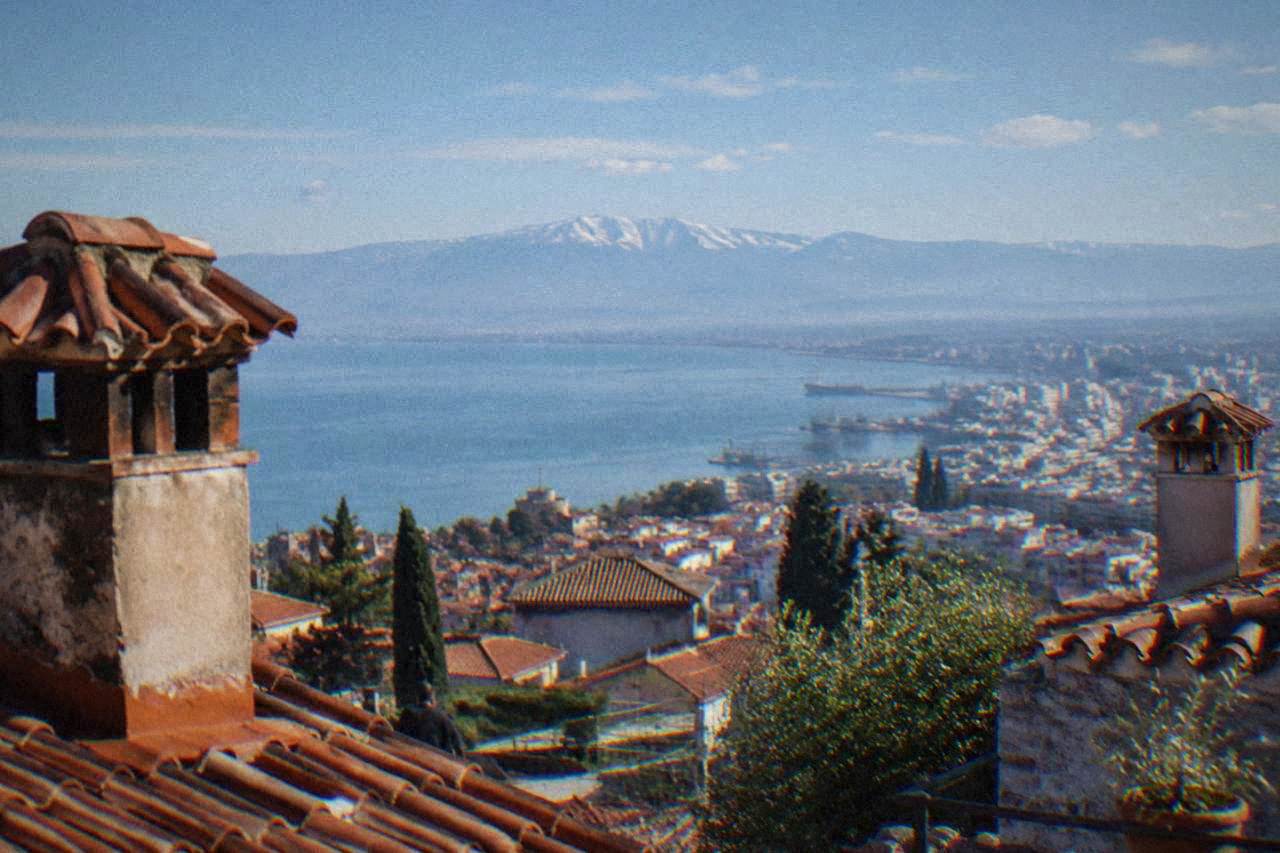
Yes, Mount Olympus can be seen from Thessaloniki on clear days, though it is roughly 90 to 107 km away depending on which point you measure to, and the view is a weather-dependent silhouette rather than a close backdrop. The mountain rises across the Thermaic Gulf to the southwest, so it appears from the city as a distant, often snow-streaked ridge above the water, not as the towering wall you see from Litochoro or Dion.
The honest version of the answer is that the sight is a bonus, not a given. Thessaloniki's air carries summer haze, and the mountain's summits, the highest of which is listed on every map of Greece as Mytikas, sit at the far edge of what the eye reliably resolves from sea level 90 km away. Winter and early spring give the sharpest air, and the same season puts snow on the ridge, which is what makes the outline jump out. The HNMS Thessaloniki Mikra station record, 1959 to 2010, shows the pattern behind this: January averages 11.5 rain days but only 37.7 mm of rain, while July averages 6.7 rain days, and summer rain is not what hides the mountain, haze is.
What can be said is mechanical: the geometry works, the distance is real, and travellers who want a dependable look at Olympus book a day trip rather than trusting the horizon. The Mount Olympus day trip guide covers those options in detail.
How Far Is Mount Olympus From Thessaloniki?
By road from Aristotelous Square, Dion is about 90 km and 67 minutes of free-flow driving, Litochoro is about 91 km and 67 minutes, and the Prionia trailhead on Mount Olympus itself is about 107 km and 86 minutes. Those are computed free-flow times with no traffic, parking or stops, so a real journey runs longer. The mountain's foothills therefore sit within an easy half-morning drive of the city centre.
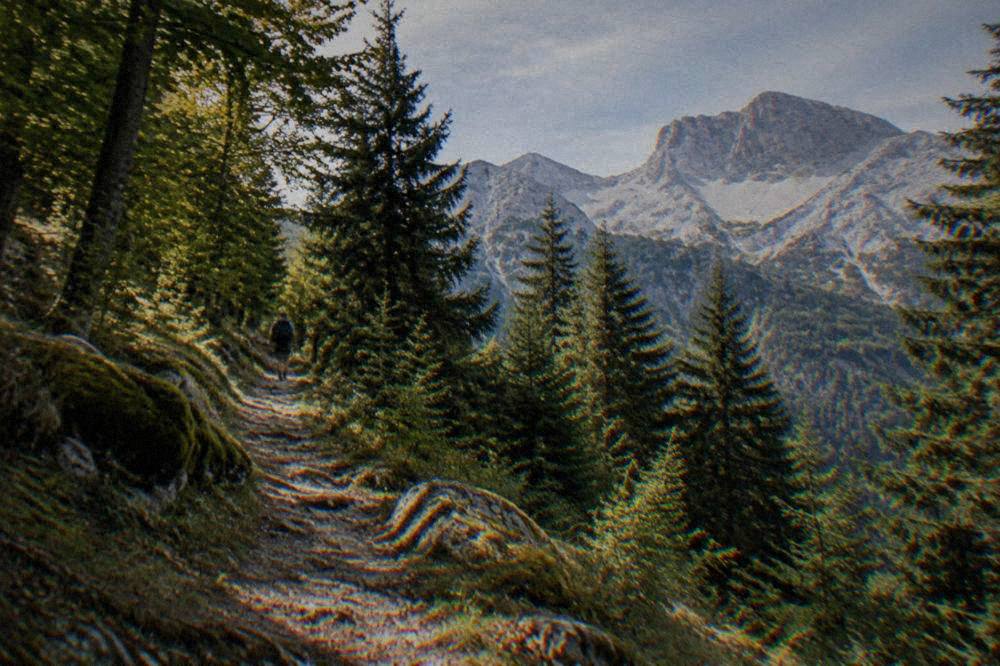
The three pins matter because they are three different experiences. Litochoro is the traditional gateway town at the foot of the mountain, where the streets end and the trails begin. Dion, a short drive east, is the archaeological park at the point where the ancient Macedonians built their sacred city under the mountain. Prionia is higher up, the road-end trailhead inside the Olympus protected area. The distances from the city centre:
| Destination | Distance by road | Free-flow drive time |
|---|---|---|
| Dion archaeological park | about 90 km | about 67 minutes |
| Litochoro | about 91 km | about 67 minutes |
| Mount Olympus (Prionia trailhead) | about 107 km | about 86 minutes |
For visitors without a car, an organised trip is the practical route, and one of the most booked options pairs the two highlights in a single day:
Where In Thessaloniki To Look For The Mountain?
The best sightlines run from high, south-west-facing ground: the upper lanes of Ano Poli below the Heptapyrgion, the terrace around the Trigoniou Tower, and the eastern stretch of the Nea Paralia seafront promenade all look down the Thermaic Gulf toward the Olympus massif. The mountain sits to the south-west of the city, so any open view across the water in that direction is a candidate.
Ano Poli, the old upper town inside the Byzantine walls, is the strongest choice because it adds height, which lifts your line of sight above the rooftop clutter of the lower city. The Heptapyrgion fortress, a prison until 1989 and now a monument, caps that ridge, and the streets just below it open repeated frames over the gulf. Down at sea level the White Tower end of the Nea Paralia works on a clear evening, when low sun from the west lights the mountain's face. One caution in both directions: the promenade is for walking, not swimming, and swimming near the city means a trip to Perea, about 28 minutes by road. The full index of guides sits on Thessaloniki Travel Guide.
Timing matters as much as place. Early morning usually offers the cleanest air, and in winter a cold, clear day after rain is the classic viewing window. Between late spring and early autumn, haze over the gulf can erase a mountain that stood out plainly the evening before. Visitors in the city for a short stay should treat a glimpse as luck and a trip to the foothills as the plan.
For those who want a guided day under the mountain rather than a squint at the horizon:
Can You Do Mount Olympus In A Day From Thessaloniki?
Yes, as a day trip to the mountain's foothills: the drive from Aristotelous Square to Litochoro or Dion takes about 67 minutes each way, and the Prionia trailhead about 86 minutes, which leaves most of a day for the park, the town and a trailhead walk.
That distinction is worth spelling out, because search results blur it. A day trip from Thessaloniki means Dion's ruins and museum, Litochoro's streets and gorge path, or a walk from Prionia along the forested slopes. It does not mean standing on Mytikas by dinner. Anyone weighing the difference should read the dedicated answer on doing Mount Olympus in a day, which keeps to the same road figures.
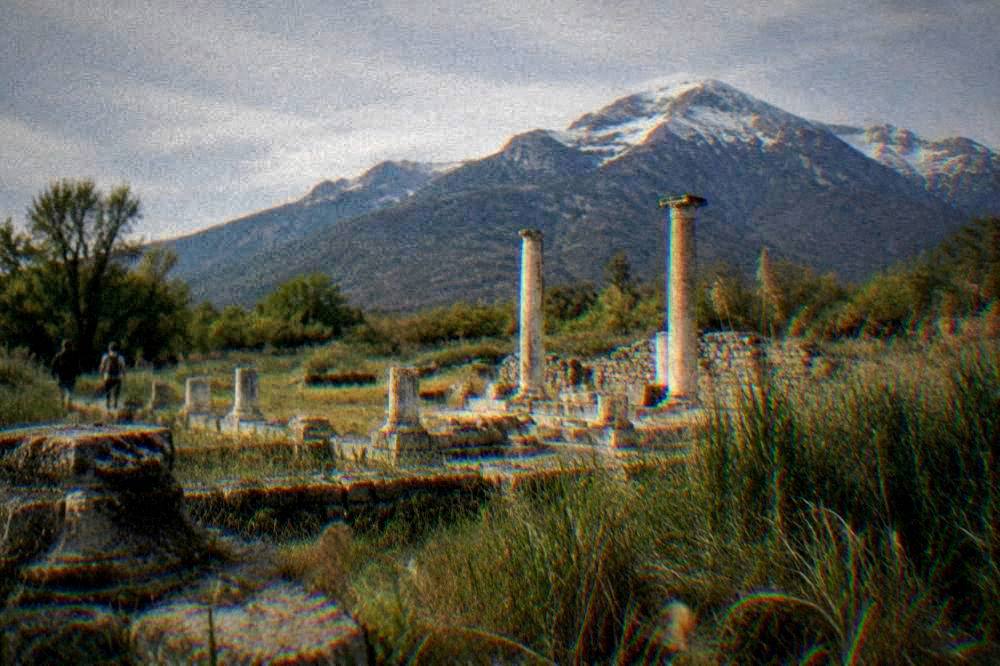
Dion deserves the stop even for visitors whose eye is on the peaks. The ancient Macedonians built their religious centre here precisely because of the mountain, dedicating the city to Zeus, and the park holds theatres, temples and city walls under the massif. The visiting hours and ticket above come from the park's own page. Litochoro, by contrast, is the base for the trails and a town built around the mountain economy rather than the ruins; the Litochoro guide covers it separately.
The easiest structured version of the day runs as a guided trip, and the pairing of Dion with the Olympus park is the one this site features:
What Else Shapes The View Over The Gulf?
Haze, humidity and the time of day shape it more than distance does: the HNMS Thessaloniki Mikra station record, 1959 to 2010, puts the July mean high at 31.7 C and August rainfall at just 19.3 mm, conditions under which heat haze builds over the water, while the colder months average mean highs near 9 to 11 C and hand the city its sharpest, snow-highlighted sightlines toward the ridge.
In practice the seasons sort themselves like this:
| Season | Air clarity signal | Mountain readability |
|---|---|---|
| Winter (Dec to Feb) | Cold air, mean highs 10.9 to 11.0 C, snow on the ridge | Clearest silhouette, fewest viewing hours of daylight |
| Spring (Mar to May) | Mean highs climb 14.3 to 24.6 C, rain days fall | Snow still visible early, haze returns late in the season |
| Summer (Jun to Aug) | Mean highs 29.4 to 31.7 C, August rainfall lowest at 19.3 mm | Weakest odds, early morning is the only reliable window |
| Autumn (Sep to Nov) | Mean highs fall 27.1 to 15.5 C, November rain 52.8 mm | First post-rain clear days restore the view |
There is a second mountain payoff that many visitors miss: the light. A clear evening over the Thermaic Gulf, with the ridge picking up the low sun, is one of the city's quiet spectacles, and the seafront was built for exactly that kind of walk. Whether the city itself earns its trip is a fair question with its own dedicated answer.
If the weather does not cooperate, or the foothills win the argument over the horizon, the same operators who run the city tours run the mountain ones, and the choice is wide:
And if the summit itch persists, the honest route is an overnight in Litochoro with an early start, not a same-day dash from the coast. The mountain has stood over this gulf since before Cassander founded Thessaloniki in 315 BC, and it does not compress to a timetable.
Common Questions About Seeing Mount Olympus From Thessaloniki
Can Mount Olympus Be Seen From Thessaloniki?
Yes, on clear days the mountain's ridge is visible above the Thermaic Gulf from high, south-west-facing points in the city such as Ano Poli. The view is a distant silhouette, roughly 90 to 107 km away, and it depends entirely on haze and season.
From Which Part Of Thessaloniki Is The Mountain Visible?
The upper town of Ano Poli, around and below the Heptapyrgion, gives the best sightlines, followed by the eastern end of the Nea Paralia seafront. Any open view across the gulf to the south-west is a candidate on a clear day.
How Far Is Mount Olympus From Thessaloniki?
By road from Aristotelous Square, Dion is about 90 km and 67 minutes of free-flow driving, Litochoro about 91 km and 67 minutes, and the Prionia trailhead about 107 km and 86 minutes.
Is Mount Olympus Visible From Thessaloniki In Summer?
Sometimes, early in the morning. Summer heat haze over the gulf thins the odds, with the July mean high at 31.7 C per the HNMS Thessaloniki Mikra station record, 1959 to 2010. Winter and spring offer the sharpest views.
Can You Visit Mount Olympus On A Day Trip From Thessaloniki?
Yes, as a visit to the foothills: Dion, Litochoro or the Prionia trailhead are all within about 67 to 86 minutes of driving each way.
Does Dion Include Views Of Mount Olympus?
Yes. The archaeological park sits directly under the massif, and the ancient city was dedicated to Zeus because of it. A full ticket is 10 euro, reduced 5 euro, and the park opens 08:00 to 20:00 Wednesday to Monday.