Is Thessaloniki Worth Visiting?
An honest editorial answer to whether Thessaloniki is worth visiting, with sight prices, museum hours, climate figures from the HNMS station record and day-trip distances.
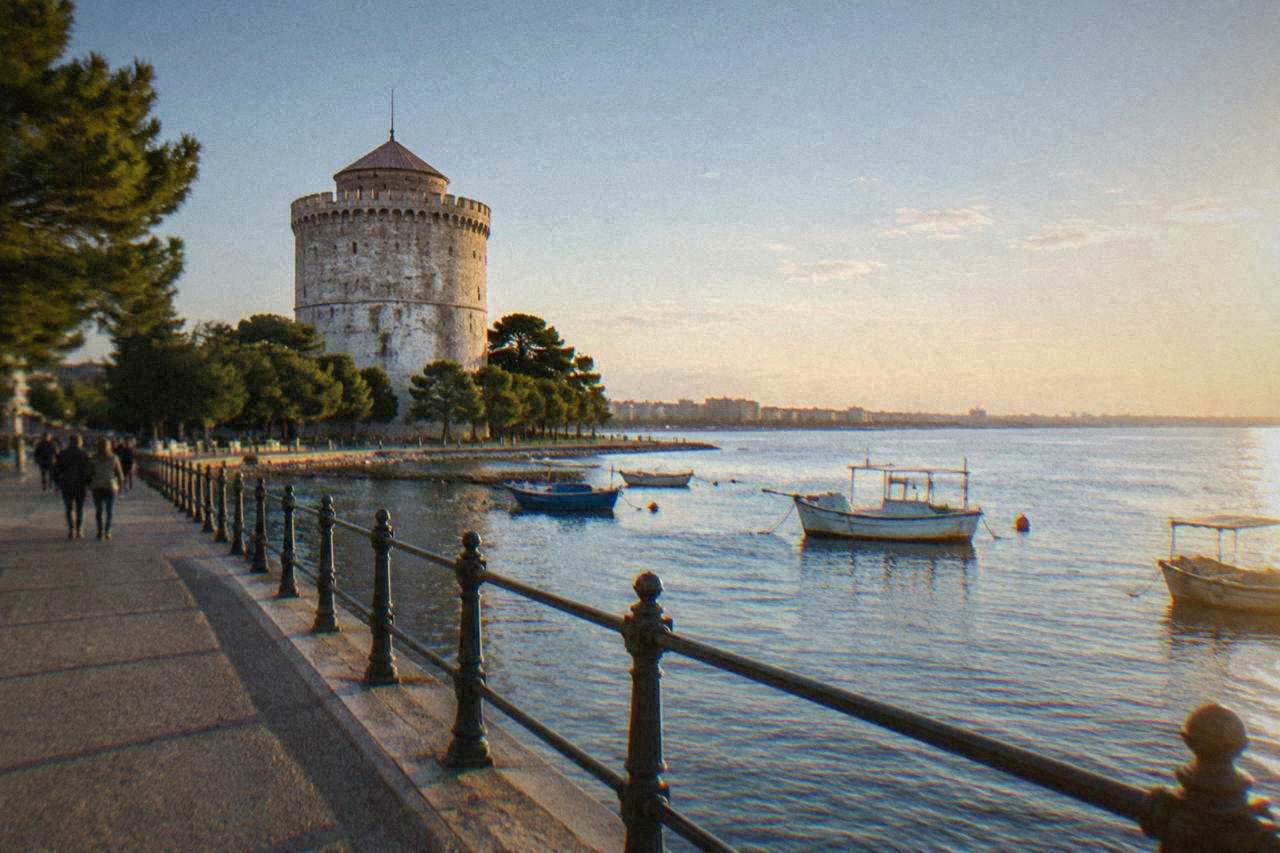
Thessaloniki, the second city of Greece, sits on the Thermaic Gulf in Central Macedonia, northern Greece, with the White Tower on its seafront promenade and the old upper town of Ano Poli inside the Byzantine walls. It is not an island and it is not Athens, and that distinction is exactly why the question deserves a real answer rather than a shrug. The city holds fifteen UNESCO-listed Paleochristian and Byzantine monuments, inscribed in 1988, a Roman Galerian complex in the middle of the modern streets, and a food reputation that the municipal gastronomy site ties directly to its UNESCO Creative City of Gastronomy listing.
Is Thessaloniki Worth Visiting?
Yes, Thessaloniki is worth visiting: it concentrates fifteen UNESCO-listed Paleochristian and Byzantine monuments, two major museums and a Roman complex walkable from Aristotelous Square, its metro has been open since November 2024, and entry to its landmark White Tower costs 8 euro full and 4 euro reduced from 1 April 2026, cheap for a European city of this depth.
That is the editorial verdict, and the reason behind it is density. The city was founded in 315 BC by Cassander and named for his wife Thessalonike, absorbed a Roman tetrarch's palace, Byzantine church-building on an imperial scale and centuries of Ottoman rule, and each layer left standing fabric inside a walkable core. The Archaeological Museum, the Museum of Byzantine Culture and the White Tower sit within a short radius of the centre, and the state museum pages list concrete hours and prices rather than vague promises. A city where the Rotunda, the Arch of Galerius and the Palace of Galerius sit beside functioning commercial streets is a city that rewards walking, and walking is free.
The honest counterweights belong in the same breath. The Nea Paralia is a promenade, not a swimming beach, so anyone picturing a resort should read the beach facts before booking. The nearest swimmable beaches are at Perea, about 28 minutes away by road, Agia Triada or Epanomi. And the climate has continental edges: the HNMS Thessaloniki Mikra station record, 1959 to 2010, shows a January mean low of 1.5 C and a July mean high of 31.7 C, so the season matters. Neither point changes the verdict; both change the packing list. For a deeper breakdown of how the city compares with the capital, read Athens or Thessaloniki compared.
What Do You Actually Get To See In Thessaloniki?
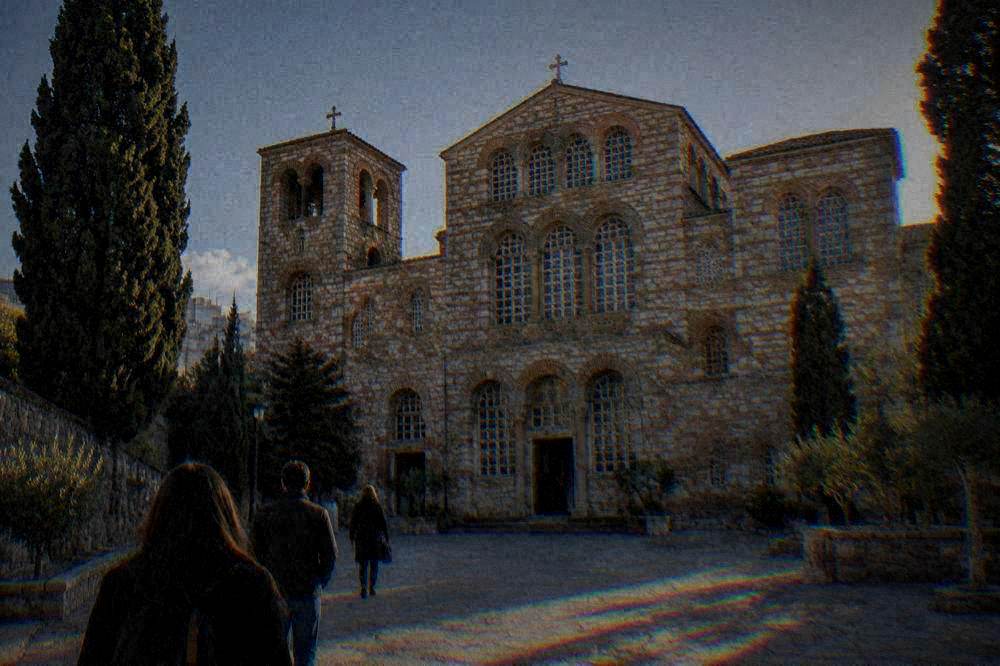
The core of a Thessaloniki visit is the UNESCO inscription of 1988: fifteen Paleochristian and Byzantine monuments, including the Church of Saint Demetrius, Hagia Sophia, Panagia Acheiropoietos, Hosios David and the city walls, plus the Roman Rotunda, the Arch of Galerius and the Palace of Galerius, nearly all reachable on foot from Aristotelous Square.
Working churches such as the Church of Saint Demetrius and Hagia Sophia are free to enter and open outside services, which makes the Byzantine core one of the more affordable heritage circuits in Europe. The Arch of Galerius is an open-air monument on Egnatia, free to view at any hour. Around that free layer sit the three ticketed anchors, and their official pages give exact terms: the Archaeological Museum runs 09:00 to 17:00 daily from 1 April to 31 October, then 09:00 to 17:00 closed Tuesday from 1 November to 31 March, at 10 euro full and 5 euro reduced; the Museum of Byzantine Culture is daily 08:00 to 20:00 in summer and Monday, Wednesday to Sunday 08:30 to 15:30 in winter, also 10 euro and 5 euro; the White Tower is daily 08:00 to 21:00 in summer and 08:30 to 15:30 in winter at 8 euro and 4 euro.
| Sight | Summer hours | Winter hours | Full ticket | Reduced ticket |
|---|---|---|---|---|
| White Tower | Daily 08:00-21:00 | Daily 08:30-15:30 | 8 EUR | 4 EUR |
| Archaeological Museum | Daily 09:00-17:00 | Daily 09:00-17:00, closed Tuesday | 10 EUR | 5 EUR |
| Museum of Byzantine Culture | Daily 08:00-20:00 | Mon, Wed-Sun 08:30-15:30, closed Tuesday | 10 EUR | 5 EUR |
State museums are also free on 6 March, 18 April, 18 May, the last weekend of September and 28 October, and free for EU citizens up to 25, per the Museum of Byzantine Culture's visiting page. A combined state-sites ticket of about 15 euro full and 8 reduced is reported on the state archaeology pages; treat it as reported and confirm at the ticket desk. Two corrections worth carrying: the old 4 euro White Tower figure still circulates on older pages and is out of date, and guides claiming the city has no metro are equally stale, Line 1 opened in November 2024 and the Kalamaria extension followed on 27 August 2026.
Ano Poli, the upper town inside the walls, is where the city's depth shows most clearly. The Heptapyrgion fortress was used as a prison until 1989 and is now an open monument above the old streets, and the walk up from the centre passes Byzantine churches and walled lanes that the flat city centre never hints at. A guided option is the Upper Town Historical Tour Experience at Greece, which covers Ano Poli, the walls and the fortress with a local guide; Check availability on the operator's live listing. The desk's fuller Thessaloniki walking tour guide covers the same ground independently.
For the full sight-by-sight rundown, the site's things to do in Thessaloniki page is the root resource, and the question of what Thessaloniki is famous for digs into the history behind the monuments.
How Expensive Is A Thessaloniki City Break?
A Thessaloniki break is inexpensive by euro-area standards: the metro basic ticket is 0.60 euro, a 24-hour metro ticket is 2.50 euro, the White Tower is 8 euro, both major museums are 10 euro, and a full day of sightseeing and eating can run on a budget closer to a Balkan capital than to Athens or the islands.
The transport numbers come from the Thessaloniki Metro's ticket page and are exact: 0.60 euro for a single journey, 2.50 euro for a day ticket, with trains from 05:15 to 00:30 Sunday to Thursday and to 02:00 on Friday and Saturday. The reported airport bus fare is about 2 euro and a daytime taxi from the airport about 25 euro, both reported figures worth confirming before you fly. Museum entry, at 8 to 10 euro per anchor sight, means the whole ticketed core costs less than a single major-attraction ticket in many western European capitals. Accommodation rates are not quoted on this site, but one cost every visitor should budget for is Greece's climate resilience fee, collected by the accommodation, charged per room per night and higher from April to October.
Food is the other half of the value case. The municipal gastronomy site frames the city as a UNESCO Creative City of Gastronomy, and the practical expression of that is the market-and-table culture around Modiano Market and Kapani Market and the ouzeri and cafe life the city is known for.
Should You Take A Guided Tour On A First Visit?
The food side of the city has its own guided layer, and the desk's Thessaloniki food tour guide compares the options; what food Thessaloniki is famous for sets the table first.
When Is Thessaloniki Worth Visiting?
Thessaloniki is worth visiting from late April through October, with the HNMS Thessaloniki Mikra station record, 1959 to 2010, showing May at a 24.6 C mean high and 44.2 mm of rain, July at 31.7 C and 23.8 mm, and October at 21.2 C with only 9.3 rain days, though the October film festival and the Dimitria period fill the city.
The same record gives the winter case honestly: January averages a 9.3 C high against a 1.5 C low, December carries the heaviest monthly rainfall at 55.1 mm and August the lightest at 19.3 mm, and the annual total is 444.5 mm. None of that is a reason to stay away. Winter brings the 67th Thessaloniki International Film Festival, which ran 5 to 15 November in 2026, museum hours that shorten but hold, and the Tuesday closures at the Archaeological Museum and the Museum of Byzantine Culture from 1 November to 31 March, which any winter itinerary must respect. The desk's best time to visit Thessaloniki guide works through the whole calendar month by month, and is Thessaloniki worth visiting in October answers the single most asked seasonal question. Snow does fall on the record, covered in does Thessaloniki get snow.
What Day Trips Add To The Case For Thessaloniki?
Thessaloniki works as a base for some of the best day trips in northern Greece: Vergina is about 62 minutes away by road, Pella 43, Dion 67, Edessa 82 and the Meteora monasteries about 228 km and a full day, while the Halkidiki peninsulas of Kassandra and Sithonia are 78 and 96 minutes respectively.
The drive times, computed over free-flow routing from Aristotelous Square and presented as about, are the honest frame for planning. Vergina holds the Museum of the Royal Tombs of Aigai, Pella the archaeology of the Macedonian capital, Dion sits at the foot of Mount Olympus and the Prionia trailhead is about 86 minutes out. Per-monastery entry of about 5 euro is reported, and each monastery closes one weekday, so confirm locally before setting out. For the sea side, the Halkidiki guide and the Kassandra or Sithonia answer weigh the two peninsulas without pretending one is simply better.
| Day trip | Distance by road | Free-flow drive time |
|---|---|---|
| Pella | 45.7 km | about 43 min |
| Vergina | 68.0 km | about 62 min |
| Dion | 90.1 km | about 67 min |
| Edessa waterfalls | 90.3 km | about 82 min |
| Kassandra (Kallithea) | 86.2 km | about 78 min |
| Sithonia (Nikiti) | 97.2 km | about 96 min |
| Meteora (Kalambaka) | 227.5 km | about 154 min |
One correction that matters here: a Mount Athos boat trip from Ouranoupoli views the monastic coast from the sea and does not land. Entry to Athos itself requires a permit, the diamonitirion, and is men only, so no cruise listing should be read as a monastery visit.
Common Questions About Visiting Thessaloniki
Is Thessaloniki Worth Visiting?
Yes. Fifteen UNESCO-listed Byzantine monuments, a walkable Roman and Ottoman core, a metro open since November 2024, low ticket prices at the major museums and a strong day-trip radius make a clear case, provided you do not expect a beach resort at the waterfront itself.
How many days does Thessaloniki need?
Two days cover the core monuments and museums comfortably, with a third for Ano Poli at leisure and a fourth for a day trip. The site's answer on how many days is enough for Thessaloniki breaks down each option.
Is Thessaloniki walkable?
The historic core is flat and compact, stretching from Aristotelous Square to the Rotunda and the Arch of Galerius, with Ano Poli a steep but short climb. The full answer is at is Thessaloniki a walkable city.
Can you swim in Thessaloniki?
Not at the city waterfront: the Nea Paralia is a promenade. Swimming is at Perea, about 28 minutes by road, Agia Triada or Epanomi, and the detail is in does Thessaloniki have nice beaches.
Is Thessaloniki safe to visit?
Greece is a Schengen member and the emergency number is 112. This site publishes no safety statistics or area lists; the practical answer is at is it safe to travel to Thessaloniki.
Is Thessaloniki cheaper than Athens?
The comparison question is discussed at Athens or Thessaloniki.
The verdict stands on the numbers: a UNESCO inscription of fifteen monuments, exact museum hours and prices published by the museums themselves, a metro that runs to 02:00 on weekends, and a day-trip radius reaching Vergina, Olympus and Meteora. Thessaloniki is worth visiting, and the Thessaloniki Travel Guide covers every layer of it in detail.