What Food Is Thessaloniki Famous For?
Thessaloniki is famous for bougatsa, koulouri, seafood meze and a market food culture that runs from Kapani Market to the Ladadika restaurants. Here is what to eat, and where.
Thessaloniki, the second city of Greece, sits on the Thermaic Gulf in Central Macedonia, and its food reputation is built on three things: pastry eaten standing up, markets that occupy whole city blocks, and a restaurant culture built around small dishes and wine. The city's municipal gastronomy site references UNESCO and the Creative Cities Network, which reflects how the city presents itself, though no designation year belongs on this page. What follows is what the city is actually known for eating, dish by dish and neighbourhood by neighbourhood, with the settings each dish belongs to.
What Food Is Thessaloniki Famous For?
Thessaloniki is famous above all for bougatsa, the warm filled pastry eaten for breakfast, and koulouri, the sesame bread ring sold from street carts, alongside a meze culture of small seafood and vegetable dishes served with wine or ouzo, and a sweet tradition that runs from trigona to tsoureki. The city backs this up with two great covered markets, Modiano Market and Kapani Market, and a seafront position on the Thermaic Gulf that keeps fish at the centre of the table.
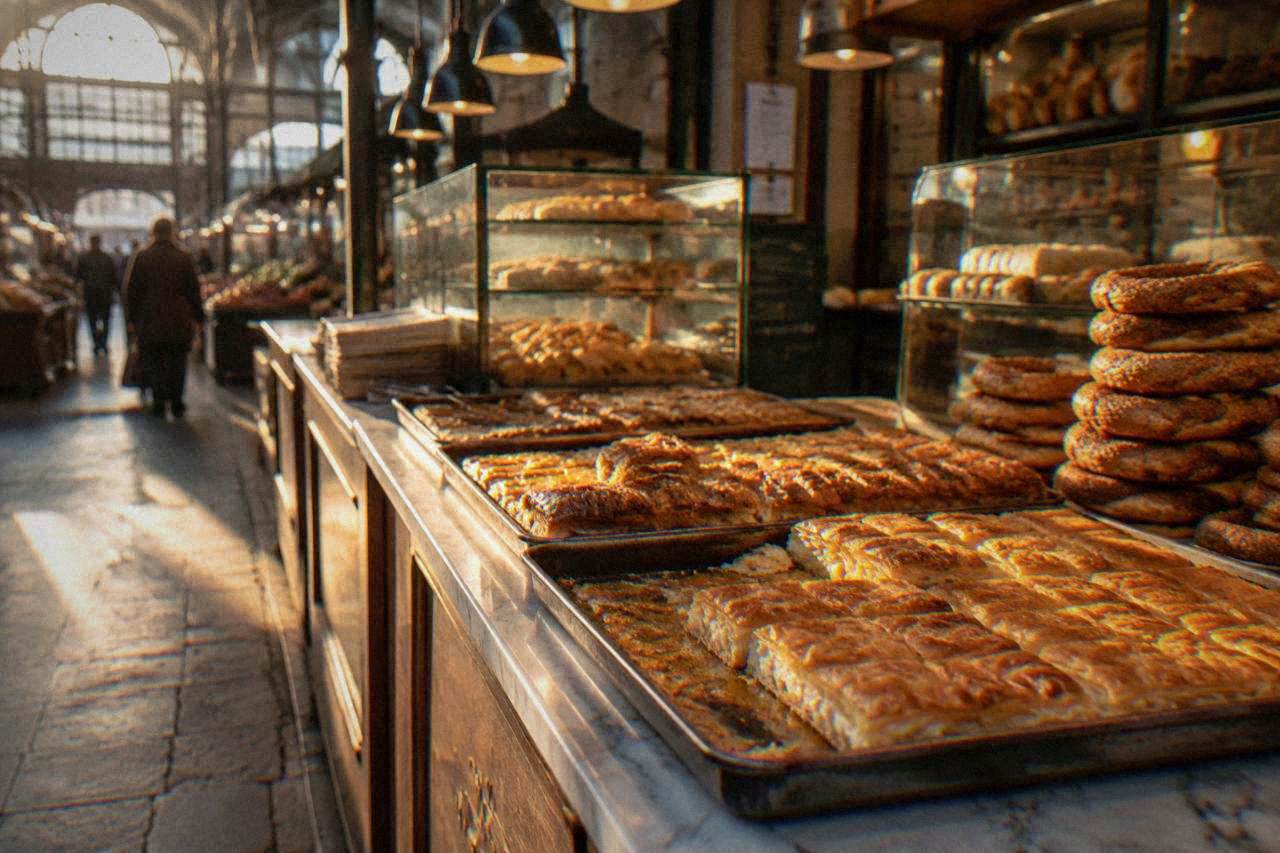
The pastry case comes first because the city does. Bougatsa is a flat pastry of thin sheets, filled with cream, cheese or minced meat, cut into squares and eaten hot, and in Thessaloniki it is a breakfast rather than a dessert. The origin story of the dish is contested and no version of it belongs on this page; what is not contested is that the city's bakeries sell it by weight, sliced in front of you, from early morning. Koulouri, the ring of bread crusted in sesame, is the other street staple, sold from carts around Aristotelous Square and eaten on the move.
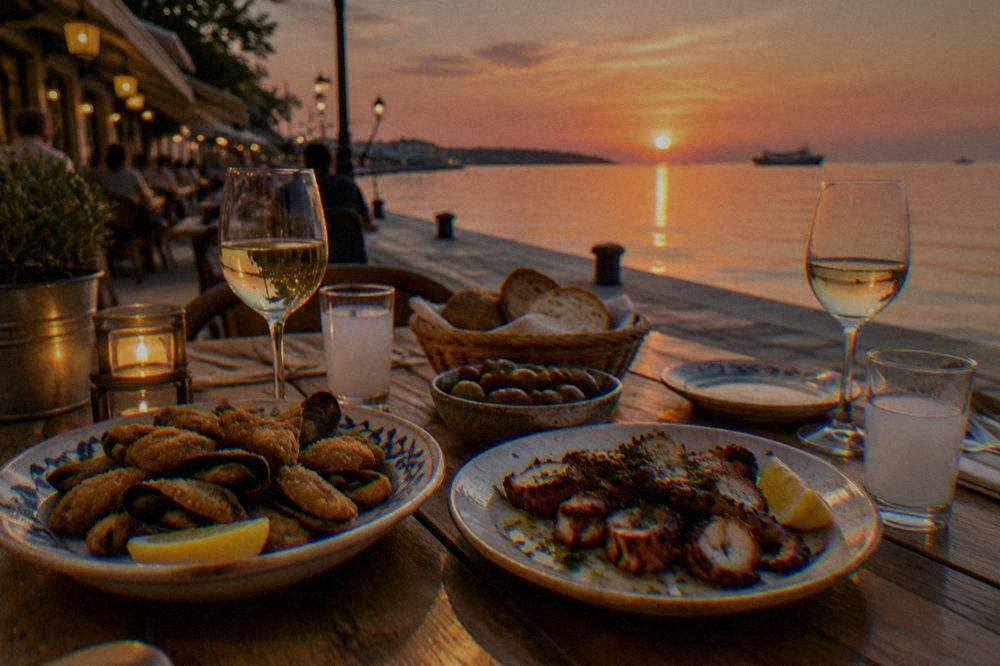
Around those two sits a wider tradition. Thessaloniki eats its seafood as meze, small plates meant to stretch an evening: mussels, small fish, octopus stewed in wine, greens of every kind, and cheese with honey. The dessert counters add syrup-soaked sweets and cream-filled ones, and the city's bakeries sell tsoureki, the braided enriched bread, year round rather than only at holidays.
The geography holds the whole story together. A city built on a gulf eats its fish the same day it lands, a city built on trade routes layers spice and pastry techniques from every direction, and a city with a working port keeps its markets loud and cheap. That is Thessaloniki's food identity in one paragraph: gulf fish, traded recipes, market prices.
Which Dishes Should A Visitor Actually Try In Thessaloniki?
The short list is bougatsa with cream or cheese for breakfast, koulouri as the walking snack, mussels and small fried fish as meze, gyros as the fast food, trigona as the sweet, and a glass of wine or ouzo alongside everything. Thessaloniki adds its own items to the standard Greek table, and the dishes below are the ones the city is identified with, eaten in the settings where the city eats them: bakeries in the morning, markets at midday, meze restaurants at night.
None of these dishes needs a guided introduction, but a local guide compresses days of wandering into one walk. The Traditional Greek Food Tour With A Local moves through the dishes and the counters that sell them, and the related walking and wine options below cover the same ground on foot. For readers planning the wider trip, the Thessaloniki food tour guide lays out how a food walk fits into a first visit.
The table below pairs each dish with the part of the day it belongs to and the setting you will find it in.
| Dish | What It Is | When The City Eats It |
|---|---|---|
| Bougatsa | Thin-sheet pastry filled with cream, cheese or minced meat, served hot | Breakfast, from opening until midday |
| Koulouri | Sesame-crusted bread ring | All day, from carts and bakery windows |
| Meze (mussels, small fish, octopus) | Small seafood and vegetable plates | Evening, with wine or ouzo |
| Gyros | Meat wrapped in pita with tomato, onion and sauce | Lunch or late night |
| Trigona | Crisp cone-shaped pastry filled with cream | Afternoon sweet, dessert counters |
A note on what is deliberately missing: no restaurant names, no bakery rankings, no "best gyros in the city" claims. Those are exactly the facts that change fastest and check worst, and the city's own answer to the question is the food itself. Readers who want the deeper planning view can start with what to eat in Thessaloniki and the overview of what Thessaloniki is famous for.
Where Does The Food Culture Live In Thessaloniki?
The food culture of Thessaloniki is concentrated in four places: Modiano Market and Kapani Market for produce, butchery and street food in the centre, the Ladadika district for meze restaurants in converted warehouses near the port, Ano Poli for old tavernas above the Byzantine walls, and the seafront line from Aristotelous Square along the Nea Paralia for cafés and evening walks. Each has a distinct job in the city's eating day, and a visitor can cover all four on foot, since the centre is compact.
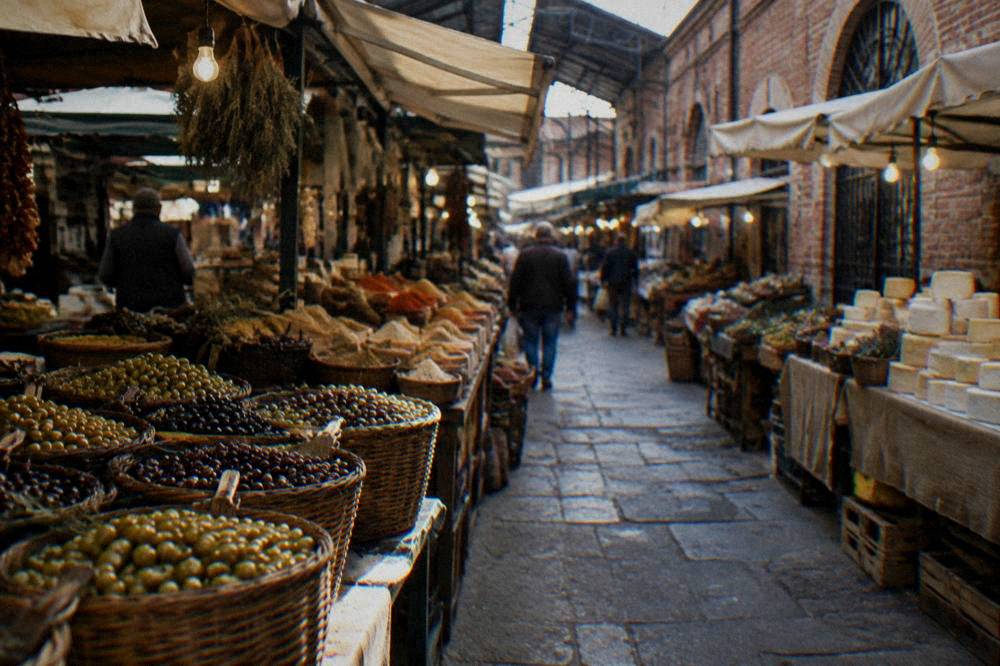
Modiano Market is the city's historic covered market, rebuilt and reopened as a food hall, with butchers, fishmongers and counters serving food to eat standing up. Kapani Market, a short walk away, is the older open street market around it, with spice stalls, hardware, barrels of olives and the noise of a working city rather than a polished one. Both are named, mapped places, and both reward an early visit before the crowds build. Neither runs to a printed schedule on this page; go on any weekday morning and they are in full swing.
Ladadika, the district named for the oil warehouses that once stood there, is where the evening happens: tablecloths, meze, grilled fish and wine in buildings that survived the 1917 fire. Ano Poli, the upper town inside the Byzantine walls, is quieter, with tavernas looking down over the whole Thermaic Gulf. The two make a natural pair, one for the night you arrive and one for the night you slow down. Readers deciding how much time to give the city will find the days-needed question answered separately, and the wider Thessaloniki Travel Guide covers the neighbourhoods in depth.
Is Thessaloniki Really A City Of Markets And Meze?
Yes, and the structure is older than the food blogs: Thessaloniki has been a port market city since it was founded in 315 BC, and its eating habits follow the port, with fish, grain, oil and refugees' recipes layered into one cuisine over two millennia. The meze style of eating, many small plates instead of one large dish, is the default in the city's restaurants, and the markets remain working food suppliers rather than tourist displays.
The layering matters. Ottoman rule until 1912, the Sephardic Jewish community that arrived after 1492, Greek refugees from Asia Minor: each wave left dishes behind, and the city's counters carry all of them at once. That is why a Thessaloniki breakfast can feel eastern, its sweets central European, and its seafood plainly Aegean. The history of Thessaloniki is a food history told another way, and it explains why no single national label fits the table here.
What a visitor does with this is simple: eat the way the city structures its day. Sweet or savoury pastry in the morning, something wrapped in pita at midday, and a long evening of small plates with wine. A food tour walks that structure with someone who can name what is on the plate as it arrives, and a cooking class goes one step further and puts you at the stove with a local family.
What Sweets Is Thessaloniki Known For?
Thessaloniki is known for trigona, the crisp cream-filled cones associated with the city, for tsoureki sold year round, for syrupy phyllo sweets such as baklava and galaktoboureko, and for bougatsa's cream filling itself, which reappears inside other pastries across the city's counters. The sweet tradition here is a counter tradition: glass cases, trays cut to order, and portions weighed rather than plated.
What stands is the texture of the scene: pastry shops in the centre of the city displaying dozens of variants at once, and residents treating dessert as an any-day purchase rather than an occasion. Try the cream cone and the syrup square side by side and the range of the tradition is obvious in two bites. The sweet counters also travel well in memory but poorly in a suitcase, so eat them where you buy them.
Can You Eat Well In Thessaloniki On A Budget?
Yes, eating well cheaply in Thessaloniki is close to the default: koulouri and bougatsa from a bakery cost a fraction of a restaurant meal, the markets sell olives, cheese and fruit by weight, and gyros wraps are the city's standing fast food, so the cheapest food in the city is also some of its most characteristic. No specific dish prices are printed on this page, because they change and check poorly, but the shape of the spending is reliable: breakfast and lunch from counters and carts cost little, and the evening meze table is where the money goes.
The budget question as a whole, accommodation included, is covered separately in is Thessaloniki expensive. On food alone, the honest summary is that the floor is low and the ceiling is optional: a visitor who eats the street food and the market food spends little and misses almost nothing that the city is famous for. Save the long restaurant evening for one night, and let the counters carry the rest of the trip.
Common Questions About Thessaloniki Food
What Food Is Thessaloniki Famous For?
Thessaloniki is famous for bougatsa, koulouri, seafood meze, gyros and cream-filled sweets such as trigona, sold from bakeries, street carts, Modiano Market, Kapani Market and the meze restaurants of Ladadika.
Is Thessaloniki Good For Food Tours?
Yes. Food tours are one of the most developed product categories in the city, covering markets, bakeries and meze restaurants, and a local guide maps the counters faster than independent wandering. Prices and details are on the operator's live listing.
What Is A Typical Breakfast In Thessaloniki?
Bougatsa, eaten hot and cut to order, with koulouri as the walking alternative, and coffee standing at a counter. That combination is the city's morning identity.
Where Should You Eat Seafood In Thessaloniki?
The meze restaurants of Ladadika and the tavernas of Ano Poli are the named districts for seafood and small plates, with fish drawn from the Thermaic Gulf and the northern Aegean. Confirm opening hours locally before you set out.
Are There Michelin-Starred Restaurants In Thessaloniki?
That question is best answered by the official Michelin Guide site, which keeps its own list and changes it; no count or names are given here.