Thessaloniki History In Ten Layers
Thessaloniki was founded in 315 BC, spent four centuries as Rome's great port on the Via Egnatia, more than a thousand years as Byzantium's second city, nearly five hundred years under Ottoman rule, and rebuilt itself after the 1917 fire. This guide walks through that story in ten layers, with the dates, monuments and museums where each era can still be seen.
Short answer
Thessaloniki was founded in 315 BC by King Cassander of Macedon and named for his wife Thessalonike, sister of Alexander the Great. Roman, Byzantine, Ottoman and Jewish layers each left monuments, and fifteen Paleochristian and Byzantine monuments were inscribed by UNESCO in 1988. The city joined Greece on 26 October 1912, burned in 1917, survived an earthquake in 1978 and opened its metro in November 2024.
Thessaloniki, the second city of Greece, sits on the Thermaic Gulf in Central Macedonia, and its history is stacked in visible layers: a Hellenistic street grid under the modern one, Roman palaces beside apartment blocks, Byzantine churches between cafe terraces, Ottoman bathhouses turned into exhibition spaces. The city was founded in 315 BC, joined the Greek state on 26 October 1912, and opened a metro in November 2024, and almost every era in between left something you can walk to in an afternoon. This guide takes each era as one layer, in order, with the dates the municipal and museum sources give and the places where the layer shows on the ground.
The table below is the whole story in one view, and each layer gets its own section further down.
| Layer | Period | What it left behind |
|---|---|---|
| Hellenistic founding | 315 BC | City plan, name, original walls in Ano Poli |
| Roman era | 146 BC onward | Via Egnatia route, Galerian complex, Rotunda, Roman Agora |
| Early Christian and Byzantine | Before 1430 | Fifteen UNESCO monuments, city walls, Ano Poli street plan |
| Ottoman era | 1430 to 1912 | White Tower, Heptapyrgion, Bey Hamam, Ladadika fabric |
| Sephardic Jewish city | after 1492 | Modiano and Kapani market fabric, heritage sites |
| Greek liberation | 26 October 1912 | Liberation Day, shared with Saint Demetrius day |
| Fire and rebuild | 1917 onward | Aristotelous Square and the Hebrard plan |
| Second World War | 1943 | Deportations, memory sites, Jewish Museum |
| Modern decades | 1978 and 1997 | Rebuilt city, cultural infrastructure |
| Metro era | November 2024 | Line 1, Kalamaria extension since 2026 |
What Is The Short Version Of Thessaloniki History?
Thessaloniki was founded in 315 BC by Cassander, king of Macedon, who named the new city after his wife Thessalonike, a half-sister of Alexander the Great, and it grew wealthy on the Roman Via Egnatia before serving for over a thousand years as Byzantium's second city. The Ottomans took it in 1430, the Greek army entered on 26 October 1912, a catastrophic fire reshaped the centre in 1917, and UNESCO inscribed fifteen of its Paleochristian and Byzantine monuments in 1988. The metro's Line 1 opened in November 2024, with the Kalamaria extension inaugurated on 27 August 2026, so the newest layer is barely a year old.
One idea holds the whole story together: because the city was never flattened and rebuilt from scratch in one act, each ruler built beside, and often on top of, the previous one. The Arch of Galerius stands in the middle of a working street. The Rotunda has been a Roman mausoleum-temple, a church and a mosque, and the White Tower began as part of the Ottoman sea walls. Reading Thessaloniki is a matter of reading down through the layers rather than around separate monuments.
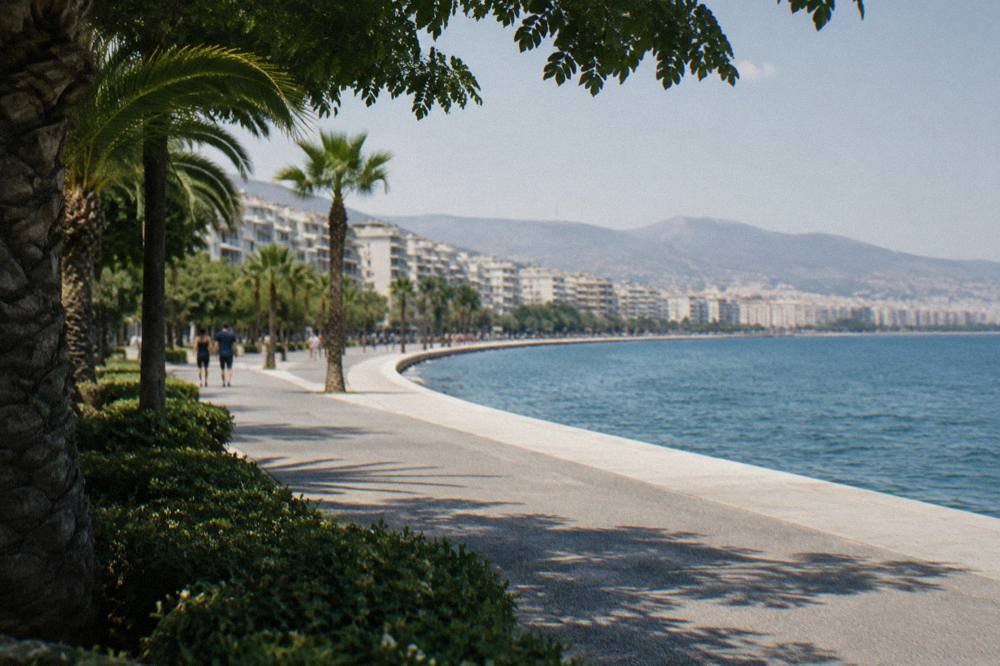
For a first visit built around these layers rather than a single era, the overview at things to do in Thessaloniki sorts the sights by district, and Thessaloniki Travel Guide covers where to sleep and eat between the monuments.
Layer One: How Did Thessaloniki Begin In 315 BC?
Cassander, king of Macedon, founded Thessaloniki in 315 BC and named the city after his wife Thessalonike, whose father was Philip II and whose half-brother was Alexander the Great, consolidating the towns of the Thermaic Gulf into one fortified port. The founding date and the naming are stated plainly on the municipality's own history pages, and they anchor every later layer: the city enters history already as a planned political act, not a village that grew.
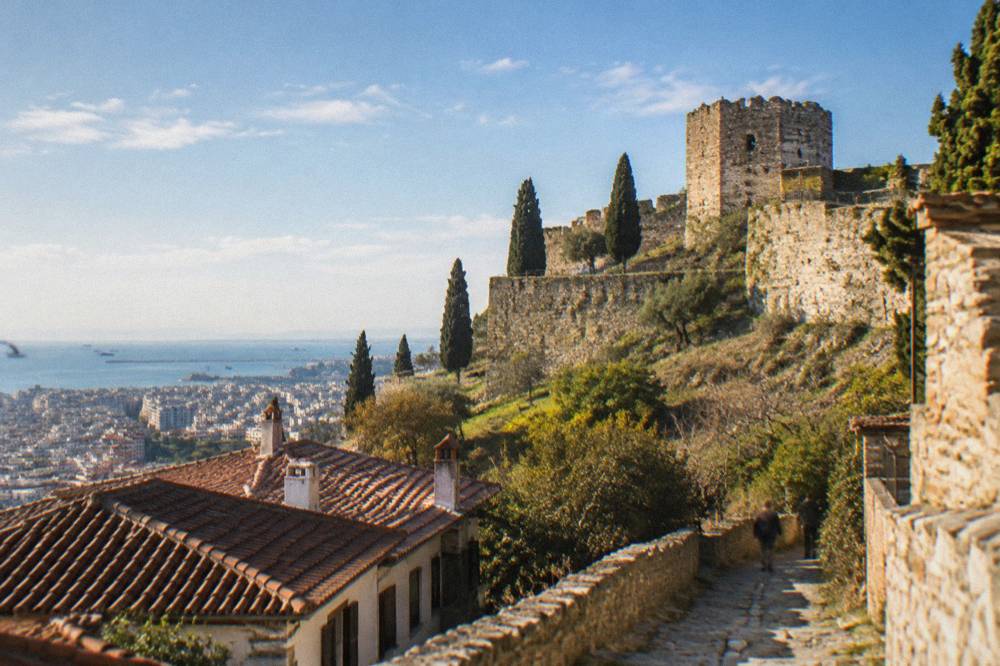
What survives from this layer is mostly shape rather than stone. The original city walls had Hellenistic origins and later expanded to run about 8 kilometres under the Byzantines, of which about 4 kilometres remain visible today, mostly in Ano Poli, the old upper town. Walking the upper town's narrow lanes gives the closest feel to the pre-Roman city, because the steep terrain there resisted later replanning in a way the flat centre did not. The trigoniou-tower stretch of the wall is the segment people usually mean when they talk about the walls.
Layer Two: What Did Rome Give Thessaloniki?
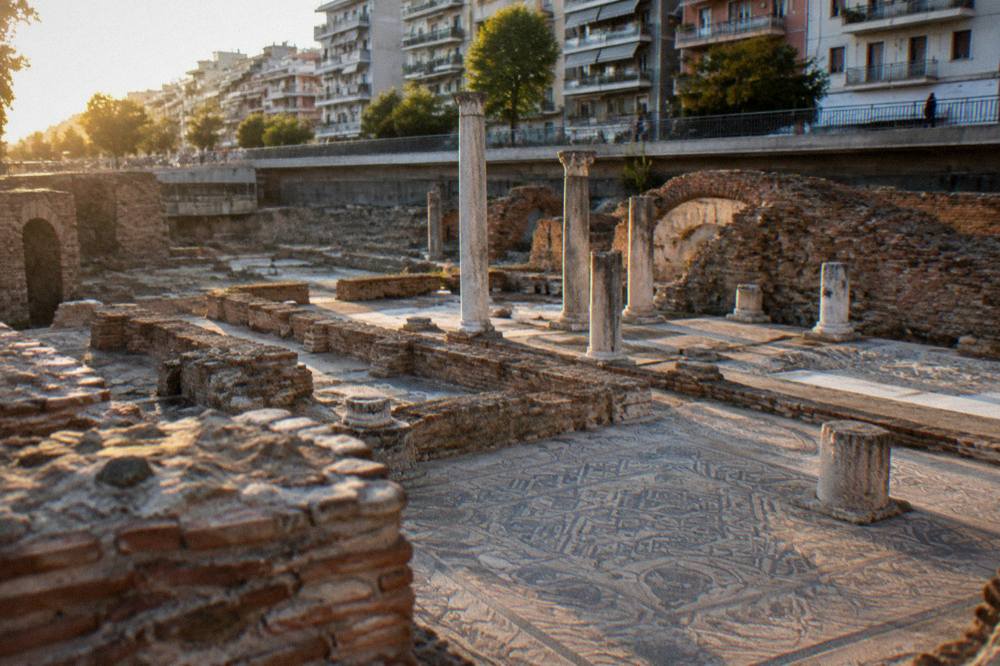
Rome made Thessaloniki a major station on the Via Egnatia, the road built between 146 and 120 BC that linked the Adriatic to the Hellespont, and in a later era the emperor Galerius based his palace complex here, leaving the Arch of Galerius, the Rotunda and the Palace of Galerius as the city's Roman core. The arch is a free-standing street monument on Egnatia, viewable at any hour, and the palace ruins sit below modern street level in the plateia around Navarinou.
The Via Egnatia dating is reported on the municipal gastronomy history pages, and the Galerian association for the palace, arch and Rotunda appears on the municipality's monuments pages. The Rotunda's later life is the point that matters for a visitor: a massive Roman round building that Byzantine Thessaloniki turned to church use and Ottoman Thessaloniki turned to mosque use, which is the three-layer story of the whole city compressed into one building.
| Roman monument | What it is | Where it stands today |
|---|---|---|
| Arch of Galerius | Triumphal arch, open-air and free to view | On Egnatia street, central |
| Rotunda | Massive round structure, later church and mosque | North of the arch, plateia Dominikou |
| Palace of Galerius | Ruined palace complex including the Apsidal Hall | Around Navarinou square, below street level |
| Roman Agora | Ancient forum with odeon and cryptoporticus | North of Aristotelous Square |
The dedicated guides to the rotunda, arch-of-galerius and galerius-palace carry what is known site by site.
Layer Three: Why Does Byzantine Thessaloniki Fill The UNESCO List?
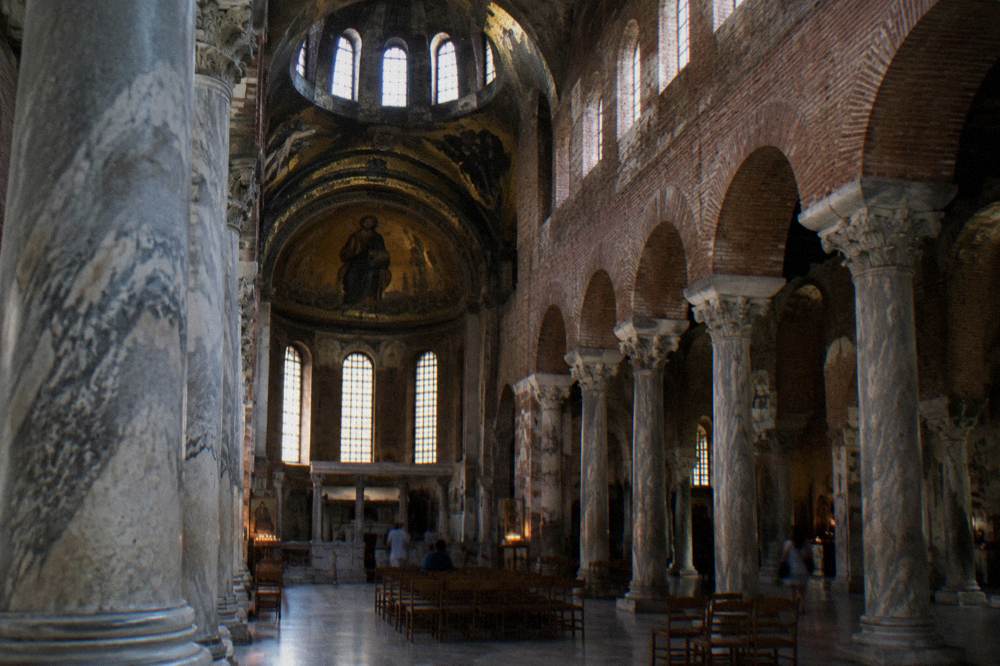
UNESCO inscribed the Paleochristian and Byzantine Monuments of Thessaloniki on the World Heritage List in 1988, and the property covers fifteen individual monuments, from the early Christian foundations of the Church of Saint Demetrius and the Rotunda mosaics to the walls and churches of Ano Poli, recognised under criteria covering human creative genius and cultural exchange. Fifteen is the number the municipality and the World Heritage listing both give, and no other Greek city carries a comparable single-city Byzantine inscription.
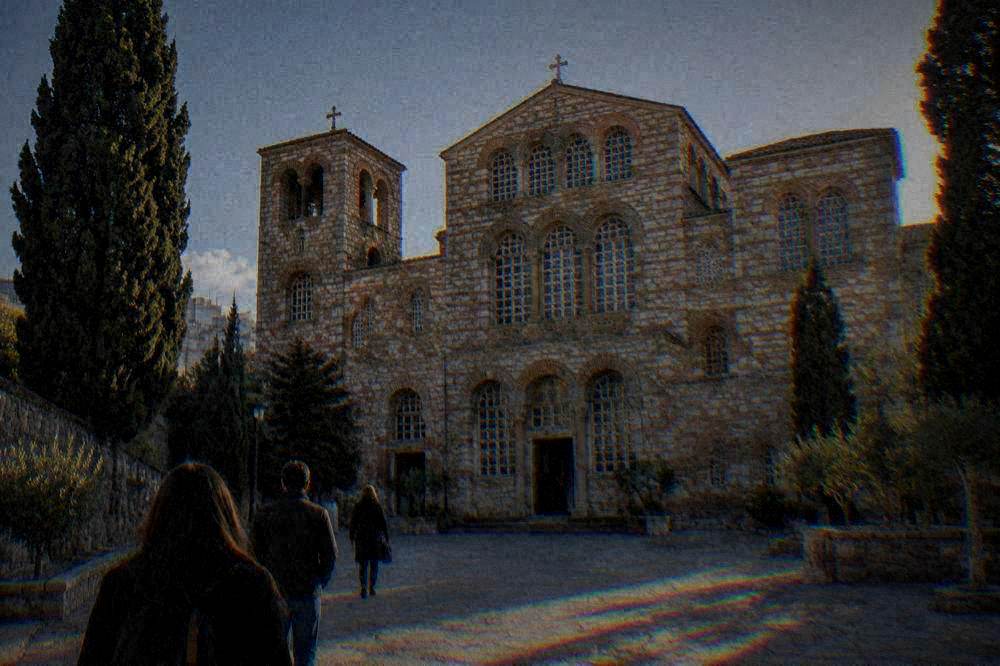
The layer is best read church by church. The Church of Saint Demetrius, the city's patron saint, and Hagia Sophia were both damaged in the Great Fire of 1917 and restored, and both appear on the municipal history pages in exactly that context. Panagia Acheiropoietos, Hosios David and the Vlatadon Monastery extend the set into the upper town. Working churches are free to enter and open outside service times, with no fixed published hours, so treat a visit as a quiet drop-in rather than a ticketed stop. The full set is walked in the Byzantine churches of Thessaloniki.
The two museums that interpret this layer, the Museum of Byzantine Culture and the Archaeological Museum, have published hours and 2026 prices worth knowing before you plan museum days.
| Museum | 2026 admission | Hours in brief |
|---|---|---|
| White Tower | 8 EUR full, 4 reduced | Summer daily 08:00 to 21:00, winter 08:30 to 15:30 |
| Archaeological Museum | 10 EUR full, 5 reduced | 09:00 to 17:00, closed Tuesday from 1 November to 31 March |
| Museum of Byzantine Culture | 10 EUR full, 5 reduced | Summer daily 08:00 to 20:00, winter Mon and Wed to Sun 08:30 to 15:30 |
State museums are free on 6 March, 18 April, 18 May, the last weekend of September and 28 October, and free for EU citizens up to 25. More detail sits in Thessaloniki museums.
Layer Four: What Did Ottoman Rule Change From 1430?
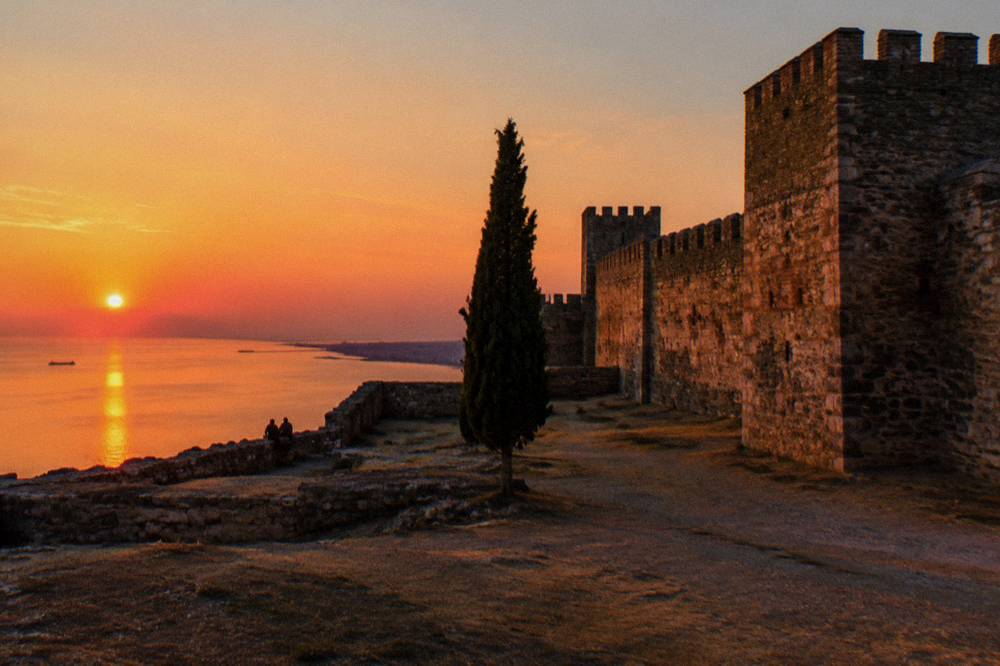
The Ottoman conquest of 1430, reported on the municipality's own history pages, ended seven years of Byzantine control in the city's final chapter as an imperial second city, and close to five hundred years of Ottoman rule followed, during which the White Tower, the Heptapyrgion fortress and the Bey Hamam bathhouse were built and the Ladadika district took its present low brick form. The city was liberated on 26 October 1912, the date the surrender protocol was signed, and that date is now the city's public holiday, shared with the feast of Saint Demetrius.
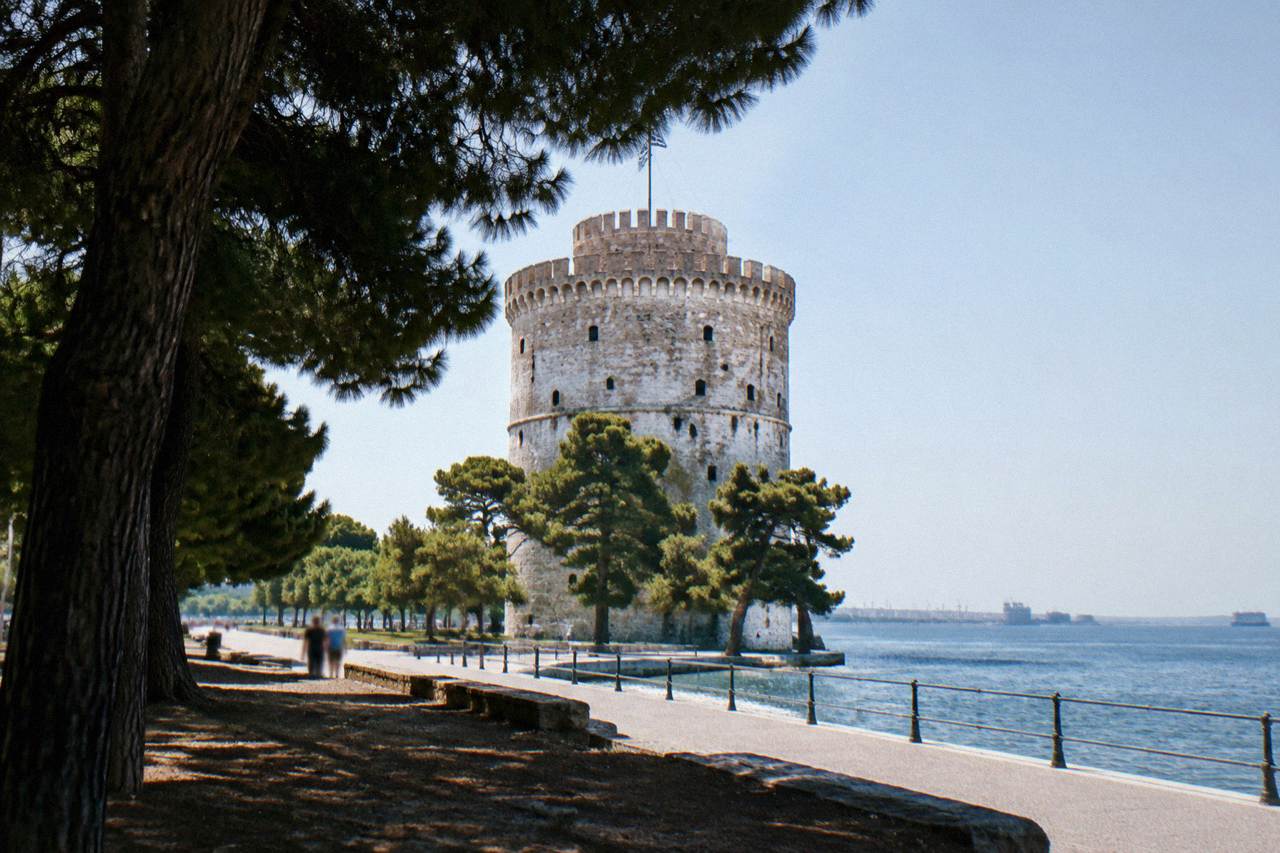
Two Ottoman buildings carry the layer. The White Tower, the seafront landmark, was built as part of late 15th-century Ottoman fortification work on an earlier Byzantine tower, and the municipality's own walk guide records that it was whitewashed in 1890, when it shed its prison past and its older name. The Heptapyrgion fortress at the top of the walls was used as a prison from the late 19th century until 1989, a detail stated on the culture ministry's own site, which means the upper town's most atmospheric ruin was a working prison within living memory. Bey Hamam, the oldest Ottoman bathhouse structure in the city, survives as an exhibition space.
Layer Five: How Did Sephardic Jews Shape Thessaloniki?
Sephardic Jews arriving after the expulsion from Spain in 1492, reported on the municipal history pages, turned Thessaloniki into a predominantly Jewish Ottoman port city whose commercial life ran through the markets and the sea trade, and the city's modern market fabric, including Modiano Market and Kapani Market, grew around that mercantile world. The municipality's history pages record the arrival after 1492 without publishing a pre-war population share, and this guide states nothing beyond that.
The layer's honest summary is that its fabric was largely destroyed by the deportations of 1943 and its memory is actively maintained. The jewish-museum and the jewish-thessaloniki guide cover the sites, memorials and cemetery monument in detail. The deeper history of the community, its destruction in 1943 and where its story is told today belongs to that page, and this one only marks the layer.
For context on the markets the era produced, see what to eat in Thessaloniki.
Layer Six: Why Is 26 October 1912 A Double Date In Thessaloniki?
The Greek army entered Thessaloniki on 26 October 1912, when the Ottoman commander signed the protocol of surrender and the city passed to Greece during the First Balkan War, and because 26 October is also the feast day of Saint Demetrius, the city's patron, the liberation anniversary and the saint's day are celebrated together each year. The municipality's own page on the 26th of October states the surrender protocol plainly, and the date is the hinge between the Ottoman layers and the modern Greek city.
The transition was not smooth. The Great Fire of 18 August 1917, reported on the municipal history pages with the exact date, destroyed the centre and left 73,000 people homeless, a figure the municipality itself publishes. The rebuild followed the Hebrard plan, and Aristotelous Square as it stands today, with its coherent colonnaded frontage opening to the sea, is that plan's signature result. So the city's most famous square is simultaneously the product of a catastrophe, and its uniformity is why the older, jumbled fabric survives only in Ano Poli and Ladadika.
| Date | Event | Source |
|---|---|---|
| 315 BC | Cassander founds the city | Municipal history pages |
| 1430 | Ottoman conquest | Municipal pages, reported |
| 26 October 1912 | Liberation, surrender protocol signed | Municipal history pages |
| 18 August 1917 | Great Fire, 73,000 homeless | Municipal pages, reported date |
| 1943 | Deportations begin, about 46,000 deported | Municipal pages, reported |
| 20 June 1978 | Earthquake, 49 dead, reported | Municipal pages, reported |
| 1988 | UNESCO inscription, fifteen monuments | Municipality and World Heritage list |
| November 2024 | Metro Line 1 opens | Thessaloniki Metro |
Layer Seven: What Is Apostle Paul's Connection To Thessaloniki?
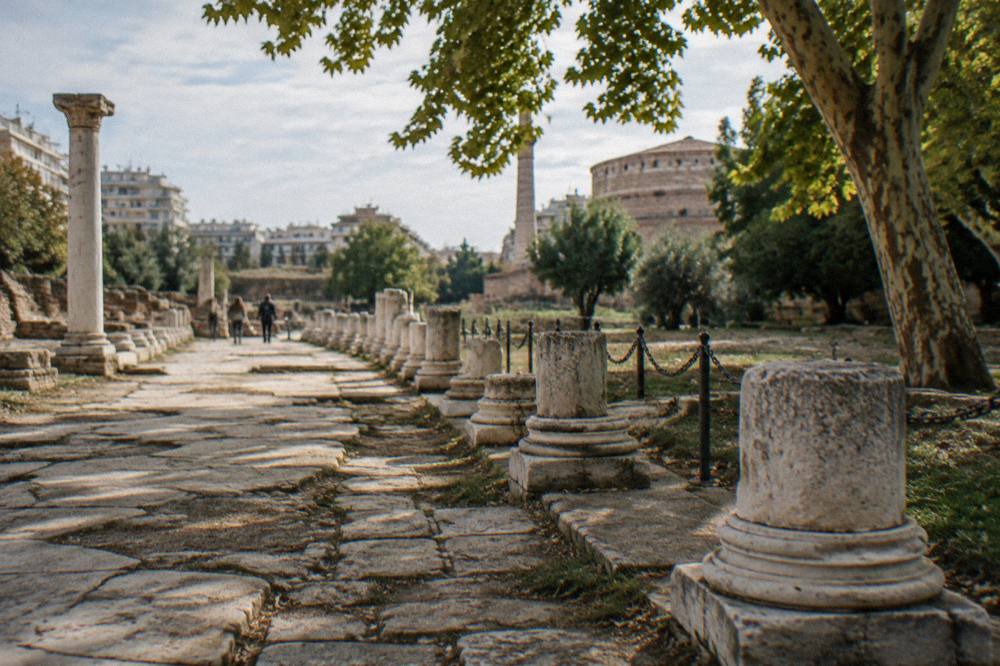
Apostle Paul preached in Thessaloniki on his second missionary journey, addressing the city's Jewish and Greek communities, and two New Testament letters to the Thessalonians are addressed to the congregation that formed here, making the city one of the earliest documented Christian communities in Europe. The number of his visits and the exact dates of the letters are not established with certainty, so this page states the connection in those general terms only.
The physical anchor of the layer is modest and easy to miss: the site associated with the ancient synagogue and the Roman-era city Paul would have known sits within walking distance of the Galerian remains, and the Rotunda and the Via Egnatia route mark the streets of that era. A themed walking tour of Paul's story, which the Thessaloniki Apostle Paul's Story Walking Tour covers, links these points with the biblical narrative. Check availability. The site's longer treatment of the subject is Thessaloniki in the Bible.
Layer Eight: What Did The Deportations Of 1943 Take From Thessaloniki?
About 46,000 Jews were deported from Thessaloniki in 1943, beginning with the first train in March 1943, according to the municipality's own Holocaust history pages, and the destruction of a community that had shaped the city for four and a half centuries hollowed out districts, trades and markets that never refilled. The municipal page records the first train date and the total, and the restrained phrasing is deliberate: this layer is documented, and the sites that commemorate it are listed in the Jewish heritage guide.
The material to visit is specific. The Jewish Museum, the railway station from which the trains departed, and the memorial at the old cemetery ground are the three anchors, and the Jewish Thessaloniki guide walks them in order. A private heritage experience, the Thessaloniki Jewish Heritage private experience, covers the same ground with a guide. Check availability.
Layer Nine: What Did 1978 And 1997 Do For Thessaloniki?
An earthquake struck Thessaloniki on 20 June 1978, reported at 6.5 Richter with 49 dead on the municipal history pages, damaging churches and buildings across the centre and prompting years of restoration that reshaped the old town, and in 1997 the city served as European Capital of Culture, a milestone the municipality credits with launching its modern cultural infrastructure, including the museum and festival network visitors use today. Both dates are on the municipality's own history page.
The 1978 quake is the reason several Byzantine monuments look freshly consolidated, and the Hagia Sophia and Church of Saint Demetrius restorations belong to the broader repair era that followed the fire damage of 1917 and the quake damage of 1978. The 1997 year, meanwhile, left the Thessaloniki Concert Hall and museum expansions that anchor today's cultural calendar, including the film festival each November and the International Fair each September.
Layer Ten: What Has The Metro Added Since November 2024?
Thessaloniki's metro Line 1 opened in November 2024 after construction that began in 2006, and the Kalamaria extension, inaugurated on 27 August 2026 with five new stations, added almost 5 kilometres of line, with the government figures reporting about 15 minutes from Mikra to the centre and roughly 63,000 passengers a day on the extension. The Thessaloniki Metro's own pages carry the opening statements, the hours, 05:15 to 00:30 Sunday to Thursday and 05:15 to 02:00 Friday and Saturday, and the fares, a 0.60 EUR basic ticket and a 2.50 EUR daily ticket.
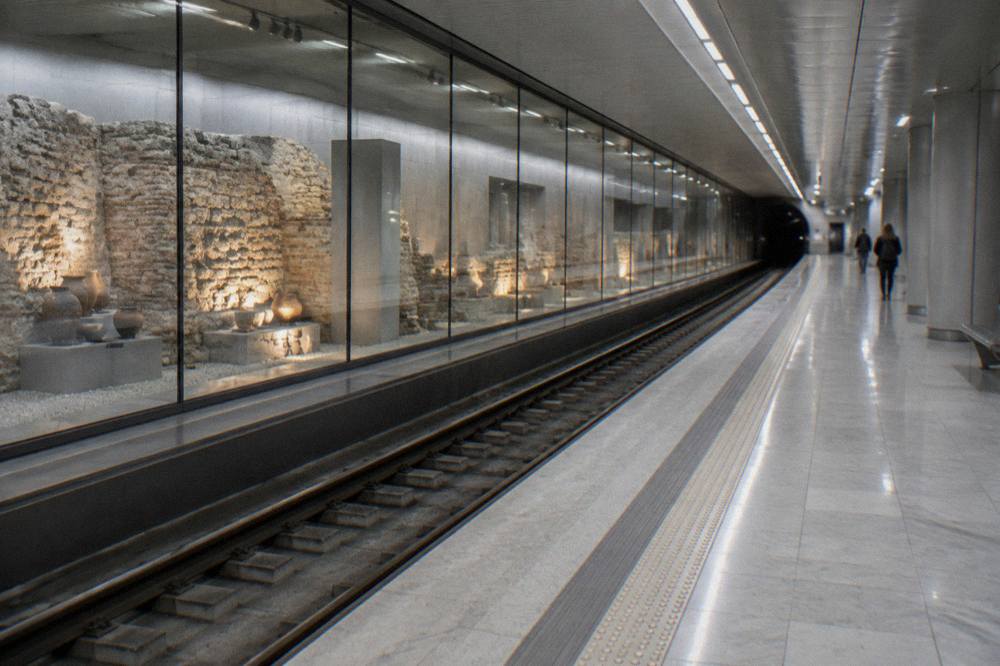
The layer has a historical twist that belongs on this page: digging the line uncovered a Roman-era city beneath the modern one, and the finds are now reported to fill a new archaeology museum at Pavlos Melas, opened with hours of 08:30 to 15:30 except Tuesdays. The metro is therefore the only layer on this list that created another layer while being built. Planning detail, stations and ticketing are covered in Thessaloniki metro.
How Can You See Thessaloniki History On The Ground In One Trip?
The whole ten-layer story can be walked in two or three days: day one covers the Roman and Byzantine core between the Rotunda, the Arch of Galerius, the Church of Saint Demetrius and the White Tower, day two climbs to Ano Poli for the walls and the Heptapyrgion, and day three goes out to Vergina or Pella for the Macedonian royal layer that predates the city itself, both reachable in under an hour by road. Drive times from Aristotelous Square, computed over OSM routing in free-flow conditions, put Pella at about 43 minutes and Vergina at about 62.
The day trips matter because the city's founding story runs through the Argead world around it. Vergina holds the Museum of the Royal Tombs of Aigai, Pella the archaeological site and museum of the Macedonian capital, and both are covered in dedicated guides. Distances below are computed free-flow times, so allow more in traffic.
| Historical day trip | Distance from Aristotelous Square | Drive time, free-flow |
|---|---|---|
| Pella, Macedonian capital | 45.7 km | about 43 minutes |
| Vergina, royal tombs of Aigai | 68.0 km | about 62 minutes |
| Dion, ancient park below Olympus | 90.1 km | about 67 minutes |
| Philippi, Roman colony | 156.3 km | about 127 minutes |
| Kavala, ancient Neapolis | 154.6 km | about 118 minutes |
| Meteora, monasteries at Kalambaka | 227.5 km | about 154 minutes |
Timing matters less than you might expect: the HNMS Thessaloniki Mikra station record, 1959 to 2010, shows mean highs from 9.3 C in January to 31.7 C in July, and December carries the highest monthly rainfall at 55.1 mm, so the shoulder months are the comfortable walking season, a comparison developed in the best time to visit Thessaloniki.
A closing note on method. Every date in this guide comes from the municipality's own history pages, the Thessaloniki Metro's site, or the museum visiting pages, and reported figures carry that word. The layers are permanent, the opening hours are not.
Common Questions About Thessaloniki History
How old is Thessaloniki?
Thessaloniki was founded in 315 BC by Cassander, king of Macedon, and named after his wife Thessalonike, making it well over two thousand years old as a continuously occupied city.
Who founded Thessaloniki and why?
Cassander founded the city in 315 BC, consolidating the towns of the Thermaic Gulf into one fortified port and naming it for his wife Thessalonike, a half-sister of Alexander the Great.
What happened in the Thessaloniki fire of 1917?
The Great Fire of 18 August 1917 destroyed the city centre and left 73,000 people homeless, and the rebuild followed the Hebrard plan that gave Aristotelous Square its present form.
Why does Thessaloniki have UNESCO monuments?
The Paleochristian and Byzantine Monuments of Thessaloniki, fifteen individual monuments, were inscribed on the UNESCO World Heritage List in 1988 for their artistic achievement and their witness to cultural exchange between Byzantium and the West.
Is Thessaloniki older than Athens?
No stated comparison belongs on this page. Athens has documented prehistoric settlement; Thessaloniki's documented founding is 315 BC.