Byzantine Churches Of Thessaloniki: The UNESCO Route
Thessaloniki holds fifteen Paleochristian and Byzantine monuments on the UNESCO World Heritage List, inscribed in 1988, and the working churches among them are free to enter. This guide lays out the route, church by church.
Short answer
Thessaloniki has fifteen UNESCO-listed Paleochristian and Byzantine monuments, inscribed in 1988. The working churches, including the Church of Saint Demetrius, Hagia Sophia, Panagia Acheiropoietos, Hosios David and Vlatadon Monastery, are free to enter and open outside services. The core of the route sits inside the Ano Poli and the city centre and can be walked in a day.
Thessaloniki, the second city of Greece, sits on the Thermaic Gulf in Central Macedonia, and its churches are the reason UNESCO came calling in 1988. The listing, "Paleochristian and Byzantine Monuments of Thessaloniki", covers fifteen monuments, from the Church of Saint Demetrius down through the upper town to the walls themselves. The city was founded in 315 BC by Cassander and named for his wife Thessalonike, a daughter of Philip II, and by the Middle Byzantine centuries it had become one of the empire's great church-building centres after Constantinople. The churches below are working places of worship, free to enter and open outside service times, and the route that links them is one of the rewarding walks in Greece, climbing from the seafront to the walls of Ano Poli.
Why Are Thessaloniki's Byzantine Churches On The UNESCO List?
Thessaloniki's Paleochristian and Byzantine monuments were inscribed on the UNESCO World Heritage List in 1988, and the listing covers fifteen individual monuments rather than a single building, spanning the city's early Christian and Middle Byzantine centuries in one compact urban setting. UNESCO cites the city as second in importance to Constantinople itself across those centuries, and the fifteen components run from large pilgrimage churches such as the Church of Saint Demetrius to small chapels, the Rotunda, the Vlatadon Monastery and stretches of the city walls. The density is what makes the route work: a traveller can stand inside five listed churches inside a couple of hours on foot.
The city's role explains the density. Founded 315 BC, rebuilt after fires and earthquakes, and the seat of an archbishop, Thessaloniki attracted imperial patronage across centuries when church building was the main form of civic prestige. The Ottoman conquest in 1430 ended that phase, but conversion and reuse, mosques in some cases, warehouses in others, ironically preserved fabrics that might otherwise have been rebuilt out of existence.
The 1917 Great Fire damaged Hagia Sophia and the Church of Saint Demetrius, and the 1978 earthquake tested them again. Restoration followed each disaster, and the mosaics that survived are the core of what visitors come to see.
What Are The Fifteen UNESCO Monuments In Thessaloniki?
The fifteen monuments are a mix of churches, the Rotunda, a monastery and the walls: the Church of Saint Demetrius, Hagia Sophia, Panagia Acheiropoietos, the Church of the Prophet Elijah, Hosios David, the Church of Saint Nicholas Orfanos, the Rotunda, the Vlatadon Monastery, the Church of the Acheiropoietos neighbour Panagia Chalkeon, the Church of Saint Panteleimon, the Church of the Holy Apostles, the Church of Saint Catherine, the Church of Christ the Saviour, the Church of the Nativity of the Theotokos and the city walls with the Heptapyrgion. Several sit within a few minutes' walk of one another, which is why this route works on foot. Not all are equally visited: the big three for church visitors are Saint Demetrius, Hagia Sophia and the Acheiropoietos, with Hosios David and Vlatadon drawing the walkers who push up into Ano Poli.
The list above groups them by geography, roughly centre then upper town. The Rotunda and the Arch of Galerius belong to the Roman Galerian complex at the other end of the centre, and the walls crown the hill. A visitor with one full day can cover the centre in the morning and the upper town after lunch.
| Monument | Area | Type | What stands out |
|---|---|---|---|
| Church of Saint Demetrius | City centre | Pilgrimage church | Crypt and the saint's shrine, damaged in the 1917 fire |
| Hagia Sophia | City centre | Cross-in-square church | Dome and mosaics, also damaged in 1917 |
| Panagia Acheiropoietos | City centre | Basilica | Early Christian colonnades |
| Church of the Prophet Elijah | Ano Poli | Church | Upper-town silhouette above the lanes |
| Hosios David | Ano Poli | Chapel | Mosaic in the conch |
| Church of Saint Nicholas Orfanos | Ano Poli | Chapel | Wall paintings |
| Vlatadon Monastery | Ano Poli | Monastery | Highest point of the church route, inside the walls |
| Rotunda | Galerian complex | Roman monument | Massive brick cylinder near the Arch of Galerius |
| City walls and Heptapyrgion | Ano Poli | Fortification | About 4 km visible of the original about 8 km |
Working churches are free to enter and open outside services; no opening hours or crypt hours are published, so plan around service times and confirm locally on the day. For the fuller sightseeing picture, the site's things to do in Thessaloniki page sets the churches in context.
A guided walk is the efficient way to absorb this much history in one pass, and a local guide also solves the orientation problem in Ano Poli, where the lanes twist. The Best of Thessaloniki tour covers the city highlights with a local, and you can Check availability for your dates.
How Do You Walk The Church Route In One Day?
Start at the Church of Saint Demetrius in the morning, walk north to Hagia Sophia and Panagia Acheiropoietos before noon, then climb into Ano Poli for Hosios David, the Church of Saint Nicholas Orfanos and the Vlatadon Monastery, finishing at the walls and the Heptapyrgion for the view. The centre-to-walls walk covers the heart of the UNESCO route without transport, and the climb, steady rather than severe, is the only real effort. Coming down, the Trigoniou Tower end of the walls drops you back toward the centre through the upper-town lanes.
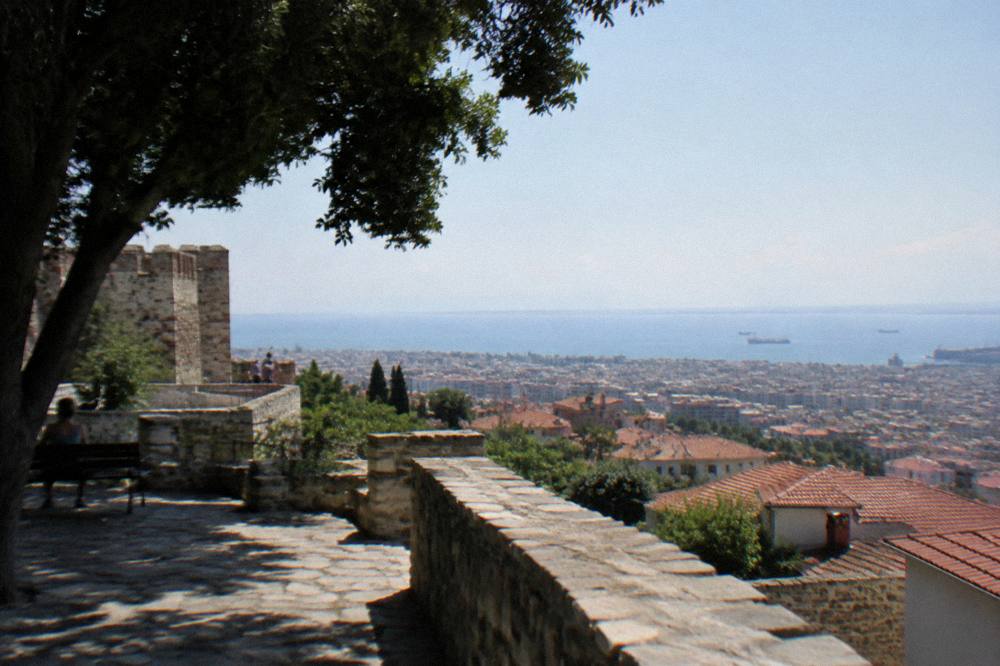
Morning light favours the centre churches, and their interiors are dim by design, lit from the domes and clerestories. Afternoons suit the upper town, where the reward is the panorama over the Thermaic Gulf and, on clear days, the distant shape of Mount Olympus across the water.
Two practical notes. First, these are working churches: modest dress is expected, and services take priority over sightseeing. Second, hours are not published anywhere this site can point to, so treat each stop as confirm-on-arrival rather than scheduled.
| Stage | Stops | Ground covered | Notes |
|---|---|---|---|
| Morning, centre | Saint Demetrius, Hagia Sophia, Acheiropoietos | Flat, central streets | All within a short walk of Aristotelous Square |
| Midday | Rotunda and Arch of Galerius | East end of the centre | Open-air arch is free to view on Egnatia |
| Afternoon, Ano Poli | Hosios David, Saint Nicholas Orfanos, Vlatadon | Uphill lanes | Steady climb, stone streets |
| Finish | Walls, Heptapyrgion, Trigoniou Tower | Ridge of the upper town | View over the gulf and the city |
The Trigoniou Tower page covers the walls' best-known bastion in detail. For the descent, use the wall path rather than retracing your steps, and the lanes will bring you back toward the centre on their own.
For visitors with an extra half day, the Museum of Byzantine Culture, covered in the Thessaloniki museums guide, holds the artifacts that go with these buildings. Per the museum's own visiting page it is 10 euro full and 5 euro reduced, daily 08:00 to 20:00 in summer and Monday, Wednesday to Sunday 08:30 to 15:30 in winter.
What Should You Know About The Church Of Saint Demetrius?
The Church of Saint Demetrius is the city's patron church and the anchor of the UNESCO route: a five-aisled basilica built over a Roman bath complex where the saint was martyred, with a crypt that became one of the Byzantine world's major pilgrimage sites. It was damaged in the Great Fire of 1917 and restored afterwards, and it functions today as the cathedral church of the city, free to enter and open outside services. The crypt level sits below the church floor and is the part visitors remember.
Saint Demetrius day falls on 26 October, the same date the city marks its liberation in 1912, when the protocol of surrender was signed and Greek soldiers entered the city that night. The coincidence makes late October a layered time to stand in this church: the religious feast and the civic anniversary share a date.
No crypt hours are published, so confirm on arrival. The church sits a few minutes' walk north of Aristotelous Square, at the edge of the Roman Agora remains.
What Makes Hagia Sophia In Thessaloniki Distinctive?
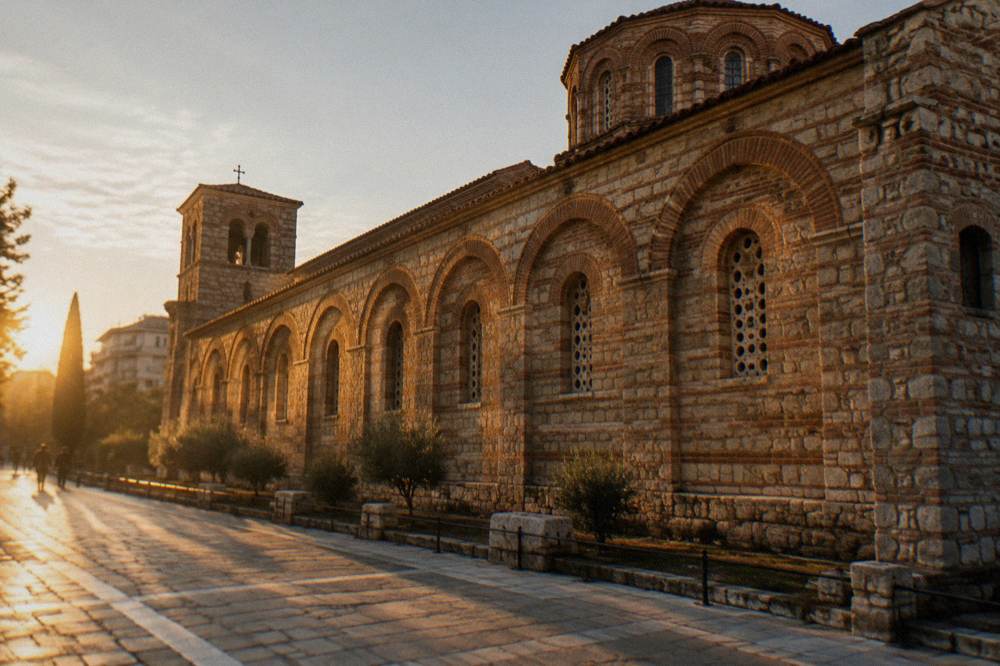
Hagia Sophia in Thessaloniki is a Middle Byzantine cross-in-square church with a dome, named for the great church of Constantinople, damaged in the 1917 fire and later restored, and its interior mosaics are among the surviving treasures of the city's Byzantine centuries. Unlike its Constantinople namesake it is compact, and its plan marks the shift from the long basilicas of the early Christian centuries to the domed cross-in-square type that defined Middle Byzantine architecture.
The church stands above the seafront end of the centre, a short walk down from the Plateia, close to the route between Aristotelous Square and the Nea Paralia promenade. The combination makes it an easy pairing: a Byzantine interior in the morning, the seafront promenade, a walk, not a swimming beach, afterwards. More of these guides are collected on Thessaloniki Travel Guide.
What Are Panagia Acheiropoietos, Hosios David And The Ano Poli Churches?
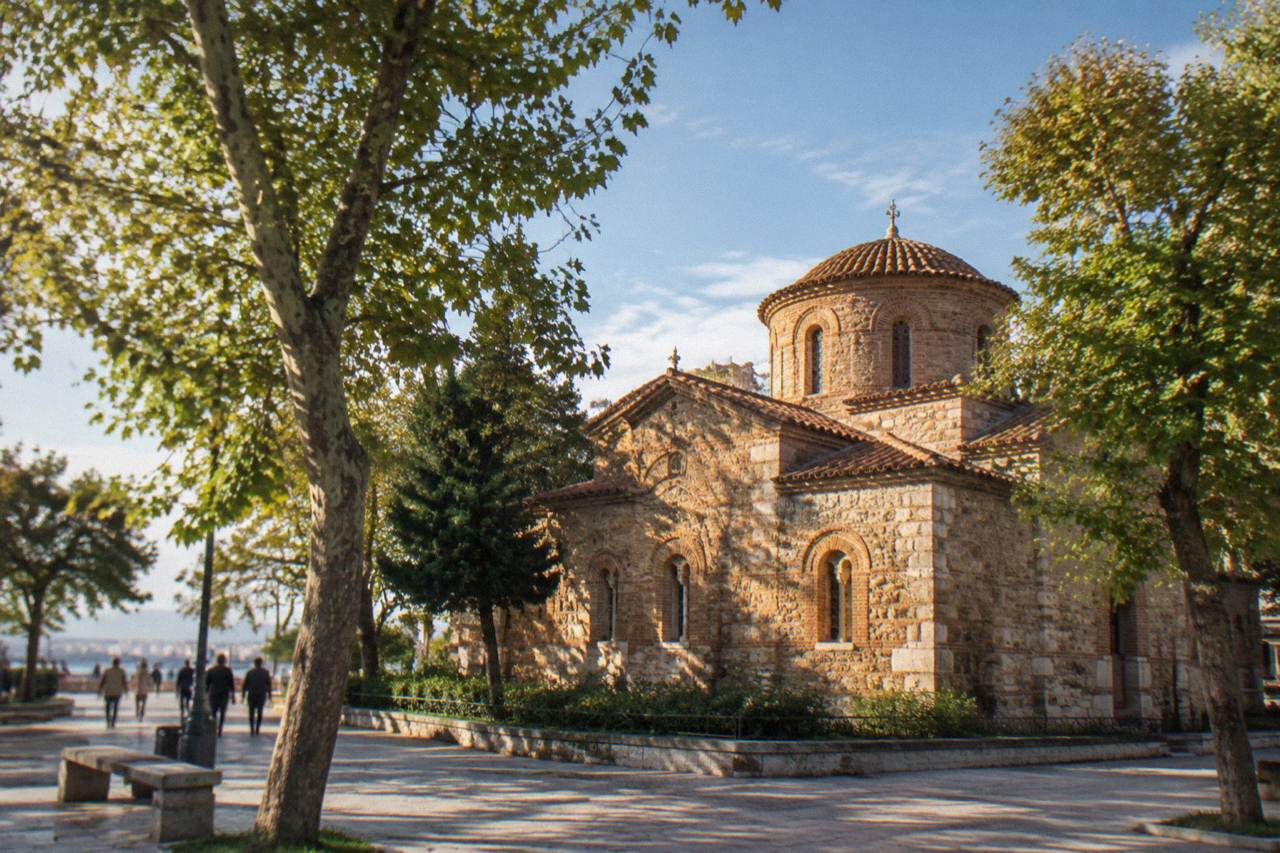
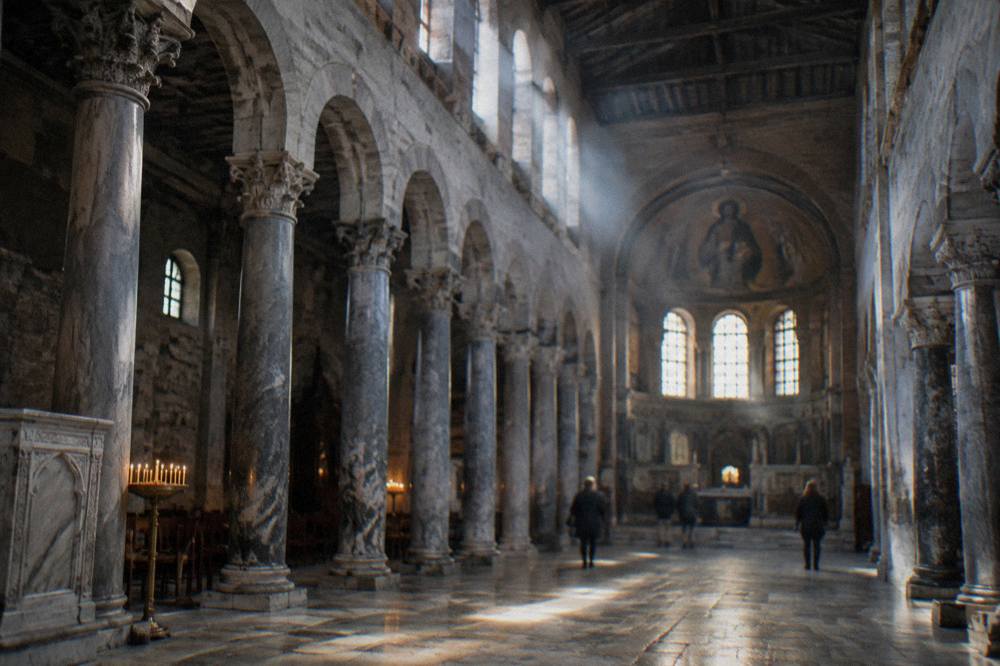
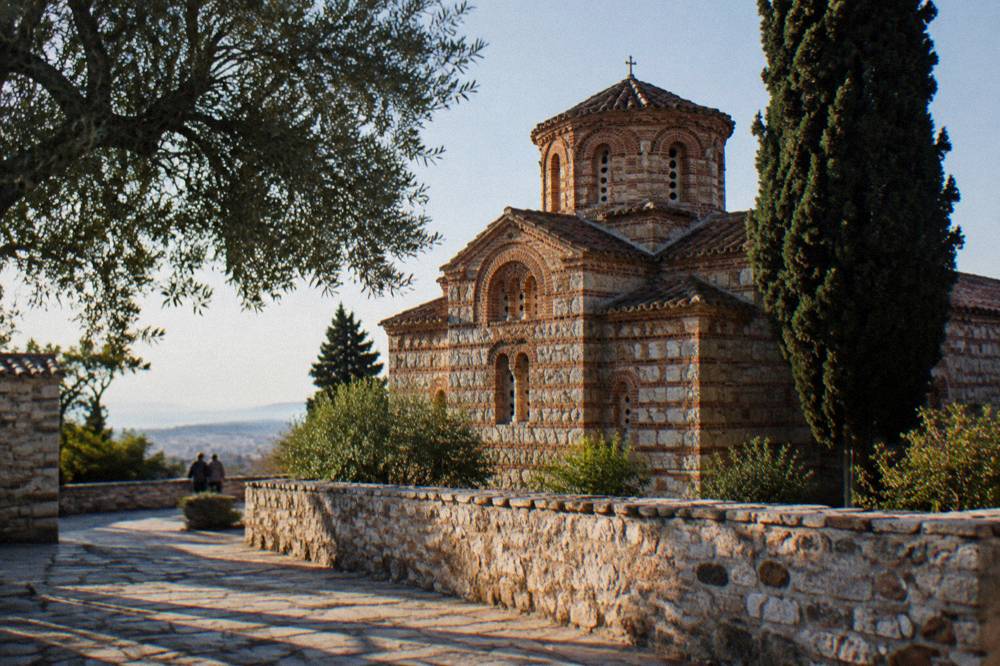
Panagia Acheiropoietos is an early Christian basilica in the centre, while Hosios David, the Church of Saint Nicholas Orfanos and the Vlatadon Monastery sit up in Ano Poli, where the UNESCO route climbs into the old upper town inside the Byzantine walls. The Acheiropoietos keeps its colonnaded basilica interior largely intact; Hosios David, small and easy to miss, holds a celebrated mosaic in its sanctuary conch; Saint Nicholas Orfanos carries extensive wall paintings; and Vlatadon, a working monastery high on the ridge, is the last church stop before the walls themselves.
The name Acheiropoietos refers to an icon "not made by hands", and the church is one of the clearest reads of early basilica architecture on the route. Walking it before the domed Hagia Sophia gives the full arc of Byzantine building practice in a single afternoon.
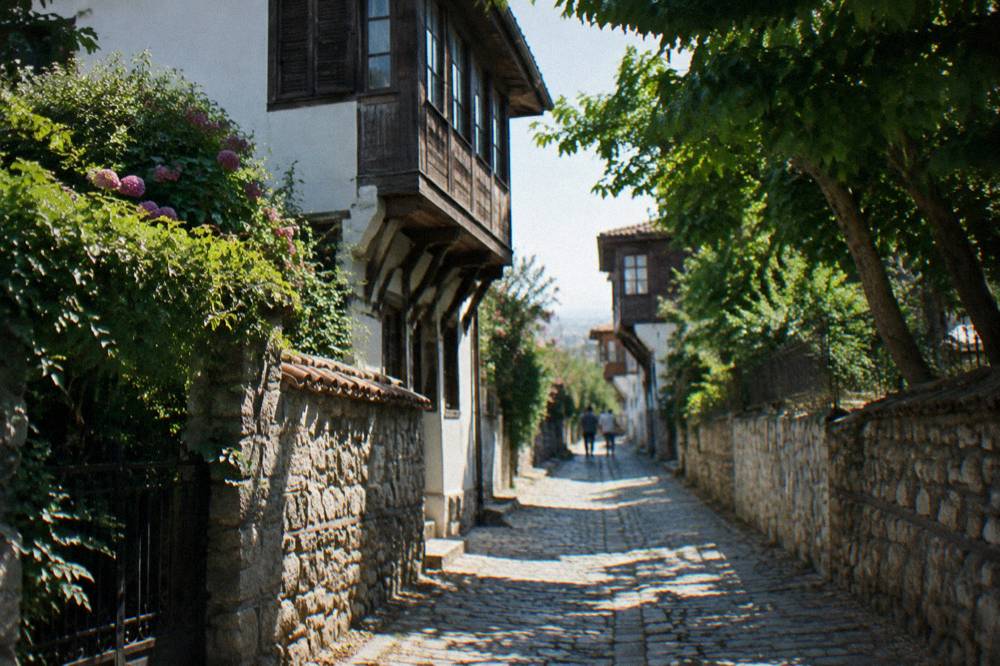
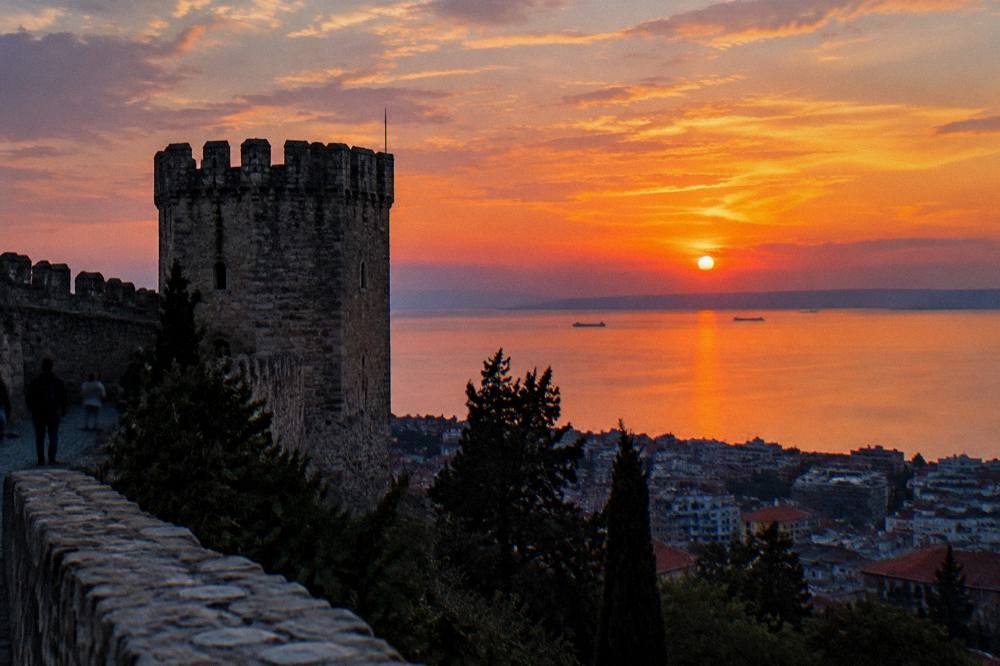
Ano Poli is the neighbourhood that holds the upper stretch: Ottoman-era houses, stone streets, and the walls running along the ridge, about 4 km visible of the roughly 8 km the circuit once ran. The Heptapyrgion fortress at its top was used as a prison until 1989 and is now part of the monumental landscape visitors walk through.
| Church | Area | Type of building | Known for |
|---|---|---|---|
| Panagia Acheiropoietos | Centre | Early Christian basilica | Colonnaded interior, name from an icon tradition |
| Hosios David | Ano Poli | Small chapel | Mosaic in the sanctuary conch |
| Church of Saint Nicholas Orfanos | Ano Poli | Chapel | Extensive wall paintings |
| Vlatadon Monastery | Ano Poli | Monastery | Setting inside the walls, gulf views |
What Role Do The Rotunda And The Galerian Complex Play?
The Rotunda is the massive Roman brick cylinder built as part of the Galerian complex, later used as a church and then a mosque, and it belongs to the UNESCO listing as the pre-Christian starting point of the city's monumental religious architecture. It stands a short walk east of the centre, paired with the Arch of Galerius on Egnatia, an open-air street monument that is free to view at any hour. The Palace of Galerius lies nearby, completing the complex.
The Rotunda's later history is the reason it sits on a churches route: a Roman building repurposed by Christians, then by Ottomans, its layers record every regime the city has had. Its original purpose beyond its place in the Galerian scheme is not stated, and its ticket price is likewise unstated, so check the current price on the official ticket page before visiting.
Walking from Hagia Sophia to the Rotunda passes the Arch of Galerius, whose sculpted panels survive on the street. The stretch is flat and short, and it slots neatly between the centre churches and lunch.
A different way to see the city's layers is from above: the OTE Tower rotating experience pairs a slow rotation with a light meal and a view across the whole UNESCO core, from the Rotunda to the walls.
When Is The Best Time Of Year For The Church Route?
Late spring and early autumn give the most comfortable walking conditions for a route that includes the Ano Poli climb: the HNMS Thessaloniki Mikra station record, 1959 to 2010, shows May mean highs of 24.6 C and September highs of 27.1 C, against 31.7 C in July, and the church interiors stay cool in any season. Winter works too, with January mean highs of 9.3 C, but December carries the heaviest monthly rainfall in the station record at 55.1 mm, against 19.3 mm in August, the lightest.
The route's indoor nature is its strength: churches are roofed, dim and cool, so a hot afternoon in the upper town is the only stretch where the calendar really matters. Morning starts dodge both heat and, in the colder months, the shorter days.
For the fuller picture, the site's best time to visit Thessaloniki and Thessaloniki weather pages break the year down month by month.
| Month | Mean high C | Mean low C | Rain mm |
|---|---|---|---|
| April | 19.1 | 7.9 | 36.1 |
| May | 24.6 | 12.6 | 44.2 |
| June | 29.4 | 17.0 | 29.8 |
| July | 31.7 | 19.3 | 23.8 |
| September | 27.1 | 15.4 | 29.8 |
| October | 21.2 | 11.3 | 43.0 |
Figures are HNMS Thessaloniki Mikra station, 1959 to 2010, the weather-station record for the city.
How Do The Churches Fit Into A Longer Thessaloniki Stay?
The church route fills one full day comfortably, and a second day can absorb the Museum of Byzantine Culture, the White Tower and the Roman sights, leaving the third and later days for day trips such as Vergina, Pella or Meteora, all of which connect to the same story of Macedonia's early Christian centuries. Thessaloniki rewards this stacking: the churches explain the empire, the museums hold its objects, and the day trips reach its hinterland.
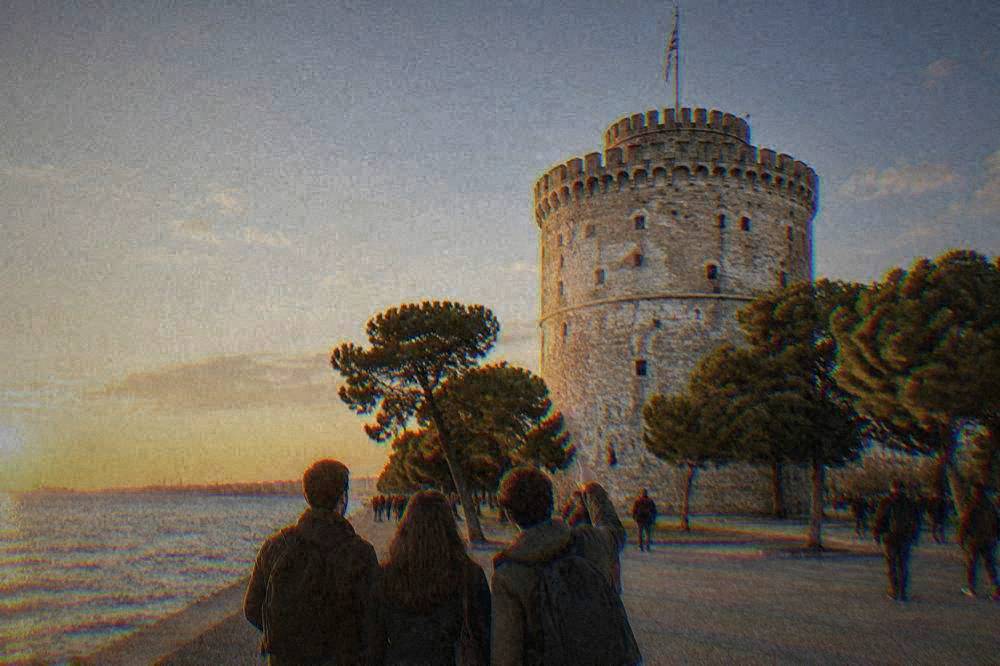
Within the city, the Museum of Byzantine Culture pairing is not the only neighbour: the White Tower, 8 euro full and 4 euro reduced since 1 April 2026 per the Museum of Byzantine Culture's visiting page, anchors the seafront end, and the Nea Paralia promenade links the sights along the water.
For trips out, the site's Veria and Kastoria pages cover two of the Byzantine-hinterland options, and where to stay in Thessaloniki helps with basing near the route.
Food belongs on the itinerary as much as stone: the church route passes straight through the eating heart of the centre, and the what to eat in Thessaloniki guide covers the city's famous snacks, including bougatsa, a cream or cheese pie that the city treats as a institution of its mornings.
What Should You Know Before Visiting The Churches?
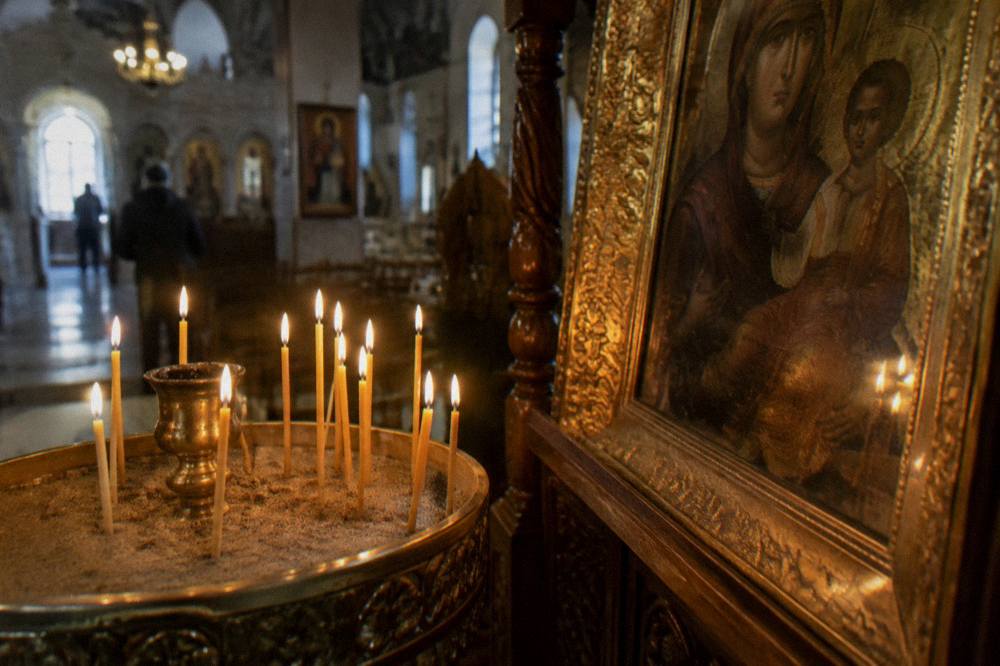
Working churches in Thessaloniki are free to enter, open outside service times, and governed by the ordinary courtesies of Orthodox worship: modest dress, quiet voices and no flash photography, with services taking precedence over visiting, and no church, crypt or hours schedule is published in a form that can be checked ahead, so confirm locally on the day of your visit. The practical rule is to ask at the door or through the city's tourist information presence at Aristotelous Square, and to plan around the Sunday morning liturgy, when sightseeing takes second place.
Three more practical points. The euro is the currency, Greece is in the Schengen area, and the emergency number is 112. The metro, open since November 2024 with the Kalamaria extension inaugurated 27 August 2026, runs 05:15 to 00:30 Sunday to Thursday and 05:15 to 02:00 Friday and Saturday, with a basic ticket at 0.60 euro, useful for reaching the route from farther out; the Thessaloniki metro page has the detail. And the getting around Thessaloniki guide covers the rest of the transport picture, including the airport run described on the airport to city centre page.
| Question | Answer |
|---|---|
| Are the churches free? | Yes, working churches are free to enter |
| Is there a combined church ticket? | No; the churches are places of worship, not ticketed sites |
| Which museums go with the route? | Museum of Byzantine Culture, 10 euro full per its visiting page |
| Is the route walkable? | Yes; the only climb is into Ano Poli |
| Best season | May and September, per the HNMS station record |
For travellers who want the stories behind the stones without a guidebook in hand, the trio below pairs the city walk with two of the site's other experiences, a rotating tower meal and a food walk through the same streets.
The food walk deserves its own word, because the Byzantine route and the eating route share the same streets: the food tastings and drinks tour with a chef moves through the markets and lanes the churches sit among, and check availability if a morning of mosaics should end in a market lunch.
Common Questions About Thessaloniki Churches
How many Byzantine churches does Thessaloniki have?
The UNESCO listing covers fifteen Paleochristian and Byzantine monuments, inscribed in 1988. The city holds further churches beyond the listed fifteen, so fifteen is the only count this site prints.
Are Thessaloniki churches free to enter?
Yes. The working churches on the route, including the Church of Saint Demetrius, Hagia Sophia, Panagia Acheiropoietos, Hosios David and Vlatadon Monastery, are free to enter and open outside services.
What is the most important church in Thessaloniki?
The Church of Saint Demetrius is the city's patron church and the anchor of the UNESCO route, built over the site of the saint's martyrdom, with a crypt that became a major Byzantine pilgrimage destination.
Can you walk between the Byzantine churches of Thessaloniki?
Yes. The centre churches sit within a short walk of one another, and the Ano Poli churches and walls are a steady climb above the centre, so the core route works on foot in a day.
What is the Rotunda's connection to the churches?
The Rotunda was built as part of the Roman Galerian complex and later served as a church, then a mosque. It is part of the same UNESCO listing and marks the pre-Christian start of the city's monumental religious architecture.
When is Saint Demetrius day in Thessaloniki?
26 October, which is also the date the city marks its liberation in 1912, when the protocol of surrender was signed. The feast and the civic anniversary share the day.