Getting Around Thessaloniki: Buses, Taxis And Walking
Thessaloniki runs on a new metro, a dense OASTH bus network and a compact, walkable centre along the Thermaic Gulf.
Short answer
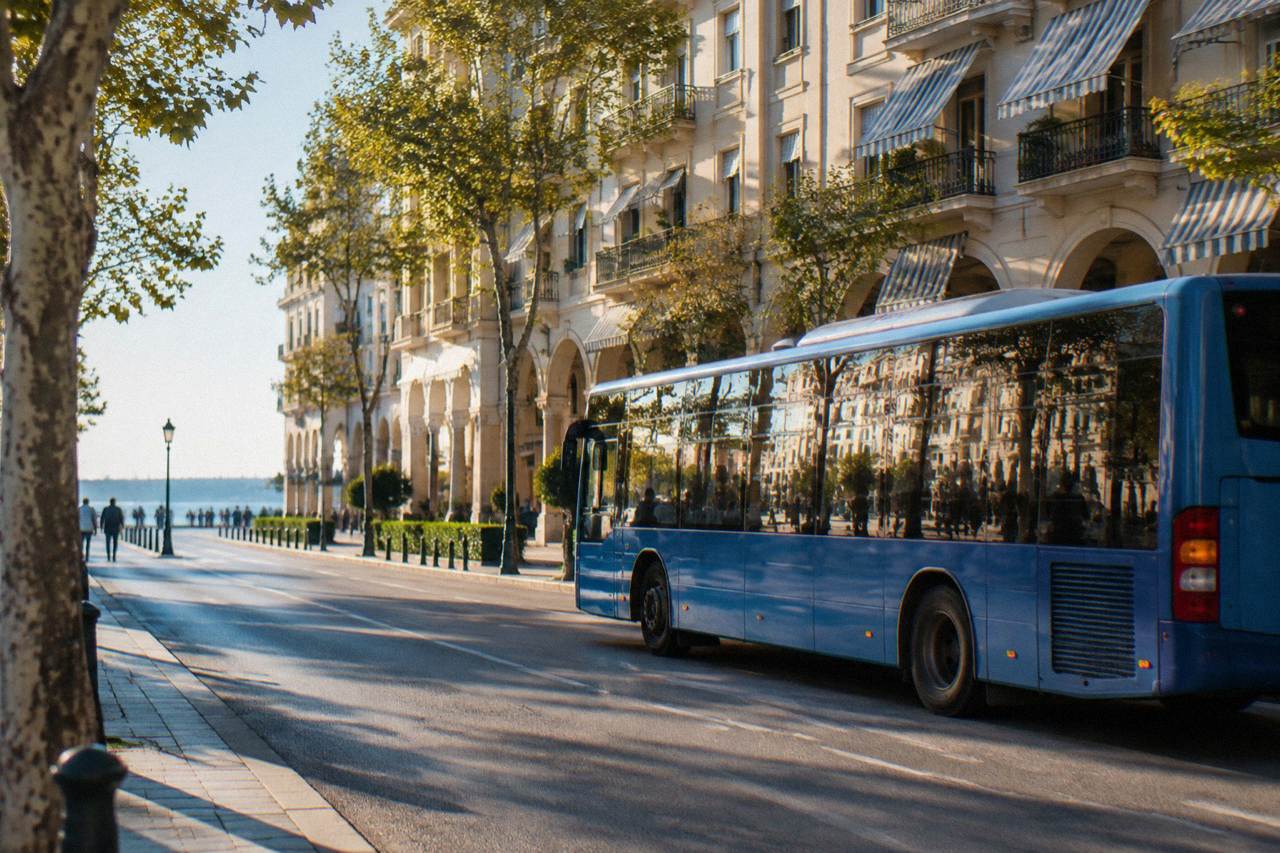
Thessaloniki's centre is compact and walkable, the metro (Line 1, open since November 2024, Kalamaria extension since 27 August 2026) costs 0.60 euro a ride, OASTH buses cover the whole city, and the airport is about 20 minutes out by road.
Thessaloniki, the second city of Greece, sits on the Thermaic Gulf in Central Macedonia, and its transport picture changed for good in November 2024, when the metro opened after decades of waiting. The city centre still folds around Aristotelous Square and the seafront promenade, the Nea Paralia, so a good share of a visit needs no vehicle at all. Beyond that core, the OASTH bus network, the metro's growing line and taxis carry the load, while KTEL intercity coaches and trains reach Halkidiki, Vergina, Pella, Edessa and Meteora.
Is The Thessaloniki Metro Open, And What Does It Cost?
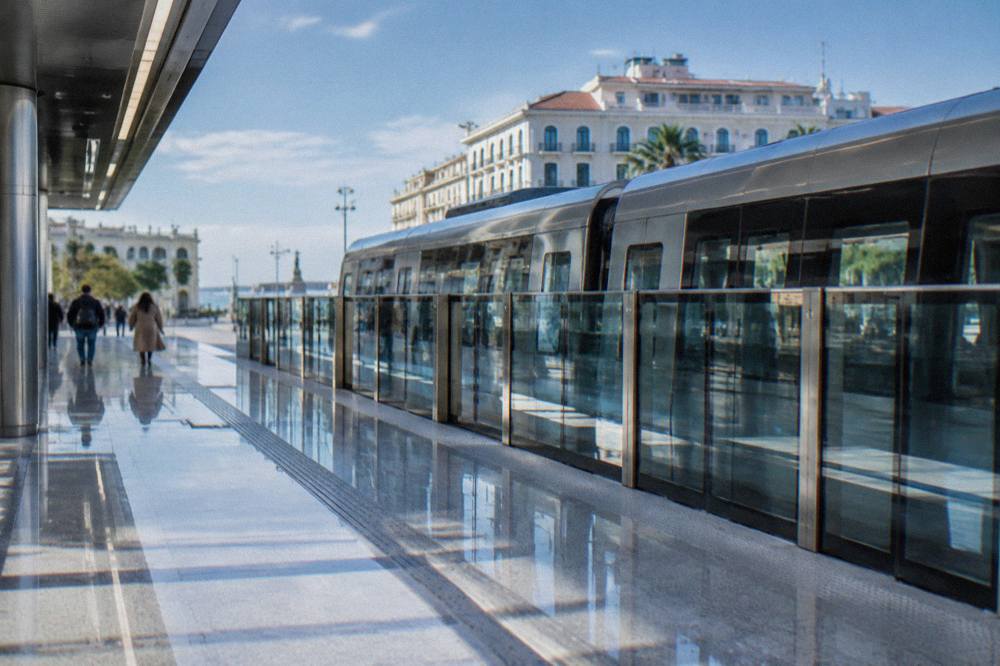
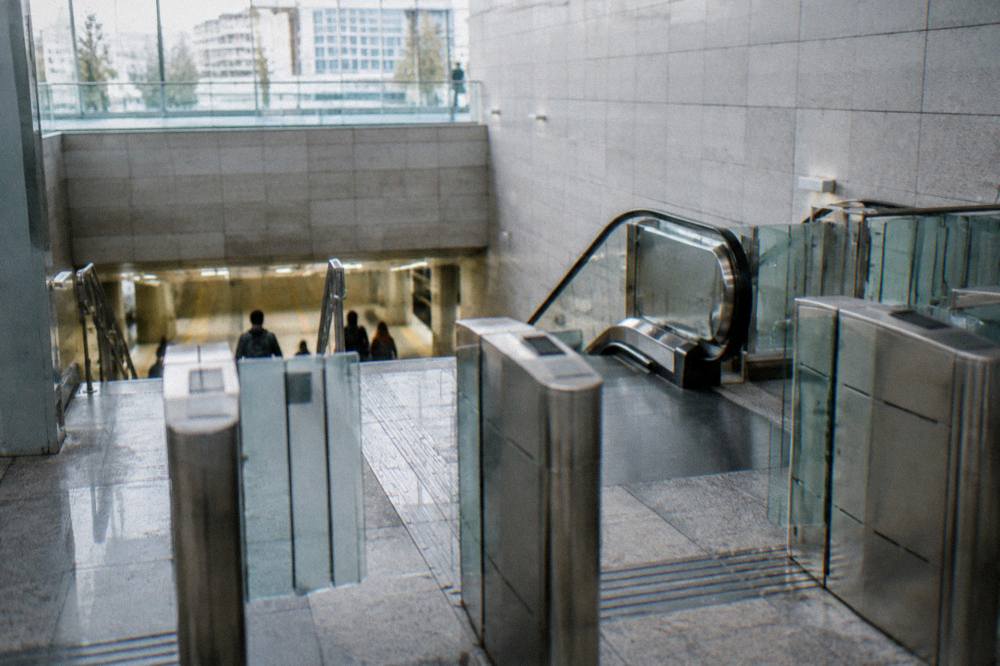
Yes, the Thessaloniki metro is open and running: Line 1 began operating in November 2024, and the Kalamaria extension, adding five more stations out to Mikra, was inaugurated on 27 August 2026. The Thessaloniki Metro's own ticket page lists a basic single ticket at 0.60 euro, a reduced ticket at 0.30 euro and a 24-hour daily ticket at 2.50 euro, so the fare question is settled by the operator itself.
The base line runs from New Railway Station to Nea Elvetia, and the Kalamaria branch adds Nomarchia, Kalamaria, Aretsou, Nea Krini and Mikra. According to the Ministry of Infrastructure and Transportation's press release on the extension, the journey from Mikra to the centre takes about 15 minutes, and the government figure for ridership is 63,000 passengers a day.
Hours come straight from the operator's homepage: 05:15 to 00:30 Sunday to Thursday, and 05:15 to 02:00 on Friday and Saturday, with those times being the first and last departures from the terminals. Anyone who read that the metro was still under construction read an outdated page, a claim that persisted for years because construction did start back in 2006.
| Ticket type | Price | Notes |
|---|---|---|
| Basic single | 0.60 EUR | One journey, per the metro's ticket page |
| Reduced single | 0.30 EUR | Per the metro's ticket page |
| Daily ticket | 2.50 EUR | 24 hours, unlimited metro rides |
| 10+1 basic tickets | 5.80 EUR | Carnet, per the metro's ticket page |
| 30-day pass | 16 EUR | Per the metro's ticket page |
Whether the 0.60 euro metro ticket also covers OASTH buses is a live question: reports say the two systems are integrated, but the metro's own tickets page does not state it, so confirm at the ticket machine or with the operator before relying on a transfer. The full network detail, station by station, is covered in the site's Thessaloniki metro guide, and the airport-to-centre guide explains the X2 and X3 airport lines that terminate at metro stations.
How Do The OASTH City Buses Work?
OASTH is Thessaloniki's city bus operator, confirmed on its own service-lines page, and its network covers the whole urban area from the KTEL intercity station to Kalamaria and the eastern suburbs, including four dedicated airport lines. For the single city bus fare, the figure to trust is the one on the operator's own fares page or ticket outlet, not a number from a travel forum.
The airport lines are the clearest documented part of the network, all listed on oasth.gr: X1 runs between the KTEL station and Thessaloniki Airport "Makedonia", X2 links Nea Elvetia metro station to the airport, X3 links Mikra metro station to the airport, and N1 is the night line from the KTEL station. That X2 and X3 pattern matters because it lets an arriving passenger ride a bus straight to a metro station and continue downtown on one transfer.
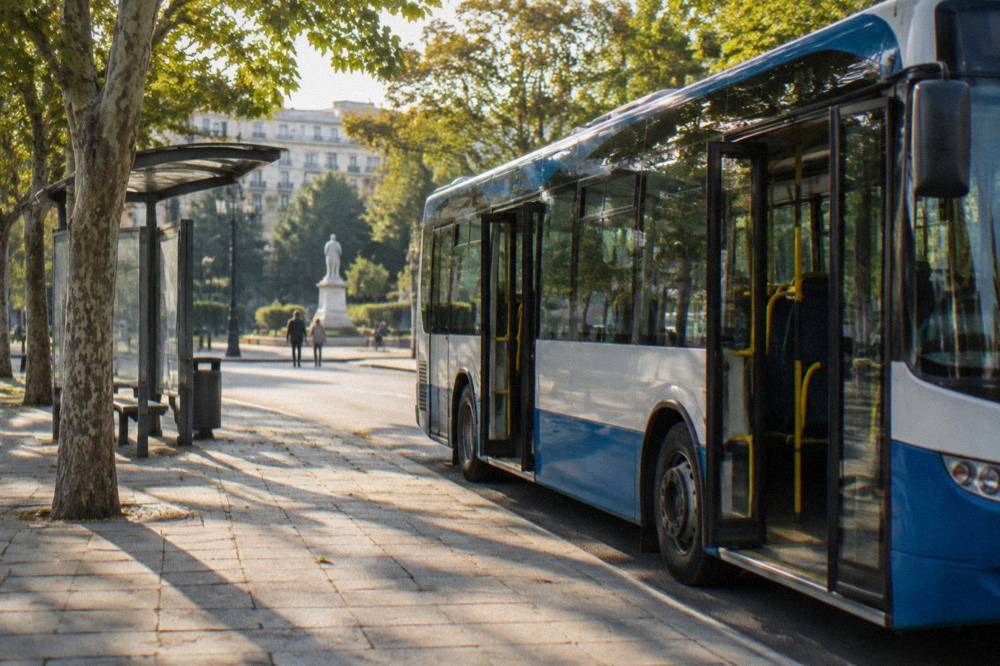
For paying on ordinary city buses, the practical answer lives in the site's dedicated how to pay for the bus in Thessaloniki. What can be said plainly is that buses run across the city day and night, that the airport lines are separate from the ordinary urban routes, and that anything about a night supplement or a luggage rule should be checked with OASTH directly.
One honest boundary: parking tariffs, car-hire rates, motorway tolls and ride-hailing prices in Thessaloniki are confirmed at the counter or in the app rather than quoted here. The same goes for Uber or Bolt availability: stay agnostic and check the app.
For travellers who want the orientation without the timetable study, the sightseeing bus products below loop the main sights on one ticket.
Is Central Thessaloniki Walkable Without A Bus?
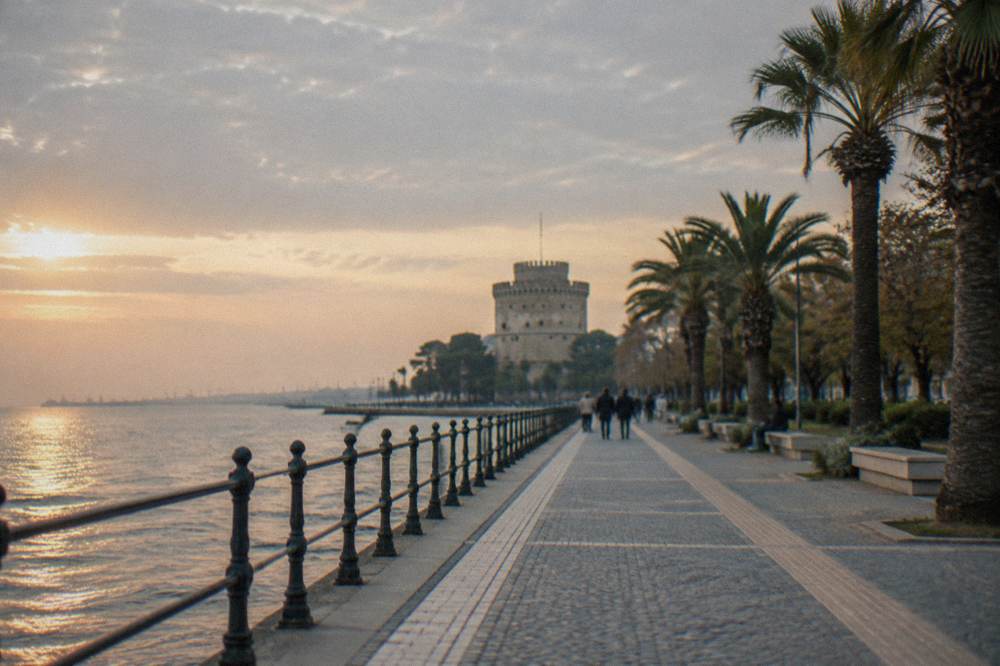
Central Thessaloniki is compact enough that the main sights sit within walking distance of Aristotelous Square: the White Tower on the seafront, the Rotunda and the Arch of Galerius on Egnatia, the Roman Agora, Hagia Sophia, the Church of Saint Demetrius and the Modiano and Kapani markets all cluster in the flat central grid. The Nea Paralia promenade, the Ladadika district and the Ano Poli upper town stretch the map, but nothing central needs a vehicle.
The geography explains it. The city centre is a ribbon between the sea and the old walls, with Aristotelous Square opening onto the Thermaic Gulf and the promenade running east toward the White Tower. The Nea Paralia is a promenade for walking, not a beach; swimming means heading out to Perea, about 28 minutes away by road, or Epanomi.
The climb into Ano Poli, the old upper town inside the Byzantine walls, is the one walk with real gradient, and it rewards the effort with the Heptapyrgion fortress and views over the whole gulf. The site's Ano Poli guide traces that route, and the is Thessaloniki a walkable city style questions are answered elsewhere on the site. On walking at night, the site's dedicated answer on safety walking around Thessaloniki at night covers it without invented statistics.
A walking tour is one way to lock in the central layout on day one, and a local-led food walk turns the market quarter into the route itself: both sit in the picks above and in the dedicated tour pages.
How Much Is A Taxi Or Bus From Thessaloniki Airport?
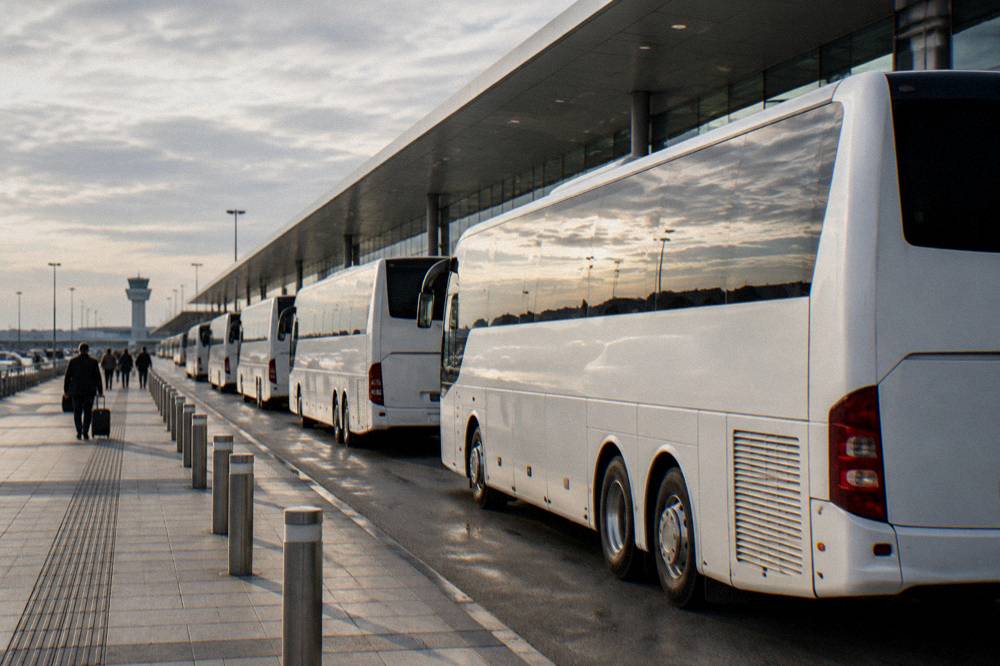
The airport bus fare is reported at about 2 euro and a daytime taxi to the centre at about 25 euro, both from secondary sources rather than an official tariff page, so treat both as approximations and confirm before you go. Thessaloniki Airport "Makedonia" (SKG) is about 16 km and 20 minutes by road from Aristotelous Square, and OASTH lists four airport bus lines.
Those reported figures are the honest ceiling of what can be printed. Taxi tariffs, night rates and ride-hailing prices lack a primary source, and the airport's own information page lists the public transport options without printing fares. The full arrival walkthrough, line by line, is in the site's airport to city centre guide. Everything else covered here is indexed on Thessaloniki Travel Guide.
| Airport option | Route | Source |
|---|---|---|
| Bus X1 | KTEL station to airport | Line listed on oasth.gr |
| Bus X2 | Nea Elvetia metro station to airport | Line listed on oasth.gr |
| Bus X3 | Mikra metro station to airport | Line listed on oasth.gr |
| Bus N1 | Night line, KTEL station to airport | Line listed on oasth.gr |
| Taxi | Airport to centre | About 25 euro by day, reported |
| Road distance | Airport to Aristotelous Square | About 16 km, about 20 minutes |
The X2 and X3 lines are the quiet advantage of the 2026 network: because the Kalamaria extension now reaches Mikra, the X3 connects the airport to a metro station at the end of the line, and the X2 does the same at Nea Elvetia. An arriving passenger can therefore ride bus to metro to centre without a taxi at all, on a route the operator itself documents.
Do You Need A Car In Thessaloniki?
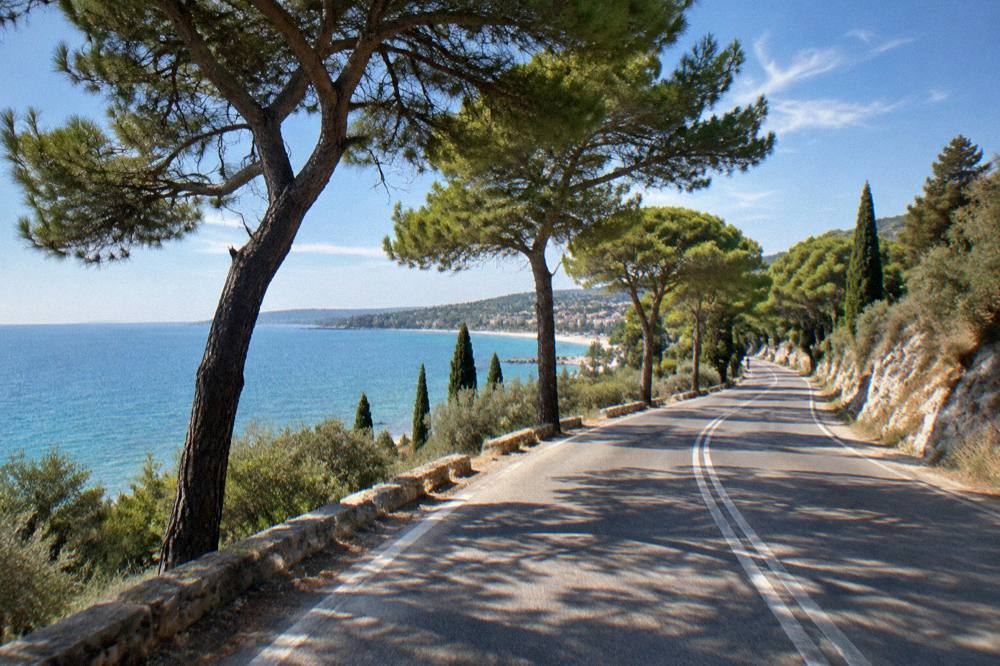
For the city itself, no: the metro, the OASTH buses and the walkable centre cover a normal visit, and parking in the central grid is the part that stays difficult. A car earns its keep for day trips at your own pace, especially Halkidiki's two peninsulas, Lake Kerkini and the Mount Olympus trailheads, where public transport thins out. Distances are moderate: Pella is about 43 minutes by road, Vergina about 62, Dion about 67 and Meteora about two and a half hours.
The trade-off is cost against freedom. Car-hire rates and motorway tolls are confirmed at the booking desk, and the site's Thessaloniki car rental guide works through the decision. For a single big excursion, an organised day trip often beats renting for one day, and the products below cover two of the most useful shapes: a bus loop of the city itself, and a guided outing into Halkidiki with lunch included.
| Day trip destination | Distance by road from Aristotelous Square | Free-flow time |
|---|---|---|
| Perea (beaches) | 23 km | about 28 min |
| Pella | 46 km | about 43 min |
| Veria | 72.8 km | about 52 min |
| Vergina (Aigai) | 68 km | about 62 min |
| Dion | 90 km | about 67 min |
| Litochoro (Mount Olympus) | 91 km | about 67 min |
| Edessa | 90 km | about 82 min |
| Kassandra (Kallithea) | 86 km | about 78 min |
| Sithonia (Nikiti) | 97 km | about 96 min |
| Meteora (Kalambaka) | 228 km | about 154 min |
Those times are free-flow estimates with no traffic, parking or stops, so treat them as floors, not promises. Meteora in particular is a full day at about 228 km each way, not a half-day add-on, and the site's Meteora guide plans it properly.
How Do Buses And Trains Reach Thessaloniki From Other Cities?
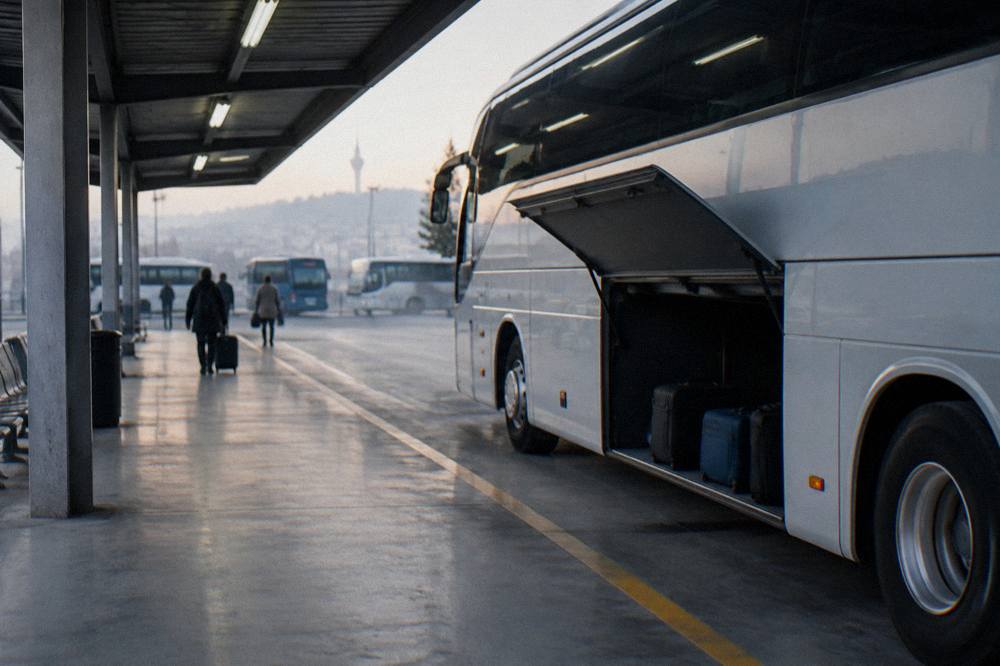
Intercity transport runs through two hubs: KTEL Macedonia station, about 4 km from the centre, for coaches including the Halkidiki services operated by KTEL Chalkidikis from a separate terminal on the road to Nea Moudania, and the city's railway stations for Hellenic Train services to Athens, Larissa, Katerini, Veria, Edessa and Florina. Both operators' networks are confirmed on their own sites; specific journey times and fares are confirmed at booking.
The KTEL split is the detail that catches people: buses to Halkidiki leave from the KTEL Chalkidikis terminal, not the main Macedonia station, and the urban link between them is a city bus or a taxi ride. The site's Thessaloniki bus station guide covers the terminals, and the longer-haul pages handle Athens to Thessaloniki and the Sofia and Skopje routes.
For planning around the year's rhythm, pair transport with timing: the site's best time to visit Thessaloniki and Thessaloniki weather pages carry the HNMS Thessaloniki Mikra station, 1959 to 2010, figures, and the where to stay page matches neighbourhoods to transport hubs.
What Does A Transport Budget For Thessaloniki Look Like?
A metro single costs 0.60 euro and a 24-hour pass 2.50 euro, both from the operator's ticket page; the airport bus is reported at about 2 euro and a daytime airport taxi at about 25 euro, both to be confirmed before you go. Walking in the centre is free, and that covers the White Tower, the Rotunda, the Arch of Galerius, the markets and the promenade, so a central visit can run on a single metro day pass plus one airport transfer each way.
The 2.50 euro daily ticket is the quiet workhorse of that budget: one pass, unlimited metro rides for 24 hours, and the network now touches both the New Railway Station and Kalamaria. Add the reported 2 euro airport bus each way and a car-free visit prices its transport in single digits per day, before any organised tour.
| Transport mode | What is | What to confirm locally |
|---|---|---|
| Metro | 0.60 EUR single, 2.50 EUR daily, hours to 00:30 or 02:00 | Whether the ticket transfers to OASTH buses |
| Airport bus | Lines X1, X2, X3, N1 listed by OASTH | The reported 2 EUR fare |
| City bus | OASTH operates the network | Single fare and ticket purchase |
| Taxi | Airport to centre about 25 EUR by day, reported | Night rates, tariffs, ride-hailing apps |
| Walking | Central sights sit near Aristotelous Square | Nothing beyond comfortable shoes |
| Intercity coach | KTEL Macedonia and KTEL Chalkidikis terminals | Fares and timetables at booking |
Which Sights Can You Reach Without A Vehicle?
Every headline sight in the central ribbon is reachable on foot from Aristotelous Square or one metro stop away: the White Tower on the seafront, the Archaeological Museum, the Museum of Byzantine Culture, the Rotunda, the Arch of Galerius, the Palace of Galerius, the Roman Agora, Hagia Sophia, the Church of Saint Demetrius and the Modiano and Kapani markets, with only Ano Poli and the Heptapyrgion asking for a climb rather than a ride.
The museums anchor the list because their hours are published. The Archaeological Museum runs 09:00 to 17:00 daily from April to October, and from November to March it closes on Tuesdays; the Museum of Byzantine Culture is daily 08:00 to 20:00 in summer and 08:30 to 15:30 Monday and Wednesday to Sunday in winter; the White Tower keeps 08:00 to 21:00 in summer and 08:30 to 15:30 in winter. Tickets at all three are 10, 10 and 8 euro full price respectively since the April 2026 adjustment, with reduced rates at 5, 5 and 4 euro. State museums are free on 6 March, 18 April, 18 May, the last weekend of September and 28 October.
| Sight | Distance from the centre | Best reached by |
|---|---|---|
| White Tower | Seafront, central | Walking, along the Nea Paralia |
| Arch of Galerius and Rotunda | Egnatia, east of the forum | Walking |
| Museum of Byzantine Culture | East of the centre on the museum axis | Walking or a short bus ride |
| Archaeological Museum | Next to the Byzantine museum | Walking or a short bus ride |
| Ano Poli and Heptapyrgion | Upper town inside the walls | Uphill walk or bus |
| Perea beaches | 23 km | Bus, taxi or car |
| Kalamaria | Eastern suburbs | Metro, Kalamaria branch |
For the full sight list with opening details, the site's things to do in Thessaloniki page is the hub, and individual guides cover the White Tower, the Rotunda and the rest. A bike extends the walking range along the flat seafront, and the e-bike tour below is one way to do it with a guide and a machine included.
The last practical note: Greece's emergency number is 112, the country is in the Schengen area and uses the euro, and Thessaloniki's tourist information centre sits at Aristotelous Square itself, so help and answers are both central. Between the metro that finally opened, a bus network that reaches the airport, and a centre built for feet, getting around Thessaloniki in 2026 is a solved problem.
Common Questions About Getting Around Thessaloniki
Is the Thessaloniki metro open?
Yes. Line 1 opened in November 2024, and the Kalamaria extension with five more stations was inaugurated on 27 August 2026. Trains run from 05:15 to 00:30 Sunday to Thursday and to 02:00 on Friday and Saturday.
How much is the metro in Thessaloniki?
A basic single ticket costs 0.60 euro, a reduced ticket 0.30 euro and a 24-hour daily ticket 2.50 euro, per the Thessaloniki Metro's own ticket page.
How do I get from Thessaloniki Airport to the city centre?
The airport is about 16 km and 20 minutes by road from Aristotelous Square. OASTH runs four airport bus lines, X1, X2, X3 and the night N1; the reported bus fare is about 2 euro and a daytime taxi about 25 euro, figures to confirm before you go.
Is Thessaloniki walkable?
The central sights, from the White Tower to the Rotunda, the markets and the main churches, sit within walking distance of Aristotelous Square. Ano Poli involves a real uphill walk inside the old walls.
Do I need a car in Thessaloniki?
Not for the city: the metro, buses and walking cover a normal visit. A car helps for independent day trips to Halkidiki, Lake Kerkini and the Mount Olympus trailheads.
Can the metro ticket be used on buses?
Reports say the systems are integrated, but the metro's own tickets page does not state it. Confirm with the operator before relying on a bus transfer.