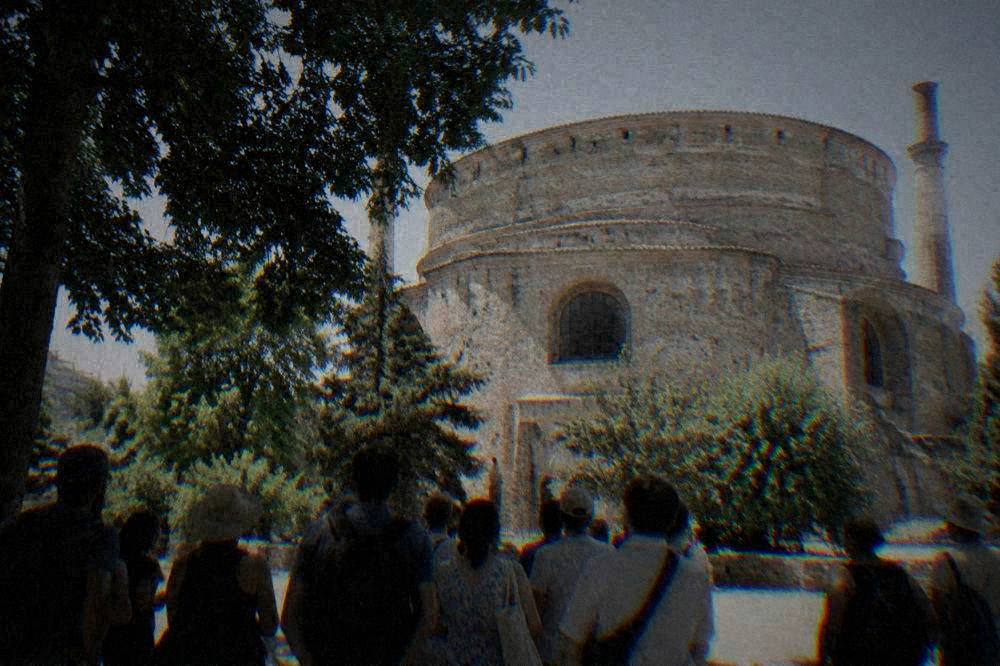
White Tower Of Thessaloniki: The Museum Inside And The Roof View
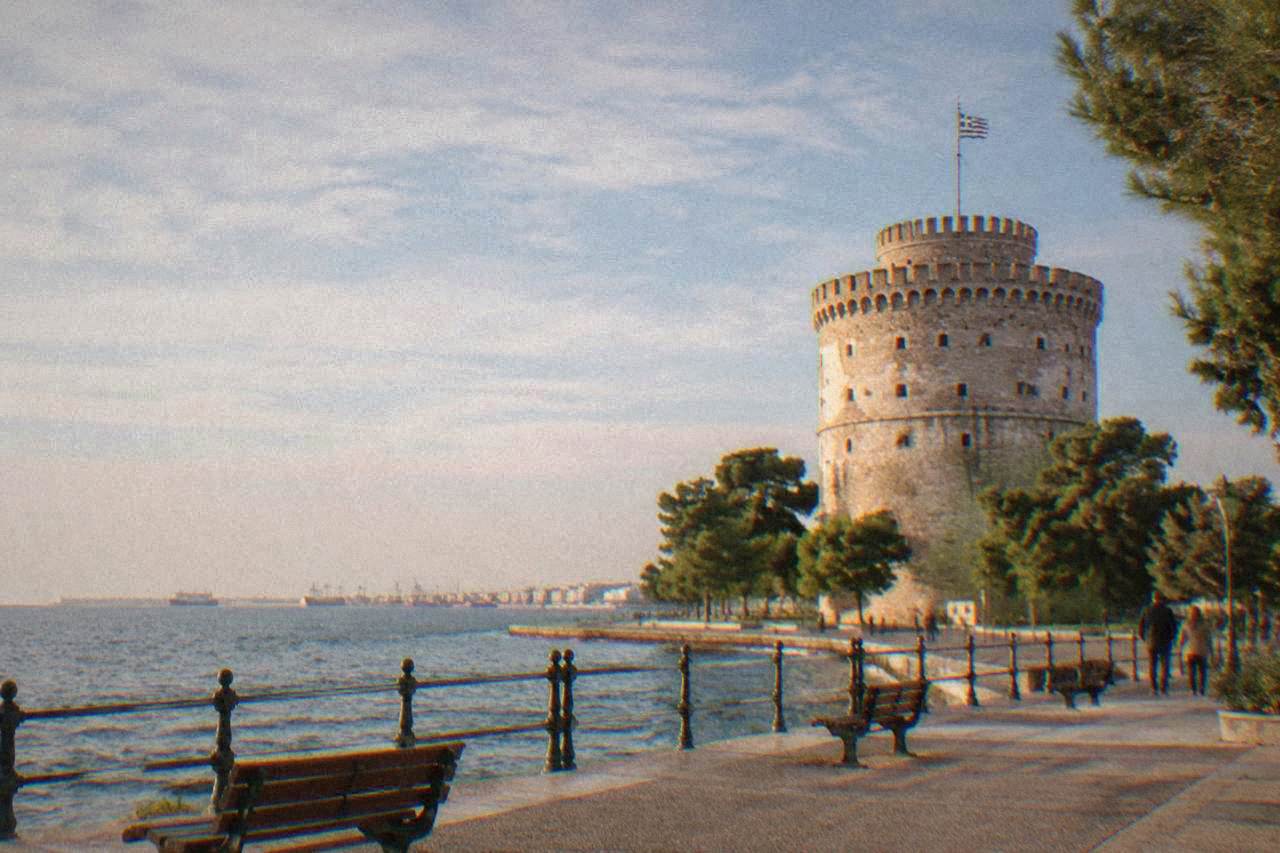
The White Tower is the landmark of Thessaloniki, a late Ottoman fortification on the Thermaic Gulf that now holds a museum of the city run by the Museum of Byzantine Culture, with a rooftop view over the port.
Short answer
The White Tower of Thessaloniki costs 8 euro full and 4 euro reduced from 1 April 2026. It is open daily 08:00 to 21:00 in summer and 08:30 to 15:30 in winter, and the last entry is 20 minutes before closing.
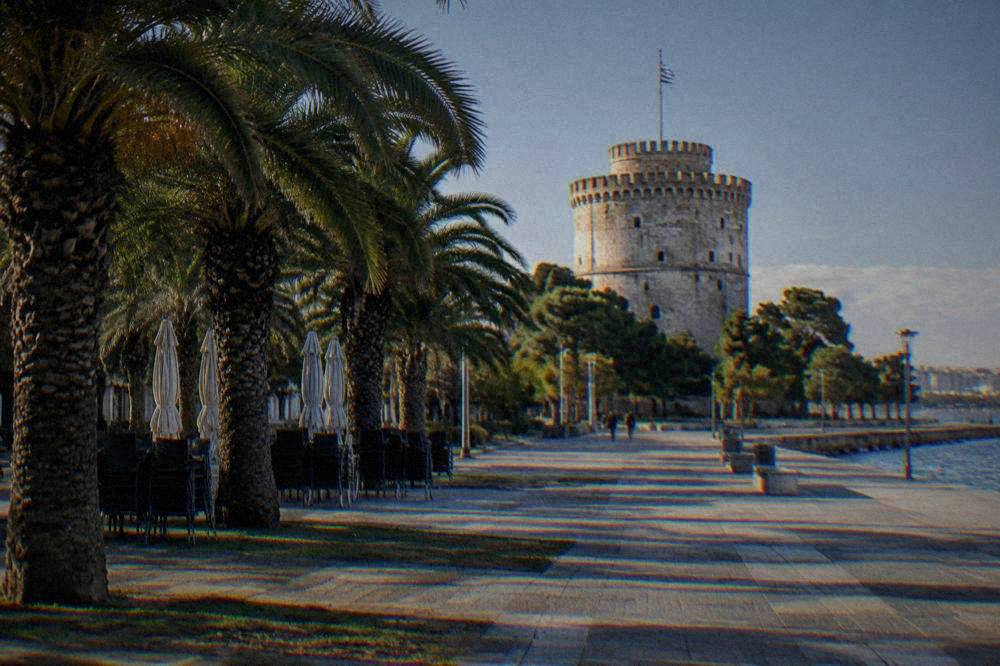
The White Tower stands at the eastern end of the seafront promenade of Thessaloniki, the second city of Greece, on the shore of the Thermaic Gulf in Central Macedonia. It is the building the city is recognised by: a tall cylinder of stone and brick, whitewashed since 1890, and today operated as a museum by the Museum of Byzantine Culture. This page collects what the official sources say about the tower: the 2026 ticket prices, the seasonal opening hours, the exhibition inside, the view from the top, and the practical question of getting there by metro, bus or bike. Thessaloniki is a coastal city, not an island, and the tower sits right where the Nea Paralia promenade meets the historic centre, a short walk from Aristotelous Square and the city's Roman and Byzantine monuments.
What Is The White Tower Of Thessaloniki?
The White Tower of Thessaloniki is a late 15th century Ottoman fortification on the city's seafront, first built as part of the harbour defences, later used as a prison, and whitewashed in 1890, after which it took the name it carries today. It now functions as a museum about the city, and it is run by the Museum of Byzantine Culture. The municipality's own heritage walks trace this history in detail. Before the whitewash the tower was known by a darker name tied to its prison years, and the whitewashing was, in effect, a symbolic fresh start for a building with a grim reputation.
The tower is a cylinder roughly 30 metres tall with a diameter of about 25 metres at its base, standing on the line of the old eastern city wall where it met the sea. Its position explains its military purpose: it guarded the harbour and the wall's seaward end, and everything east of it lay outside the fortified city until the walls came down in the late Ottoman era of urban expansion. The upper town of Ano Poli still carries long stretches of those Byzantine walls, and the Heptapyrgion fortress at their top tells the same story of fortification reused as prison, in its case until 1989.
Inside, the tower is no longer a military space. Each floor holds a themed gallery, with a spiral ramp connecting the levels and a viewing platform on the roof. The museum's story runs from the founding of the city in 315 BC by Cassander, who named it after his wife Thessalonike, through the Roman, Byzantine and Ottoman centuries to the modern city. The permanent exhibition is titled "Thessaloniki, History and Culture", and it is maintained by the staff of the Museum of Byzantine Culture, whose main building sits a few hundred metres inland.
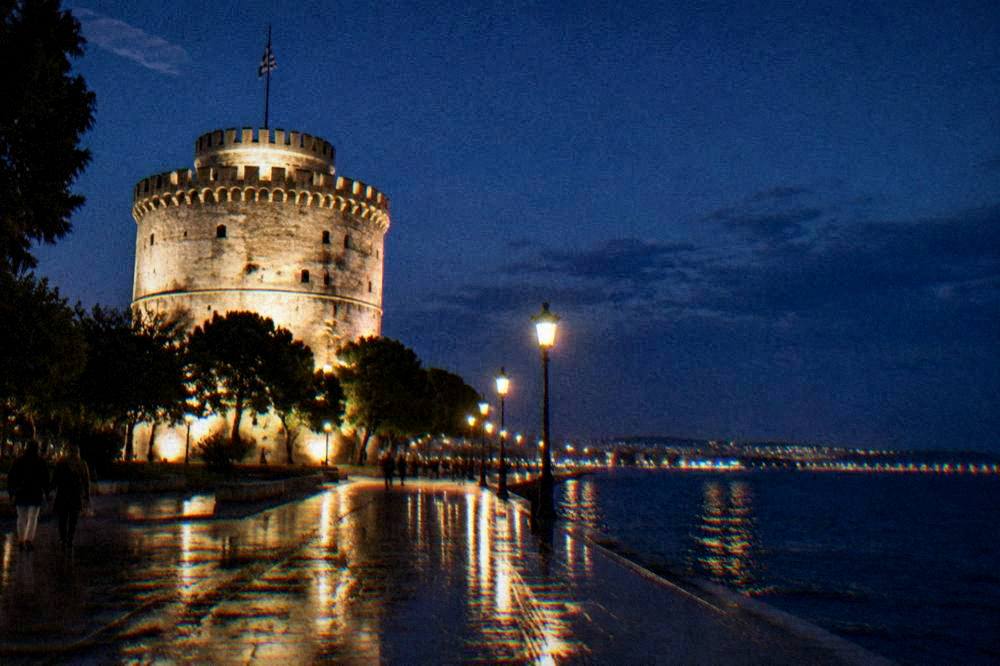
The tower also anchors the city's public life. The promenade at its foot, the Nea Paralia, is a walk, not a beach: the HNMS Thessaloniki Mikra station table records the climate, and the promenade records the evening ritual of the volta, the slow seafront stroll that structures daily life here. For the wider picture of the city's sights, the site's things to do in Thessaloniki page places the tower in context among the Roman forum, the churches and the markets.
How Much Does It Cost To Visit The White Tower In Thessaloniki?
A full ticket to the White Tower costs 8 euro and a reduced ticket 4 euro, according to the Museum of Byzantine Culture's own visiting page, the prices in force from 1 April 2026. Entry stops 20 minutes before closing. The old 4 euro figure still circulates on older pages, and it is outdated. The price rise came with a government repricing of state museums and sites in 2026, and the Museum of Byzantine Culture's page is the authority to check before a visit, because it also lists the current combined offers, if any, with the city's other state sites.
A combined ticket covering the main state sites of Thessaloniki is reported at about 15 euro full and 8 euro reduced, per the state archaeology portal, but it was not on the museum's own fetched pages, so confirm before you go whether it is on sale at the tower's desk. State museums in Greece also run fixed free-admission days, listed below, and entry is free for visitors up to 25 years old from European Union member states, per the standard state exemptions on the museum's page.
| Ticket | Price | Notes |
|---|---|---|
| Full | 8 euro | From 1 April 2026 |
| Reduced | 4 euro | From 1 April 2026 |
| EU visitors up to 25 | Free | Standard state exemption |
| Free-admission days | Free | 6 March, 18 April, 18 May, last weekend of September, 28 October |
For comparison, the two big museums nearby both charge 10 euro full and 5 euro reduced under the same 2026 repricing. The Archaeological Museum covers Macedonia's ancient past, from gold Macedonian finds to the city's Roman centuries, and the Museum of Byzantine Culture covers the thousand years when Thessaloniki was the empire's second city. A tower ticket plus one museum is a full and fairly priced day of sightseeing.
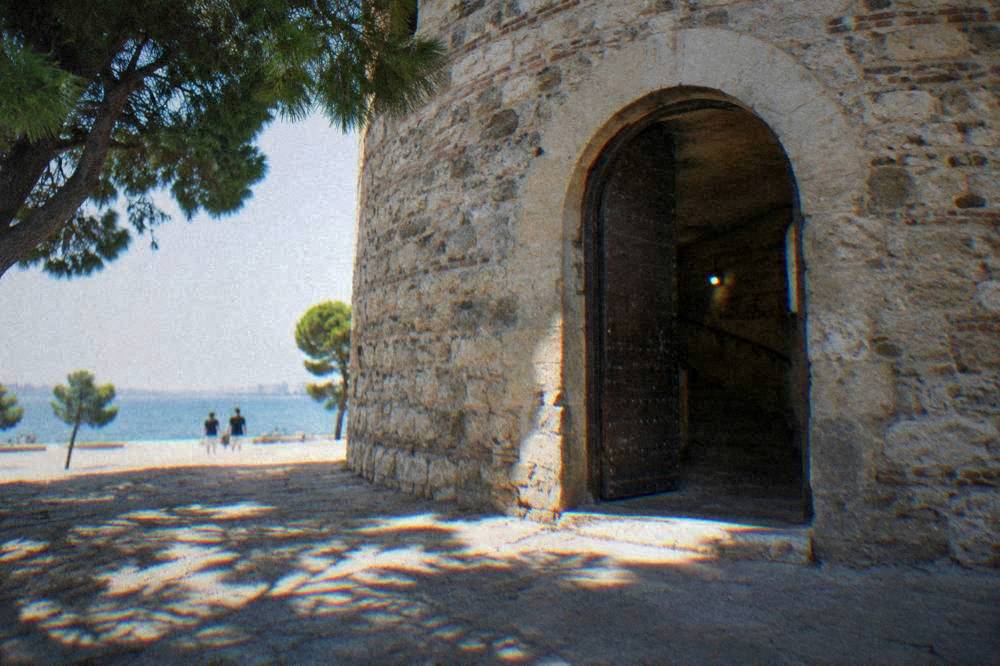
One practical note on timing: the tower is one of the city's most recognisable paid sights, and the desk can have a queue in the middle of the day in high summer. The museum's page does not publish a crowd forecast, so the honest advice is structural rather than statistical: the tower opens at 08:00 in summer, and the first hour after opening and the hour before the 21:00 close are the quiet ends of the day. Entry stops 20 minutes before closing, so a late visit still gets you up the ramp and onto the roof.
What Are The White Tower Opening Hours In Thessaloniki?
The White Tower is open daily, 08:00 to 21:00 in summer, from 1 April to 31 October, and 08:30 to 15:30 in winter, from 1 November to 31 March, with the last entry 20 minutes before closing in both seasons. The hours are published by the Museum of Byzantine Culture, which operates the tower. Unlike its sister museums, the tower does not close on Tuesdays in winter: it is the one major state site in the city that runs seven days a week, which makes it the reliable fallback on a Tuesday in November when the Archaeological Museum and the Museum of Byzantine Culture are both closed.
The seasonal split matters for planning. A summer evening visit ends in daylight over the gulf as late as 21:00, while a winter visit needs the morning, because the 15:30 close comes early and the last ticket is sold at 15:10. The table below sets the tower against the other two state museums so the weekly arithmetic is visible at a glance.
| Site | Summer hours | Winter hours | Winter Tuesday |
|---|---|---|---|
| White Tower | Daily 08:00 to 21:00 | Daily 08:30 to 15:30 | Open |
| Archaeological Museum | Daily 09:00 to 17:00 | 09:00 to 17:00 | Closed |
| Museum of Byzantine Culture | Daily 08:00 to 20:00 | Mon, Wed to Sun 08:30 to 15:30 | Closed |
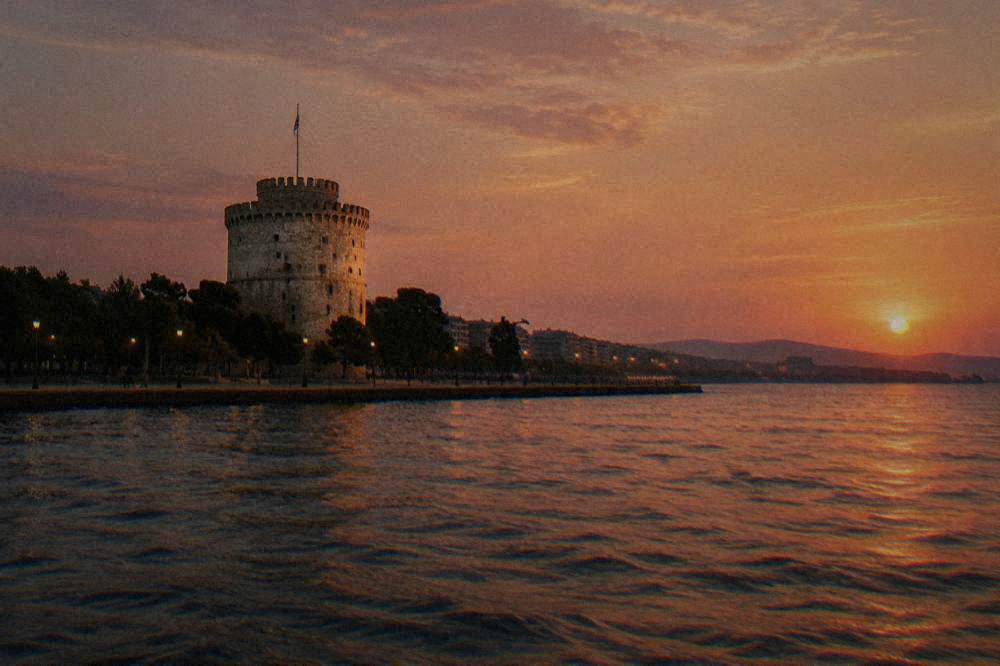
The free-admission days apply to the tower as to all state museums: 6 March, 18 April, 18 May, the last weekend of September and 28 October, per the Museum of Byzantine Culture's visiting page. Two of those days fall in the tower's summer season, and 28 October, Ochi Day, is a national holiday that also commemorates, in Thessaloniki, the anniversary week of the city's liberation on 26 October 1912. Those are busy, festive days on the seafront.
Beyond the fixed free days, the only other price lever is the reported combined ticket, which is worth asking about at the desk if a museum-heavy itinerary is planned. Whatever the answer, the Museum of Byzantine Culture's own page remains the reference to check before travelling, since prices and offers at Greek state sites were adjusted in 2026 and older guides lag behind.
What Is Inside The White Tower Museum?
Inside, the White Tower holds a permanent exhibition about the history and culture of Thessaloniki, arranged over several floors connected by a spiral ramp, with the rooftop viewing platform as the final exhibit. The exhibition is curated by the Museum of Byzantine Culture and covers the city from its founding in 315 BC to the modern era. It is, in effect, the city's museum in miniature: a single building that walks you through twenty-three centuries, floor by floor, ending with the city itself spread out below you.
The lower floors deal with the ancient and Roman city, the port, and the everyday material recovered from it. The middle floors carry the Byzantine centuries, when Thessaloniki was second only to Constantinople, and the story of the fifteen Paleochristian and Byzantine monuments inscribed together on the UNESCO World Heritage List in 1988. The upper floors turn to the Ottoman period, the port city's communities, the Great Fire of 1917 that left 73,000 people homeless, and the city of the years after it. The presentation mixes finds, models, photographs and multimedia, and labelling is in Greek and English.
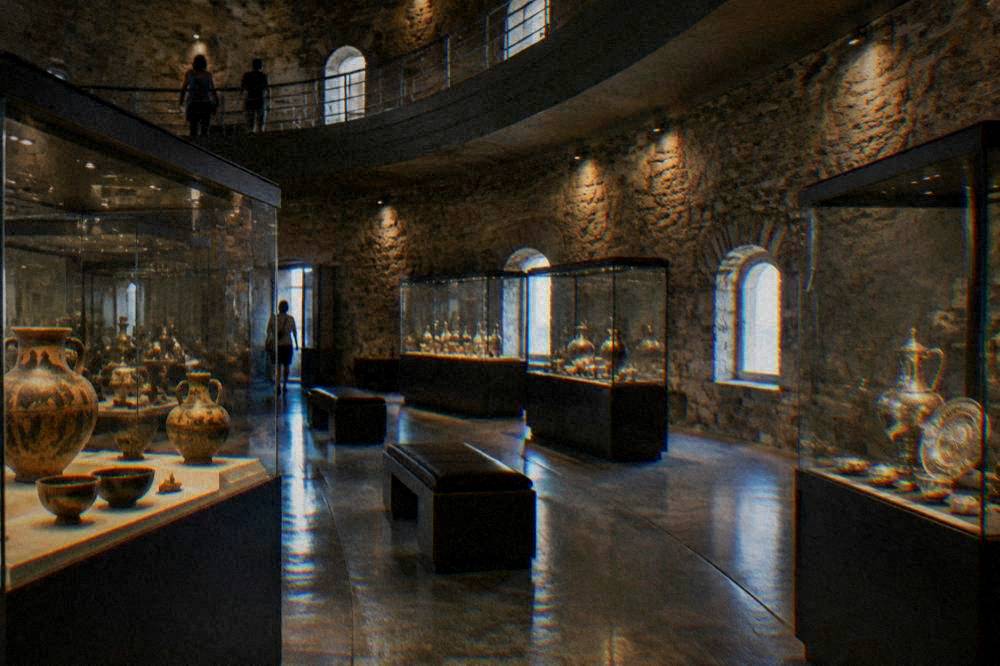
The tower is not a large museum. The floors are compact, and a visit that reads the panels properly is a couple of hours; a brisk pass to the roof is much less. The reward at the top is a platform open to every point of the compass, from which the whole geography of the city can be read at once: the Thermaic Gulf and the port to the south-west, the Nea Paralia curving east, the Acropolis walls and Ano Poli climbing north, and on clear days the silhouette of Mount Olympus far to the south-west across the gulf. The Rotunda, the Arch of Galerius and the Galerius Palace complex are all visible inland, a reminder that the Roman city and the Ottoman tower face each other across a short walk.
How Do You Get To The White Tower In Thessaloniki?
The White Tower sits on the seafront at the junction of the Nea Paralia promenade and Nikis Avenue, about a 10-minute walk east of Aristotelous Square along the water, and it is served by the city's bus network and by the metro, whose nearest stops lie a short walk inland. Thessaloniki's metro Line 1 opened in November 2024, and the Kalamaria extension was inaugurated on 27 August 2026, so the old claim that the city has no metro is simply wrong. A basic metro ticket costs 0.60 euro and a 24-hour daily ticket 2.50 euro, per the Thessaloniki Metro's ticket page.
The metro runs 05:15 to 00:30 Sunday to Thursday and 05:15 to 02:00 Friday and Saturday. From the airport, Thessaloniki Airport "Makedonia" is about 16 km and roughly 20 minutes by road from the centre, and the airport's own page lists the public bus connections; the OASTH airport bus fare is reported at about 2 euro, a figure to confirm before travelling. The tower's position on the waterfront means almost every approach ends as a walk along the sea, which is part of the pleasure of the visit. Everything else covered here is indexed on Thessaloniki Travel Guide.
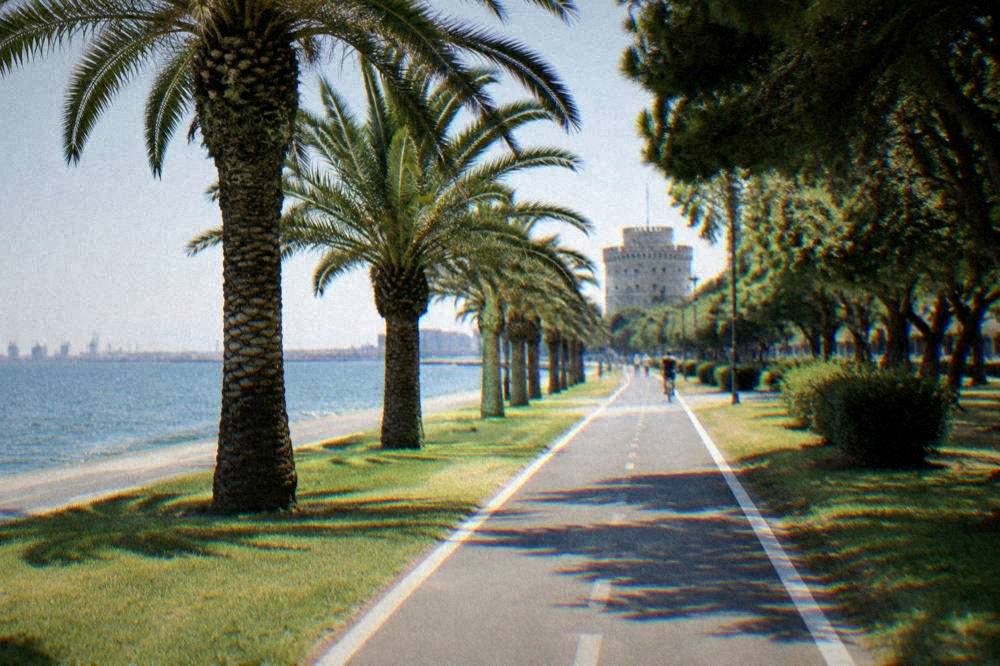
Cycling is the other natural approach, because the Nea Paralia is one of the flattest, most continuous rides in the city, linking the tower with the eastern suburbs and the port end of town. A guided option is the bike tour past the White Tower and the Rotunda, which links the seafront landmark with the Roman complex inland; see the bike tour past the White Tower and the Rotunda on this site, with Check availability on the operator's live listing. For a ride-around overview of the whole city rather than a single route, the sightseeing bus tour is the other wheeled option; see the hop-on hop-off sightseeing bus tour, with check availability beside it.
Walking distances in the historic centre are short. From Aristotelous Square the tower is a level seafront stroll; from the Roman Forum or the Church of Saint Demetrius it is a gentle 20-odd minutes through the streets of the centre; from Ladadika and the Port of Thessaloniki it is a longer but flat walk along Nikis Avenue with the water beside you the whole way. Emergency services anywhere in Greece, as across the EU, answer on 112.
What Can You See From The Top Of The White Tower?
From the rooftop platform you can see the full sweep of the Thermaic Gulf from the container port to the eastern suburbs, the whole seafront line of the Nea Paralia, the upper town of Ano Poli under its Byzantine walls, and, on clear days, Mount Olympus across the gulf, roughly 100 km away. The view is the tower's second exhibition: it turns the museum's historical narrative into a map you can read with your own eyes.
The foreground is the sea. The gulf fills the southern half of the panorama, with the port's cranes to the west, the long curve of the promenade to the east, and the pier line of the cruise and ferry terminal in between. The Museum of Byzantine Culture and the city hall stand just inland. To the north-east the eye climbs from the flat centre to Ano Poli, where the walls, the Trigoniou Tower and the Vlatadon Monastery mark the old fortified upper city, and the Heptapyrgion sits at the top of the ridge.
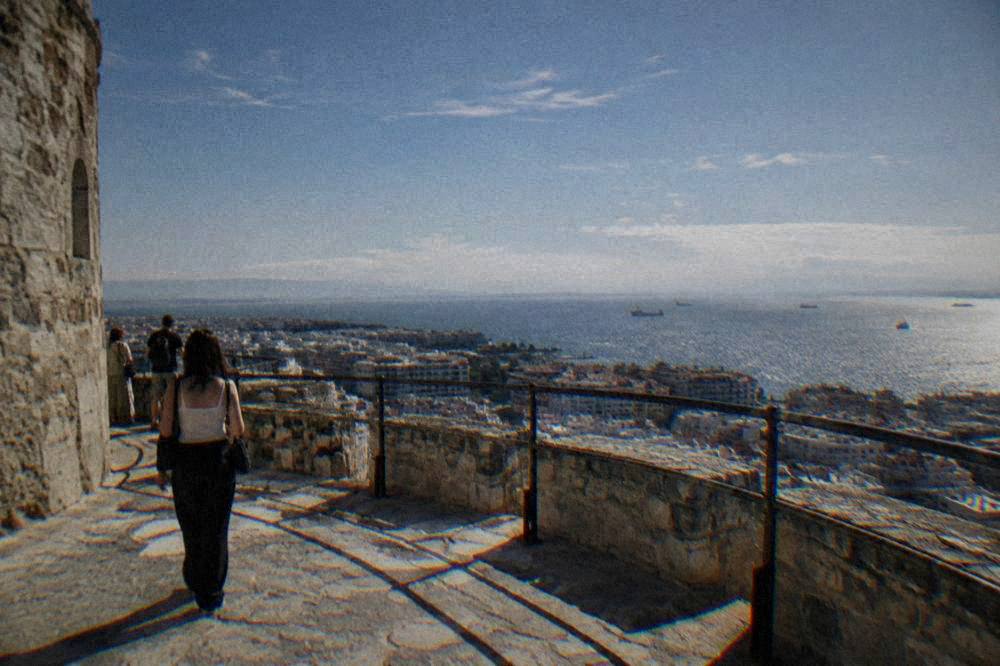
To the south and west across the water lie the beaches of the outer gulf at Perea and beyond, about 23 km by road, and on the clearest days the mass of Mount Olympus rises at the far side of the gulf. The mountain and its foothill town of Litochoro are a day trip from the city, about 67 minutes by road to Litochoro, and the Archaeological Museum in town holds much of what was dug out of the region's ancient sites, including Dion at the mountain's foot.
Photography is unrestricted on the platform, and the light changes the view completely across the day. A morning visit looks east into clear air; a late-afternoon or summer-evening visit catches the sun dropping behind the port and the mountains, which is why the 21:00 summer close suits a sunset trip. The tower does not run a cafe or rooftop service; the benches and the view are the amenity.
When Is A Good Time Of Year To Visit The White Tower In Thessaloniki?
The tower is open all year, and the choice is between the long summer day, when the 08:00 to 21:00 hours allow an evening visit in daylight, and the winter half, when the 08:30 to 15:30 hours make it a morning stop. The HNMS Thessaloniki Mikra station table, 1959 to 2010, gives July a mean daily high of 31.7 C and January a mean daily low of 1.5 C, which frames the practical difference. December carries the highest monthly rainfall of the station record at 55.1 mm and August the lowest at 19.3 mm.
The rooftop is open-air, so weather genuinely shapes the visit. Summer gives reliable viewing but the middle of the day is hot on an unshaded stone platform; the tower's own hours solve this by staying open to 21:00. Spring and autumn sit in the sweet spot of the table: April has a mean high of 19.1 C, October 21.2 C, and both fall inside the 08:00 to 21:00 summer season. Winter visits are quiet and cheap-adjacent, and remember the Tuesday rule in reverse: in winter the tower is open when both major museums are closed.
| Month | Mean high C | Mean low C | Rain mm |
|---|---|---|---|
| January | 9.3 | 1.5 | 37.7 |
| April | 19.1 | 7.9 | 36.1 |
| July | 31.7 | 19.3 | 23.8 |
| October | 21.2 | 11.3 | 43.0 |
The climate figures above are the HNMS Thessaloniki Mikra station record, 1959 to 2010, the weather-station averages the national meteorological service publishes for the city. The autumn also brings the city's festival calendar: the Dimitria festival was reported to run 1 to 26 October in 2026, and the Thessaloniki International Film Festival ran 5 to 15 November in its 67th edition in 2026. An October or November visit can pair a tower sunset with a festival evening.
One more seasonal note: the seafront promenade at the tower's foot is a walk, not a beach, and swimming in the city waterfront is not what the shoreline is for. The nearest proper swimming is at Perea, about 28 minutes by road, and the beaches of Halkidiki beyond it. The tower is for looking at the water, and the gulf beaches are for getting into it.
Which Other Sights Sit Near The White Tower In Thessaloniki?
Within a 15-minute walk of the White Tower stand the Museum of Byzantine Culture, the Archaeological Museum, the Rotunda, the Arch of Galerius and the Galerius Palace complex, the Nea Paralia promenade, Aristotelous Square, Hagia Sophia and the Church of Saint Demetrius, making the tower the natural anchor of a walking day through the historic centre. The concentration is unusual: Roman, Byzantine and Ottoman monuments stand in one compact strip between the sea and the upper walls.
| Sight | Direction from the tower | Notes |
|---|---|---|
| Museum of Byzantine Culture | Inland, short walk | 10 euro full ticket, run with the tower |
| Archaeological Museum | Inland, near the fair grounds | 10 euro, closed Tuesday in winter |
| Rotunda and Arch of Galerius | Inland, east | Roman Galerian complex, street monument free to view |
| Aristotelous Square | West along the seafront | Main square, designed after the 1917 fire |
| Nea Paralia | East from the tower | Seafront promenade for walking and cycling |
| Ano Poli and Heptapyrgion | North, uphill | Byzantine walls and fortress above the centre |
A sensible pairing is the tower plus one museum. The Archaeological Museum holds the ancient Macedonian and Roman story, and its collection is the deep background to the tower's lower floors; its page on this site covers the 2026 prices and the winter Tuesday closure. The Museum of Byzantine Culture is the tower's own operator, and its main building's galleries expand the Byzantine floors into full exhibitions. Both are covered in detail on the Archaeological Museum and Museum of Byzantine Culture pages here.
For visitors with more than a day, the same seafront where the tower stands is the departure frame for the region's day trips. Vergina, the site of the Royal Tombs of Aigai, is about 62 minutes by road, and Pella, the birthplace of Alexander, about 43 minutes; a combined day trip to both is one of the region's classic outings, and the city's Roman monuments are catalogued on the Arch of Galerius page of this site. The Vergina and Pella day trip runs with transport from the city; see check availability on the operator's listing.
The tower closes the loop that the whole of the Thessaloniki Travel Guide walks: a fortification that became a prison, a prison that became a museum, and a museum whose best exhibit is the city visible from its roof.
Common Questions About The White Tower Of Thessaloniki
How much does the White Tower of Thessaloniki cost?
A full ticket costs 8 euro and a reduced ticket 4 euro from 1 April 2026, per the Museum of Byzantine Culture's visiting page. The older 4 euro figure found on many pages is outdated. Check the museum's own page before a visit for any combined offers.
What are the White Tower opening hours?
Daily 08:00 to 21:00 from 1 April to 31 October, and daily 08:30 to 15:30 from 1 November to 31 March, with the last entry 20 minutes before closing. The tower does not close on Tuesdays in winter, unlike the two major state museums.
What is inside the White Tower?
A permanent exhibition on the history and culture of Thessaloniki from its founding in 315 BC to the modern era, spread over several floors connected by a spiral ramp, curated by the Museum of Byzantine Culture, with a rooftop viewing platform at the top.
How old is the White Tower?
The current structure is a late 15th century Ottoman fortification, built into the harbour defences, later used as a prison, and whitewashed in 1890, which is when the name White Tower took hold. The city itself was founded in 315 BC.
Is the White Tower free on some days?
Yes. State museums and sites, including the tower, are free on 6 March, 18 April, 18 May, the last weekend of September and 28 October, and entry is free for EU visitors up to 25 years old under the standard state exemptions.
Can you see Mount Olympus from the White Tower?
On clear days, yes: the mass of Mount Olympus rises across the Thermaic Gulf to the south-west. Litochoro, the town at the mountain's foot, is about 67 minutes by road from central Thessaloniki, and Dion, the ancient park below the mountain, about the same.