Roman Forum Of Thessaloniki: The Agora And Odeon
The Roman Forum of Thessaloniki, the ancient agora with its odeon, sits below street level in the city centre, steps from Aristotelous Square. This guide covers what the site holds, how to reach it, what a visit costs and what to pair it with.
Short answer
The Roman Forum of Thessaloniki is the city's ancient agora, an excavated complex below plateia Dikastirion in the centre, with an odeon, stoas and a cryptoporticus. Current ticket prices and hours for the site are not published, so confirm at the entrance or on the state ticketing pages before you go.
Thessaloniki, the second city of Greece, sits on the Thermaic Gulf in Central Macedonia, and below the plateias of its modern centre lies one of the least advertised Roman sites in the country: the Roman Forum of Thessaloniki, the ancient agora with its restored odeon. Founded in 315 BC by Cassander and named for his wife Thessalonike, a daughter of Philip II, the city grew into a Roman metropolis on the Via Egnatia, and its forum was the administrative and social heart of that era. Today the excavated complex sits in a sunken square steps from Aristotelous Square, surrounded by the everyday life of a working city, with the White Tower a pleasant walk away along the seafront. This guide from the Thessaloniki Travel Guide editorial desk sets out what the site contains, how to reach it on the city's new metro, what a visit costs and what to pair it with.
What Is The Roman Forum Of Thessaloniki?
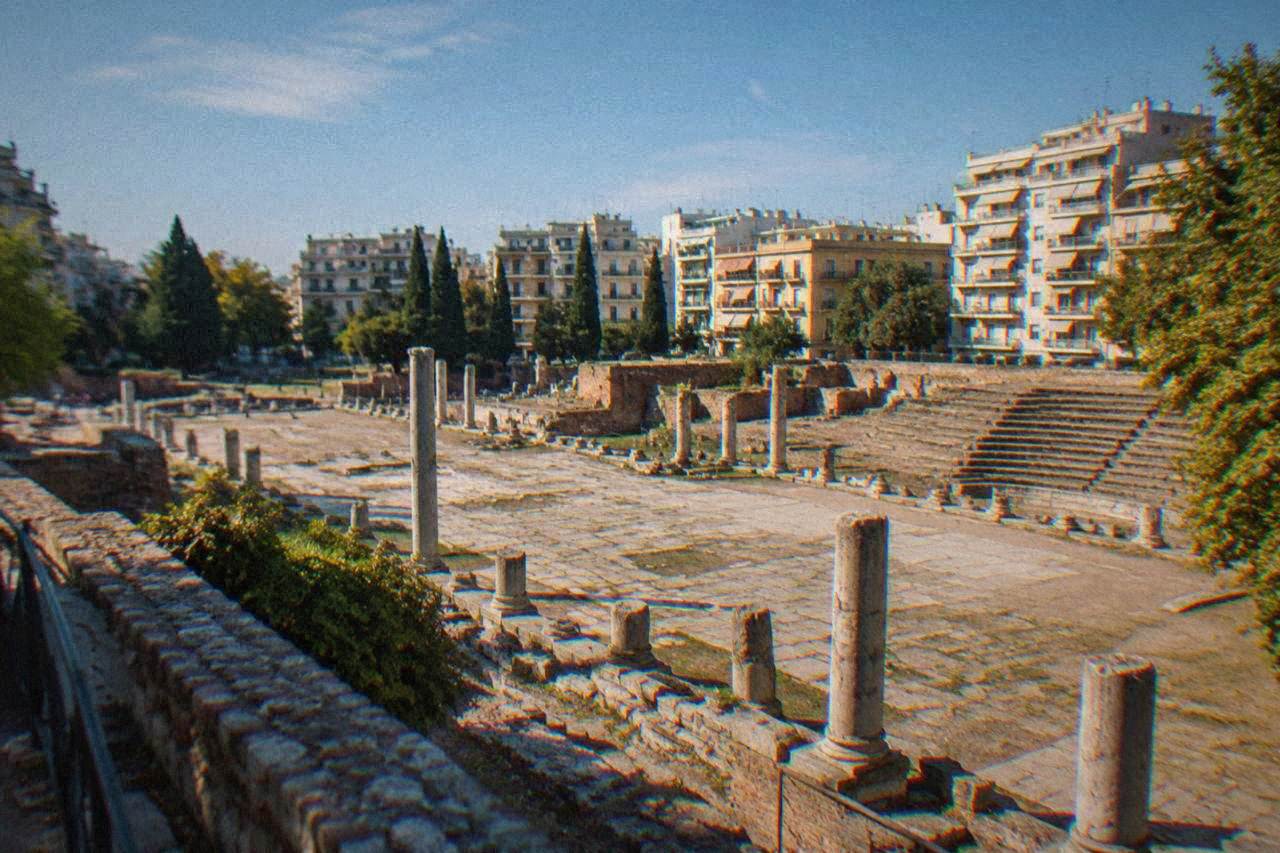
The Roman Forum of Thessaloniki is the ancient agora of the city, an excavated complex of squares, stoas, an odeon and an underground cryptoporticus that served as the administrative and commercial centre of Roman Thessaloniki, laid out around two terraces and still visible today in a sunken site in the middle of the modern city. It was the place where the business of the Roman city was done: trade, official functions, performances in the odeon and public assembly. The complex sits below modern street level, which is part of why it surprises visitors who come around a corner and find a Roman theatre pit opening beneath the apartment blocks. The site is managed by the state archaeological service, alongside the other ancient monuments of the city such as the Arch of Galerius and the Rotunda.
The forum belongs to the Roman layer of Thessaloniki, distinct from the fifteen Paleochristian and Byzantine monuments inscribed on the UNESCO World Heritage List in 1988. The UNESCO list covers the churches and walls of the later city; the forum, the Galerian complex and the Via Egnatia alignment belong to the earlier Roman centuries, when Thessaloniki was a major stop on the road that linked the Adriatic to the Hellespont. That layered quality is the city's defining feature, and the forum is one of the places where the layers are visible at once: Hellenistic grid, Roman public space, Byzantine churches, Ottoman-era streets and modern apartment blocks all within a few hundred metres.
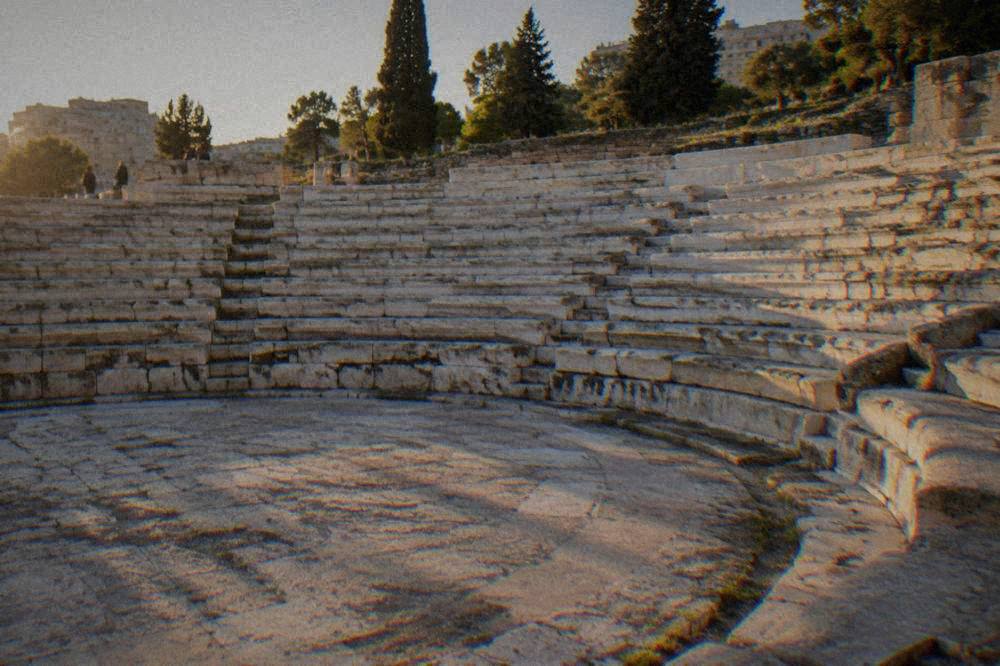
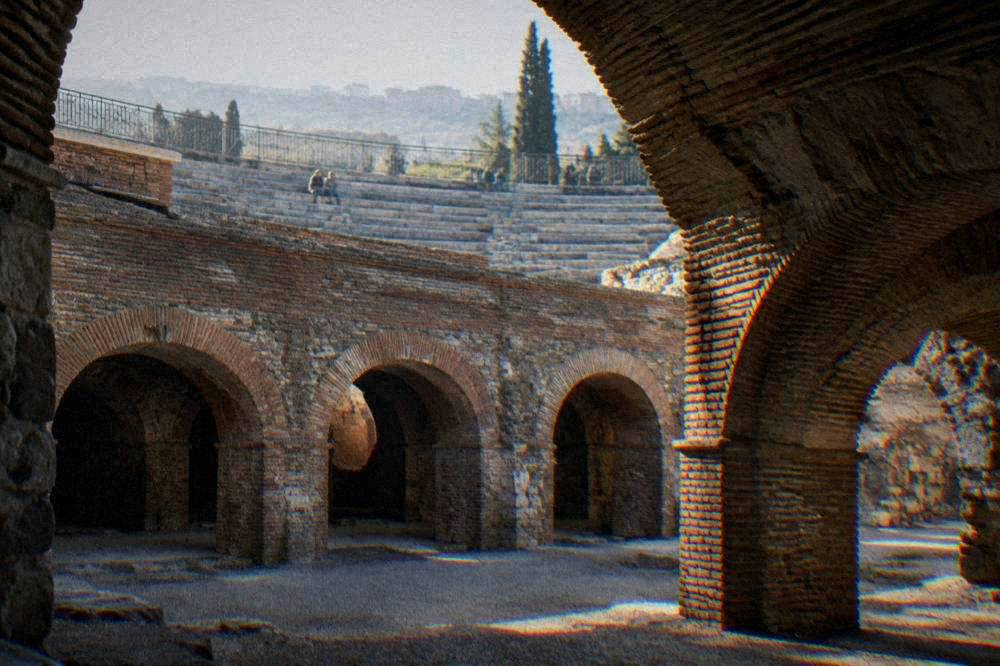
The odeon is the part of the forum people remember. It is a small theatre, restored and occasionally used for performances in summer, terraced into the slope of the upper square. Around it run the outlines of the stoas, the covered walkways that framed the ancient marketplace, and beneath the court the cryptoporticus, a vaulted substructure that carried the upper terrace and stored goods. Reading the site takes some imagination in places, but the geometry of the ancient city is clear enough that the layout makes sense on the ground without a guide.
Where Is The Roman Forum And How Do You Get There?
The Roman Forum of Thessaloniki sits in the city centre at plateia Dikastirion, about two minutes on foot from Aristotelous Square, reachable on the metro to either the city-centre stops or on the airport bus lines that stop along the seafront, with the site's entrance on the square itself. The forum has no dedicated transit stop of its own because it does not need one: it is inside the walkable core, and every route into the centre passes within a short walk of it. The nearest landmarks are Aristotelous Square to the south and the Hagia Sophia church to the east along the seafront axis.
The Thessaloniki Metro is the simplest way in from further out. Line 1 opened in November 2024 from the New Railway Station to Nea Elvetia, and the Kalamaria extension, inaugurated on 27 August 2026, added five more stations out to Mikra. The metro runs 05:15 to 00:30 Sunday to Thursday and 05:15 to 02:00 Friday and Saturday, according to the Thessaloniki Metro's own site. A basic ticket costs 0.60 euro and a 24-hour daily ticket 2.50 euro, per the metro's ticket page. From the airport, the OASTH X1, X2 and X3 buses connect to the KTEL terminal, the Nea Elvetia metro station and the Mikra metro station respectively; the airport bus fare is reported to be about 2 euro, so confirm before boarding.
Walking to the forum is often quicker than any transit once you are in the centre. The site lies on the natural route between the seafront and the upper city: many people visit it as a stop between Aristotelous Square and the Ladadika district or the Ano Poli climb. The terrain slopes upward toward the Byzantine walls, so approach the forum from the seafront for the gentler gradient and save the climb for afterward.
| Route into the centre | Service | Key figure |
|---|---|---|
| Metro Line 1 | New Railway Station to Nea Elvetia, opened November 2024 | Basic ticket 0.60 euro |
| Metro Kalamaria extension | Five stations to Mikra, inaugurated 27 August 2026 | Daily ticket 2.50 euro |
| Airport bus X1 | Airport to KTEL Macedonia terminal | Reported fare about 2 euro |
| Airport bus X2 / X3 | Airport to Nea Elvetia / Mikra metro stations | Reported fare about 2 euro |
| Metro hours | Sunday to Thursday / Friday and Saturday | 05:15-00:30 / 05:15-02:00 |
What Can You See At The Agora And The Odeon Today?
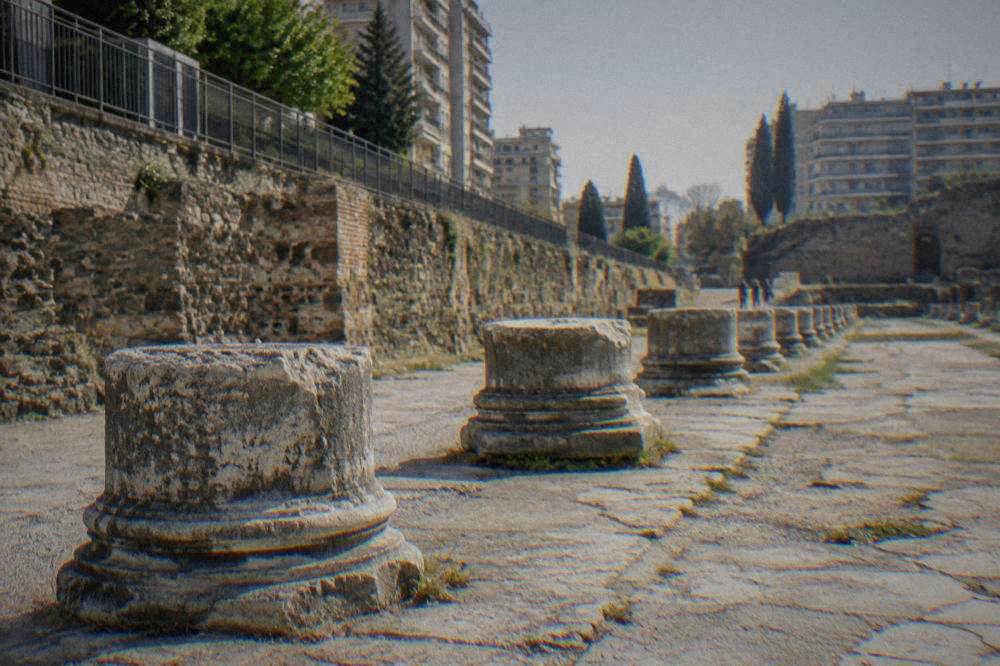
Today the Roman Forum of Thessaloniki shows an excavated two-terrace complex: the lower square with the restored odeon at its edge, the outlines of the stoas that framed the marketplace, the semicircular exedra where public business was conducted, and the vaulted cryptoporticus beneath the upper terrace, all readable in under an hour at walking pace. The odeon is the visual centrepiece, its tiered stone seats rising against the modern city behind. The stoa foundations run along the square, and the surviving sections of paving show the scale of the original court. The cryptoporticus, partly open to view, explains how the builders handled the slope: a substructure of vaulted galleries that supported the upper square and served as storage.
The museum space attached to the site displays finds from the excavation, including the small but well-preserved ensemble connected with the forum's fountains and public amenities. The famous feature many guidebooks mention is the set of latrines and the plumbing of the ancient public convenience, which survives well enough to be interpreted. Sculpture, inscriptions and architectural fragments round out the display, and they do the work of connecting the stones outside to the people who used them.
Give the site an unhurried circuit. Enter from the square, walk the perimeter of the lower terrace, take in the odeon from below, then follow the upper terrace line and look down into the court. The contrast between the ancient geometry and the modern apartment blocks ringing the site is the picture visitors come away with, and late afternoon light across the stone is the best version of it.
How Much Does The Roman Forum Of Thessaloniki Cost To Visit?
No current official ticket price for the Roman Forum of Thessaloniki can be stated here, so check the current price on the state ticketing pages or at the site entrance before you go; a combined state-sites ticket reported at about 15 euro full and 8 reduced is said to cover the major state museums and sites, but that figure is reported rather than official and should be confirmed before you rely on it. The prices nearby are worth knowing for planning: the White Tower costs 8 euro full and 4 euro reduced from 1 April 2026, and the Archaeological Museum and the Museum of Byzantine Culture each cost 10 euro full and 5 euro reduced, per their own visiting pages.
Whether the forum participates in every scheme should be confirmed at the entrance, but the days themselves are the standard state calendar.
| State site or museum | Full ticket | Reduced | Source basis |
|---|---|---|---|
| White Tower | 8 euro | 4 euro | Its own visiting page, from 1 April 2026 |
| Archaeological Museum of Thessaloniki | 10 euro | 5 euro | Its own hours and tickets page |
| Museum of Byzantine Culture | 10 euro | 5 euro | Its own visiting page |
| Roman Forum of Thessaloniki | Not stated here | Not stated here | Confirm at the entrance or on the state ticketing page |
| Combined state-sites ticket | Reported about 15 euro | Reported 8 euro | Reported only, confirm before you go |
What Are The Opening Hours Of The Roman Forum?
Opening hours for the Roman Forum of Thessaloniki should be confirmed locally before planning a visit around a fixed time; the pattern at Thessaloniki's state sites generally runs longer summer hours of roughly 08:00 to 20:00 and shorter winter hours with Tuesday closures at several sites, and the forum's own schedule needs checking on the day. The comparison museums are the Archaeological Museum, open 09:00 to 17:00 daily from 1 April to 31 October and closed Tuesdays from 1 November to 31 March, and the Museum of Byzantine culture, daily 08:00 to 20:00 in summer and Monday plus Wednesday to Sunday 08:30 to 15:30 in winter.
This matters more than it might seem, because the forum is an outdoor site and its gate hours do not follow museum logic. A sunken archaeological site in a city square can look open from the railing while the entrance is shut, and the odeon's use for summer performances changes access on event days. The practical approach is to treat the forum as a flexible stop: check the site's status when you arrive in the city, keep the museums for fixed appointments and fit the forum around them.
| Comparator | Summer | Winter | Tuesday |
|---|---|---|---|
| Archaeological Museum of Thessaloniki | 09:00-17:00 daily, 1 Apr to 31 Oct | 09:00-17:00, closed Tuesday | Closed Nov to Mar |
| Museum of Byzantine Culture | Daily 08:00-20:00 | Mon, Wed-Sun 08:30-15:30 | Closed in winter |
| White Tower | Daily 08:00-21:00 | Daily 08:30-15:30 | Open |
| Roman Forum of Thessaloniki | Not stated here | Not stated here | Confirm locally |
Roman Forum Or Galerian Complex: Which Roman Sites Should You See In Thessaloniki?
See both if you have the time, because the Roman Forum and the Galerian complex answer different questions: the forum shows the everyday civic life of Roman Thessaloniki as a marketplace and theatre, while the palace, arch and Rotunda of the Galerian complex show the imperial ceremonial city of its era, and together they cover the full range of the city's Roman centuries in a walkable circuit. The two complexes are close, both in the central strip of the city, and a route from the forum east along the Egnatia axis links them naturally.
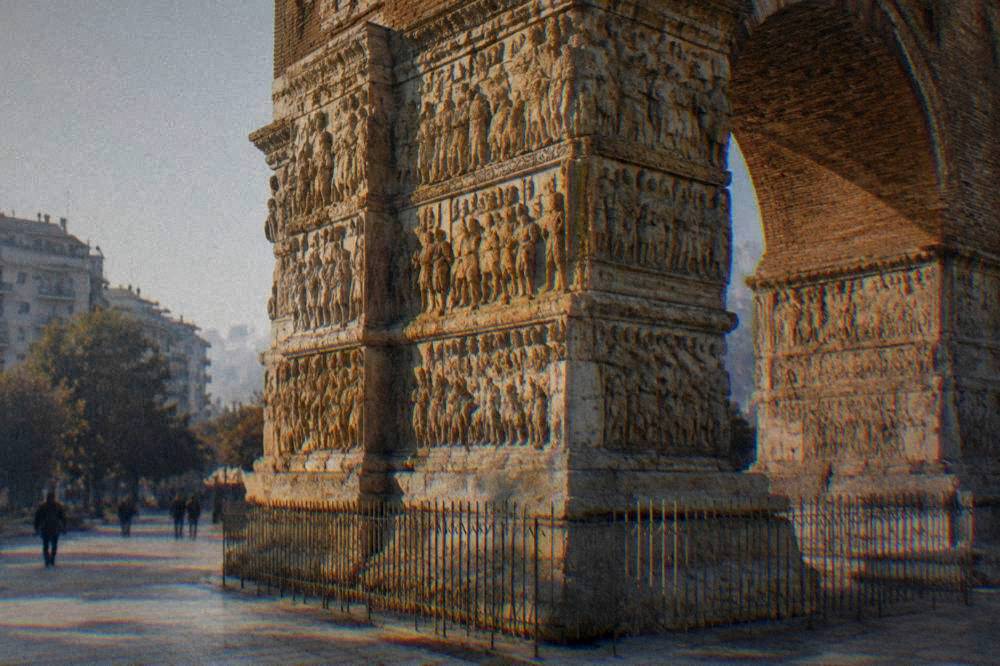
The Galerian complex is the grander spectacle. The Arch of Galerius stands free on Egnatia street, an open-air monument you can walk under at any hour without a ticket, its reliefs of the tetrarch's campaigns still legible. The Palace of Galerius remains stretch between them, terraced down the hill.
The forum, by contrast, is intimate. Where the Galerian complex was built to overawe, the forum was built to be used, and its scale, a marketplace with a small theatre, tells you how the ordinary city worked. Families with children tend to find the odeon the more engaging of the two Roman experiences, since the theatre seats can be sat in and the site's story is concrete. Travellers with one short stay should prioritise the Galerian axis for spectacle and add the forum if the centre loop allows, which it usually does.
What Else Is Within Walking Distance Of The Roman Forum?
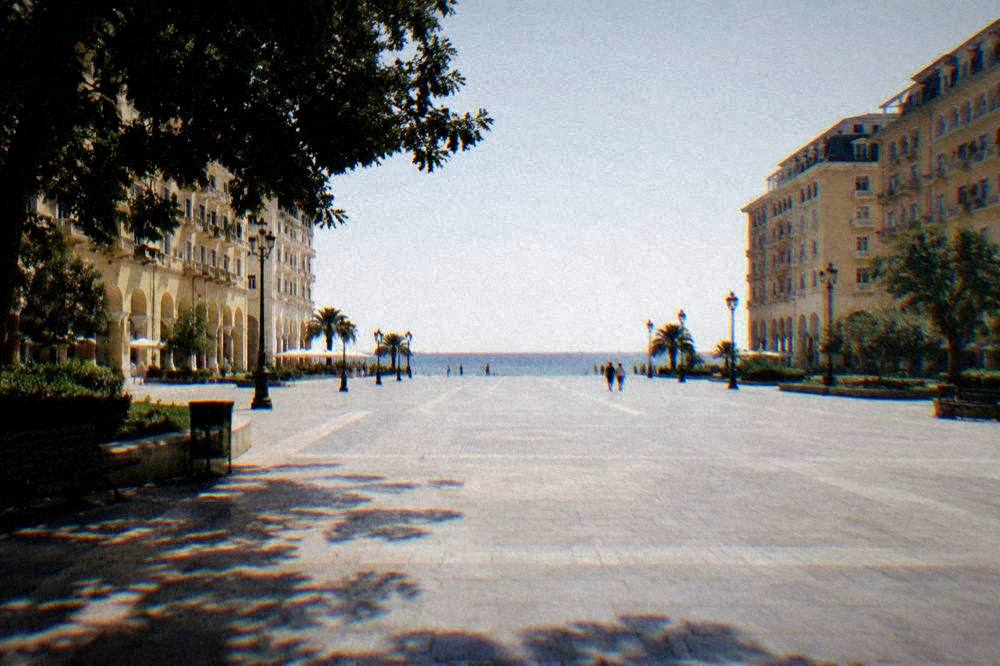
The Roman Forum of Thessaloniki sits in the densest cluster of sights in the city: Aristotelous Square and the seafront are moments to the south, Hagia Sophia and the Church of Saint Demetrius lie along the same axis, the two great food markets lie immediately north, and the Ladadika district and the White Tower complete a loop that fills a full day entirely on foot. The forum works best as the hinge of that loop, because it stands between the food markets and the seafront and gives the walk a historical anchor halfway through.
A sensible circuit runs from Aristotelous Square north to the forum, on through the market halls where the city shops for its food, then back down to the seafront by Hagia Sophia, along the Nea Paralia promenade toward the White Tower, and inland past the Archaeological Museum and the Museum of Byzantine Culture if museum time allows. The promenade is a walking and cycling space, not a swimming beach; swimming near the city means Perea, about 28 minutes away by road, or Epanomi. In the other direction, the upper town of Ano Poli climbs toward the Byzantine walls and the Heptapyrgion, which served as a prison until 1989.
| Stop on the central loop | Character | Notes |
|---|---|---|
| Aristotelous Square | Open plateia toward the sea | Laid out after the 1917 Great Fire |
| Roman Forum | Ancient civic centre | Odeon, stoas, cryptoporticus |
| Modiano Market and Kapani Market | Food halls and market lanes | The city's shopping larder |
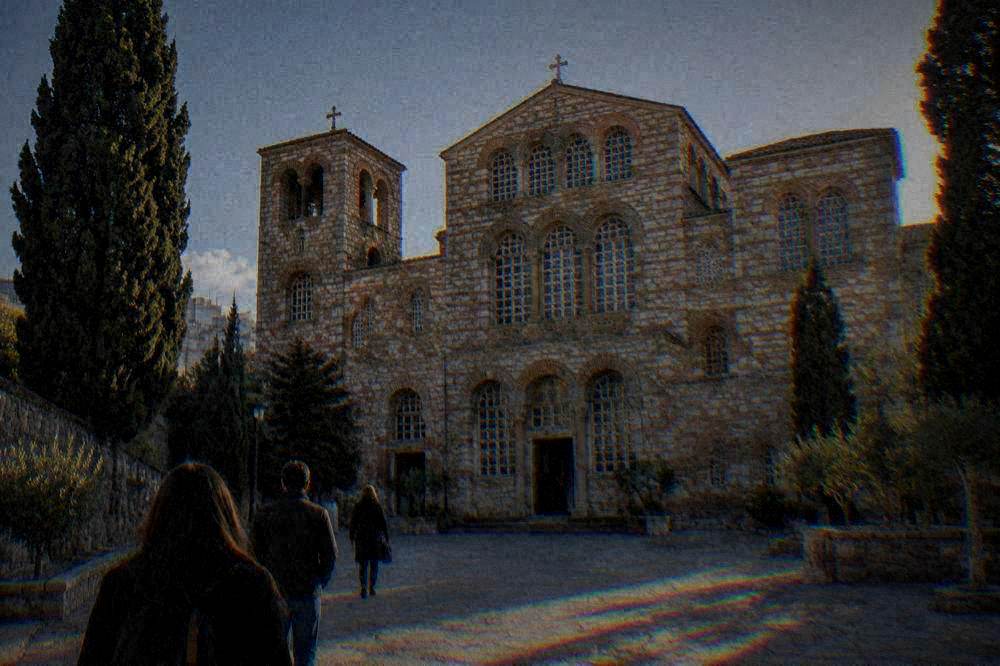
| Hagia Sophia | Byzantine church, UNESCO list | Free entry, open outside services |
| Church of Saint Demetrius | City patron's church, UNESCO list | Crypt damaged in the 1917 fire era |
| White Tower | Landmark tower museum | 8 euro full from 1 April 2026 |
| Nea Paralia | Seafront promenade | Walking and cycling, not a beach |
When Is The Best Time Of Year To Visit Thessaloniki's Roman Sites?
The comfortable months for outdoor Roman sites in Thessaloniki are April, May, June, September and October, when the HNMS Thessaloniki Mikra station record for 1959 to 2010 shows mean daily highs of 19.1 to 29.4 C in those months, while July and August average 31.7 and 31.4 C and January lows average 1.5 C, so spring and autumn pair mild stone-walking weather with thinner city crowds than midsummer. The climate is Mediterranean with continental edges: December carries the highest monthly rainfall total in the station record at 55.1 mm and August the lowest at 19.3 mm, with annual rainfall of 444.5 mm.
October deserves a special mention for the festival layer. The Dimitria festival ran 1 to 26 October in 2026, its 61st edition, and the city's patronal day of Saint Demetrius falls on 26 October, the same date as the city's liberation in 1912, followed by Ochi Day on 28 October. The mean October high of 21.2 C in the station record is mild for walking the central loop, though the 43.0 mm of monthly rainfall argues for a rain layer. November brings the International Film Festival, which ran 5 to 15 November in 2026, but the shorter days and cooler stone suit indoor museums more than open sites.
| Month | Mean high C | Mean low C | Rain mm | Rain days |
|---|---|---|---|---|
| April | 19.1 | 7.9 | 36.1 | 11.1 |
| May | 24.6 | 12.6 | 44.2 | 11.0 |
| June | 29.4 | 17.0 | 29.8 | 7.9 |
| July | 31.7 | 19.3 | 23.8 | 6.7 |
| August | 31.4 | 19.1 | 19.3 | 5.1 |
| September | 27.1 | 15.4 | 29.8 | 7.0 |
| October | 21.2 | 11.3 | 43.0 | 9.3 |
Figures are HNMS Thessaloniki Mikra station, 1959 to 2010, a weather-station record, and they describe averages rather than any particular year.
Which Tours Include The Roman Forum Area?
Guided walking tours of central Thessaloniki regularly pass through or beside the Roman Forum, because the site sits on the standard route between Aristotelous Square, the Galerian complex and the upper town, so a city-centre walking tour is the reliable way to see the forum with interpretation rather than alone. A sunset-oriented city highlights walk covers the Roman layer and the seafront in one circuit, which suits travellers who want the forum's stones explained in context rather than read from a placard. The related tour below is that kind of walk, and it can be booked alongside a visit to the site itself.
For a different angle on the same centre, the rotating OTE Tower experience pairs a light meal with a slow revolution above the Thermaic Gulf, a natural end to a day spent below street level in the forum. Food-market walks through Modiano and Kapani add the modern marketplace layer to the ancient one, a comparison the forum itself invites, since the agora was doing long ago what the market halls do today. Day trips out of the city, to Vergina, Pella, Dion or Meteora, are a separate category: Meteora at Kalambaka is about 228 km by road and a full day, not a half-day add-on.
How Does The Roman Forum Fit Into One Day In Thessaloniki?
A one-day plan that works around the Roman Forum starts on the seafront at the White Tower, walks the Nea Paralia promenade to the Galerian arch and the Rotunda, continues through the forum and the market halls by midday, returns to the seafront via Hagia Sophia and the Church of Saint Demetrius, and finishes with sunset from the upper town or the seafront, all on foot and without transport beyond the metro in and out. The forum earns its place in the middle of the day as the hinge between the imperial east side and the market district north of the centre.
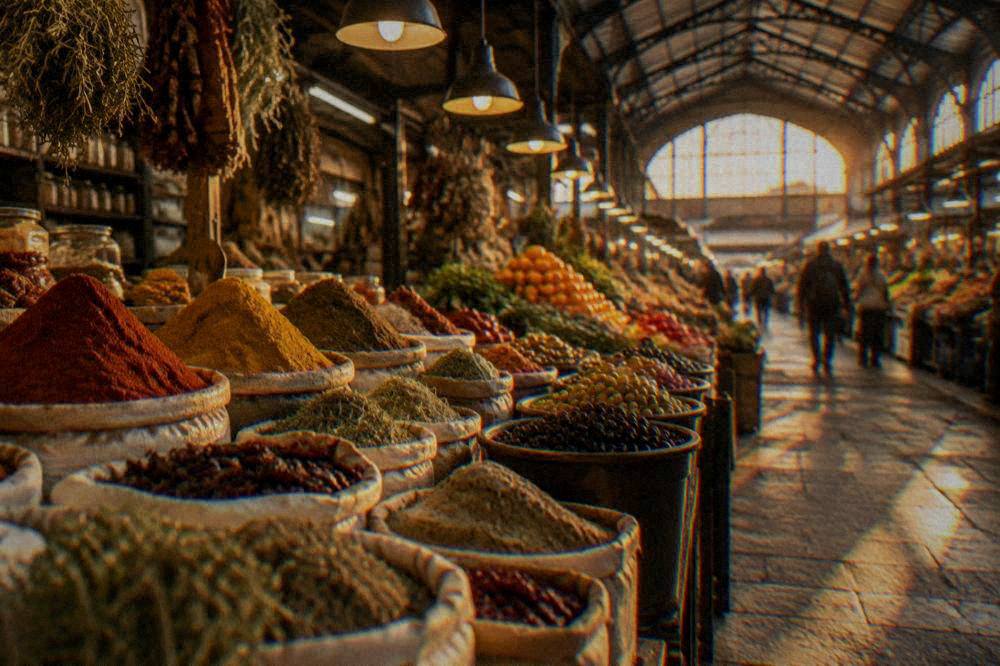
Morning light suits the east side. The Arch of Galerius and the Rotunda area are quiet early, and the seafront walk between them and the centre is at its best before the afternoon heat, with July and August mean highs above 31 C in the station record. By late morning the markets are at full volume, which is the right moment to arrive at the forum, since the contrast between the ancient agora and the working food halls next door is the whole point of the pairing. Afternoon belongs to the Byzantine layer, and the churches on the UNESCO list of fifteen monuments are free to enter and open outside service times.
The evening closes the loop. Sunset from the Ano Poli walls or from the water's edge near the White Tower is the classic end of a Thessaloniki day, and the metro's Friday and Saturday service until 02:00, per the metro's own site, makes a late dinner in Ladadika painless to return from. Travellers with a cruise-port day can run a compressed version of the same loop; the shore excursion options in the roster cover it with port pickup.
Common Questions About The Roman Forum Of Thessaloniki
What Is The Roman Forum Of Thessaloniki?
It is the ancient agora of the city, an excavated complex of two terraces with a restored odeon, stoas, a cryptoporticus and attached museum finds, which served as the civic and commercial centre of Roman Thessaloniki. It sits below street level in the modern city centre, steps from Aristotelous Square.
Is The Roman Forum Of Thessaloniki Worth Visiting?
For anyone interested in the Roman layer of the city, yes: the odeon is one of the most legible Roman structures in central Thessaloniki, and the site's position between the markets and the seafront makes it a natural stop on any central walk. Travellers with only a few hours may prioritise the Galerian complex for spectacle, but the forum tells the everyday side of the Roman city.
How Much Does The Roman Forum Of Thessaloniki Cost?
Check the current price on the state ticketing pages or at the entrance before you go. A combined state-sites ticket reported at about 15 euro full and 8 reduced is said to cover the major state sites, but it is reported rather than official and needs confirming.
How Do I Get To The Roman Forum Of Thessaloniki?
Walk from Aristotelous Square, which is a couple of minutes away. The metro's Line 1, open since November 2024 with the Kalamaria extension since 27 August 2026, serves the centre, with a basic ticket at 0.60 euro per the metro's ticket page. Airport buses X1, X2 and X3 link the airport to the KTEL terminal and two metro stations.
What Are The Opening Hours Of The Roman Forum Of Thessaloniki?
Confirm locally before planning around a fixed time.
Can You Combine The Roman Forum With Other Roman Sites In Thessaloniki?
Yes, easily. The Arch of Galerius on Egnatia street is free to view at any hour, the Rotunda and the Palace of Galerius complete the Galerian complex on the same axis, and all of it sits within the walkable central strip. A morning or a full afternoon covers the forum and the Galerian sites together on foot.
The Roman Forum of Thessaloniki rewards an hour of curiosity with a clear picture of how the Roman city worked, and its position at the centre of everything, between the markets, the seafront and the Byzantine upper town, makes it one of the easiest significant sights in Greece to fit into any plan.