Kapani Market: The Old Food Bazaar Off Aristotelous
Kapani Market is Thessaloniki's historic food bazaar, a short walk from Aristotelous Square, and this guide covers what it is, how to reach it, and what to pair it with.
Short answer
Kapani Market is a covered food market in central Thessaloniki, steps from Aristotelous Square and next to Modiano Market, reachable on the metro to Venizelou station. It is a working market rather than a museum, and the desk recommends pairing it with a guided food tour.
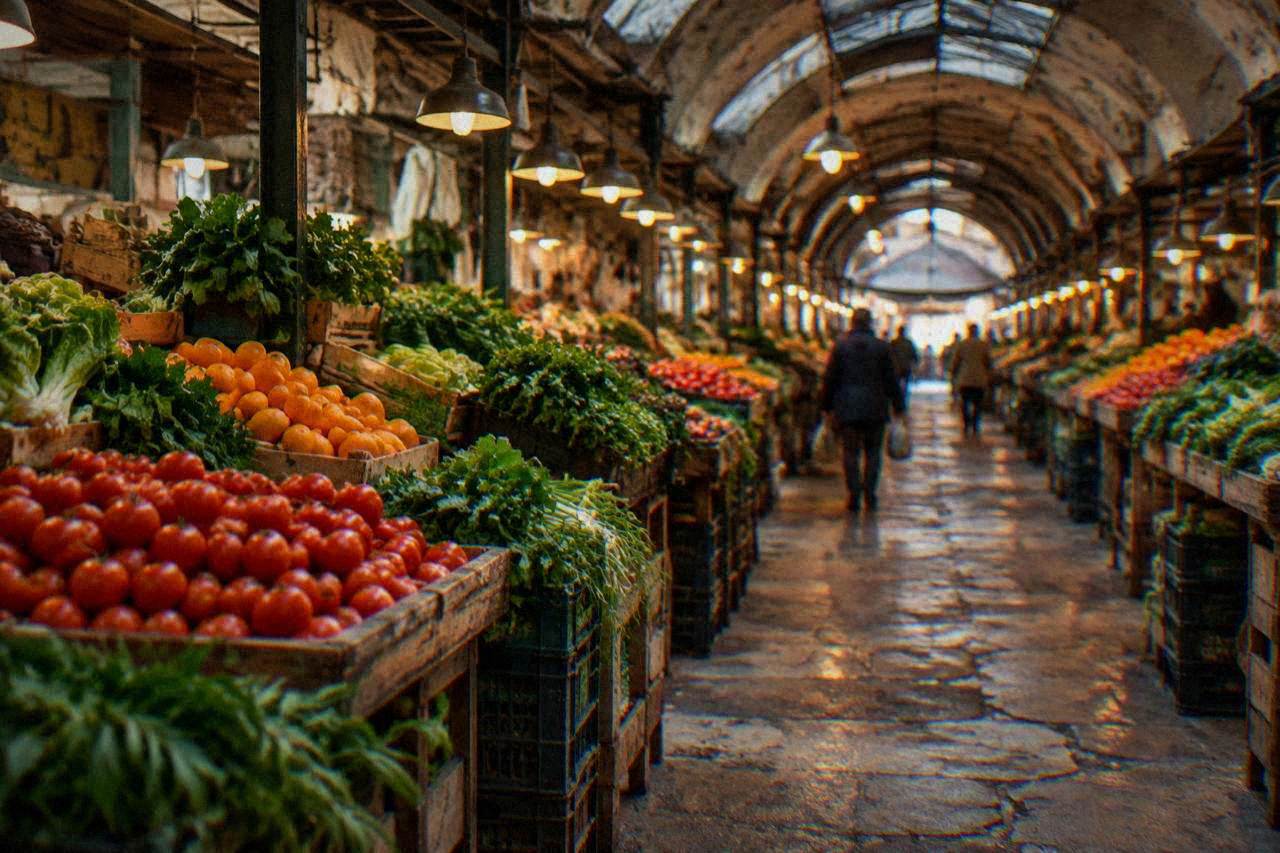
Kapani Market is the old food bazaar of Thessaloniki, the second city of Greece, sitting in the commercial grid a few minutes' walk southwest of Aristotelous Square. It is a named, established place in the city's food geography, and it works as a market first and a sight second: butchers, fish stalls, spice sellers, greengrocers and household goods traders all operate inside and around it, alongside the neighboring Modiano Market.
What Is Kapani Market In Thessaloniki?
Kapani Market is a historic covered food market in central Thessaloniki, in the block network between Aristotelous Square and the port-side quarter of the city, and it is one of the two great named markets of the centre alongside Modiano Market. It is a working trading bazaar rather than a curated attraction, and its stalls cover food and household goods rather than souvenirs.
The name belongs to the city's Ottoman-era commercial layer, when this district functioned as the principal bazaar of a port town that had been under Ottoman rule since 1430. Thessaloniki was founded in 315 BC by Cassander, taken into the Ottoman state in 1430, liberated on 26 October 1912, and reshaped by the Great Fire of 1917, which left 73,000 people homeless and led to the Hebrard reconstruction plan that gave the centre much of its present street layout. The market quarter sits inside that rebuilt grid.
What the desk can state plainly is that Kapani Market is a named, established market place (V), directly adjacent to Modiano Market, and that both feed into the city's gastronomic reputation. Thessaloniki's municipal gastronomy site references UNESCO and the Creative Cities Network, which is why food is treated so seriously here. What the desk cannot state, because no official source supplies it, is a founding date for the market, a stall count, opening hours or a renovation schedule. For hours in particular, the honest instruction is simple: confirm locally on arrival, since a working bazaar keeps traders' hours rather than museum hours.
The market rewards the same approach as the rest of the city's food culture. The editorial desk's companion pages on what to eat in Thessaloniki and the food Thessaloniki is famous for cover the dishes, and a market visit is where several of their raw ingredients are bought before they reach the city's tables.
Where Is Kapani Market And How Do You Get There?
Kapani Market sits in central Thessaloniki a few minutes on foot southwest of Aristotelous Square, in the market block adjoining Modiano Market, and the metro now serves the area: Line 1 runs from the New Railway Station to Nea Elvetia, with the Kalamaria extension from 27 August 2026, and a basic ticket costs 0.60 euro.
Getting there is straightforward. The Thessaloniki Metro opened its first line in November 2024, and the Kalamaria extension was inaugurated on 27 August 2026, adding five stations toward the southeastern suburbs. The metro runs 05:15 to 00:30 Sunday to Thursday and 05:15 to 02:00 Friday and Saturday, per the operator's own page. Fares, from the Thessaloniki Metro's ticket page: a basic single 0.60 euro, a reduced single 0.30 euro, a 24-hour daily ticket 2.50 euro, a 10+1 carnet 5.80 euro and a 30-day pass 16 euro.
| Ticket | Price | Notes |
|---|---|---|
| Basic single | 0.60 euro | One journey, per the metro ticket page |
| Reduced single | 0.30 euro | Per the metro ticket page |
| Daily ticket | 2.50 euro | 24 hours, unlimited metro |
| 10+1 carnet | 5.80 euro | Per the metro ticket page |
| 30-day pass | 16 euro | Per the metro ticket page |
On foot, the centre is compact. Aristotelous Square is the anchor of the downtown grid, the seafront Nea Paralia promenade and the White Tower lie east of it, and the market block sits inland of the square. The city centre guide on this site maps the walkable core. From the airport, Thessaloniki Airport "Makedonia" is about 16 km and 20 minutes by road from Aristotelous Square, with OASTH airport bus lines X1, X2 and X3 serving the city, per the operator's line list; the reported airport bus fare is about 2 euro and a day taxi about 25 euro, both figures reported by secondary sources, so confirm before relying on them.
For readers who want the market explained rather than just found, a guided option exists. The Thessaloniki Open Market Food Tour with Tasting covers the open markets with tastings, and Check availability shows the operator's live listing.

What Can You Find Inside Kapani Market?
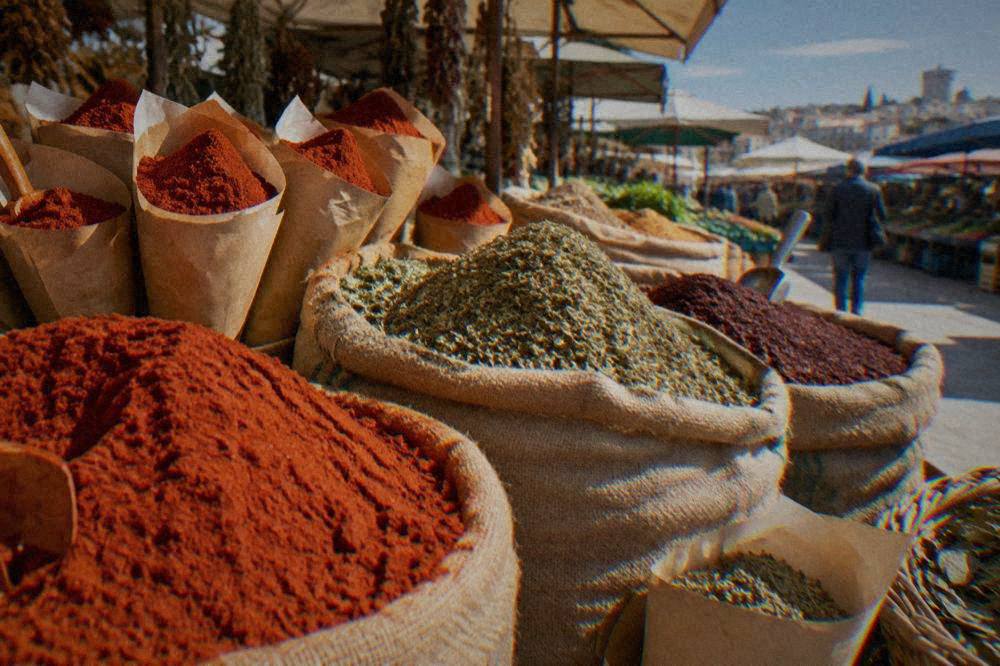
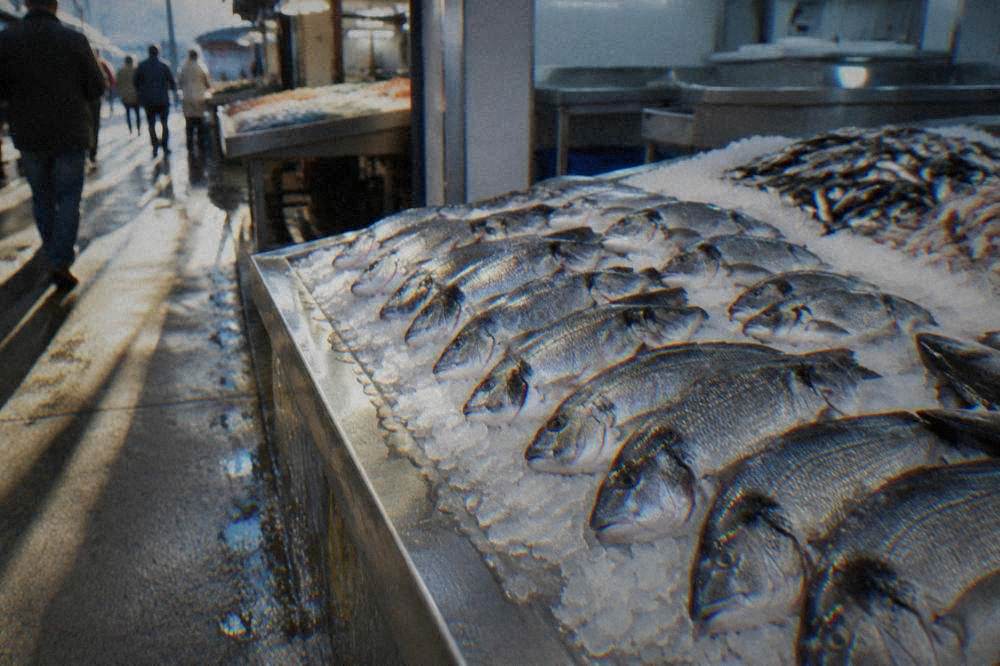
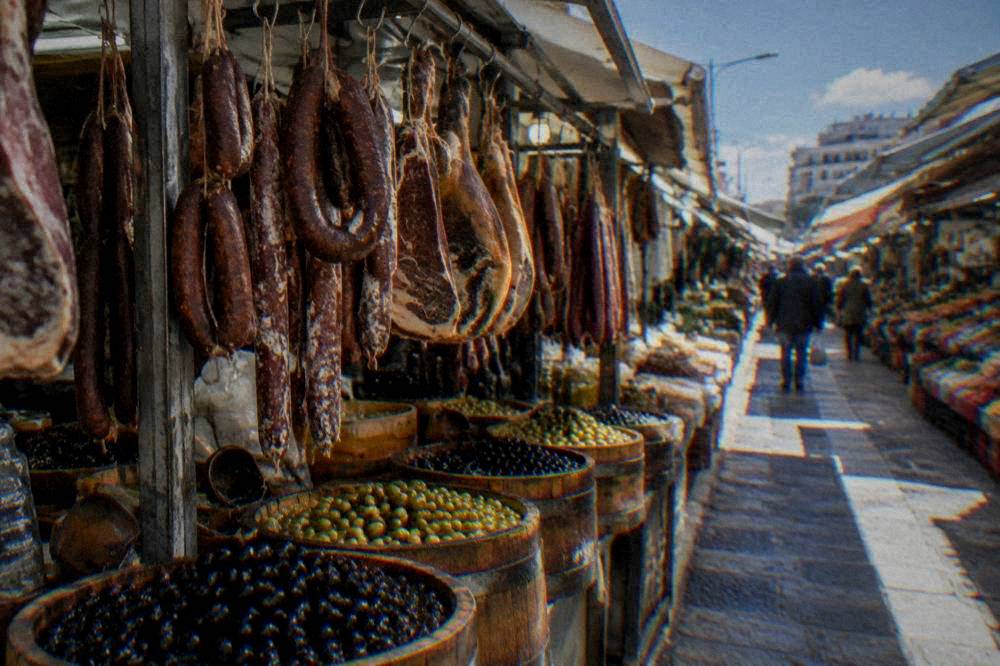
Inside Kapani Market the trade is food and household goods: butchers and fishmongers, greengrocers, spice and dried-goods sellers, cheese and olive stalls, plus traders in kitchenware and everyday items, all operating as a working bazaar. The desk can name the market and its category of trade, but stall names, prices and opening hours are unavailable, so treat each stall as its own shop.
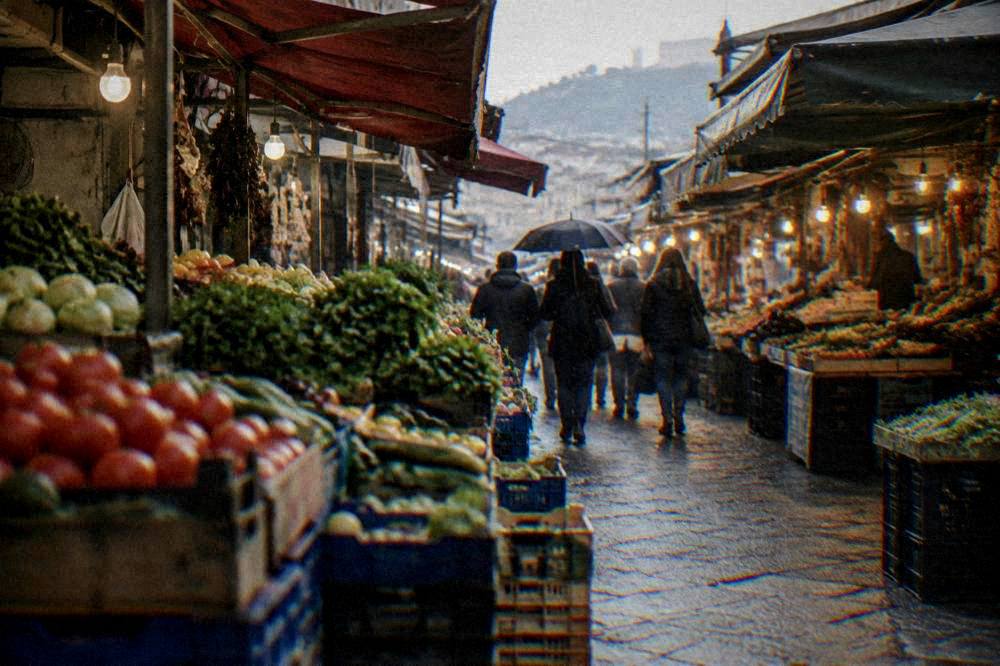
The character of the place is the draw. Unlike a museum, the market has no ticket, no closing ritual and no curated route. It is the layer of the city where restaurants, tavernas and home cooks source ingredients, and where the produce of Central Macedonia, the plain that stretches toward Pella, Veria and Edessa, arrives in the city each day. The smells are spice, cured fish and fresh bread; the sounds are trade, scales and vendor calls; the visual register is stacked crates rather than shop windows.
Two honest boundaries apply. The desk does not publish opening hours for the market: a working bazaar keeps traders' hours, which typically means Prices of any dish are likewise off the table; for planning, treat the market as a cash-and-card bazaar where you pay per stall.
For travellers who want the market decoded rather than self-guided, the mid-article pick below is the open-market tour that includes tastings, with pay-later and free-cancellation terms on the operator's listing.
Pairing the market with a guided walk of the whole food quarter is the desk's recommendation for a first visit. The related tour above is built around exactly this terrain, and the site's general Thessaloniki food tour page lists the wider food-walk options.
How Does Kapani Market Compare With Modiano Market?
Kapani Market and Modiano Market are two named markets sitting directly beside each other in central Thessaloniki, and the practical difference is layout and focus: Modiano Market is the covered market hall, while Kapani is the older-style bazaar of open-fronted stalls and lanes around it, so a visit naturally covers both in one walk.
A sensible route starts at Aristotelous Square, walks into the market block, covers Modiano Market's covered hall and then drifts through the Kapani lanes, exiting toward the Roman Forum or the Ladadika dining quarter depending on appetite. The whole cluster is flat, central and walkable.
| Market | Type | Source | Pair with |
|---|---|---|---|
| Kapani and Modiano combined | One contiguous market district | Both named places | Roman Forum, Ladadika, Hagia Sophia |
A useful pattern is to do the markets in the morning, eat nearby at midday, and spend the afternoon on the monumental sights. The Aristotelous Square guide covers the square itself, and the seafront Nea Paralia promenade, a walk rather than a swimming beach, runs east from the White Tower end of the centre.
What Should You Eat Around Kapani Market?
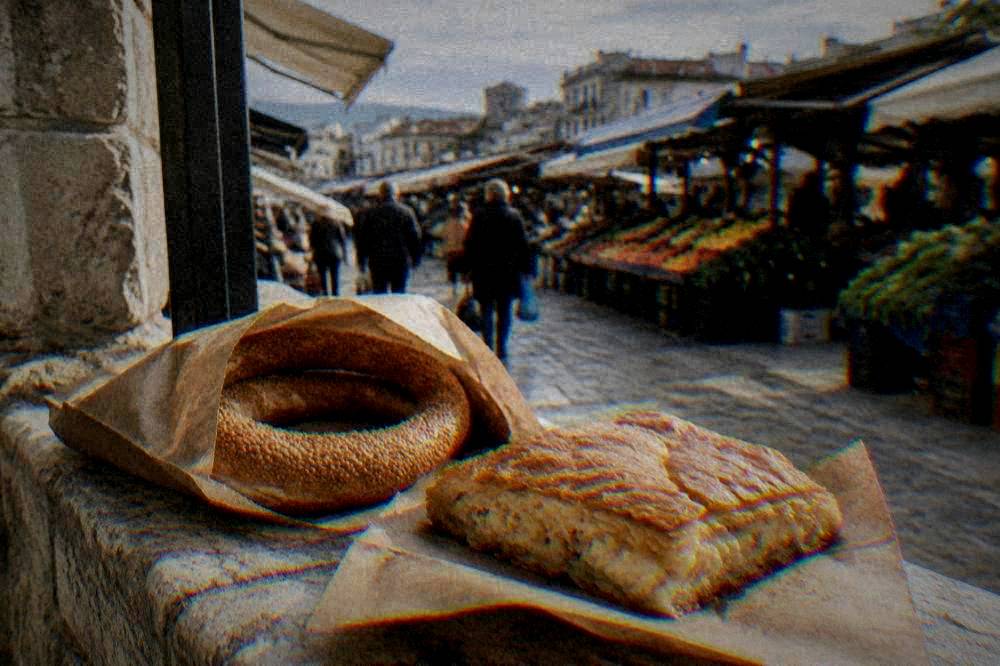
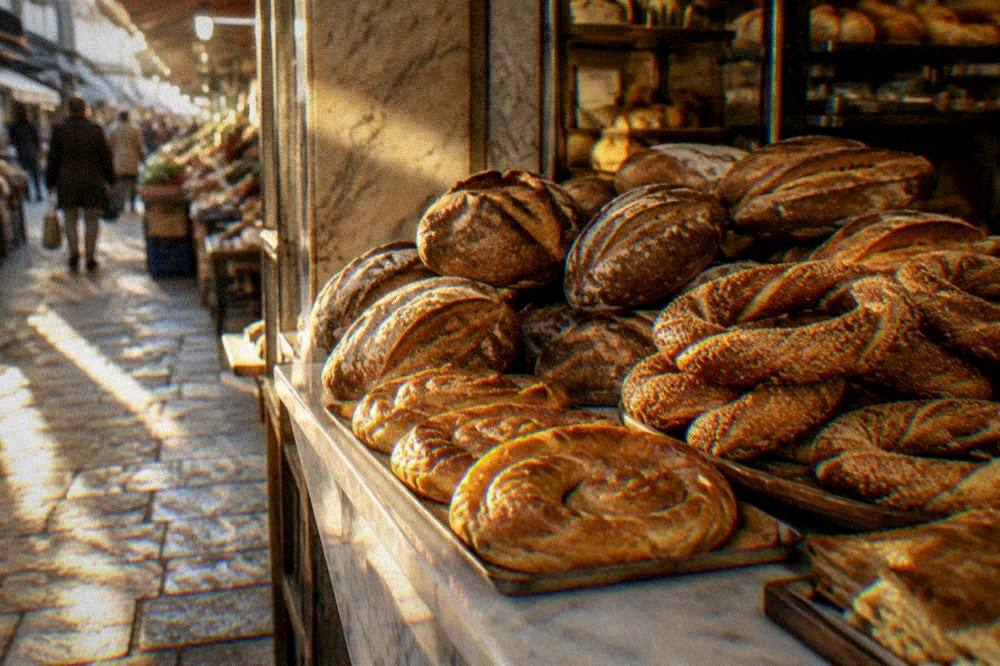
Around Kapani Market the eating is Thessaloniki's standard street and market food, bought from stalls, bakeries and counters in the surrounding lanes, but the desk cannot name shops, print dish prices or recount origin stories for bougatsa, koulouri or any sweet.
The honest frame: the municipal gastronomy site references UNESCO and the Creative Cities Network, which tells a reader the city takes food seriously, but the designation year is not printed on this site because it was not confirmed on an official page. The dishes themselves are covered properly in the site's dedicated food pages, which this page deliberately does not duplicate.
Readers who want the tasting handled by a local can take a guided option, and the solo pick below is the chef-led tastings walk that covers food and drinks across the centre.
What Else Is Within Walking Distance Of Kapani Market?
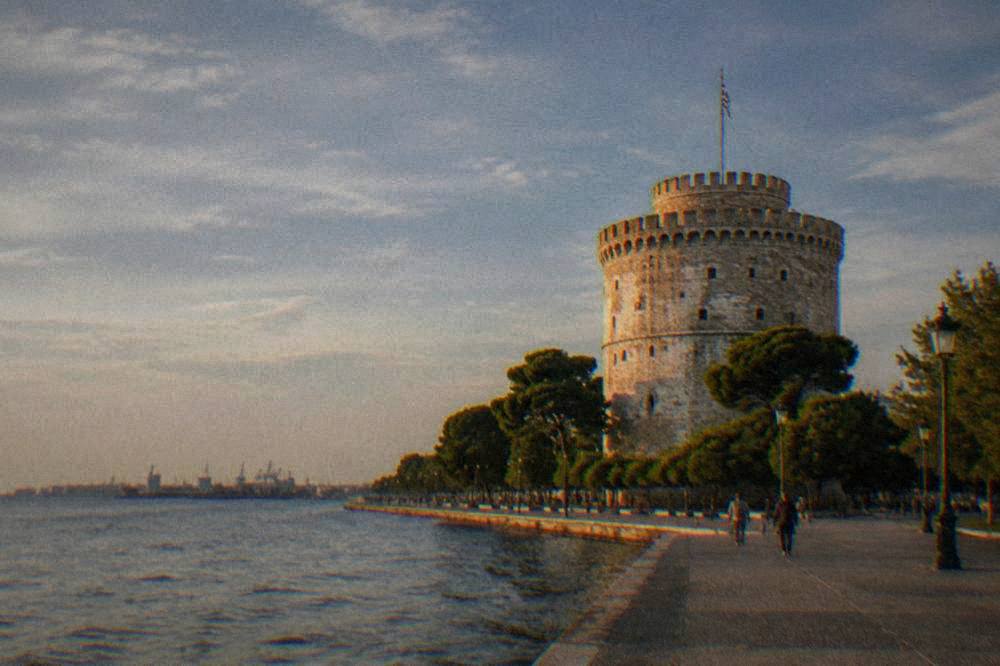
Within walking distance of Kapani Market lies the densest sight cluster in Thessaloniki: Aristotelous Square, the Roman Forum, Hagia Sophia, the Church of Saint Demetrius, the Rotunda, the Arch of Galerius and the seafront promenade, plus three major museums with published ticket prices, the Archaeological Museum and the Museum of Byzantine Culture at 10 euro full and 5 reduced, and the White Tower at 8 euro full and 4 reduced since 1 April 2026.
The market sits at the centre of a walkable monumental core, and the UNESCO listing of 1988, covering fifteen Paleochristian and Byzantine monuments, threads through it. A realistic day pairs the morning market with an afternoon of churches and museums. The desk's pages on the Rotunda, the Arch of Galerius and Hagia Sophia cover each sight in detail. Working churches, including the Church of Saint Demetrius, are free to enter and open outside services.
| Sight | Summer hours | Winter hours | Ticket |
|---|---|---|---|
| White Tower | Daily 08:00 to 21:00 (1 Apr to 31 Oct) | Daily 08:30 to 15:30 | 8 euro full, 4 reduced |
| Museum of Byzantine Culture | Daily 08:00 to 20:00 (8 May to 31 Oct) | Mon, Wed to Sun 08:30 to 15:30, Tue closed | 10 euro full, 5 reduced |
| Archaeological Museum | Daily 09:00 to 17:00 (1 Apr to 31 Oct) | Daily 09:00 to 17:00, Tue closed (1 Nov to 31 Mar) | 10 euro full, 5 reduced |
State museums are free on 6 March, 18 April, 18 May, the last weekend of September and 28 October, per the Museum of Byzantine Culture's visiting page. Two accuracy notes the desk repeats because the internet still gets them wrong: the Archaeological Museum is not open every day all year, it closes on Tuesdays from 1 November to 31 March, and the White Tower's 4 euro figure is outdated, the price has been 8 euro since 1 April 2026. Check the current price on each museum's own ticket page before booking.
When Is The Best Time Of Year To Visit Kapani Market?
There is no known seasonal pattern for Kapani Market's trade, so the honest answer runs on the city's climate instead: Thessaloniki's mean daily high peaks at 31.7 C in July and bottoms at a 9.3 C high in January, with December carrying the heaviest monthly rainfall at 55.1 mm and August the lightest at 19.3 mm, all per the HNMS Thessaloniki Mikra station, 1959 to 2010. A market hall is largely weatherproof, which helps in the wet months.
The climate record, station data rather than last year's weather, gives the planning frame. Spring and autumn are the comfortable shoulder seasons: April averages a 19.1 C high and October a 21.2 C high, each with roughly 36 to 43 mm of rain across the month. Summer is hot but drier, and winter is cool and the wetter stretch of the year.
| Month | Mean high C | Mean low C | Rain mm | Rain days |
|---|---|---|---|---|
| January | 9.3 | 1.5 | 37.7 | 11.5 |
| April | 19.1 | 7.9 | 36.1 | 11.1 |
| July | 31.7 | 19.3 | 23.8 | 6.7 |
| October | 21.2 | 11.3 | 43.0 | 9.3 |
| December | 10.9 | 3.2 | 55.1 | 12.7 |
Figures: HNMS Thessaloniki Mikra station, 1959 to 2010. The event calendar adds seasonal colour: the Dimitria festival ran 1 to 26 October in 2026 as its latest edition, the Thessaloniki International Film Festival ran 5 to 15 November 2026 in its 67th edition, and the Thessaloniki International Fair ran 5 to 13 September 2026 in its 90th edition. Saint Demetrius day falls on 26 October, which is also the city's liberation day, and Ochi Day follows on 28 October. The site's Thessaloniki Christmas page covers the December city.
Can You Visit Kapani Market On A Guided Tour?
Yes, guided food and walking tours of Thessaloniki include the open markets in their routes, and the desk's featured pick for this page is the Thessaloniki Open Market Food Tour with Tasting, a tour built around the open-market quarter with tastings, bookable through the operator's live listing.
A guided walk suits a first visit for a simple reason: the market quarter rewards interpretation. A guide can read the stalls, the cuts, the fish and the spices in a way a self-guided visitor will not get from a map, and the tasting format converts the market from a spectacle into a meal. The desk's solo pick below is the general city walk that covers the top sights and hidden gems for readers who want orientation before food.
For depth on the culinary side, the chef-led gastronomic walk is the strongest option on the roster, and it pairs naturally with a market morning.
How Does Kapani Market Fit Into A Wider Thessaloniki Trip?
Kapani Market fits a wider Thessaloniki trip as the morning anchor of a central day, with the rest of the stay given to the UNESCO monumental core, the seafront and the day-trip ring of Central Macedonia: Pella about 43 minutes by road, Vergina about 62, Dion about 67 and Meteora about 154 minutes and a full day, all computed free-flow drive times from Aristotelous Square.
Two or three days in the city is the realistic frame, and the market earns its slot on day one. After that, the region opens out. The ancient Macedonian sites sit within an hour: Pella, the Archaeological Museum about 43 minutes away, and Vergina, the Museum of the Royal Tombs of Aigai, about 62 minutes. Dion and Litochoro, the gateway to Mount Olympus, are each about 67 minutes. Meteora, at about 228 km, is a full day and should never be planned as a half day.
| Day trip | Road distance from Aristotelous Square | Free-flow drive time |
|---|---|---|
| Pella (Archaeological Museum) | 45.7 km | about 43 minutes |
| Vergina (Royal Tombs of Aigai) | 68.0 km | about 62 minutes |
| Veria | 72.8 km | about 52 minutes |
| Dion (archaeological park) | 90.1 km | about 67 minutes |
| Litochoro | 90.7 km | about 67 minutes |
| Edessa (waterfalls) | 90.3 km | about 82 minutes |
| Kassandra (Kallithea) | 86.2 km | about 78 minutes |
| Sithonia (Nikiti) | 97.2 km | about 96 minutes |
| Meteora (Kalambaka) | 227.5 km | about 154 minutes |
Distances are computed over OSM routing and assume free-flow traffic, so add margin for summer weekends. One regional correction worth carrying: a Mount Athos boat trip from Ouranoupoli views the monastic coast from the sea and does not land, and entry to Athos itself requires a permit, the diamonitirion, and is men only, per the reporting on the Mount Athos authorities. For the desk's final set of picks spanning markets, ancient Macedonia and family-friendly tickets, see below.
For everything beyond the market, start with the site's full guide to things to do in Thessaloniki, and let Thessaloniki Travel Guide carry the planning from there. Pack cash and patience, go early, and buy whatever the stall in front of you is busiest selling.
Common Questions About Kapani Market
Is Kapani Market in Thessaloniki worth visiting?
Yes, for anyone interested in food. It is a working bazaar of butchers, fishmongers, spice sellers and greengrocers in the city centre, and it is a named, established place in Thessaloniki's food geography alongside Modiano Market. Treat it as a market visit rather than a museum.
What are the opening hours of Kapani Market?
A working bazaar keeps traders' hours, which generally favours mornings. Confirm locally on arrival before planning a visit around a fixed time.
How do I get to Kapani Market?
Kapani Market sits a few minutes' walk southwest of Aristotelous Square in central Thessaloniki, next to Modiano Market. The metro is open, Line 1 since November 2024 with the Kalamaria extension since 27 August 2026, a basic ticket costs 0.60 euro and a daily ticket 2.50 euro, per the Thessaloniki Metro's ticket page.
What is the difference between Kapani Market and Modiano Market?
The two sit directly beside each other in the same market block. Modiano Market is the covered market hall; Kapani is the bazaar of open-fronted stalls and lanes around it.
Can you eat inside Kapani Market?
A guided food tour with tastings is the way to sample the quarter with the choosing handled by a local.
Is Kapani Market close to the main sights of Thessaloniki?
Yes. The market sits inside the walkable monumental core: Aristotelous Square, the Roman Forum, Hagia Sophia, the Church of Saint Demetrius, the Rotunda, the Arch of Galerius and the seafront are all in walking range, and the White Tower, the Museum of Byzantine Culture and the Archaeological Museum complete the cluster.