Thessaloniki Food Tour Options Compared
Food tours are one of the most bookable products in Thessaloniki, and the options differ more than their titles suggest. This page compares the formats, the stops they can and cannot include, and what the city's market and gastronomy scene actually offers.
Short answer
Thessaloniki food tours come in four main formats: market-based tasting walks, chef-led gastronomic tours, street food walks, and cooking classes with a market visit.
Food tourism is serious business in Thessaloniki, the second city of Greece, a coastal city on the Thermaic Gulf in Central Macedonia whose municipal gastronomy site openly references UNESCO and the Creative Cities Network. That connection, plus two famous covered markets within walking distance of Aristotelous Square, has produced a dense shelf of food tours: market walks, chef-led tastings, street food routes, cooking classes and hybrid tours that bolt a food component onto a general city walk. The titles blur together. The products do not.
This page compares them on what can actually be checked: what each format covers, which named places in Thessaloniki a route can realistically include, how group size and price behave, and where a self-guided alternative makes more sense. Where a question needs a primary source, the source is named in the text.
What Are The Main Types Of Food Tour In Thessaloniki?
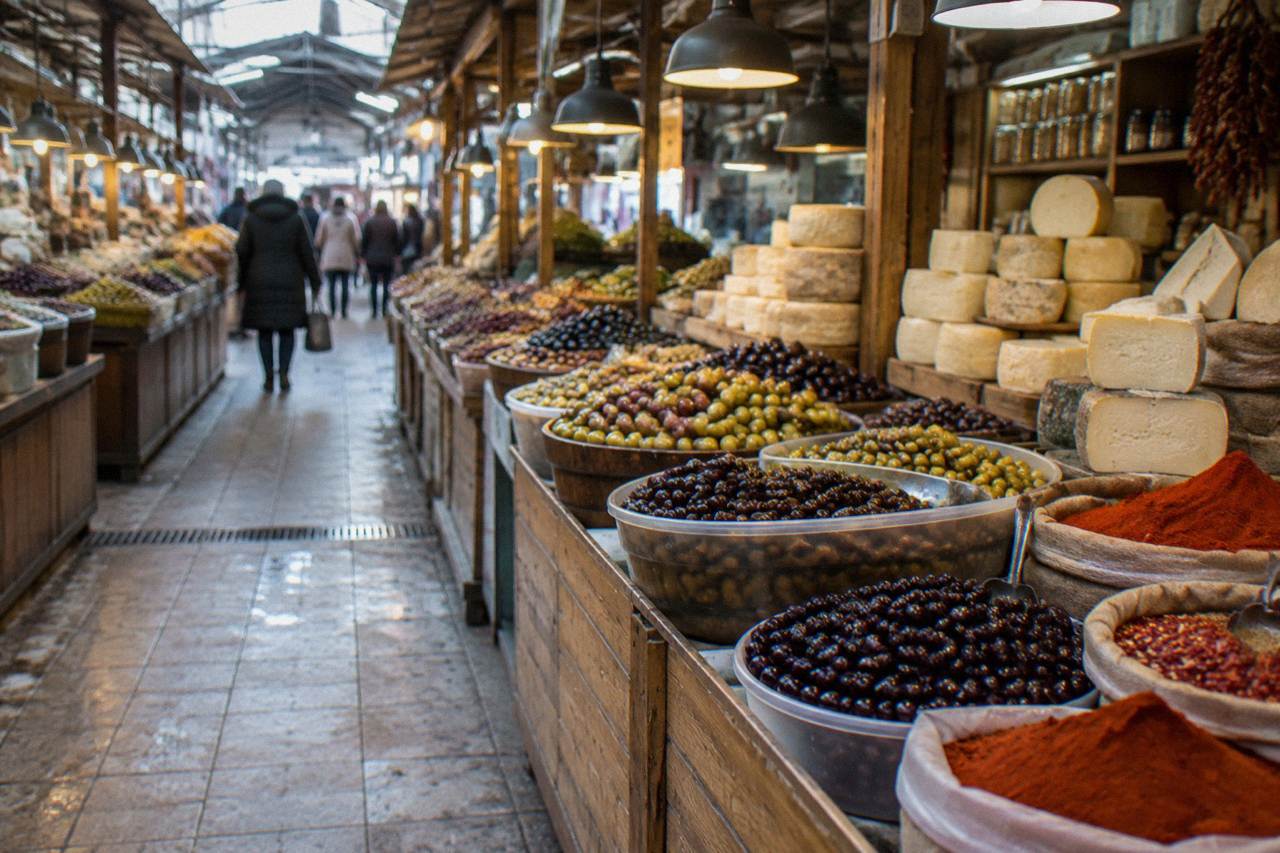
The Thessaloniki food tour market splits into four working formats: a market-based tasting walk around Kapani Market and Modiano Market, a chef-led gastronomic tour with seated stops, a street food walk built on quick hand-held stops, and a hands-on cooking class that usually starts with a market or shop visit. A fifth option is a general city walk with a light food component, which suits visitors who want sights first and snacks second. The formats overlap at the edges. A street food walk may pass through a covered market; a cooking class may include a tasting board before the stove is lit. What separates them in practice is pace, seating and how much commentary is about food versus the city itself.
The market walk is the most location-dependent format. Kapani Market and Modiano Market sit close together in the city centre, both a short walk from Aristotelous Square, so a tasting route can cover both in one outing alongside the Modiano Market's food stalls. The chef-led format moves the emphasis from browsing to explaining: what the ingredient is, how it is used, why it belongs to this city. The cooking class format ends with a meal you helped build, which makes it the longest sitting of the four.
Street food walks trade depth for coverage. They suit a first day in the city, when a visitor wants a walking orientation plus calories rather than a seminar. The hybrid city-plus-food walk suits travellers with one free afternoon who would otherwise have to choose between a Thessaloniki walking tour and a food outing.
| Format | Typical anchor stops | Best suited to | Watch out for |
|---|---|---|---|
| Market tasting walk | Kapani Market, Modiano Market | First-time visitors, photographers | Market stall hours vary; confirm the tour's start time against your own plans |
| Chef-led gastronomic tour | Seated tastings, specialty shops | Food-motivated travellers | More stationary than a walk; check dietary options on the listing |
| Street food walk | Hand-held stops across the centre | Short visits, tight budgets | Fast pace, less history per stop |
| Cooking class with market visit | Market plus a home kitchen | Families, repeat visitors | Longest commitment of the four formats |
| City walk with food component | White Tower area, Ano Poli viewpoints | Sightseers who also eat | Food is a supplement, not the focus |
A word on what this city's food scene is and is not. The municipal gastronomy site's connection to the Creative Cities Network is a real, checkable thing. Likewise, the origin stories of bougatsa and koulouri are popular guidebook fodder, but none of them appears on this page. The listings below cover the markets, the neighbourhoods and the products on offer.
How Much Does A Thessaloniki Food Tour Cost?
Thessaloniki is a euro-city, Greece has used the euro since 2001, and formats differ more in inclusions than in raw price: market and street food walks sit at the accessible end, chef-led tours mid-shelf, and private or cooking-class formats at the top. The honest comparison is therefore not a price ladder but an inclusion list. Two tours at the same from-price can differ by whether drinks, a seated meal or a guide's commentary are inside the number.
Read each listing's inclusions the way you would read a restaurant bill. Does the price cover tastings only, or tastings plus a drink at each stop? Is the final stop a full meal or a sample? Is pickup included, and in a city this compact, do you even want it to be? The city centre is walkable, and the standard food tour geography, from Aristotelous Square through the market quarter into Ladadika, needs no vehicle.
For context on the wider budget: the Thessaloniki Metro's ticket page states a basic fare of 0.60 euro and a daily ticket of 2.50 euro, so getting to a meeting point in the centre costs very little. State museum entry, if a route passes the White Tower or the Museum of Byzantine Culture, runs 8 euro and 10 euro full price respectively under the 2026 ticketing. Those are the fixed reference points; the food tour itself is priced by the operator, and the listing is the place to check it.
Which Stops Can A Thessaloniki Food Tour Realistically Include?
A realistic Thessaloniki food tour route stays inside the compact centre: Kapani Market and Modiano Market for produce and stalls, the Ladadika district for seated stops, the streets around Aristotelous Square for bakeries and street food, and, on some formats, a cross into Kalamaria or a nearby suburb for a home-cooking experience.
Routes that promise to cover the centre, Ano Poli and a beach in one food outing overreach; Ano Poli is uphill and food-light, and the waterfront promenade, the Nea Paralia, is a walking and cycling space rather than a food corridor. The geography favours the market quarter. Everything a classic route needs sits within a short walk of the square.
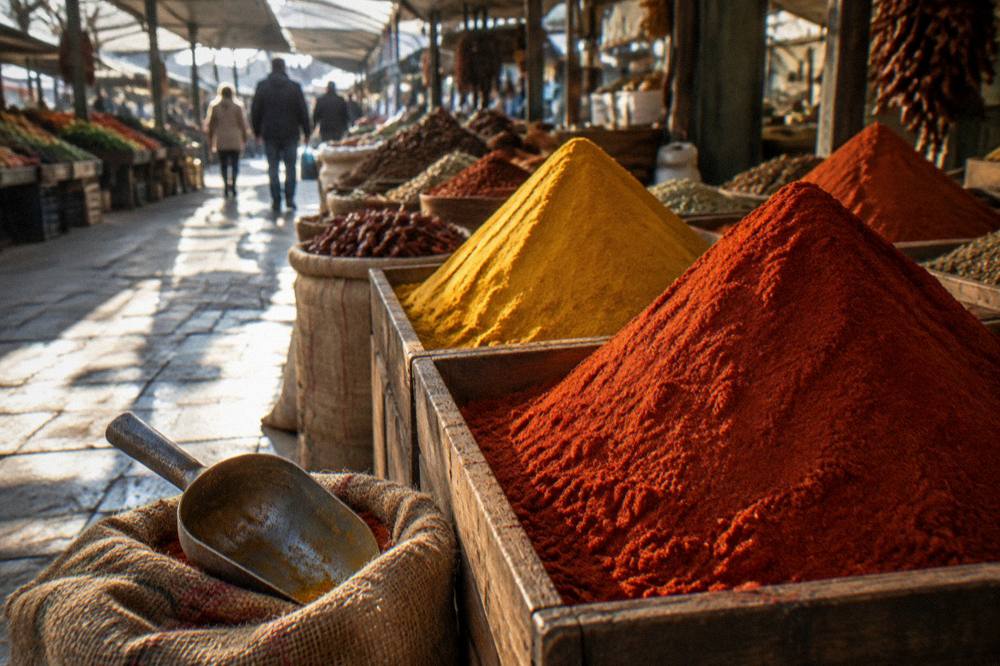
The two markets are the anchors. Modiano Market is the restored covered market in the heart of the centre; Kapani Market is the older, open-air sprawl beside it, and together they give a tour its produce displays, its spice stalls and its noise. A food tour that skips both is really a restaurant crawl. Around them, the formats diverge: street food walks work the busy commercial streets, chef-led tours tend toward specialty shops and seated tables, and cooking classes begin at the market to shop and end in a kitchen.
What no honest route can promise is a specific named shop or bakery. This site holds no restaurant, bakery or cafe rankings, and the "original" shop claims that circulate around the city's sweets are exactly the kind of story that gets repeated without a source. Tours pick their own partner stops, and the listing states what is included. Treat any stop list on a listing as the operator's plan for that departure, not a permanent fixture.
| City area | Food role on a tour | Realistic on a 2 to 4 hour route? |
|---|---|---|
| Kapani Market | Produce, spice and bulk stalls | Yes, core stop |
| Modiano Market | Covered market, food stalls | Yes, core stop |
| Streets around Aristotelous Square | Street food, bakeries, coffee | Yes |
| Ladadika | Seated stops, evening restaurants | Yes, especially later tours |
| Ano Poli | Views, tavernas, uphill streets | Only on hybrid walks; adds climb time |
| Nea Paralia | Waterfront walk, not a food strip | As a stroll finish, not a tasting stop |
| Kalamaria | Home kitchens, suburban cooking classes | Only on class formats with transfer |
Chef-Led Tours Or Local-Guide Tours: Which Suits You?
The choice between a chef-led gastronomic tour and a local-guide tasting walk comes down to commentary style and seating: the chef-led format explains ingredients, technique and context, usually with longer seated stops, while the local-guide format trades depth for pace, street energy and a broader slice of the city in the same afternoon.
Neither is the better product; they serve different appetites, and a first-time visitor with one free evening often gets more from the faster walk, while a returning visitor who already knows the skyline gets more from the chef. The listings below carry both formats side by side, with ratings and review counts rendered from live data rather than quoted from memory.
The featured option on this page, the Thessaloniki: Food Tastings and Drinks Tour with a Chef, sits in the chef-led camp: tastings plus drinks with a professional cook framing each stop. For contrast, the Best of Thessaloniki tour by a local covers the city broadly with food folded in, which works when the White Tower, the Rotunda and the Roman leftovers matter as much as lunch. A visitor torn between the two should ask which failure would annoy more: missing the monuments, or missing the explanation of the food.
A practical note on pace and time of day. Summer afternoons in this city are genuinely warm: the HNMS Thessaloniki Mikra station record, 1959 to 2010, puts the July mean daily high at 31.7 C, and even September averages 27.1 C. Tours that walk the market quarter in mid-afternoon in high summer feel different from the same route at 18:00. Winter is milder but wetter, with December showing the highest monthly rainfall in that station record at 55.1 mm, so a covered-market-heavy route is the safer cold-season pick. Operators shift departure times with the season; the listing shows the current slots.
Can You Do A Thessaloniki Food Tour On Your Own?
Yes, a self-guided food walk of Thessaloniki is entirely workable, because the two markets and the streets around Aristotelous Square are public, free to enter and within a short walk of each other; what you lose is the explanation, the relationship stops with vendors and the pre-arranged tastings, and what you gain is freedom to linger, spend only on what you actually want and set your own pace. A sensible self-guided loop starts at Kapani Market, moves through Modiano Market, wanders the commercial streets toward the seafront, and ends in Ladadika. Costs are then whatever you choose to spend, with no per-person tour price attached.
The trade-off is real, though. A tasting tour's stops are pre-negotiated: portions are ready, vendors expect the group, and nothing is ordered blind. Alone, you are a customer like any other, which is fine for a confident traveller and slow for one who cannot read a menu. The middle path is popular: book one structured outing early in the trip to calibrate, then repeat the favourites independently later. The city's compactness makes this easy; the metro's 0.60 euro basic ticket, per the Thessaloniki Metro's ticket page, covers the cross-town legs if the loop stretches toward Kalamaria.
Two things to keep honest about. First, this site publishes no restaurant rankings, so a self-guided route here names districts and markets, not venues; build the venue list from your own research at the time you travel. Second, market stall hours are not reliably published, so check locally on the day, and note that a Sunday arrival changes what is open. For the wider picture of what the city cooks, the what to eat in Thessaloniki guide covers the dishes themselves, and the what food is Thessaloniki famous for answer page handles the headline question.
What About Cooking Classes And Market Visits?
Cooking classes are the deepest food product in Thessaloniki: they typically pair a market or shop visit with a hands-on session and a shared meal, and they suit travellers who want to take a dish home rather than just taste it, families who need an activity that ends in dinner, and anyone whose second or third visit has exhausted the walking formats.
The cost per hour tends to look better than a tasting walk's because the meal is the event, but the commitment is longer and the group smaller, so availability is tighter. Check the listing for the menu, the dietary options and whether children can join.
The class formats on this site's roster range from a private home-cooking experience with a local family to a structured Greek cooking class that begins with a market visit and ends with lunch. The differences that matter are venue, menu and group size: a family kitchen is intimate and improvised, a class with a market visit is organised and instructional. Both beat a restaurant meal for anyone who cooks at home, and both are slower than a walk, so they fit best on a relaxed day or a rainy one; with November averaging 52.8 mm of rain in the HNMS Thessaloniki Mikra station record, 1959 to 2010, an indoor format earns its place in a late-autumn itinerary.
Street Food Walks: What Do They Cover?
A street food walk in Thessaloniki covers the hand-held classics sold across the centre: the bread-ring snack sold on street corners, savoury and sweet pastries from bakeries, and quick grilled or wrapped items eaten standing, with a guide steering the group between stops and folding in city commentary between bites. It is the fastest and usually the cheapest structured food format, and it doubles as an orientation walk, which makes it the natural day-one purchase for a short visit. What it is not: a seated meal, a cooking lesson or a deep seminar on any single dish.
The origin-story problem returns here. The bread ring and the creamy pastry are the two foods whose invented histories circulate most freely in travel content, and this site prints none of them. A good street food guide will tell stories; a reader should enjoy them as stories. The layer underneath is simpler: the snacks exist, they are sold everywhere in the centre, and a guided walk buys them faster than a first-time visitor could find them alone.
| Format | Food depth | City depth | Pace | Good for |
|---|---|---|---|---|
| Street food walk | Broad, hand-held | Moderate | Fast | Day one, short visits |
| Market tasting walk | Broad, produce-focused | Light | Moderate | Market lovers, photographers |
| Chef-led gastronomic tour | Deep, ingredient-level | Light to moderate | Moderate, seated stops | Food-motivated travellers |
| Cooking class | Deepest, hands-on | Minimal | Slow | Families, cooks, repeat visitors |
| Self-guided loop | You decide | You decide | Yours | Confident, independent travellers |
How Do Food Tours Fit Into A Wider Thessaloniki Itinerary?
A food tour slots most naturally into the late afternoon and evening of a first or second day in Thessaloniki, after the sightseeing core, the White Tower, the Rotunda, the Arch of Galerius and a museum, has been cleared, and before the day trips to Pella, Vergina, Mount Olympus or Meteora begin; because food tours run in the centre and day trips consume whole days, mixing them on the same date usually fails. The city's compactness is the enabler: sights, markets and dinner stops share one walkable core, so a food tour rarely needs its own dedicated half-day in the way a Meteora trip does, at about 228 km each way and a full day by road.
A sample shape for a three-day stay: day one for the seafront and the Roman and Byzantine core, ending with a street food walk as orientation; day two for museums in the morning and a chef-led tour in the evening; day three for a day trip, with a cooking class held in reserve for a wet or jet-lagged afternoon. Adjust for season: winter closes the Archaeological Museum and the Museum of Byzantine Culture on Tuesdays from 1 November, which frees a Tuesday for food and markets instead. The things to do in Thessaloniki page carries the full sightseeing spine, and the Kapani Market page covers the market itself in detail.
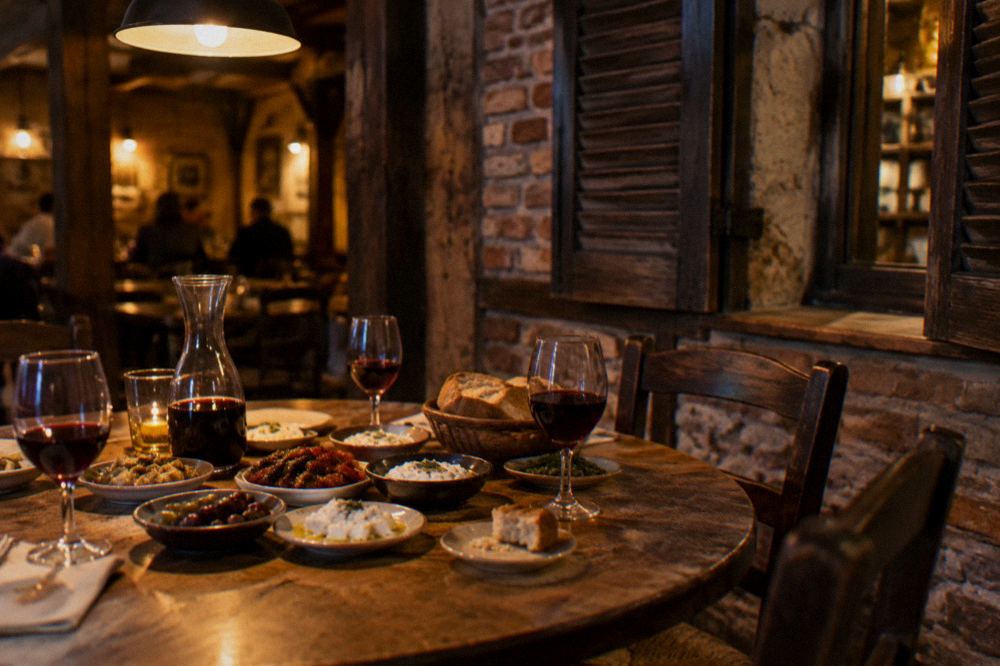
Day trips with a food angle exist but are rarer than the ancient-site trips. Edessa, about 82 minutes by road, pairs waterfalls with the regional table; the Pozar thermal baths and Edessa day trip below is the packaged version. Naoussa and Veria sit about 76 and 52 minutes out respectively, in wine country, though this site holds no winery-visit package for that corridor beyond the wine-tasting products in the city itself. Halkidiki, about an hour to its gateway, is a beach-and-sea destination more than a food one. The rule of thumb: eat in the city, sight-see outward.
Booking Questions Worth Checking Before You Pay
Before booking any Thessaloniki food tour, check four things on the live listing: the dietary policy, since a tasting menu is a fixed menu; the meeting point, since the centre is walkable but your hotel may not be near it; the cancellation window, since plans in Greece shift with weather and ferries; and the group-size cap, since a twelve-person tasting walk and a four-person one are different products with near-identical titles. None of these is glamorous, and all of them decide whether the afternoon works. The listing, not this page, holds the current answers.
A few Thessaloniki-specific angles. If the visit falls in late October, the city's patron day on 26 October and the national holiday on 28 October bring parades and closures that can move a meeting point or thin a market; the Dimitria festival was reported to run 1 to 26 October in 2026, so autumn visits carry a cultural overlay worth checking. If the visit overlaps winter, note that the Tuesday museum closures free Tuesday for food. And if the plan includes a metro ride to the meeting point, the Thessaloniki Metro runs 05:15 to 00:30 Sunday to Thursday and 05:15 to 02:00 Friday and Saturday, per its own site, so late-evening tour endings are covered in both directions.
| Check | Why it matters | Where to look |
|---|---|---|
| Dietary accommodations | Fixed tasting menus need advance notice | Listing's inclusions and options |
| Meeting point | Determines your transit plan; centre is walkable, suburbs less so | Listing details |
| Cancellation terms | Weather and schedule shifts | Listing policy before payment |
| Group size | Changes the feel and the pace | Listing description |
| Departure time vs season | Summer heat shifts tours later | Listing calendar |
| Public holiday overlap | 26 and 28 October affect the centre | City event calendar at booking time |
Guided Or Self-Guided: A Plain Comparison
Guided tours win on access, explanation and efficiency; self-guided food walking wins on cost control, pace and repeatability, and in a city whose market quarter is public and compact, the self-guided floor is genuinely good rather than a consolation prize. The deciding factors are confidence and time budget. A traveller with two evenings can do both: one guided outing to learn the map and the vocabulary, one independent night to return to what worked. A traveller with a single evening should usually buy the guide, because the first evening alone is spent learning what a guide would have explained in minutes.
Money behaves differently in each mode. A guided tour is one fixed per-person price covering its listed inclusions, rendered live on this site's product pages. A self-guided evening is pay-as-you-go, and since this site publishes no dish prices, no range is quoted here: budget from what the stalls and menus show on the day, and check prices in the room rather than trusting any round number from the internet. Transport between the parts of a self-guided loop is trivially cheap by metro at 0.60 euro a ride, per the metro's ticket page, and the centre legs need no transport at all.
The middle option, a market visit plus one booked tasting experience, is what this site's editorial desk would point a first-time visitor toward. The Thessaloniki Travel Guide covers the sightseeing core for the rest of the stay, and the itineraries for one, two and three days slot food outings in explicitly.
What About Dietary Restrictions And Allergies?
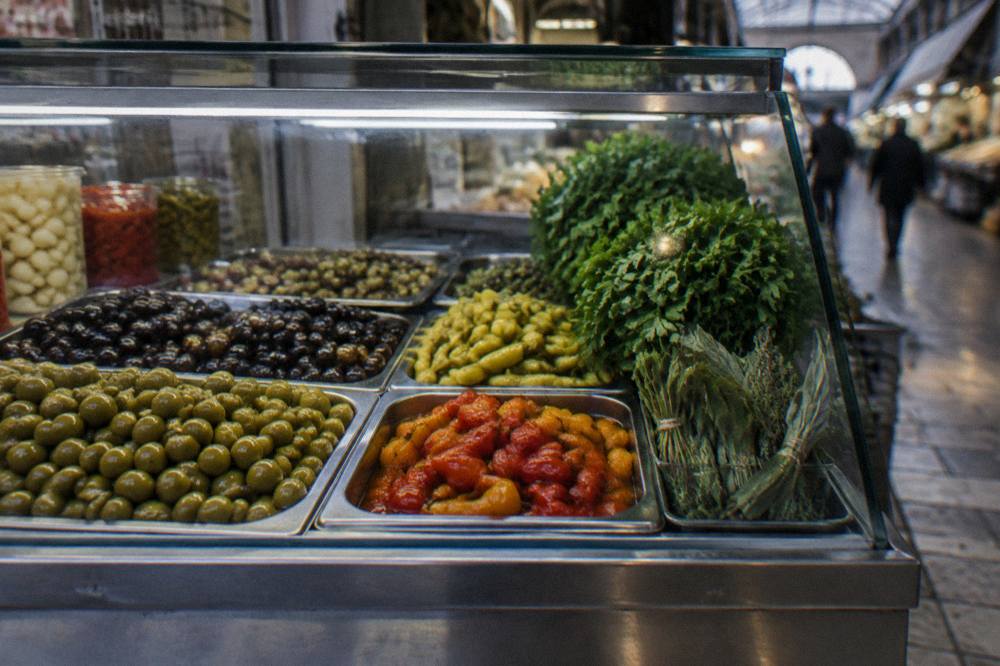
Food tours in Thessaloniki can usually accommodate vegetarian diets without much friction, since the market and pastry repertoire is heavy on vegetables, cheese and bread, but allergies, vegan requirements and gluten-free needs must be raised with the operator before booking, because a tasting menu is a pre-arranged chain of stops and a last-minute substitution may not be possible at a partner vendor. The listing's booking fields and message option exist for exactly this. State the restriction, wait for the answer, then pay.
This is one place where the chef-led formats earn their premium: a professional cook guiding the stops is better placed to re-route a menu than a general guide relaying to a vendor. Cooking classes are the most flexible of all, since the group prepares the food and the ingredients are visible from the start. The self-guided route is fully flexible but gives no safety net: a traveller with a serious allergy eats alone at their own diligence, and Greek menus are not always written with allergen codes. None of this is unique to Thessaloniki, but a fixed-route tasting format raises the stakes compared with a la carte dining.
Common Questions About Thessaloniki Food Tours
How much does a food tour in Thessaloniki cost?
Per-person prices are set by the operators and render live on this site's tour pages, so no figure is typed here. The format drives the price more than the brand: street food and market walks sit at the accessible end, chef-led tastings mid-shelf, and private or cooking-class formats above them. Check the live listing for the current from-price and what it includes.
Which market is better for a food tour: Kapani Market or Modiano Market?
They sit beside each other in the centre, and tours typically use both. Kapani Market is the older open-air sprawl of produce and spice stalls; Modiano Market is the restored covered market. A route that includes one but not the other is still a full outing, but the strongest market walks take in both.
Are Thessaloniki food tours suitable for vegetarians?
Usually yes, and the market-heavy formats are naturally vegetable-forward. Raise the requirement with the operator before booking anyway, since stops are pre-arranged. Vegans and travellers with allergies should always message the operator first and confirm before paying.
Can you do a Thessaloniki food tour on your own?
Yes. The markets are public and free, the core is compact and walkable, and a self-guided loop from Kapani Market through Modiano Market to Ladadika costs only what you spend on food. You give up the explanations, the vendor relationships and the pre-set tastings.
How long does a food tour in Thessaloniki last?
Durations vary by product and render from each live listing rather than being typed here. The formats run shorter for street food walks and longer for cooking classes, which include the meal itself. Check the duration on the listing against the rest of your day's plan before booking.
When is the best time of day for a food tour in Thessaloniki?
Late afternoon into evening works well in summer, when the HNMS Thessaloniki Mikra station record, 1959 to 2010, puts the July mean high at 31.7 C. In cooler months a midday start is comfortable. Operators shift departure times with the season, so the listing's calendar is the current truth.