Thessaloniki Walking Tour: Which City Walk To Book
A guided walk is one of the fastest ways to read Thessaloniki, a layered coastal city in Central Macedonia where Roman, Byzantine and Ottoman monuments stand within a compact centre. This guide sets out what a city walk covers, what the sights cost to enter, and which walk fits which kind of traveller.
Short answer
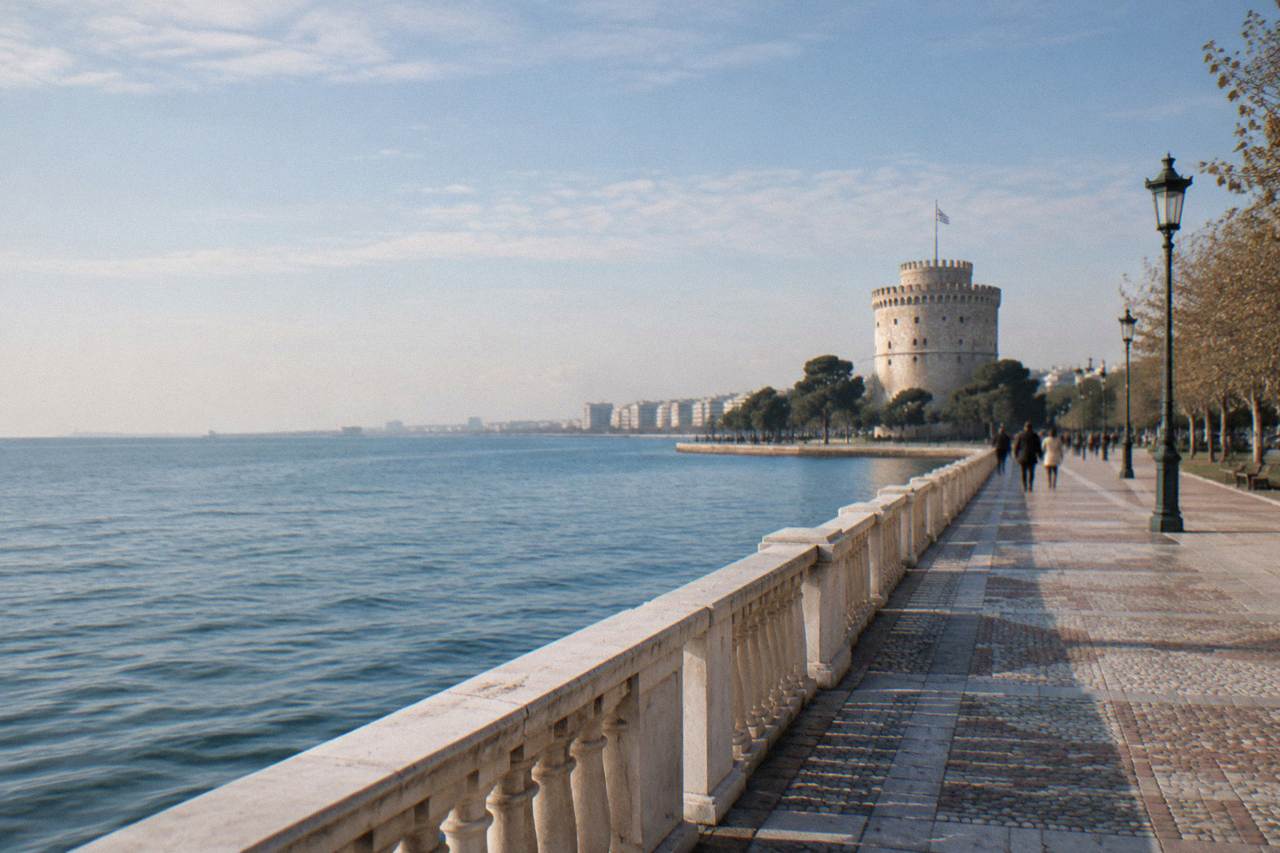
A Thessaloniki walking tour typically connects Aristotelous Square, the White Tower, the Roman Galerian complex and the upper town of Ano Poli in a single guided loop, with food-focused walks threading Modiano and Kapani markets instead. Sights along the route are cheap or free: the White Tower is 8 euro, the big state museums are 10 euro, and the churches are free.
Thessaloniki, the second city of Greece, sits on the Thermaic Gulf in Central Macedonia, and its centre is compact enough that a walking tour can cover two thousand years in a single loop. Founded in 315 BC by Cassander and named for his wife Thessalonike, the city carries a Roman palace, fifteen UNESCO-listed Paleochristian and Byzantine monuments inscribed in 1988, an Ottoman-era upper town and a seafront promenade, the Nea Paralia, all within reach on foot. The question for a visitor is not whether to walk the city but which walk to book, because a sights walk, a food walk and a market walk overlap far less than their titles suggest.
What Does A Guided Walk Around Thessaloniki Include?
A standard guided walk of Thessaloniki connects Aristotelous Square, the White Tower, the Arch of Galerius and the Rotunda, and often climbs into Ano Poli beneath the Byzantine walls, with a licensed or local guide explaining the Roman, Byzantine and Ottoman layers along the way. Church interiors are free to enter, and the walk itself usually skips museum interiors, which keeps the route moving through open streets and squares rather than ticket lines.
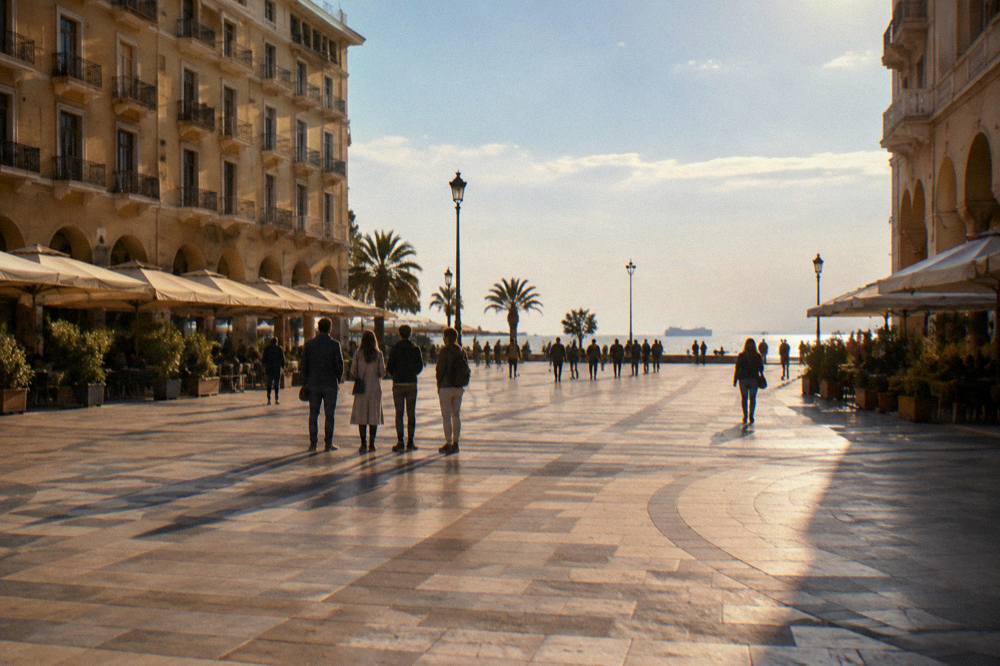
The core route has barely changed in a generation, and for good reason: everything on it sits within a walkable band between the seafront and the old walls. Most walks start on or near Aristotelous Square, the centrepiece of the post-fire Hebrard plan that reshaped the centre after the Great Fire of 1917 left 73,000 people homeless. From there the route runs down to the White Tower, the Ottoman-era landmark on the promenade, then east along the water or inland to the Galerian complex, where the Arch of Galerius and the Rotunda anchor the Roman layer.
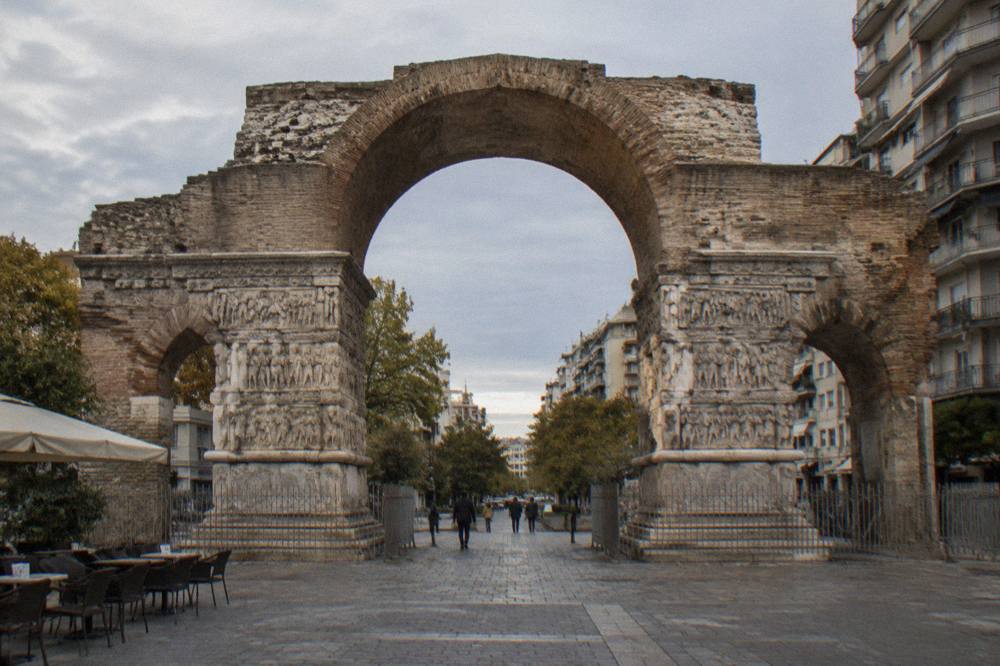
What a guided walk adds, beyond the route itself, is the reading of buildings a casual passer-by would misread. The Rotunda has been a Roman mausoleum-adjacent structure, a church and a mosque across its life. The Heptapyrgion fortress in Ano Poli served as the city's prison until 1989, a detail that reshapes how the upper town looks once you know it. A guide who can place those layers in order turns a pleasant stroll into the history lesson the city is quietly offering.
Here is what the main sights along a standard walk cost and when they are open, taken from the museums' own visiting pages:
| Sight On The Walk | Hours | Admission |
|---|---|---|
| White Tower | 1 Apr to 31 Oct daily 08:00 to 21:00; 1 Nov to 31 Mar daily 08:30 to 15:30 | 8 euro full, 4 euro reduced, since 1 April 2026 |
| Museum of Byzantine Culture | 8 May to 31 Oct daily 08:00 to 20:00; winter Mon, Wed to Sun 08:30 to 15:30 | 10 euro full, 5 euro reduced |
| Archaeological Museum | 1 Apr to 31 Oct daily 09:00 to 17:00; 1 Nov to 31 Mar 09:00 to 17:00, closed Tuesday | 10 euro full, 5 euro reduced |
| Arch of Galerius | Open-air monument on Egnatia, viewable at any hour | Free |
| Working churches (Hagia Sophia, Church of Saint Demetrius) | Open outside services; hours vary | Free |
One practical note worth folding into your planning: state museums in Greece are free on 6 March, 18 April, 18 May, the last weekend of September and 28 October, and the White Tower stops entry 20 minutes before closing. If your walk ends near a museum in late afternoon, the timing matters.
Which Sights Should A First Walk In Thessaloniki Connect?
A first walk should link Aristotelous Square, the White Tower, the Galerian complex and the Church of Saint Demetrius, in roughly that order, because that single line crosses the Roman, Byzantine and modern city in under an hour of actual walking. Add Ano Poli only if your legs and schedule allow a second half, since the climb to the walls adds a genuinely different district rather than more of the same one.
The logic is geographic. The four anchors sit along or just off Egnatia, the modern street that follows the alignment of the Roman Via Egnatia, so a walker moves forward through the city's strata almost without detour. The Church of Saint Demetrius, dedicated to the city's patron saint whose name day falls on 26 October, the same date the city celebrates its liberation in 1912, sits a short way west of the Rotunda. Hagia Sophia, another of the UNESCO fifteen, sits between the square and the Galerian complex and needs only a pause.
The upper town is the reward for the climb. Ano Poli keeps its Ottoman-era street plan, low houses and the Trigoniou Tower viewpoint, and the surviving stretch of the Byzantine walls frames the whole district; the original circuit ran about 8 km, of which about 4 km still stands. A walking tour that includes Ano Poli is a different product from one that stays on the flat, and the slope is real: check the route description before booking if steep streets are a concern.
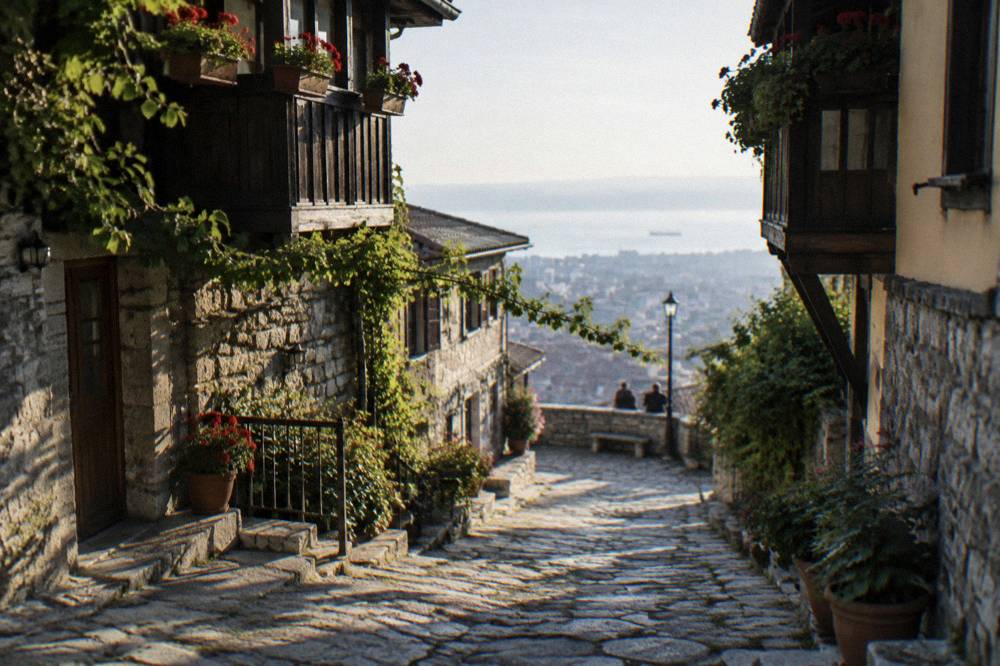
A typical sights walk breaks down like this, using distances a walker can verify on any city map:
| Leg Of The Walk | What You Pass | Character |
|---|---|---|
| Aristotelous Square to White Tower | Seafront blocks, the promenade start | Flat, busy, 10 minutes |
| White Tower to Arch of Galerius | Nea Paralia gardens or the inland streets | Flat, shaded options, 20 minutes |
| Arch of Galerius to Rotunda | The Galerian complex plate | Flat, 5 minutes |
| Rotunda to Church of Saint Demetrius | Egnatia, Hagia Sophia en route | Flat, 20 minutes |
| Centre up to Ano Poli | Byzantine walls, Trigoniou Tower | Steep climb, 20 to 30 minutes |
How Much Does A Thessaloniki Walking Tour Cost?
Group walking tours in Thessaloniki generally price in the same band as a museum ticket or two rather than as a major excursion, with private walks costing more because the guide is yours alone for the block of time you book.
The economics are simple enough. A shared group walk spreads the guide's fee across strangers, which keeps the entry price near what a couple of museum tickets cost, while a private walk, such as the Thessaloniki Private Walking Tour with a Local, buys a route shaped around your interests, whether that means more Byzantine churches, more street photography or a slower pace. Check availability on the operator's live listing to see the current from-price and calendar.
What the ticket does not cover, on nearly every walk, is entry to the paid sights. The White Tower's 8 euro and the museums' 10 euro are separate, and a walk that promises a White Tower interior will usually say so explicitly. Budget the sight entries on top of the tour price and the arithmetic stays honest.
Ano Poli Or The Waterfront: Which Half Of Thessaloniki First?
Walk the flat waterfront and Roman core first, and save Ano Poli for a second walk or a late-afternoon climb, because the lower city's sights are dense and close while the upper town rewards unhurried time around its walls and viewpoints. A walker with one morning only should stay low; a walker with a full day gets both halves and sees two different cities.
The two halves suit different moods. The waterfront half, from the port district through Ladadika and along the Nea Paralia, is the promenade city: flat, open, facing the Thermaic Gulf, with the White Tower as its hinge. Remember the promenade is exactly that, a walking and cycling seafront, not a beach; swimming happens at Perea, about 28 minutes away by road, or further down the gulf.
The upper half is the Ottoman and Byzantine survivor. Ano Poli's lanes, the Heptapyrgion fortress and the wall-side terraces feel closer to a mountain village than a port city, and several walks built around the upper town concentrate there. The Upper Town Historical Tour Experience covers exactly this territory if the walls matter more to you than the promenade.
| District | Terrain | Highlights | Best Fit |
|---|---|---|---|
| Centre and waterfront | Flat | Aristotelous Square, White Tower, Galerian complex | First-time visitors, short stays |
| Ano Poli | Steep, cobbled | Walls, Trigoniou Tower, Heptapyrgion, views | Second walks, history and photography |
| Ladadika and port | Flat | Warehouses, squares, evening life | Food walks, late-day routes |
| Kalamaria | Flat, residential | Seafront suburbs, local pace | Long stays, repeat visitors |
What About A Food Walk Instead Of A Sights Walk?
A food walk in Thessaloniki trades the monuments for the markets and counters of the centre, threading Modiano Market and Kapani Market with tastings at stops a sights walk passes without entering, and it suits a second day in the city better than a first. The city runs a UNESCO Creative City of Gastronomy programme, and the market halls are where that claim is tested daily.
The two products barely overlap. A sights walk moves through squares and church forecourts; a food walk lives inside Kapani Market and Modiano Market, among spice stalls, butchers and the counters that feed the city's office workers. The open market food tour with tastings is the template: a guided circuit of the market halls with tastings folded in, and a natural pairing with the city's broader food culture covered on the Thessaloniki food tour page.
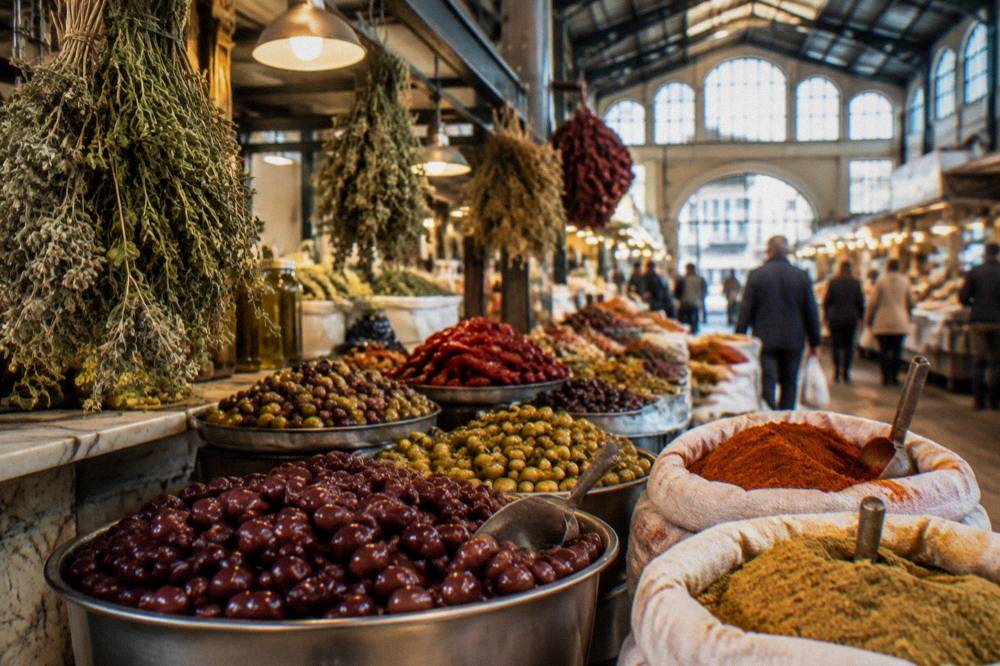
A sensible two-walk plan pairs them: the sights walk on the first morning when legs are fresh and the light is good for photographs, the food walk at midday or in the evening when the market counters are doing their real business. Walking both on the same day is possible, the centre is small enough, but it turns two distinct experiences into one long blur. Everything else covered here is indexed on Thessaloniki Travel Guide.
| Walk Type | Where It Lives | What It Skips | Book It If |
|---|---|---|---|
| Sights walk | Squares, Roman core, churches, Ano Poli | Market interiors, tastings | It is your first day |
| Market food walk | Modiano and Kapani markets, food streets | Wall climbs, museum commentary | You have seen the core already |
| Upper-town walk | Ano Poli, walls, viewpoints | The flat waterfront | Views and history matter most |
| Sunset or evening walk | Waterfront, Ladadika | Morning-only interiors | Your days are booked solid |
Can You Combine A City Walk With A Day Trip From Thessaloniki?
Yes, but treat the combination as two separate bookings: the city walks stay inside Thessaloniki, while the day trips, Vergina, Pella, Dion, Mount Olympus, Edessa and Meteora, are coach or van products to places the city walk cannot reach, and Meteora in particular is a full day because Kalambaka sits about 228 km away, roughly 2 hours 34 minutes of driving each way in free-flow traffic.
The pairing question matters because Thessaloniki's region is where much of the payoff sits. Vergina, the Museum of the Royal Tombs of Aigai, is about 62 minutes by road from Aristotelous Square, and its ticket, reported at 20 euro full and 10 reduced on the museum's own site, covers the royal tombs complex; confirm the current price before you go. Pella, the Archaeological Museum of Alexander's birthplace, is about 43 minutes, with a museum ticket reported at 10 euro and a combined site ticket reported at 15. Dion's archaeological park, about 67 minutes, lists a 10 euro full and 5 euro reduced ticket on the park's own site.
| Day Trip Destination | Road Distance From Aristotelous Square | Drive Time (Free-Flow) |
|---|---|---|
| Pella | 45.7 km | about 43 minutes |
| Vergina | 68.0 km | about 62 minutes |
| Veria | 72.8 km | about 52 minutes |
| Dion | 90.1 km | about 67 minutes |
| Litochoro (Mount Olympus base) | 90.7 km | about 67 minutes |
| Edessa | 90.3 km | about 82 minutes |
| Naoussa | 92.3 km | about 76 minutes |
| Kassandra (Kallithea) | 86.2 km | about 78 minutes |
| Sithonia (Nikiti) | 97.2 km | about 96 minutes |
| Meteora (Kalambaka) | 227.5 km | about 154 minutes |
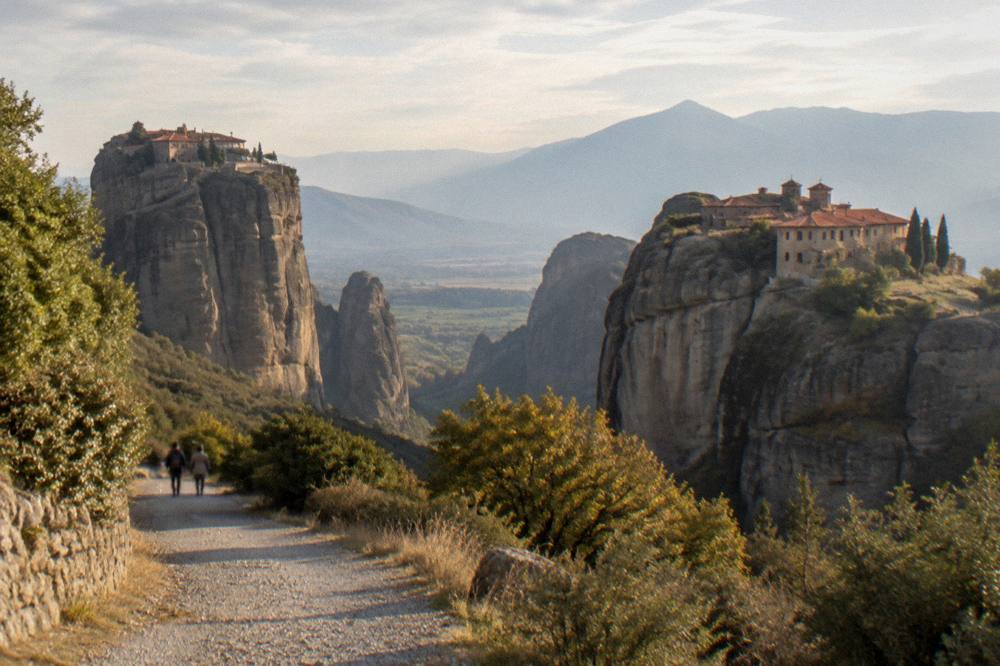
Meteora is the one that tempts everyone and disappoints the rushed. Each of the six monasteries charges a reported 5 euro in cash, each closes one weekday, and there is no combined ticket; the operator's listing states the schedule for the coach products from Thessaloniki. If Meteora is on your list, give it a dedicated day and keep the city walks on separate days entirely.
When Is The Best Time Of Day To Walk Thessaloniki?
Morning is the practical answer: the HNMS Thessaloniki Mikra station record, 1959 to 2010, shows July and August mean daily highs of 31.7 and 31.4 degrees, so a walk that starts by 09:00 finishes before the heat peaks, while the seafront and Ano Poli viewpoints are at their best again in the late afternoon and at sunset. Winter flips the equation, with January mean lows of 1.5 degrees making midday the comfortable window.
The climate record gives exact anchors for planning. Spring and autumn are the generous seasons, with April at a 19.1 degree mean high and October at 21.2, and December carries the highest monthly rainfall in the table at 55.1 mm against August's 19.3 mm. None of this stops a winter walk; the city in winter runs its own quieter rhythm, and the museums' winter hours, 08:30 to 15:30 at the White Tower, fit a morning-first day neatly.
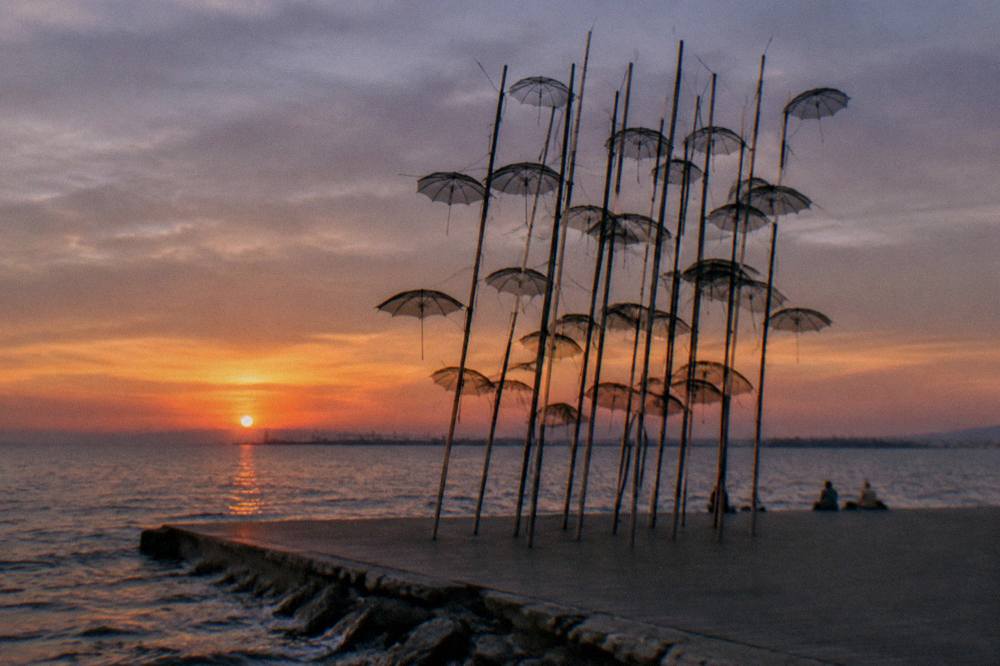
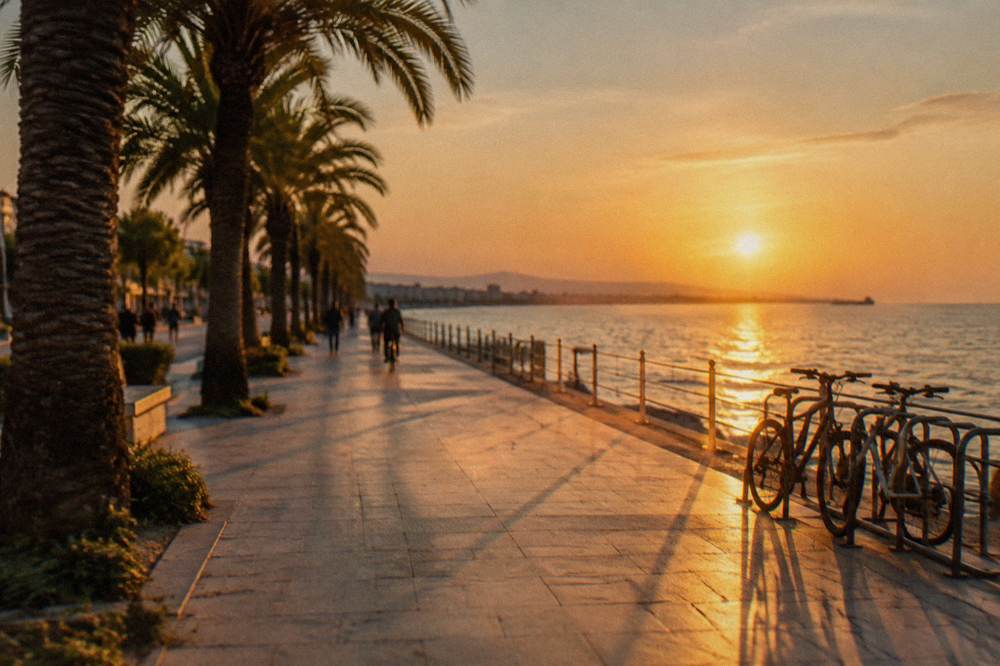
Evening walks deserve their own mention. The promenade faces west across the gulf, which makes the seafront the city's natural sunset theatre, and several guided walks are built around exactly that hour. If an evening walk appeals, the sunset cruise alternative puts the same light offshore instead.
| Month | Mean High C | Mean Low C | Rainfall Mm | Rain Days |
|---|---|---|---|---|
| January | 9.3 | 1.5 | 37.7 | 11.5 |
| April | 19.1 | 7.9 | 36.1 | 11.1 |
| July | 31.7 | 19.3 | 23.8 | 6.7 |
| August | 31.4 | 19.1 | 19.3 | 5.1 |
| October | 21.2 | 11.3 | 43.0 | 9.3 |
| December | 10.9 | 3.2 | 55.1 | 12.7 |
All figures in the table are HNMS Thessaloniki Mikra station, 1959 to 2010.
Do You Even Need A Guide To Walk Thessaloniki?
You can walk Thessaloniki's core alone and see every exterior on this page for free, since the churches are free to enter and the Arch of Galerius is a street monument, but a guide converts buildings you would photograph into buildings you can read, and on a short stay that difference is what you are buying. The honest test is trip length: one or two days favours a guide, a week does not.
The self-guided case is strong. The centre's sights sit in a line, the metro makes arrivals from the airport or Kalamaria straightforward as the getting-around guide explains, and a one-day itinerary can be followed from any map. Solo walkers should still read up on the Roman agora and the Galerian complex before standing in front of them, because the ruins explain little on their own.
The guided case is equally strong. Thessaloniki's story, Roman capital, Byzantine second city, Ottoman port, the fire of 1917, the earthquake of 1978, is layered in ways a guide surfaces street by street. Group walks also handle pacing and openings: a guide knows which church door is likely open at which hour, and which market counter is worth stopping at. Walking at night, a fair question for evening arrivals, is covered separately on the is it safe to walk around Thessaloniki at night page.
Common Questions About Thessaloniki Walking Tours
How long is a Thessaloniki walking tour?
Durations render from each operator's live listing and are never typed here; group sight walks generally fit a morning or afternoon, while private walks can be booked in longer blocks. Check the duration on the listing before you plan the rest of your day.
Do Thessaloniki walking tours include the White Tower?
Most include the exterior; entry to the White Tower is a separate 8 euro full or 4 euro reduced ticket in force since 1 April 2026. If going inside matters to you, look for a tour that states tower entry is included, or budget the ticket and the 08:00 to 21:00 summer hours into your own timing.
Is a food tour or a sights walk better in Thessaloniki?
First-time visitors usually get more from a sights walk that covers the Roman core, the churches and possibly Ano Poli, while a market food walk suits a second day or a repeat visit. The two overlap surprisingly little: one lives in the squares and church forecourts, the other inside Modiano Market and Kapani Market.
Can you walk from the cruise port into Thessaloniki?
Yes, the port sits at the western end of the centre and the White Tower is a straightforward walk along the waterfront. Shore-excursion walks with port pickup exist for passengers who prefer a guide to meet the ship; see the operator's live listing for the current options.
Are the churches on the walk free to enter?
Yes. Working churches such as Hagia Sophia and the Church of Saint Demetrius are free to enter and open outside service times; no published hours exist for individual churches, so confirm locally if a specific interior matters to you.
Does a walking tour cover Ano Poli?
Only walks that say so. The climb to the upper town is steep, so many standard walks stay on the flat core. If the Byzantine walls and the Trigoniou Tower viewpoint are a priority, book a walk that names Ano Poli or the upper town in its route description.
Whatever walk you choose, book it for your first full day: a guided loop early in the trip teaches the city's geography fast, and everything afterward, from things to do in Thessaloniki to the day trips beyond it, gets easier to plan once the centre's layout is in your legs.