One Day In Thessaloniki: A Walkable Plan
Thessaloniki, the second city of Greece, sits on the Thermaic Gulf in Central Macedonia, and its central sights line up along the water so neatly that a single day covers the White Tower, the Roman Galerian complex, a cluster of UNESCO-listed Byzantine churches and the food streets between them.
Short answer
Start at the White Tower at 08:00, walk west through the Galerian complex and the Rotunda, loop through the Church of Saint Demetrius and Hagia Sophia, lunch around Modiano Market and Kapani Market, spend the afternoon in the Museum of Byzantine Culture or Ano Poli, and end with sunset on the Nea Paralia. A basic metro ticket costs 0.60 euro.
Thessaloniki, the second city of Greece, spreads along the Thermaic Gulf in Central Macedonia, northern Greece, and its core is generous to anyone with a single day: the White Tower stands on the seafront, the Roman Galerian complex sits a few blocks inland, and fifteen UNESCO-listed Paleochristian and Byzantine monuments, inscribed in 1988, thread through streets that can be covered on foot between breakfast and dark. The plan below runs in one loop from the waterfront outward and back, using opening hours, ticket prices and metro facts, so the day works in any season. Readers with more time can extend it with the two days in Thessaloniki plan or the fuller three days in Thessaloniki itinerary.
Can You See Thessaloniki In One Day?
Yes, the central core of Thessaloniki can be seen in one focused day, because the White Tower, the Rotunda, the Arch of Galerius, the Church of Saint Demetrius, Hagia Sophia, Aristotelous Square and the Modiano and Kapani markets all sit in a compact belt between the seafront and the upper town. The museums need choices: the Museum of Byzantine Culture and the White Tower each take a full visit, so a one-day plan picks one and keeps the other for a return trip.
The geography does the organising. Founded in 315 BC by Cassander and named for his wife Thessalonike, the city grew along the shore rather than around a single square, so its landmarks form a line: the port and Ladadika district in the west, Aristotelous Square at the centre, the Galerian complex and the walls rising east and uphill to Ano Poli. A visitor who walks that line once, west to east or the reverse, passes nearly everything a first day needs.
Two limits shape the day. First, this is a coastal city on a gulf, but the Nea Paralia is a promenade rather than a swimming beach; swimming belongs to Perea, about 28 minutes away by road, or Epanomi, and neither fits a one-day city plan. Second, the big day trips, Vergina, Pella, Dion and above all Meteora at about 228 km and roughly two and a half hours by road each way, are full days of their own and must not be squeezed into this one. The Meteora day trip guide covers that separately.
What Does The Morning Look Like From The White Tower Westward?
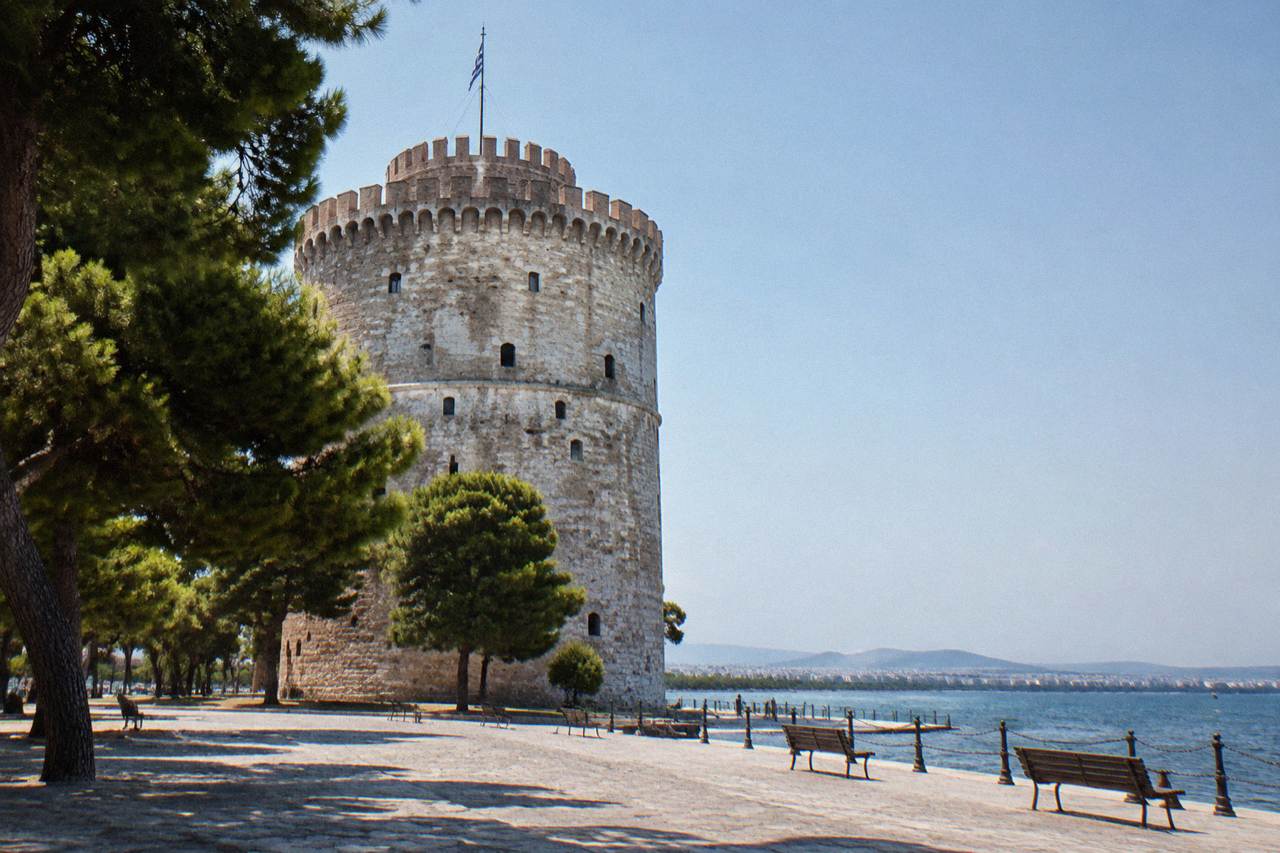
Start at the White Tower at 08:00 in summer, when the Museum of Byzantine Culture's visiting page lists it open daily 08:00 to 21:00 from 1 April to 31 October; in winter, 1 November to 31 March, it opens 08:30 to 15:30 daily. A full ticket costs 8 euro and a reduced ticket 4 euro, prices in force since 1 April 2026, and entry stops 20 minutes before closing. The old 4 euro figure still circulates on older pages and is out of date.
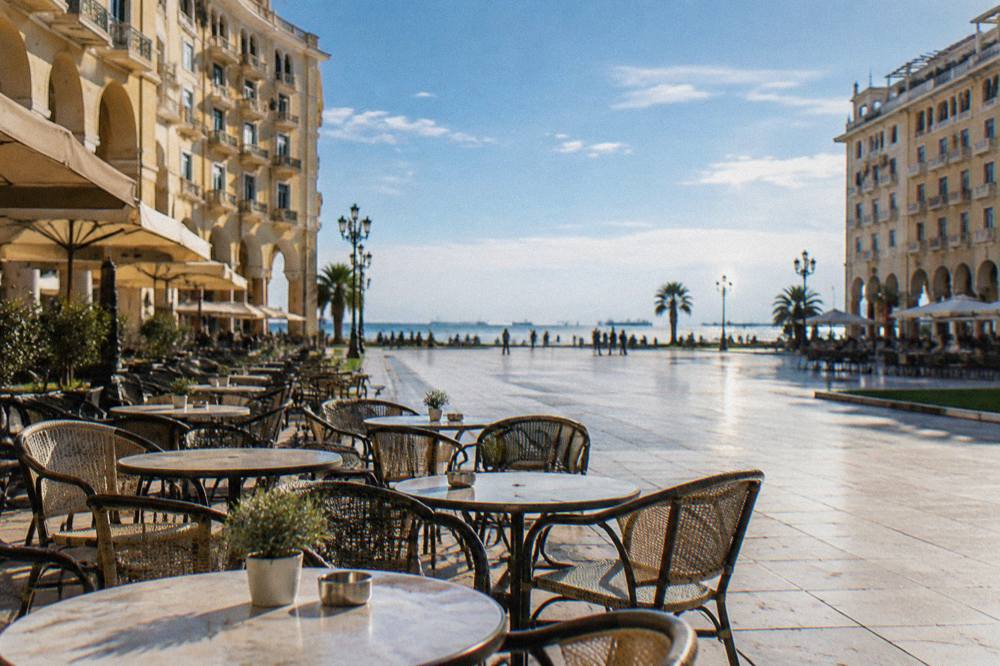
The tower is the city's landmark and its viewing platform frames the whole day's route: the Thermaic Gulf to the south, the dense centre to the west, the walls of Ano Poli climbing east. From there the morning runs west along the seafront promenade toward Aristotelous Square, the great open square laid out under the Hebrard reconstruction plan that followed the Great Fire of 1917, a fire that left 73,000 people homeless and reshaped the centre.
Below the square, a short walk inland reaches the Galerian complex, the palace group of the tetrarch Galerius. The Arch of Galerius stands in the open on Egnatia street and is free to view at any hour; the Rotunda and the Palace of Galerius are ticketed state sites, so check the current price on the museum's own ticket page before booking. The Rotunda guide and the Arch of Galerius guide carry the detail.
A morning loop of tower, square, arch and Rotunda can be walked without transport. For a structure someone else holds, a guided walk pairs the landmarks with their history; the site's Thessaloniki walking tour overview compares the options, and the trio below includes the sunset walk that ends this same itinerary in the evening.
Where Should Lunch And The Markets Sit In The Day?
Lunch belongs around the Modiano Market and the Kapani Market, the two historic covered and open markets a few blocks north of Aristotelous Square, because they sit exactly on the walking line between the morning's Roman sights and the afternoon's churches. The markets are food destinations in themselves, so the choice of counter is left to the reader on the day.
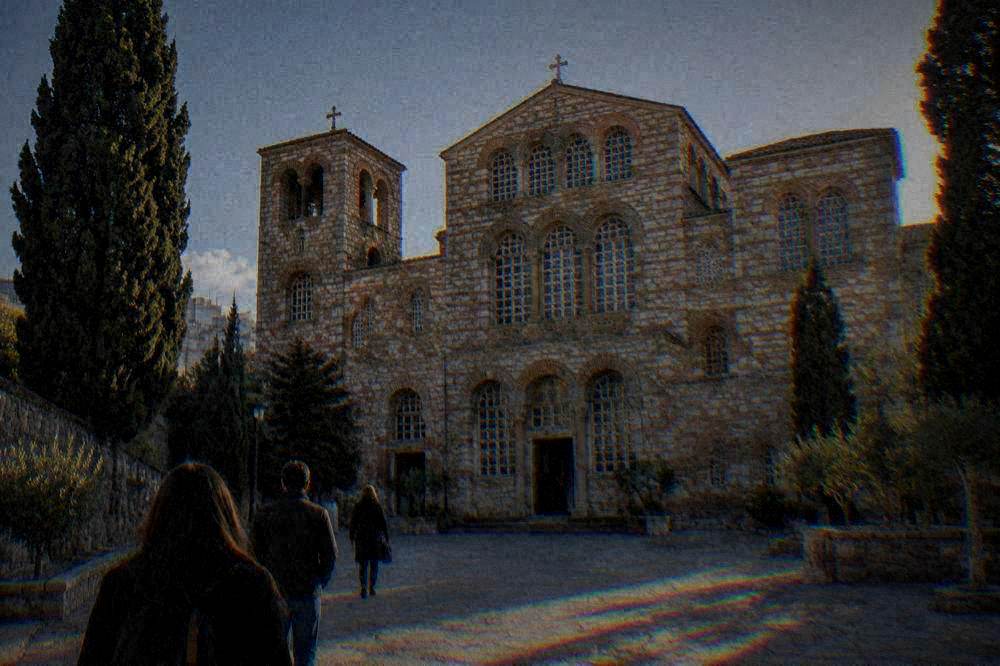
The order of the afternoon matters more than the choice of lunch table. West of the markets stands the Church of Saint Demetrius, the city's patron saint whose name day, 26 October, doubles as the anniversary of the city's liberation on 26 October 1912. The church is a working church, free to enter and open outside services, like all the churches on this route; no fixed liturgical timetable is published, so time the visit around a service rather than a posted hour. The Church of Saint Demetrius guide gives the history, including the damage of the 1917 fire.
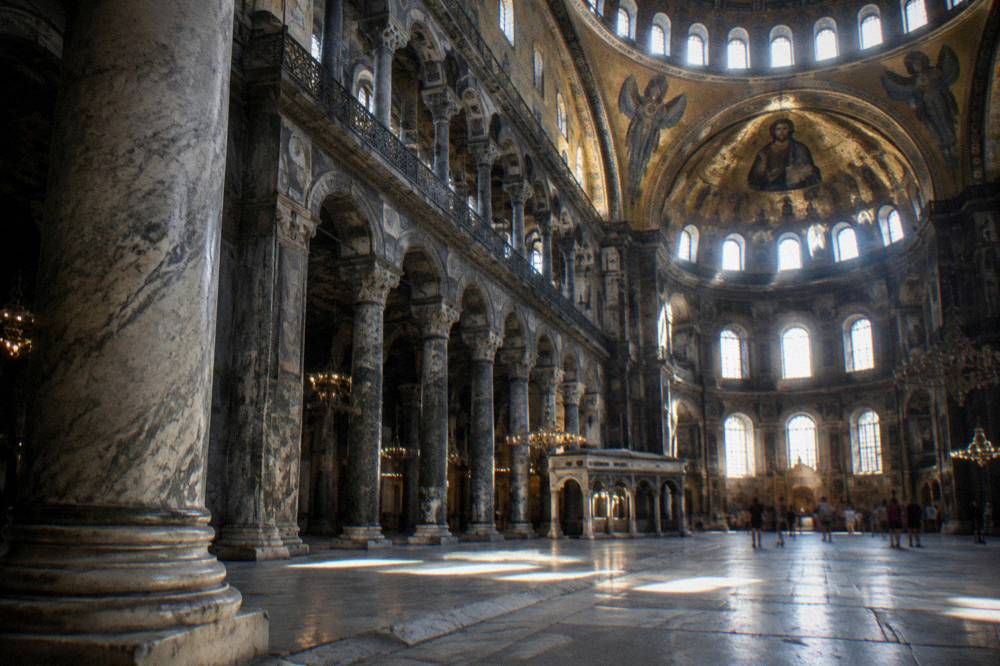
From there the route turns back east along the seafront belt of Byzantine churches: Hagia Sophia, Panagia Acheiropoietos and, uphill in Ano Poli, Hosios David and the Vlatadon Monastery, all inside the UNESCO inscription of 1988. Working churches ask for modest dress and quiet, and none charges admission.
A market walk is also the moment where a food tour earns its slot in a one-day plan, since a guided tasting pass through the market streets turns casual browsing into a structured lunch. The site's Thessaloniki food tour overview lays out the choices.
Which Museum Fits A One-Day Visit: Byzantine Culture Or Archaeological?
The Museum of Byzantine Culture is the better single-day fit, because it is open daily 08:00 to 20:00 in summer and sits on the walking route near the White Tower, while the Archaeological Museum closes at 17:00 and, from 1 November to 31 March, closes on Tuesdays. Both cost 10 euro full and 5 euro reduced. A visitor who picks one museum and does it properly gets more from the day than a rushed split between two.
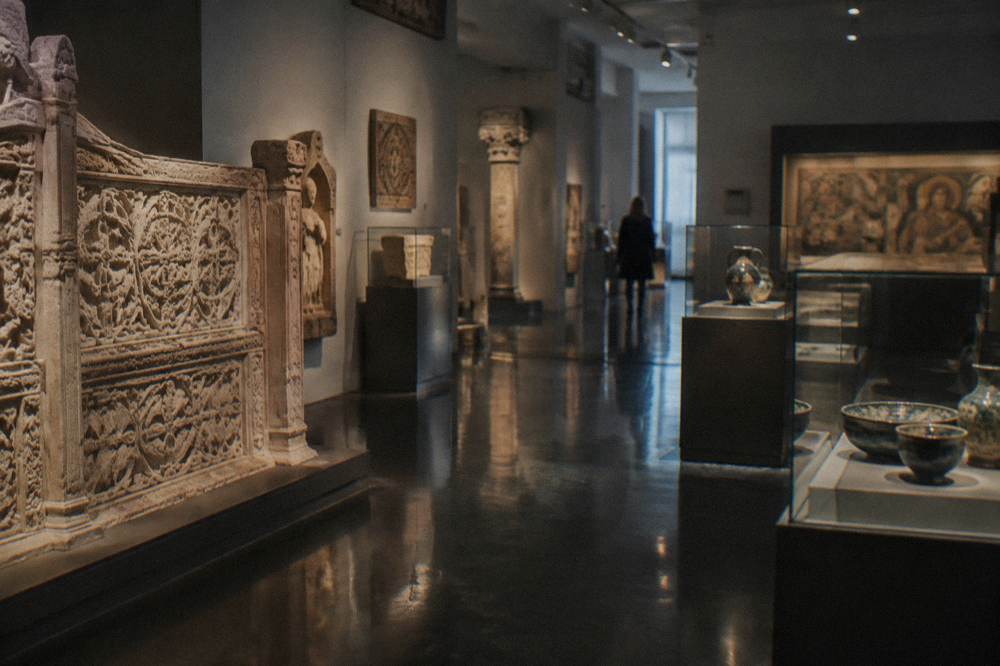
The two houses divide the city's history between them. The Archaeological Museum holds the ancient Macedonian and Roman material, from the city's founding in 315 BC through the Roman era that produced the Galerian complex; its visiting page lists 09:00 to 17:00 daily in summer and the same hours with a Tuesday closure in winter. The Museum of Byzantine Culture covers exactly the centuries that put the city on the UNESCO list, and its late summer closing hour, 20:00 daily from 8 May to 31 October, means it can even be deferred to the end of the afternoon after the churches.
| Museum | Summer hours | Winter hours | Full ticket | Reduced |
|---|---|---|---|---|
| White Tower | Daily 08:00-21:00 (1 Apr-31 Oct) | Daily 08:30-15:30 | 8 EUR | 4 EUR |
| Museum of Byzantine Culture | Daily 08:00-20:00 (8 May-31 Oct) | Mon, Wed-Sun 08:30-15:30, Tue closed | 10 EUR | 5 EUR |
| Archaeological Museum | Daily 09:00-17:00 (1 Apr-31 Oct) | Daily 09:00-17:00, Tue closed (1 Nov-31 Mar) | 10 EUR | 5 EUR |
Free-admission days apply across the state museums: 6 March, 18 April, 18 May, the last weekend of September and 28 October, with free entry for EU citizens up to 25 on ordinary days. A one-day visitor rarely hits those dates, but a late-October arrival might: 28 October is Ochi Day, a national holiday with a parade in Thessaloniki, and free museum entry besides.
How Do You Fit Ano Poli Into A One-Day Walk?
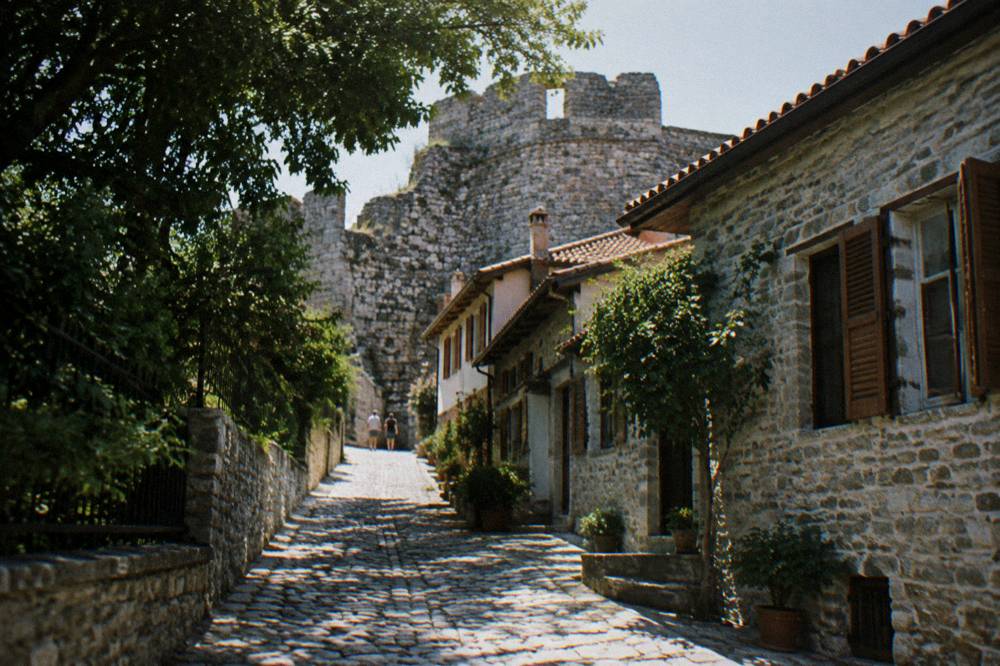
Ano Poli, the old upper town inside the Byzantine walls, fits best as a late-afternoon climb of one to two hours, reached on foot from the Church of Saint Demetrius or the Vlatadon side and descended before dark, with the Heptapyrgion fortress and the Trigonion Tower as the high points. The walls are part of the UNESCO inscription, running about 8 km in their original extent with about 4 km visible today, and the Heptapyrgion served as a prison until 1989.
The climb is the steepest stretch of the day, so it belongs after lunch rather than before. Streets of Ottoman-era houses rise to the fortress, and the view over the gulf from the wall-top path is the payoff. The wider set of guides lives on Thessaloniki Travel Guide.
The upper town also answers the where-to-stay question for a return trip, since a night in Ano Poli trades seafront convenience for quiet and height. The is Thessaloniki a walkable city page takes the walkability question in detail, and the honest short answer is that the central belt walked in this itinerary is walkable by design, while the airport, 16 km and about 20 minutes by road from Aristotelous Square, is not.
How Does The Day End: Sunset On The Nea Paralia?
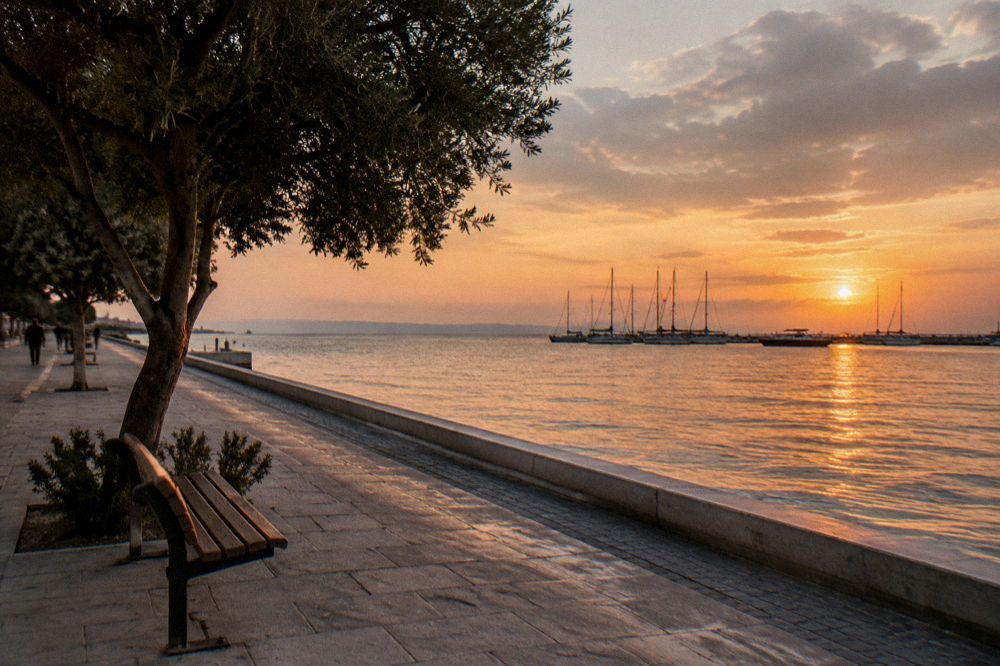
The day ends on the Nea Paralia, the seafront promenade that runs east from the White Tower, timed to the sunset over the Thermaic Gulf, and the sunset walking tour from the morning's trio is built to finish exactly there, covering the city highlights first and the waterfront at dusk. The promenade is for walking and viewing, not swimming; the nearest swimmable beaches are at Perea, about 28 minutes by road, and no swimming belongs in this plan.
The promenade walk is the city's free evening ritual and needs no ticket, no booking and no research beyond the sunset hour. In July the HNMS Thessaloniki Mikra station record, 1959 to 2010, shows a mean daily high of 31.7 C, so the waterfront after dark is also the comfortable hour of a midsummer day; in January the mean daily low is 1.5 C and the same walk wants a coat. December carries the highest monthly rainfall in that station record at 55.1 mm and August the lowest at 19.3 mm, so the odds of a dry sunset are simply better in the second half of the year's warm months.
For a different water ending, a half-day sailing cruise out of the city runs to a shipwreck bay on the gulf and returns the same afternoon; it is the third pick in this page's tour trio and pairs naturally with a day whose land portion ends by mid-afternoon.
The evening can close in Ladadika, the restored district near the port, whose dining streets sit a flat walk west of Aristotelous Square. As with the markets, the choice is made on the night.
What Does A One-Day Thessaloniki Plan Look Like Hour By Hour?
A workable single-day plan runs 08:00 to sunset in six blocks: the White Tower at opening, the seafront walk to Aristotelous Square, the Galerian complex and Rotunda before noon, the markets and the Church of Saint Demetrius over lunch, one museum or Ano Poli from mid-afternoon, and the Nea Paralia at dusk. The blocks below hold inside the opening hours in both seasons, with the museum choice swapping if a winter Tuesday closes both museums.
| Time | Block | Notes |
|---|---|---|
| 08:00-09:30 | White Tower | Opens 08:00 summer, 08:30 winter; 8 EUR full |
| 09:30-11:00 | Seafront walk to Aristotelous Square | Free; square laid out after the 1917 fire |
| 11:00-12:30 | Arch of Galerius, Rotunda, Palace of Galerius | Arch free; Rotunda price not printed, check the ticket page |
| 14:30-16:00 | Church of Saint Demetrius, Hagia Sophia | Free, working churches, open outside services |
| 16:00-18:30 | Museum of Byzantine Culture or Ano Poli | Museum to 20:00 summer; Ano Poli walls free to walk |
| Sunset | Nea Paralia promenade | Walking and views; no swimming from the waterfront |
The plan flexes by season. In winter the White Tower closes at 15:30, so it moves to the morning's first slot without change, but the Museum of Byzantine Culture's 15:30 winter closing pulls the museum block forward and pushes Ano Poli or the churches to the end of the day. On a winter Tuesday both museums close, and the day becomes a churches-and-walls day, which the Thessaloniki in the rain plan covers with indoor alternates.
What Should Never Be Squeezed Into This One Day?
Meteora, Mount Olympus, Vergina, Pella, Dion, Edessa and the Halkidiki peninsulas are all day trips of their own and none of them fits inside a one-day city plan: Kalambaka at Meteora is about 228 km and roughly two and a half hours by road each way, Vergina is about 62 minutes, Pella about 43 and Dion about 67, all one-way and all before any visit time. Attempting one of these as a half of a city day leaves the visitor with neither the site nor the city.
The drive times below, computed over road routing in free-flow conditions and presented as approximate, show why the split matters.
| Day trip | Road distance from Aristotelous Square | About, one way |
|---|---|---|
| Pella | 45.7 km | 43 min |
| Vergina | 68.0 km | 62 min |
| Dion | 90.1 km | 67 min |
| Litochoro (Mount Olympus) | 90.7 km | 67 min |
| Edessa | 90.3 km | 82 min |
| Kassandra (Kallithea) | 86.2 km | 78 min |
| Sithonia (Nikiti) | 97.2 km | 96 min |
| Meteora (Kalambaka) | 227.5 km | 154 min |
The one exception to the rule is a shore arrival: a cruise-port day is effectively this same one-day plan under a tighter clock, and the Thessaloniki cruise port day itinerary runs it. Otherwise, the honest structure is one day for the city, then separate days for the ancient sites, with the northern Greece itinerary sequencing them. Readers driving themselves can compare arrangements in the Thessaloniki car rental guide.
How Does The Metro Change A One-Day Visit?
The Thessaloniki Metro is open and running, with Line 1 operating since November 2024 and the five-station Kalamaria extension inaugurated on 27 August 2026, and it serves the one-day visitor mainly at the edges of the day: a basic ticket costs 0.60 euro, a daily ticket 2.50 euro, and trains run 05:15 to 00:30 Sunday to Thursday and 05:15 to 02:00 Friday and Saturday, per the metro's own ticket page and homepage. The central loop of this itinerary is walked, not ridden.
The old claim that the city has no metro or that it is still under construction is false and dates badly now. For this plan the metro matters for arrival and departure: the airport connects to the network by the X2 and X3 airport bus lines to the Nea Elvetia and Mikra metro stations, per the OASTH line list, and the airport is about 20 minutes by road from Aristotelous Square. Confirm locally whether the 0.60 euro metro ticket also covers city buses before relying on a transfer.
| Metro fact | Figure | Source note |
|---|---|---|
| Basic ticket | 0.60 EUR | Metro ticket page |
| Reduced ticket | 0.30 EUR | Metro ticket page |
| Daily ticket, 24 h metro | 2.50 EUR | Metro ticket page |
| Hours Sun-Thu | 05:15-00:30 | Metro homepage |
| Hours Fri-Sat | 05:15-02:00 | Metro homepage |
| Kalamaria extension | 5 stations, opened 27 August 2026 | Infrastructure ministry press release |
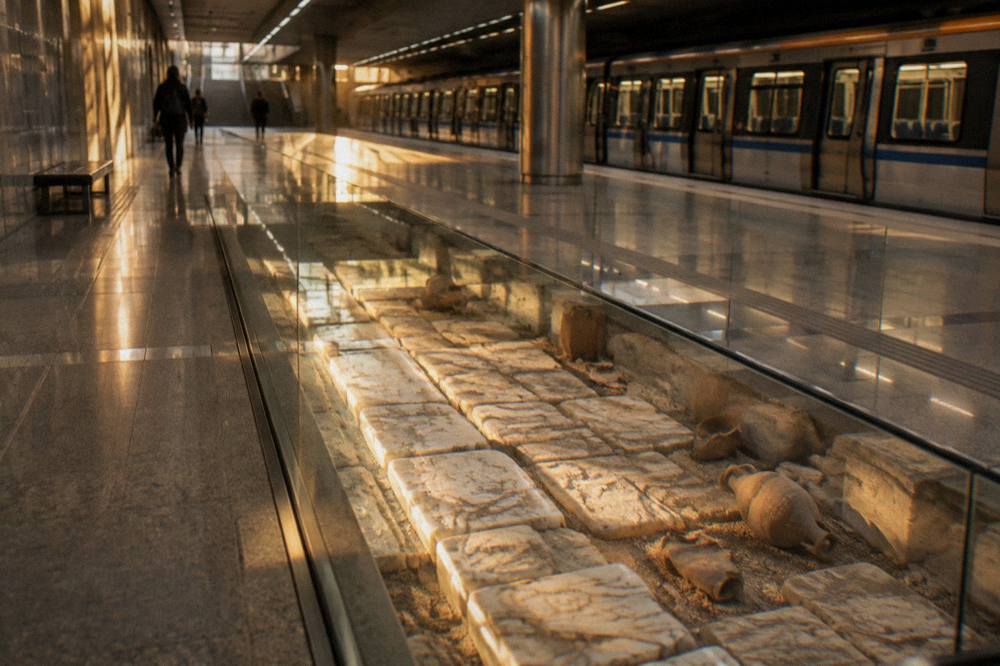
Metro construction also left the city with a new archaeological display: a museum of metro-construction finds has opened at Pavlos Melas, reported open 08:30 to 15:30 except Tuesdays, a fringe option for a reader whose day overruns the plan.
What If The Weather Turns Or The Day Runs Long?
A wet or hot day bends the plan toward the indoor blocks, the White Tower, the Museum of Byzantine Culture, the Archaeological Museum and the covered Modiano Market, all on the same walking line, and the rain-day plan on this site restructures the itinerary around them; the city's station record shows December with 55.1 mm of rain on 12.7 rain days and August with 19.3 mm on 5.1, per the HNMS Thessaloniki Mikra station table.
Heat bends the plan the other way, pushing outdoor blocks to the day's edges.
The July mean daily high of 31.7 C in that same station record argues for the 08:00 tower start and the evening promenade, with the museum block sheltering the early afternoon. Winter visitors get shorter daylight and a 15:30 closing time on the tower and the Byzantine museum, which is why the hour-by-hour table above swaps the museum and Ano Poli blocks between seasons.
Families get a gentler version of the same spine: the flat seafront, the tower and the market streets are the low-effort segments, and the Thessaloniki with kids plan adapts them. A short connection between flights gets the tightest version, in the Thessaloniki layover plan, built around the airport's 20-minute road distance and the airport bus lines.
Common Questions About One Day In Thessaloniki
Can you see Thessaloniki in one day?
Yes. The White Tower, Aristotelous Square, the Arch of Galerius, the Rotunda, the Church of Saint Demetrius, Hagia Sophia and the Modiano and Kapani markets sit in one walkable belt, and one museum plus Ano Poli plus the Nea Paralia at sunset completes a full day.
What should I do first in Thessaloniki?
Start at the White Tower at opening time, 08:00 in summer and 08:30 in winter, with a full ticket at 8 euro and reduced at 4 euro, then walk the seafront west toward Aristotelous Square.
How much does one day in Thessaloniki cost in tickets?
Count the prices: White Tower 8 euro, Museum of Byzantine Culture or the Archaeological Museum 10 euro each, churches free, the Arch of Galerius free to view, metro basic ticket 0.60 euro.
Is one day enough for Meteora from Thessaloniki?
Meteora is its own full day, about 228 km and roughly two and a half hours by road each way to Kalambaka, and it cannot be combined with a city day. The Meteora day trip guide on this site covers it separately.
Can you swim in Thessaloniki on a one-day visit?
Not from the city waterfront. The Nea Paralia is a promenade; swimming is at Perea, about 28 minutes by road, or Epanomi, which does not fit a one-day city plan.
Does the Thessaloniki Metro help a one-day visitor?
Yes, mostly at the edges of the day. Line 1 has run since November 2024, the Kalamaria extension since 27 August 2026, a basic ticket is 0.60 euro, and the airport connects via the X2 and X3 bus lines to metro stations.
The Thessaloniki Travel Guide holds the depth this one day cannot: every sight above has its own page, from the White Tower and Hagia Sophia to the full things to do in Thessaloniki index for the return trip this itinerary is designed to provoke.