Thessaloniki In The Rain: An Indoor Day
Rain in Thessaloniki is a planning problem with a clean solution: the city holds two major state museums, fifteen UNESCO-listed Byzantine monuments, a covered market district and an open metro, and the HNMS Thessaloniki Mikra station table, 1959 to 2010, shows exactly when rain is likely.
Short answer
Spend a rainy Thessaloniki morning in the Archaeological Museum or the Museum of Byzantine Culture (10 euro full, 5 reduced each), shelter in the Church of Saint Demetrius and Hagia Sophia, eat through Modiano Market and Ladadika, and ride the metro, open since November 2024, between stops at 0.60 euro a single.
Rain falls on Thessaloniki, the second city of Greece on the Thermaic Gulf in Central Macedonia, on roughly one day in three across the year, and the city is unusually well built for it. The HNMS Thessaloniki Mikra station table, 1959 to 2010, counts between 5.1 and 12.7 rain days a month depending on season, and December carries the highest monthly rainfall in the table at 55.1 mm. What that means for a visitor is simple: the Archaeological Museum and the Museum of Byzantine Culture sit half a metro ride apart, the Church of Saint Demetrius and Hagia Sophia have sheltered worshippers for well over a thousand years, Modiano Market is under a roof, and the metro that opened in November 2024 keeps you dry between all of them. This page lays out a full wet-weather day from the first shower to the last, with the hours, prices and distances that make it work, and it slots into the wider things to do in Thessaloniki root guide if the sun comes back.
How Often Does It Rain In Thessaloniki?
Rain in Thessaloniki is a winter-and-autumn phenomenon rather than an all-year one: the HNMS Thessaloniki Mikra station table, 1959 to 2010, records 12.7 rain days in December against 5.1 in August, with monthly rainfall running from 55.1 mm in December down to 19.3 mm in August, so a rainy day plan matters from October to April and barely matters at all in high summer. The annual total across the same station record is 444.5 mm, and the prevailing wind is north-westerly in every month except August. None of this says it never rains in July; it says the probability is unevenly spread, and a wet day in August is the exception while a wet day in December is close to every third day.
The temperature side matters for how a rainy day feels. January averages a high of 9.3 C and a low of 1.5 C, so winter rain is genuinely cold rain, while October still averages a high of 21.2 C and November 15.5 C, which makes an autumn shower a minor event if the plan has roofs in it. Winter rain in Thessaloniki can sit close to the freezing mark overnight; the station table gives January lows of 1.5 C as a mean, so pack for cold rather than merely damp.
| Month | Mean high C | Mean low C | Rain mm | Rain days |
|---|---|---|---|---|
| January | 9.3 | 1.5 | 37.7 | 11.5 |
| February | 11.0 | 2.3 | 35.0 | 10.7 |
| March | 14.3 | 4.7 | 37.9 | 12.1 |
| April | 19.1 | 7.9 | 36.1 | 11.1 |
| May | 24.6 | 12.6 | 44.2 | 11.0 |
| June | 29.4 | 17.0 | 29.8 | 7.9 |
| July | 31.7 | 19.3 | 23.8 | 6.7 |
| August | 31.4 | 19.1 | 19.3 | 5.1 |
| September | 27.1 | 15.4 | 29.8 | 7.0 |
| October | 21.2 | 11.3 | 43.0 | 9.3 |
| November | 15.5 | 7.1 | 52.8 | 11.0 |
| December | 10.9 | 3.2 | 55.1 | 12.7 |
All figures above are HNMS Thessaloniki Mikra station, 1959 to 2010, a weather-station record and the only climate table this site prints. November and December hold the two highest monthly rainfall totals in the table, which is why the indoor infrastructure below is worth knowing before a late-autumn trip rather than after arrival. For a month-by-month travel judgement, see when to visit Thessaloniki in the main guide collection.
Which Indoor Sights In Thessaloniki Fill A Rainy Morning?
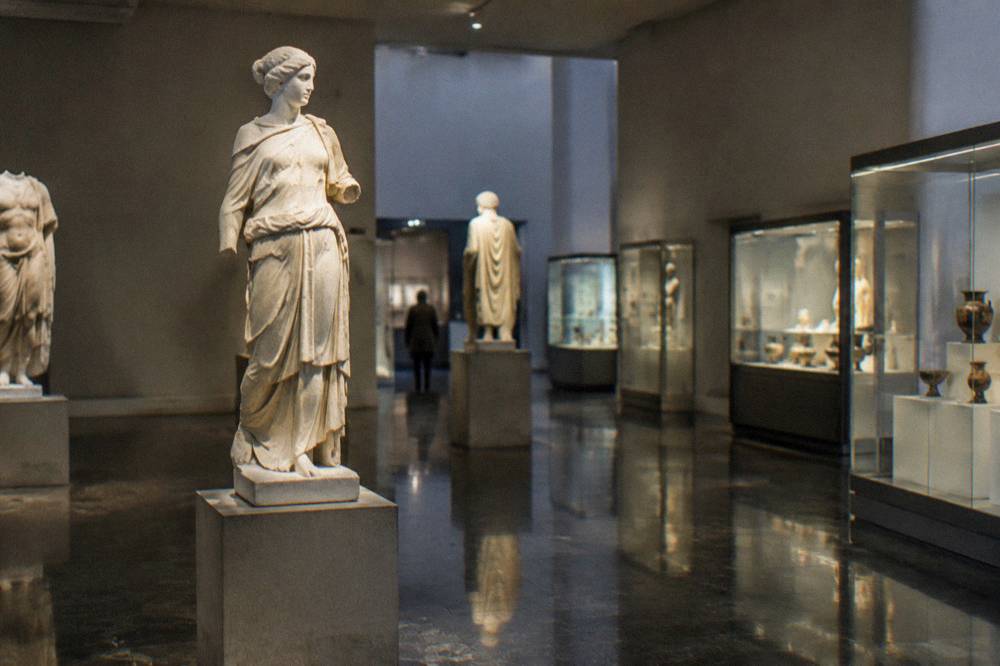
The two anchor indoor sights are the Archaeological Museum of Thessaloniki and the Museum of Byzantine Culture, each 10 euro full and 5 euro reduced, with summer hours that run long, 09:00 to 17:00 daily for the former and 08:00 to 20:00 daily in summer for the latter, so one rainy morning comfortably absorbs either. Both are covered in the city's museum pass territory, and both are state museums: the Archaeological Museum's own hours and tickets page lists its figures, and the Museum of Byzantine Culture's visiting page lists its own. Between them they cover the Roman and Macedonian past on one side and the Byzantine centuries on the other, which is most of what Thessaloniki is.
The winter schedule needs care. The Archaeological Museum runs 09:00 to 17:00 from 1 November to 31 March and closes on Tuesday in that window; the Museum of Byzantine Culture runs Monday and Wednesday to Sunday 08:30 to 15:30 in winter, also closed Tuesday. Last entry at the Archaeological Museum is 20 minutes before closing. A Tuesday arrival in winter therefore pushes the plan toward the White Tower, which the Museum of Byzantine Culture's page lists as daily 08:00 to 21:00 in summer and 08:30 to 15:30 in winter, at 8 euro full and 4 reduced since 1 April 2026.
| Sight | Summer hours | Winter hours | Full ticket | Reduced |
|---|---|---|---|---|
| Archaeological Museum | 1 Apr to 31 Oct, 09:00 to 17:00 daily | 1 Nov to 31 Mar, 09:00 to 17:00, closed Tuesday | 10 euro | 5 euro |
| Museum of Byzantine Culture | 8 May to 31 Oct, 08:00 to 20:00 daily | 1 Nov to 31 Mar, Mon and Wed to Sun 08:30 to 15:30, closed Tuesday | 10 euro | 5 euro |
| White Tower | 1 Apr to 31 Oct, 08:00 to 21:00 daily | 1 Nov to 31 Mar, 08:30 to 15:30 daily | 8 euro | 4 euro |
State museums are free on 6 March, 18 April, 18 May, the last weekend of September and 28 October, and free for EU citizens up to 25 on any day, per the Museum of Byzantine Culture's visiting page. The White Tower also stops entry 20 minutes before closing, a detail the same page states plainly. Deep dives on each building sit at the Archaeological Museum and the Museum of Byzantine Culture, and the White Tower has its own page with the full climb described.
A rainy day is also a good day for a guide, since the interpretive part of a walk happens under umbrellas and inside churches, and the city's old-town walk in particular spends its time in the upper streets and covered entrances where rain matters least.
Can You Walk Ano Poli And The Old Town In The Rain?
Yes, with the right shoes: Ano Poli, the old upper town inside the Byzantine walls, is a district of short stone streets, covered church entrances and the Heptapyrgion fortress, and the Upper Town Historical Tour Experience at Greece covers it with a guide, so rain changes the footing but not the route. The walls, about 4 km of which remain visible from an original circuit of roughly 8 km, are open-air, and the Vlatadon Monastery and the Church of Saint Demetrius both give interior shelter.
Rain makes the cobbles of Ano Poli slippery, which is a reason for shoes with grip rather than a reason to skip it. The district's churches are working churches, free to enter and open outside services, so time a visit around a service rather than a published timetable. The panoramic views over the Thermaic Gulf that make Ano Poli famous on clear days become moody and grey-green in rain, which suits the neighbourhood's Ottoman-era character better than a postcard sky does.
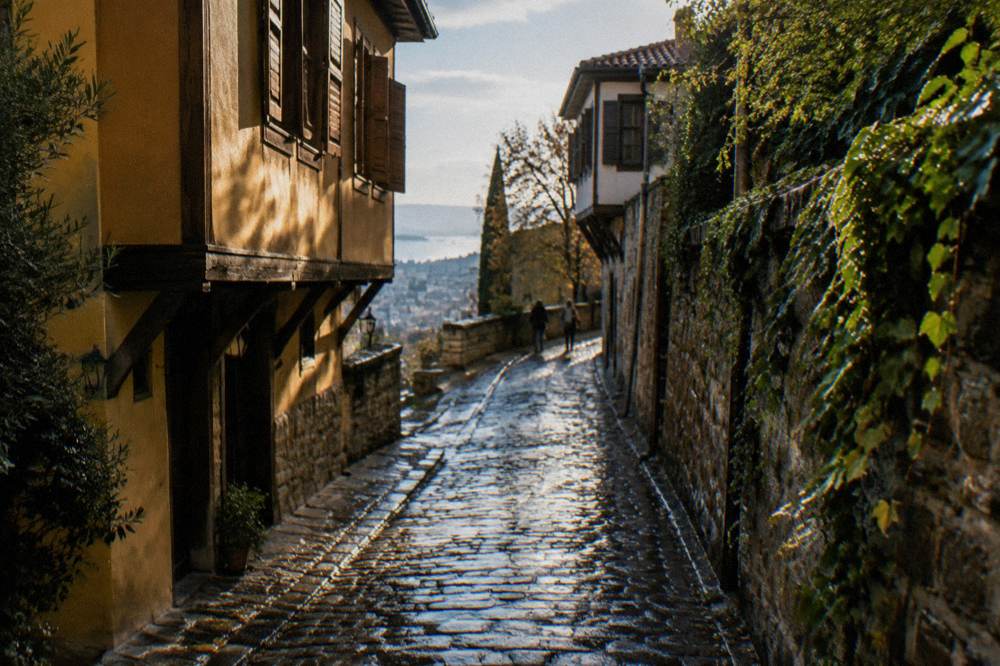
For visitors who want the history without self-navigation in the wet, the guided option below covers the upper town with a local operator; the site's walking tour overview collects the full range of guided walks for comparison.
The same tour also appears in the free-to-cancel form below, which is the practical point on a day when the forecast might clear.
Where Do You Eat In Thessaloniki When It Pours?
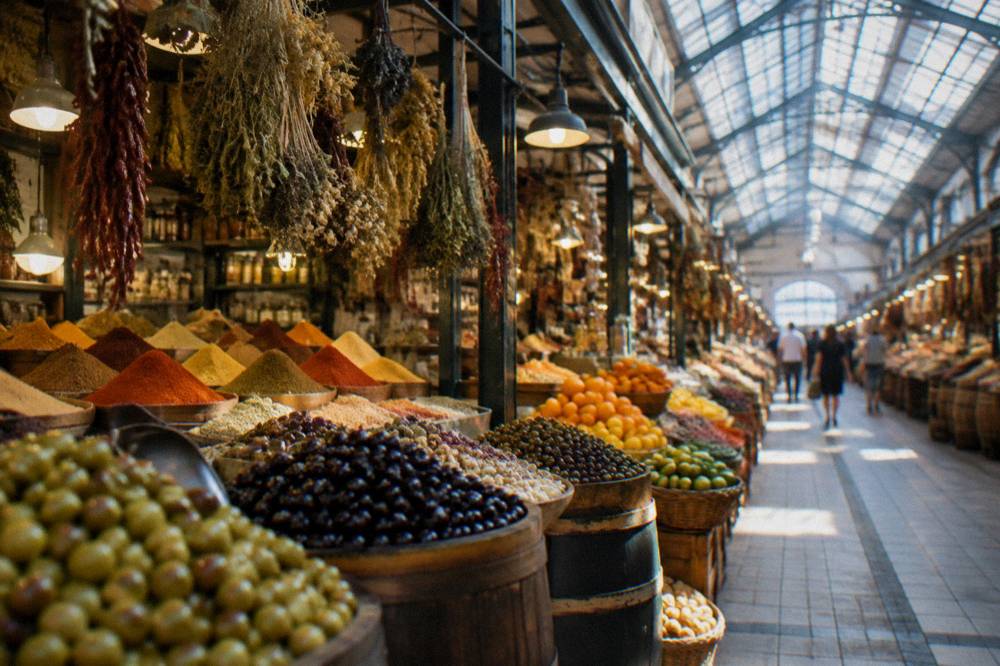
The covered answer is Modiano Market, the restored market hall in the city centre, plus the surrounding Kapani Market streets and the arcaded restaurants of Ladadika, all within a short walk of Aristotelous Square; a food tour strings them together so the eating happens under roofs while the walking between stops stays short. Modiano Market and Kapani Market are the city's two historic markets, and this site's rule on food venues is strict: no restaurant names, so the plan here names the markets and the districts, and the eating decisions happen on the ground.
A guided food walk has a specific rainy-day value: the guide picks the covered stops and the routing, and the Traditional Greek Food Tour With A Local is built exactly on the market-and-taverna pattern. The site's food hub at the Thessaloniki food tour page covers the full range, including market-focused options, and the what to eat in Thessaloniki guide handles the dishes themselves.
Ladadika, the old merchant quarter west of Aristotelous Square, is dense enough that a heavy shower is a two-minute problem: step into any doorway and the district's layout does the rest. Rain also empties the seafront, so the walk back along the Nea Paralia after eating, rain or not, is a promenade rather than a beach, and this site never describes it as a swimming spot; swimming belongs to Perea, about 28 minutes away by road, in any weather.
Does The Thessaloniki Metro Help On A Wet Day?
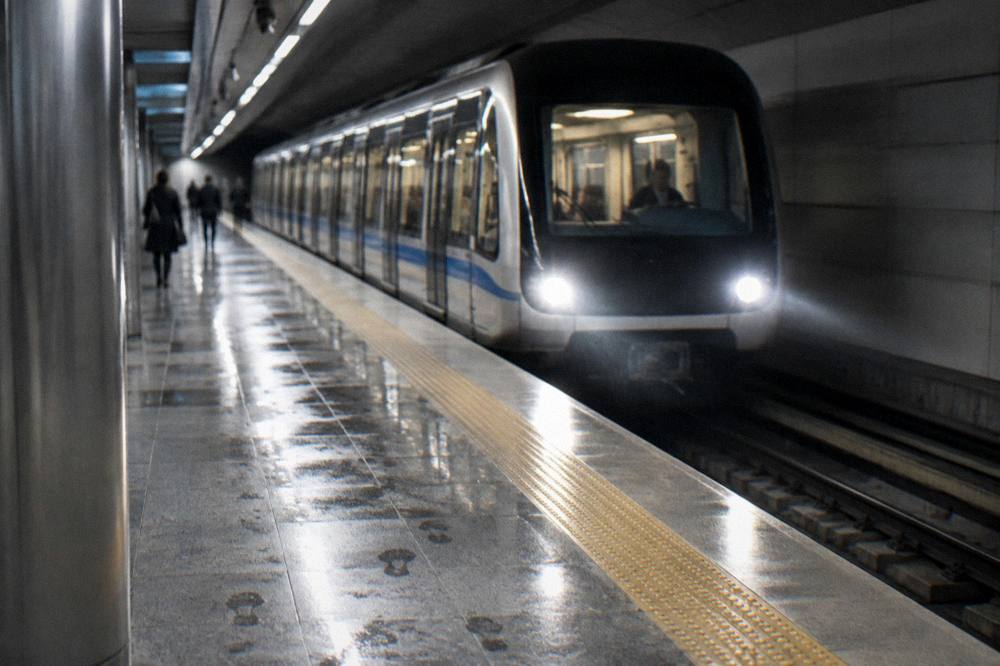
Yes, directly: the metro runs 05:15 to 00:30 Sunday to Thursday and 05:15 to 02:00 Friday and Saturday, a basic single ticket costs 0.60 euro and a 24-hour unlimited ticket 2.50 euro, and the Kalamaria extension inaugurated on 27 August 2026 added five stations to the line that opened in November 2024. The metro's own ticket page prints those fares, and the system is fully underground, which makes it the one part of a rainy Thessaloniki day where the weather does not exist. The White Tower, the Archaeological Museum and the Museum of Byzantine Culture all sit within walking distance of stations.
The airport is served by OASTH bus lines X1, X2, X3 and N1 per the operator's own route list, with a reported fare of about 2 euro for the airport lines; confirm the current fare before you ride, since that figure is reported rather than printed on an official page this site fetched. A taxi from the airport to the centre runs about 25 euro by day, again reported, again worth confirming. Everything else covered here is indexed on Thessaloniki Travel Guide.
| Ticket | Price | Notes |
|---|---|---|
| Basic single | 0.60 euro | One journey, reduced 0.30 euro |
| Daily ticket | 2.50 euro | 24 hours, unlimited metro |
| 10+1 basic tickets | 5.80 euro | Carnet |
| 30-day pass | 16 euro | Unlimited |
Fares are from the Thessaloniki Metro's ticket page. Whether a single metro ticket also covers city buses is not stated on the official tickets page, so buy bus tickets separately unless the operator confirms otherwise at the machine. The full transport picture, including the Thessaloniki metro and the airport transfer detail, has its own guide pages.
Which Byzantine Churches Work As Rain Shelters?
Thessaloniki has fifteen UNESCO-listed Paleochristian and Byzantine monuments, inscribed in 1988, and the working churches among them, the Church of Saint Demetrius, Hagia Sophia, Panagia Acheiropoietos and Hosios David, are free to enter and open outside service times, which makes them the cheapest rain stops in the city. The Church of Saint Demetrius is the city's patron church and sits over a crypt; Hagia Sophia stands on a plateau above the modern grid; Hosios David, in Ano Poli, holds a famous early mosaic.
The UNESCO listing is the frame: fifteen monuments across the city, from the Rotunda and the Arch of Galerius at street level to the walls and the churches above them. Individual pages cover Hagios Demetrius, Hagia Sophia, the Rotunda and the Arch of Galerius in depth.
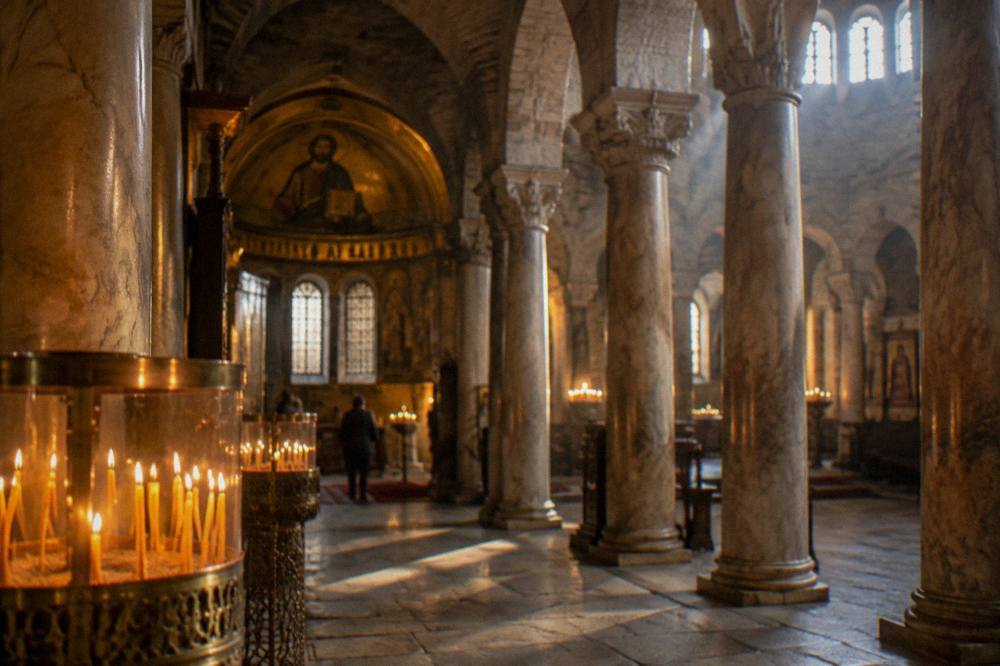
Rain actually flatters these buildings. Byzantine mosaics are low-light art, and a grey afternoon leaves the interiors closer to the light level they were made for than a blinding Greek noon does. The Church of Saint Demetrius was rebuilt after the Great Fire of 1917 damaged it, along with Hagia Sophia, so the buildings carry their own weather history: the city survived fire in 1917, with 73,000 people left homeless, and an earthquake in 1978, and the churches standing today are the survivors of both.
Can You Still Take A Day Trip From Thessaloniki In The Rain?
Most Thessaloniki day trips survive rain because they are indoor or museum-led, with one hard exception: Meteora, at about 228 km and about 2 hours 34 minutes by road from Aristotelous Square, is a full day at the best of times and its monasteries are a rain-exposed experience, so save it for a clear forecast. Vergina, at about 62 minutes by road, is largely underground: the Museum of the Royal Tombs of Aigai is a covered, tumulus-enclosed space. Pella's museum is about 43 minutes away and indoors, and the Archaeological Museum of Thessaloniki itself is the zero-minute version of the same idea.
The drive times below are computed free-flow road times from Aristotelous Square, with no traffic, parking or stops, so read them as floors rather than plans. Rain adds minutes, and a winter Tuesday adds the museum-closure problem from earlier sections.
| Day trip | Distance by road | Drive time, free-flow | Rain suitability |
|---|---|---|---|
| Pella museum | 45.7 km | about 43 min | Indoor museum, works in rain |
| Vergina, Royal Tombs of Aigai | 68.0 km | about 62 min | Underground museum, works in rain |
| Dion archaeological park | 90.1 km | about 67 min | Open-air site, poor in rain |
| Edessa waterfalls | 90.3 km | about 82 min | Waterfalls are bigger in rain, paths are wet |
| Mount Olympus, Prionia trailhead | 106.9 km | about 86 min | Hiking, not a rain option |
| Meteora, Kalambaka | 227.5 km | about 154 min | Full day, exposed, save for clear weather |
The Vergina and Pella prices float in this site's reporting as reported figures from the sites' own pages, so confirm them on the museum pages before setting out; the drive times are the stable part. The Meteora day trip guide covers the monastery planning in full, and the three days in Thessaloniki itinerary slots these trips into a longer stay.
One rain-specific note on the waterfalls at Edessa: rain is the point there, since the falls run hardest after wet weeks, but the viewing paths are exactly where the spray goes, so the trip trades one kind of wet for another. Organised options exist for the Vergina-and-Pella pairing and for Pozar thermal baths, and the thermal-baths pairing is the one rain explicitly improves: hot outdoor pools in cold drizzle are a selling point, not a problem.
What Does A Full Rainy Day In Thessaloniki Look Like?
A workable wet-day sequence runs the Museum of Byzantine Culture in the morning at 08:00 when its summer schedule opens, the Church of Saint Demetrius and Hagia Sophia around midday, Modiano Market for lunch, the White Tower at 8 euro in the mid-afternoon, and the OTE Tower rotating lounge for the evening, all stitched together by the 2.50 euro daily metro ticket. The OTE Tower option matters on a grey day because it does the panoramic part of Thessaloniki from indoors, with a light meal, which replaces the sunset everyone tells you to chase from the walls.
The hour-by-hour plan below assumes a summer schedule (1 April to 31 October) and a non-Tuesday. In winter, shift everything an hour later, swap the museum opening to 08:30, and remember both major museums close on Tuesday.
| Time | Stop | Why it works in rain |
|---|---|---|
| 08:00 | Museum of Byzantine Culture | Opens daily at 08:00 in summer, fully indoors |
| 10:30 | Church of Saint Demetrius | Free, covered, crypt below street level |
| 11:15 | Hagia Sophia | Short walk or one metro stop, free entry |
| 12:30 | Modiano Market and Kapani Market | Roofed market halls, lunch in place |
| 14:30 | White Tower | Indoor exhibition climb, 8 euro full |
| 16:30 | Archaeological Museum | 09:00 to 17:00, last entry 20 minutes before |
| 19:00 | OTE Tower rotating experience | Panorama and light meal from indoors |
That is a dense day, and a family version bends differently: the Thessaloniki with kids itinerary and the one day in Thessaloniki plan both trim it. Cruise passengers on a wet port day have a tighter version still, covered at the cruise port day guide, where the White Tower and the museums cluster close to the berth.
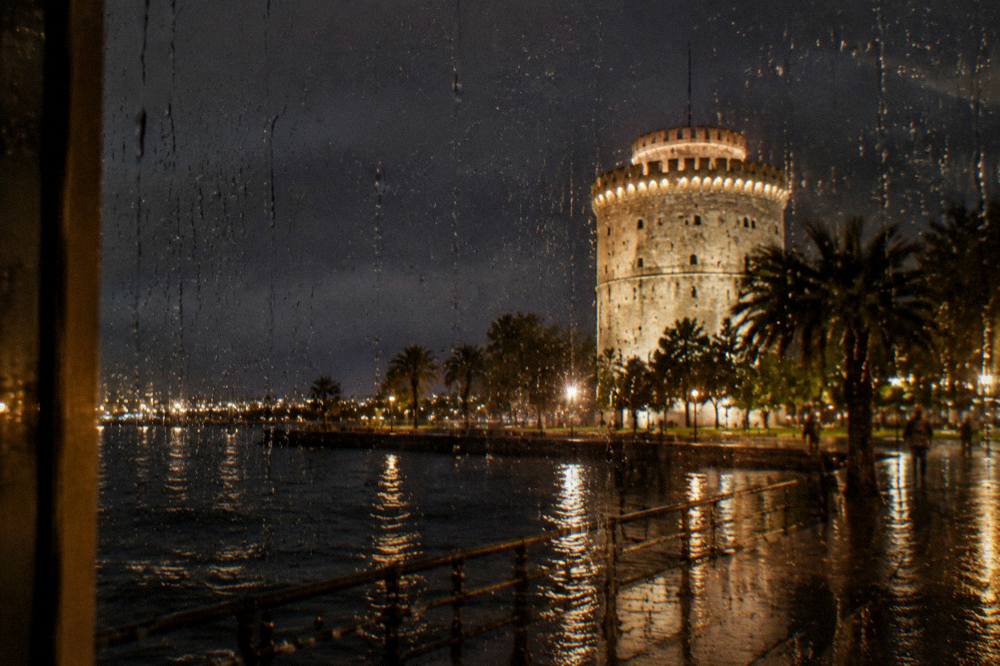
The OTE Tower slot is the one booking worth locking early on a rainy evening, because the rotating floor is a fixed-capacity experience and rain pushes demand indoors. The site's partner listing handles the light-meal version:
Common Questions About Thessaloniki In The Rain
Does it rain a lot in Thessaloniki?
Rain is seasonal: the HNMS Thessaloniki Mikra station table, 1959 to 2010, records 55.1 mm in December against 19.3 mm in August, with rain days running from 12.7 in December to 5.1 in August. Annual rainfall totals 444.5 mm across the same record.
Is Thessaloniki worth visiting when it rains?
As editorial judgement, yes: the city's core attractions are indoor ones, including two major state museums, fifteen UNESCO-listed monuments with covered church interiors, roofed market halls and a fully underground metro, so rain removes the beach and the views but little of the substance.
Are Thessaloniki museums open in winter?
Yes, with a Tuesday exception: the Archaeological Museum runs 09:00 to 17:00 from 1 November to 31 March and closes on Tuesday, and the Museum of Byzantine Culture runs 08:30 to 15:30 Monday and Wednesday to Sunday in the same window, also closed Tuesday. The White Tower stays open daily in winter.
Can you swim near Thessaloniki in the rain?
The Nea Paralia seafront is a promenade, not a swimming beach, in any weather. Swimming is done at Perea, about 28 minutes by road, or Agia Triada and Epanomi further along the gulf; whether a beach operates in poor weather is a local question on the day.
Does the Thessaloniki metro run when it rains?
The metro is fully underground and runs 05:15 to 00:30 Sunday to Thursday and 05:15 to 02:00 Friday and Saturday. A single ticket costs 0.60 euro and a 24-hour ticket 2.50 euro, per the metro's own ticket page.
What about snow instead of rain?
The station table gives January mean lows of 1.5 C, so winter precipitation can fall near freezing, but this site prints no snow-day count because the HNMS table holds none. Assume cold rain capability in January rather than assuming snow.
Pack shoes with grip, keep the Tuesday closures in mind from November to March, and let the city do the rest under cover.