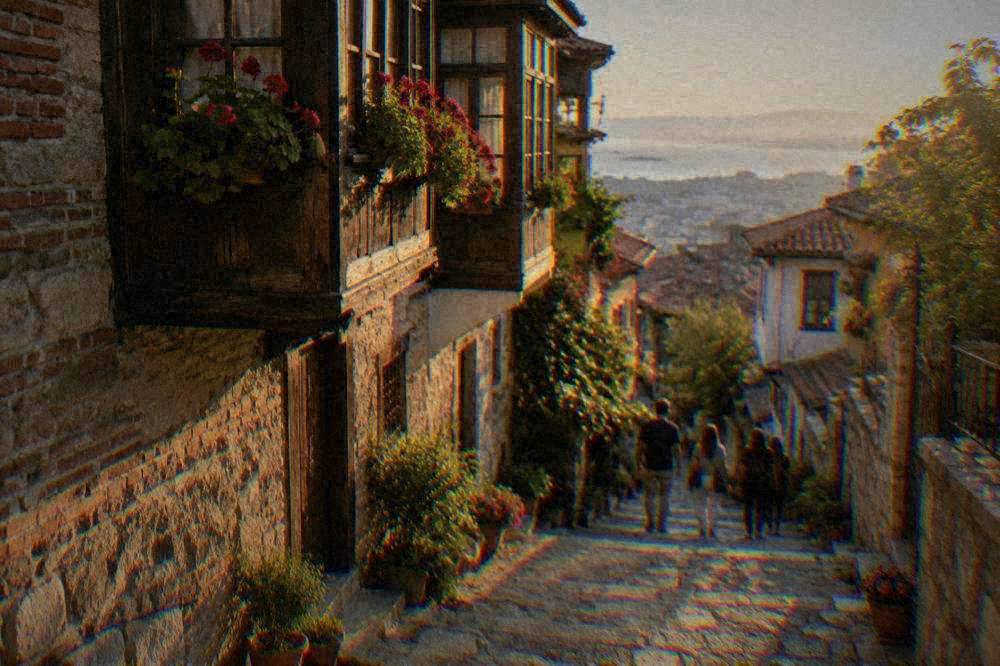
Ano Poli: The Upper Town Above The Walls
Ano Poli is the old upper town of Thessaloniki, the only part of the historic centre that survived the Great Fire of 1917, climbing from the modern city to the Byzantine walls and the Heptapyrgion fortress above the Thermaic Gulf.
Short answer
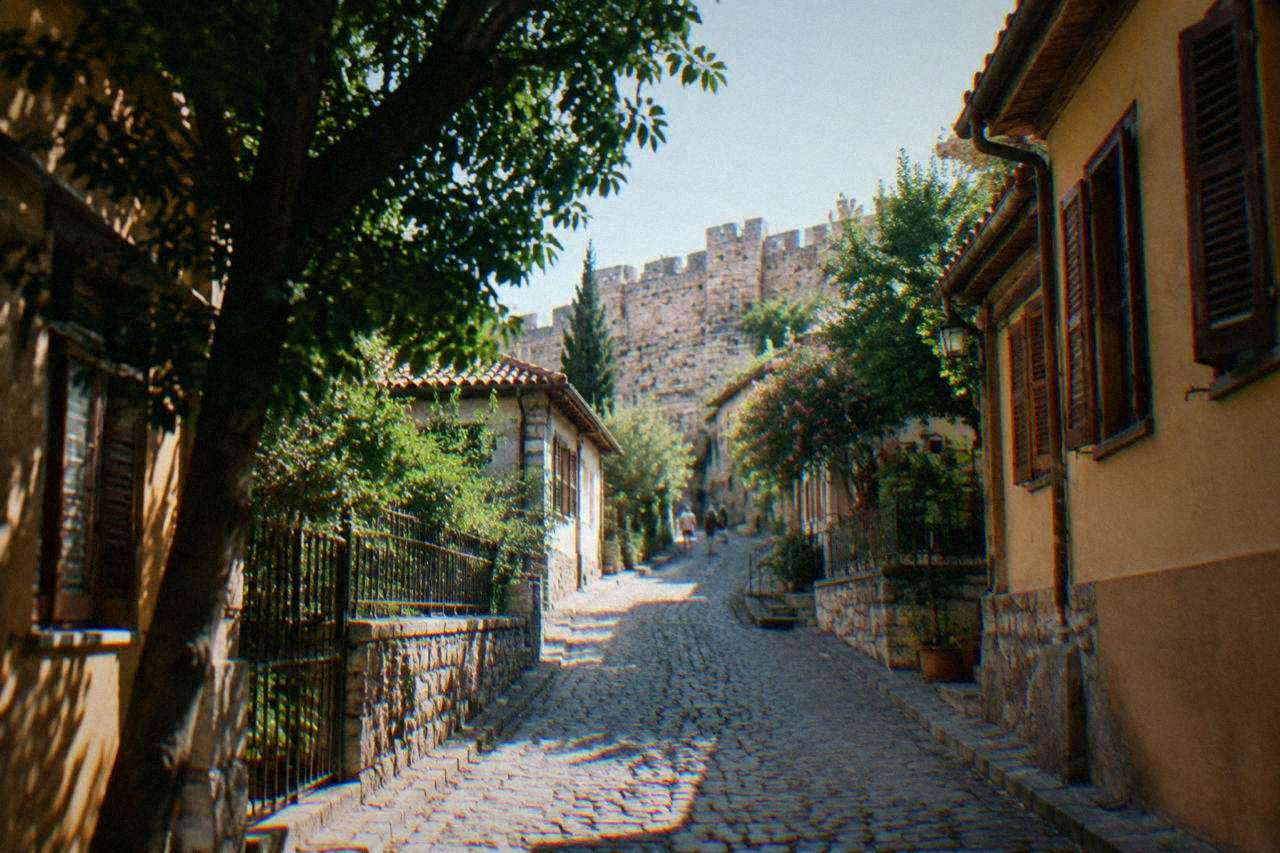
Ano Poli is Thessaloniki's old upper town, inside and below the Byzantine walls, reachable on foot from the city centre in roughly twenty minutes of uphill walking. It holds four of the city's fifteen UNESCO-listed monuments, the Heptapyrgion fortress, and the broadest views over the city and the Thermaic Gulf.
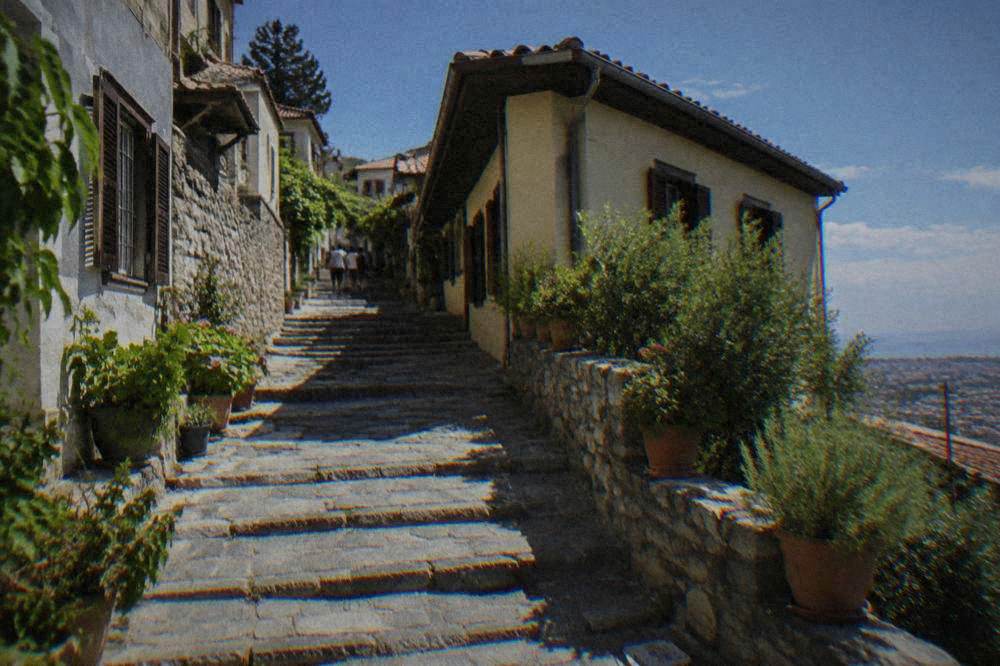
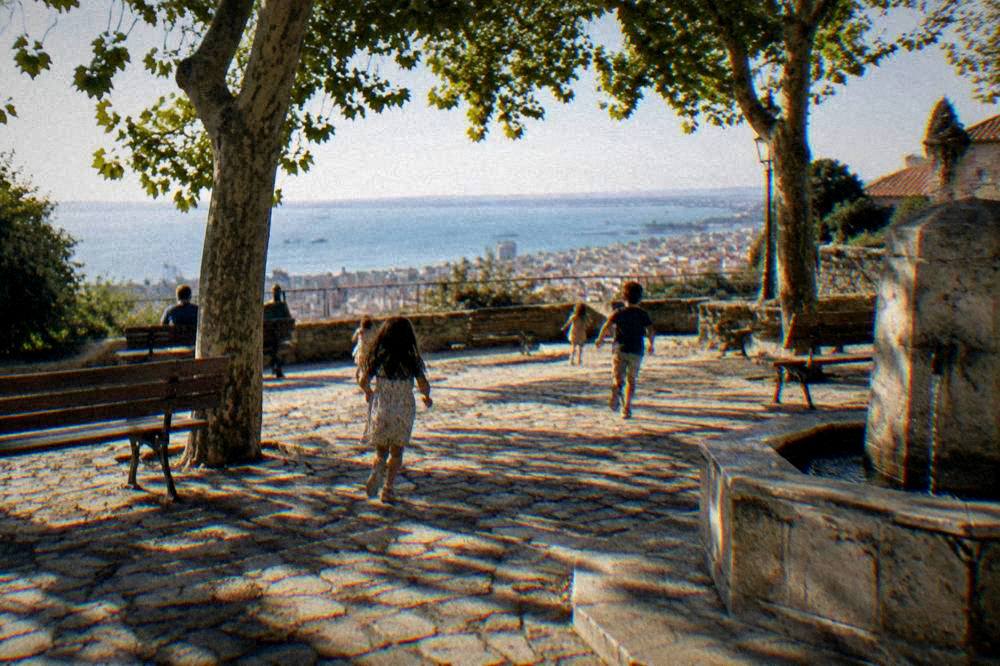
Ano Poli is the old upper town of Thessaloniki, the second city of Greece, spread across the hillside below the Byzantine walls in Central Macedonia, northern Greece. It is the one district of the historic centre that still shows the city as it stood before the Great Fire of 1917: low Ottoman-era houses, cobbled lanes climbing in steps, plane-tree squares with neighbourhood tavernas, and above it all the fortress of the Heptapyrgion and the long line of the walls looking out over the Thermaic Gulf. The modern city, rebuilt after the fire, begins at the bottom of the slope; Ano Poli, above it, is where the older city survived.
The name simply means upper town, and that is the honest description of the place. Everything here is oriented uphill: the streets, the views, the churches, the walk. This guide covers what Ano Poli is, what there is to see inside it, how hard the walk is, where to eat and drink, and how the district fits into a wider visit to Thessaloniki, including day trips out to Halkidiki, Vergina and Mount Olympus from a city base. For the broader picture of the city below, start with the site's Thessaloniki things-to-do overview.
What Is Ano Poli In Thessaloniki?
Ano Poli is the old upper town of Thessaloniki, the residential quarter that grew inside and just below the city's Byzantine walls, and the only part of the historic centre that was not rebuilt after the Great Fire of 1917 destroyed the lower city. It preserves Ottoman-era houses, cobbled streets and several of the city's UNESCO-listed Byzantine churches, and it was inscribed together with them on the World Heritage List in 1988 as part of the fifteen Paleochristian and Byzantine monuments of Thessaloniki.
The district's character comes directly from that survival. The lower city, around what is now Aristotelous Square, burned in August 1917 and was replanned under the Hebrard scheme; roughly 73,000 people were left homeless by that fire, per the municipality's own history pages. Ano Poli, above the fire line, kept its street pattern. What a walker finds today is therefore not a reconstruction but a continuation: lanes that follow the medieval hillside, houses with overhanging upper floors, and gardens inside old courtyard walls.
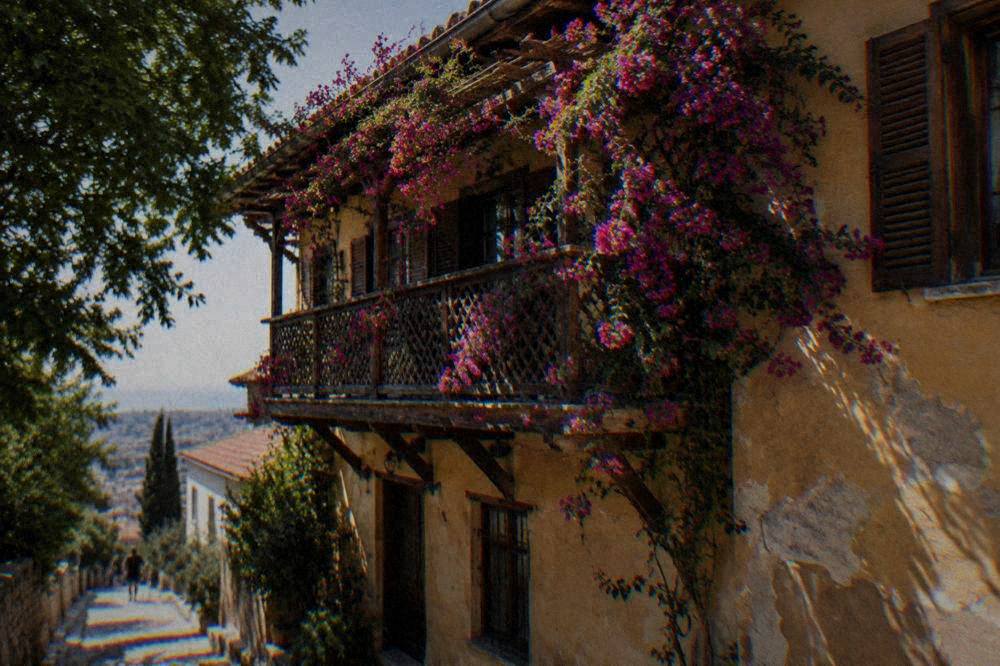
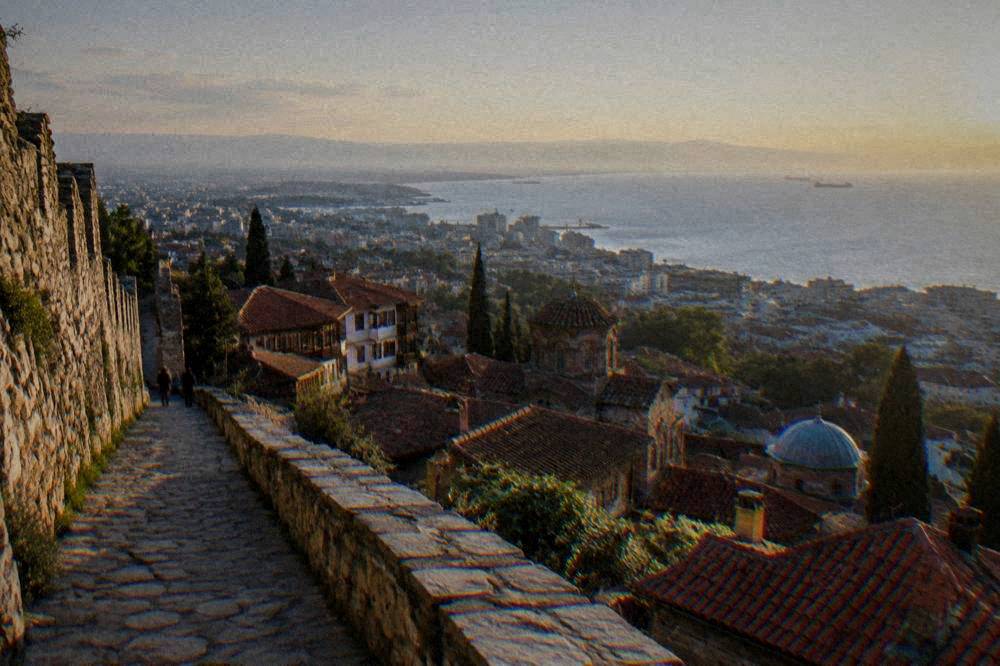
The boundaries are easy to read on the ground even without a map. To the south the district meets the modern city around the Rotunda and the Arch of Galerius, both reachable in minutes downhill. To the north and west it ends at the walls themselves, the fortress of the Heptapyrgion at their highest point, and the Acropolis plateau above Vlatadon Monastery. About four kilometres of the original wall circuit, which once ran roughly eight kilometres, remains visible today, per the Greek Ministry of Culture's own site entry on the monument.
Four of the fifteen UNESCO monuments sit in or at the edge of Ano Poli: the Church of Saint Demetrius is at its foot on the modern side, while Hosios David, the Vlatadon Monastery and the church of Agios Nikolaos Orfanos are inside the upper town itself, along with the walls, which are a listed component in their own right. Add the Heptapyrgion fortress and the Trigoniou Tower, and the district holds a heavier concentration of listed heritage than any other part of the city.
What Are The Best Things To See In Ano Poli?
The core sights of Ano Poli are the Heptapyrgion fortress at the top of the walls, the Byzantine churches of Hosios David, Agios Nikolaos Orfanos and the Vlatadon Monastery, the Trigoniou Tower on the wall walk, and the viewpoints over the Thermaic Gulf from the plateau near Vlatadon, with the Ottoman-era lanes and squares of the district between them. All are within a single walk of under three kilometres end to end.
The Heptapyrgion, also called Yedi Kule, is the fortress at the highest point of the walls. Its history has two halves: a Byzantine and Ottoman fortification, then a prison. The Ministry of Culture's monument page records that it served as a prison until 1989, which is why generations of Thessalonians knew the building only from outside. Today it is a monument again, open to walk through, with the wall circuit running from it along the ridge. Check the current opening hours on the official ticketing pages before you go, because state-site schedules shift between summer and winter.
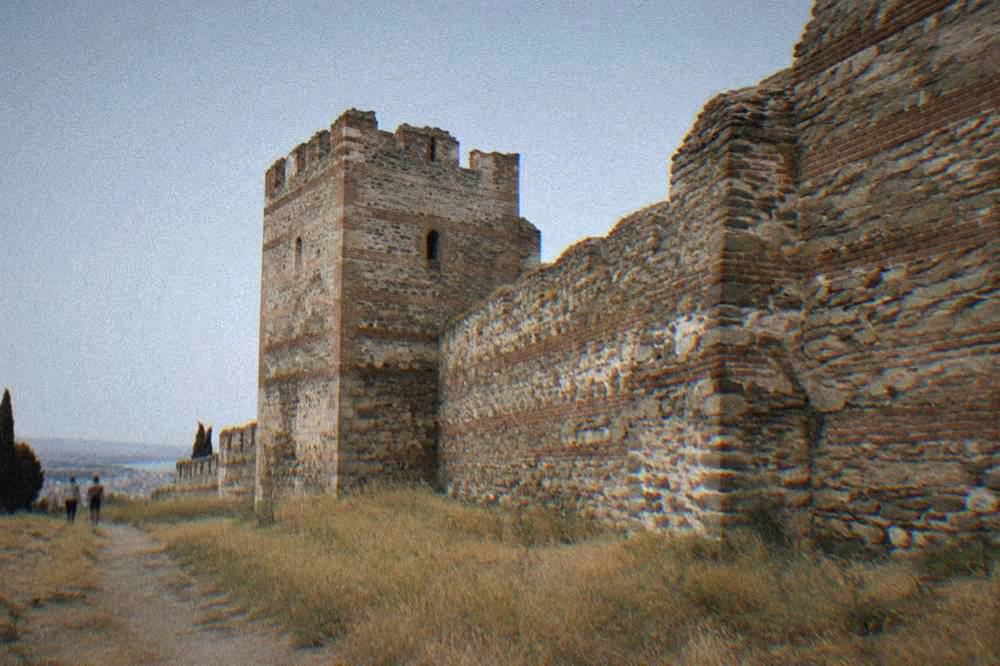
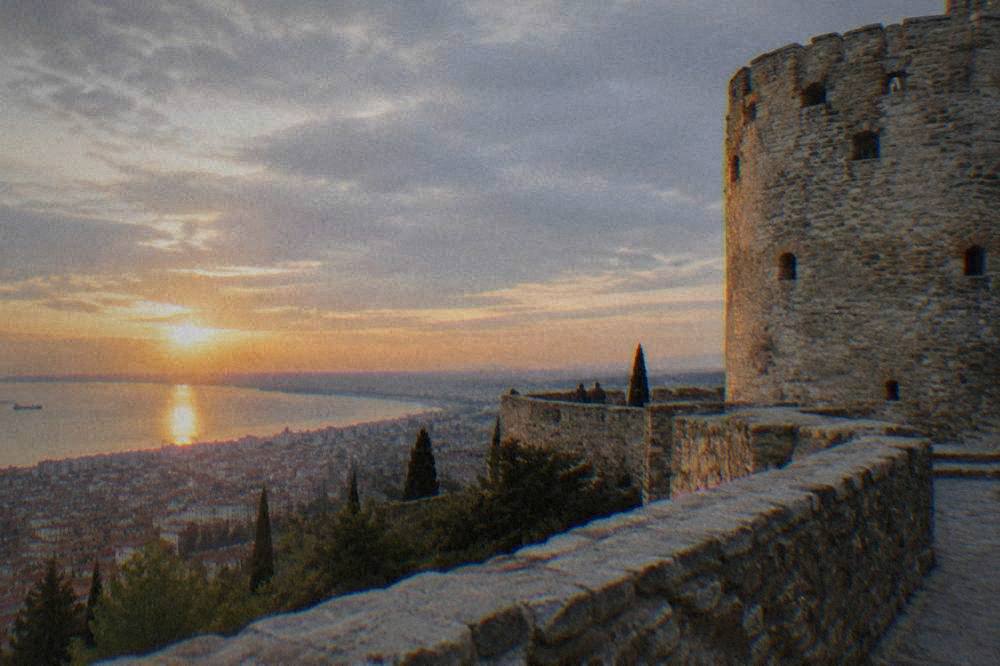
From the Heptapyrgion the walls run east toward the Trigoniou Tower, a round tower that has become the emblem of the upper town skyline. The path along the wall here gives the longest open views in the city: the whole Thermaic Gulf, the waterfront from the White Tower to the port, and on clear days the profile of Mount Olympus away to the southwest. It is a free, open-air walk, and it works at sunrise, at midday and at sunset, three genuinely different experiences of the same ground.
The churches are quieter and, for many travellers, the reason the district carries UNESCO weight at all. Hosios David holds an early Christian mosaic that the UNESCO citation lists among the city's Paleochristian monuments. Agios Nikolaos Orfanos, a Byzantine church of the Paleologan period, keeps its full wall-painting cycle, listed in the same 1988 inscription. The Vlatadon Monastery sits on the Acropolis plateau at the top of the district, the only working monastery inside the walls, with a garden terrace looking straight down the gulf. Working churches in Thessaloniki are free to enter and open outside service times; no published hours exist beyond that, so plan visits around morning hours and be prepared to find a door closed before a service.
A reasonable half-day loop, described from the bottom up:
| Stop | What it is | Notes for the walk |
|---|---|---|
| Church of Saint Demetrius | UNESCO-listed basilica at the foot of the district | Start here; the crypt and the upper town climb both begin nearby |
| Olympos Naoussa street climb | Cobbled stepped lane into Ano Poli | Steady uphill, roughly 15 minutes to the plateau |
| Agios Nikolaos Orfanos | Byzantine church, full fresco cycle | Free entry, modest dress expected |
| Vlatadon Monastery | Working monastery on the Acropolis plateau | Garden terrace with gulf views |
| Heptapyrgion | Fortress at the wall's high point | Former prison until 1989; check hours before visiting |
| Trigoniou Tower and wall walk | Round tower and wall-circuit path | Open air, free, best light late afternoon |
A guided walk is one way to compress the loop into a single morning with the stories attached, and the Upper Town historical walking tour in the band above covers the walls, the fortress and the lanes with a local guide. For travellers who prefer to walk alone, the loop above works without one; carry water, because the climb has few shaded stretches in summer, when the HNMS Thessaloniki Mikra station record, 1959 to 2010, puts the July mean daily high at 31.7 C.
How Do You Get To Ano Poli And How Steep Is It?
Ano Poli is reached on foot from the city centre in roughly twenty minutes of continuous uphill walking from the Rotunda or the Church of Saint Demetrius, and by city bus to stops along its southern edge, with the metro connecting at the bottom of the district via the line that opened in November 2024 and was extended to Kalamaria in August 2026. There is no metro station inside Ano Poli itself, and the streets inside are stepped and narrow, so the climb is always the final stage.
The walk up is the honest headline. From the Rotunda, the route follows the line of the walls north through streets that shift from apartment blocks to low houses within a few blocks. From the Arch of Galerius it is a few minutes longer. The gradient is real but steady, broken by steps and squares, and the whole climb is shorter than it looks on a contour map. Anyone comfortable with a hill can do it; anyone who is not should consider the bus up and the walk down.
The metro helps with the approach, not the summit. Line 1 runs from the New Railway Station to Nea Elvetia, and the Kalamaria extension, inaugurated 27 August 2026, added five more stations to Mikra; the Thessaloniki Metro's own ticket page lists the basic ticket at 0.60 euro and a 24-hour ticket at 2.50 euro. The stations sit in the modern city at the bottom of the slope, so from any of them the upper town remains a walk or a short bus ride away. Service runs 05:15 to 00:30 Sunday to Thursday and 05:15 to 02:00 Friday and Saturday, per the operator's own page.
For the orientation, the practical picture:
| Approach | Route | Effort |
|---|---|---|
| On foot from the Rotunda | North through the wall line, roughly 20 minutes | Steady uphill, stepped lanes |
| On foot from the Church of Saint Demetrius | West then north past the Ladadika-side streets, roughly 25 minutes | Uphill, partly cobbled |
| Metro plus walk | Line 1 to a central station, then the climb | Flat ride, uphill finish |
| City bus to the district edge | Stops along the southern boundary of Ano Poli | Shortest walk; confirm routes locally |
One caution that matters: no sight in Ano Poli offers step-free access, and the district's stepped streets should be assumed to be walking-only. Visitors with mobility constraints should treat the lower churches, such as the Church of Saint Demetrius and Hagia Sophia, as the more manageable Byzantine sights and enjoy the upper town from a vehicle drop-off near the walls.
Where Does Ano Poli Fit In A Thessaloniki Itinerary?
Ano Poli deserves half a day in any Thessaloniki itinerary of two days or more, usually as a morning or late-afternoon block, because its churches keep daylight hours and its viewpoints reward low sun. In a two-day plan it pairs naturally with the Roman and Byzantine centre below it, the Rotunda, the Arch of Galerius and the museums, and it leaves the seafront promenade, the Nea Paralia, for the evening.
The reason for the sequencing is simple geometry. The upper town sits at the top of the sightseeing map, and everything else in the historic centre sits below it in a compact belt: the Archaeological Museum, the Museum of Byzantine Culture, the Roman Forum and Aristotelous Square are all within a downhill walk of twenty to thirty minutes. Doing Ano Poli first, while legs are fresh, then descending through the sights, is the shape the site's two-day Thessaloniki itinerary follows.
Seasons change the block but not its place. In summer, the HNMS Thessaloniki Mikra station table, 1959 to 2010, shows a July mean daily high of 31.7 C against a January mean daily low of 1.5 C, which argues for walking the walls at either end of the day from June to August. In winter, December carries the highest monthly rainfall in the record at 55.1 mm, so a wet-day plan puts the district's churches first and the open wall walk last, ready to cut short. Annual rainfall across the year totals 444.5 mm in the same station record, spread through every month, so a light shell belongs in the bag in any season.
For visitors staying longer, the district also works as a base rather than an excursion. Ano Poli sits inside the wider question of [where to base a stay in Thessaloniki], and its trade-off is consistent: quieter nights, older fabric, real views, in exchange for the climb and fewer hotel options than the centre. Confirm accommodation choices against listings directly.
What And Where Should You Eat In Ano Poli?
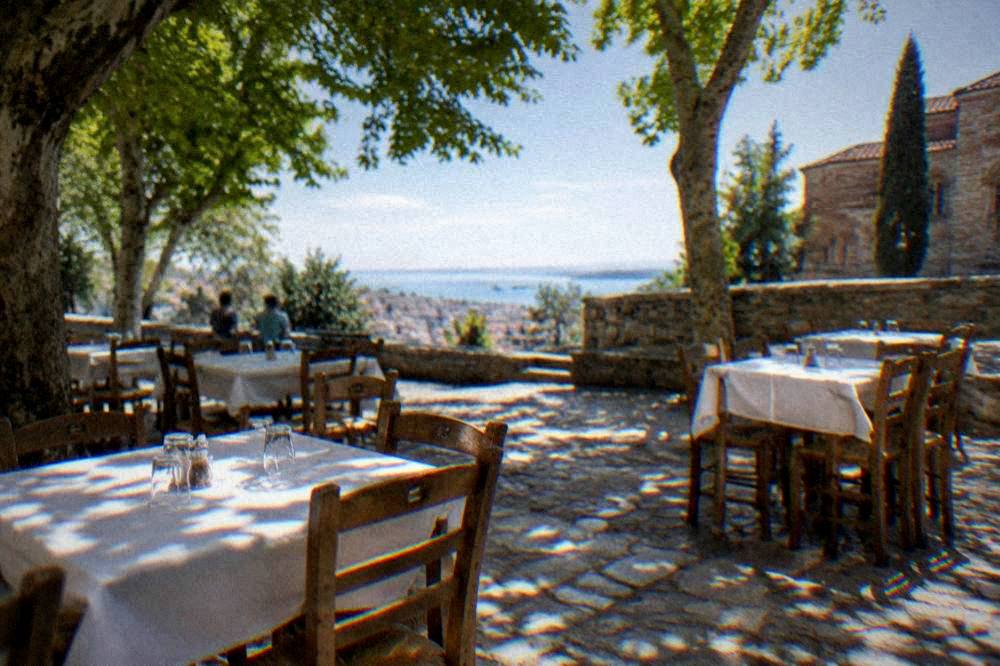
Ano Poli's food offer runs to neighbourhood tavernas and small ouzeri around its squares and along the wall-facing streets, serving the grilled meats, meze and slow-cooked dishes of northern Greek cooking, with the cluster near the plateia at the district's heart the easiest single place to stop. Treat the district as a walk-in area and confirm specifics on the spot.
That constraint is stated plainly because food is a reason people come up here, and it deserves honesty rather than a list. What the facts support is the pattern: the upper town is the traditional-quarter counterweight to the eating streets of Ladadika and the market food of the centre, a place of long tables under plane trees rather than bright signage. A practical route is to eat in Ano Poli after the wall walk, or to descend into the city for dinner and keep the upper town for the view. Everything else covered here is indexed on Thessaloniki Travel Guide.
For travellers who want the city's food explained rather than just found, a guided option covers more ground. The site's dedicated Thessaloniki food tour guide sets out how these walks work, and the tour below is one of the options that includes market and neighbourhood stops.
For self-guided comparison, the practical eating map of the city:
| Area | Character | Best fit |
|---|---|---|
| Ano Poli squares | Neighbourhood tavernas, meze, slower pace | After the wall walk, long lunches |
| Ladadika | Concentrated eating and nightlife streets | Evening dinner from the centre |
| City centre markets | Modiano Market and Kapani Market stalls | Morning produce and street food |
| Kalamaria waterfront | Fish tavernas along the eastern shore | A seafront lunch outside the centre |
Drink water on the climb, in any case. The summer hill is the one part of an Ano Poli visit that regularly catches walkers out, and there are few shops on the upper lanes.
What Are The Best Views In Ano Poli?
The best views in Ano Poli run along the wall path between the Heptapyrgion and the Trigoniou Tower, and from the garden terrace of the Vlatadon Monastery on the Acropolis plateau, all looking south over the city and the Thermaic Gulf; the Trigoniou Tower itself is the focal point of the skyline, and the gulf panorama from the wall path takes in the White Tower, the port and, on clear days, Mount Olympus across the water.
Light matters more than location here. In the morning the gulf is lit from the east and the city sits in soft front light; in the late afternoon the sun drops behind the height of the district and the rooftops glow, which is why the wall walk is a sunset ritual for the city. There is no bad hour, but there is a best one, and it is the last two before sundown.
For photographers and planners, the view stops in order:
| Viewpoint | What you see | Notes |
|---|---|---|
| Heptapyrgion ramparts | Walls, city rooftops, gulf | Inside the fortress; check hours |
| Wall path to Trigoniou Tower | Panoramic gulf, port, Mount Olympus on clear days | Free, open air |
| Vlatadon Monastery garden | Plateau view over the eastern city | Monastery etiquette applies |
| Trigoniou Tower base | Upper-town rooftops and tower itself | Best at golden hour |
| Streets below the walls | Lanes, old houses, wall towering above | Morning shade in summer |
The Nea Paralia promenade at the bottom of the city gives the counter-view, the skyline of Thessaloniki seen from the water's edge with the walls and the Trigoniou Tower on the hill above; the two views bookend each other, and a day that does both has understood the city's shape.
Is Ano Poli Worth Visiting With Kids Or On A Short Trip?
Ano Poli is worth visiting on trips of any length if the walls, the churches or the views are a priority, and it works with children as an open-air walk rather than a museum stop, because the fortress, the tower and the wall path are all outdoor, free-range experiences; on a stay of one day only, it competes with the White Tower, the Rotunda and the seafront, and the honest answer is to climb for the late-afternoon view and skip the church interiors.
The trade-off is time versus uniqueness. Nothing else in Thessaloniki offers the wall walk or the stacked old-town lanes, so the district is unrepeatable; but the lower-city sights are closer to arrival points and flatter underfoot. Families usually find the fortress and the tower the easiest sell, with the caveat that the paths are unfenced in places and toddlers need close supervision along the wall. The site's guide to [Thessaloniki with kids] covers the flatter alternatives.
For short-trip planning, the decision in one table:
| Trip length | Ano Poli fit | Suggested block |
|---|---|---|
| One day | Late-afternoon wall walk only | 90 minutes, views over interiors |
| Two days | Half day, full loop | Morning loop, museums after |
| Three days or more | Full district at leisure | Churches, fortress, taverna lunch |
| Cruise day | Only if the port day is long | Fortress and viewpoint, skip the lanes |
| Family trip | Outdoor stops only | Fortress, tower, square with a fountain break |
Cruise passengers should weigh the port day carefully; the site's guide to a [Thessaloniki cruise port day] sets out the timing from the terminal, and Ano Poli is the most uphill item on any shore list.
What Else Should You Know Before Walking Ano Poli?
Dress code is the one that catches travellers out. The working churches, Agios Nikolaos Orfanos, Hosios David and the Vlatadon Monastery, are active places of worship, free to enter and open outside services, and covered shoulders and knees are the working expectation at all of them. The fortress and the wall path have no code beyond sun sense.
The city context helps the rest of the day. Thessaloniki is in Greece, uses the euro and is in the Schengen area; the emergency number is 112. The nearest swimming is not the city waterfront, which is a promenade, but Perea, about 28 minutes by road, and the Halkidiki peninsulas beyond it, all covered in the site's guide to [beaches near Thessaloniki]. For the wider region, the site's [northern Greece itinerary] connects Ano Poli's Byzantine layer with Vergina, Pella and Mount Olympus.
Two smaller guided options round out the district for travellers who want company or a theme. The old-town walk below adds a mythology and botany angle to the same lanes, and the e-bike tour is a way to reach the heights without the full climb.
Ano Poli rewards the slow approach. Walk up early or late, let the churches set the pace, take the wall path for the gulf, and finish at a square table while the city switches on below. That single loop, a couple of hours long, is the closest thing Thessaloniki offers to seeing the city as it stood for centuries before the fire reshaped everything downhill.
Common Questions About Ano Poli In Thessaloniki
What is Ano Poli in Thessaloniki?
Ano Poli is the old upper town of Thessaloniki, the quarter inside and below the Byzantine walls and the only part of the historic centre that survived the Great Fire of 1917. It holds Ottoman-era houses, cobbled lanes and several of the city's fifteen UNESCO-listed Paleochristian and Byzantine monuments, inscribed in 1988.
How do you get to Ano Poli?
On foot from the Rotunda or the Church of Saint Demetrius in roughly twenty to twenty-five minutes of uphill walking, or by city bus to stops along its southern edge. The metro, open since November 2024 with the Kalamaria extension since 27 August 2026, serves the modern city below; there is no station inside Ano Poli, and the final climb is always on foot.
What are the main sights in Ano Poli?
The Heptapyrgion fortress, the wall path and the Trigoniou Tower, the Byzantine churches of Hosios David and Agios Nikolaos Orfanos, the working Vlatadon Monastery on the Acropolis plateau, and the viewpoints over the Thermaic Gulf.
Is Ano Poli a difficult walk?
The district is stepped and continuously uphill from the centre, but the climb takes roughly twenty minutes and is broken by squares and lanes.
Is the Heptapyrgion open to visitors?
The Heptapyrgion is a state monument open to visitors, but opening hours shift between summer and winter schedules, so check the official ticketing pages before you go. The fortress was used as a prison until 1989, per the Ministry of Culture's monument entry.
Can you eat in Ano Poli?
Yes, the district has neighbourhood tavernas and small ouzeri around its squares.