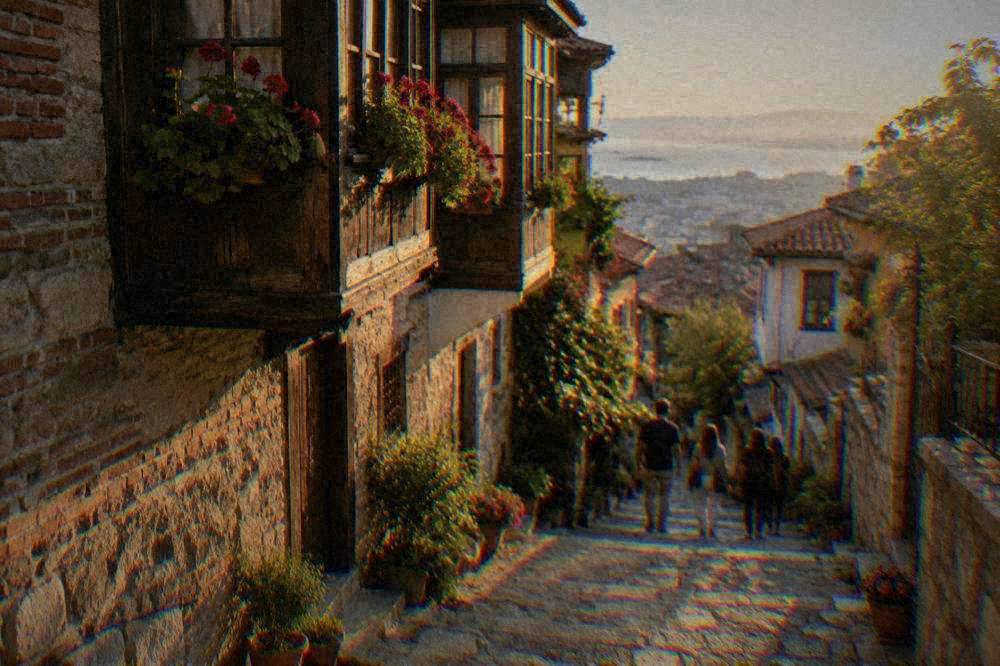
Vlatadon Monastery: Peacocks And A View Over The Gulf
Vlatadon Monastery stands inside the Byzantine walls of Ano Poli, above Thessaloniki, one of the fifteen UNESCO-listed Paleochristian and Byzantine monuments of the city, free to enter and open outside services.
Short answer
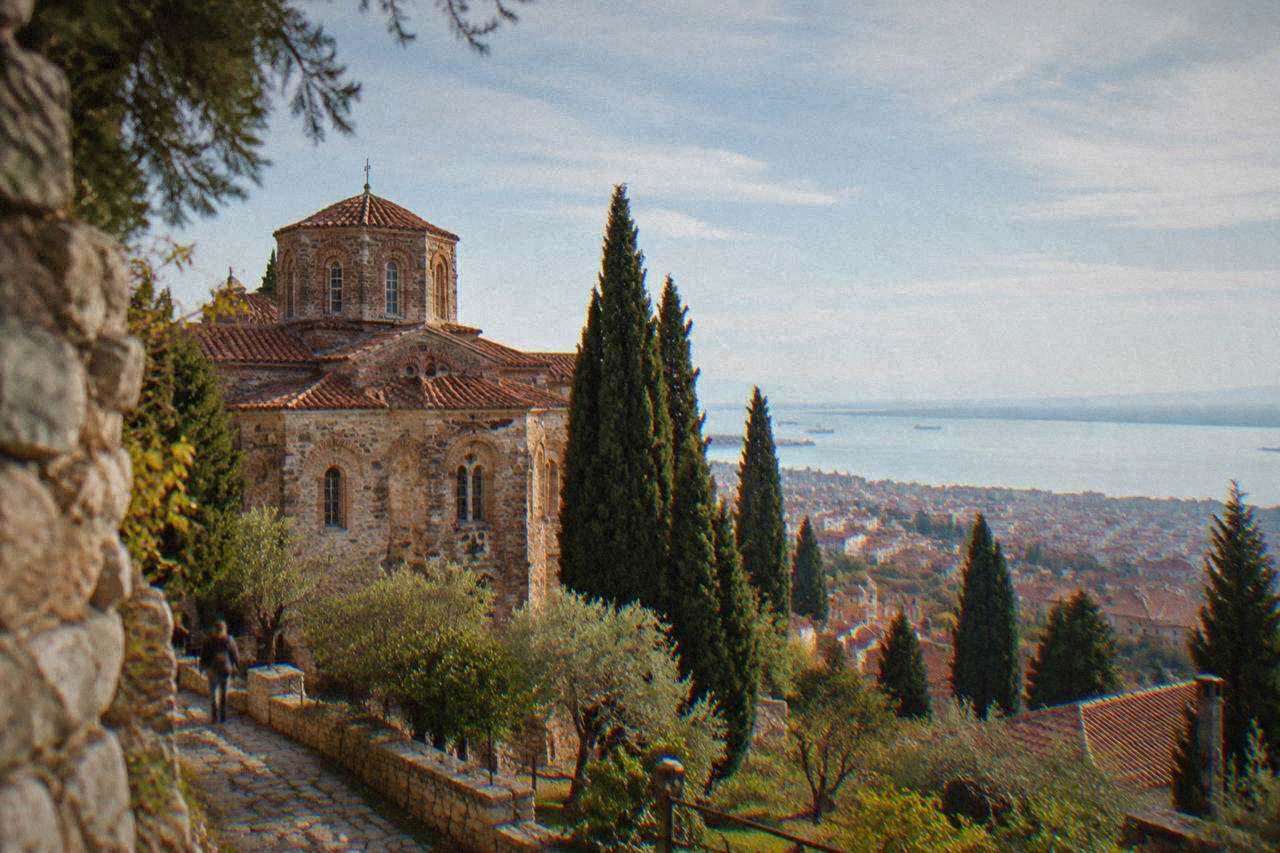
Vlatadon Monastery is a working Byzantine monastery in Ano Poli, the old upper town of Thessaloniki, listed as one of the city's fifteen UNESCO World Heritage monuments since 1988. Entry is free, the monastery is open outside service times, and its terrace looks out over the Thermaic Gulf and the rooftops below.
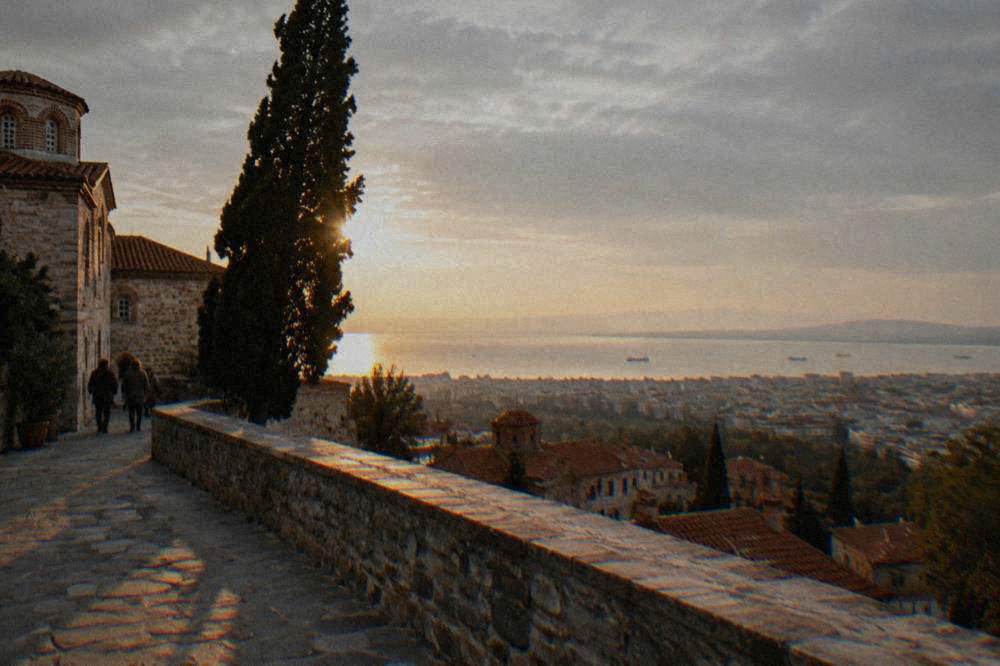
Vlatadon Monastery sits at the top of Ano Poli, the old upper town of Thessaloniki, inside the line of the Byzantine walls and above the Thermaic Gulf that gives this second city of Greece its seafront. It is one of the fifteen Paleochristian and Byzantine monuments inscribed on the UNESCO World Heritage List in 1988, and it remains a working monastery rather than a ticketed museum: entry is free, and the complex is open outside service times. The setting is the reason people climb this far: from the monastery's terrace the whole amphitheatre of the city opens below, from the White Tower on the Nea Paralia promenade to the hills of the horizon.
What Is Vlatadon Monastery In Thessaloniki?
Vlatadon Monastery is a functioning Byzantine-era monastery in Ano Poli, the upper town of Thessaloniki, in Central Macedonia, northern Greece, and one of the fifteen monuments covered by the city's UNESCO World Heritage inscription of 1988. It is not a state museum and sells no ticket: like the other working churches of Thessaloniki, it is free to enter and open outside service times.
That status matters more than it first appears. Of the fifteen UNESCO monuments, several are churches that still hold services, and Vlatadon is one of them, a monastery rather than an archaeological ruin. The city around it was founded in 315 BC by Cassander and named for his wife Thessalonike, a daughter of Philip II, and its layered Byzantine and Ottoman past is the reason the World Heritage list covers so many buildings in such a compact centre. Thessaloniki's fifteen monuments were inscribed together in 1988 under the title "Paleochristian and Byzantine Monuments of Thessaloniki".
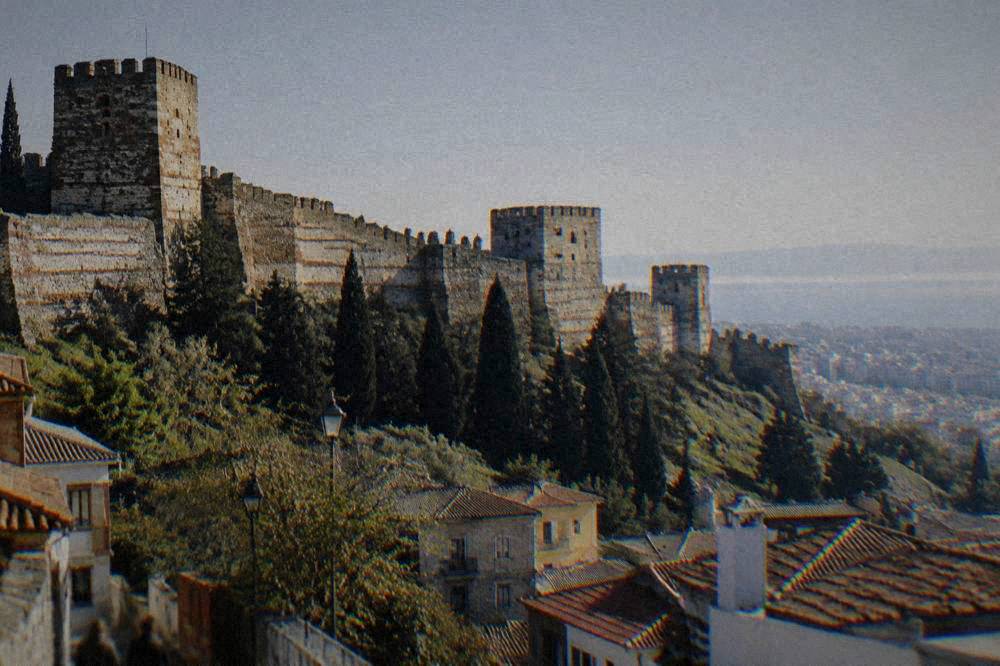
The monastery's position is inseparable from its character. Ano Poli climbs away from the grid of the lower city, which was rebuilt after the Great Fire of 1917 left 73,000 people homeless, and its lanes, low houses and wall fragments survived in a way the centre did not. Vlatadon stands near the crest of that slope, close to the Heptapyrgion fortress and the Trigoniou Tower, inside the walls whose original circuit ran about 8 km and of which roughly 4 km remains visible today. The climb rewards the walk with the widest single view over the gulf available anywhere in the old town.
Where Is Vlatadon Monastery And How Do You Get There?
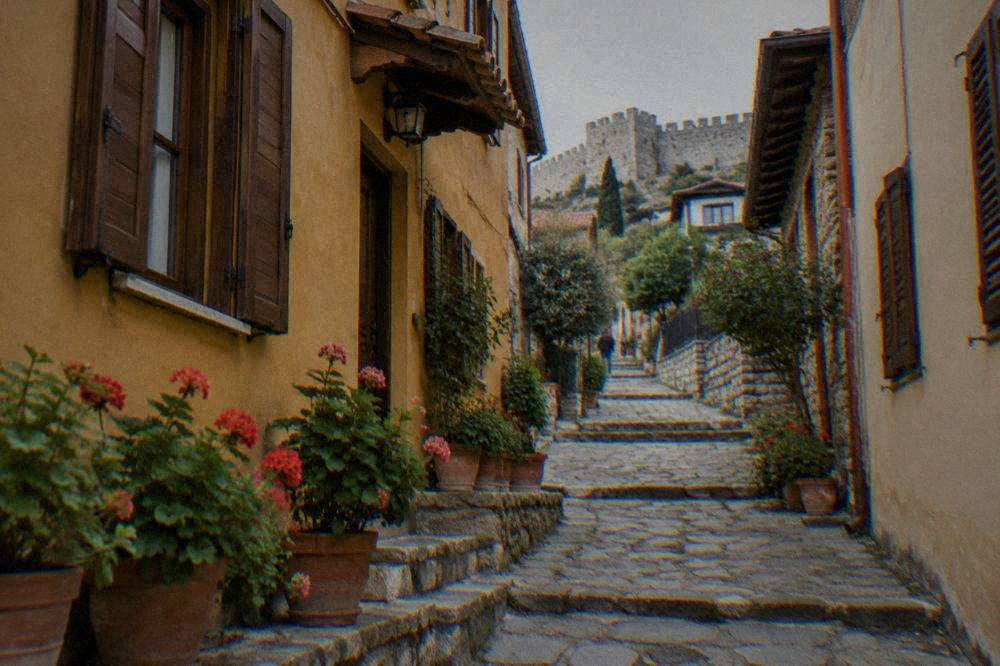
Vlatadon Monastery is in Ano Poli, Thessaloniki's old upper town, a short walk uphill from the Byzantine walls, the Heptapyrgion fortress and the Trigoniou Tower. There is no metro station at the top of the hill: the practical route is the metro or a bus to the centre, then the signed uphill paths of the old town on foot.
The city's transport base has changed quickly, and older guides are wrong about it. Thessaloniki's metro Line 1 opened in November 2024 and the Kalamaria extension, five further stations out to Mikra, was inaugurated on 27 August 2026, so the network now runs from the New Railway Station to Nea Elvetia and on to Mikra in the southeast. The Thessaloniki Metro's ticket page lists a basic ticket at 0.60 euro, a reduced ticket at 0.30 euro and a 24-hour daily ticket at 2.50 euro, and the system runs 05:15 to 00:30 Sunday to Thursday and 05:15 to 02:00 Friday and Saturday. No station serves Ano Poli directly; the monastery is reached from the centre on foot, by taxi or by city bus toward the upper town, and you should confirm bus routes locally before setting out.
The walk up is part of the point. The full loop is one of the half-day classics of the city and needs nothing but sensible shoes and water in summer.
What Can You See At Vlatadon Monastery?
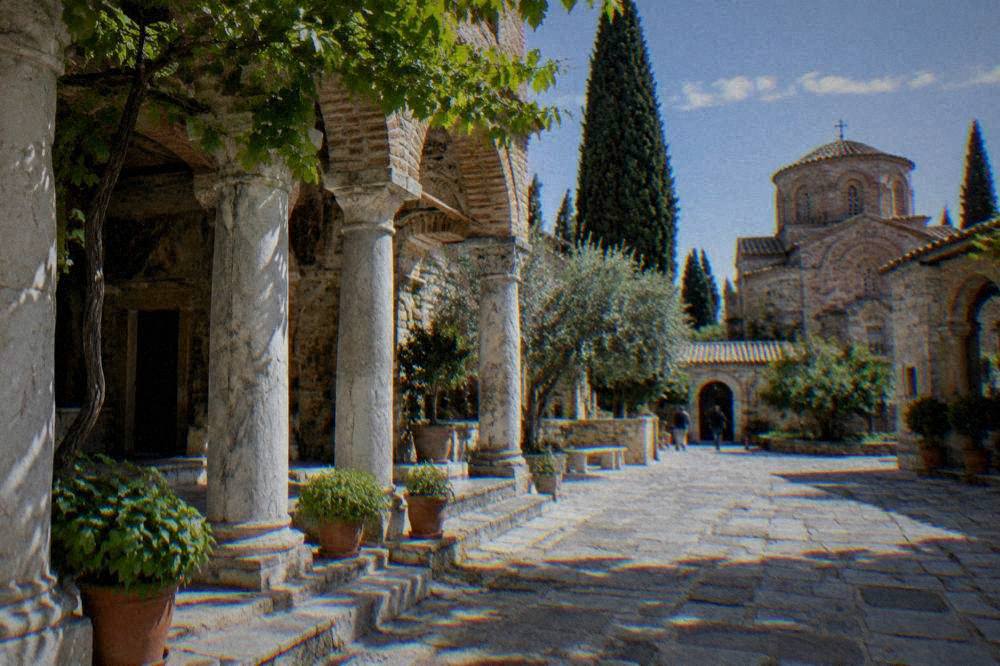
The draw at Vlatadon is the combination of a working Byzantine monastery, its church, stretches of the city's ancient walls beside it, and a terrace view over the Thermaic Gulf and the whole of Thessaloniki below. Entry is free, and because it is a monastery rather than a museum there are no ticket lines, no timed slots and no published closing schedule to plan around.
The church itself belongs to the city's family of Byzantine monuments, alongside the Church of Saint Demetrius, Hagia Sophia, Panagia Acheiropoietos and Hosios David, all of them free to enter and open outside services. What the sources do establish is the monastery's place in the UNESCO inscription of 1988 and its continuous religious use.
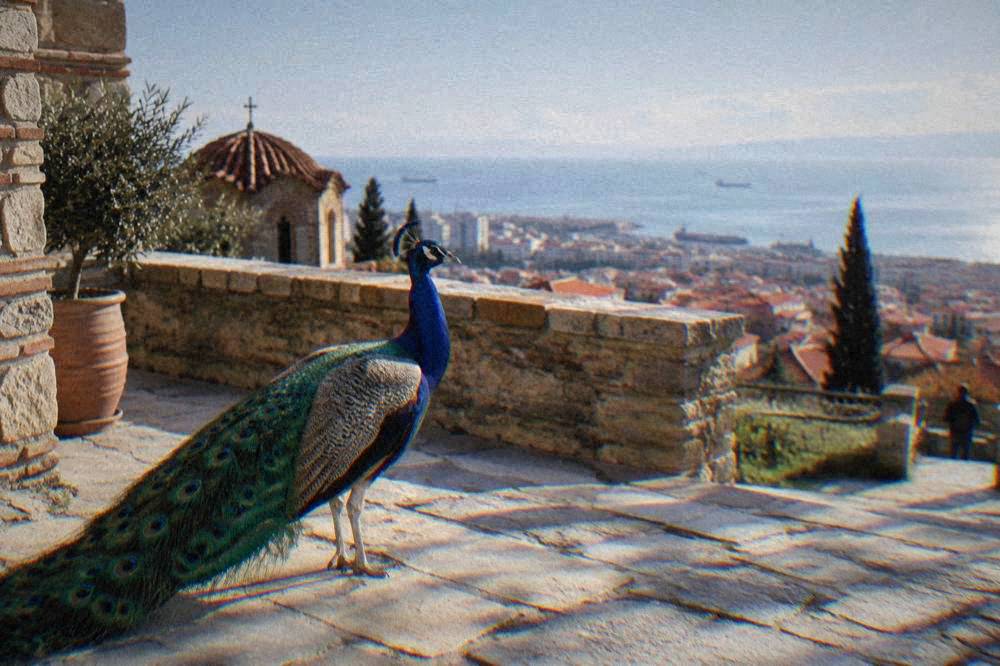
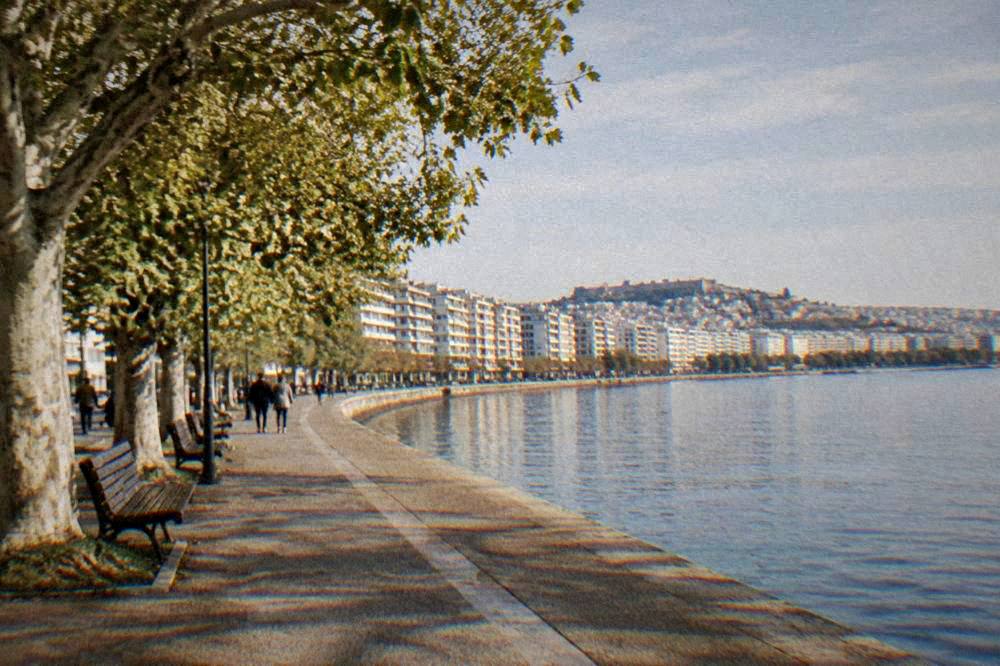
Around the monastery the walls dominate. The original circuit ran about 8 km and roughly half of that stands today, and the stretch near Vlatadon, between the Heptapyrgion and the Trigoniou Tower, is the most complete and the most walked. Look down from the terrace and the geography of the destination snaps into focus: the Thermaic Gulf curving east, the seafront promenade of the Nea Paralia, the White Tower on the waterfront, and, on clear days, the horizon toward Mount Olympus, which sits about 86 minutes by road from the city at its Prionia trailhead. This is also the spot where the approved title of this page earns its second half: the view over the gulf, not any interior feature, is what people remember.
A guided walk makes sense here for a simple reason: Ano Poli's story is told by its walls, its Ottoman-era houses and its dead-end lanes, and a local guide carries that context in a way a plaque cannot. The Upper Town Historical Tour is the site's featured tour for this page, and you can Check availability alongside the free planning pages of the Thessaloniki Travel Guide.
How Much Does Vlatadon Monastery Cost To Visit?
Vlatadon Monastery costs nothing to enter: like the other working churches of Thessaloniki it is free and open outside service times, and no church in the city charges admission. The money question on this hill concerns the state-run sites around it, and for those the prices changed on 1 April 2026, so older figures circulating online are wrong.
The two flagship museums near the waterfront illustrate the change. The Museum of Byzantine Culture's visiting page lists 10 euro full and 5 euro reduced, and the White Tower costs 8 euro full and 4 euro reduced, both figures in force from 1 April 2026, replacing the old 4 euro White Tower price that still appears in many guides. State museums are also free on set days each year: 6 March, 18 April, 18 May, the last weekend of September and 28 October, and free for EU citizens up to 25 at any time.
| Sight in Thessaloniki | Admission | Source |
|---|---|---|
| Vlatadon Monastery | Free, open outside services | Working monastery |
| Church of Saint Demetrius | Free, open outside services | Working church |
| Hagia Sophia | Free, open outside services | Working church |
| Hosios David | Free, open outside services | Working church |
| White Tower | 8 euro full, 4 euro reduced | From 1 April 2026 |
| Museum of Byzantine Culture | 10 euro full, 5 euro reduced | From 1 April 2026 |
| Archaeological Museum | 10 euro full, 5 euro reduced | Current listing |
One caution applies to the fortress at the top of the hill. Check the current price for the Heptapyrgion, the Rotunda and the Galerian complex on each site's own ticket page before planning a full circuit. A combined state-sites ticket of about 15 euro full and 8 reduced is reported for the main museums and sites, but that figure is reported rather than confirmed on the museums' own pages, so confirm before you go.
For readers weighing the upper town against the rest of the city, a bike tour is an efficient alternative to the climb: the route past the White Tower and the Rotunda covers the flat monuments first, and you can check availability to compare its coverage with a walking day.
When Is The Best Time To Visit Vlatadon Monastery?
The most comfortable months to climb to Vlatadon Monastery are April, May, October and early November, when the HNMS Thessaloniki Mikra station record for 1959 to 2010 shows mean highs of 19.1 to 24.6 C and 21.2 C respectively, with July and August mean highs of 31.7 and 31.4 C making the uphill walk a morning task in high summer.
The station record is the only climate source worth quoting, and it describes a Mediterranean climate with continental edges. The mean daily high climbs from 9.3 C in January to 31.7 C in July, and rainfall is not where guidebook intuition expects it: December is the high month at 55.1 mm and August the low at 19.3 mm, with an annual total of 444.5 mm spread fairly evenly across the cooler half of the year. Autumn, in other words, is both mild and drier than December, and October's 43.0 mm falls on about 9.3 rain days across the whole month.
| Month | Mean high C | Mean low C | Rain mm | Rain days |
|---|---|---|---|---|
| January | 9.3 | 1.5 | 37.7 | 11.5 |
| February | 11.0 | 2.3 | 35.0 | 10.7 |
| March | 14.3 | 4.7 | 37.9 | 12.1 |
| April | 19.1 | 7.9 | 36.1 | 11.1 |
| May | 24.6 | 12.6 | 44.2 | 11.0 |
| June | 29.4 | 17.0 | 29.8 | 7.9 |
| July | 31.7 | 19.3 | 23.8 | 6.7 |
| August | 31.4 | 19.1 | 19.3 | 5.1 |
| September | 27.1 | 15.4 | 29.8 | 7.0 |
| October | 21.2 | 11.3 | 43.0 | 9.3 |
| November | 15.5 | 7.1 | 52.8 | 11.0 |
| December | 10.9 | 3.2 | 55.1 | 12.7 |
Figures: HNMS Thessaloniki Mikra station, 1959 to 2010.
Timing within the day matters as much as the month. The terrace faces the gulf, so late afternoon light across the water is the hour photographers aim for, and the same applies to the whole wall walk from the Trigoniou Tower down. In July and August, do the climb before midday: the lane network offers little shade, and the monastery itself is a quiet, unhurried place at any hour of its opening.
What Else Should You See Near Vlatadon Monastery In Ano Poli?
The walk around Vlatadon Monastery takes in the Heptapyrgion fortress, the Trigoniou Tower, long stretches of the Byzantine walls and the lanes of Ano Poli, and it can be extended downhill to the Roman and Byzantine centre: the Rotunda, the Arch of Galerius and the Church of Saint Demetrius are all within the same half-day arc on foot.
The Heptapyrgion anchors the top of the hill. The fortress served as a prison from the late 19th century until 1989, and its outline above the walls is the visual signature of the upper town. From there the wall path runs east to the Trigoniou Tower, a favourite sunset perch, and the monastery sits on the descending line between them. Downhill, the route falls naturally toward the city's other UNESCO monuments: the Rotunda and the Arch of Galerius, both parts of the Roman Galerian complex, and the great churches of the lower town.
| Sight near Vlatadon | Walking link | Notes |
|---|---|---|
| Heptapyrgion | Same hilltop, minutes away | Fortress, prison until 1989 |
| Trigoniou Tower | Along the wall path | Viewpoint at the walls |
| Byzantine walls | Beside the monastery | About 4 km visible today |
| Hosios David | Downhill in Ano Poli | Free, open outside services |
| Church of Saint Demetrius | Downhill to the centre | Free, open outside services |
| Rotunda and Arch of Galerius | Lower city | Galerian complex |
| Bey Hamam | Between centre and old town | Ottoman bathhouse |
If you would rather ride than climb, a bike circuit of the flat sights pairs well with a shorter walk in the upper town. The featured trio on this page includes that option, and readers comparing it with the guided historical walk above can check availability for the bike route past the White Tower and the Rotunda.
How Does Vlatadon Monastery Fit Into The UNESCO Fifteen?
Vlatadon Monastery is one of the fifteen Paleochristian and Byzantine monuments of Thessaloniki inscribed together on the UNESCO World Heritage List in 1988, a single inscription that also covers the city walls, the Church of Saint Demetrius, Hagia Sophia, the Rotunda and the other great churches of the Byzantine city.
The inscription, titled "Paleochristian and Byzantine Monuments of Thessaloniki", treats the city as one coherent Byzantine ensemble, and that framing is why a monastery on a hill above the gulf shares a listing with a Roman rotunda and a seaside wall. Founded in 315 BC, conquered by the Ottomans in 1430, liberated on 26 October 1912, damaged by the Great Fire of 1917 and the earthquake of 1978, and a European Capital of Culture in 1997, Thessaloniki accumulated layers that few cities of its size can match, and the fifteen monuments are the fixed points of that story.
For planning purposes, the inscription gives you a ready-made itinerary. The wall-and-monastery cluster in Ano Poli covers the high ground; Aristotelous Square and the Roman Forum sit in the middle; the churches and the Galerian complex fill the eastern half of the centre; and the museums, the Archaeological Museum and the Museum of Byzantine Culture, hold the artefacts that the buildings themselves cannot display. Two or three unhurried days cover the set.
| Cluster of the UNESCO fifteen | Where in Thessaloniki | Good pairing |
|---|---|---|
| Walls, Heptapyrgion, Vlatadon | Ano Poli, upper town | Wall walk at sunset |
| Church of Saint Demetrius | Centre-west | Roman Forum nearby |
| Hagia Sophia, Acheiropoietos | Centre | Aristotelous Square |
| Rotunda, Arch of Galerius | East of centre | Galerius palace remains |
| Hosios David, small churches | Ano Poli and east | Combine with the climb |
Can You Visit Vlatadon Monastery On A Day Trip From Elsewhere?
Vlatadon Monastery is an in-city sight, not a day trip, but Thessaloniki works well as a base for day trips once the monuments are seen: Vergina is about 62 minutes by road from Aristotelous Square, Pella 43, Dion 67, Edessa 82 and Meteora about 154, the last of which is a full day rather than a half.
The distances below are computed free-flow road times, so add margin for traffic and parking. Meteora is the one that catches people out: Kalambaka is about 228 km away and the drive is roughly 2 hours 34 minutes without stops, which is why every serious plan treats it as a full-day outing. Closer options, Pella and Vergina for the Macedonian royal past, Dion and Litochoro for Olympus, and the beaches of Perea about 28 minutes out, slot into a single day each.
| Day trip destination | Road distance from Aristotelous Square | Free-flow time |
|---|---|---|
| Perea (beaches) | 23.0 km | About 28 min |
| Pella | 45.7 km | About 43 min |
| Vergina | 68.0 km | About 62 min |
| Dion | 90.1 km | About 67 min |
| Litochoro | 90.7 km | About 67 min |
| Edessa | 90.3 km | About 82 min |
| Kassandra (Kallithea) | 86.2 km | About 78 min |
| Sithonia (Nikiti) | 97.2 km | About 96 min |
| Meteora (Kalambaka) | 227.5 km | About 154 min |
A sensible split for a first visit is two full days in the city, with Vlatadon and the wall walk anchoring one afternoon, then one or two day trips. If the beach is the goal, remember that the Nea Paralia is a promenade and not a swimming beach: swimming is at Perea, Agia Triada or Epanomi, with Perea under half an hour by road.
What Should You Know Before You Go To Vlatadon Monastery?
Take water, comfortable shoes and modest clothing for a monastery visit, expect an uphill walk on stone lanes, and plan around service times rather than a published schedule, because Vlatadon is free, open outside services and has no ticketed hours to check. Weather on the exposed hilltop follows the city record, and the emergency number in Greece is 112.
Practicalities first. Greece is in the Schengen area and has used the euro since 2001, so there are no border formalities for Schengen arrivals and no currency math to do. The climate resilience fee is a Greek accommodation levy collected by your hotel or host, charged per room per night and higher from April to October; it is paid locally and appears nowhere in your sightseeing budget.
Getting down, the same transport facts apply as anywhere in the city. For everything else, the desk's standing advice is the same: confirm locally or at booking, since monastery schedules and service times are set by the community, not by a tourism office.
Common Questions About Vlatadon Monastery
Is Vlatadon Monastery free to visit?
Yes. Vlatadon is a working monastery, and like the other working churches of Thessaloniki it is free to enter and open outside service times. No church in the city charges admission.
Is Vlatadon Monastery part of UNESCO?
Yes. It is one of the fifteen Paleochristian and Byzantine monuments of Thessaloniki inscribed on the UNESCO World Heritage List in 1988 as a single property.
Where is Vlatadon Monastery located?
In Ano Poli, the old upper town of Thessaloniki, inside the Byzantine walls near the Heptapyrgion fortress and the Trigoniou Tower, reached on foot by the uphill lanes of the old town.
How long does a visit to Vlatadon Monastery take?
The monastery itself is a short stop; allow a half-day for the full upper-town loop that includes the walls, the Trigoniou Tower, the Heptapyrgion and the walk back down through Ano Poli.
When is the best time of day to visit?
Late afternoon, when the terrace light falls across the Thermaic Gulf and the rooftops below. In July and August, with mean highs above 31 C on the HNMS Thessaloniki Mikra station record for 1959 to 2010, do the climb before midday instead.
Can you see the sea from Vlatadon Monastery?
Yes. The monastery's terrace looks south over the Thermaic Gulf, the seafront promenade and the White Tower, one of the widest views in the city.
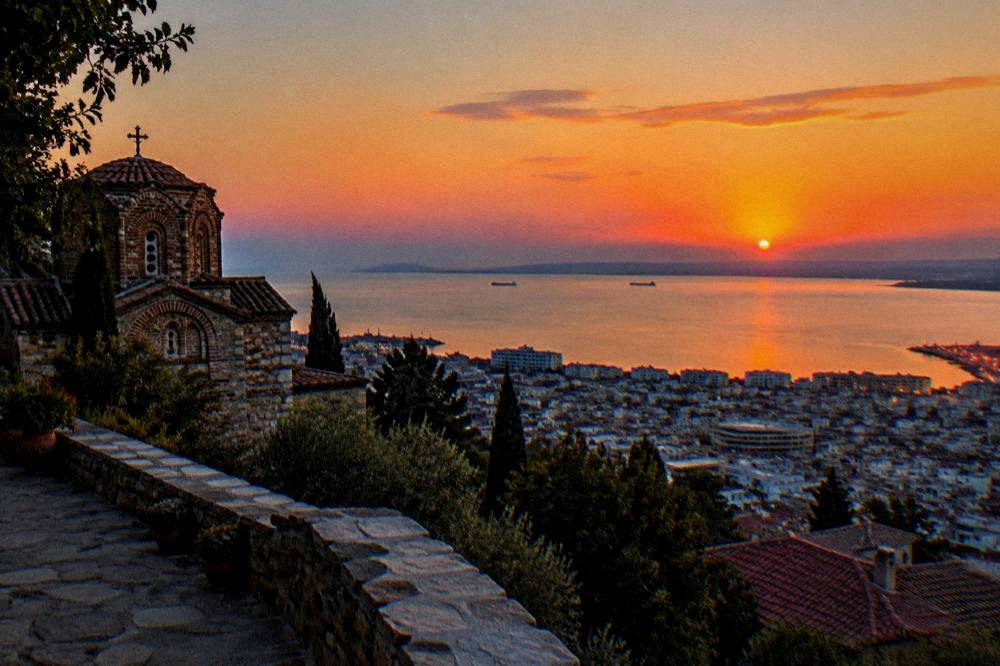
Vlatadon Monastery earns its place on any Thessaloniki itinerary not as a single sight but as the quiet summit of the upper town: free to enter, easy to fold into the wall walk, and unmatched for the view over the gulf that defines this coastal city. Pair it with the Heptapyrgion at one end and the great churches of the lower town at the other, and you have the Byzantine half of Thessaloniki in a single afternoon.