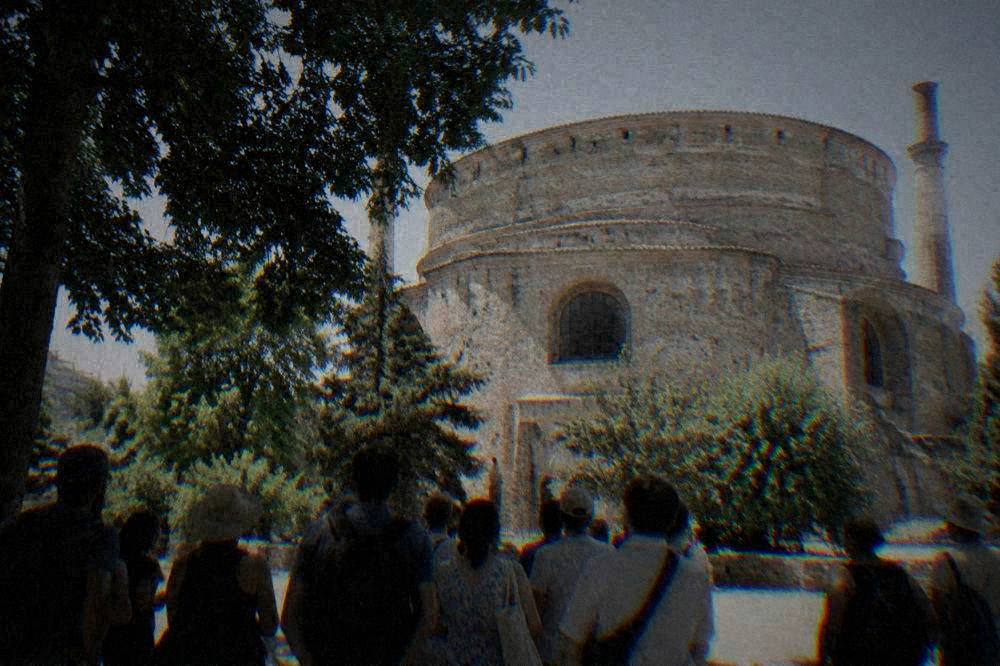
Panagia Acheiropoietos: The Fifth-Century Basilica
Panagia Acheiropoietos in Thessaloniki is a fifth-century basilica and one of the fifteen Paleochristian and Byzantine monuments inscribed on the UNESCO World Heritage List in 1988. It stands a short walk from Aristotelous Square, it is free to enter, and it is one of the clearest statements of the city's early Christian past.
Short answer
Panagia Acheiropoietos is a working Orthodox church on Agias Sofias street in central Thessaloniki, a fifth-century three-aisled basilica and one of the UNESCO-listed Paleochristian and Byzantine monuments. Entry is free, it is open outside service times, and it sits within a few minutes' walk of Hagia Sophia and Aristotelous Square.
Panagia Acheiropoietos in Thessaloniki, the second city of Greece on the Thermaic Gulf in Central Macedonia, is a fifth-century basilica and one of the fifteen Paleochristian and Byzantine monuments the city earned a place on the UNESCO World Heritage List for in 1988. The church stands on Agias Sofias street, a few minutes on foot from Aristotelous Square and even closer to Hagia Sophia, which makes it one of the easiest of the UNESCO fifteen to fold into a first walk through the centre. Unlike the White Tower or the two big state museums, it is a working Orthodox church: entry is free, and it opens its doors outside service times rather than to a published ticketing schedule.
The name rewards a moment of attention before the architecture does. "Acheiropoietos" means "not made by hands", a reference to a sacred image said to have been created without human intervention, and the dedication signals how early and how central the basilica was to the Christian city.
What Is Panagia Acheiropoietos In Thessaloniki?
Panagia Acheiropoietos is a fifth-century three-aisled basilica in central Thessaloniki, dedicated to the Virgin Mary and named for an image "not made by hands", and it is one of the fifteen Paleochristian and Byzantine monuments inscribed on the UNESCO World Heritage List in 1988. It functions today as a working Orthodox church, and the UNESCO inscription covers the whole group of monuments.
The basilica belongs to the earliest Christian stratum of a city founded in 315 BC by Cassander and named for his wife Thessalonike, a daughter of Philip II. By the fifth century Thessaloniki was one of the principal cities of the eastern Mediterranean, and its churches from that period, Acheiropoietos among them, are the reason UNESCO inscribed the group in 1988 under the name "Paleochristian and Byzantine Monuments of Thessaloniki". The inscription lists fifteen monuments in total, ranging from the city walls to the Church of Saint Demetrius, Hagia Sophia, the Rotunda, the Heptapyrgion and this basilica.
What survives above ground is a large colonnaded interior of a type that predates the domed cross-in-square churches of the middle Byzantine period. The plan, with its rows of columns carrying the upper walls and its timber-roofed nave, is the architecture of early Christianity in the eastern empire, and it is the quality of that survival, in a city that burned in 1917 and shook in 1978, that gives the building its standing. The church's early history after the Ottoman conquest of 1430 is documented in broad outline in the standard accounts, but this page sticks to what the sources here support: the century, the dedication, the UNESCO status and the fact of continuous use.
It helps to place the basilica against the other UNESCO monuments nearby, because a visitor with two hours can see several of them on foot.
| UNESCO monument | Type | Central Thessaloniki location |
|---|---|---|
| Panagia Acheiropoietos | Fifth-century basilica | Agias Sofias street, near Aristotelous Square |
| Hagia Sophia | Byzantine church | Agias Sofias square, a short walk east |
| Church of Saint Demetrius | Five-aisled basilica with crypt | Above the Roman forum, near Agios Dimitriou street |
| Rotunda | Roman-era circular monument | North of the Arch of Galerius on Egnatia |
| Arch of Galerius | Open-air triumphal monument | On Egnatia street, free to view |
| Hosios David (Latomos Monastery) | Byzantine chapel with mosaic | Upper city, Ano Poli |
For a fuller run through the whole group, the site's overview of things to do in Thessaloniki sets the Byzantine monuments in context with the museums, markets and waterfront.
Is Panagia Acheiropoietos Free To Visit?
Entry to Panagia Acheiropoietos is free. It is a working Orthodox church, not a ticketed state museum, so there is no admission price, no ticket desk and no published schedule of the kind the state museums print. The church is open to visitors outside service times, and anyone arriving during a service is asked to let worship take priority over sightseeing.
That answer matters because it distinguishes the two halves of a Thessaloniki sightseeing day. The churches on the UNESCO list, including the Church of Saint Demetrius, Hagia Sophia, Hosios David and Panagia Acheiropoietos, are free to enter and keep the rhythm of a living parish. The state museums run on published hours and tickets. The contrast is worth planning around: a morning of churches costs nothing and follows liturgical time, while the museums follow a timetable you can read in advance.
| Site | Admission | Hours basis |
|---|---|---|
| Panagia Acheiropoietos | Free, working church | Open outside services |
| Hagia Sophia | Free, working church | Open outside services |
| Church of Saint Demetrius | Free, working church | Open outside services |
| White Tower | 8 EUR full, 4 reduced, from 1 April 2026 | Daily 08:00-21:00 summer, 08:30-15:30 winter |
| Archaeological Museum | 10 EUR full, 5 reduced | 09:00-17:00, closed Tuesday from 1 November to 31 March |
| Museum of Byzantine Culture | 10 EUR full, 5 reduced | 08:00-20:00 summer, 08:30-15:30 winter |
Two practical notes carry over from the state system. State museums, including the White Tower and the Archaeological Museum, are free on fixed days: 6 March, 18 April, 18 May, the last weekend of September and 28 October. And entry to the museums is free for EU citizens up to the age of 25. Neither rule applies to the churches, because they charge nothing to anyone at any time.
A dress note is the only "rule" a first-time visitor needs: shoulders and knees covered, the same convention observed at Orthodox churches across Greece. No figure in the sources covers a dress-code enforcement, so treat this as the ordinary courtesy of a working church rather than a gate.
What Can You See Inside The Basilica?
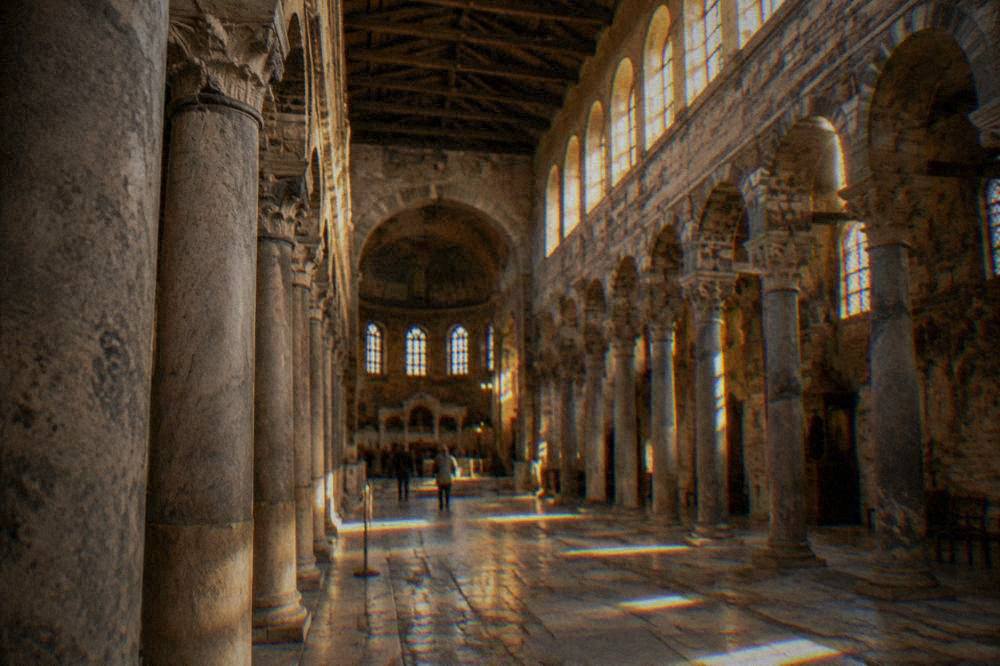
The interior of Panagia Acheiropoietos is a fifth-century basilica plan: a tall nave, two colonnades of reused ancient columns, an upper gallery level, surviving sculpted capitals and marble revetment, and fragments of early mosaic and paint. It is read as architecture rather than as a museum display, and a visit of twenty to thirty unhurried minutes covers it well alongside the exterior arcades.
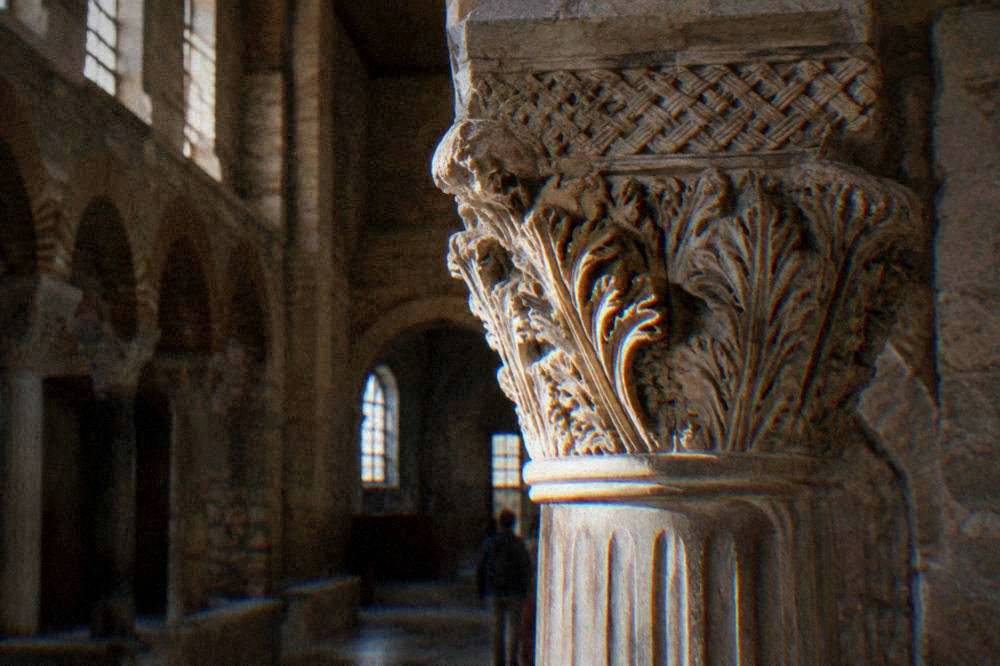
The columns are the first thing the eye finds. They carry the gallery and the upper wall in two rows, and their capitals are carved in the early Christian idiom that a visitor will meet again at the Church of Saint Demetrius and in the galleries of the Museum of Byzantine Culture, whose collection is the best place in the city to see sculptural and iconographic material from exactly this period taken out of its architectural setting. Walking the nave of Acheiropoietos and then the museum's galleries is the most efficient way to understand both.
The fabric carries its whole history. What can be said plainly is that the basilica form itself, columned aisles and a timber-roofed nave, is the surviving fifth-century core, and that later Orthodox decoration sits inside it.
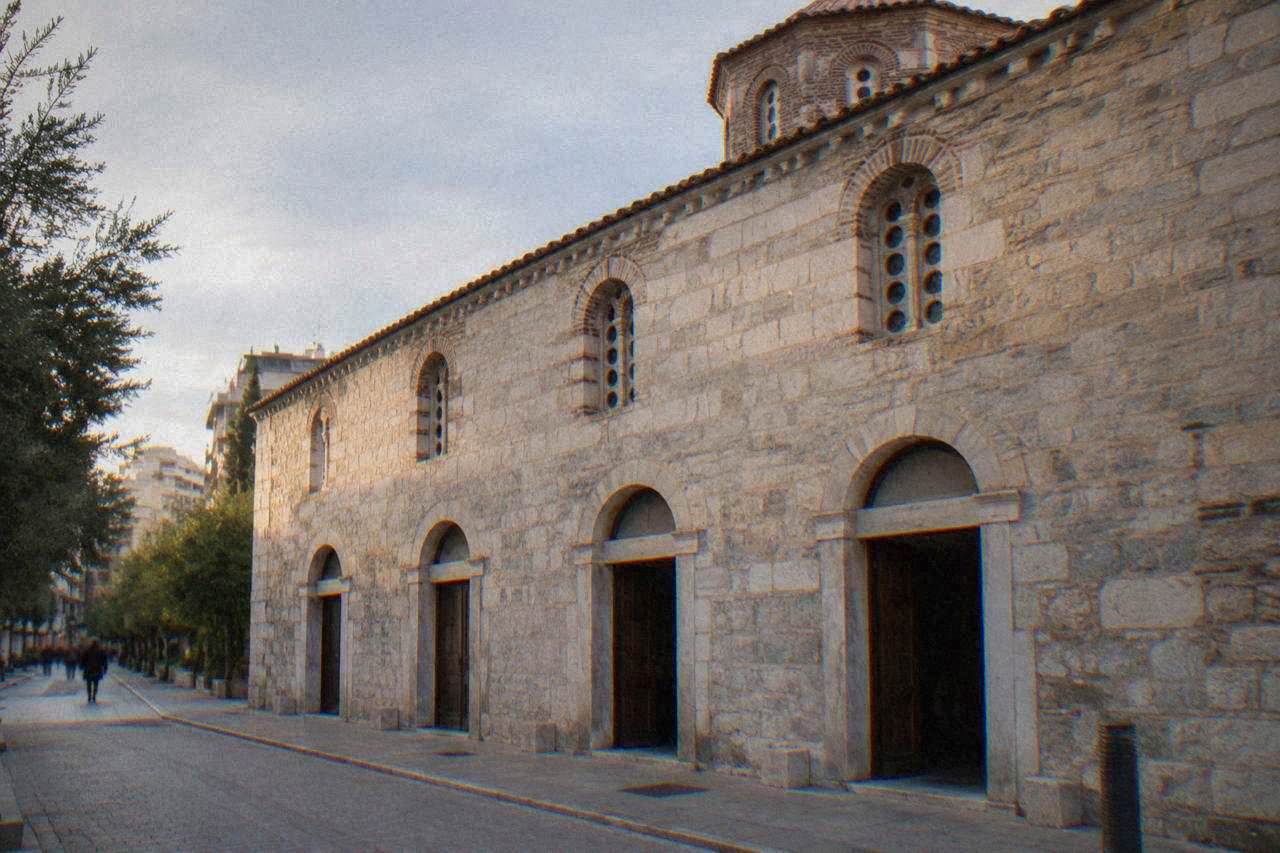
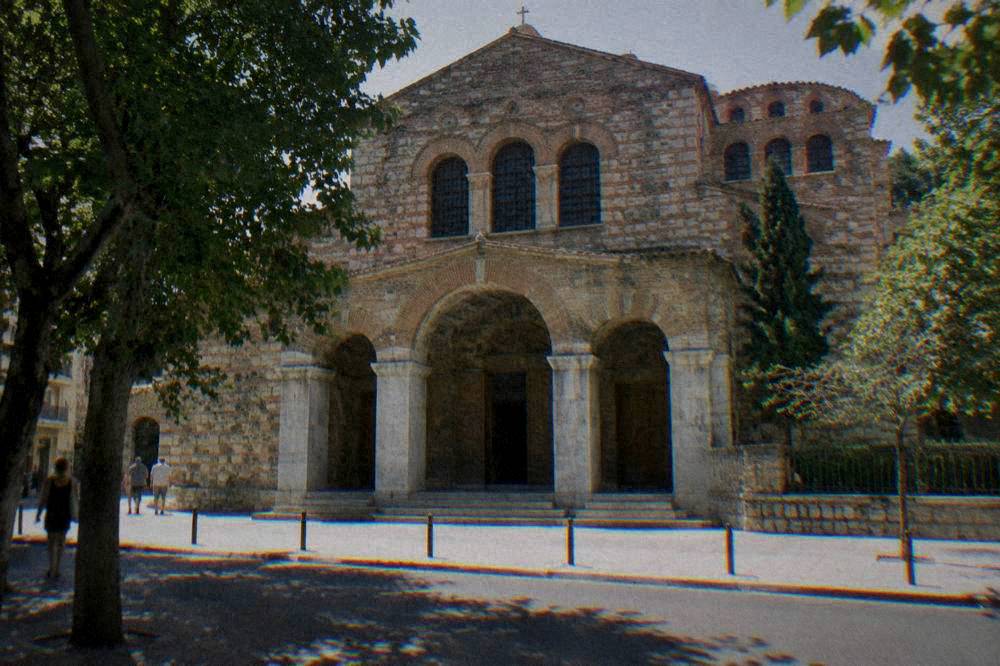
Outside, the street elevations are part of the experience. The church fronts directly onto the city block, its stone arcades and doorways meeting the pavement of a working shopping street, which is itself instructive: in Thessaloniki the Byzantine monuments are not set apart on a lawn, they are embedded in the grid the city still uses. From the steps you can see the everyday Thessaloniki that surrounds them, the same quality that makes the compact city centre so rewarding on foot.
A short list of what to look for:
| Feature | Where | What to notice |
|---|---|---|
| Colonnades | Nave, both aisles | Reused ancient columns in two rows |
| Capitals | Top of each column | Early Christian carved stonework |
| Gallery level | Above the aisles | The upper wall the colonnade carries |
| Marble revetment | Lower walls | Surviving panels of stone facing |
| Street arcades | Exterior on Agias Sofias | Byzantine stonework meeting the pavement |
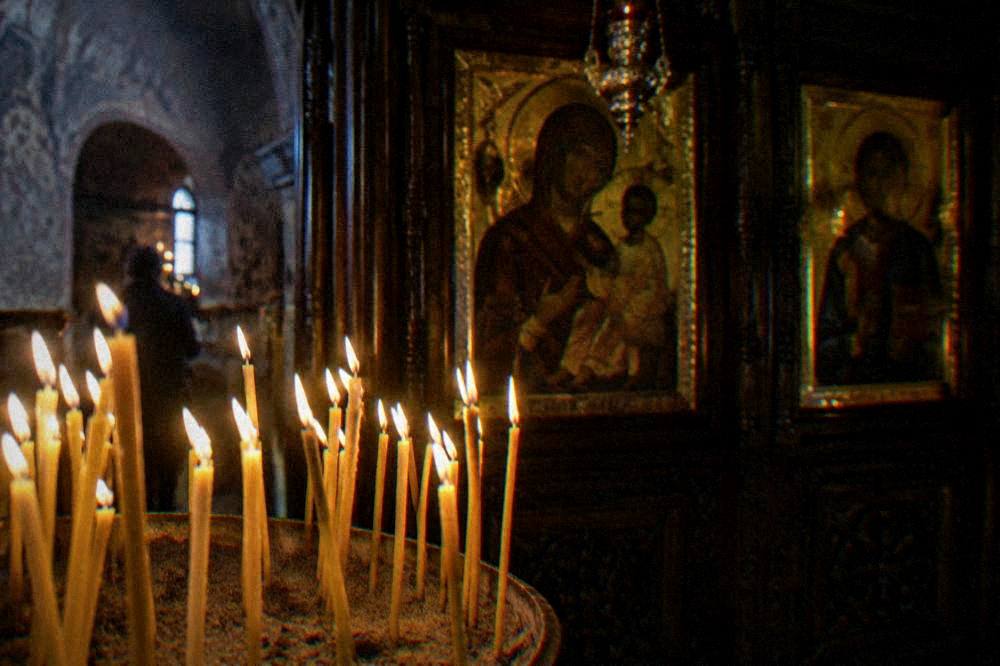
| Icon stands | Near the east end | Icons of a working parish church |
How Old Is Panagia Acheiropoietos?
Panagia Acheiropoietos is a fifth-century basilica, and the approved architectural description places its construction in that century. The UNESCO inscription, by contrast, is firmly dated: 1988, covering fifteen monuments.
The distinction matters for honesty. Plenty of pages hand out exact years for every Byzantine church in the city, and those numbers do not all survive checking. The basilica lived through every one of those events.
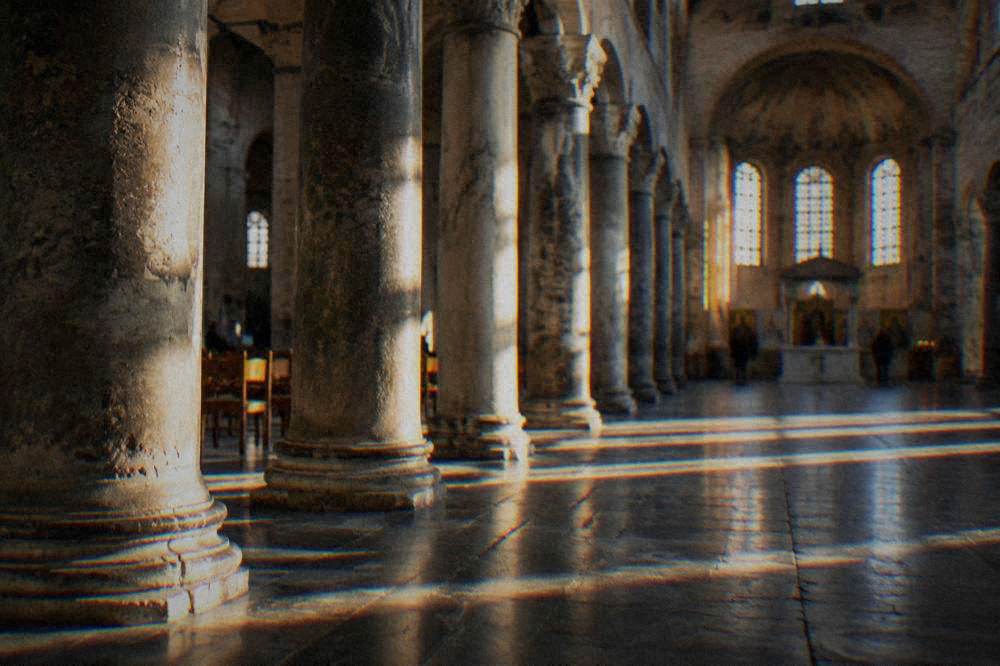
That survival is the real story. A timber-roofed early Christian basilica that still stands, still holds services and still fronts the same street it has fronted since late antiquity is rare anywhere in Europe. The Heptapyrgion fortress above in Ano Poli, a prison until 1989, and the walls that once ran about 8 km tell the military side of the same city; Acheiropoietos tells the parish side. For the deeper background, the site's Thessaloniki history overview carries the full chronology the sources support.
How Do You Get To Panagia Acheiropoietos?
Panagia Acheiropoietos stands on Agias Sofias street in central Thessaloniki, within a short walk of Aristotelous Square and immediately west of Hagia Sophia. From the White Tower on the seafront promenade, the walk is a few city blocks inland along the regular street grid; from the metro, the centre's stations put the whole landmark cluster within walking distance, and the metro runs 05:15 to 00:30 Sunday to Thursday and to 02:00 on Friday and Saturday.
The Thessaloniki Metro's Line 1 opened in November 2024 and its Kalamaria extension, five further stations out to Mikra, was inaugurated on 27 August 2026, so the "no metro" claim that still circulates on older pages is simply wrong. A basic ticket costs 0.60 EUR and a 24-hour daily ticket 2.50 EUR, per the metro's own ticketing page. The basilica itself is a centre-city sight: the practical answer for almost everyone is to walk, because the cluster of UNESCO monuments, the Rotunda, the Arch of Galerius and the Roman forum all sit inside the same compact grid.
A sensible walking order, using the street grid rather than any measured distance claim:
| Stop | Order | Note |
|---|---|---|
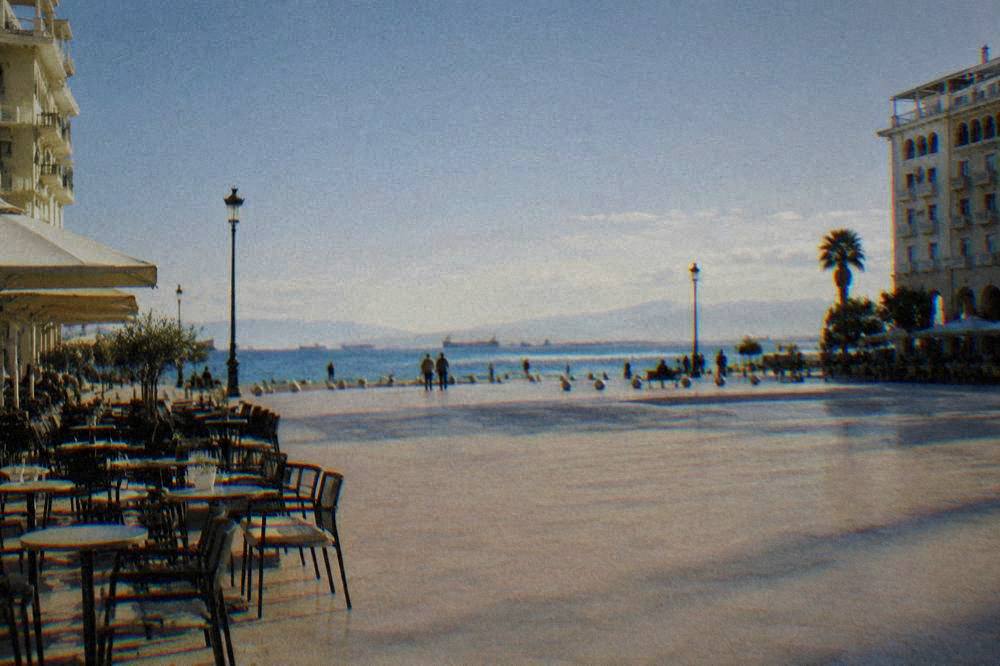
| Aristotelous Square | Start | The city's central square, open to the sea |
| Panagia Acheiropoietos | 2 | On Agias Sofias street, free entry |
| Hagia Sophia | 3 | A few minutes east, same street name |
| Roman forum and Church of Saint Demetrius | 4 | Uphill towards Agios Dimitriou street |
| Rotunda and Arch of Galerius | 5 | Via Egnatia street |
| White Tower and Nea Paralia | Finish | Down to the seafront promenade |
Visitors arriving from the airport should see the site's guide to getting from Thessaloniki airport to the centre for the bus and taxi options, and the Thessaloniki metro guide for fares and hours in full. Cruise passengers with a single day can follow the dedicated cruise port day plan, which includes this church in the walkable cluster.
When Is The Best Time To Visit The Basilica?
The practical answer is a weekday morning outside service times, in spring or autumn, when the HNMS Thessaloniki Mikra station record for 1959 to 2010 shows mean highs of 19.1 C in April and 21.2 C in October against 31.7 C in July, and the church is quiet enough to be seen at walking pace. Thessaloniki is a year-round city, and the basilica is open in every season, so the choice is about comfort and crowds, not access.
The climate record gives the frame. July's mean daily high is 31.7 C and August's is 31.4 C, with mean lows of 19.3 C and 19.1 C, while January's mean low is 1.5 C. December carries the highest monthly rainfall total at 55.1 mm and August the lowest at 19.3 mm, across an annual total of 444.5 mm. None of that closes a church. It simply argues for the shoulder months, or for morning visits in summer before the afternoon heat builds.
| Month | Mean high C | Mean low C | Rain mm |
|---|---|---|---|
| January | 9.3 | 1.5 | 37.7 |
| April | 19.1 | 7.9 | 36.1 |
| July | 31.7 | 19.3 | 23.8 |
| October | 21.2 | 11.3 | 43.0 |
(All figures: HNMS Thessaloniki Mikra station, 1959 to 2010.)
Two calendar notes are worth carrying. October is a dense month in the city: the Dimitria festival ran 1 to 26 October in 2026, the Night Half Marathon fell on 17 October 2026, and Saint Demetrius day on 26 October and Ochi Day on 28 October bring fixed annual celebrations. The 67th Thessaloniki International Film Festival ran 5 to 15 November 2026. Around Saint Demetrius day in particular, the city's churches are at their fullest, which is a reason to go then for the liturgy or to avoid then for quiet sightseeing, depending on what you want from the visit.
What Else Is Near Panagia Acheiropoietos?
The blocks around the basilica hold Hagia Sophia to the east, Aristotelous Square and the seafront to the south, the Church of Saint Demetrius and the Roman forum uphill to the west, and the Modiano and Kapani markets a short walk southwest, so the church is best treated as one stop inside a two-hour circuit rather than a standalone destination. Nothing on that circuit needs a car, and only the museums on it charge admission.
The market pair rewards the detour. Modiano Market and Kapani Market are the city's traditional food markets, and the walk from a fifth-century basilica to a covered fish and spice market is a fair summary of how Thessaloniki layers its history. A guided food walk turns that layering into an itinerary; the street food walk below is the pick of the site's roster for exactly this neighbourhood.
North of the church, the ground rises towards Ano Poli, the old upper town inside the Byzantine walls, where the Vlatadon Monastery and the Trigoniou Tower complete the UNESCO set and give the widest views over the Thermaic Gulf. The site's Ano Poli guide covers that climb in detail. South, the Nea Paralia promenade runs along the water; it is a walking promenade, not a swimming beach, and swimming means a trip out to Perea, about 28 minutes by road, or Epanomi.
Should You Visit Panagia Acheiropoietos With A Guided Tour?
A guided walking tour is worth it for this church specifically because the basilica explains itself through context, the UNESCO group, the fifth-century plan, the city's layered survival, and a guide carries that context in a way a free leaflet does not. The site's featured walk covers the top sights and hidden gems of the centre, this church among them, and can be cancelled free before the start time.
The trade-off is honest: Panagia Acheiropoietos is free, central and self-explanatory at the level of "a very old, very beautiful basilica", and a visitor with a good overview page can see it perfectly well alone. What a guide adds is the connective tissue between this church, Hagia Sophia, Saint Demetrius and the Rotunda, the sequence of early Christian building in the city, and the street-level detail that turns a column capital into evidence. For a first visit of one or two days, the site's one day in Thessaloniki and two days in Thessaloniki plans place the basilica in a full itinerary either way.
One caution on tour type: the hop-on hop-off bus suits visitors who want the landmark circuit without the walking, but this church's immediate neighbourhood is pedestrian in character and rewards being on foot. Families balancing both can mix the two, and the Thessaloniki with kids guide has the fuller comparison.
Common Questions About Panagia Acheiropoietos In Thessaloniki
Is Panagia Acheiropoietos free?
Yes. It is a working Orthodox church and entry is free. It is not one of the ticketed state museums; it opens to visitors outside service times.
What does Acheiropoietos mean?
"Acheiropoietos" means "not made by hands", a reference to a sacred image said to have been created without human intervention, and the church is dedicated to the Virgin Mary.
Is Panagia Acheiropoietos part of UNESCO?
Yes. It is one of the fifteen Paleochristian and Byzantine Monuments of Thessaloniki inscribed on the UNESCO World Heritage List in 1988.
How old is the church?
It is a fifth-century basilica. The sources used here do not support a more precise construction date, and no specific year is printed for it.
How do I get there?
The church is on Agias Sofias street in central Thessaloniki, within a short walk of Aristotelous Square and Hagia Sophia. The metro runs to the centre, with a basic ticket at 0.60 EUR, from 05:15 to 00:30 Sunday to Thursday and to 02:00 Friday and Saturday.
What should I wear?
The same as at any working Orthodox church: shoulders and knees covered. It is an active parish church, and services take priority over sightseeing.
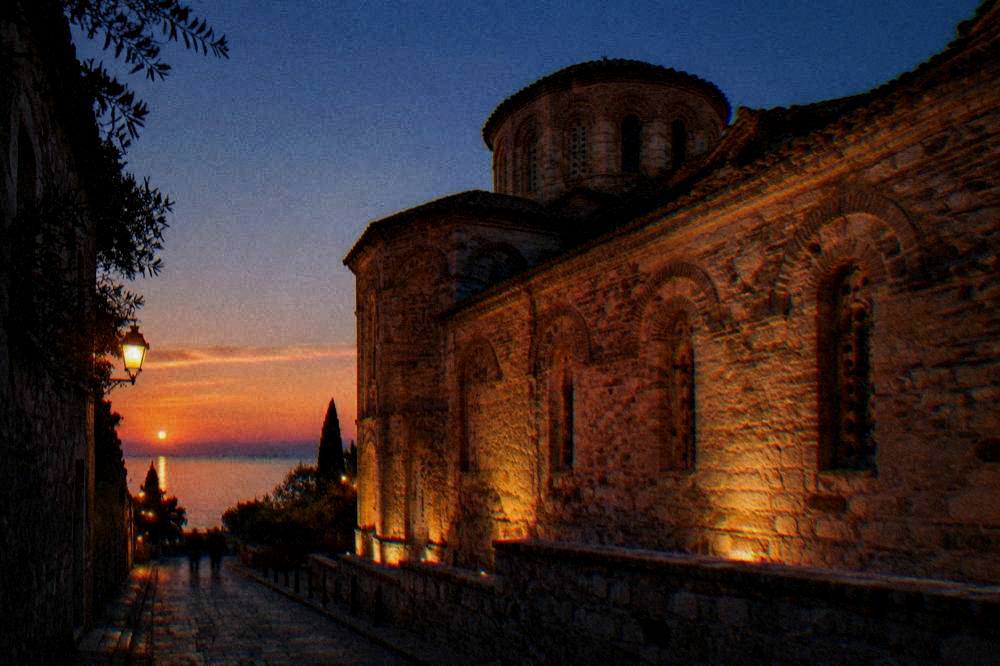
Panagia Acheiropoietos earns its place on any Thessaloniki itinerary on three counts: it is free, it is central, and it is one of the fifteen monuments that put the city on the UNESCO list in 1988. Pair it with Hagia Sophia on the same street, walk downhill to Aristotelous Square, and the fifth century sits comfortably inside a single morning of a modern Greek city.