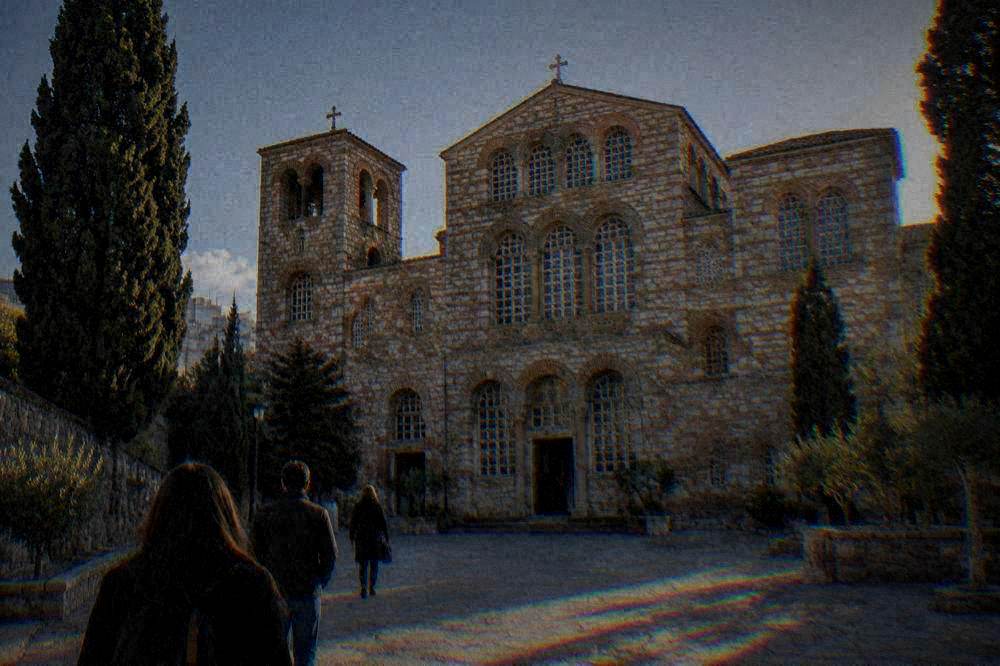
The Rotunda: Galerius's Mausoleum, Church And Mosque
The Rotunda is one of the fifteen UNESCO-listed Paleochristian and Byzantine monuments of Thessaloniki, a giant round building raised in the age of the emperor Galerius and reused as a church and then a mosque.
Short answer
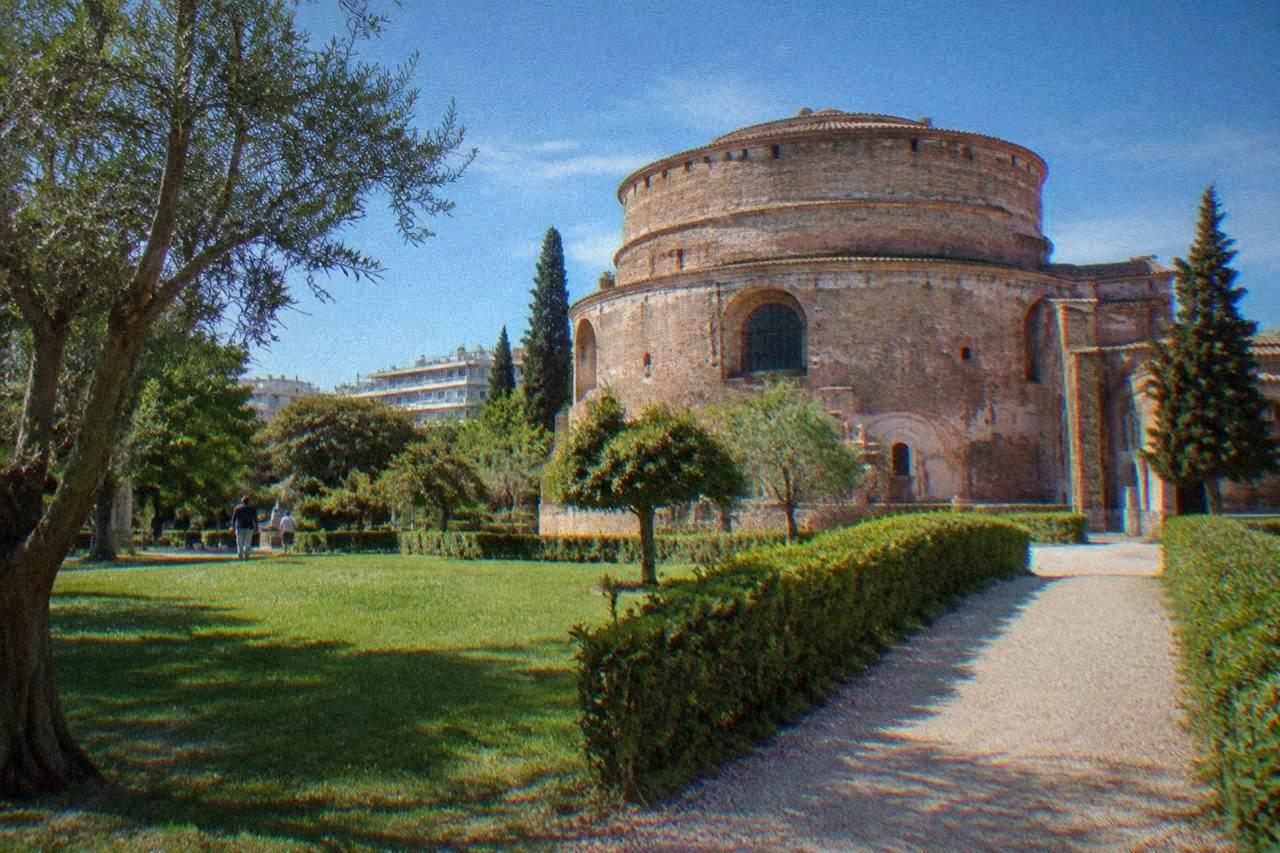
The Rotunda is a massive circular Roman monument in central Thessaloniki, about a 16-minute walk up from Aristotelous Square, built in the Galerian complex, later consecrated as a church and later still used as a mosque, and listed by UNESCO in 1988 as one of the city's fifteen Paleochristian and Byzantine monuments.
The Rotunda of Thessaloniki stands a short walk north of the Arch of Galerius on Egnatia street, a cylinder of Roman brick so large that it dominates its whole block of the city centre. Thessaloniki, the second city of Greece, sits on the Thermaic Gulf in Central Macedonia, and its historic core earned a place on the UNESCO World Heritage List in 1988. Fifteen Paleochristian and Byzantine monuments make up that inscription, and the Rotunda is among the most physically imposing of them all.
Few buildings anywhere have served so many masters. Raised as part of the palace scheme of the Roman emperor Galerius, passed into Christian use, converted to a mosque under the Ottomans and finally declared an ancient monument, it carries the whole arc of the city's history inside one set of walls.
What Is The Rotunda In Thessaloniki?
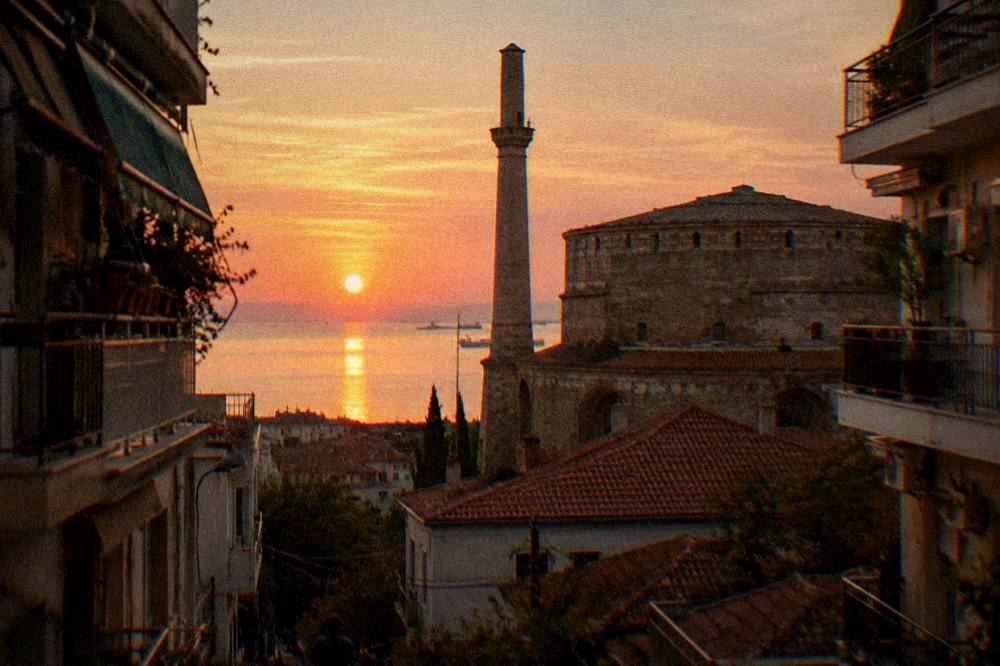
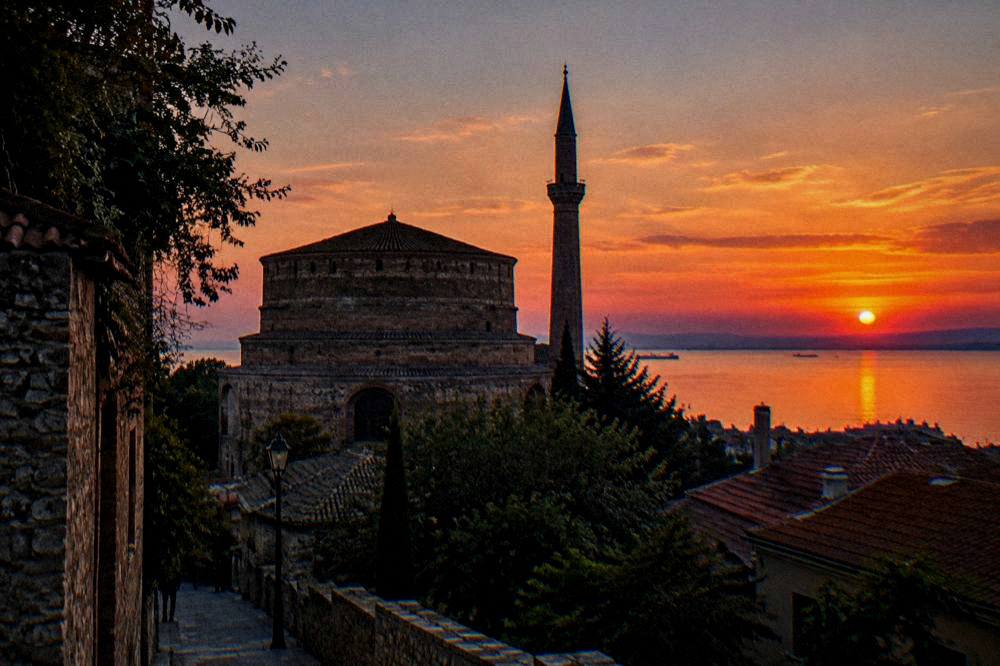
The Rotunda is a huge circular Roman building in central Thessaloniki, raised as part of the Galerian palace complex, and it has served successively as a Roman monument, a Christian church and a mosque, before becoming one of the fifteen monuments inscribed on the UNESCO World Heritage List in 1988 under the listing "Paleochristian and Byzantine Monuments of Thessaloniki". The municipality's own monument pages describe it as part of the Galerian buildings that reshaped the eastern edge of the Roman city. Its survival is remarkable: the Great Fire of 1917 and the 1978 earthquake both damaged the historic centre, yet the cylinder still stands close to its full original height. Today it sits in a quiet garden off Egnatia, beside the minaret from its mosque years.
The name is simply descriptive. A rotunda is a round building, and this one is the largest Roman construction surviving in Thessaloniki. Over the centuries it has carried other names tied to its religious use, and its dedication as a church is usually given to the archangel Michael, which is why older sources call it the Church of the Archangels. The Greek Orthodox church considers it a consecrated space, and the building you see now is managed as an archaeological site open to visitors.
Its scale is the first thing that registers on arrival. The walls run about two metres thick at points and the interior rises to a dome that has been repaired repeatedly since late antiquity. The municipality's UNESCO pages list the Rotunda among the fifteen inscribed monuments alongside the city walls, the Churches of Saint Demetrius, Hagia Sophia, Panagia Acheiropoietos, Hosios David and others. In practice it works well as the anchor of a walk along the Galerian axis, from the palace remains to the arch to the Rotunda itself.
Who Built The Rotunda And How Old Is It?
The Rotunda was built in the reign of the Roman emperor Galerius, in the tetrarch period, as part of the vast palace complex he laid out at the eastern edge of Roman Thessaloniki, alongside the Palace of Galerius, the hippodrome and the Arch of Galerius, and it is therefore roughly seventeen centuries old, older than every standing church building around it. The municipality's history pages group the Rotunda with the Galerian buildings, and the Arch of Galerius itself is dated by the same sources to the tetrarch period. Galerius ruled as one of the tetrarchs, the four-way division of imperial power that ended with Constantine.
The building's original purpose is not settled. The approved reading of this site treats it as Galerius's intended mausoleum, the traditional explanation given on monument pages and in guidebooks, though archaeologists have also proposed a temple or a throne hall. What is not in dispute is the plan: a cylinder of brick and rubble faced with stone, ringed inside by eight deep rectangular niches, and covered by a brick dome built up in horizontal courses rather than with a wooden frame.
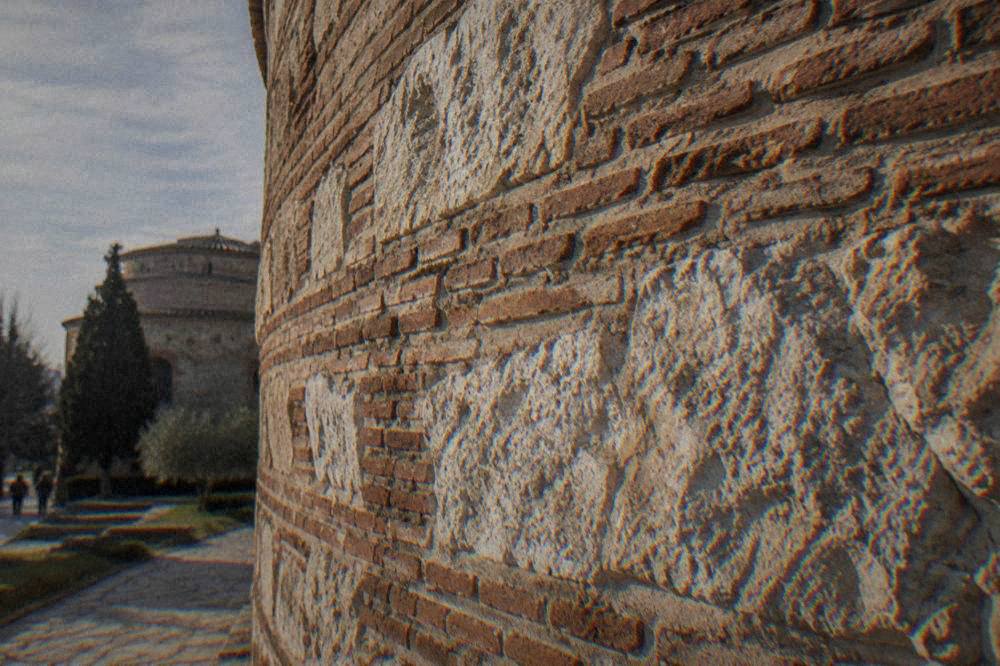
After Galerius's death, the building outlived its patron. In the Christian centuries it was given a sanctuary, an ambulatory and a fine suite of mosaics, of which a fraction survives. Under Ottoman rule, after the conquest of the city in 1430, it served as a mosque, and the minaret beside it is a survivor from that phase. Each layer of use left marks that a visitor can still trace: the dome, the niche architecture, the mihrab, the minaret.
| Phase | Period | What each use left behind |
|---|---|---|
| Roman construction | tetrarch period, under Galerius | The cylinder, the eight interior niches and the dome |
| Christian church | late antique and Byzantine centuries | Sanctuary, ambulatory and mosaic decoration |
| Mosque | after the Ottoman conquest of 1430 | Mihrab and the surviving minaret |
| Monument and museum | since its declaration as an ancient monument | Archaeological presentation as a UNESCO-listed site |
For a sense of the period, a walking route themed on the apostle Paul's Thessaloniki pairs naturally with the Galerian axis, since both run through the eastern old town. The Apostle Paul's Story walking tour covers the city's early Christian layer with a guide, a good complement once you have seen the Roman monuments under your own steam.
What Can You See Inside The Rotunda In Thessaloniki?
Inside the Rotunda you see one vast circular space, about 30 metres across and covered by a dome, ringed by eight deep niches, with the surviving fragments of its early Christian mosaics preserved in the vaults above them, together with the mihrab from its years as a mosque and, outside, the minaret that still stands beside the building. The interior is kept as an archaeological space rather than a furnished church, so the walls and vaults themselves are the exhibits. The marble revetment that once sheathed the lower walls has largely gone, and what remains shows the bones of the structure plainly.
The mosaics are the treasure. The vaults of three of the eight niches keep figurative decoration from the early Christian phase, including saints, praying figures, architectural scenes and rich plant ornament, executed in glass tesserae. Conservators have worked on them over many years, and some panels remain partly lacunose, which only makes the surviving figures read more vividly. Photographs do the mosaics less justice than standing under them, because the gold and colour shift as you move around the circle.
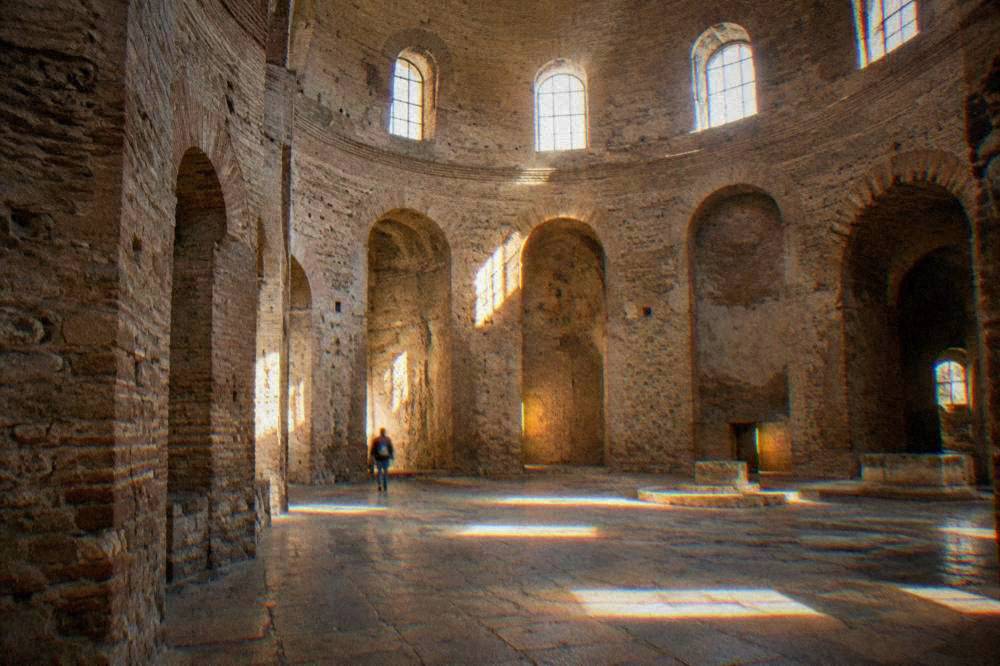
Below the vaults, the floor level preserves sections of earlier paving and the foundations of the Christian sanctuary arrangement. Display panels explain the building's phases in Greek and English. The space is cool in summer and unheated in winter, so dress for the season. Photography is generally allowed in the interior, but rules at state sites can change, so check the posted notice at the entrance on the day.
Outside, walk the full circle of the building. The garden setting lets you take in the mass of the walls and the minaret from every side, and the short stroll south brings you to the Arch of Galerius, the free open-air monument on Egnatia, and beyond it the Palace of Galerius remains. For more on those, see the site's pages on the Arch of Galerius and the Palace of Galerius.
What Are The Rotunda's Opening Hours And Ticket Price?
No ticket price for the Rotunda can be stated here, and no fixed opening schedule can be quoted either, because the sources available to this site do not carry a confirmed 2026 price or timetable for it, so the practical advice is to check the current price and hours on the official ticketing page before you set out, or to ask at the entrance. What can be said with confidence concerns the wider pattern of state sites in Thessaloniki: the big state museums publish seasonal hours, and free-admission days apply across them on 6 March, 18 April, 18 May, the last weekend of September and 28 October, per the Museum of Byzantine Culture's own visiting page.
That pattern of free days is worth planning around, since a day trip through several state sites costs nothing on those dates. Reduced admission applies to the standard groups, and EU citizens up to 25 enter free at the state museums, again per the Museum of Byzantine Culture's visiting page. Whether these rules extend to the Rotunda on the day you visit is exactly the detail to confirm at booking or at the gate.
| State site in Thessaloniki | Admission | Hours (summer) | Source basis |
|---|---|---|---|
| White Tower | 8 euro full, 4 reduced, from 1 April 2026 | daily 08:00 to 21:00 | Museum of Byzantine Culture visiting page |
| Museum of Byzantine Culture | 10 euro full, 5 reduced | daily 08:00 to 20:00 | Museum of Byzantine Culture visiting page |
| Archaeological Museum | 10 euro full, 5 reduced | daily 09:00 to 17:00, closed Tuesday in winter | museum's own hours and tickets page |
| Rotunda | confirm on the official ticket page | confirm on the official ticket page | not confirmed for 2026 |
A combined ticket covering several state sites, including the Rotunda's neighbours among the Galerian monuments, is reported at about 15 euro full and 8 reduced, but that figure is a reported one rather than a printed official price, so treat it as indicative and confirm it before you plan a multi-site day around it.
Why Is The Rotunda Part Of Thessaloniki's UNESCO Listing?
The Rotunda is one of the fifteen monuments inscribed on the UNESCO World Heritage List in 1988 as the "Paleochristian and Byzantine Monuments of Thessaloniki", a listing the municipality and the UNESCO entry both confirm, recognised under criteria covering human creative genius, the exchange of values over time and a testimony to a civilisation, and the Rotunda sits in that set as the Roman foundation that carried the city into its Christian centuries. Thessaloniki was founded in 315 BC by Cassander and named for his wife Thessalonike, a daughter of Philip II, and by late antiquity it was one of the empire's great cities.
The UNESCO listing exists because Thessaloniki kept its early Christian and Byzantine buildings in an unbroken chain. The Rotunda demonstrates the point better than any other single monument: a Roman imperial structure that was re-consecrated rather than demolished, decorated with mosaics, and then re-used again under Ottoman rule. Fifteen monuments share the inscription, and the municipality's UNESCO pages give the full set, from the walls and the Heptapyrgion down to individual churches. Other pages covering the same trip are gathered on Thessaloniki Travel Guide.
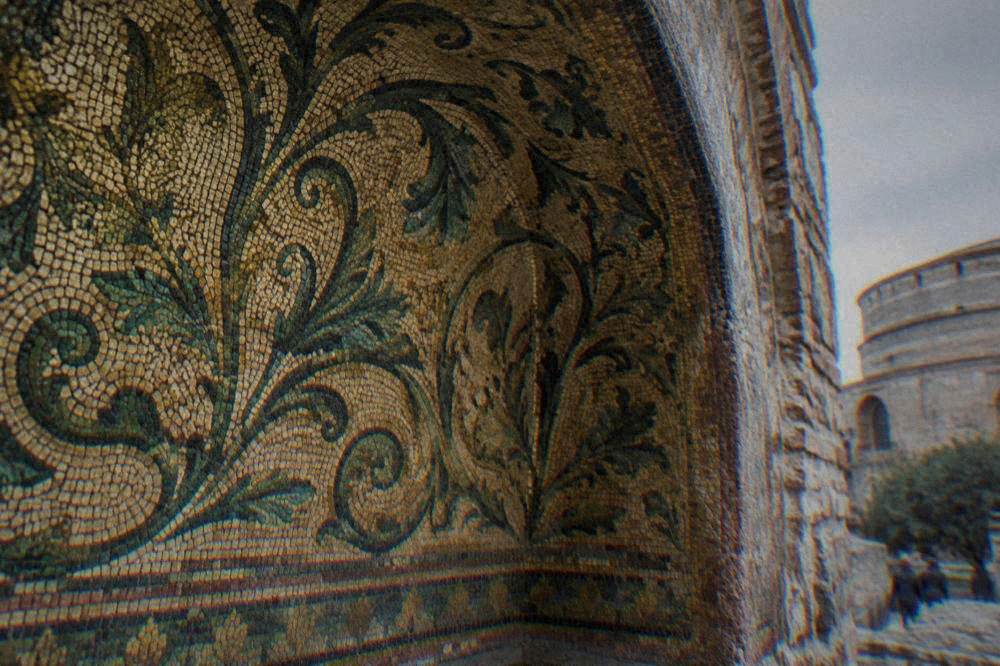
Seeing the Rotunda in that context changes how you look at it. The dome and niches are Roman engineering. The mosaics are early Christian art. The minaret is Ottoman. Read together, they are the city's biography in one building, which is precisely the argument the inscription makes for the whole set.
| Theme | Where the Rotunda fits in Thessaloniki |
|---|---|
| Roman imperial city | Galerian complex together with the palace, hippodrome and arch |
| Early Christian art | Niche vault mosaics of saints, orants and ornament |
| Byzantine worship | Consecrated church space within the Roman shell |
| Ottoman city | Mosque use after 1430, mihrab and minaret |
| Modern heritage | UNESCO inscription of 1988 as one of fifteen monuments |
How Does The Rotunda Compare With The Other Galerian Monuments?
The Rotunda, the Arch of Galerius and the Palace of Galerius were raised as one imperial scheme under Galerius, but they survive in very different states: the Rotunda as a complete roofed building, the Arch of Galerius as a free open-air street monument on Egnatia that anyone can walk under at any hour, and the Palace of Galerius as excavated remains including the Apsidal Hall and the Decumanus, so the three are best seen together in a single walk of a few hundred metres. The municipality's monument pages treat them as a group.
The arch is the easiest: no ticket, no hours, marble panels carved with the tetrarchic propaganda of Galerius's campaigns. The palace remains lie south of Egnatia, with the Apsidal Hall the standout space, a huge vaulted hall that once faced onto the hippodrome where the modern streets now run. The Rotunda was the monumental terminus of the whole composition, set apart to the north, and it is the only one of the three with a roof and interior decoration.
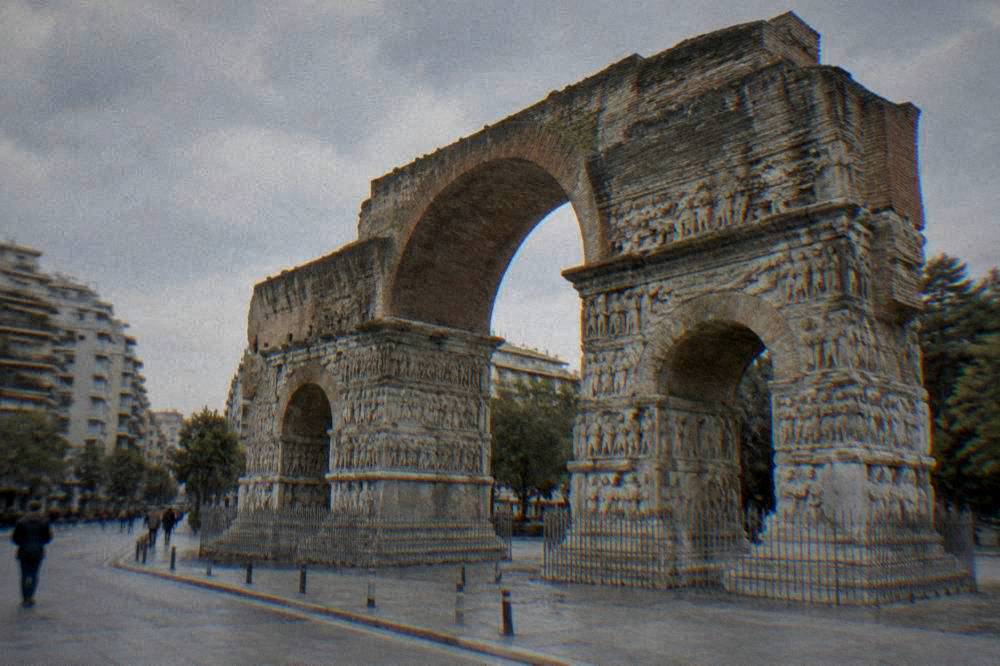
For each of the three, this site carries a dedicated page: the Arch of Galerius, the Palace of Galerius and this one. A reasonable circuit starts at the palace remains, follows the line of the Decumanus to the arch, crosses Egnatia and ends at the Rotunda, then continues west into the historic centre towards the Roman Forum and Aristotelous Square.
| Galerian monument | What survives | Access |
|---|---|---|
| Rotunda | Roofed cylinder, dome, niche mosaics, mihrab, minaret | Ticketed archaeological site, confirm price and hours locally |
| Arch of Galerius | Carved marble panels and piers | Open-air, free to view at any time |
| Palace of Galerius | Foundations, Apsidal Hall, Decumanus, mosaics | Excavated site, confirm locally before visiting |
How Do You Get To The Rotunda In Thessaloniki?
The Rotunda sits just north of Egnatia street in central Thessaloniki, a level walk of roughly 15 minutes from Aristotelous Square and less from the White Tower end of the seafront, and it is reachable by the Thessaloniki Metro, whose Line 1 opened in November 2024, with a basic ticket at 0.60 euro and a 24-hour ticket at 2.50 euro per the metro's own ticket page. The exact station to use for the Rotunda depends on your starting point, so check the metro map for the stop nearest Egnatia on your route.
The building's garden entrance faces the street, and the surrounding pavements are ordinary city pavements.
The metro deserves a note, because older guides still describe Thessaloniki as a city waiting for one. It is not. Line 1 has been running since November 2024, and the Kalamaria extension, inaugurated 27 August 2026, added five more stations including Mikra. The metro's own pages give the hours and fares above. For a full briefing, see the site's guide to the Thessaloniki metro and the overview of getting around Thessaloniki.
| Way to reach the Rotunda | What the sources say |
|---|---|
| On foot from Aristotelous Square | roughly 15 minutes along the level centre |
| Metro Line 1 | open since November 2024, Kalamaria extension since 27 August 2026 |
| Metro hours | 05:15 to 00:30 Sun to Thu, 05:15 to 02:00 Fri and Sat |
| Metro fares | 0.60 euro basic, 2.50 euro 24-hour ticket |
| City bus | network covers Egnatia, fare not confirmed, check locally |
What Else Should You See Near The Rotunda In Thessaloniki?
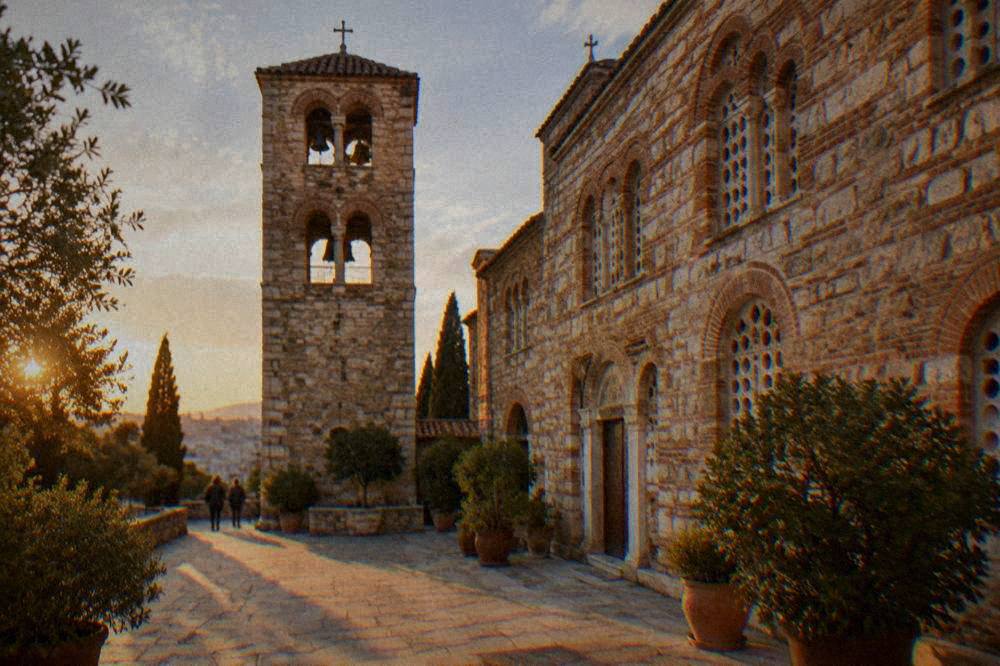
Within a short walk of the Rotunda you can reach the Church of Saint Demetrius, the Hagia Sophia of Thessaloniki, the Panagia Acheiropoietos, the Archaeological Museum and the Museum of Byzantine Culture, all of them in the same belt of the centre, so the Rotunda works as the eastern anchor of a full day of churches and museums on foot. The Church of Saint Demetrius, the city's patron saint, is a working church, free to enter and open outside services, as are Hagia Sophia and the other working churches of the UNESCO set.
The two big museums bookend the theme nicely. The Archaeological Museum holds the pre-Christian city, the Museum of Byzantine Culture the Christian one, and the Rotunda stands exactly on the hinge between the two eras. Both museums charge 10 euro full and 5 reduced, per their own visiting pages, and the Archaeological Museum closes on Tuesdays from 1 November to 31 March, a detail worth building a winter itinerary around.
For a full rundown of the city's possibilities, the site's root guide to things to do in Thessaloniki covers everything from the White Tower to the markets. Closer to hand, the Hagia Sophia and Church of Saint Demetrius pages give each church its own treatment, and the Archaeological Museum page does the same for the collections.
| Sight near the Rotunda | Type | Notes from the sources |
|---|---|---|
| Arch of Galerius | Roman monument | Open-air on Egnatia, free to view |
| Church of Saint Demetrius | Working church, UNESCO set | Free entry, open outside services |
| Hagia Sophia | Working church, UNESCO set | Free entry, open outside services |
| Panagia Acheiropoietos | Working church, UNESCO set | Free entry, open outside services |
| Archaeological Museum | State museum | 10 euro full, 5 reduced, closed Tuesdays in winter |
| Museum of Byzantine Culture | State museum | 10 euro full, 5 reduced, daily in summer |
When Is The Best Time Of Year To Visit The Rotunda?
Any month works for the Rotunda itself, since it is an enclosed building, but the surrounding walk is most comfortable in spring and autumn, when the HNMS Thessaloniki Mikra station record for 1959 to 2010 shows mean highs of 19.1 C in April and 21.2 C in October, against 31.7 C in July and 9.3 C in January, so a shoulder-season visit lets you combine the Rotunda with the whole Galerian axis and the Ano Poli walls without heat or chill dominating the day. Rain is modest by north European standards but present all year, with December the highest month at 55.1 mm and August the lowest at 19.3 mm.
Thessaloniki's calendar also shapes a visit. The Thessaloniki International Film Festival ran 5 to 15 November in 2026, the Dimitria festival ran 1 to 26 October in 2026, and the city's patron day falls on 26 October, which is also the anniversary of the city's liberation in 1912, followed by Ochi Day on 28 October with its parade. An autumn visit can catch both the monuments and the festival city at once.
Winter has its own case. The light in December and January is low and soft, the centre is quiet between the holidays, and the museums keep winter hours. Just remember the Tuesday closures at the state sites in winter, noted above, and plan the Rotunda itself around what the ticket page shows for the day you intend to go.
| Month | Mean high C | Mean low C | Rain mm |
|---|---|---|---|
| April | 19.1 | 7.9 | 36.1 |
| July | 31.7 | 19.3 | 23.8 |
| October | 21.2 | 11.3 | 43.0 |
| December | 10.9 | 3.2 | 55.1 |
All figures above are from the HNMS Thessaloniki Mikra station record, 1959 to 2010.
Common Questions About The Rotunda In Thessaloniki
What is the Rotunda in Thessaloniki?
A massive circular Roman building raised under the emperor Galerius as part of his palace complex, later used as a Christian church and then as a mosque, and today one of the city's fifteen UNESCO-listed Paleochristian and Byzantine monuments.
How old is the Rotunda in Thessaloniki?
About seventeen centuries. It was built in the reign of Galerius, alongside the Arch of Galerius and the Palace of Galerius, which makes it older than every standing church around it in the city centre.
What can you see inside the Rotunda?
One vast circular space under a brick dome, ringed by eight deep niches, with surviving early Christian mosaics of saints and ornament in the niche vaults, plus the mihrab from its mosque years and the minaret outside.
How much does it cost to visit the Rotunda?
No confirmed 2026 price can be quoted here. Check the current price on the official ticket page before you go. A combined state-sites ticket is reported at about 15 euro, but treat that as a reported figure and confirm it.
How do I get to the Rotunda?
It stands just north of Egnatia street, roughly a 15-minute walk from Aristotelous Square. The metro runs from 05:15, with a basic ticket at 0.60 euro and a 24-hour ticket at 2.50 euro per the metro's ticket page, and city buses cover Egnatia.
Is the Rotunda part of the UNESCO listing?
Yes. It is one of the fifteen monuments inscribed in 1988 as the Paleochristian and Byzantine Monuments of Thessaloniki, confirmed by both the municipality's pages and the UNESCO entry.
The Rotunda earns its place on any Thessaloniki itinerary by doing what few monuments anywhere manage: surviving three civilisations in one skin. Walk around it once in the garden, step inside for the mosaics, then carry on down the Galerian axis to the arch, and the city's long story reads itself in a single afternoon.