Aristotelous Square: The Seafront Square At The Centre
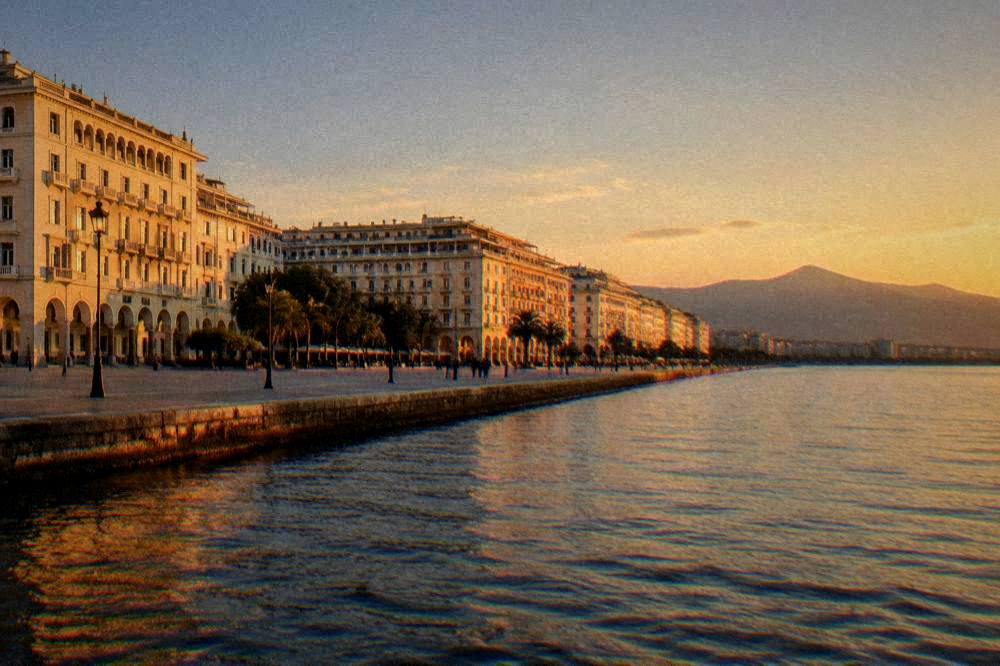
Aristotelous Square is the great open room of Thessaloniki, the seafront plaza on the Thermaic Gulf where the city's main axis meets the water.
Short answer
Aristotelous Square is the central seafront square of Thessaloniki, Greece, laid out under the Hebrard plan after the Great Fire of 1917 and opening directly onto the Thermaic Gulf.
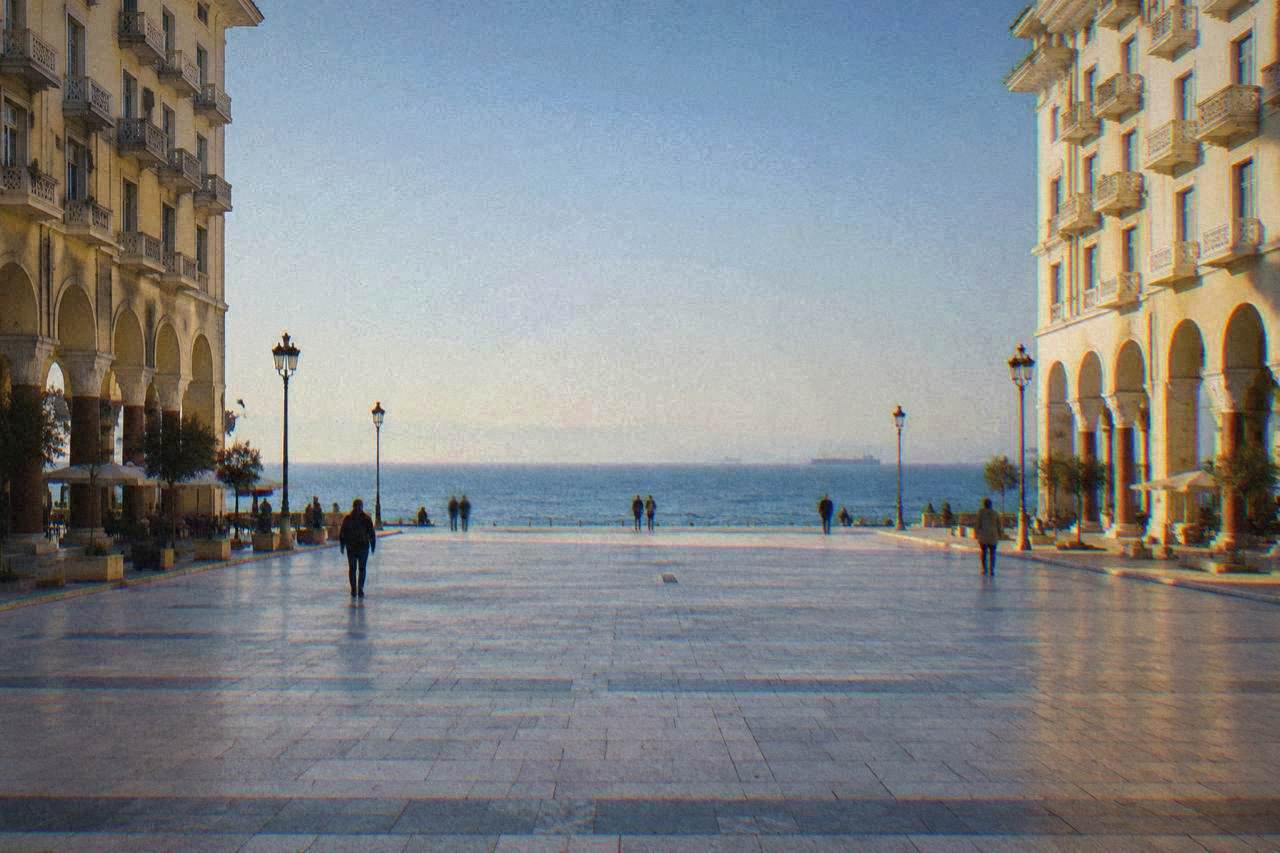
Aristotelous Square is the central seafront square of Thessaloniki, the second city of Greece, a coastal port on the Thermaic Gulf in Central Macedonia, northern Greece. The plaza opens straight onto the water, with Mount Olympus visible across the gulf on clear days, and every major axis of the city centre runs into it or beside it. The square took its present shape from the reconstruction plan drawn up after the Great Fire of 1917 destroyed the old commercial quarter; the municipality's own history pages record that the fire left 73,000 people homeless and that the Hebrard plan that followed reshaped the whole centre. Today the square is where public life gathers: parades, festivals, political rallies, the Christmas period, and the evening stroll that moves between the square and the Nea Paralia promenade. This guide covers the history, what stands around the square, the food streets on its flanks, how to reach it by metro or bus, and how it fits into a first day in the city.
What Is Aristotelous Square In Thessaloniki?
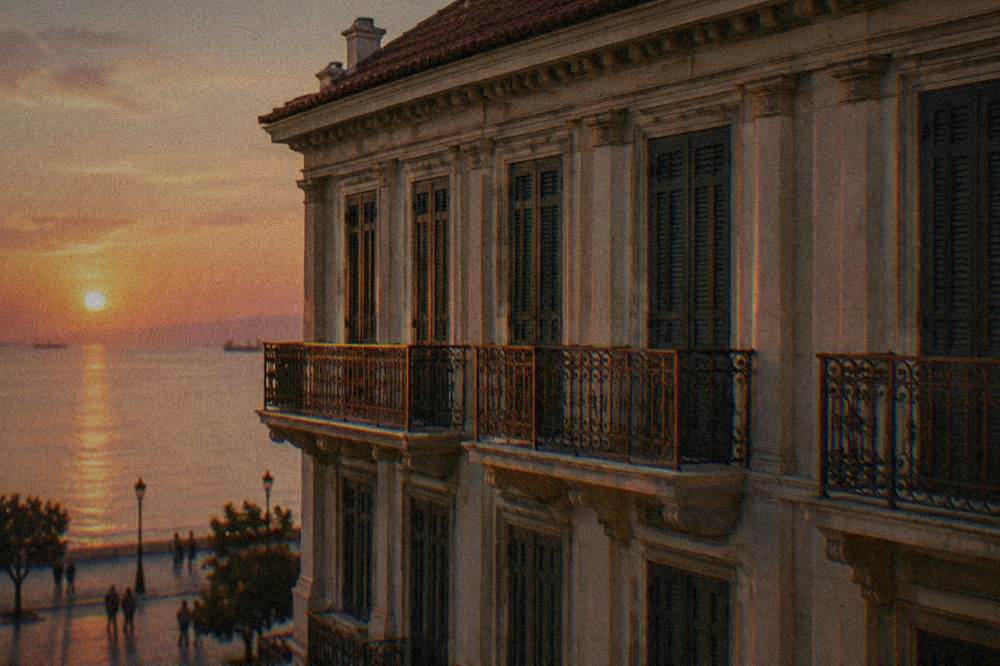
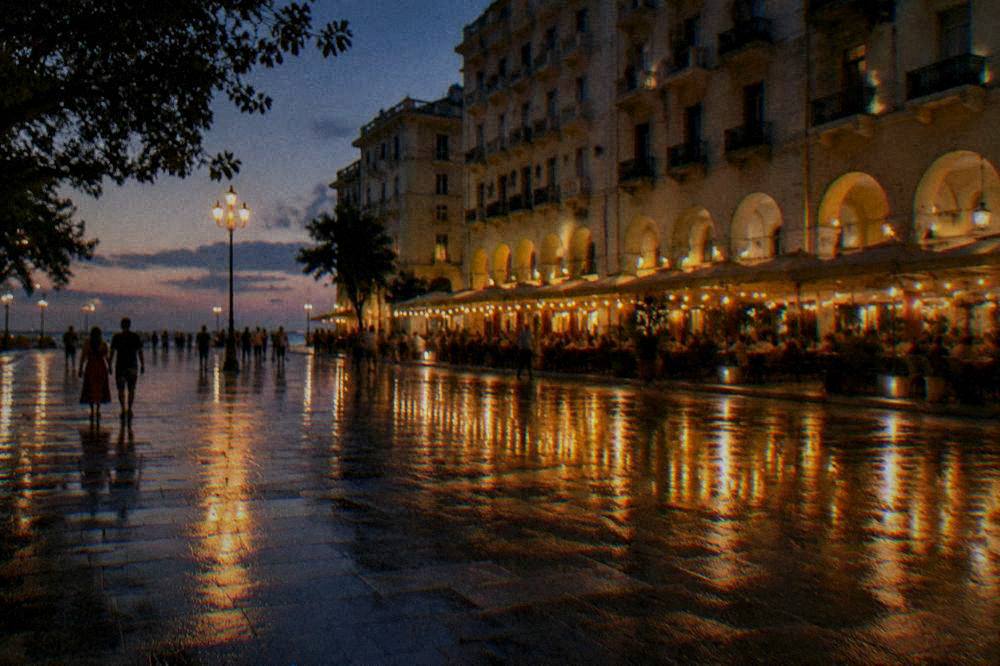
Aristotelous Square is the main seafront square of Thessaloniki, a large open plaza on the Thermaic Gulf where the city's principal commercial streets meet the water, laid out under the Hebrard reconstruction plan after the Great Fire of 1917 and named after the philosopher Aristotle. The square sits at the heart of what the municipality describes as the post-fire city: a fire on 18 August 1917 burned the old central quarter and left 73,000 residents homeless, and a French planner was commissioned to redesign the centre. The square as built is a wide funnel that narrows toward the sea, framed by monumental buildings with arcades and orientalist rooflines that reflect the Hebrard design ideas. Implementation of the plan began around 1918 and continued for decades, which is why the buildings around the square mix several architectural styles rather than following one uniform design.
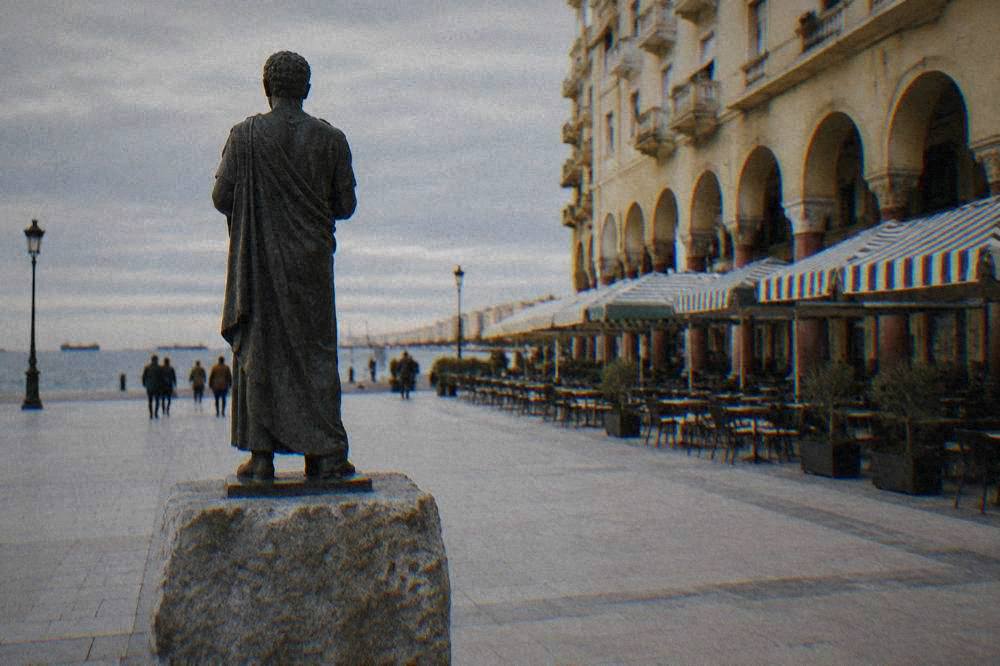
Before 1917 this was a dense commercial district of the Ottoman-era city, close to the commercial heart around what is now Modiano Market and the old quarters inland. The fire erased it, and the reconstruction deliberately opened the city to the sea, creating the vista from the square across the gulf that defines Thessaloniki today. The square's name honours Aristotle, born at Stagira in Chalcidice, and a statue of him stands on the square, a standard meeting point.
The square functions as the city's stage. The 26 October liberation day and Ochi Day parades pass along the adjoining seafront avenue, the Thessaloniki International Fair fills the city in September (the 90th edition ran 5 to 13 September 2026 with Japan as honoured country, per the organiser), and the Thessaloniki International Film Festival uses venues around the centre each November (the 67th edition, 5 to 15 November 2026). Nothing here needs a ticket: the square is a public open space, free to walk at any hour.
What Can You See Around Aristotelous Square?
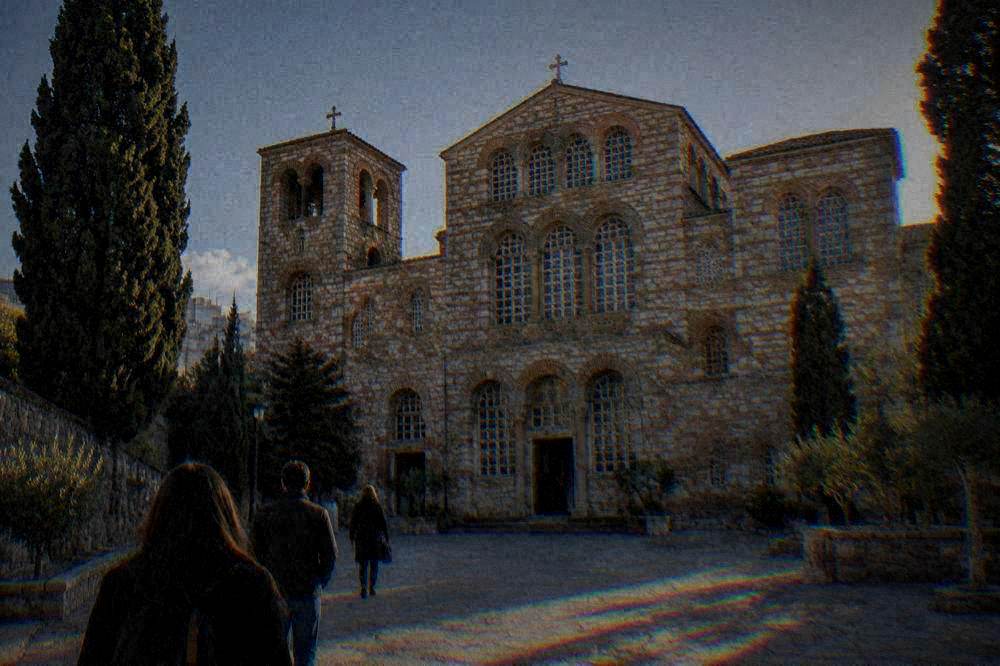
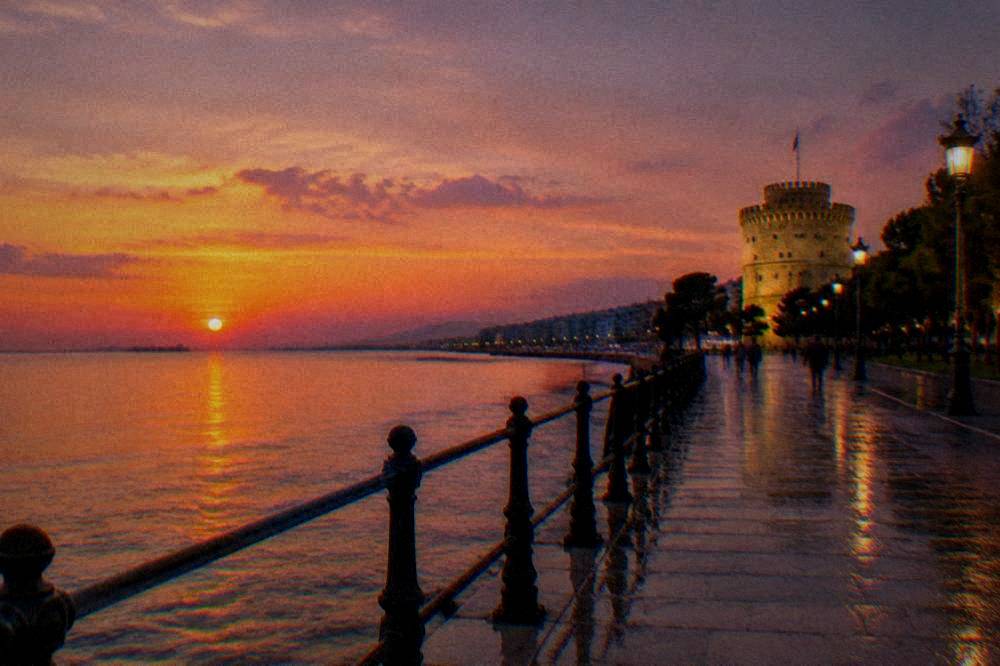
Within a ten minute walk of Aristotelous Square sit the White Tower, the Roman Agora, the Church of Saint Demetrius, Hagia Sophia, the Ladadika dining quarter and the start of the Nea Paralia promenade, with the Archaeological Museum and the Museum of Byzantine Culture a short ride away. The square is the natural base camp for the historic centre because the Greco-Roman and Byzantine monuments cluster immediately east and west of it. The White Tower, the city's landmark, stands on the seafront about ten minutes east along the promenade; its 2026 ticket is 8 euro full and 4 reduced, effective from 1 April 2026, open daily 08:00 to 21:00 in summer and 08:30 to 15:30 in winter.
West along Egnatia street, the Roman past surfaces in the Arch of Galerius, the Rotunda and the Galerius Palace complex, all built when the tetrarch Galerius made the city his base. The Roman Forum lies one block north of the square itself. The Byzantine layer is heavier still: fifteen Paleochristian and Byzantine monuments of Thessaloniki were inscribed together on the UNESCO World Heritage List in 1988, and several of them, including Hagia Sophia, the Church of Saint Demetrius and Panagia Acheiropoietos, stand within walking distance. Working churches are free to enter and open outside service times.
| Sight | Direction from the square | Entry |
|---|---|---|
| White Tower | East along the seafront, about 10 minutes on foot | 8 euro full, 4 reduced |
| Roman Forum | One block north | Check the current price on the official ticket page |
| Church of Saint Demetrius | Northeast, uphill from the forum | Free, open outside services |
| Hagia Sophia | East, on the same axis as the square | Free, open outside services |
| Arch of Galerius | East along Egnatia street | Open-air monument, free to view |
| Ladadika | Southwest, toward the port | Public quarter, free to walk |
Guided options cover the same ground efficiently. The Apostle Paul walking tour traces the city's early Christian layers, and the sightseeing bus loops the wider city from a stop near the square.
Where Do You Eat Near Aristotelous Square?
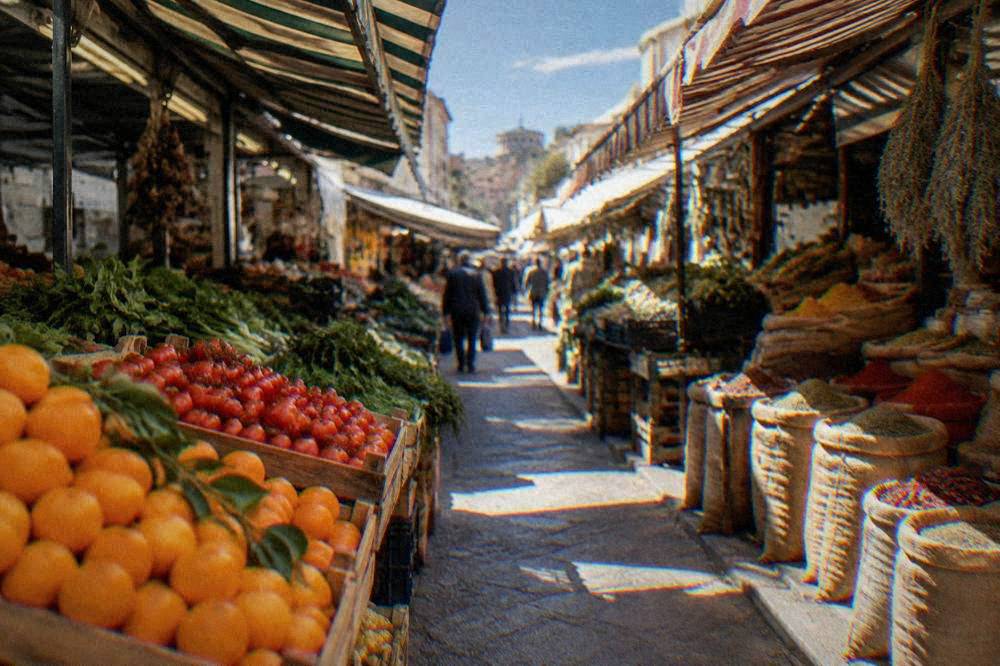
The streets flanking Aristotelous Square hold some of the densest eating in Thessaloniki: the market quarter around Modiano Market and Kapani Market inland, the historic Ladadika dining quarter toward the port, and the cafe terraces of the square itself, all within a short walk of one another. The city runs a UNESCO Creative City of Gastronomy programme through its municipal gastronomy site, and the eating culture around the square is where it is most visible. The 1917 fire and the reconstruction moved the commercial arteries but the food markets stayed close: Modiano Market, the covered market, and Kapani Market, the open street market, both sit a few blocks north of the square and supply the surrounding kitchens.
Ladadika, the old oil merchant quarter near the port southwest of the square, survived the fire and its low stone buildings now house eating places of every kind. What is solid is the geography. The square's own terraces face the sea, and the evening promenade custom moves diners from the square down to the water and back. A food tour is the structured way through this: the food tastings and drinks tour with a chef walks the market and eating quarter with stops along the way.
| Eating area | Position relative to the square | Character |
|---|---|---|
| Square terraces | On the square | Cafes facing the sea |
| Modiano Market | A few blocks north | Covered food market |
| Kapani Market | Adjacent to Modiano | Open street market |
| Ladadika | Southwest, toward the port | Historic quarter of eating places |
| Waterfront strip | South, along the gulf | Sea-facing cafes along the promenade |
How Do You Get To Aristotelous Square?
Aristotelous Square is reached from Thessaloniki Airport "Makedonia" in about 20 minutes by road, about 16 km from the square, with airport bus lines X1, X2, X3 and N1 connecting to the metro and the centre, and the metro's Line 1 running from 05:15 to 00:30 Sunday to Thursday and to 02:00 on Friday and Saturday nights. The airport's own page lists public bus and taxi connections; the OASTH network page confirms the airport lines X1 (KTEL to airport), X2 (Nea Elvetia metro station to airport), X3 (Mikra metro station to airport) and N1 (night line). The reported airport bus fare is about 2 euro and a daytime taxi to the centre about 25 euro; both are reported figures, so confirm before you travel. The full transfer picture, with the metro and bus options compared, is in the airport to city centre guide.
The metro is now a fixed fact of the city, not a construction site. Line 1 opened in November 2024 from New Railway Station to Nea Elvetia, and the Kalamaria extension, five further stations to Mikra, was inaugurated on 27 August 2026, per the operator's press release. A basic ticket costs 0.60 euro and a 24 hour ticket 2.50 euro, per the Thessaloniki Metro's ticket page. From the square, the seafront axis is flat and pedestrian friendly; the whole city centre segment between the square, Ladadika and the White Tower is a compact walking district, which is why Thessaloniki has a reputation as a walkable city.
| From | To the square | Time (about) |
|---|---|---|
| Airport SKG | By road | 20 minutes, 16 km |
| New Railway Station | Metro Line 1 then short walk | Under 20 minutes |
| White Tower | On foot along the seafront | 10 minutes |
| Kalamaria (Mikra) | Metro Line 1 extension | About 15 minutes to centre |
| Perea | By road | 28 minutes, 23 km |
What Is The History Behind The Square?
The history of Aristotelous Square condenses the whole modern story of Thessaloniki: a Roman and Byzantine city founded in 315 BC by Cassander, taken by the Ottomans in 1430, liberated on 26 October 1912, burned in the Great Fire of 1917, rebuilt under the Hebrard plan, struck by an earthquake in 1978, and named a European Capital of Culture in 1997. Every one of those dates is documented on the municipality's own history pages. The city was founded in 315 BC by Cassander and named for his wife Thessalonike, sister of Alexander the Great; it became a Roman metropolis under Galerius, whose palace, arch and Rotunda still stand east of the square, and then one of the Byzantine world's great cities, whose fifteen monuments were UNESCO-listed together in 1988.
The events that shaped the square itself came in quick succession after liberation. The Greek army entered the city on 26 October 1912, the date now marked alongside Saint Demetrius day. Less than five years later, on 18 August 1917, the Great Fire destroyed the central quarters and left 73,000 people homeless; the Hebrard plan that followed gave the city its square, its axes and much of its present street plan. The 1978 earthquake damaged buildings across the centre, including Hagia Sophia and the Church of Saint Demetrius, and both were repaired. The city's cultural profile rose again with the European Capital of Culture year in 1997. More planning pages are at the Thessaloniki Travel Guide homepage.
| Year | Event in Thessaloniki |
|---|---|
| 315 BC | City founded by Cassander, named for Thessalonike |
| 1430 | Ottoman conquest of the city |
| 26 October 1912 | Liberation, Greek army enters the city |
| 18 August 1917 | Great Fire, 73,000 left homeless |
| 1978 | Earthquake damages the centre |
| 1988 | Fifteen Byzantine monuments UNESCO-listed |
| 1997 | European Capital of Culture |
The Apostle Paul walking tour follows the earliest layer of this story, the Roman city in which the apostle's letters to the Thessalonians were written, and the early Christian churches that grew from it.
What Is The Weather Like At Aristotelous Square?
The square sits in a Mediterranean climate with continental edges: HNMS Thessaloniki Mikra station data for 1959 to 2010 shows a July mean daily high of 31.7 C, a January mean daily low of 1.5 C, and annual rainfall of 444.5 mm, with December the highest rainfall month at 55.1 mm and August the lowest at 19.3 mm. The square is an open, south-facing space with almost no shade except the cafe awnings, so summer afternoons are hot and the custom moves to the evening; winter days average a high of 9.3 C in January with rain on about 11.5 days in the month, per the same station record. The sea breeze off the Thermaic Gulf tempers the square in the warm months, and the prevailing wind is from the northwest in every month of the year except August, when it swings south.
| Month | Mean high C | Mean low C | Rain mm | Rain days |
|---|---|---|---|---|
| January | 9.3 | 1.5 | 37.7 | 11.5 |
| April | 19.1 | 7.9 | 36.1 | 11.1 |
| July | 31.7 | 19.3 | 23.8 | 6.7 |
| October | 21.2 | 11.3 | 43.0 | 9.3 |
| December | 10.9 | 3.2 | 55.1 | 12.7 |
All figures are station means from the HNMS Thessaloniki Mikra station, 1959 to 2010, a long-period weather record rather than a forecast. October, the month of the Dimitria festival and the Film Festival build-up, averages a 21.2 C high with rain on 9.3 days; February is cooler and quieter. The station record does not carry monthly sunshine or sea temperature figures.
How Does The Square Fit Into A Visit To Thessaloniki?
Aristotelous Square works best as the anchor of a Thessaloniki visit: start mornings on the square or at the adjacent markets, spend middays in the museums and Byzantine churches east of it, eat in Ladadika or the market quarter in the evening, and reserve separate days for the big day trips such as Vergina, Pella and Meteora. A first loop from the square covers the White Tower, the Arch of Galerius, the Rotunda and the Heptapyrgion in the upper town in a single long day, and a two day itinerary adds the Archaeological Museum, whose visiting page lists 09:00 to 17:00 opening with a Tuesday closure only from 1 November to 31 March, and the Museum of Byzantine Culture, daily 08:00 to 20:00 in summer. State museums are free on 6 March, 18 April, 18 May, the last weekend of September and 28 October.
The day trips fan out from the square in every direction. The Edessa waterfalls are about 82 minutes away by road; Pella about 43; Vergina about 62; Meteora about 154 minutes and 228 km, a full day by any measure. The residential Kalamaria district, now on the metro since the August 2026 extension, sits southeast across the city. The full rundown of the city's sights is on the things to do in Thessaloniki page.
| Day trip | Road distance from the square | Time (about) |
|---|---|---|
| Pella | 46 km | 43 minutes |
| Vergina | 68 km | 62 minutes |
| Dion | 90 km | 67 minutes |
| Edessa | 90 km | 82 minutes |
| Meteora (Kalambaka) | 228 km | 154 minutes |
What Should You Know Before You Go?
Three practical points shape any visit to Aristotelous Square: the square itself is free and always open, the surrounding state museums have fixed hours and free-admission days worth planning around, and the climate resilience fee is charged by accommodation per room per night, higher from April to October, collected locally rather than through the nightly rate. The fee is a Greek national measure; its existence and collection method are documented, and the accommodation collects it at checkout, so budget a small extra amount per night. The emergency number in Greece is 112, the euro has been the currency since 2001, and Greece is a Schengen member, so no separate visa regime applies within the zone.
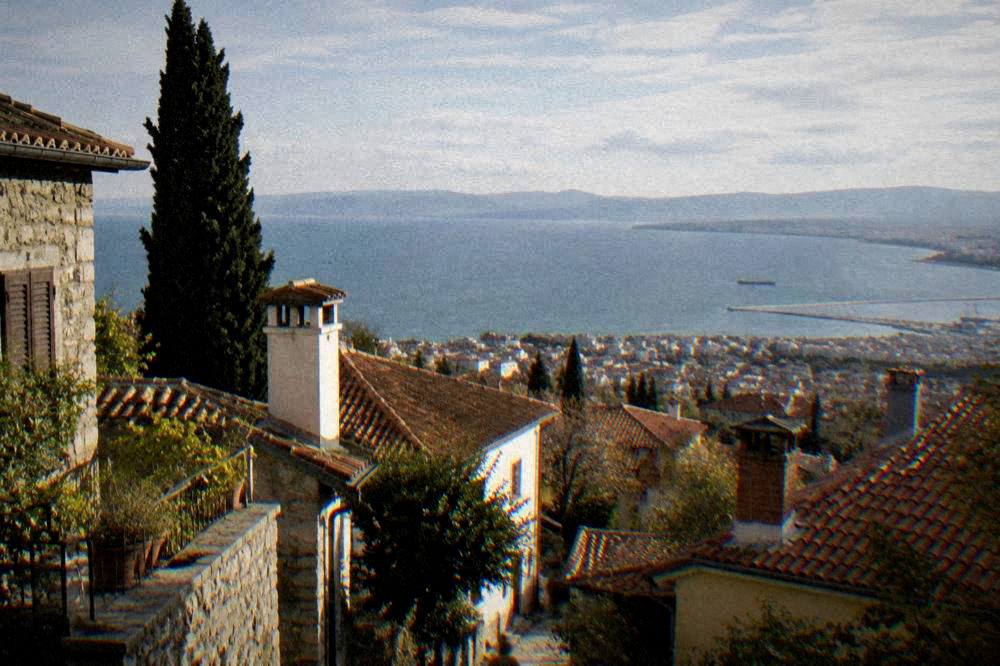
Around the square, keep expectations practical. The Nea Paralia is a promenade for walking, not a swimming beach; swimming is done at Perea, about 28 minutes away by road, or Epanomi. Church opening depends on service schedules, and no fixed hours for individual churches are printed anywhere on this site. For the reported taxi fare question from the airport, the dedicated answer page covers it in detail.
The square rewards the unhurried approach that suits the whole city: arrive on the metro, walk everything in the centre, and save the long drives for the Macedonian heritage sites beyond it. A guided walk adds the layers that the stones do not explain on their own, from the Roman forum to the apostle's city to the fire that built the square you are standing in.
Common Questions About Aristotelous Square
Is Aristotelous Square free to visit?
Yes. The square is a public open space, open at all hours with no ticket, no gate and no fee. Only the surrounding museums, such as the White Tower at 8 euro full and 4 reduced from 1 April 2026, charge entry.
How far is Aristotelous Square from the White Tower?
The White Tower stands on the seafront about a ten minute walk east of the square, along the same promenade axis. The route is flat the whole way.
Can you reach Aristotelous Square by metro?
Yes. Line 1 of the Thessaloniki Metro, opened in November 2024 and extended to Kalamaria on 27 August 2026, serves the centre a short walk from the square. A basic ticket costs 0.60 euro per the operator's ticket page.
Why is it called Aristotelous Square?
The square is named after Aristotle, the philosopher born at Stagira in Chalcidice, and a statue of him stands on the square as a familiar meeting point.
When was Aristotelous Square built?
The square was laid out after the Great Fire of 18 August 1917 destroyed the old central quarter and left 73,000 people homeless. The Hebrard reconstruction plan, implemented from around 1918 onward, gave the square its present funnel shape opening to the sea.
Can you swim at Aristotelous Square?
No. The square opens onto the Nea Paralia, which is a promenade on the Thermaic Gulf, not a swimming beach. Swimming is done at Perea, about 28 minutes away by road, at Agia Triada or at Epanomi.