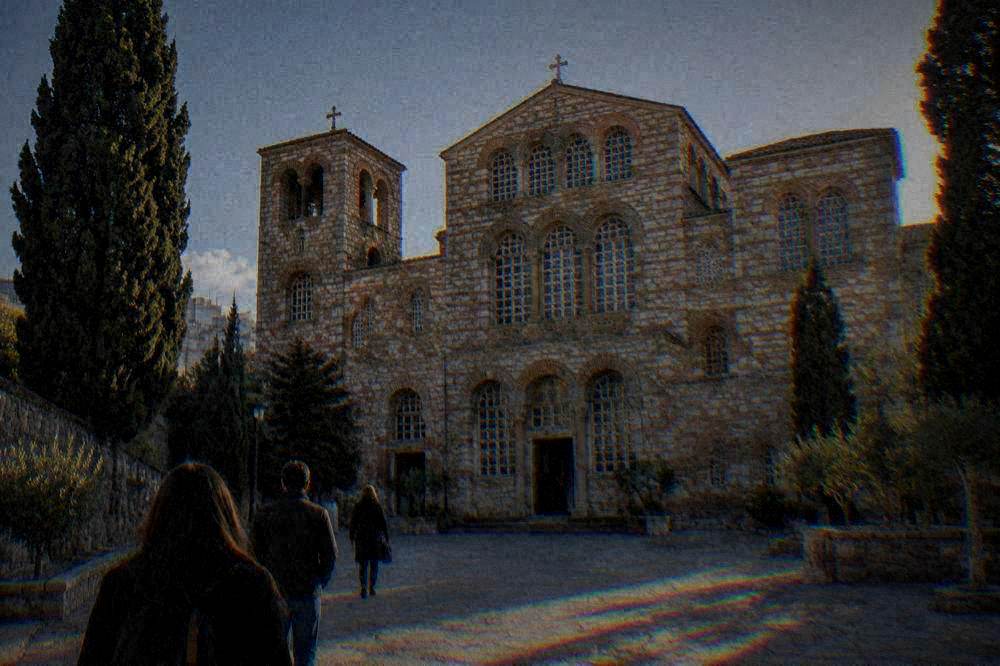
City Centre: Between Egnatia And The Sea
The Thessaloniki city centre runs from Aristotelous Square down to the White Tower and up to the Roman remains along Egnatia, a walkable core where the metro, two covered markets and fifteen UNESCO monuments sit within a short walk of one another.
Short answer
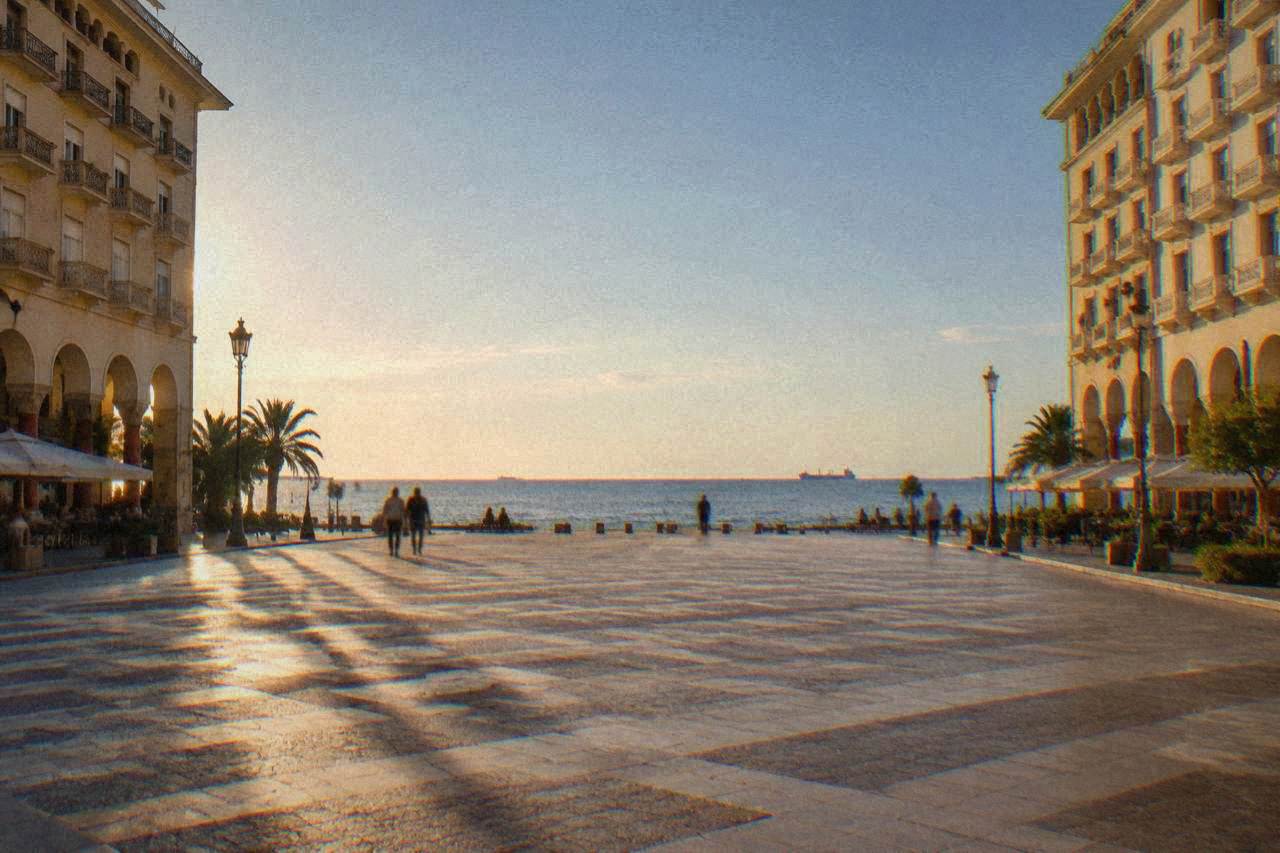
The Thessaloniki city centre is the compact area between the Egnatia road and the Thermaic Gulf, anchored by Aristotelous Square and the White Tower. It is walkable end to end, served by the metro since November 2024, and holds the main state museums, the Roman Galerian complex and the Ladadika dining quarter.
Thessaloniki, the second city of Greece, sits on the Thermaic Gulf in Central Macedonia, and its city centre is the strip of land between the old Egnatia road and the sea. That strip holds Aristotelous Square, the White Tower, the Roman Galerian complex, two covered markets and the Ladadika dining quarter, all within a walkable core that the Thessaloniki Travel Guide covers sight by sight. The metro has run here since November 2024, the Kalamaria extension opened on 27 August 2026, and the whole centre is now one of the easiest city cores to work in northern Greece.
Where Exactly Is The Thessaloniki City Centre?
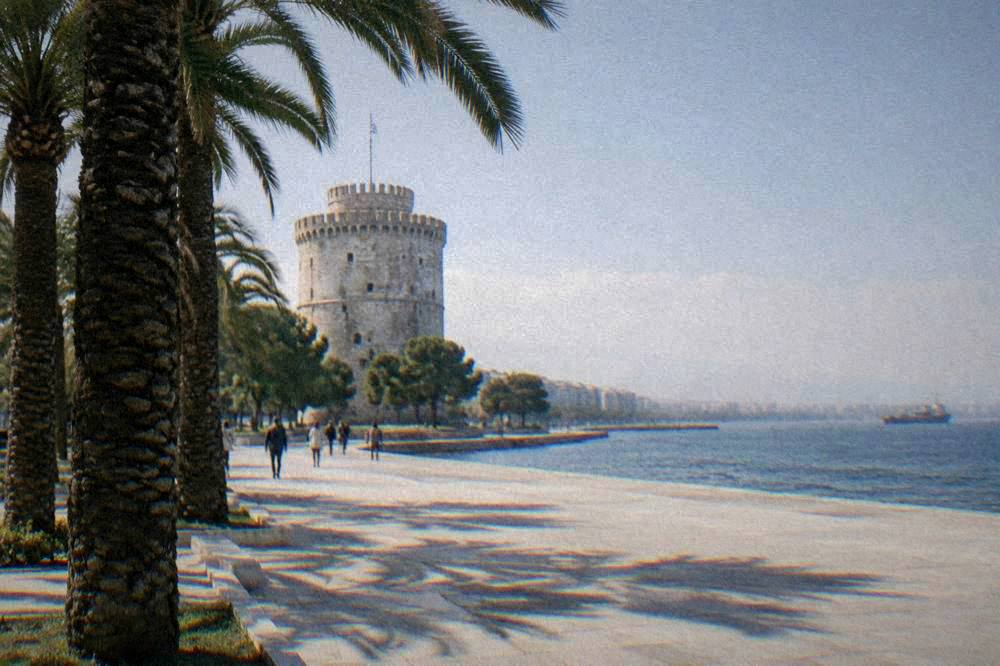
The Thessaloniki city centre is the compact rectangle between Egnatia street and the Thermaic Gulf, roughly 1.5 km from the Rotunda in the east to the port area in the west, with Aristotelous Square at its heart, and the whole of it can be crossed on foot in under half an hour from edge to edge. The upper boundary follows Egnatia, where the Arch of Galerius and the Rotunda stand; the lower boundary is the seafront promenade, the Nea Paralia, which is a walking promenade and not a swimming beach. Above Egnatia the ground climbs into Ano Poli, the old upper town inside the Byzantine walls, which is a separate area with its own character.
The city was founded in 315 BC by Cassander and named for his wife Thessalonike, and the modern centre still follows lines the Romans and Byzantines drew. Fifteen Paleochristian and Byzantine monuments were inscribed on the UNESCO World Heritage List in 1988, and several of them, including the Rotunda, Hagia Sophia and the Church of Saint Demetrius, sit inside or on the edge of this core. A fire in 1917 destroyed much of the centre and left 73,000 people homeless, and the reconstruction plan that followed gave the city the regular street grid and the designed frame of Aristotelous Square that visitors see today.
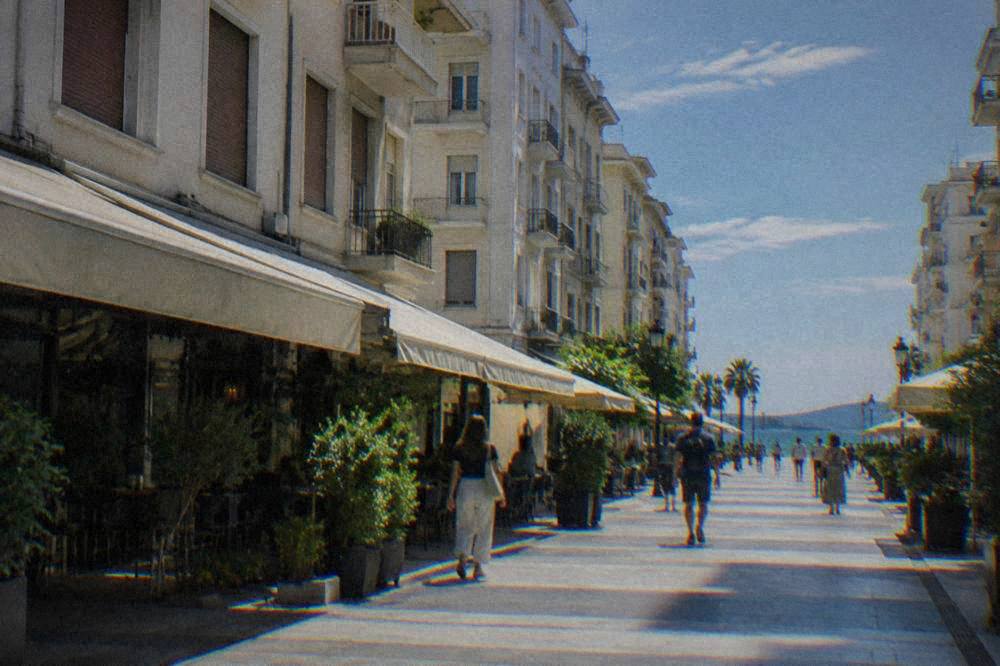
Orientation is simple. Egnatia runs east to west along the top; Tsimiski runs parallel below it; the sea runs along the bottom. The streets between them hold the bulk of the shops, the banks and the food streets, and the two covered markets, Modiano Market and Kapani Market, sit close together just north of the centre of the grid. A visitor who fixes those three lines in mind rarely needs a map inside the core.
What Are The Main Sights Inside The City Centre?
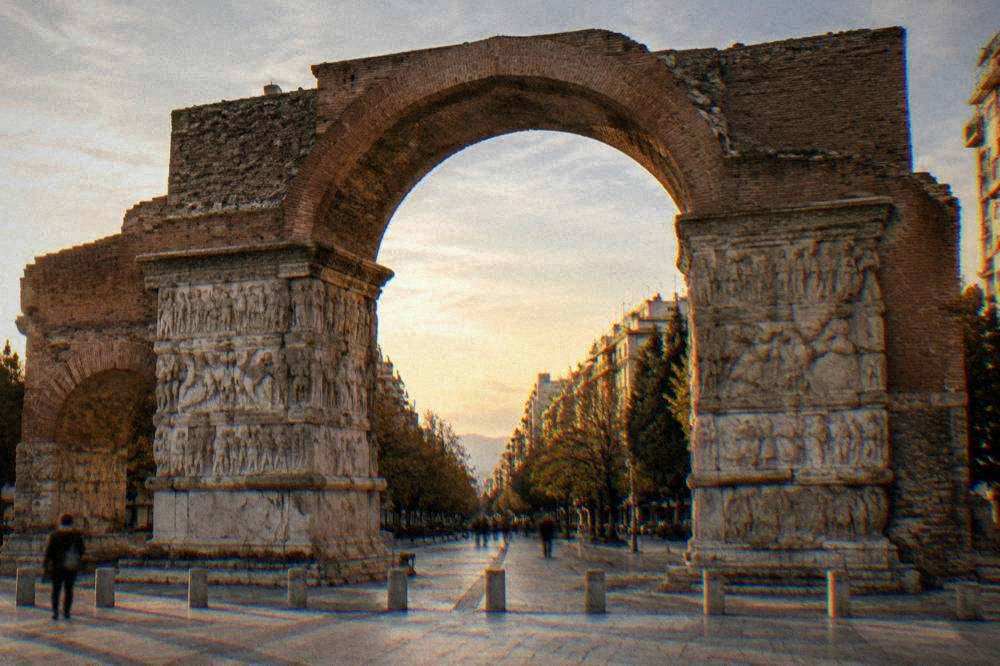
The main sights inside the Thessaloniki city centre are the White Tower on the seafront, the Rotunda and the Arch of Galerius on Egnatia, the Church of Saint Demetrius, Hagia Sophia, the Archaeological Museum and the Museum of Byzantine Culture, plus the Roman remains around Navarinou Square. The Arch of Galerius is a free, open-air monument standing in the street; the Rotunda and the Palace of Galerius beside it are the rest of the Roman Galerian complex. Working churches such as the Church of Saint Demetrius are free to enter and open outside service times, and their hours follow the liturgical calendar rather than a museum timetable.
Two prices changed on 1 April 2026 and older pages still print the wrong figures. The White Tower costs 8 euro full and 4 euro reduced, per the Museum of Byzantine Culture's own visiting page, and the Archaeological Museum and the Museum of Byzantine Culture each cost 10 euro full and 5 euro reduced. The White Tower keeps summer hours of 08:00 to 21:00 daily from 1 April to 31 October, and winter hours of 08:30 to 15:30 from 1 November to 31 March, with entry stopping 20 minutes before closing.
| Sight | Position in the centre | Admission | Hours to plan around |
|---|---|---|---|
| White Tower | Seafront, east end of the promenade | 8 EUR full / 4 EUR reduced | 08:00-21:00 summer, 08:30-15:30 winter |
| Archaeological Museum | West of the centre, toward the fair ground | 10 EUR / 5 EUR | 09:00-17:00 daily; closed Tuesday 1 Nov to 31 Mar |
| Museum of Byzantine Culture | Same district as the Archaeological Museum | 10 EUR / 5 EUR | 08:00-20:00 summer; 08:30-15:30 winter, Tuesday closed in winter |
| Arch of Galerius | On Egnatia at the top of the centre | Free, open air | Visible at any hour |
| Church of Saint Demetrius | North edge, above the Roman Agora | Free | Open outside services |
| Hagia Sophia | On Egnatia, mid-centre | Free | Open outside services |
State museums are free on fixed days each year: 6 March, 18 April, 18 May, the last weekend of September and 28 October. Detailed sight pages on this site carry the fuller picture for the White Tower, the Rotunda and the Archaeological Museum, each with what the official visiting pages state.
How Do You Cover The City Centre On Foot Or By Bike?
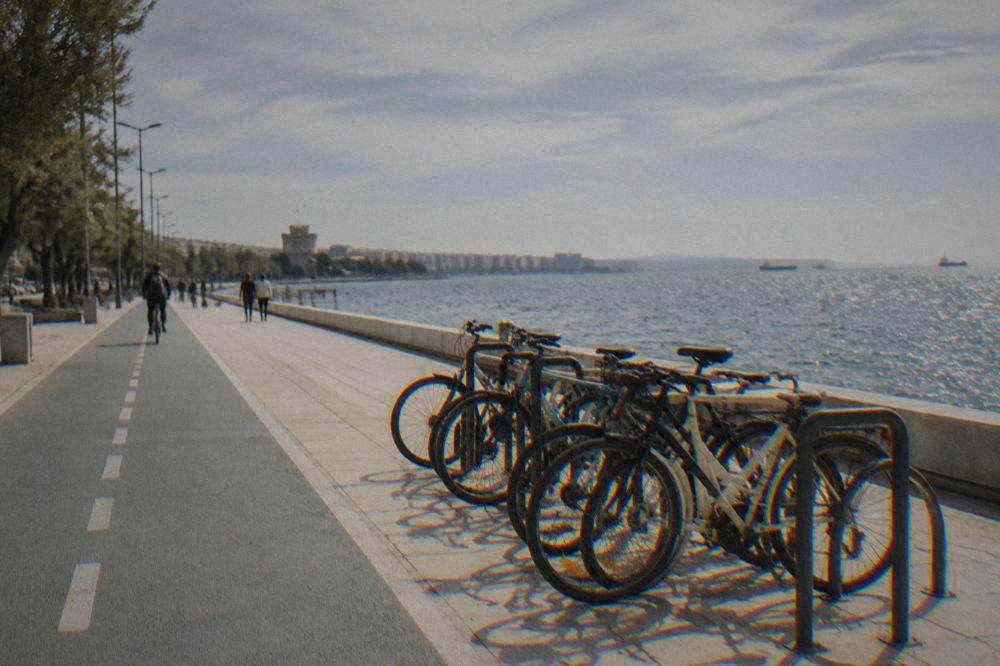
The Thessaloniki city centre is flat along the sea and climbs only at its northern edge, so it works as a walking city, and an e-bike covers the whole stretch from the Galerian complex to the sea in a single loop. The distances are short: the White Tower stands about 15 minutes on foot from Aristotelous Square along the promenade, and the Rotunda is another 15 minutes beyond that up Egnatia. The one real climb is the lane up into Ano Poli toward the Heptapyrgion, which rises inside the walls above the grid.
A bike answers the one problem walking has here, which is that the interesting pieces spread along a line rather than cluster. The operator's listing for the e-bike tour through the city's neighbourhoods describes a route past the seafront, the centre and the districts beyond it, and the tour's own page on this site sets out what it covers. For readers who prefer to walk, the Thessaloniki walking tour profile on this site walks the same core on foot. If you would rather ride, Check availability for the e-bike tour.
Where Do You Eat Around The City Centre?
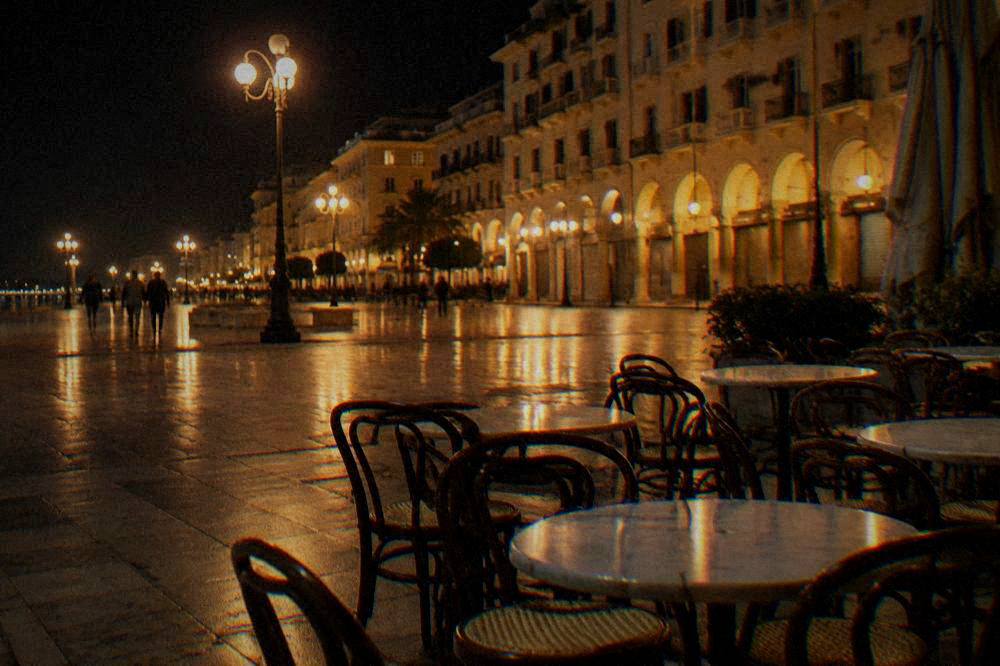
Eating around the Thessaloniki city centre splits into three zones: the Ladadika quarter west of Aristotelous Square for sit-down evening meals, the streets around Modiano Market and Kapani Market for market food and quick lunches, and the waterfront stands for the city's bread-and-snack culture eaten on the move. Ladadika is the restored warehouse district by the old port, and the two markets sit a few minutes' walk north of the square. This site keeps a full food tour profile and a dedicated what-to-eat page for the detail.
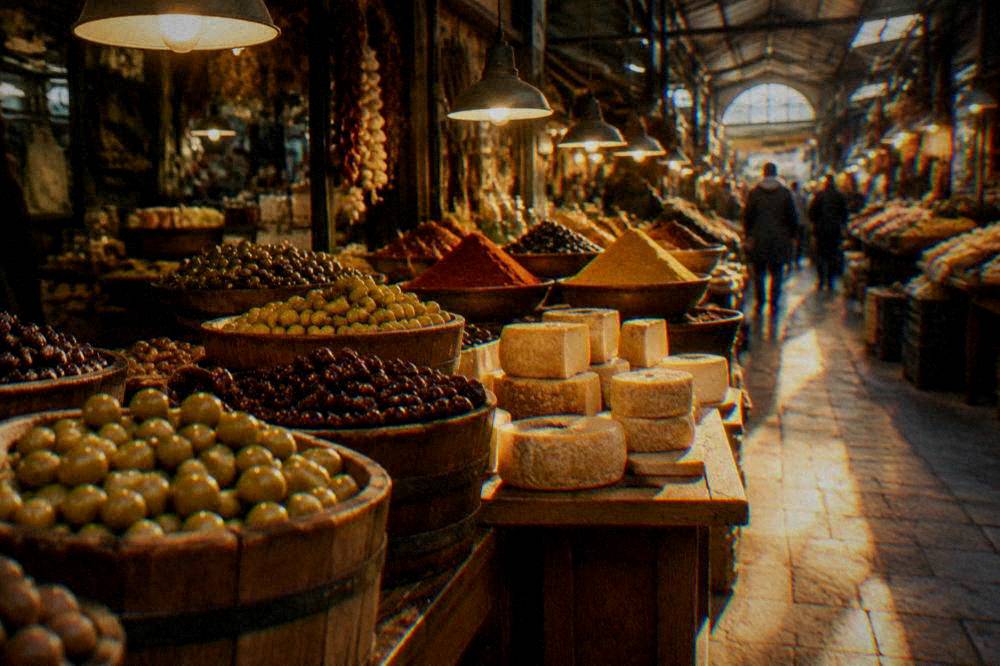
No restaurant, bakery or cafe on this page is named. Modiano Market and Kapani Market are the two historic covered markets, both walkable from Aristotelous Square, and the food shops and counters around them sell the city's snacks, cheeses and sweets by weight and by piece. The Bey Hamam, the Ottoman bathhouse, stands in this market district as a monument rather than a working bath.
A guided food walk answers the first-day question of what to order. The gastronomic food tour led by a chef stops at a series of counters in and around the markets, and its listing carries the current price and dates; the same tour appears in the picks band above. For readers ready to book, check availability and read the operator's own terms.
How Does The Metro Change Getting Around The City Centre?
The Thessaloniki metro is open and it cuts straight through the city centre: Line 1 opened in November 2024, the Kalamaria extension was inaugurated on 27 August 2026, and a basic ticket costs 0.60 euro with a daily ticket at 2.50 euro. The Thessaloniki Metro's own ticket page states those fares. Trains run from 05:15 to 00:30 Sunday to Thursday and from 05:15 to 02:00 on Friday and Saturday. The line links the New Railway Station at the western edge of the centre with Nea Elvetia to the east, and the extension now carries five more stations out to Mikra in Kalamaria.
For visitors this matters in one specific way. The walk from the metro to the main sights is short, and the station at the top of the centre connects the arrival routes from the airport with the pedestrian core around Aristotelous Square. The airport bus fare is reported at about 2 euro and a daytime taxi from the airport at about 25 euro; both are reported figures from secondary sources, so confirm before you ride. This site's airport transfer guide and the taxi fare answer page carry the fuller breakdown.
| Metro fact | Figure | Source basis |
|---|---|---|
| Line 1 opening | November 2024 | Stated by the metro operator |
| Kalamaria extension | Inaugurated 27 August 2026 | Government press release |
| Basic ticket | 0.60 EUR, reduced 0.30 EUR | The metro ticket page |
| Daily ticket | 2.50 EUR, 24 hours | The metro ticket page |
| Hours, Sunday to Thursday | 05:15-00:30 | The operator's site |
| Hours, Friday and Saturday | 05:15-02:00 | The operator's site |
Whether the 0.60 euro ticket also covers city buses is not stated on the operator's ticket page, so buy bus tickets separately until that is confirmed on the spot. The getting around overview on the root page of this site puts the metro in the wider transport picture.
What Does A Day In The City Centre Cost?
A day in the Thessaloniki city centre can run from about 8 euro in entry fees, for the White Tower alone, to about 28 euro per person for the three main state museums at full price, before any food, because the churches, the Arch of Galerius and the whole seafront promenade are free. That range assumes full-price adult tickets at the prices in force since 1 April 2026 and no free-admission day. On 6 March, 18 April, 18 May, the last weekend of September or 28 October, the state museums and the White Tower cost nothing.
| Item | Full price | Reduced price |
|---|---|---|
| White Tower | 8 EUR | 4 EUR |
| Archaeological Museum | 10 EUR | 5 EUR |
| Museum of Byzantine Culture | 10 EUR | 5 EUR |
| Metro basic ticket | 0.60 EUR | 0.30 EUR |
| Metro daily ticket | 2.50 EUR | one price |
| Churches, Arch of Galerius, Nea Paralia | Free | Free |
Two smaller costs sit outside that table. A climate resilience fee applies to overnight stays in Greece: it is collected by the accommodation, charged per room per night, and is higher from April to October than in winter. Restaurants and market stalls set their own prices, so check each menu where you stand. Reduced museum tickets generally apply to the standard state categories, and the museum pages list who qualifies; European Union visitors up to 25 enter free, as the state pages state.
When Is The Best Time To Walk The City Centre?
The best months to walk the Thessaloniki city centre are May, June, September and October, when the HNMS Thessaloniki Mikra station record, 1959 to 2010, shows mean daily highs of 24.6, 29.4, 27.1 and 21.2 C respectively, against 31.7 C in July. December carries the heaviest monthly rainfall in that station record at 55.1 mm, and August the lightest at 19.3 mm, while July has the highest mean daily high and January the lowest mean daily low at 1.5 C. Those are weather-station means, not a forecast, but they frame the walking question well.
The centre itself changes character with the calendar rather than the thermometer. The Dimitria festival ran 1 to 26 October in 2026, the International Fair ran 5 to 13 September in 2026, and the Film Festival runs 5 to 15 November in 2026; all three are annual events that fill the centre's venues and squares. Saint Demetrius day falls on 26 October, the same date as the city's liberation in 1912, and Ochi Day follows on 28 October with its parade. In summer the museums keep their long hours and the promenade carries the evening life; in winter the Archaeological Museum closes on Tuesdays from 1 November to 31 March, which is the one schedule trap worth planning around.
Which Day Trips Start From The City Centre?
The classic day trips from the Thessaloniki city centre are Pella at about 43 minutes by road, Vergina at about 62, Dion at about 67, Edessa at about 82 and Meteora at about 154 minutes each way, all measured as free-flow drive times from Aristotelous Square. Those figures are computed over road routing with no traffic, so real journeys run longer. Meteora, at about 228 km to Kalambaka, is a full day and cannot be a half day, however it is marketed. The beaches of the Thermaic Gulf are the nearest escape: Perea sits about 28 minutes and 23 km from the square, and swimming happens there and at Agia Triada or Epanomi, never at the city promenade.
| Day trip | Road distance from Aristotelous Square | Free-flow drive time |
|---|---|---|
| Perea | 23 km | about 28 min |
| Pella | 46 km | about 43 min |
| Vergina | 68 km | about 62 min |
| Dion | 90 km | about 67 min |
| Edessa | 90 km | about 82 min |
| Kassandra, Kallithea | 86 km | about 78 min |
| Sithonia, Nikiti | 97 km | about 96 min |
| Meteora, Kalambaka | 228 km | about 154 min |
Each of these has its own page on this site, including Edessa and the wider northern Greece coverage, and the metro's New Railway Station terminus plus the KTEL bus stations connect them by public transport where a car is not an option. The reported Vergina ticket is 20 euro full and 10 reduced and the reported Pella museum ticket 10 euro, both per the sites' own pages and worth confirming before you go. For Meteora, a private day trip with transfer handles the long drive; its listing carries the current price and the inclusions.
Common Questions About The Thessaloniki City Centre
Is the Thessaloniki city centre walkable?
Yes. The only real climb is the lane up into Ano Poli toward the Heptapyrgion.
Can you swim at the city waterfront?
No. The Nea Paralia is a walking promenade on the Thermaic Gulf, not a swimming beach. Swimming is done at Perea, about 28 minutes and 23 km by road, or at Agia Triada and Epanomi further along the gulf.
How much does the White Tower cost?
8 euro full and 4 euro reduced, in force since 1 April 2026, per the Museum of Byzantine Culture's visiting page. Entry stops 20 minutes before closing, and the tower keeps hours of 08:00 to 21:00 in summer and 08:30 to 15:30 in winter.
Does the metro reach the city centre?
Yes. Line 1 opened in November 2024 and crosses the centre between the New Railway Station and Nea Elvetia, and the Kalamaria extension, inaugurated on 27 August 2026, added five stations out to Mikra. A basic ticket costs 0.60 euro and a daily ticket 2.50 euro.
How many days does the city centre need?
Two comfortable days cover the core: the seafront, the Galerian complex, the churches and the two big museums on one rhythm, and the markets, Ladadika and Ano Poli on the other. Day trips to Pella, Vergina, Dion, Edessa or Meteora each add a full day.
Are the churches in the centre free?
Yes. Working churches such as the Church of Saint Demetrius and Hagia Sophia are free to enter and open outside service times; their hours follow the liturgical calendar, so time a visit around a service if the interior is the point of the visit.
The centre of Thessaloniki holds more per square kilometre than its size suggests, and the metro, the promenade and the market district tie it together into something a visitor can work entirely on foot. Start at the sea, work up to Egnatia, and let the climb into Ano Poli be the last walk of the day.