Bey Hamam: The Ottoman Bathhouse On Egnatia
Bey Hamam stands on Egnatia in central Thessaloniki, a domed relic of the centuries of Ottoman rule between 1430 and 1912, within a short walk of the Rotunda and the Arch of Galerius. This guide sets out what the building is, how it fits the city's monument list, and how to plan a visit around it.
Short answer
Opening arrangements vary, so confirm locally before planning an interior visit; the exterior and its place on the Egnatia monument axis can be appreciated at any time.
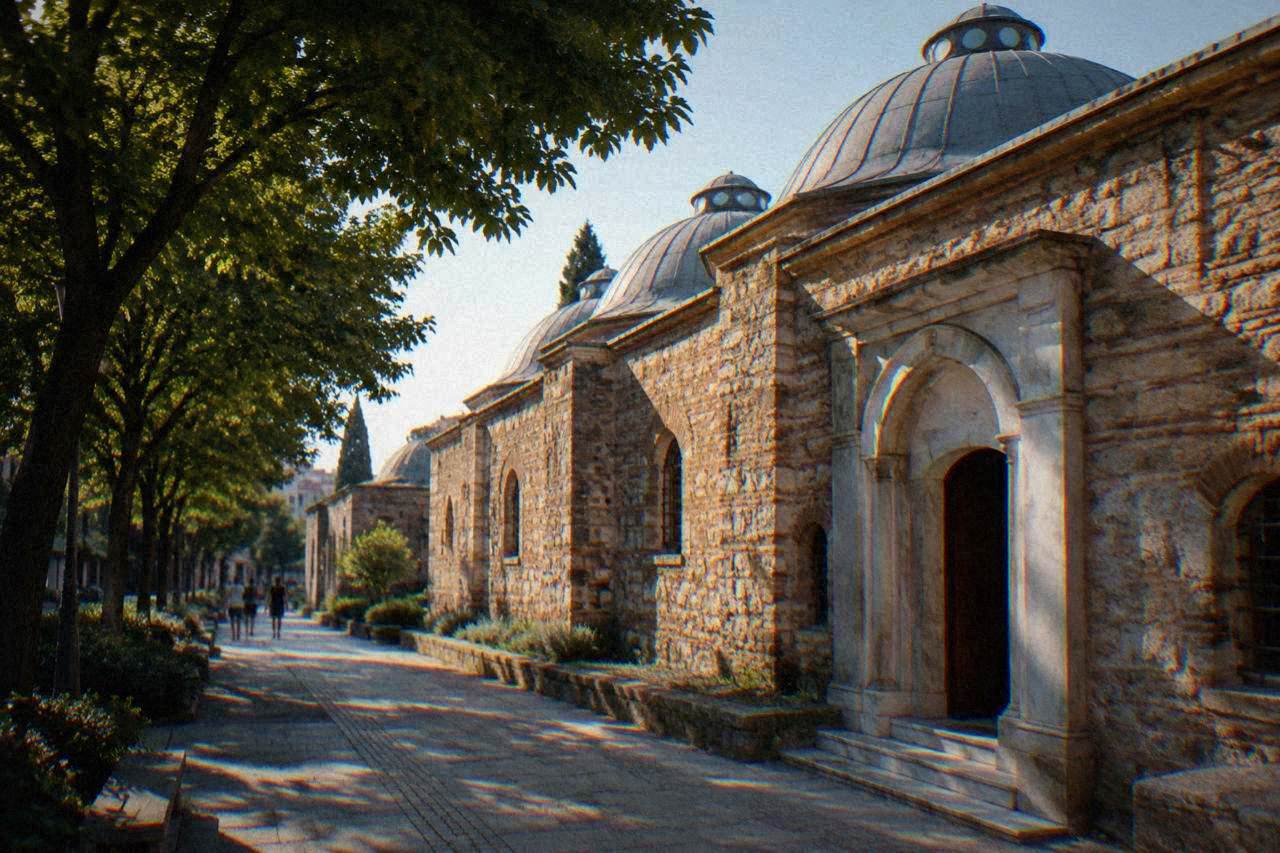
Bey Hamam is an Ottoman-era bathhouse standing on the Egnatia axis in central Thessaloniki, the second city of Greece, on the Thermaic Gulf in Central Macedonia. It belongs to the Ottoman layer of the city's history, the period between the conquest of 1430, which is reported on the municipality's own history pages, and the liberation of 26 October 1912. The building sits in one of the densest monument corridors in Europe: the Rotunda, the Arch of Galerius and the Palace of Galerius are all a few minutes away on foot, and the fifteen UNESCO-listed Paleochristian and Byzantine monuments, inscribed in 1988, surround it on all sides. This page from the Thessaloniki Travel Guide explains what the bathhouse is, how it fits the city's story, and how to plan a visit around it.
What Is Bey Hamam In Thessaloniki?
Bey Hamam is an Ottoman-era public bathhouse on Egnatia street in central Thessaloniki, built during the centuries of Ottoman rule that began with the reported conquest of 1430 and ended with the liberation on 26 October 1912. It is one of the few surviving bathhouse buildings in a city whose monument stock is otherwise dominated by Roman, Byzantine and modern landmarks.
A hamam, in the Ottoman urban tradition, was a public bath built around hot rooms, steam and flowing water, and bathhouses of this kind were ordinary civic infrastructure in Ottoman Thessaloniki, as they were across the empire. Thessaloniki under Ottoman rule was a multi-faith port city: the municipality's history pages report the arrival of Sephardic Jews after 1492, adding a community that would shape the city for centuries, alongside the Muslim, Christian and other populations already there. Bathhouses, mosques, churches and markets shared the same streets, and several of those streets survive in the grid you walk today.
What makes Bey Hamam useful to a visitor is less any single interior feature than its position. It stands directly on the Egnatia axis, the great west-east boulevard of the modern city, whose name recalls the Roman Via Egnatia. That road, reported as constructed between 146 and 120 BC on the municipal gastronomy site's historical pages, linked the Adriatic to the Bosporus and made Thessaloniki a commercial hub from an early date. Walking Egnatia today you pass Roman, Byzantine, Ottoman and modern Thessaloniki in the space of about twenty minutes, and the bathhouse is one of the clearest Ottoman markers on that line.
If an interior visit matters to your plans, ask at the tourist information centre at Aristotelous Square, whose reported telephone line is +30 2310 229070, or check locally at your accommodation before you set out. The exterior is visible from the street at any hour, and it pairs naturally with the monuments either side of it, which is how most itineraries treat it: as a stop on a walk rather than a destination in itself.
Where Does Bey Hamam Sit On Egnatia In Thessaloniki?
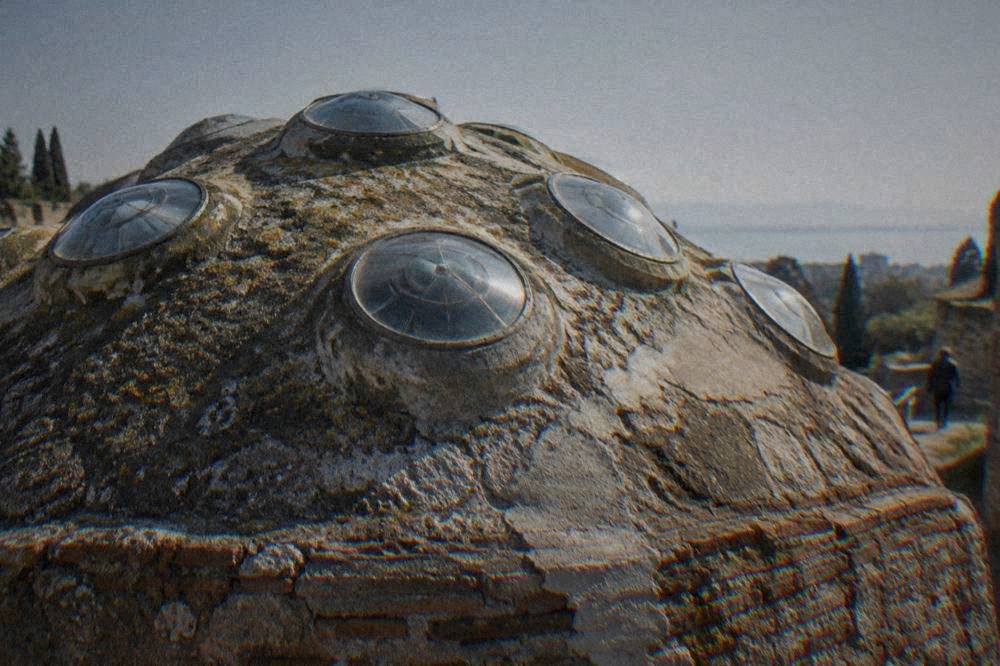
Bey Hamam sits on the Egnatia axis in central Thessaloniki, a few minutes' walk west of the Rotunda and the Arch of Galerius, the heart of the Roman Galerian complex, and within easy reach of Aristotelous Square to the south. Everything worth pairing it with sits inside a compact walkable core.
The Egnatia corridor is the natural way to understand the city's layout. From west to east it carries you past the Roman Agora, the Bey Hamam itself, the Church of Saint Demetrius a short way south, the Rotunda and the Arch of Galerius, and the walls of Ano Poli rising to the north. The bathhouse sits close to the middle of this run, which is why a Thessaloniki walking itinerary almost always crosses it whether it is listed by name or not.
Distances here are short. The whole monument core of the city centre sits within a rectangle you can walk end to end in half an hour, and the city centre area guide covers the same ground in detail. The table below gives the opening and price picture for the state-run neighbours, drawn from each museum's own visiting page.
| Sight | Hours per the official visiting pages | Ticket per the official pages |
|---|---|---|
| White Tower | 1 Apr to 31 Oct daily 08:00 to 21:00; 1 Nov to 31 Mar daily 08:30 to 15:30 | 8 EUR full, 4 EUR reduced |
| Archaeological Museum | 1 Apr to 31 Oct daily 09:00 to 17:00; 1 Nov to 31 Mar 09:00 to 17:00, closed Tuesday | 10 EUR full, 5 EUR reduced |
| Museum of Byzantine Culture | 8 May to 31 Oct daily 08:00 to 20:00; winter Mon and Wed to Sun 08:30 to 15:30 | 10 EUR full, 5 EUR reduced |
| Arch of Galerius | Open-air street monument, viewable at any time | Free to view |
Two practical notes from the same official pages. Entry to the state museums stops 20 minutes before closing, and the White Tower and Archaeological Museum both observe the standard state closure days: 1 January, 25 March, Easter Sunday, 1 May and 25 to 26 December. State museums are also free on 6 March, 18 April, 18 May, the last weekend of September and 28 October, which is worth knowing if your visit overlaps one of those dates.
A guided walk is the efficient way to absorb this corridor, because the layers are not self-explanatory. A Roman arch, a Byzantine church and an Ottoman bath can stand within a hundred metres of each other, and a local guide who can name each layer turns a pleasant street into a legible timeline. The walks also handle the uphill section toward Ano Poli, which is where the city's Ottoman-era street plan survives in its clearest form.
Can You Go Inside Bey Hamam In Thessaloniki?
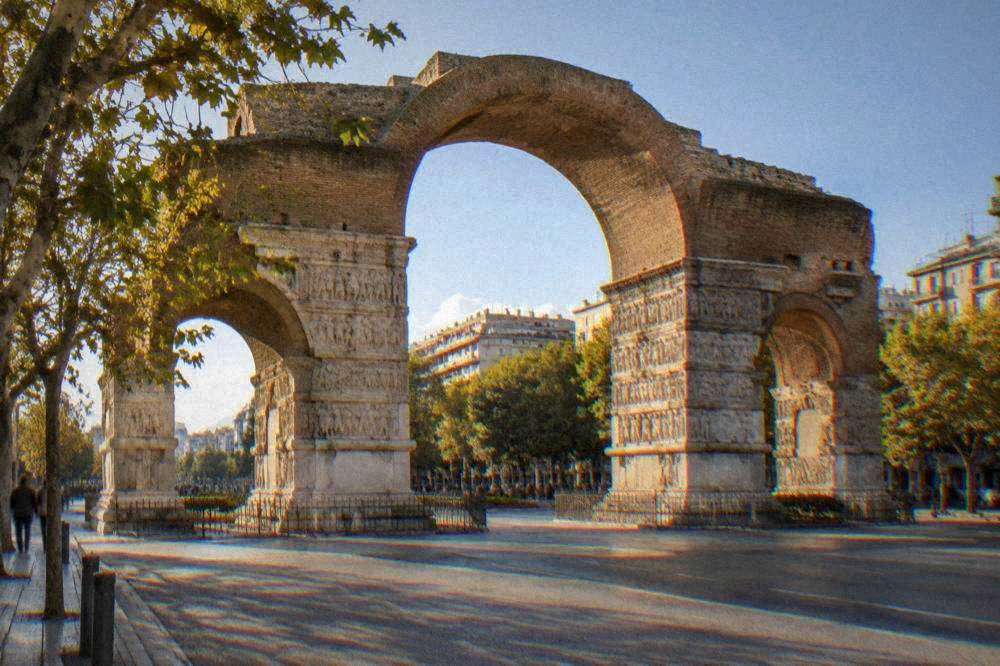
There is no fixed, published schedule or ticket for the interior of Bey Hamam in Thessaloniki, so treat an inside visit as something to confirm locally rather than plan around. The building's exterior on Egnatia, by contrast, can be seen freely at any time, and the surrounding Galerian complex monuments are permanent street fixtures.
This is a common situation with Thessaloniki's non-state monuments: the fifteen UNESCO-inscribed Paleochristian and Byzantine churches are working churches, free to enter and open outside services, while Ottoman-era buildings have passed through various uses and their access depends on whatever arrangement is in force when you arrive. The practical move is to ask at the tourist information centre at Aristotelous Square, or at your hotel desk, the day before you want to go. If the interior is closed, nothing is lost, because the density of documented sights around it means your morning fills anyway.
The Rotunda and the Arch of Galerius anchor the eastern end of your walk, and the Archaeological Museum sits a few blocks north of Egnatia. Check the current price on each museum's own ticket page before booking, since the 2026 pricing regime took effect from 1 April of that year and older pages still circulate stale figures.
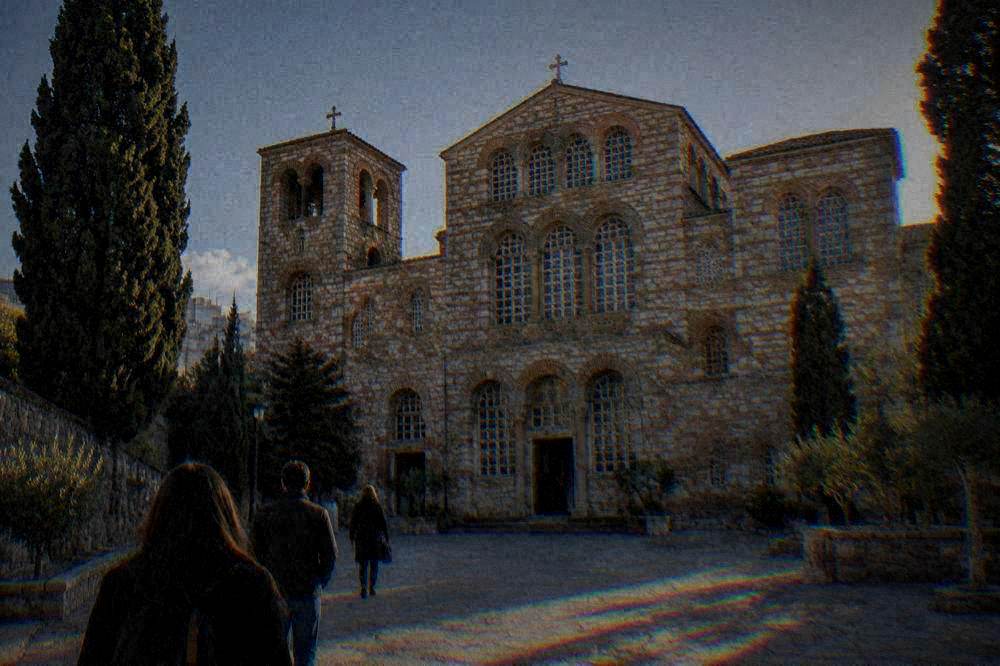
Between the bathhouse and the Rotunda you also pass the Church of Saint Demetrius, the city's patron saint's church, damaged in the Great Fire of 1917 and rebuilt, and one of the fifteen UNESCO monuments. The fire of 18 August 1917, reported on the municipal history pages with about 73,000 people left homeless, redrew the city centre around the Hebrard plan, and the Aristotelous Square you see today belongs to that post-fire redesign.
How Does Bey Hamam Fit Thessaloniki's Ottoman Story?
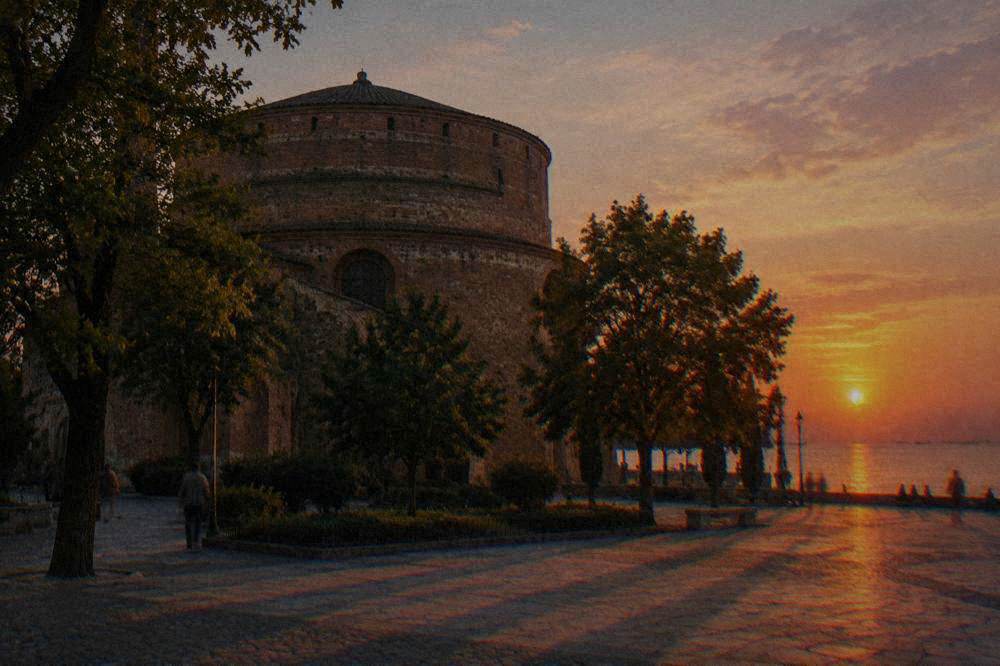
Bey Hamam belongs to the Ottoman centuries of Thessaloniki, the period between the reported conquest of 1430 and the liberation on 26 October 1912, when the city was one of the empire's major Balkan ports and its streets carried mosques, bathhouses, churches and synagogues side by side. The bathhouse is one of the visible reminders of that era on the modern street grid.
The Ottoman period is a layer visitors often miss, because the tourist eye is drawn to the Roman Galerian complex and the Byzantine churches. Yet it shaped the city for nearly five hundred years. The municipality's history pages report that the Ottoman conquest came in 1430 and that a large Sephardic Jewish community arrived after the expulsion from Spain in 1492, growing into a defining presence. The same pages report the harder chapters: about 46,000 of the city's Jews were deported in 1943, beginning in March of that year, a history the Jewish Museum presents with care and restraint.
Other Ottoman traces sit within an easy walk. The Heptapyrgion fortress at the top of Ano Poli, whose walls have Hellenistic and Byzantine origins, was used as a prison until 1989 according to the culture ministry's own site, and its story runs through the Ottoman era. The White Tower, the city's landmark on the seafront, is described on municipal walking-guide pages as a late 15th-century Ottoman fortification built on an earlier Byzantine tower, later a prison and later still whitewashed into its present name. The Atatürk Museum marks the house associated with Atatürk's birth in the city.
For the reported figures in this section, the pattern is the same: the conquest year, the Jewish arrival after 1492 and the deportation toll come from municipal pages cited by live search. The other anchors stand on their own sources: 26 October 1912 for liberation, 1988 for the UNESCO inscription and 1989 for the end of the Heptapyrgion's prison use.
| Period | Marker and attribution |
|---|---|
| 1430 | Ottoman conquest of Thessaloniki, reported |
| After 1492 | Sephardic Jewish arrival, reported |
| 18 August 1917 | Great Fire, about 73,000 homeless, reported date |
| 26 October 1912 | Liberation of Thessaloniki, per thessaloniki.gr |
| 1943 | About 46,000 Jews deported from March 1943, reported |
| 1988 | UNESCO inscription of fifteen monuments, per the inscription record |
Which Thessaloniki Sights Cluster Around Bey Hamam?
The sights around Bey Hamam in central Thessaloniki cluster into four walkable groups: the Roman Galerian complex of the Rotunda, Arch of Galerius and Palace of Galerius to the east; the Byzantine churches of the UNESCO list scattered through the blocks south of Egnatia; the markets of Kapani and Modiano to the southwest; and the seafront Nea Paralia with the White Tower about fifteen minutes on foot to the south.
You can cover all four groups in one long morning. Start at the bathhouse on Egnatia, walk east to the Rotunda, loop south through the Hagia Sophia and down to the seafront, then return through the Kapani Market and Modiano Market for the food side of the city. The Nea Paralia is a promenade rather than a beach, so treat it as a walking and viewpoint destination; swimming happens at Perea, about 28 minutes away by road, not on the city waterfront.
| Sight | Type | Access fact |
|---|---|---|
| Arch of Galerius | Roman monument | Open-air, free to view at any time |
| Rotunda | Roman monument | Check the current price on the official ticket page before visiting |
| Church of Saint Demetrius | UNESCO-listed church | Working church, free, open outside services |
| Panagia Acheiropoietos | UNESCO-listed church | Working church, free, open outside services |
| Hosios David | UNESCO-listed church | Working church, free, open outside services |
| Palace of Galerius | Roman complex | Check the current price on the official ticket page before visiting |
| Roman Agora | Roman forum | Access arrangements vary; confirm locally |
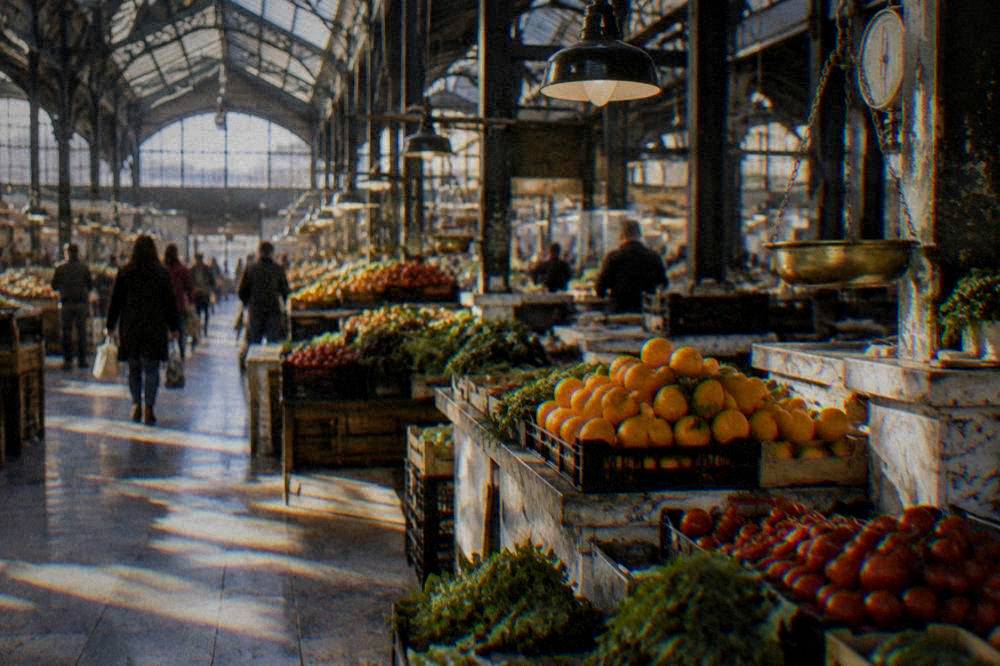
The market pair deserves its own hour. Kapani and Modiano sit south and west of the bathhouse, and the food tour above walks the stalls with a guide who explains what is on the counters, from fish of the Thermaic Gulf to the cured and pickled goods of the Macedonian interior. Food in this city is not a side note: the municipal gastronomy site exists as part of the UNESCO Creative Cities Network, confirmed as a subject on the city's own pages, and the food markets are where that reputation is made daily.
How Do You Reach Bey Hamam In Thessaloniki?
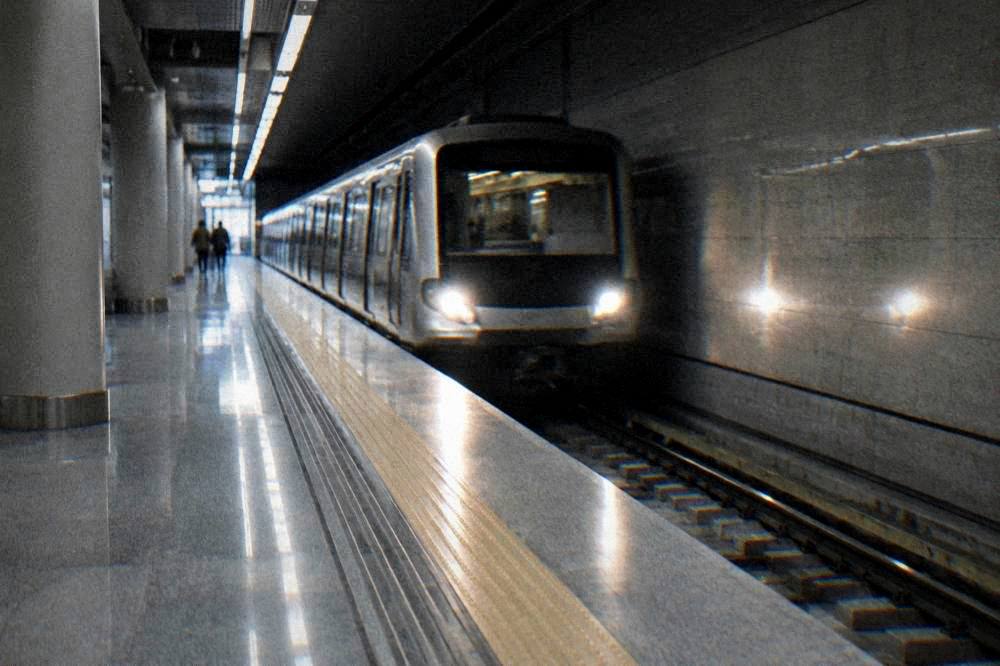
Bey Hamam in central Thessaloniki is reached on foot from anywhere in the city core, or by the Thessaloniki Metro, whose Line 1 opened in November 2024 and whose Kalamaria extension was inaugurated on 27 August 2026, with a basic ticket of 0.60 EUR and a daily ticket of 2.50 EUR according to the metro's own ticket page. The airport is about 20 minutes by road from Aristotelous Square.
The metro changed the practical arithmetic of this part of the city. Line 1 runs from the New Railway Station to Nea Elvetia, and the Kalamaria branch added five more stations as far as Mikra, giving the network eighteen stops in total as reported by the operator. Trains run from 05:15 to 00:30 Sunday to Thursday and from 05:15 to 02:00 on Friday and Saturday, hours confirmed on the operator's own site. From the airport, the OASTH bus lines X1, X2, X3 and N1 serve the connection, with a reported flat fare of about 2 EUR for the airport lines and a reported daytime taxi ride of about 25 EUR; confirm both before you travel.
| Metro fact | Figure per the operator's own pages |
|---|---|
| Basic single ticket | 0.60 EUR full, 0.30 EUR reduced |
| Daily ticket | 2.50 EUR, 24 hours |
| 10 plus 1 basic tickets | 5.80 EUR |
| 30-day pass | 16 EUR |
| Hours Sunday to Thursday | 05:15 to 00:30 |
| Hours Friday and Saturday | 05:15 to 02:00 |
Once you are in the centre, the bathhouse needs no transport at all. From Aristotelous Square the walk north is a few minutes up to Egnatia; from the White Tower it is a similar distance northwest. A taxi or bus is only worth considering if you are coming from Kalamaria or the western districts, and the metro covers those directions well. The getting around guide on this site covers the fuller transport picture, and the emergency number throughout Greece is 112.
What Is The Best Time Of Year To See Bey Hamam In Thessaloniki?
The comfortable months to walk the Egnatia monuments around Bey Hamam in Thessaloniki are April, May, September and October, when the HNMS Thessaloniki Mikra station record for 1959 to 2010 shows mean highs between 19.1 and 27.1 C, while July and August average 31.7 and 31.4 C, which makes long street walks a morning activity. There is no indoor climate control argument here, since the visit is outdoors.
The climate record gives you the planning numbers. December carries the highest monthly rainfall total in the record at 55.1 mm, with 12.7 rain days, while August is the lowest month at 19.3 mm. January's mean low is 1.5 C, mild enough that winter walking remains practical, and the city has a full winter life of its own, including the museums on the hours listed above. Rain in Thessaloniki is spread fairly evenly through the year, so a waterproof layer earns its place in any season.
| Month | Mean high C | Mean low C | Rain mm | Rain days |
|---|---|---|---|---|
| Jan | 9.3 | 1.5 | 37.7 | 11.5 |
| Apr | 19.1 | 7.9 | 36.1 | 11.1 |
| Jul | 31.7 | 19.3 | 23.8 | 6.7 |
| Sep | 27.1 | 15.4 | 29.8 | 7.0 |
| Oct | 21.2 | 11.3 | 43.0 | 9.3 |
| Dec | 10.9 | 3.2 | 55.1 | 12.7 |
All figures in that table are station means from the HNMS Thessaloniki Mikra station record, 1959 to 2010, and they describe the weather-station history rather than promising any individual week. October has an added draw: the Dimitria festival was reported to run from 1 to 26 October in 2026, the city's patron saint day falls on 26 October, which is also the liberation anniversary, and the Thessaloniki International Film Festival ran 5 to 15 November in 2026 as the 67th edition. Any of these can turn a monument walk into a fuller day.
Which Day Trips From Thessaloniki Extend The Story?
Day trips that extend the Ottoman and layered-history story around Thessaloniki include Vergina at about 62 minutes by road, Pella at about 43, Edessa at about 82 and Kavala at about 118, all computed over free-flow routing from Aristotelous Square, while Meteora at about 228 km and 154 minutes is a full day and should not be squeezed into a half.
The ancient Macedonian sites answer a different chapter of the same story. Pella was the capital of the Macedonian kingdom and Vergina holds the royal tombs of Aigai; both are covered in this site's full Thessaloniki planning guide with the drive times below. Kavala, further east, carries its own Ottoman aqueduct and fortress, a natural pairing for a reader interested in the bathhouse's world.
| Day trip | Distance by road from Aristotelous Square | Free-flow time |
|---|---|---|
| Perea | 23.0 km | about 28 min |
| Pella | 45.7 km | about 43 min |
| Vergina | 68.0 km | about 62 min |
| Edessa | 90.3 km | about 82 min |
| Kavala | 154.6 km | about 118 min |
| Meteora (Kalambaka) | 227.5 km | about 154 min |
Free-flow times assume no traffic, parking or stops, so treat them as floors rather than promises. For Meteora, the monasteries charge per monastery and each closes one weekday, arrangements reported but worth confirming before you commit, and the distance alone makes it a full-day outing. Closer to home, the beaches of Perea and Epanomi, about 28 and 36 minutes by road respectively, are where swimming actually happens; the Nea Paralia promenade in the city is for walking, not for bathing.
How Does A Bey Hamam Visit Fit One Day In Thessaloniki?
A Bey Hamam stop fits neatly as the midpoint of a single day in Thessaloniki: the White Tower and the seafront in the early morning, the walk north to Egnatia and the Galerian complex around the bathhouse at midday, the museums or the markets in the afternoon, and Ano Poli at sunset, all inside a walkable core backed by a metro that runs until 00:30 or 02:00.
The sequence works because the geography cooperates. Begin on the Nea Paralia with the White Tower, whose summer hours run to 21:00 per its own visiting page, then walk up to Egnatia via the Church of Saint Demetrius. The bathhouse, the Roman Agora, the Arch of Galerius and the Rotunda line up along or just off the boulevard, and the Archaeological Museum fills any spare hour with its 09:00 to 17:00 schedule. Afternoon belongs to the markets or the Museum of Byzantine Culture, and the evening climb into Ano Poli ends at the Trigoniou Tower for the view back over the Thermaic Gulf.
Sensible pacing keeps the whole day on foot. The one figure worth holding in mind is the museum stop rule: entry closes 20 minutes before the stated closing time at the state museums, so a 16:45 arrival at a 17:00 museum buys nothing. If the day runs long, the metro's late hours give you a cheap way home from either end of the centre, and a single 0.60 EUR ticket covers one journey.
Common Questions About Bey Hamam In Thessaloniki
What is Bey Hamam in Thessaloniki?
Bey Hamam is an Ottoman-era bathhouse on the Egnatia axis in central Thessaloniki, a surviving marker of the Ottoman period between the reported conquest of 1430 and the liberation on 26 October 1912.
Can you go inside Bey Hamam in Thessaloniki?
No fixed public schedule or ticket is published in a checkable form, so confirm locally before planning an interior visit. Ask at the tourist information centre at Aristotelous Square, whose reported line is +30 2310 229070, or at your accommodation.
How far is Bey Hamam from the Rotunda and the Arch of Galerius?
The bathhouse sits on the same Egnatia corridor, a few minutes on foot from the Arch of Galerius and the Rotunda, both part of the Roman Galerian complex, with the Palace of Galerius in the same compact zone.
How do you get to Bey Hamam by public transport?
The Thessaloniki Metro serves the centre, with Line 1 open since November 2024 and the Kalamaria extension since 27 August 2026. A basic ticket is 0.60 EUR and a daily ticket 2.50 EUR per the operator's own ticket page, and the airport bus costs a reported 2 EUR.
Is Bey Hamam one of the UNESCO monuments of Thessaloniki?
No. The UNESCO World Heritage inscription of 1988 covers fifteen Paleochristian and Byzantine monuments of Thessaloniki, principally churches and the city walls. The bathhouse belongs to the later Ottoman layer, though it stands among the UNESCO-listed churches on the same streets.
When is the best time to walk the Egnatia monuments?
April, May, September and October offer the most comfortable walking temperatures in the HNMS Thessaloniki Mikra station record for 1959 to 2010, with mean highs from 19.1 to 27.1 C, while July and August average above 31 C and suit early-morning walks.
Bey Hamam rewards the visitor who reads the street as a timeline: a Roman arch on one corner, a Byzantine church on the next, an Ottoman bath between them, and a post-1917 city plan holding it all together. Confirm the interior locally, walk the corridor either way along Egnatia, and the bathhouse will have done its job as the hinge between the city's layers.