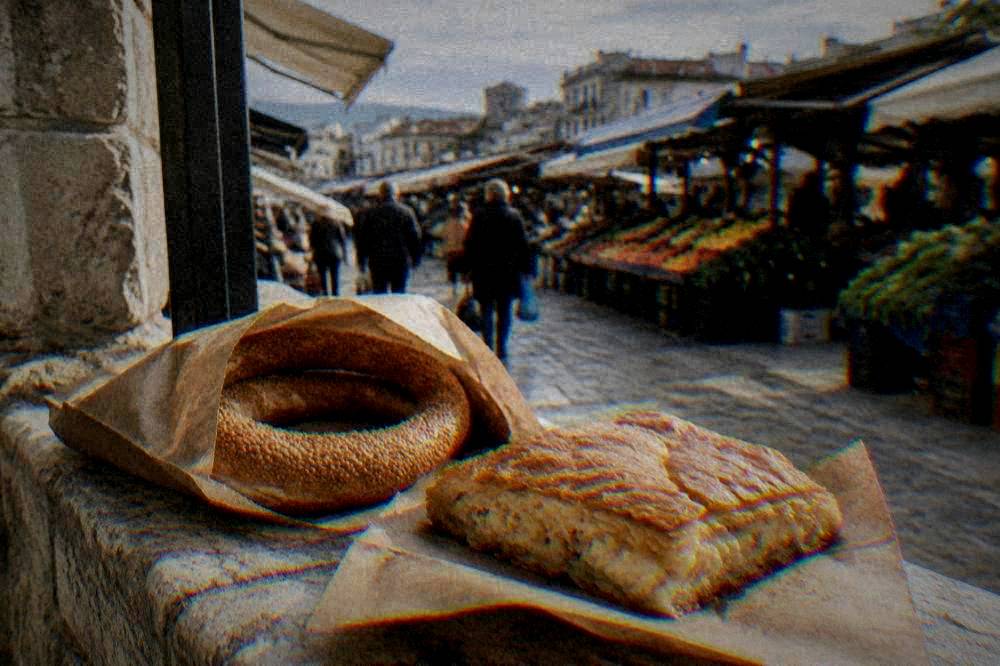
Modiano Market: The Restored Covered Hall
Modiano Market is Thessaloniki's restored covered food hall, steps from Aristotelous Square in the centre of Greece's second city. This guide covers what it is, how to reach it on the metro, and what to combine it with.
Short answer
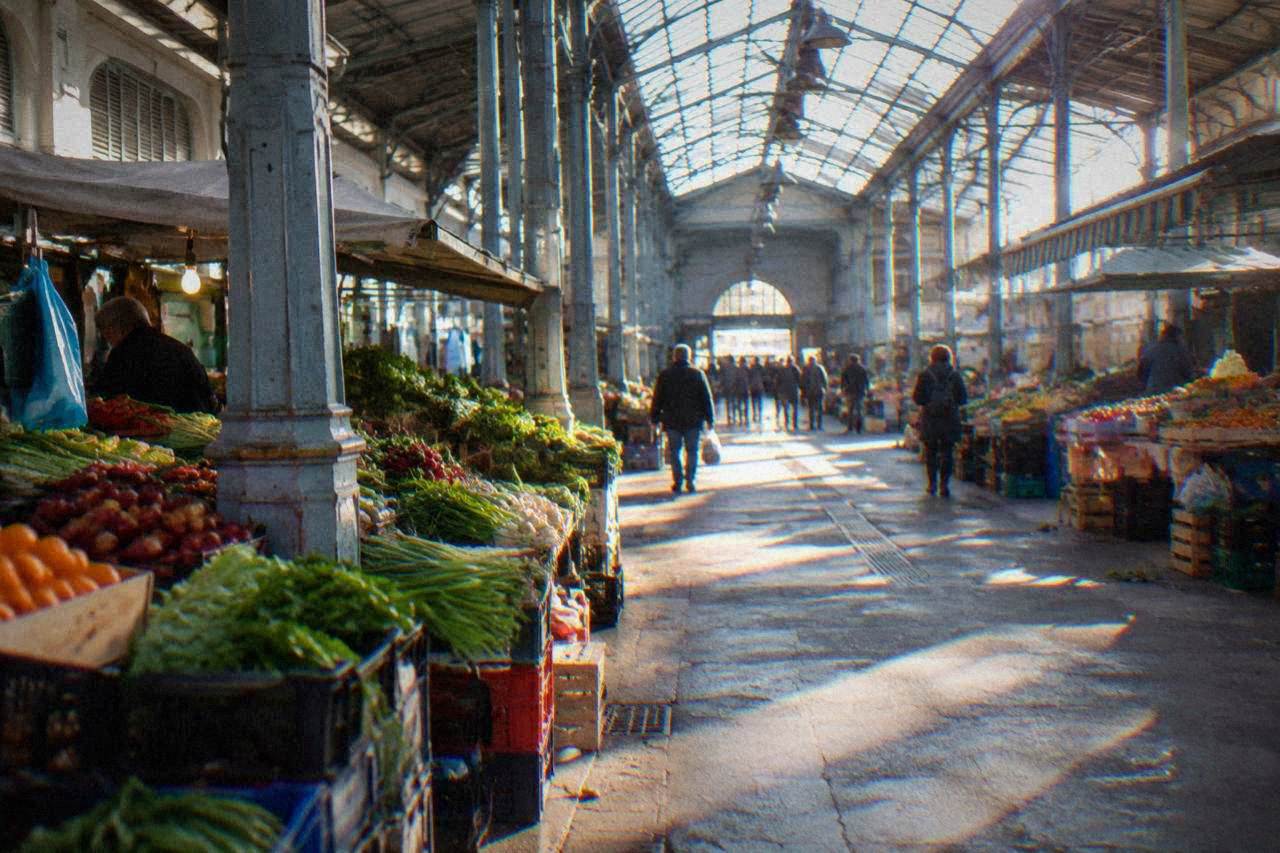
Modiano Market is a restored covered market hall in central Thessaloniki, a short walk from Aristotelous Square. It sits inside the city's historic market district alongside Kapani Market, and it is best combined with a food tour or a walking circuit of the surrounding Roman and Byzantine monuments.
Modiano Market is the restored covered market hall of Thessaloniki, the second city of Greece, standing in the dense commercial core between Aristotelous Square and the old business streets that run inland from the Thermaic Gulf waterfront. It is one of two named central markets in the city, the other being Kapani Market, and together they form the market district that anchors the food identity of a city whose municipal gastronomy site is part of the UNESCO Creative Cities Network. This page explains what the hall is, how the Thessaloniki Metro and the surrounding street grid deliver you to it, what sits within walking distance, and how a guided food tour turns a market browse into a structured tasting route through the city centre.
What Is Modiano Market In Thessaloniki?
Modiano Market is a covered food market hall in the centre of Thessaloniki, in Central Macedonia, northern Greece, and it is one of the two named markets, with Kapani Market, that make up the city's historic central market district. The hall has undergone a full restoration, and its stalls sit under one roof a short walk from Aristotelous Square, the seafront promenade and the Roman monuments of the city core.
Thessaloniki is a coastal city on the Thermaic Gulf, and its commercial heart has always sat within a few blocks of the water. The market district is the engine room of that commercial heart. Fish, meat, cheese, olives, spices, fruit and vegetables move through these blocks daily and supply both household kitchens and the eateries of the wider centre. Modiano Market, as a covered hall, is the piece of that district where the trading happens under a restored roof rather than across open-air street stalls.
The name matters for orientation. When locals or listings refer to the central markets of Thessaloniki, they mean this pair: Modiano Market, the covered hall, and Kapani Market, the neighbouring market that spreads across the surrounding streets. Visitors staying anywhere in the city centre will pass through or beside this district repeatedly, because it lies between the main square and the streets heading east toward the Arch of Galerius and the Rotunda.
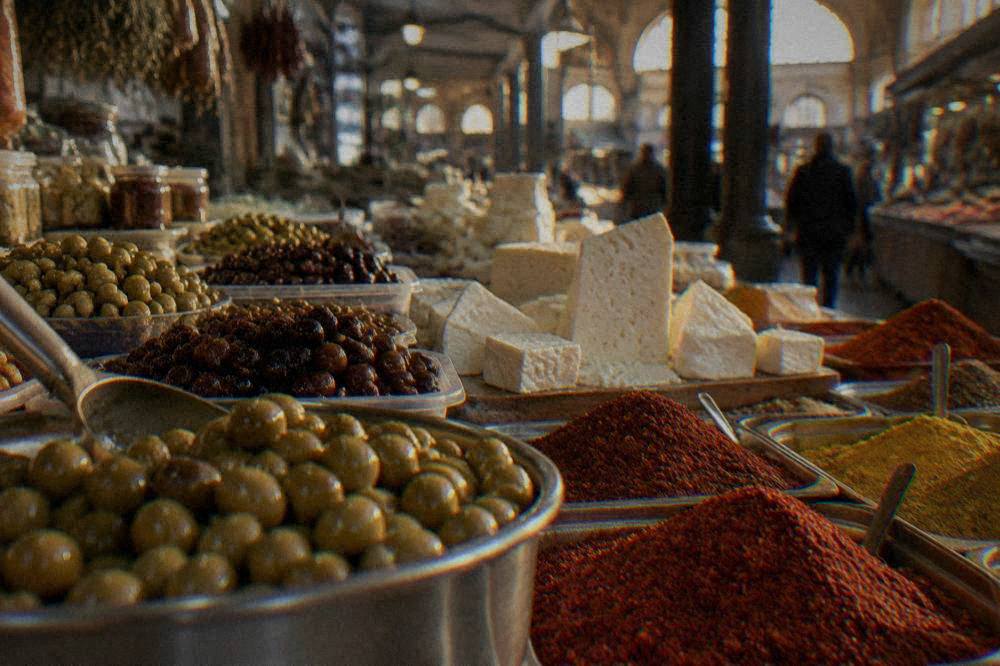
The hall's restoration is the reason it stands out on a walk of the district. A covered market of this kind, rebuilt and re-opened as a food hall, gives the market district a centrepiece: a single address where a visitor can see the produce of northern Greece, from Thermaic Gulf fish to Macedonian cheese and mountain herbs, arranged under one roof. What any individual stall stocks, and at what price, changes with the season and the day, so treat the hall as a place to browse rather than a place with a fixed menu of sights.
For context on how the city itself frames its food culture: Thessaloniki operates a dedicated municipal gastronomy site that references UNESCO and the Creative Cities Network. That is the city's own claim to a food identity, and the central markets are the physical proof of it.
Where Is Modiano Market And How Do You Get There?
Modiano Market sits in the commercial core of Thessaloniki, a few minutes on foot from Aristotelous Square, and the whole district is walkable from anywhere in the city centre. The Thessaloniki Metro is open, with Line 1 running since November 2024 and the Kalamaria extension since 27 August 2026, and a basic ticket costs 0.60 euro, per the metro's own ticket page.
The geography is simple. Aristotelous Square is the recognised centre of the city, the open plaza that runs down to the seafront, and the market district lies just inland and east of it. A visitor standing in the square walks into the commercial blocks and is among the markets within minutes. From the White Tower on the eastern end of the promenade, the walk is longer but flat, along the seafront and then inland.
The metro makes the district reachable from well outside the centre. Line 1 runs from the New Railway Station to Nea Elvetia, and the Kalamaria extension, inaugurated on 27 August 2026, added five more stations out to Mikra. Hours are 05:15 to 00:30 Sunday to Thursday and 05:15 to 02:00 Friday and Saturday, per the Thessaloniki Metro's own site. Fares, per the metro's ticket page: a basic single 0.60 euro, reduced 0.30 euro, a daily ticket 2.50 euro, a 10-plus-1 block of basic tickets 5.80 euro, and a 30-day pass 16 euro.
| Ticket | Price | Notes |
|---|---|---|
| Basic single | 0.60 euro | One journey, reduced 0.30 euro |
| Daily ticket | 2.50 euro | 24 hours, unlimited metro use |
| 10+1 basic tickets | 5.80 euro | Carnet of eleven journeys |
| 30-day pass | 16 euro | Monthly pass |
For a visitor arriving by air: Thessaloniki Airport "Makedonia", IATA SKG, is about 16 km and roughly 20 minutes by road from Aristotelous Square. The airport bus lines, listed on the OASTH network page, include the X1 from the KTEL station, the X2 from Nea Elvetia metro station and the X3 from Mikra metro station, plus a night line. A reported airport bus fare is about 2 euro and a daytime taxi to the centre about 25 euro, both figures reported by secondary sources, so confirm at the airport before relying on them.
The market district also rewards plain walking. Thessaloniki's centre is compact, and the stretch from the seafront through the markets to the Roman monuments is one continuous, flat walk. Anyone planning a wider circuit can start from things to do in Thessaloniki and work inward, but for the market district itself the rule is: get to Aristotelous Square, walk inland, and you are there.
What Can You Find Inside Modiano Market?
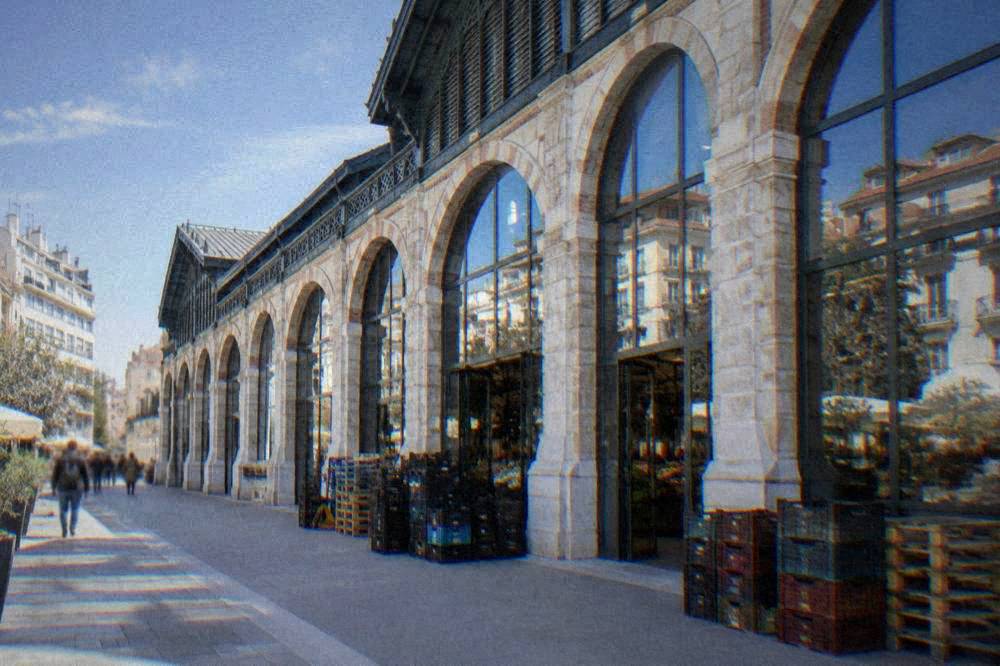
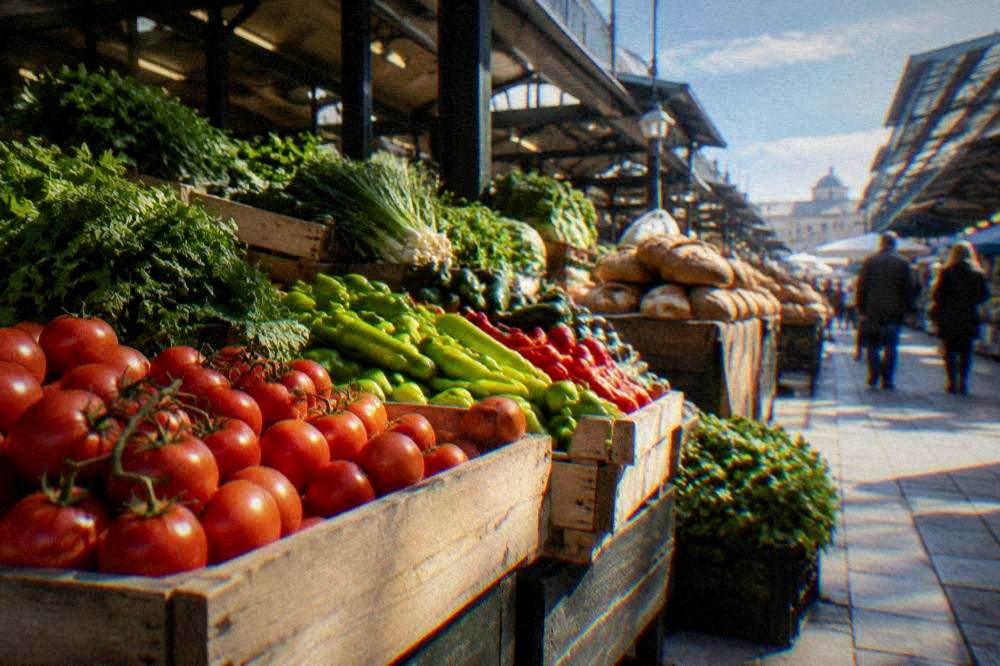
Inside Modiano Market you find the covered stalls of a working food hall: fish, meat, cheese, olives, spices, fruit and vegetables, the produce that supplies the kitchens of central Thessaloniki. The hall is a restored building, and its stalls trade under one roof, which distinguishes it from the open-air street trading of the neighbouring Kapani Market district.
What a covered market hall offers a visitor is density. Instead of hunting across the city for its food culture, you stand in one room with the evidence around you: the fish of the Thermaic Gulf region, the cheeses and cured meats of the Macedonian interior, the herbs and dried goods that move through northern Greece. The stalls are businesses, not museum exhibits, and they change stock with the season and the day of the week.
The practical advice is the standard one for any Mediterranean market: go in the morning, carry cash as well as a card, and confirm prices at the stall before buying. Eating in or around the market is a separate question from shopping in it, and for that, a guided tour is the most reliable structure.
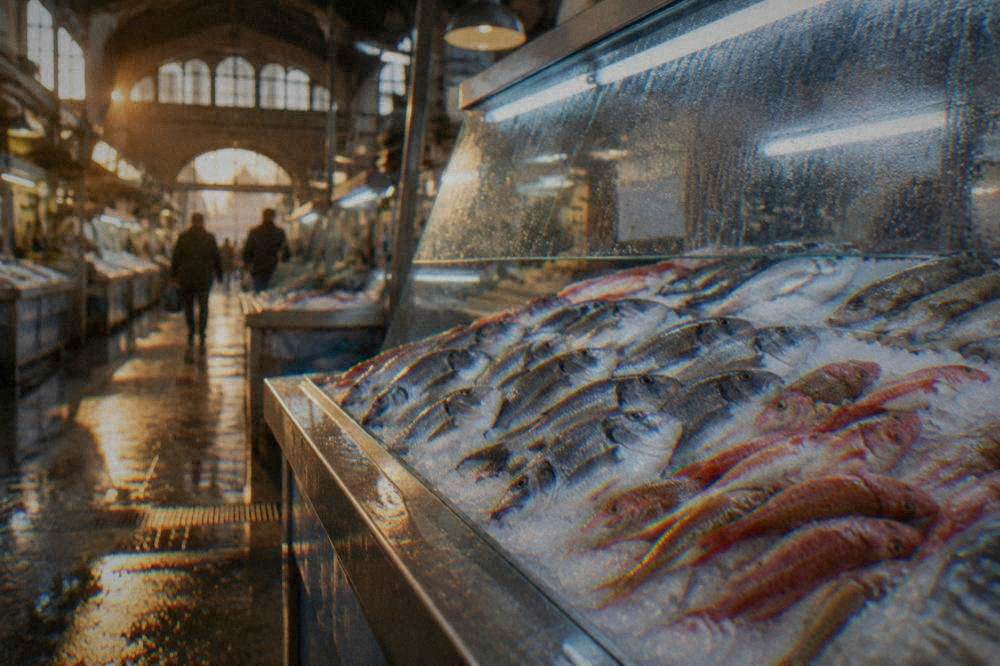
A market-focused food tour is the natural companion to a visit, because a guide who trades in the district regularly knows which stalls reward attention on a given morning. The related tour on this page, an open-market food tour with tastings, is built exactly around this district and the city's food culture. The open market food tour pairs the market browse with tastings, and you can Check availability on the operator's live listing.
Modiano Market Or Kapani Market: Which Should You Visit?
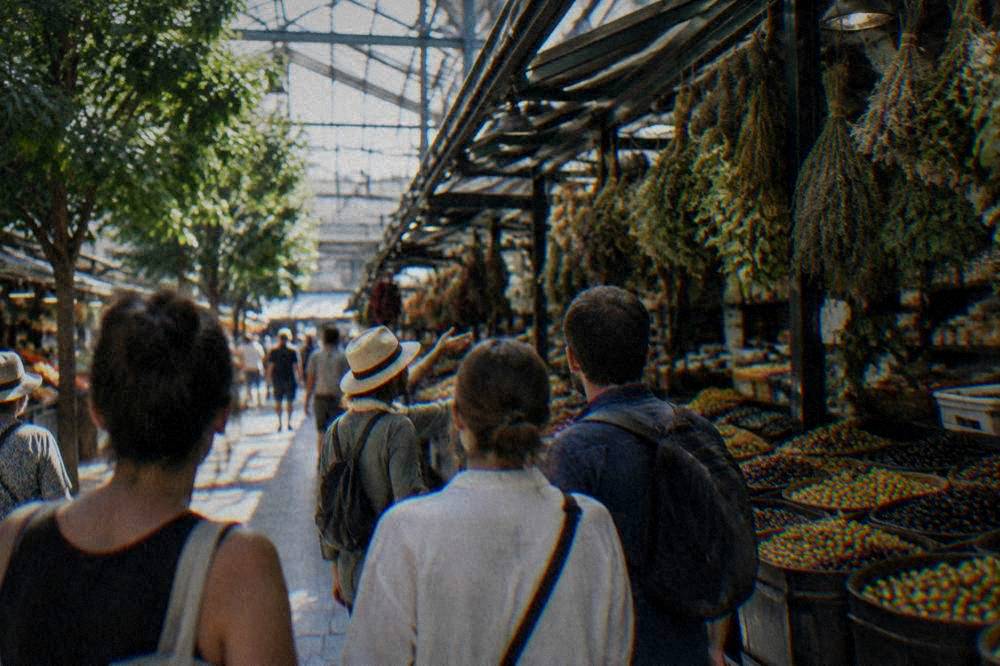
Choose Modiano Market for a covered, restored hall where the trading happens under one roof, and choose Kapani Market for the open-air street market spread across the surrounding blocks. In practice you do not choose at all, because the two sit beside each other in the same central Thessaloniki district and one walk covers both.
The distinction is architectural and atmospheric rather than geographic. Modiano Market is the hall: a roofed, restored space, orderly, with stalls in rows. Kapani Market is the street-level sprawl around it: stalls, shops and traders across a web of central streets. A visitor who walks into the district from Aristotelous Square will cross from one into the other without a clear border, and that is the point: the district works as one continuous market experience.
| Modiano Market | Kapani Market | |
|---|---|---|
| Form | Covered, restored market hall | Open-air street market across surrounding blocks |
| Setting | Under one roof | Streets and sidewalks of the market district |
| Best for | A structured browse of the produce of northern Greece | The full noise and spread of a working street market |
| Location | Central Thessaloniki, minutes from Aristotelous Square | Immediately alongside, same district |
Neither market has published hours in the material behind this site, so plan a morning visit and confirm locally. The working rule for Greek central markets generally, and for this district specifically, is that trading concentrates early: stalls are fullest in the morning and wind down through the afternoon. Treat that as a planning heuristic, not a schedule, and check with your hotel or a guide on the day.
What Else Sits Within Walking Distance Of Modiano Market?
Within a short walk of Modiano Market you reach Aristotelous Square, the seafront promenade of the Nea Paralia, the Roman Forum, the Bey Hamam bathhouse, the Arch of Galerius and the Rotunda, plus state museums including the Archaeological Museum and the Museum of Byzantine Culture by metro or a longer walk. The market district is the hinge between the waterfront and the Roman core.
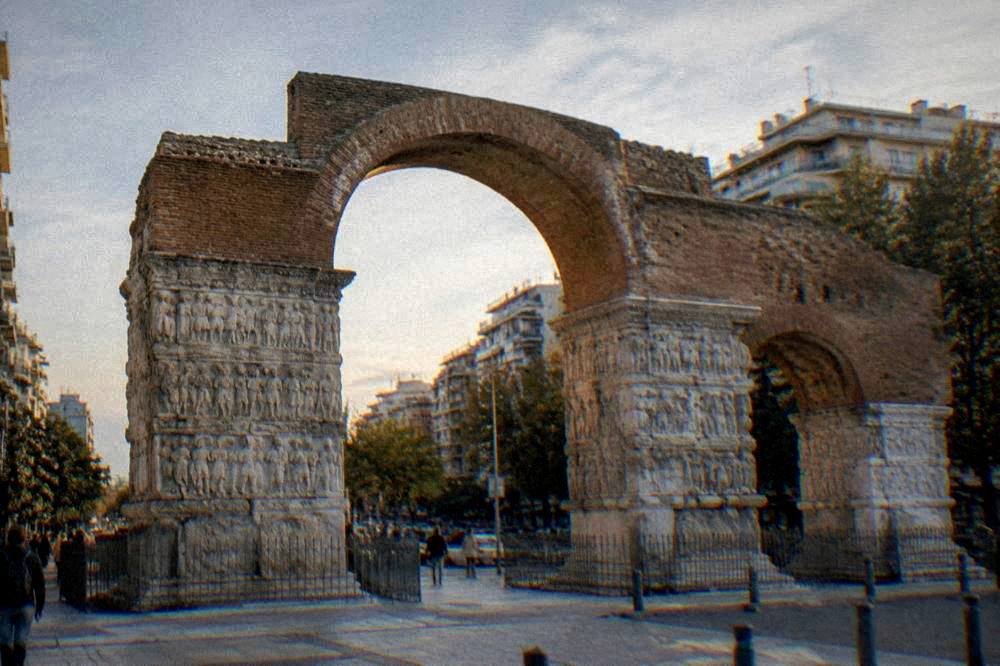
This density is the reason the market district earns a place on a first visit. The Roman and Byzantine monuments that put Thessaloniki on the UNESCO list in 1988, fifteen Paleochristian and Byzantine monuments in total, cluster in and around the same grid of streets. The Roman Forum sits in the historic core of the city. The Arch of Galerius stands on Egnatia as an open-air monument, free to view, and the Rotunda rises just beyond it. The Bey Hamam, the Ottoman bathhouse, is another named monument of the same central stretch.
| Sight | Type | Relation to the market district |
|---|---|---|
| Aristotelous Square | Central plaza | The recognised centre, minutes on foot to the west |
| Roman Forum | Roman-period site | In the historic core, short walk away |
| Bey Hamam | Ottoman bathhouse monument | Central, within the same grid of streets |
| Arch of Galerius | Roman triumphal arch, open-air | On Egnatia, free to view, walkable east |
| Rotunda | Roman monument | Just beyond the Arch of Galerius |
| Nea Paralia | Seafront promenade | Runs along the Thermaic Gulf waterfront |
| Jewish Museum | Museum | Central, in the historic commercial district |
Prices for the state museums, from the museums' own visiting pages: the Archaeological Museum is 10 euro full and 5 euro reduced, open 09:00 to 17:00 daily from 1 April to 31 October, and closed Tuesdays from 1 November to 31 March. The Museum of Byzantine Culture is 10 euro and 5 euro, daily 08:00 to 20:00 in summer and Monday plus Wednesday to Sunday 08:30 to 15:30 in winter. The White Tower, out on the promenade, is 8 euro full and 4 euro reduced, prices in force since 1 April 2026. State museums admit visitors free on 6 March, 18 April, 18 May, the last weekend of September and 28 October.
| Museum | Summer hours | Winter hours | Admission |
|---|---|---|---|
| Archaeological Museum | 09:00-17:00 daily | 09:00-17:00, closed Tuesday | 10 euro full, 5 euro reduced |
| Museum of Byzantine Culture | Daily 08:00-20:00 | Mon, Wed-Sun 08:30-15:30, Tuesday closed | 10 euro full, 5 euro reduced |
| White Tower | Daily 08:00-21:00 | Daily 08:30-15:30 | 8 euro full, 4 euro reduced |
A morning in the market district flows naturally into an afternoon among these monuments, and the whole circuit is flat. For visitors who want the same ground covered with a local's framing rather than a map, a private walking tour is the product built for it. You can check availability on the operator's listing.
When Is The Best Time Of Year To Visit Modiano Market?
The market hall trades year round, and the best time to plan the visit around is shoulder season, spring and autumn, when the HNMS Thessaloniki Mikra station record for 1959 to 2010 shows mean highs of 19.1 C in April and 21.2 C in October against 31.7 C in July, with the lowest monthly rainfall of the year, 19.3 mm, in August and the highest, 55.1 mm, in December.
The climate record matters here because a market visit is a walking visit: you reach the district on foot, you browse partly outdoors, and you continue on to the monuments around it. Summer heat in Thessaloniki is real, with mean highs above 31 C in July and August, and mornings are the workable window in those months. Winter is milder than northern Europe but wetter, with December and November the two wetter months in the station record.
| Month | Mean high C | Mean low C | Rain mm |
|---|---|---|---|
| Jan | 9.3 | 1.5 | 37.7 |
| Feb | 11.0 | 2.3 | 35.0 |
| Mar | 14.3 | 4.7 | 37.9 |
| Apr | 19.1 | 7.9 | 36.1 |
| May | 24.6 | 12.6 | 44.2 |
| Jun | 29.4 | 17.0 | 29.8 |
| Jul | 31.7 | 19.3 | 23.8 |
| Aug | 31.4 | 19.1 | 19.3 |
| Sep | 27.1 | 15.4 | 29.8 |
| Oct | 21.2 | 11.3 | 43.0 |
| Nov | 15.5 | 7.1 | 52.8 |
| Dec | 10.9 | 3.2 | 55.1 |
All figures are from the HNMS Thessaloniki Mikra station, 1959 to 2010, a weather-station record of long-run averages, not a forecast for any given week. Annual rainfall across the year totals 444.5 mm.
Two annual events sit close to the market district and can shape an autumn visit. The Dimitria festival ran 1 to 26 October in its 2026 edition, reported by festival listings, and the Thessaloniki International Film Festival ran 5 to 15 November 2026, its 67th edition. Saint Demetrius day falls on 26 October and Ochi Day on 28 October, both fixed dates in the city's calendar. Confirm current-year dates locally before building a trip around them.
Can You Explore The Market District By Bike In Thessaloniki?
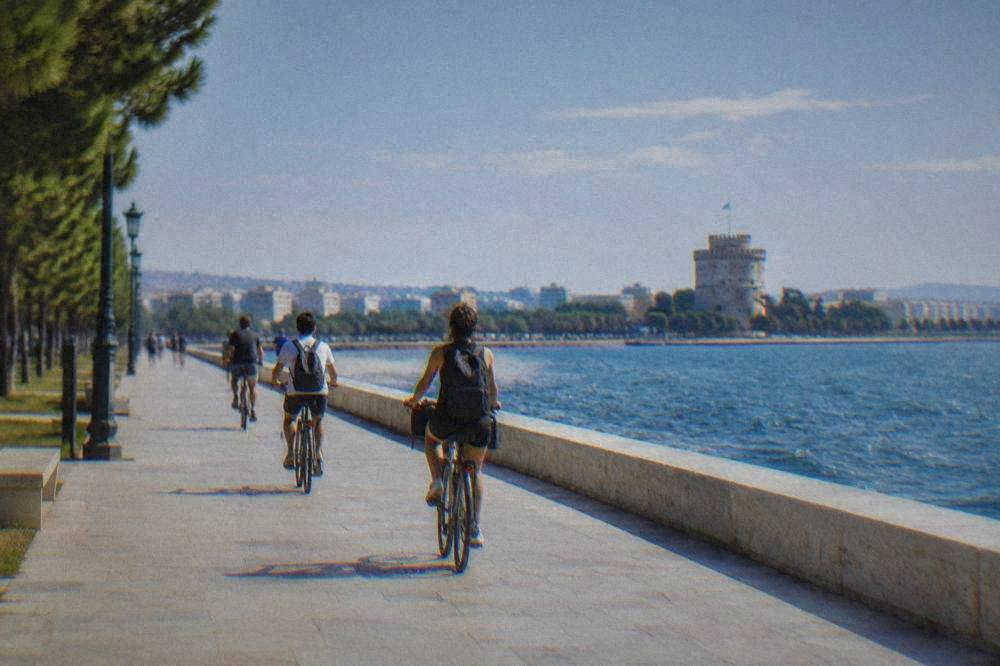
Yes, the flat central grid between the market district, the seafront and the eastern monuments is well suited to a bike or e-bike circuit, and guided e-bike tours of the city's neighbourhoods are a listed, bookable product from Thessaloniki. The promenade of the Nea Paralia and the streets running inland give a continuous, level route past the White Tower, the Rotunda and the market core.
The case for two wheels is the same geography that makes the district walkable: everything sits on one flat plain between the sea and the low rise of Ano Poli to the north. Ano Poli itself, the old upper town under the Byzantine walls, is the one part of the centre where the climbing starts, and it rewards the e-bike format more than the plain walking tour. The Heptapyrgion fortress at the top, a prison until 1989, and the Trigoniou Tower give the widest views over the whole city and the gulf.
A structured way to cover that ground is the e-bike tour through the city's neighbourhoods, one of the trio featured on this page. You can check availability on the operator's live listing.
What Day Trips Work Around A Market Morning In Thessaloniki?
The classic pattern is a market morning in the city and an afternoon or full second day on a day trip, and Thessaloniki's computed road distances make the menu clear: Pella about 43 minutes, Vergina about 62, Dion about 67, Edessa about 82, the Halkidiki beaches of Kassandra about 78 and Sithonia about 96, and Meteora about 154 minutes, which is a full day.
These drive times are computed over open-source routing in free-flow conditions, from Aristotelous Square, so treat them as floor values: add time for traffic, parking and stops. The pattern they support is straightforward. The closest destinations, Pella and Vergina, the royal capital sites of ancient Macedonia, work as a single combined day trip, and organized tours exist that pair them. Dion and Mount Olympus sit about 67 and 86 minutes out respectively. The Halkidiki peninsulas, Kassandra and Sithonia, carry the beaches, since the city waterfront itself is a promenade, not a swimming beach; swimming nearest the city is at Perea, about 28 minutes by road.
| Day trip | Distance by road | Free-flow drive time |
|---|---|---|
| Perea (nearest beach town) | 23.0 km | about 28 min |
| Pella | 45.7 km | about 43 min |
| Vergina | 68.0 km | about 62 min |
| Kassandra (Kallithea) | 86.2 km | about 78 min |
| Dion | 90.1 km | about 67 min |
| Edessa | 90.3 km | about 82 min |
| Sithonia (Nikiti) | 97.2 km | about 96 min |
| Mount Olympus (Prionia) | 106.9 km | about 86 min |
| Meteora (Kalambaka) | 227.5 km | about 154 min |
Meteora deserves its own warning line: Kalambaka is about 228 km by road, and a Meteora trip is a full day, not a half day, despite what compressed itineraries imply. The monasteries each charge entry and each closes one weekday, per monastery-listing sources, so confirm the day's open houses before committing.
The market morning and the day trip are not in competition. A visitor who shops or tours the market on day one, walks the Roman and Byzantine core on day two, and heads to Vergina or Halkidiki on day three has used the city exactly as it is built to be used: a compact, food-centred base with a hinterland of ancient sites, mountains and beaches.
Common Questions About Modiano Market In Thessaloniki
What is Modiano Market?
Modiano Market is the restored covered food market hall of central Thessaloniki, one of the two named central markets alongside the open-air Kapani Market, located minutes from Aristotelous Square in the city's commercial core.
Is Modiano Market the same as Kapani Market?
No. Modiano Market is the covered, restored hall, while Kapani Market is the open-air street market spread across the surrounding blocks. The two sit beside each other in the same district and one walk covers both.
How do I get to Modiano Market?
Walk inland a few minutes from Aristotelous Square, or use the Thessaloniki Metro, open since November 2024 with the Kalamaria extension since 27 August 2026, with a basic ticket at 0.60 euro and a daily ticket at 2.50 euro per the metro's ticket page.
When should I visit Modiano Market?
Go in the morning, when market trading concentrates. The hall trades year round; shoulder season, April, May, September and October, pairs the visit with the mildest walking weather in the HNMS Thessaloniki Mikra station record, 1959 to 2010. Confirm opening hours locally.
Can you eat at Modiano Market?
The hall is a working food market, and eating in and around the district is part of its role in the city's food culture. This site prints no stall, shop or restaurant names and no dish prices; a guided market food tour is the structured way to taste the district.
Is a food tour of the market worth it?
A guided tour adds a guide's working knowledge of the stalls and pairs the market with tastings across the city centre. The related tour on this page is an open-market food tour with tastings; price, duration and rating render on the operator's live listing.
A final orientation note: the market district rewards the unhurried approach. Arrive early, browse the covered hall, cross into Kapani Market's streets, then walk west to Aristotelous Square and the sea, or east to the Arch of Galerius and the Rotunda, and you will have covered the essential Thessaloniki in a single flat circuit that this Thessaloniki Travel Guide considers the city at its most vivid.