Museum Of Byzantine Culture: Icons, Mosaics And Tombs
The Museum of Byzantine Culture in Thessaloniki holds the Byzantine story of Greece's second city, from early Christian mosaics to tomb finds, and it sits on a cultural avenue you can reach in minutes by metro.
Short answer
The Museum of Byzantine Culture in Thessaloniki is open daily 08:00 to 20:00 in summer (8 May to 31 October) and 08:30 to 15:30 in winter, closed Tuesdays; tickets cost 10 euro full and 5 euro reduced under the prices in force from 1 April 2026.
Thessaloniki, the second city of Greece, sits on the Thermaic Gulf in Central Macedonia, and no single building explains its Byzantine centuries better than the Museum of Byzantine Culture. The museum's own visiting page lists the hours, the 2026 ticket prices and the seasonal schedule, and this guide reports what that page says, alongside the metro connections and the day trips that make sense once the galleries have done their work. The city around it carries fifteen UNESCO-inscribed Paleochristian and Byzantine monuments, so the museum is both a destination and a key to everything else you will walk past on the seafront and in Ano Poli.
What Is The Museum Of Byzantine Culture In Thessaloniki?
The Museum of Byzantine Culture is Thessaloniki's national museum for the Byzantine and post-Byzantine centuries, holding icons, mosaics, fresco fragments, sculpture and tomb finds from a city that was the second city of the Byzantine Empire for a thousand years. The state runs it, the same museum network that operates the White Tower's exhibition, and its collections cover the early Christian period through to the Ottoman centuries. For anyone whose picture of Greece stops at marble columns and whitewashed islands, this is the building that fills in the millennium between ancient Macedonia and the modern Greek state.
The museum exists because Thessaloniki itself is the exhibit. The city was founded in 315 BC by Cassander and named for his wife Thessalonike, a daughter of Philip II, and it later became the administrative centre of the Roman province of Macedonia. From the early Christian era onward it grew into one of the empire's great Christian cities, and in 1988 UNESCO inscribed fifteen of its Paleochristian and Byzantine monuments on the World Heritage List as a single property. The museum gathers the movable half of that story, the mosaics, coins, ceramics, textiles and burial goods that came out of the ground as the city rebuilt itself across the decades that followed.
Visitors coming from the things to do in Thessaloniki overview will notice that the museum anchors one end of a cultural strip. The Archaeological Museum of Thessaloniki sits close by, covering the ancient Macedonian and Roman centuries, so the two buildings together give you the full arc from Cassander's foundation to the fall of Constantinople. Plan them as a pair if your schedule allows, because the price structure and opening seasons are set out the same way for both.
What Are The Opening Hours And Ticket Prices?
The Museum of Byzantine Culture is open daily 08:00 to 20:00 in summer, defined as 8 May to 31 October, and 08:30 to 15:30 in winter from Monday and Wednesday to Sunday, closed on Tuesdays, with tickets at 10 euro full and 5 euro reduced under the prices in force from 1 April 2026. Those figures come from the museum's own visiting page, which also places it in the same state ticketing system as the Archaeological Museum and the White Tower. Check the museum's own ticket page before you go, because Greek state pricing changed in 2026 and older guides still print superseded figures.
The seasonal switch matters more here than at some museums. Summer hours run to 20:00 daily, which makes an early-evening visit realistic after a day of walking the seafront. Winter compresses the day and closes Tuesday entirely, so a Tuesday arrival between November and March means planning the Archaeological Museum of Thessaloniki instead, which is also closed on Tuesdays in that season. State museums in Thessaloniki keep aligned winter schedules, and the free-admission days below apply across the network.
| Museum | Summer hours | Winter hours | Full ticket | Reduced |
|---|---|---|---|---|
| Museum of Byzantine Culture | 8 May to 31 Oct, daily 08:00 to 20:00 | Mon, Wed to Sun 08:30 to 15:30, closed Tue | 10 EUR | 5 EUR |
| Archaeological Museum | 1 Apr to 31 Oct, daily 09:00 to 17:00 | 09:00 to 17:00, closed Tue | 10 EUR | 5 EUR |
| White Tower | 1 Apr to 31 Oct, daily 08:00 to 21:00 | Daily 08:30 to 15:30 | 8 EUR | 4 EUR |
Free-admission days at Greek state museums are fixed by the national calendar, and the Museum of Byzantine Culture's page lists them. On these days the ticket desks simply do not charge, and queues can be longer for it.
| Date | Occasion |
|---|---|
| 6 March | Melina Mercouri Day |
| 18 April | International Day for Monuments and Sites |
| 18 May | International Museum Day |
| Last weekend of September | European Heritage Days |
| 28 October | Ochi Day, a national holiday |
A combined ticket covering the main state sites in Thessaloniki is reported at about 15 euro full and 8 euro reduced, per the national antiquities portal, but it is not printed on the museum's own pages, so confirm at the desk before buying. If your stay covers several museums, ask whether the combined ticket is on sale that day, and if it is not, the individual 10 euro tickets still apply. Families, students and visitors eligible for reduced admission should bring documentation either way, since the reduced rate is checked at the desk rather than at the gate.
Guided visits change how the collection reads, and the operator listings below cover approaches from a hop-on bus circuit of the sights to full-day trips into ancient Macedonia.
What Will You See Inside The Museum Of Byzantine Culture?
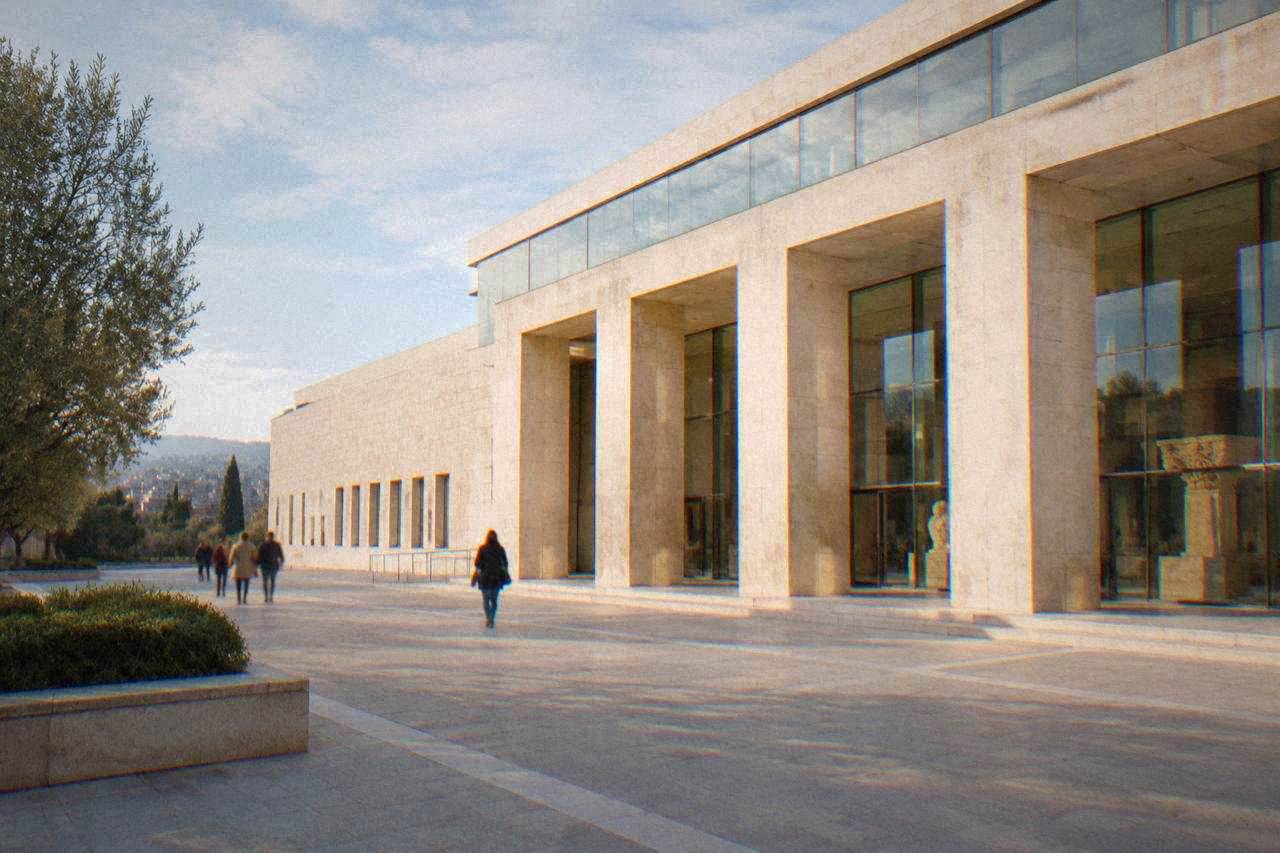
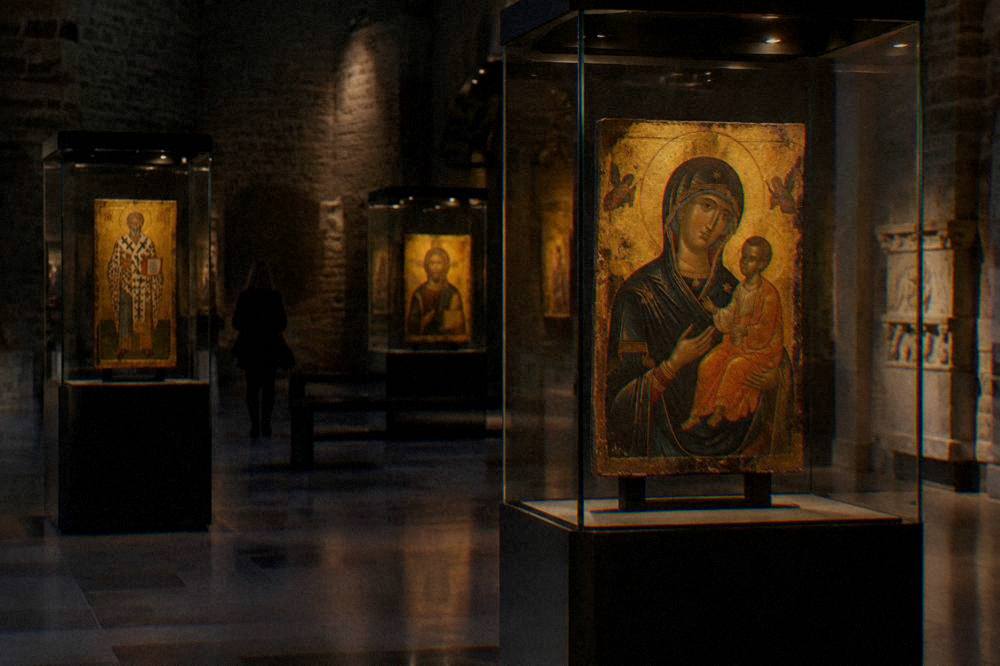
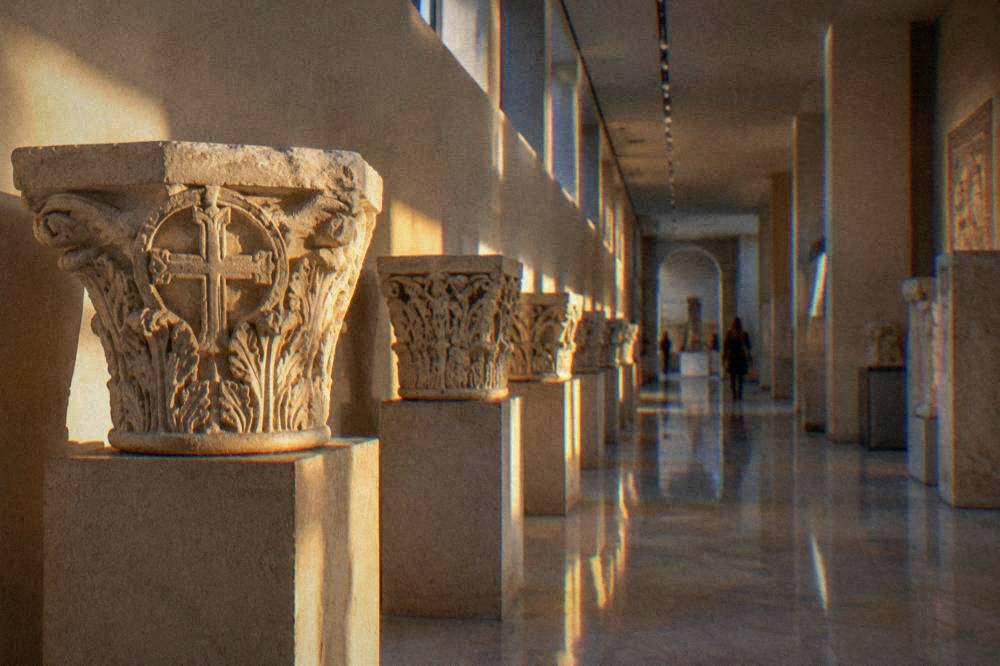
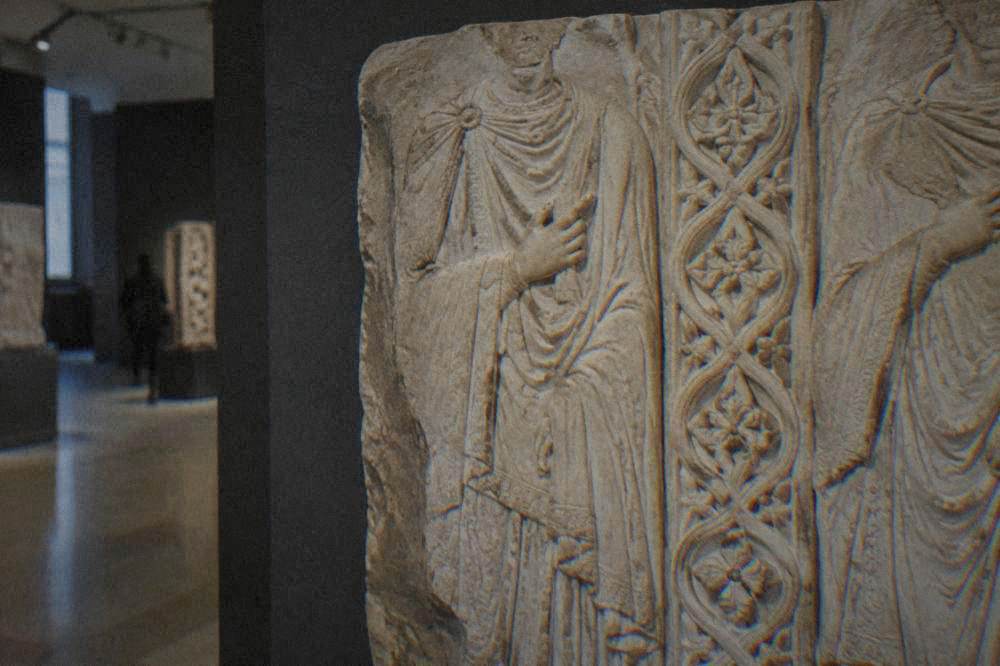
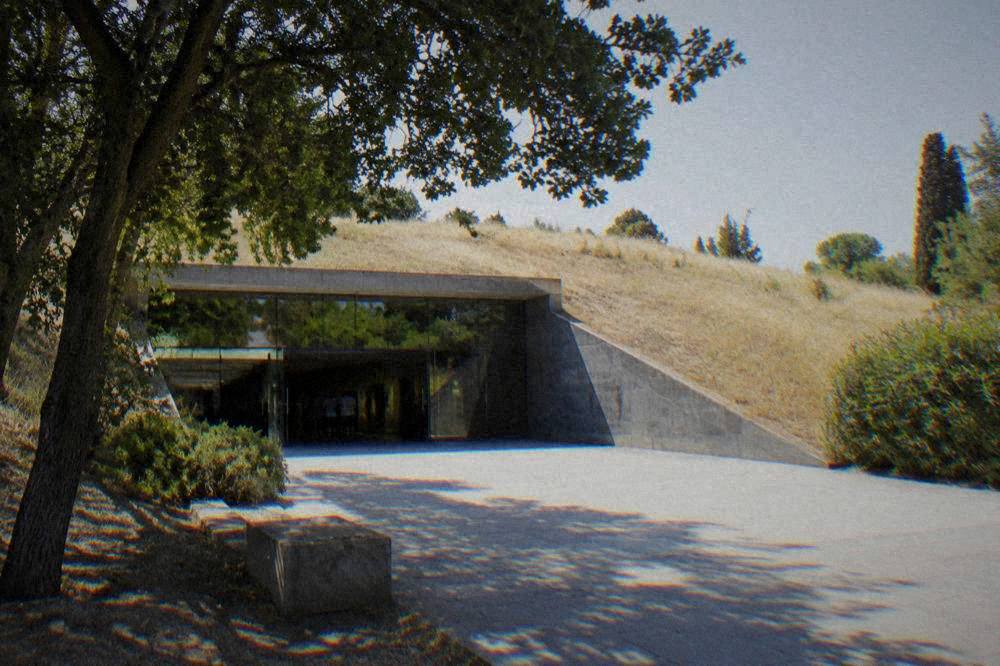
The permanent displays walk chronologically from the early Christian city to the Ottoman centuries: floor mosaics and church sculpture from the early Byzantine period, icons and fresco fragments from the middle Byzantine era, and a burial section where reconstructed tombs and their goods show how Thessalonians buried their dead across a thousand years. The museum labels are bilingual in Greek and English, and the building itself, a low modernist structure of brick and glass, was designed to hold large stone pieces at street level rather than to stack treasures in a grand hall.
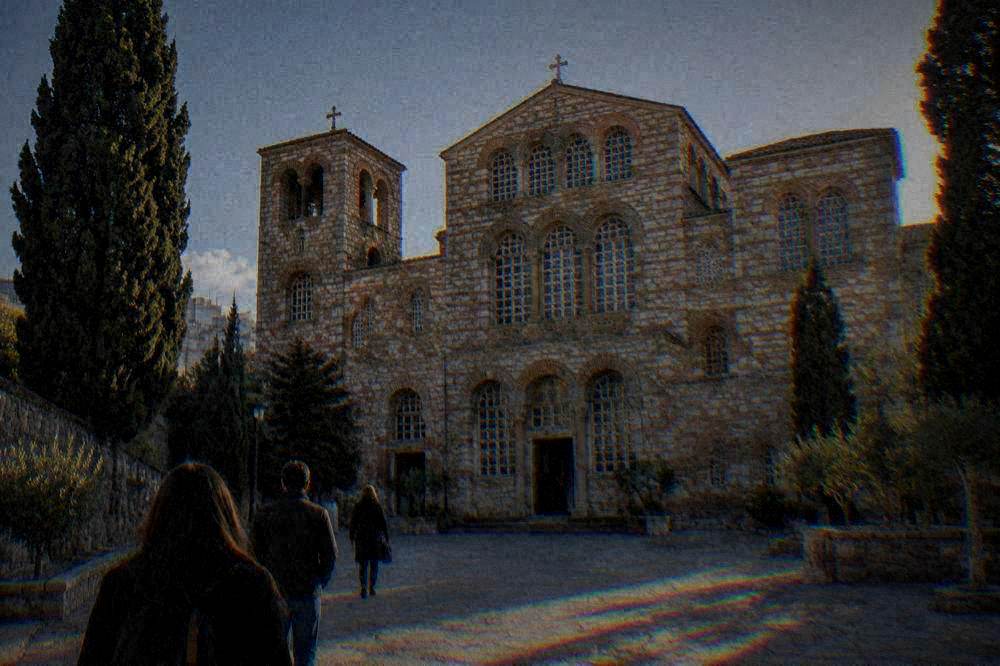
The early Christian galleries carry the strongest connection to the city outside. Thessaloniki's great churches, the Church of Saint Demetrius, Hagia Sophia and the smaller Panagia Acheiropoietos, stand as working churches you can enter free outside service hours, and the museum holds the movable counterpart: capitals, threshold mosaics, marble screens and coins that came out of excavations around those same buildings. Reading the galleries first, then walking the churches, turns a chain of old buildings into a legible sequence.
The tomb displays give the museum its subtitle claim to "tombs" in most visitor descriptions. Reconstructed burial chambers, painted inscriptions, jewellery and everyday objects show burial practice changing from late antiquity into the Byzantine centuries. The icon collection carries the story past 1430, the year of the Ottoman conquest, into the post-Byzantine world where Thessaloniki remained a mixed city of Christians, Muslims and a Jewish community that grew after 1492. The museum's temporary exhibitions rotate; reported listings say a show of repatriated ecclesiastical artifacts runs until 5 November 2026, so confirm the current programme on the museum's own site before planning around it.
For depth on the churches themselves, the site's guide to the Byzantine churches of Thessaloniki covers the UNESCO monuments one by one, and the White Tower exhibition picks up the city's story where this museum's permanent trail ends. The Trigoniou Tower on the Ano Poli walls adds the fortress perspective from the same era, and the whole set can be sequenced into a single long day of walking if the weather holds.
How Does The Museum Connect To Thessaloniki's UNESCO Monuments?
The UNESCO property "Paleochristian and Byzantine Monuments of Thessaloniki", inscribed in 1988, covers fifteen monuments across the city, and the Museum of Byzantine Culture holds the excavated material from that same world: the mosaics, sculpture, coins and burial goods that could not stay in the churches and walls themselves. The city and the museum therefore work as one visit split in two. The walls, the churches and the Rotunda are the architecture; the museum is the content.
You can walk the sequence in an afternoon. From the museum district, the Roman forum, the Arch of Galerius and the Rotunda line the historic axis along Egnatia street, and the Arch of Galerius is an open-air street monument, free to view at any hour. Uphill from there, Ano Poli holds the Heptapyrgion fortress, which served as a prison from the late 19th century until 1989, and the walls of which about 4 km remain visible from an original circuit of roughly 8 km. Working churches on the route are free to enter and open outside services; no fixed church opening hours are published, so time church interiors flexibly around the museum's reliable schedule.
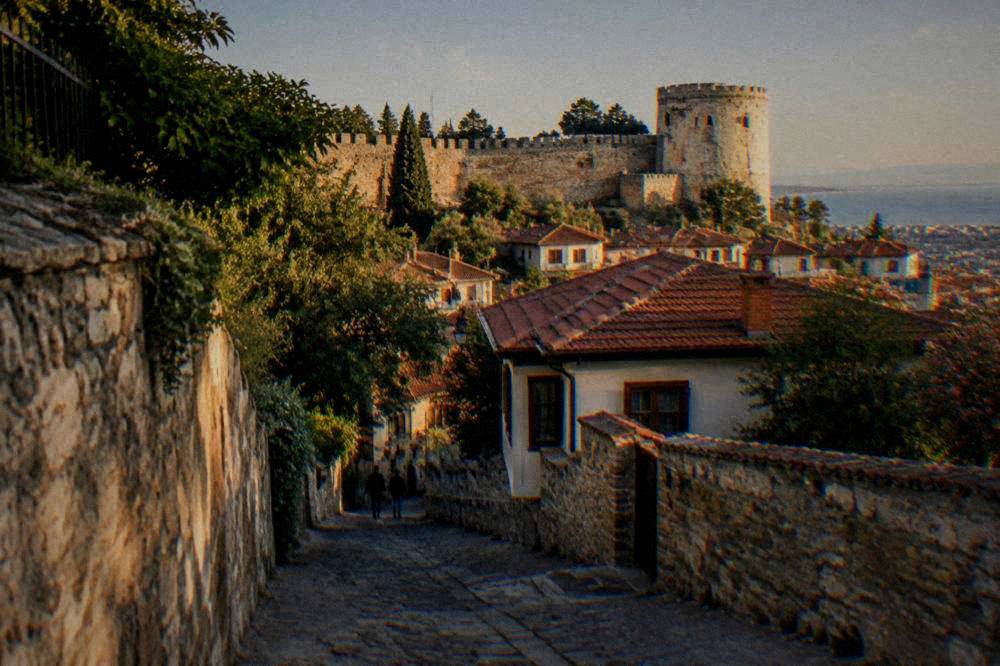
The Heptapyrgion's prison past is the kind of fact the museum's later galleries help explain: the fortress passed from Byzantine to Ottoman hands in 1430 and stayed a working prison until 1989, which is why its interior survives differently from the churches. No ticket price or hours are published for the fortress, so check the current arrangements on the official archaeology portal before you climb up. The same caution applies to the Galerius palace remains: the open-air sections are viewable from the street, but ticketed interior areas follow the state sites' seasonal calendar, and their current prices are best confirmed on site.
How Long Does A Visit Take And How Do You Get There By Metro?
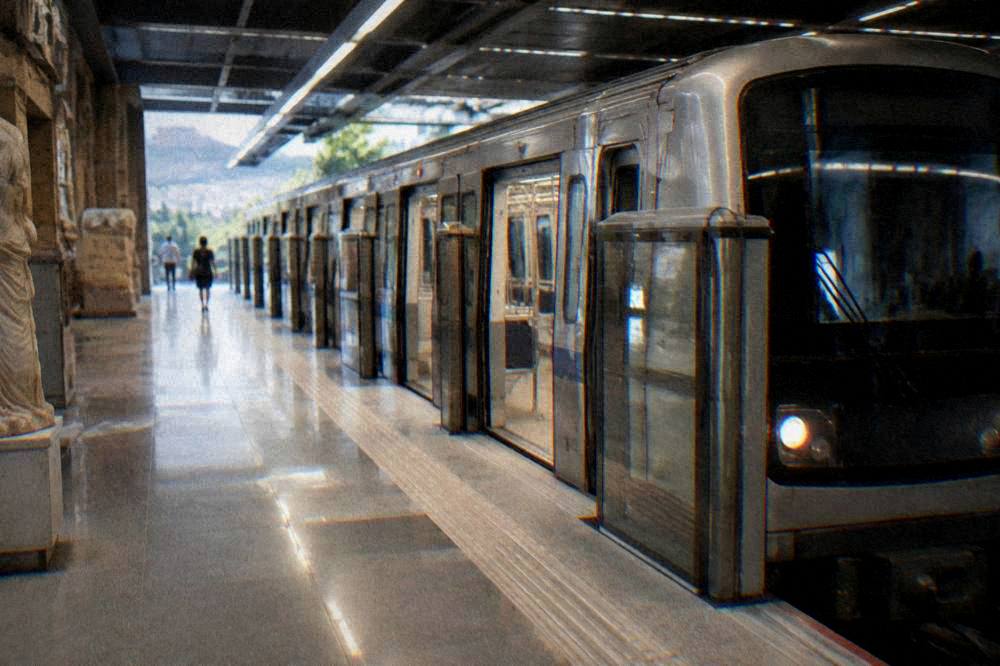
A full visit to the Museum of Byzantine Culture takes about two to three hours at reading pace, and the museum sits in the central cultural district within walking distance of the seafront promenade, reachable on Thessaloniki's metro Line 1 with a basic ticket of 0.60 euro or a 24-hour ticket of 2.50 euro. The metro runs 05:15 to 00:30 from Sunday to Thursday and 05:15 to 02:00 on Friday and Saturday, per the operator's own site, so evening visits in summer line up well with the 20:00 closing time.
The metro changed how the city is visited. Line 1 opened in November 2024 from the New Railway Station to Nea Elvetia, and the Kalamaria extension, inaugurated 27 August 2026, added five stations reaching Mikra. The government's press release for the extension gives a ride of about 15 minutes from Mikra to the centre and reports roughly 63,000 passengers a day on the line. For museum-goers the practical point is simpler: the museum district sits within walking distance of central stops, and the daily ticket covers unlimited metro rides for 24 hours.
| Metro fact | Detail (operator's site) |
|---|---|
| Basic ticket | 0.60 EUR, one journey |
| Reduced ticket | 0.30 EUR |
| 24-hour ticket | 2.50 EUR, unlimited metro |
| Hours Sun to Thu | 05:15 to 00:30 |
| Hours Fri and Sat | 05:15 to 02:00 |
| Line 1 opened | November 2024 |
| Kalamaria extension | 27 August 2026, 5 stations |
After the museum, the walk to Aristotelous Square and the seafront takes you past the cultural strip at an easy pace, and the market halls of the Modiano Market and Kapani Market sit a few blocks inland for a food stop. The Thessaloniki Travel Guide covers the seafront promenade in detail; the key correction worth repeating is that the Nea Paralia is a promenade rather than a beach, and swimming happens at Perea, about 28 minutes away by road.
Which Byzantine And Ancient Day Trips Pair With The Museum?
The strongest day-trip pairings from Thessaloniki are Vergina, where the royal tombs of Aigai lie about 62 minutes away by road, and Pella, the birthplace-era capital about 43 minutes away, both in the ancient Macedonian hinterland; Meteora is also reachable as a full-day trip at about 228 km and roughly two and a half hours each way. The museum explains the Byzantine centuries, and these trips supply the Macedonian dynasty that preceded them, so the two halves of the region's history slot together naturally. Drive times are computed over free-flow routing from Aristotelous Square, so treat them as lower bounds with traffic and stops.
| Day trip | Distance by road | Free-flow time |
|---|---|---|
| Pella | 45.7 km | about 43 min |
| Vergina (Aigai) | 68.0 km | about 62 min |
| Veria | 72.8 km | about 52 min |
| Dion | 90.1 km | about 67 min |
| Edessa | 90.3 km | about 82 min |
| Meteora (Kalambaka) | 227.5 km | about 154 min |
The Aigai royal tombs at Vergina are the headline. The museum complex there holds the unplundered tombs of the Macedonian royal family, and a guided day trip from Thessaloniki that pairs it with the museum at Pella keeps the logistics simple, with pickup in the city and a fixed itinerary covering both sites in one loop. Details and current availability are on the operator's live listing. Travellers who prefer independent movement can also reach the Vergina area by KTEL intercity bus from the Macedonia station, though the guided option removes the connection risk on a fixed day.
For a lighter commitment, a hop-on hop-off bus circuit links the museum district with the White Tower, the Arch of Galerius and the Ano Poli viewpoints in one ticketed loop, which suits a first day in the city before you commit to any long excursion.
Meteora, at about 228 km, is a full day by any measure, and the monastery plateau belongs to the Byzantine centuries this museum narrates, so it reads differently after a morning among the icons. Each monastery there charges its own entry and closes one weekday, per the reports from the monasteries' own pages, so confirm the day's open houses before you commit to the long drive.
What Should You Know Before You Go?
Take the 2026 prices as your baseline, avoid Tuesdays between November and March, aim for the long summer evening hours if you visit between 8 May and 31 October, and remember that the working churches around the museum are free but keep no published schedule. A visit ordered around those four facts runs smoothly, and everything else, metro fares included, is cheap and well signposted in the central district.
Practical points worth holding onto:
- The euro is the currency, Greece is in the Schengen area, and the emergency number is 112.
- State museums are free on 6 March, 18 April, 18 May, the last weekend of September and 28 October.
- The reported combined state-sites ticket is about 15 euro full and 8 euro reduced; confirm at the desk before you go.
- A climate resilience fee applies to accommodation in Greece, collected by the property, charged per room per night and higher from April to October.
- The nearest full alternatives on a winter Tuesday are the White Tower, which stays open daily, though at winter hours.
- The tourist information centre reported at Aristotelous Square can answer current-hours questions in person; call ahead to confirm it is staffed on the day you need it.
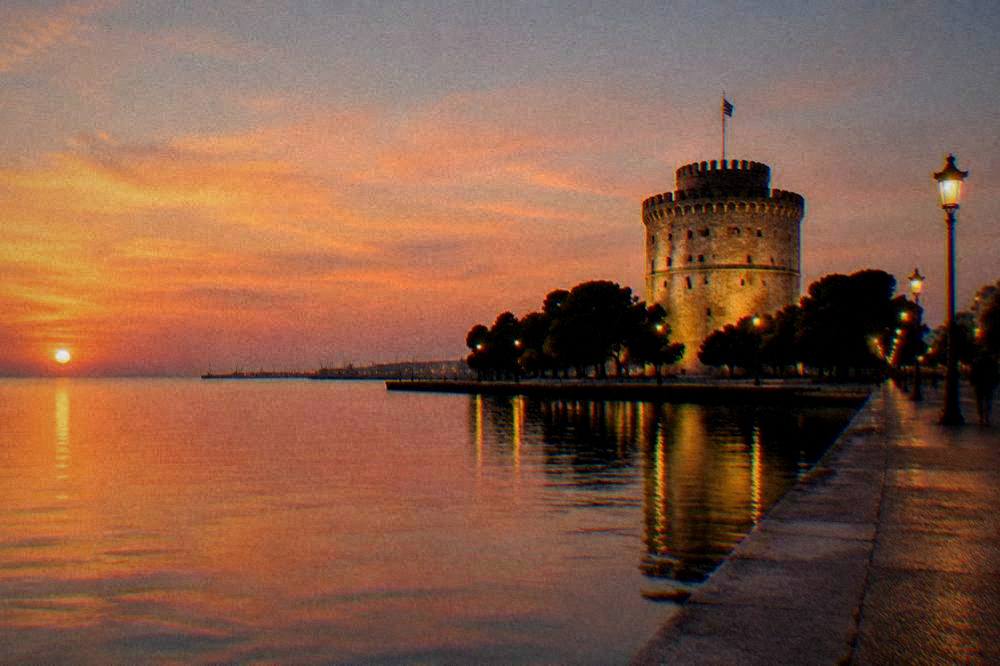
If the museum leaves you wanting the post-Byzantine story, the Jewish Museum and the reported Atatürk birthplace museum cover the communities that shaped the Ottoman and early modern city; confirm their current hours directly, as neither publishes them through the state portal this page reports from. And if one museum day turns into three, the itineraries for one, two or three days in the city sequence all of this, churches, markets, seafront and museums, into walking order.
Common Questions About The Museum Of Byzantine Culture
How much does the Museum of Byzantine Culture cost?
A full ticket costs 10 euro and a reduced ticket 5 euro under the prices in force from 1 April 2026, per the museum's own visiting page.
Is the Museum of Byzantine Culture open on Tuesday?
Only in summer. From 1 November to 31 March the museum is closed on Tuesdays; from 8 May to 31 October it opens daily.
How do I get to the Museum of Byzantine Culture?
The museum sits in the central cultural district of Thessaloniki, within walking distance of the seafront and close to the metro's Line 1 stops; a basic metro ticket costs 0.60 euro per the operator's ticket page.
Is there a combined ticket for Thessaloniki museums?
A combined state-sites ticket is reported at about 15 euro full and 8 euro reduced, but it is not printed on the museums' own pages, so confirm at the ticket desk before buying.
How long should I spend at the Museum of Byzantine Culture?
About two to three hours covers the permanent galleries at reading pace, with extra time for temporary exhibitions; the museum's own site lists the current programme.