Meteora From Thessaloniki: Is The Long Day Worth It?
Meteora sits about 228 km from Thessaloniki, which makes it the longest of the classic day trips from the city and a full day out, not a half day. This page sets out the real distances, the reported monastery entry rules, and the honest case for and against the journey.
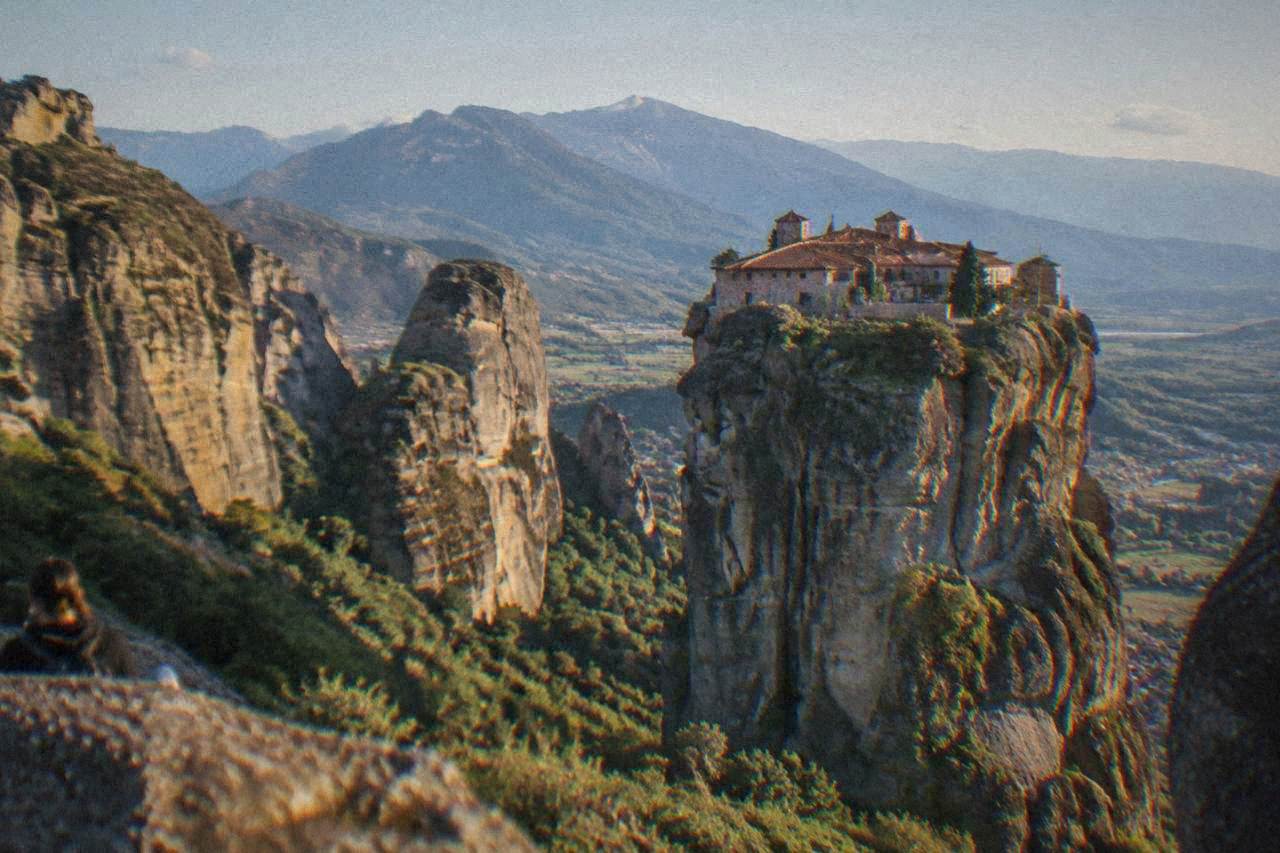
Short answer
Meteora is a full-day trip from Thessaloniki. Kalambaka, the gateway town, is about 228 km and about 154 minutes by road from Aristotelous Square in free-flow conditions, so a same-day visit means either a long self-drive or an organised coach excursion.
Meteora, the cluster of monasteries perched on sandstone rock pinnacles above the town of Kalambaka, is the single longest established day trip from Thessaloniki, the second city of Greece on the Thermaic Gulf in Central Macedonia. The rocks stand far inland, about 228 km by road from Aristotelous Square, and every credible way of visiting them from Thessaloniki consumes a full day. That distance is the whole story of this trip: it rules the schedule, it shapes the choice between driving and a coach, and it decides whether the day is worth it. This page works through the numbers, the monastery entry rules, the ways of getting there, and an honest verdict.
How Far Is Meteora From Thessaloniki And How Long Does The Drive Take?
Meteora is about 228 km from Thessaloniki by road, and the free-flow drive from Aristotelous Square to Kalambaka takes about 154 minutes, roughly two hours and thirty minutes, according to routing computed over OpenStreetMap data with no traffic, no parking and no stops. In real conditions the door-to-door journey runs longer, because the route passes through the Thessaloniki urban network and the national road towards Trikala before the final climb to Kalambaka. The figure is a planning number, not a timetable promise: anyone self-driving should assume closer to three hours each way with a break.
Those numbers are what separate Meteora from every other day trip on the Thessaloniki menu. Compare it with the ancient-Macedonia circuit: Vergina, home of the Museum of the Royal Tombs of Aigai, is about 68 km and 62 minutes from Aristotelous Square, and Pella about 46 km and 43 minutes. Dion, at the foot of Mount Olympus, is about 90 km and 67 minutes. Meteora is roughly three times the driving distance of Vergina, and that ratio never changes however the day is arranged.
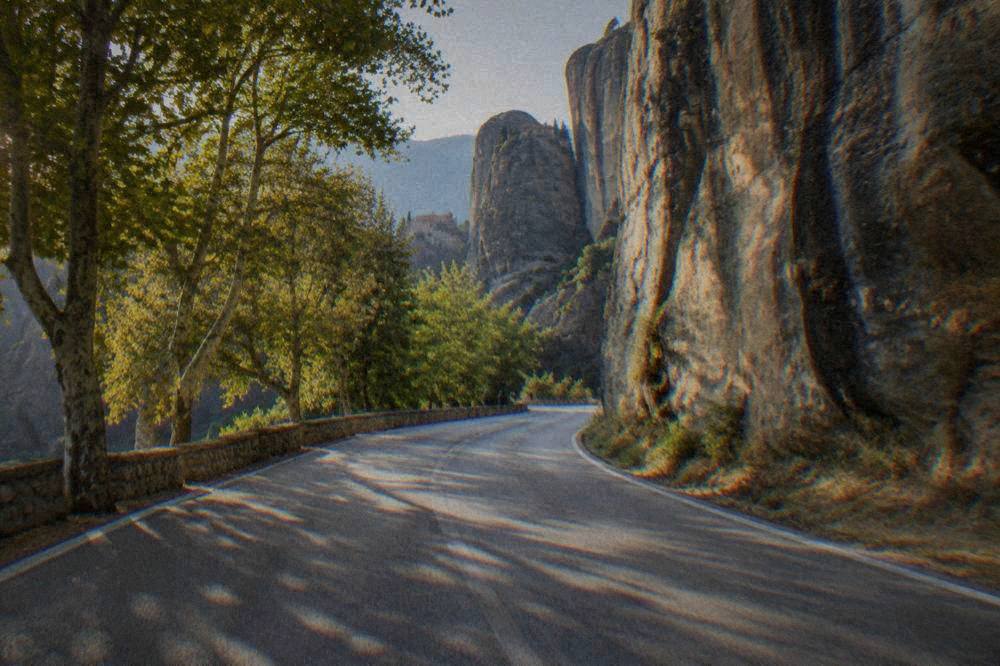
The distance table below puts Meteora in context against the other standard day trips from Thessaloniki. All figures are computed free-flow road distances and times from Aristotelous Square, the city's central reference point, and should be read as minimums.
| Day trip destination | Distance by road | Free-flow drive time |
|---|---|---|
| Pella (Archaeological Museum) | 45.7 km | about 43 minutes |
| Vergina (Royal Tombs of Aigai) | 68.0 km | about 62 minutes |
| Dion (archaeological park) | 90.1 km | about 67 minutes |
| Litochoro (Mount Olympus base) | 90.7 km | about 67 minutes |
| Edessa (waterfalls) | 90.3 km | about 82 minutes |
| Meteora (Kalambaka) | 227.5 km | about 154 minutes |
Read that table one way and Meteora looks punishing. Read it another way and it is still only about two and a half hours each way, which is inside the range day-trippers accept for a site of this kind. The question is not whether the drive is long, it is what the day buys, and that comes later on this page. For a shorter alternative built on the same ancient-Macedonia corridor, see the Vergina day trip guide and the Pella guide.
Can You Do Meteora As A Day Trip From Thessaloniki?
Yes, Meteora works as a day trip from Thessaloniki, but only as a full day: with about 154 minutes of driving each way in free-flow conditions, a same-day visit means at least five hours on the road before any time at the monasteries is counted. Day trips run on two models. The first is an organised coach excursion, which departs Thessaloniki in the morning, drives to Kalambaka, tours the monasteries as a group and returns in the evening. The second is self-drive, which gives full control of the itinerary but puts the whole 228 km each way in the visitor's hands.
The organised option is the one most Thessaloniki visitors choose, and it is easy to see why. The coach absorbs the navigation, the fuel, the tolls and the parking at Kalambaka, and a driver-guide arrangement means the monastery sequence is planned before departure. The site's featured option is the Full-Day Bus Trip to Meteora, a coach excursion built exactly around this corridor; Check availability if that model suits. What the coach trades away is flexibility: the monastery list, the stops and the return time are fixed.
Self-drive suits travellers who want to set their own pace, linger at a viewpoint, or pair Meteora with a stop en route. The trade is fatigue. Two long driving legs plus a monastic site that involves stairs, paths and sun is a demanding combination for one driver, and the return leg finishes after dark for much of the year. Anyone weighing self-drive should also read the Thessaloniki car rental guide for the local hire picture.
There is a third framing worth naming: Meteora from Thessaloniki versus Meteora from Athens. The honest planning answer is that Thessaloniki is the nearer of the two big Greek cities for a day trip by a wide margin, but the useful comparison is not Athens at all: it is Vergina and Pella, which deliver world-class archaeology at a third of the driving distance, and those are covered in their own guides on this site.
What Do The Meteora Monasteries Cost And When Can You Visit?
Entry to the Meteora monasteries is reported at about 5 euro per person per monastery, and each of the six main monasteries closes on one weekday, according to secondary sources, so the exact closing day of each house and the current price should be confirmed before you go. Those two facts, the per-monastery fee and the rotating weekday closures, are the load-bearing planning details, and both sit in the reported tier rather than on an official page this site has fetched, which is why they carry the word "reported" here.
The structure of the site matters more than the price. The six great monasteries of Meteora are separate institutions, each with its own entrance, its own ticket and its own closing day, and there is no combined ticket that covers them all. A day trip therefore means choosing two or three houses rather than attempting all six.
Dress expectations at Greek Orthodox monasteries are conservative, and the exact wording of the Meteora dress code is not restated here. The general Greek Orthodox convention, long trousers for men and covered shoulders and long skirts or dresses for women, is the sensible baseline, and some monasteries lend wraps at the door. Confirm the current requirements before you travel.
A working cost table for one person, using only figures the sources support:
| Item | Planning figure | Status and note |
|---|---|---|
| Monastery entry | about 5 euro per monastery | Reported; confirm the current price before you go |
| Monasteries visited in a day | 2 to 3 is realistic | Editorial planning judgement, given the distance and the stairs |
| Coach day trip from Thessaloniki | price renders from the listing | See the featured trip on this page |
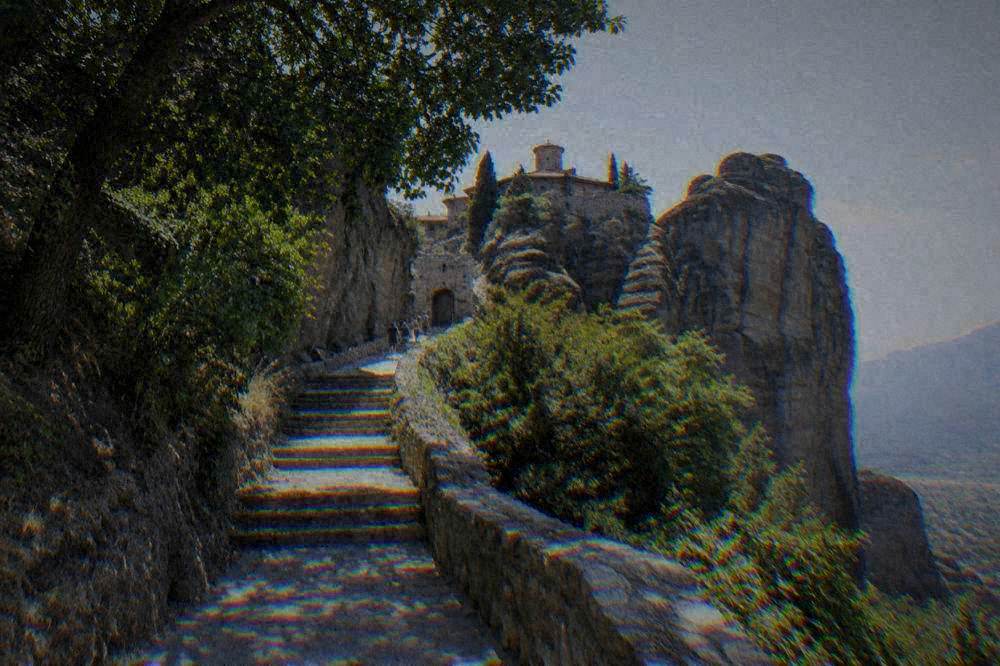
One more practical note: the monasteries sit on top of rocks, and reaching several of them involves significant staircases cut into or built against the stone.
Organised Coach Or Self-Drive: Which Way Suits A Thessaloniki Day Trip To Meteora?
An organised coach suits anyone who wants the 228 km each way handled, wants a monastery sequence planned in advance and does not want to drive back to Thessaloniki after a full day on the rocks, while self-drive suits travellers who want to control the clock, add stops and accept a long day behind the wheel. Neither option shortens the distance: the drive is about 154 minutes each way in free-flow conditions whichever way it is done, and that fact drives the whole decision.
The comparison comes down to what the day is for. A coach day is a single decision made once, in advance, from Thessaloniki: the departure, the route, the monastery selection and the return are all settled, and the day at Meteora itself is the only thing left to experience. Self-drive converts the same day into a rolling set of choices, and for some travellers that control is the point, an extra half hour at a viewpoint, a detour through Kalambaka's back lanes, a stop on the national road. The cost of that control is that the driver ends the day with four to five hours of cumulative wheel time.
| Factor | Organised coach | Self-drive |
|---|---|---|
| Driving | handled entirely | about 154 minutes each way, plus traffic |
| Monastery sequence | planned by the operator | chosen on the day, subject to closing days |
| Flexibility en route | fixed itinerary | full control |
| Driver fatigue | none | high, long return leg |
| Booking | reserve a seat in advance | car hire plus fuel and tolls |
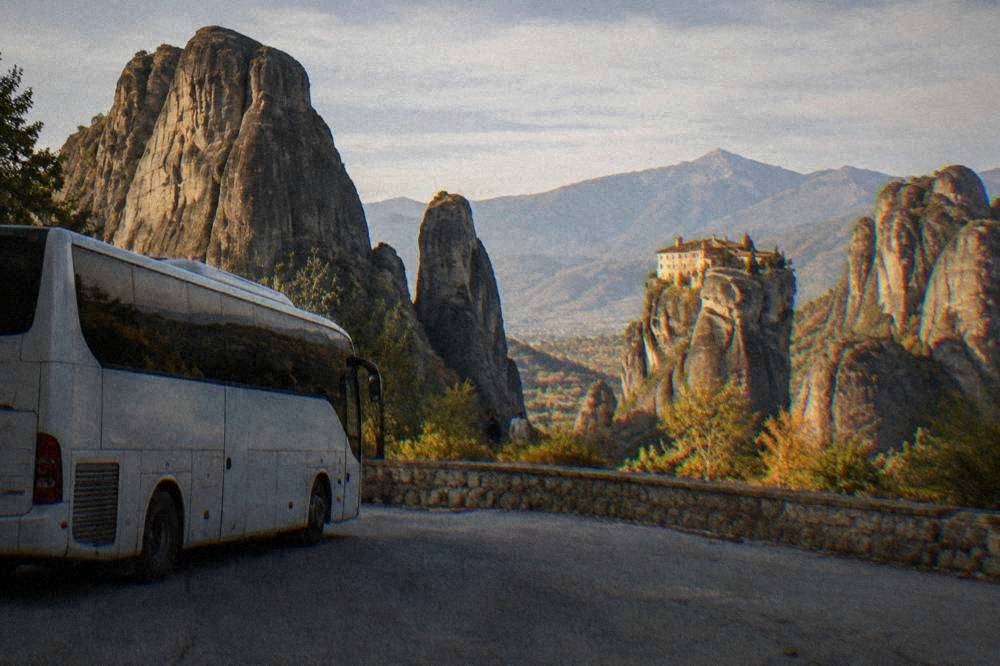
For the coach route, the site's featured product is one option among several on the roster, and the small-group variant below trades the big coach for a smaller vehicle. For a completely different pace inside Thessaloniki itself on a rest day before or after, the hop-on hop-off bus in the trio above covers the city's own sights, from the White Tower along the seafront.
What Does A Full Day At Meteora Look Like From Thessaloniki?
A realistic Meteora day from Thessaloniki runs roughly twelve hours door to door: about two and a half hours out by road, a morning-to-afternoon block at the rocks covering two or three monasteries and the viewpoints, and about two and a half hours back, which is why operators sell it as a full-day excursion. The shape below is a planning skeleton built from the drive time and the reported monastery pattern, not an operator's timetable.
The morning starts early in Thessaloniki, usually from a central pickup point near the hotel districts, and the coach heads west out of the city before joining the national road. The middle of the day belongs to Meteora itself: a driving loop between the monasteries, visits to two or three of them, and stops at the panoramic viewpoints between the rock pillars where the plain of Thessaly opens below. Lunch sits somewhere in that block, and the sources behind this page verify no restaurant name in Kalambaka, so none is given. The return leg lands back in Thessaloniki in the evening.
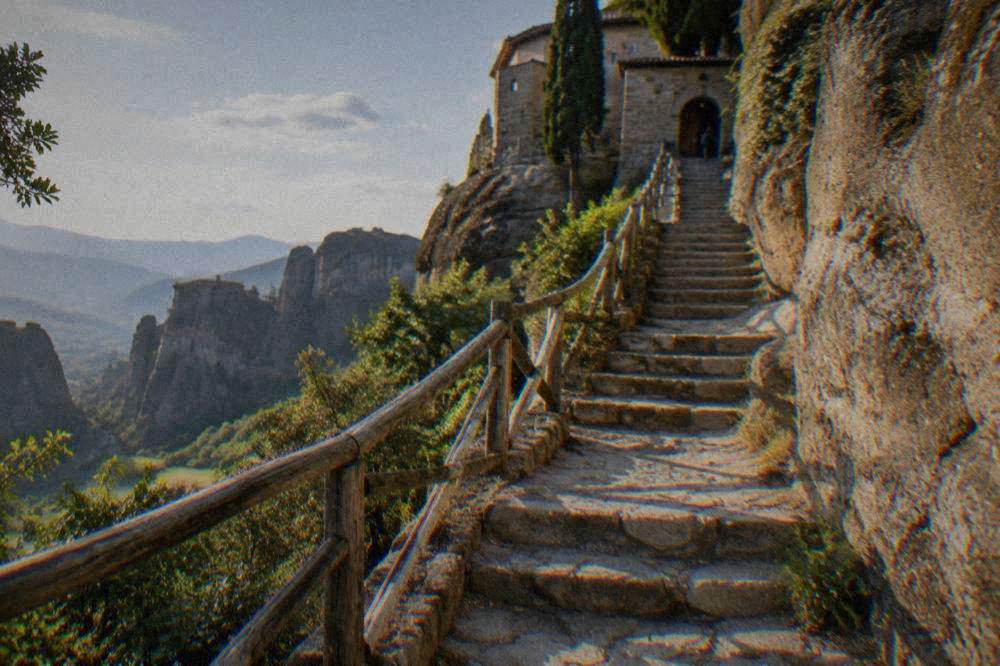
A sample skeleton for the day:
| Block of the day | What happens | Planning note |
|---|---|---|
| Early morning | Depart Thessaloniki | Central pickup is standard for coach days |
| Mid-morning | Arrive Kalambaka and begin the monastery loop | About 154 minutes of driving done |
| Middle of the day | Two or three monastery visits plus viewpoints | Each house has its own entry and closing day |
| Evening | Drive back to Thessaloniki | Arrive in the city in the evening |
Two cautions keep the plan honest. First, the monastery closing days mean a fixed sequence can fail if a chosen house is shut that weekday, which is exactly the kind of detail an operator manages and a self-driver must check. Second, winter daylight shortens the useful afternoon: the sun sets early enough in the cold months that the viewpoints lose their light before the return leg, so anyone self-driving in winter should plan the monastery block earlier in the day than the skeleton suggests.
Meteora Or Vergina And Pella: Which Day Trip From Thessaloniki Suits?
For a first visit to Thessaloniki with only one day-trip slot, Vergina and Pella deliver more per kilometre driven: both sit within about 62 minutes of Aristotelous Square by road, against about 154 minutes each way for Meteora, so the ancient-Macedonia pair costs roughly half the wheel time of the monastery day. Meteora answers a different question: it is landscape and monastic architecture on a scale that central Macedonia's archaeological sites do not attempt, and for many travellers the rocks justify the distance on their own.
The editorial judgement, stated as judgement and not as fact: choose Meteora when the photographs of the monasteries are the reason for the trip, when one very long day is acceptable, and when the party is happy with stairs and heights. Choose the Vergina and Pella circuit when the interest is Alexander the Great's world, when the travelling party includes anyone for whom a twelve-hour day is too much, or when the weather is poor, since the museum at Vergina is indoors and Meteora is an outdoor day. The three days in Thessaloniki itinerary shows how both can fit into a longer stay, with Meteora on one day and the ancient sites on another.
| Question | Meteora day | Vergina and Pella day |
|---|---|---|
| Driving each way | about 154 minutes | about 62 minutes (Vergina) |
| What it delivers | Monasteries on rock pinnacles, viewpoints | Royal tombs at Aigai, Pella museum and site |
| Physical demand | Stairs, paths, sun | Mostly flat museum walking |
| Weather sensitivity | High, it is an outdoor day | Low, the key sights are indoors |
| Length of day | Full day, evening return | Shorter day possible |
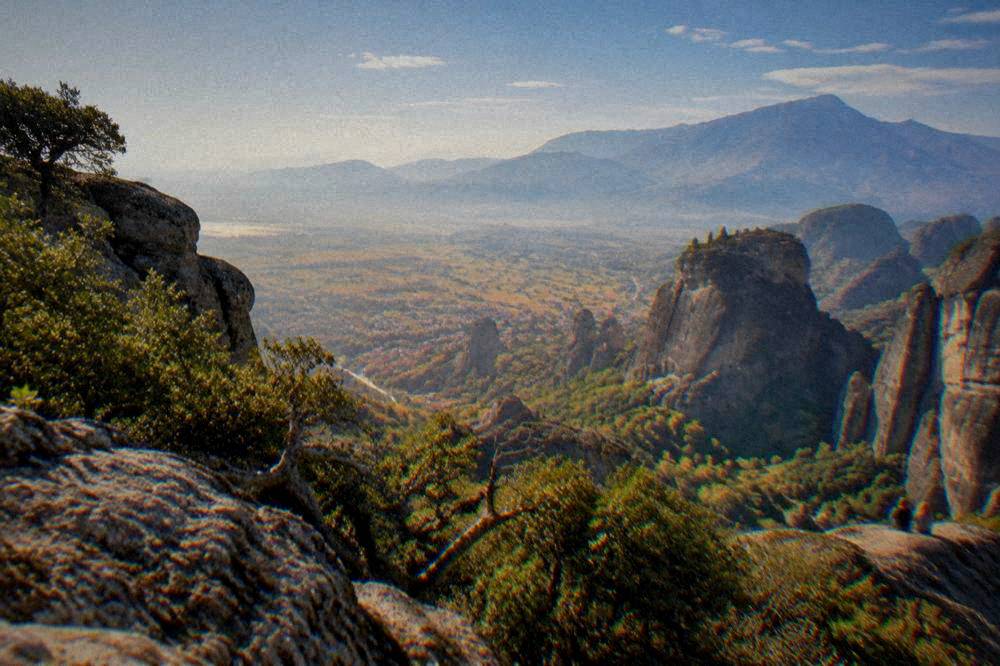
Both trips appear in the site's roster as bookable days, and the band below carries the Meteora coach, the combined Vergina and Pella excursion, and the city hop-on hop-off bus for the day in Thessaloniki itself. The full comparison of every option on the menu, from Halkidiki to Mount Olympus, sits in things to do in Thessaloniki and beyond.
What Should You Bring For The Meteora Day Trip?
The Meteora day from Thessaloniki calls for closed walking shoes, sun protection, water, conservative clothing that covers shoulders and knees, and cash for the per-monastery entry, because the reported entry of about 5 euro per monastery is said to be cash only at the gate, a detail to confirm before you go. The day mixes a long coach or car ride with real walking on stone paths and staircases, and the summer heat at the top of the rocks is a factor the sources quantify for Thessaloniki itself.
Kalambaka sits inland and gets no sea breeze, so a midsummer monastery day runs at least as warm as those figures suggest. Winter flips the problem: the January mean low at the Thessaloniki station is 1.5 C, and an exposed viewpoint in January is genuinely cold, so layers matter more than they do in the city.
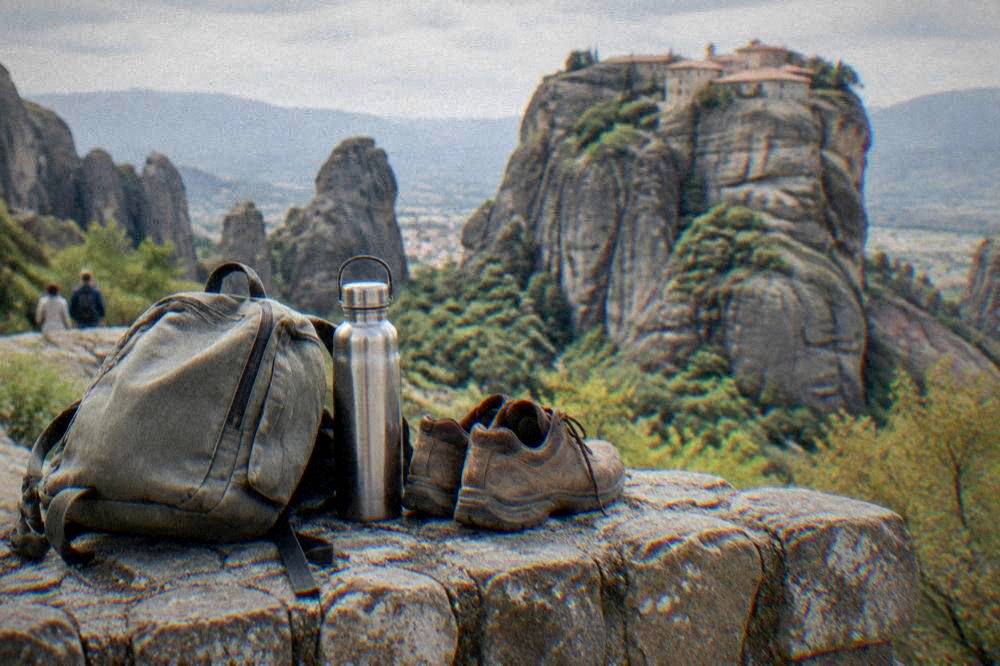
A practical checklist, kept to items the day actually requires:
| Item | Why it matters |
|---|---|
| Closed walking shoes | Stone paths and monastery staircases |
| Shoulders and knees covered | Standard expectation at Greek Orthodox monasteries |
| Cash in euro | Reported cash-only entry, about 5 euro per monastery |
| Water and sun protection | Inland heat, exposed viewpoints, summer means above 30 C |
| Layers in winter | January mean low of 1.5 C at the coastal station, colder inland |
| Snack for the coach legs | About 154 minutes each way by road |
Photography deserves one line of caution the sources support indirectly: monasteries are working religious houses, and rules on photographing interiors, frescoes and the religious themselves vary by house and are posted at the entrances. Treat the posted rule at each gate as the only rule, and ask where it is unclear.
Is The Meteora Day Trip From Thessaloniki Actually Worth It?
As an editorial judgement with the reason attached: the Meteora day trip from Thessaloniki is worth it when the monasteries themselves are the draw, because a site of that visual force sits at the end of the drive and no closer alternative in northern Greece matches it, and it is not worth it when the travelling party cannot absorb a roughly twelve-hour day or when the weather collapses, since Meteora is an outdoor site. The distance is the whole trade, and it is a known quantity: about 228 km and about 154 minutes each way in free-flow conditions, computed over OpenStreetMap routing.
The case against is honest and short. It is the longest day trip Thessaloniki offers, longer even than the far destinations in the region's day-trip set, Kavala at about 118 minutes or Lake Kerkini at about 82 minutes by road. The monastery circuit involves stairs and heat, the per-house entry fees add up across two or three visits, and a share of the day is spent on a coach. Travellers who dislike long excursions will dislike this one.
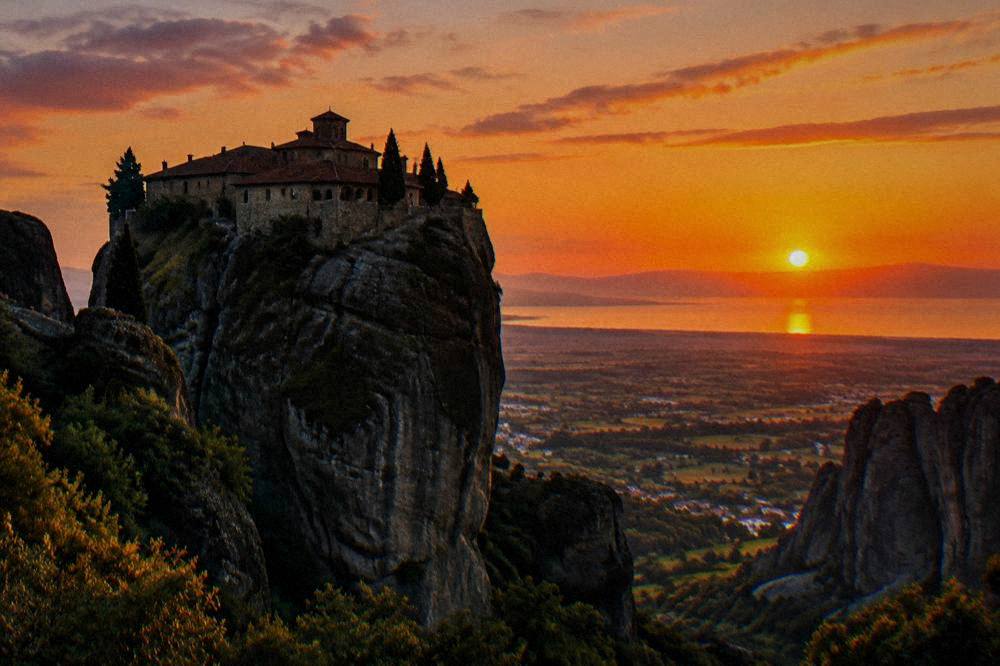
The case for is equally short. Meteora is one of the few sights in Greece where the setting and the monuments are inseparable, and a day trip from Thessaloniki is the most practical way to see it from the country's second city, with a manageable single-day drive each way rather than an overnight commitment. For a traveller based in Thessaloniki for one day in the city plus excursions, Meteora is the headline long day and Vergina is the efficient one, and doing both across two days is the pattern the itineraries on this site recommend. For anyone whose day is rain-hit instead, the Thessaloniki in the rain guide covers the indoor alternatives inside the city itself.
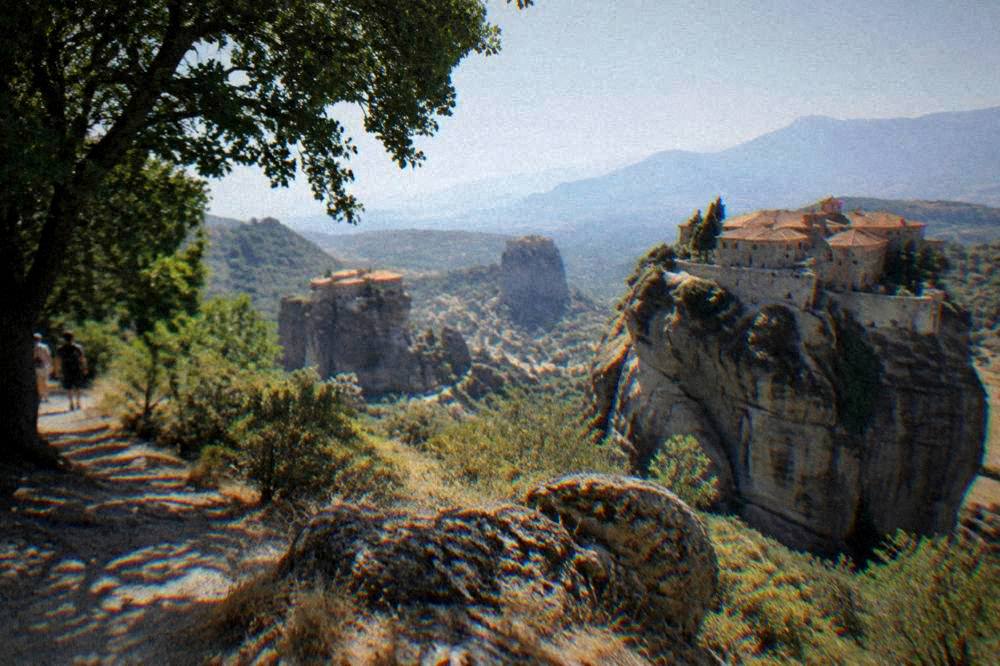
The featured full-day coach trip below is the straightforward version of the day: one booking from Thessaloniki, the drive handled, the monastery sequence managed. For travellers who prefer the small-group format, that variant appeared earlier on this page, and the English-guided full-day version rounds out the roster.
Common Questions About The Meteora Day Trip From Thessaloniki
How far is Meteora from Thessaloniki?
Meteora, at the gateway town of Kalambaka, is about 228 km by road from Aristotelous Square in Thessaloniki, and the free-flow drive takes about 154 minutes each way, computed over OpenStreetMap routing. Real conditions with traffic and a stop run longer, so plan on about three hours door to door.
Can you visit Meteora in one day from Thessaloniki?
Yes, but only as a full day. With about two and a half hours of driving each way, the day runs roughly twelve hours door to door, either on an organised coach excursion or self-driven. It is never an easy half day.
How much does it cost to enter the Meteora monasteries?
Entry is reported at about 5 euro per person per monastery, from secondary sources, and there is no combined ticket. Confirm the current price before you go, as the figure is not from an official page this site has fetched.
Are the Meteora monasteries open every day?
No. Each of the six main monasteries closes on one weekday, and the closing days can shift with the seasons.
Is it better to take a tour or drive to Meteora from Thessaloniki?
A coach tour handles the long drive, the parking and the monastery sequence, which matters on a day with roughly five hours of total road time. Self-drive suits travellers who want to control the clock and accept a long day behind the wheel. The distance is the same either way.
Is Meteora worth the long day from Thessaloniki?
As an editorial judgement, yes when the monasteries and the rock landscape are the draw and the party can absorb a twelve-hour day, and no when the weather is poor or long excursions do not suit, because Meteora is an outdoor site with stairs, sun and heights. Vergina and Pella are the closer alternative at about a third of the driving distance.
For everything else within reach of the city, from Halkidiki's peninsulas to the monastic coast of Mount Athos viewed from the sea at Ouranoupoli, the day-trip guides on Thessaloniki Travel Guide cover each route with the same distance-first approach used here.
Before you go, the pick for this guide:
Meteora Day Trip, English Guide
★ 4.7 · 294 reviews · From $51
Check availability →