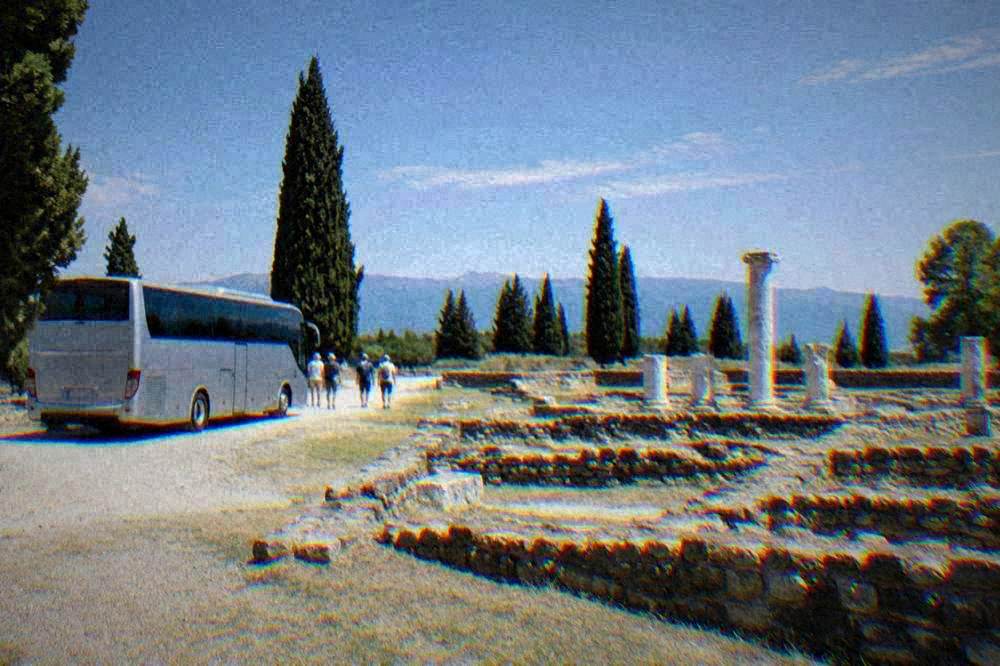
Vergina: The Royal Tombs Of Aigai
Vergina, ancient Aigai, sits within easy reach of Thessaloniki by road and holds the Museum of the Royal Tombs of Aigai, one of the most significant archaeological sites in northern Greece.
Short answer
Vergina is about 68 km by road from Aristotelous Square in Thessaloniki. The Museum of the Royal Tombs of Aigai is reported to charge about 20 euro full and 10 euro reduced, with summer opening to 20:00 and Tuesday hours that differ from the rest of the week, so confirm current hours on the museum's own page before you go.
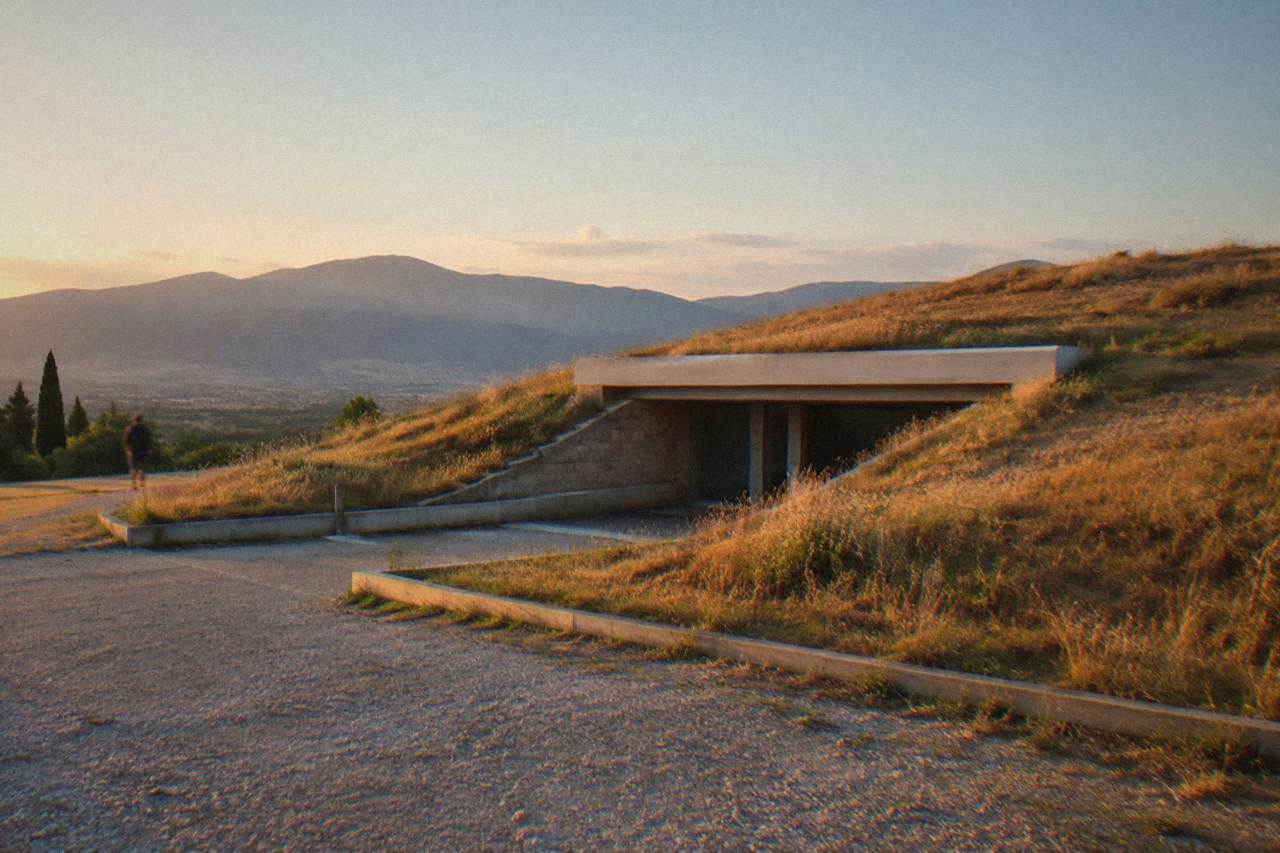
Vergina, the modern village that sits on the ancient Macedonian royal city of Aigai, is the archaeological day trip from Thessaloniki that travelers talk about long after the drive back. The site lies about 68 km by road southwest of Aristotelous Square, in the hills behind Veria in Central Macedonia, and its underground museum, the Museum of the Royal Tombs of Aigai, protects the burial mound of the Macedonian royal family inside a shell of earth and concrete.
What Is Vergina And Why Does It Matter?
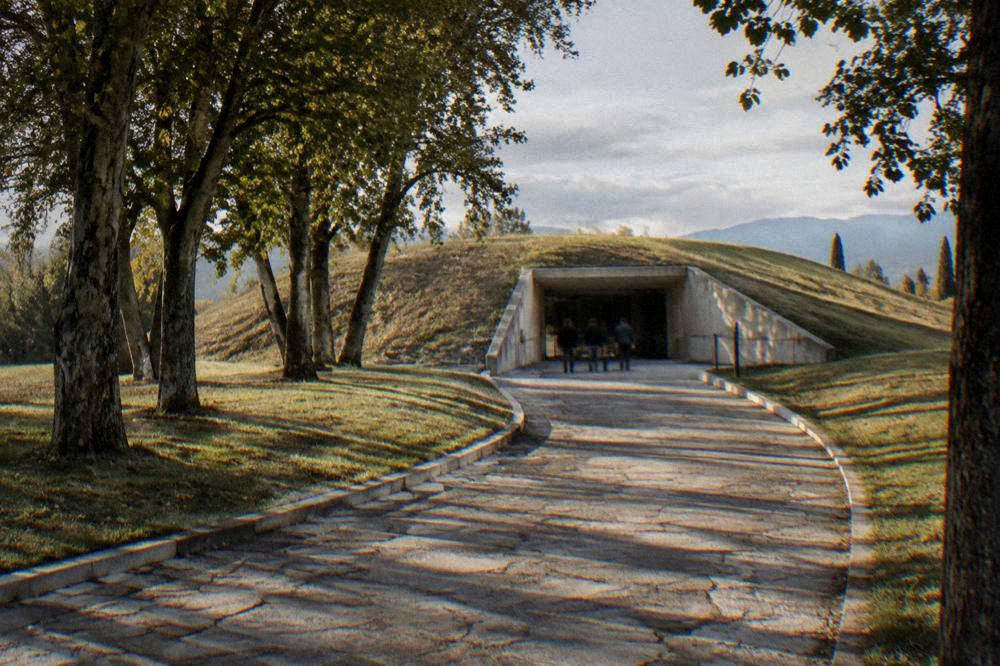
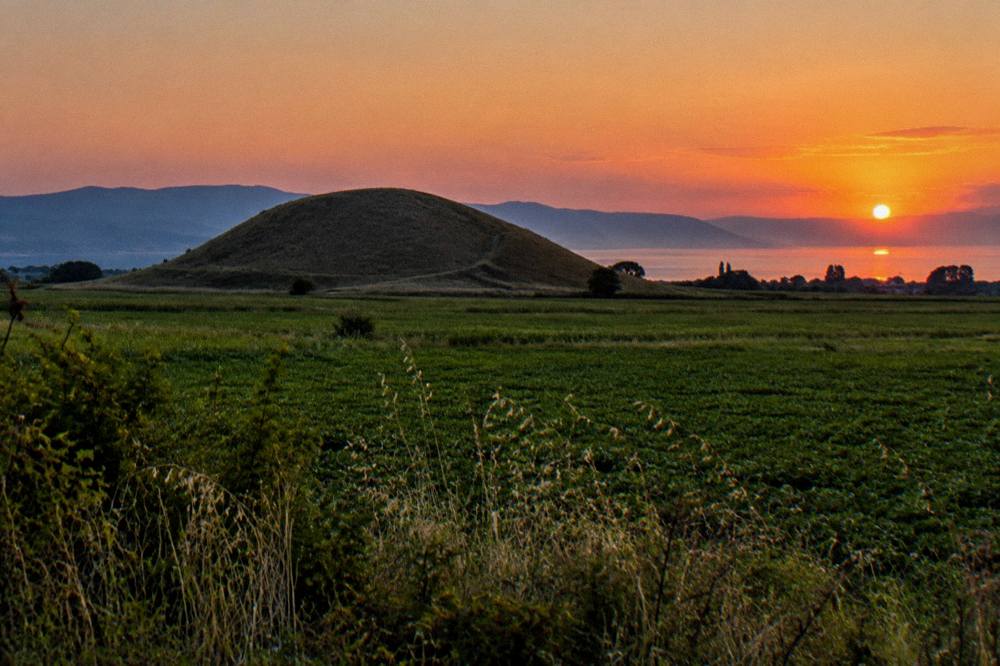
Vergina is the modern name of the village at Aigai, the royal burial city of the ancient Macedonian kingdom, where the great earthen mound covering the royal tombs is now enclosed in the Museum of the Royal Tombs of Aigai, an underground museum built around the tombs themselves so that visitors walk inside the mound rather than around it. The name Aigai appears in the museum's own title and in the state archaeological listings, and the complex is described by the archaeological authorities as a polycentric museum spread across several buildings and monument zones, not a single hall. For anyone based in Thessaloniki, it is the deepest single dive into the Macedonian royal world available as a day trip.
The connection to Thessaloniki is direct and historical. Thessaloniki was founded in 315 BC by Cassander, who named the city after his wife Thessalonike, the daughter of Philip II, and the same Macedonian royal world that built Aigai later built and peopled the city on the Thermaic Gulf. A visitor who has walked the Arch of Galerius and the Rotunda in Thessaloniki is looking at the Roman layer of the same region; at Vergina the layer underneath is the kingdom itself.
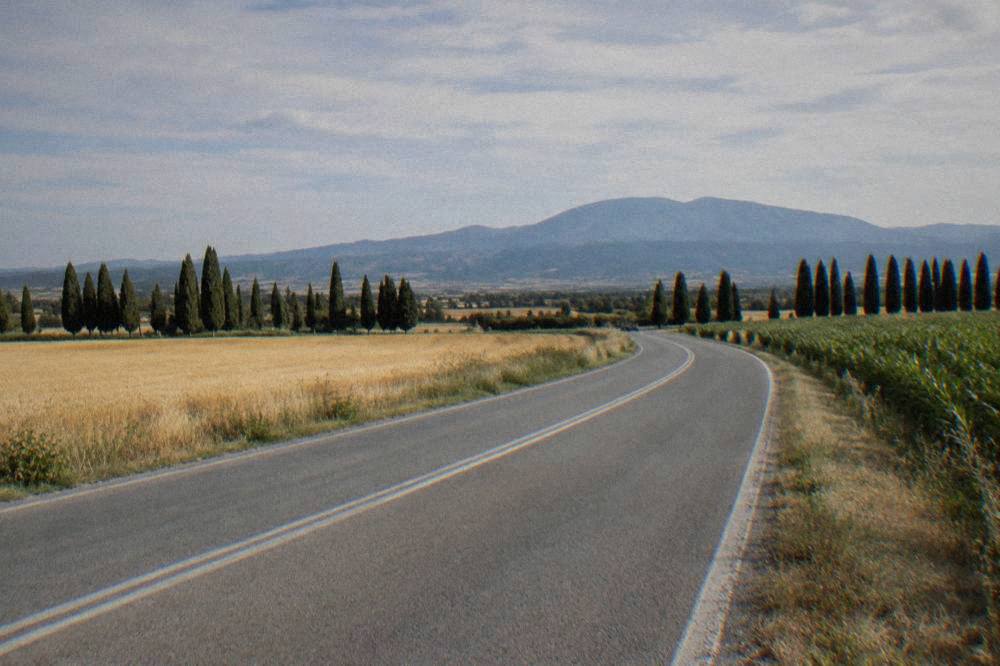
The setting matters too. Vergina sits at the foot of the Pierian mountains, west of the Haliacmon river plain, in farm country that looks nothing like the seafront of Thessaloniki. The drive out crosses the plain of Imathia, and the change from the coastal second city of Greece to low green hills is part of what makes the trip feel like a genuine excursion rather than a suburb visit.
How Far Is Vergina From Thessaloniki And How Do You Get There?
Vergina is about 68 km from Aristotelous Square in Thessaloniki, a drive of well under an hour in free-flow traffic, routed southwest past Veria on the A2 and local roads, which makes it one of the shorter major archaeology day trips from the city alongside Pella at about 43 minutes and Veria itself at about 52 minutes. These times are computed over OpenStreetMap routing with no traffic, no parking and no stops, so treat them as floor values: a morning departure in the summer season, or any return drive at the end of a holiday weekend, will run longer.
There is no rail link to Vergina itself. The practical options from Thessaloniki are a rented car, an organized day trip, or the regional KTEL bus network toward Veria with a local connection onward; the intercity buses for the Veria area leave from the KTEL Macedonia station. A car or a tour is the realistic choice, because the site, its satellite monument zones and the neighboring town of Veria do not line up along one walkable street the way central Thessaloniki does.
| Destination from Aristotelous Square | Distance by road | Free-flow drive time |
|---|---|---|
| Pella (Archaeological Museum) | 45.7 km | about 43 minutes |
| Veria | 72.8 km | about 52 minutes |
| Naoussa | 92.3 km | about 76 minutes |
| Edessa (waterfalls) | 90.3 km | about 82 minutes |
| Loutra Pozar thermal baths | 111.4 km | about 100 minutes |
| Meteora (Kalambaka) | 227.5 km | about 154 minutes |
The table shows the practical logic of the region: Vergina and Veria are neighbors, Pella is almost on the way, and everything else costs at least another half hour. Travelers who want the Macedonian royal story in full often run Pella in the morning and Vergina in the afternoon, or Vergina with Veria, in one loop out of Thessaloniki. The full Vergina, Pella and Veria sweep in a single day is possible with an early start and a car.
For visitors who would rather not drive, an organized excursion handles the routing and the timing. A tour from Thessaloniki to the royal tombs of Aigai and the museum of Pella, with pickup included, is the featured option for this page, and it pairs well with a first day of city sightseeing in Thessaloniki itself.
What Does A Ticket To The Museum Of The Royal Tombs Of Aigai Cost?
Entry to the Vergina complex is reported at about 20 euro full and about 10 euro reduced, covering the central museum building, the Royal Tombs display of treasures, the necropolis, the ancient theater and the palace, with summer opening reported daily to 20:00 except Tuesday from 12:00, and winter opening reported Monday and Wednesday to Sunday 09:00 to 17:00 with Tuesday closed, so confirm the current price and hours on the museum's own page before you go. These figures come from live-search reporting of the museum's listed information rather than from a directly fetched page, and Greek state sites adjusted pricing across 2026.
The Tuesday pattern is the detail that catches people out. In the reported summer season the site opens at 12:00 on Tuesdays rather than 08:00, and in the reported winter season it closes on Tuesdays altogether. That single column in the schedule has rerouted more day trips than any weather forecast, and it interacts badly with the common instinct to leave Vergina for a quiet midweek day. Check the museum's own current page before locking in a Tuesday.
| Item | Reported figure | Notes |
|---|---|---|
| Vergina full ticket | about 20 euro | Reported, per the museum's listed information; confirm before you go |
| Vergina reduced ticket | about 10 euro | Reported; eligibility follows the standard Greek state reductions |
| What the ticket covers | Central museum building, Royal Tombs display, necropolis, theater, palace | Reported as one polycentric ticket |
| Summer hours | Mon, Wed to Sun about 08:00 to 20:00; Tue from 12:00 | Reported; seasonal dates around April and October shift |
| Winter hours | Mon, Wed to Sun about 09:00 to 17:00; Tue closed | Reported; winter runs roughly November to March |
| Standard state closure days | 1 January, 25 March, 1 May, 25 and 26 December | Reported alongside the state holiday pattern |
The palace and the theater sit apart from the tomb mound, so a full visit means more than one stop inside the site boundary. The reported ticket covers the whole polycentric complex, which is why the price sits above the single-building museums back in Thessaloniki: the Archaeological Museum of Thessaloniki charges 10 euro full and 5 euro reduced, and the Museum of Byzantine Culture the same, for one building each.
What Will You Actually See Inside The Royal Tombs Museum?
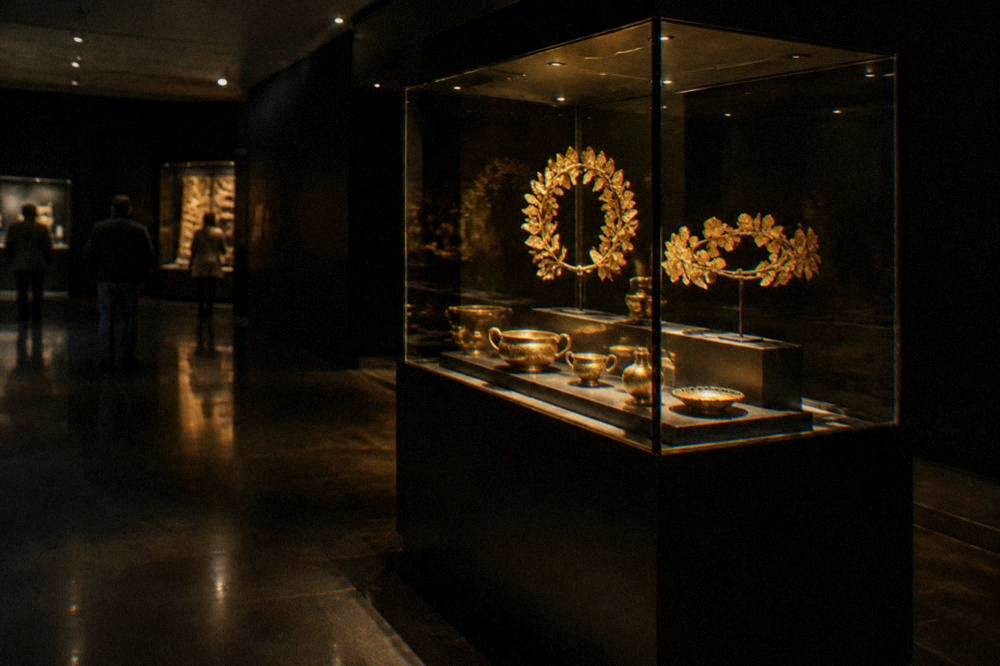
Inside the Museum of the Royal Tombs of Aigai you walk through a darkened, climate-controlled space built inside the original burial mound, past the facades of the Macedonian tombs themselves and through galleries of gold, painted and worked finds from the royal burials, arranged so the architecture of the mound and the objects from it are seen together rather than separated, with the palace and theater visited separately outside. The museum's own description presents it as a display of the royal tombs and their treasures in situ, which is the detail that separates it from every conventional museum in Greece.
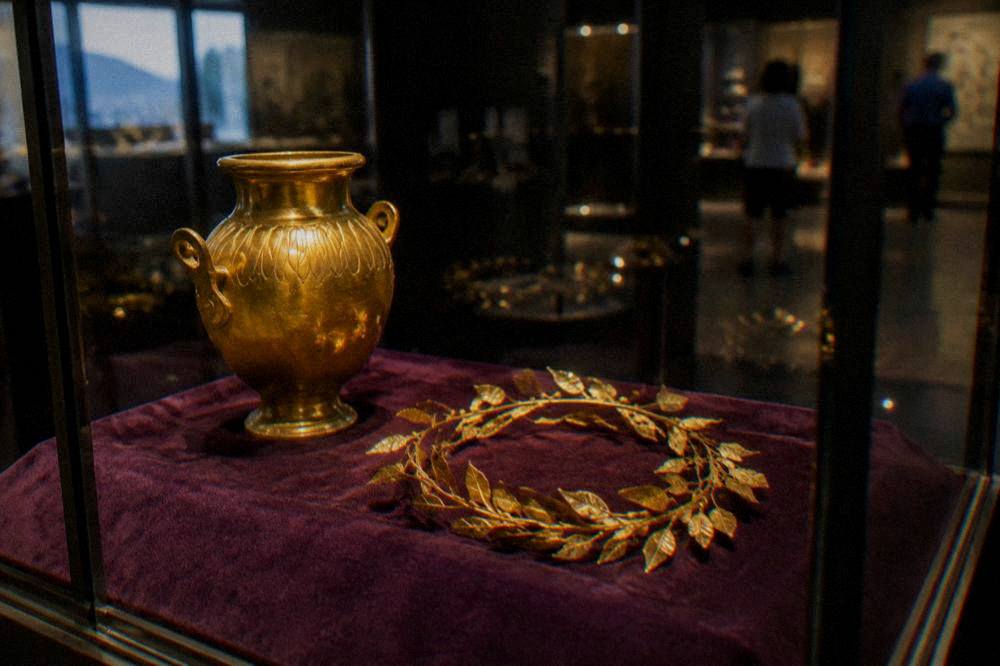
The tombs are the heart of it. The burial structures stand where they were found, and the exhibition route moves around and, in places, beneath the mound. Photography rules inside are strict, light levels are kept low for conservation, and the visit is closer to moving through a monument than through a gallery. The finds on display include the gold and purple funeral material from the royal burials, presented alongside the tomb architecture.
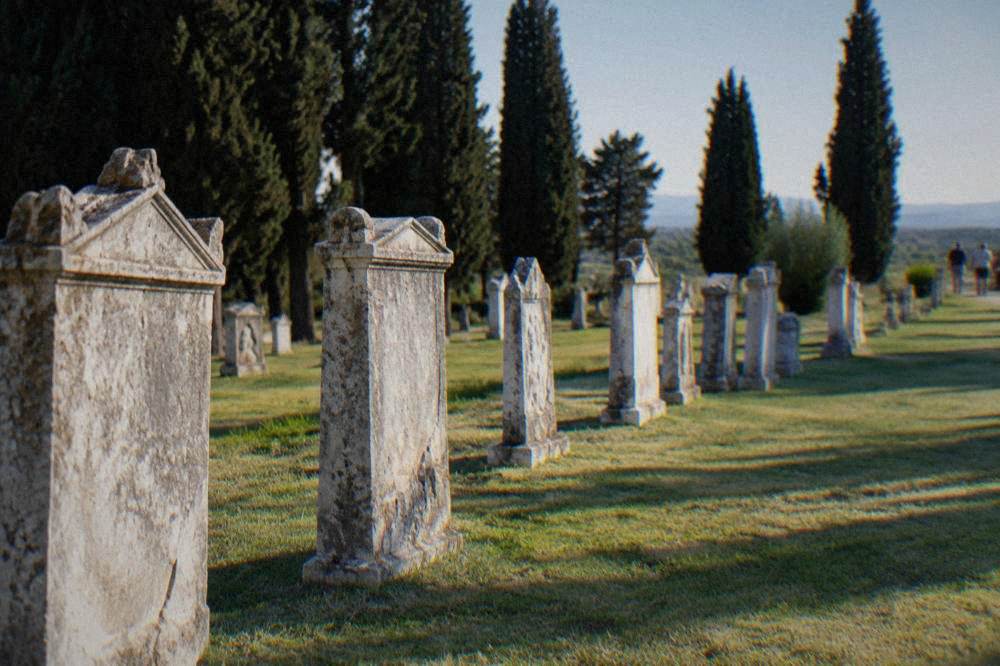
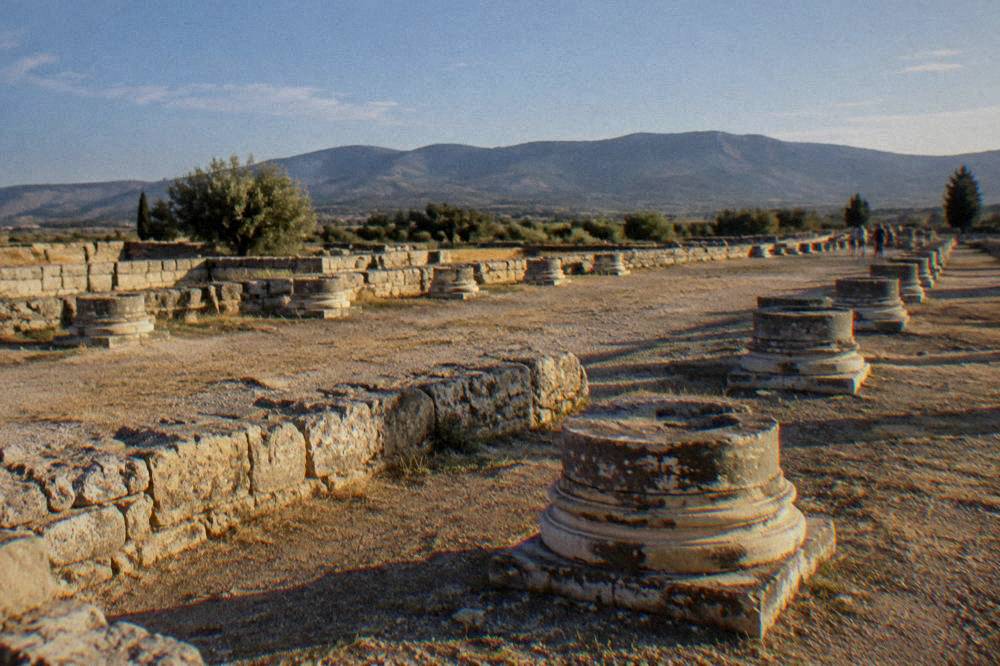
Outside the mound, the polycentric complex reaches further. The reported ticket covers the central museum building, the Royal Tombs display of treasures, the necropolis with its further grave structures, the ancient theater, and the palace, whose remains stand as a separate monument zone with its own scale and its own walking. A visit that takes in all of the parts is a half-day proposition, not an hour.
| Part of the Vergina complex | What it is | How it is visited |
|---|---|---|
| Museum of the Royal Tombs | Underground museum inside the burial mound | Walk-through exhibition, low light |
| Display of Treasures | Gold and funeral finds from the royal burials | Inside the museum route |
| Necropolis | Further burial structures of the royal city | Outdoors, part of the reported ticket |
| Ancient theater | The theater of Aigai | Outdoors, short walk from the mound |
| Palace | The royal palace remains of Aigai | Separate monument zone, allow extra time |
One question every visitor asks is who was buried in the great tombs. Anything more specific about individual occupants belongs to the museum's own interpretation, which is exactly where you should read it.
Can You Combine Vergina With Pella Or Veria In One Day?
Yes, and the geography argues for it: Pella lies about 43 minutes and 46 km from Aristotelous Square, Veria about 52 minutes and 73 km, and Vergina about 68 km, so a single loop out of Thessaloniki can cover Pella in the morning and Vergina in the afternoon, or Vergina and Veria, with realistic driving and time at both stops, provided the Tuesday hour pattern at Vergina is checked first. The pairing is not a forced march; it is how the region is shaped.
The classic combination is Vergina with Pella. Pella was the later capital of the kingdom and its museum holds the celebrated pebble mosaics, while Aigai at Vergina was the royal burial city; together the two sites tell the beginning and the middle of the Macedonian royal story in one day. The Pella museum is reported at about 10 euro, because combined-ticket conditions change with the annual pricing reviews. The rest of the planning pages sit on Thessaloniki Travel Guide.
| Day trip combination from Thessaloniki | Driving logic | What the day looks like |
|---|---|---|
| Pella and Vergina | About 43 minutes to Pella, then under an hour between the two | Mosaics in the morning, royal tombs after lunch |
| Vergina, Pella and Veria | Full loop, longest day | Early start, all three stops, tight but done |
| Vergina and Naoussa | About 76 minutes to Naoussa beyond Veria | Tombs, then vineyard country |
Veria is the natural second stop in a different mood. The town sits on the route between Thessaloniki and Vergina, and its old quarters, Byzantine churches and river views make a soft landing after a morning inside a burial mound.
For the Pella side of the story, see the site's dedicated Pella day trip guide, and for the town on the route home, the Veria guide covers the practicalities. Travelers with two spare days sometimes add the Naoussa guide or push north to the waterfalls covered in the Edessa day trip guide.
Is Vergina The Right Day Trip Compared With Meteora Or Mount Olympus?
Vergina is the closest of the great northern Greece day trips to a specifically royal and archaeological story, with Meteora about 228 km and about 154 minutes each way and Mount Olympus at Prionia about 86 minutes, so the choice is really between one deep site nearby, a long full-day drive to the monasteries, or a nature day toward the mountain, and travelers with three days can do all three in sequence. Each trip answers a different question about the same region.
Meteora rewards patience and distance. The drive is more than twice the Vergina run in each direction, the monasteries sit on rock pinnacles, and per-monastery entry is reported at about 5 euro in cash with each monastery closed one weekday, details the Meteora guide treats in full. Mount Olympus, through Litochoro and up to the Prionia trailhead, is a walking and scenery day, covered on the site's Mount Olympus and Litochoro pages. Dion, about 67 minutes out, is the archaeological alternative that pairs a city of ancient sanctuaries with the mountain backdrop, and the Dion guide lays out its hours and ticket.
| Day trip from Thessaloniki | Distance | Free-flow time | Character of the day |
|---|---|---|---|
| Dion | 90.1 km | about 67 minutes | Sanctuary city under Mount Olympus |
| Litochoro | 90.7 km | about 67 minutes | Mountain town, gorge walking |
| Edessa | 90.3 km | about 82 minutes | Waterfalls and parkland |
| Loutra Pozar | 111.4 km | about 100 minutes | Thermal baths and river gorge |
| Meteora (Kalambaka) | 227.5 km | about 154 minutes | Monasteries on rock towers |
The honest comparison is that Vergina is the most compact of them. Sixty-two minutes each way leaves room for a slow museum visit, the palace zone and lunch, and still puts you back on the Nea Paralia in Thessaloniki for the evening. Meteora is a magnificent day, but it is a full one, with more than five hours of driving before any walking. If the royal tombs are the reason you came to northern Greece, do Vergina first and let the rest of the week expand outward.
When Is The Best Time Of Year To Visit Vergina?
The reported summer season at Vergina, roughly April into late October, brings longer opening to 20:00 and warm dry weather for the outdoor palace and theater zones, while the reported winter season brings shorter hours, a Tuesday closure and mean highs in Thessaloniki below 16 C from November through February, so late spring and early autumn combine the long hours with comfortable walking conditions. The outdoor parts of the polycentric site argue for the shoulder months more than the indoor mound does.
The climate baseline for the region comes from the HNMS Thessaloniki Mikra station, 1959 to 2010, the nearest long station record this site uses. July averages a mean high of 31.7 C and August 31.4 C, which is demanding for the unshaded palace zone even though the tomb museum itself is cool and dark. April and May sit at mean highs of 19.1 C and 24.6 C, and October at 21.2 C, with rainfall in October at 43.0 mm on average across about nine rain days.
| Month (HNMS Thessaloniki Mikra station, 1959 to 2010) | Mean high C | Mean low C | Rain mm | Rain days |
|---|---|---|---|---|
| April | 19.1 | 7.9 | 36.1 | 11.1 |
| May | 24.6 | 12.6 | 44.2 | 11.0 |
| June | 29.4 | 17.0 | 29.8 | 7.9 |
| July | 31.7 | 19.3 | 23.8 | 6.7 |
| August | 31.4 | 19.1 | 19.3 | 5.1 |
| September | 27.1 | 15.4 | 29.8 | 7.0 |
| October | 21.2 | 11.3 | 43.0 | 9.3 |
Timing within the day matters as much as the month. The reported hours run to 20:00 in the summer season, which makes a late-afternoon arrival viable, with the tomb museum's controlled interior making it the one part of Greek archaeology that is genuinely pleasant at the warmest hour of the day. Group coaches from Thessaloniki tend to arrive mid-morning, so an early or late entry buys quiet in the outdoor zones regardless of season.
How Do You Plan The Practical Side Of A Vergina Day?
Plan on leaving Thessaloniki early, budgeting driving time each way plus time for parking, buying tickets at what is reported as a 20 euro full entry, spending two to four hours across the tomb museum, necropolis, theater and palace, and returning via Veria or Pella, with cash on hand for smaller sites and the emergency number 112 in mind as the single EU-wide number for anything urgent. The day is simple, but its rhythm rewards a little structure.
Parking and access at the site are straightforward by car, and the village of Vergina itself is small, with services clustered around the site approach. Visitors returning to Thessaloniki in the evening will find the city's own eating districts, from Ladadika to the streets off Aristotelous Square, fully lit and busy.
A few practical anchors for the wider day: Greece uses the euro and is a Schengen member, so no border formalities exist on any route within the country; the climate resilience fee is a per-room, per-night charge collected by accommodations across Greece, collected by the property rather than prepaid; and the drive times quoted throughout are free-flow values. On holiday weekends, and on the days around the Thessaloniki International Fair, which ran 5 to 13 September 2026, traffic out of the city runs heavier than the routing engine expects.
For travelers building the day around a guide rather than a steering wheel, the Aigai and Pella excursion with pickup is the natural fit, and travelers spending a first day in the city itself often pair the museum day with a walking tour of Thessaloniki's own layers, from the Apostle Paul story in the city where he preached, to the mythology and botany walk through the old upper town of Ano Poli.
The archaeological story in Thessaloniki itself continues where Vergina leaves off. The Archaeological Museum of Thessaloniki, covered in the site's museum guide, and the city's own Roman and Byzantine layers, from the Rotunda to the fifteen UNESCO Paleochristian and Byzantine monuments inscribed in 1988, make a natural second day after the royal tombs. Travelers short on planning time can start from the site's root page of things to do in Thessaloniki and work outward to the day trips.
Common Questions About Vergina From Thessaloniki
How far is Vergina from Thessaloniki?
About 68 km by road from Aristotelous Square, roughly 62 minutes free-flow. Traffic, parking and stops add to that, especially on weekends and holidays.
How much does Vergina cost to visit?
Entry is reported at about 20 euro full and about 10 euro reduced for the polycentric complex, covering the tomb museum, the display of treasures, the necropolis, the theater and the palace. Confirm the current price on the museum's own ticket page before you go.
Is Vergina open on Tuesdays?
In the reported summer season the site opens at 12:00 on Tuesdays instead of 08:00, and in the reported winter season it is closed on Tuesdays. The Tuesday pattern is the single detail most worth checking before you plan the drive.
Can you visit Vergina and Pella in one day from Thessaloniki?
Yes. Pella is about 43 minutes from Thessaloniki and Vergina about 62, with under an hour between them, so a morning at Pella's mosaics and an afternoon at the royal tombs is a standard loop with a car or an organized tour.
Is the Museum of the Royal Tombs of Aigai indoors?
The tomb museum itself is underground, inside the reconstructed burial mound, and climate-controlled. The palace, theater and necropolis are outdoor zones, so dress for the season for those parts of the visit.
Vergina rewards the traveler who checks two things before leaving Thessaloniki: the current ticket price and the Tuesday hours, both of which are reported figures best confirmed on the museum's own page. Everything else about the day, the short drive through the plain of Imathia, the walk inside the mound, the palace standing open under the sky, is stable, and it sits closer to Thessaloniki than any other day trip of this weight in northern Greece.