Edessa: The Waterfalls In The Town Centre
Edessa, about 82 minutes by road from Thessaloniki, is the Greek town where a river falls through the middle of the streets. Here is what to expect from the waterfalls, the park and the drive from Central Macedonia's coastal capital.
Short answer
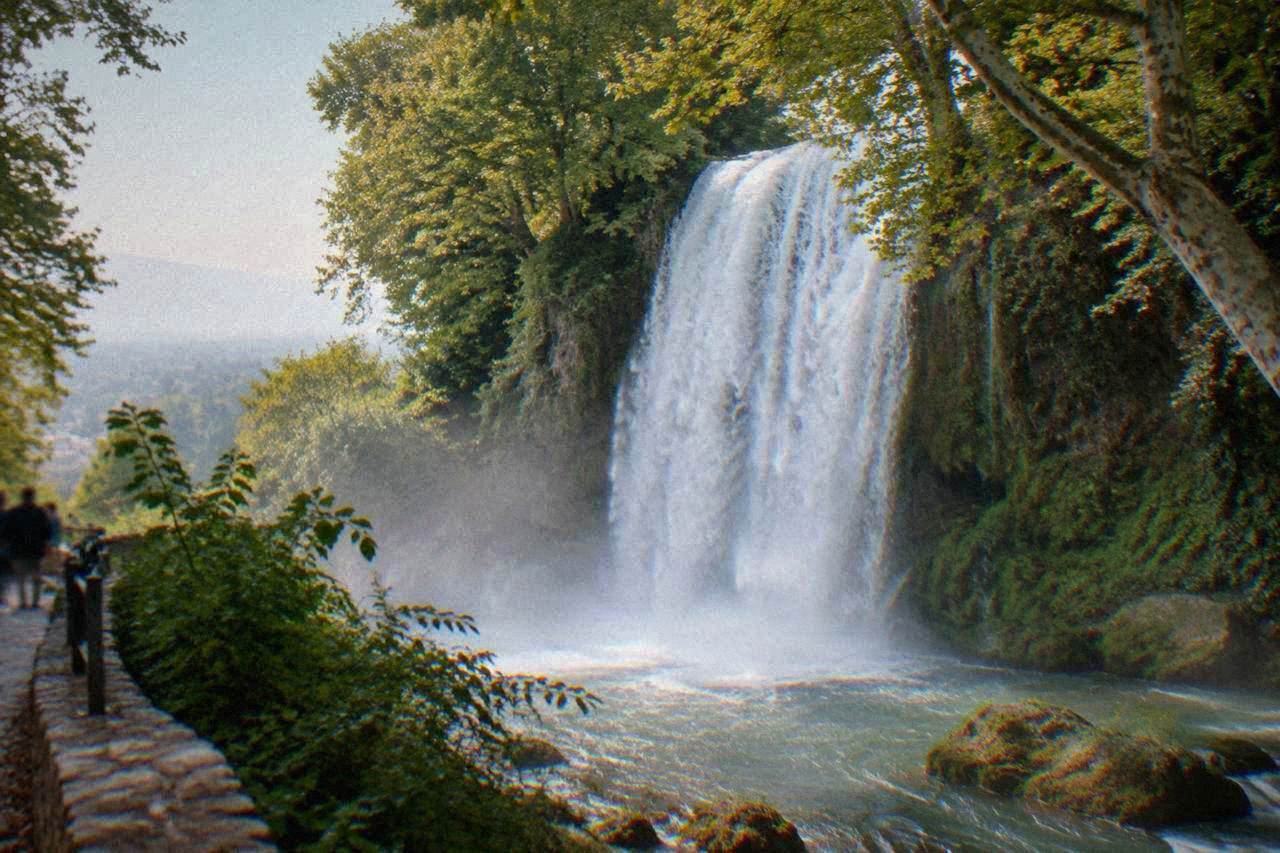
The Edessa waterfalls sit inside a public park in the centre of Edessa town, about 90 km and 82 minutes by road west of Thessaloniki. The park is reported to be free to enter, with the largest waterfall, Karanos, dropping through a wooded gorge right below the town's cliff edge.
Thessaloniki, the second city of Greece on the Thermaic Gulf in Central Macedonia, sits close to one of the stranger natural sights in northern Greece: a town where the main attraction is a river that falls off a cliff through the middle of the streets. Edessa, about 90 km by road and about 82 minutes of free-flow driving west of Thessaloniki's Aristotelous Square, is built on a plateau edge, and the water that once powered its mills now drops through a wooded gorge directly below the town centre.
What Are The Edessa Waterfalls And Where Are They?
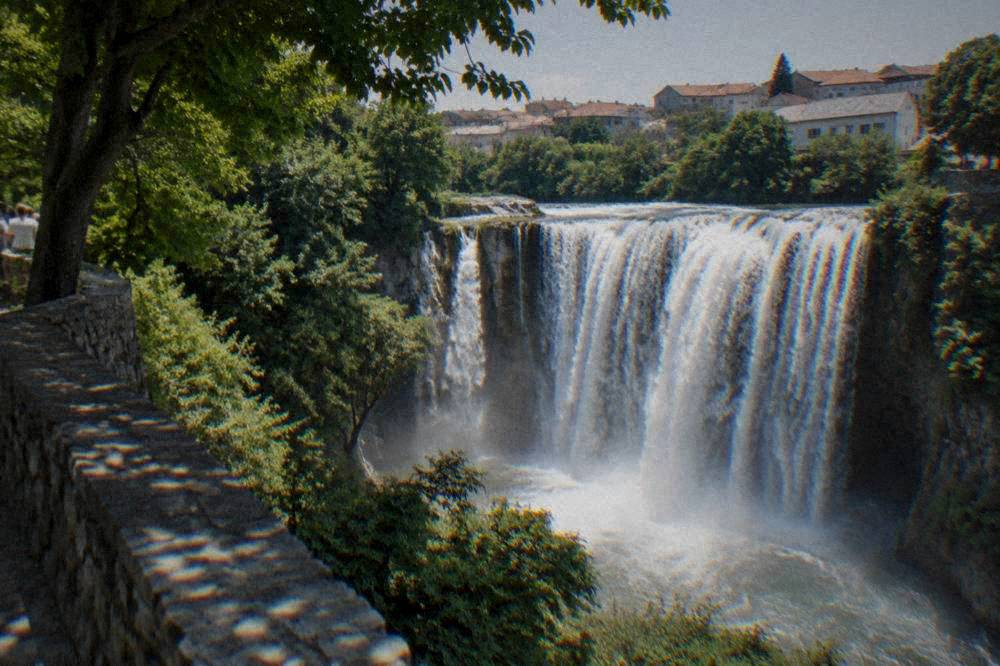
The Edessa waterfalls are a chain of falls where the town's river leaves the plateau and drops into a gorge immediately below the centre of Edessa, about 90 km and 82 minutes by road west of Thessaloniki. The main fall is called Karanos, and the falls sit inside a public park that the municipality of Edessa describes as a freely accessible green space on the edge of the town.
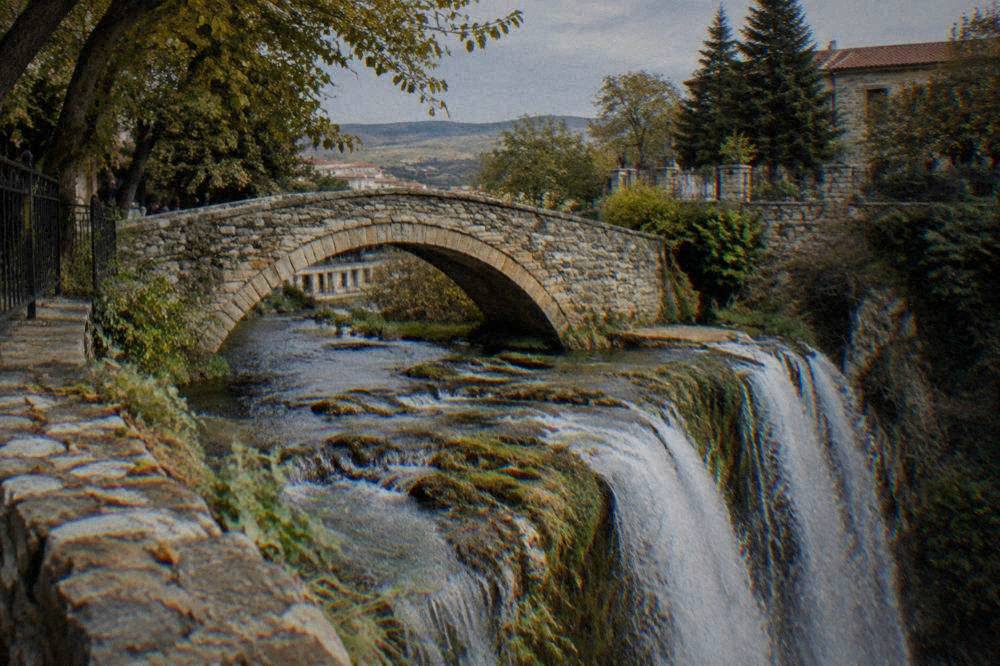
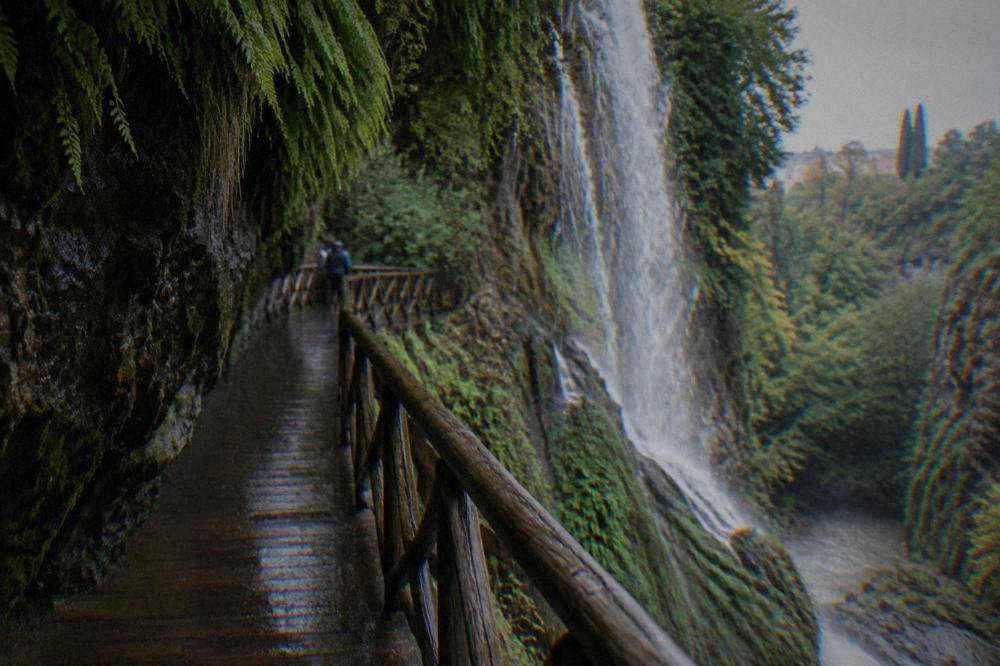
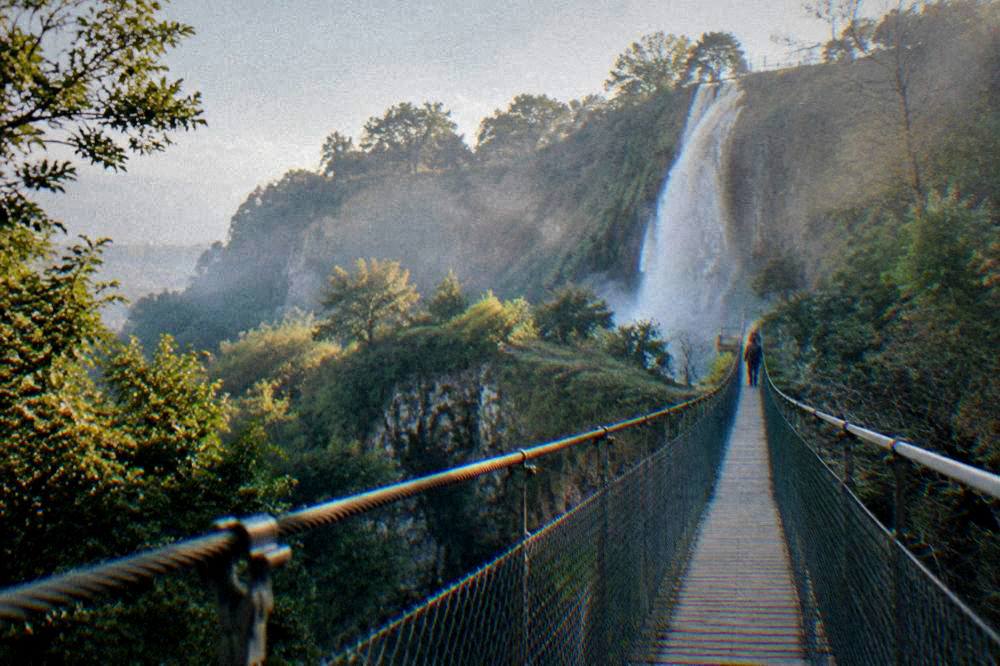
Edessa is unusual among Greek towns because its water feature is not on the outskirts. The town occupies a plateau above the plain of Central Macedonia, and its river crosses that plateau before pouring over the edge. The municipality's own visitor pages describe the waterfall park as the city's central attraction, with paths, bridges and viewing platforms threaded through the gorge beneath the cliff. The falls are illuminated at night, per the municipal site.
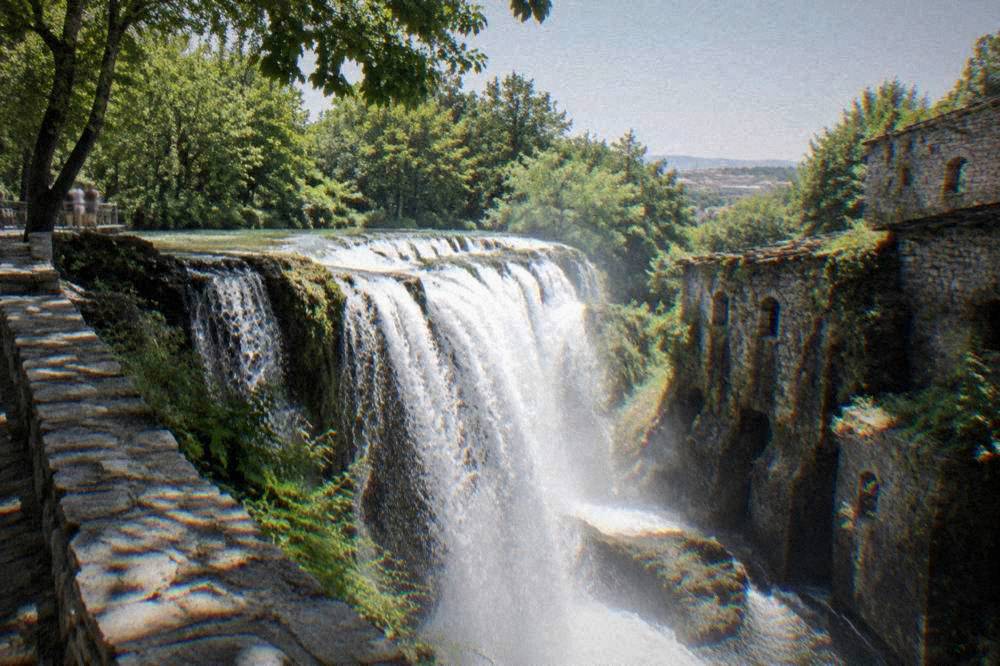
The water has a history beyond scenery. The same drop powered the town's water mills and early factories, and some of the mill buildings in and around the park have been preserved. The municipality's pages describe a water museum and small paid attractions among the mills, with modest separate charges reported, in the range of a few euro per attraction; confirm current prices locally before you go.
How Far Is Edessa From Thessaloniki And How Do You Get There?
Edessa is about 90 km from Thessaloniki by road, roughly 82 minutes of free-flow driving from Aristotelous Square, heading west across Central Macedonia toward Pella and the mountains. The route passes near Pella, the ancient Macedonian capital, and the town of Skydra before climbing to Edessa's plateau. These are computed free-flow times with no traffic or stops.
That drive is the reason Edessa works as a day trip. It is comfortably inside a two-hour radius of Thessaloniki, which puts it in the same practical band as Vergina and Veria rather than the long-haul destinations like Meteora, about 228 km and a full day away. A rental car, a KTEL intercity bus or an organized tour all cover the route; the bus and train options from Thessaloniki toward Edessa and Veria exist on the Hellenic Train and KTEL networks, but the site's facts hold no timetables, so check the operators' own pages before planning around a specific departure.
The table below places Edessa among its neighbours, with drive times and distances computed over OpenStreetMap routing from Aristotelous Square.
| Destination from Thessaloniki | Distance by road | Free-flow time |
|---|---|---|
| Pella (Archaeological Museum) | 46 km | about 43 minutes |
| Veria | 73 km | about 52 minutes |
| Vergina (Museum of the Royal Tombs of Aigai) | 68 km | about 62 minutes |
| Naoussa | 92 km | about 76 minutes |
| Edessa (waterfalls) | 90 km | about 82 minutes |
| Lake Kerkini | 88 km | about 82 minutes |
| Loutra Pozar thermal baths | 111 km | about 100 minutes |
| Meteora (Kalambaka) | 228 km | about 154 minutes |
One planning note matters more than any other on this route: Edessa is not an isolated stop. Pella, Vergina, Veria and Naoussa all sit on or near the same western corridor, which is why nearly every organized tour from Thessaloniki bundles the waterfalls with at least one ancient site. The northern Greece itinerary logic is simple: the driving is shared, and a single day covers two very different kinds of sightseeing.
What Can You See In The Edessa Waterfall Park?
The park holds the Karanos waterfall, the largest of the falls, plus smaller cascades, walking paths and bridges through the gorge, preserved mill buildings, and reported small paid attractions including a water museum and a cave, while entry to the park itself is reported to be free. The municipality of Edessa describes illuminated falls and outdoor paths with seasonal hours.
The municipal pages give a picture of a compact site. Paths descend from the town edge into the gorge, cross the river on footbridges and lead behind one of the falls, where the spray and the shade keep the rock green through summer. The reported park hours run to roughly 10:00 to 16:00 or 18:00 depending on season, with some indoor exhibits on separate schedules; treat those hours as reported and confirm before a dedicated trip.
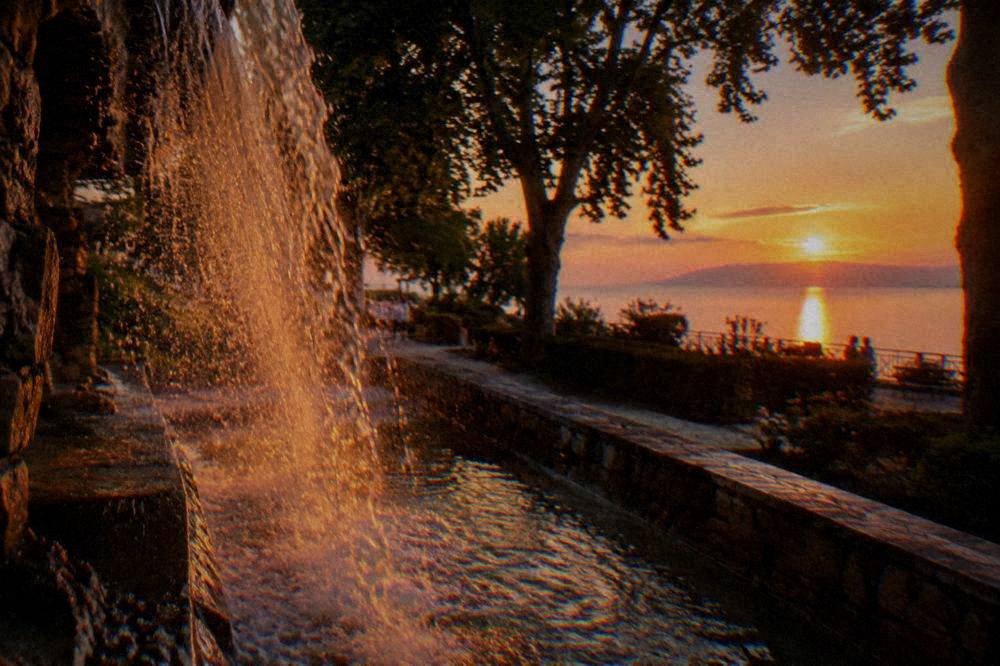
Two details from the municipal description shape a visit. First, the falls are illuminated at night, which extends the day in summer and gives the town an evening attraction that ancient sites cannot match. Second, the small per-attraction fees for the mills, the water museum and the cave are separate from park entry, so a family budget should allow a few euro per person per exhibit, checked on arrival.
For readers planning the wider day, the essential planning ranges look like this, with reported figures flagged for confirmation.
| Item in Edessa | Cost | Status of the figure |
|---|---|---|
| Waterfall park entry | free | reported, confirm on arrival |
| Karanos waterfall viewing paths | included in park entry | reported |
| Water museum and mills | a few euro per attraction, reported | confirm locally |
| Night illumination of the falls | free to view | reported |
| Parking near the park | not in this site's facts | confirm locally |
A guided option removes the parking question entirely. The Vergina Tombs And Edessa Waterfalls day trip from Thessaloniki pairs the royal tombs of Aigai with the waterfalls in one loop, and Check availability shows the current departure details.
Is The Edessa Waterfalls Park Free To Enter?
Entry to the waterfall park is reported to be free, because the falls and the gorge paths sit in a public green space owned by the municipality of Edessa. The separate indoor attractions inside the park, including the water museum, mills and cave, carry their own small reported fees. Confirm both on arrival, as municipal arrangements can change season by season.
This is one of the friendlier budgets in northern Greece. The headline sight, the falls themselves, costs nothing to view from the public paths, which is why Edessa appears on the site's guides to low-cost days out from Thessaloniki alongside the free churches and the open-air Roman monuments. What costs money is the layer on top: the exhibits, any guided commentary, food in town, and transport.
The contrast with the state archaeological sites on the same corridor is worth seeing side by side. The Pella museum is reported at about 10 euro with a combined site ticket at about 15 euro, and the Museum of the Royal Tombs of Aigai at Vergina is reported at about 20 euro full and 10 euro reduced, all figures to confirm before travel. A full independent loop of Pella, Vergina and Edessa is therefore dominated by the two ancient tickets, not the waterfalls.
| Site on the western corridor | Reported admission | Notes |
|---|---|---|
| Edessa waterfall park | free | paths and viewing platforms |
| Edessa water museum, mills, cave | a few euro each | confirm locally |
| Pella archaeological museum | about 10 euro | combined site ticket about 15 euro |
| Vergina, Museum of the Royal Tombs of Aigai | about 20 euro full, 10 euro reduced | confirm before travel |
| Veria and Naoussa town centres | free to walk | street-level sightseeing |
How Much Time Do You Need In Edessa?
The waterfall park itself is a half-day sight at most: the paths, the gorge and the main viewpoints can be walked in a couple of hours, and the municipal description supports a visit of two to three hours including the small exhibits. The drive from Thessaloniki takes about 82 minutes each way, so a realistic day is six to eight hours door to door.
That arithmetic is what pushes nearly every traveller to combine Edessa with something else. Two hours of waterfalls plus three hours of driving leaves most of a day unused, and the corridor offers Pella, Vergina, Veria and Naoussa within an hour's further driving. The Veria guide covers the Byzantine town to the south, and the wine country around Naoussa sits about 76 minutes from Thessaloniki on the same side of the plain.
The exception is Loutra Pozar, the thermal baths near the border with North Macedonia. At about 100 minutes and 111 km from Thessaloniki, Loutra Pozar sits roughly 20 to 30 minutes beyond Edessa, and the two are commonly paired as a water-themed day: falls in the morning, hot pools in the afternoon.
When Is The Best Time Of Year To Visit The Edessa Waterfalls?
The falls flow all year, but late autumn through spring carries the most water after the wet months, and summer offers the longest daylight and the reported evening illumination. Judge by the regional climate: December and November carry the highest monthly rainfall totals in the HNMS Thessaloniki Mikra station table, 1959 to 2010.
The climate station is in Thessaloniki, not Edessa, but both sit in the same broad Macedonian pattern: wet winters, dry summers, and a rainfall peak in late autumn and early winter. August, at 19.3 mm of rain on that station record, is the month with the least rainfall, which is when the falls are at their gentlest even as the park is at its greenest and the evenings are warm enough for the illuminated viewing. Travellers who want the thundering version should aim for November through April, accepting cooler walking conditions.
| Month (HNMS Thessaloniki Mikra station, 1959 to 2010) | Mean high C | Mean low C | Rain mm |
|---|---|---|---|
| January | 9.3 | 1.5 | 37.7 |
| March | 14.3 | 4.7 | 37.9 |
| May | 24.6 | 12.6 | 44.2 |
| July | 31.7 | 19.3 | 23.8 |
| August | 31.4 | 19.1 | 19.3 |
| October | 21.2 | 11.3 | 43.0 |
| December | 10.9 | 3.2 | 55.1 |
Winter visits carry one advantage nobody else on this corridor can claim: the falls and the park do not depend on opening hours in the way museums do. In January, when the Archaeological Museum of Thessaloniki runs its reduced winter schedule, an outdoor waterfall in a town centre is indifferent to the season, and snow on the plateau is not unusual. Check locally for winter path conditions after cold spells.
Should You Visit Edessa Independently Or On An Organized Day Trip From Thessaloniki?
Independent travel suits confident drivers who want to control the pace and stack Edessa with Pella or Veria on their own route; an organized day trip suits travellers who prefer the driving, parking and timing handled, and every guided option from Thessaloniki pairs the waterfalls with the ancient sites because the geography rewards it. Both approaches reach the same free park.
The independent case rests on the road: 90 km each way on good Macedonian roads, with the corridor's sites close enough together that a self-planned loop is genuinely easy. The things to do in Thessaloniki overview frames the day-trip radius, and the city centre guide covers the practicalities of leaving it. Rental pickup, tolls and parking are not covered on this site, so plan those from the operators' own pages.
The organized case rests on bundling. The guided products from Thessaloniki that reach Edessa also cover Vergina, the Dion archaeological park at the foot of Mount Olympus, or both, and the shared driving makes the combined day cheaper per sight than two separate trips.
For a different flavour of the region, the Dion And Mount Olympus Park day trip heads the other way from Thessaloniki, into the ancient sanctuary below Greece's most famous mountain, while the OTE Tower rotating experience keeps the day inside the city with a rotating view over the Thermaic Gulf and a light meal in the tower.
What Else Can You Combine With Edessa On The Same Day Trip?
The natural pairings are Pella, about 43 minutes from Thessaloniki and on the direct route, Vergina at about 62 minutes, and Loutra Pozar at about 100 minutes, which sits beyond Edessa and turns the trip into a falls-and-hot-springs day. Veria and Naoussa add towns and wine country to the south of the corridor.
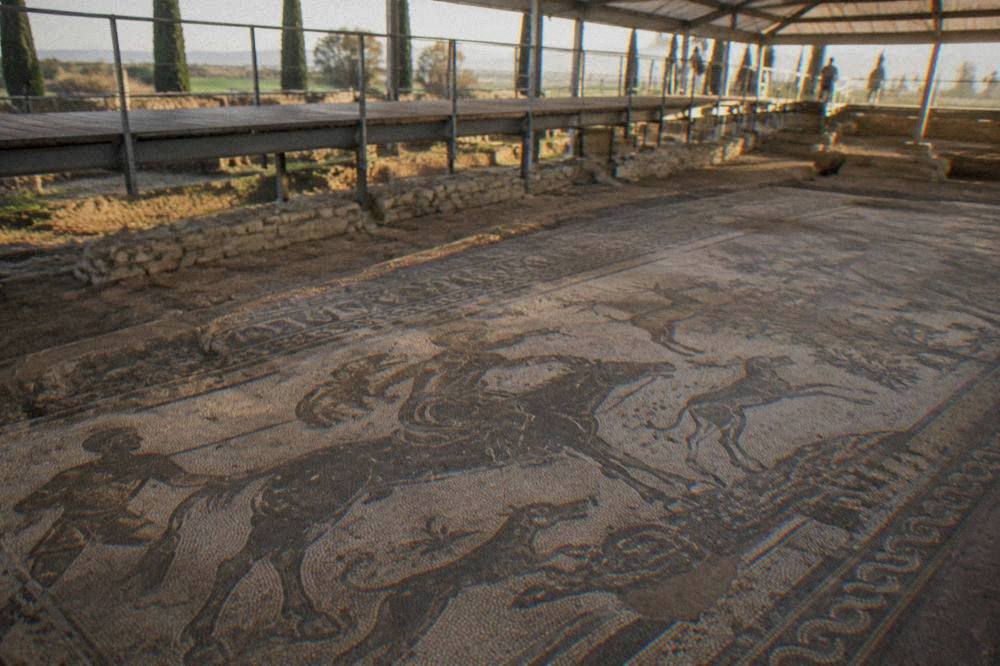
Each combination has a logic. Pella plus Edessa is the gentlest day: the ancient capital's mosaics and museum first, then the waterfalls as a cooling finish, with under two hours of total driving beyond the outbound leg. Vergina plus Edessa is the heavyweight cultural day, anchored by the royal tombs of Aigai, and it is exactly the loop the guided tours run. Loutra Pozar plus Edessa is the water day, and the one to book in the colder months when hot outdoor pools and heavy falls both peak.
The southward option should not be overlooked. Veria, with its old quarter and Byzantine remains, and Naoussa, the wine town of the region, let a two-day trip cover falls, tombs, towns and vineyards without ever driving more than about 90 minutes from Thessaloniki. The Naoussa guide covers the wine country, though estate opening hours are not in this site's facts, so check each winery's own page.
| Day trip combination | Total driving from Thessaloniki, about | Character of the day |
|---|---|---|
| Pella and Edessa | 43 minutes out, Edessa 82 minutes, shared corridor | ancient mosaics then waterfalls |
| Vergina and Edessa | 62 minutes out, then the western loop | royal tombs and falls, the classic guided pairing |
| Edessa and Loutra Pozar | 82 minutes out, baths about 20 to 30 minutes further | waterfalls and hot springs |
| Veria, Naoussa and Edessa | 52 minutes to Veria, Naoussa nearby, Edessa beyond | towns, wine country and falls over one or two days |
Is Edessa Worth The Drive From Thessaloniki?
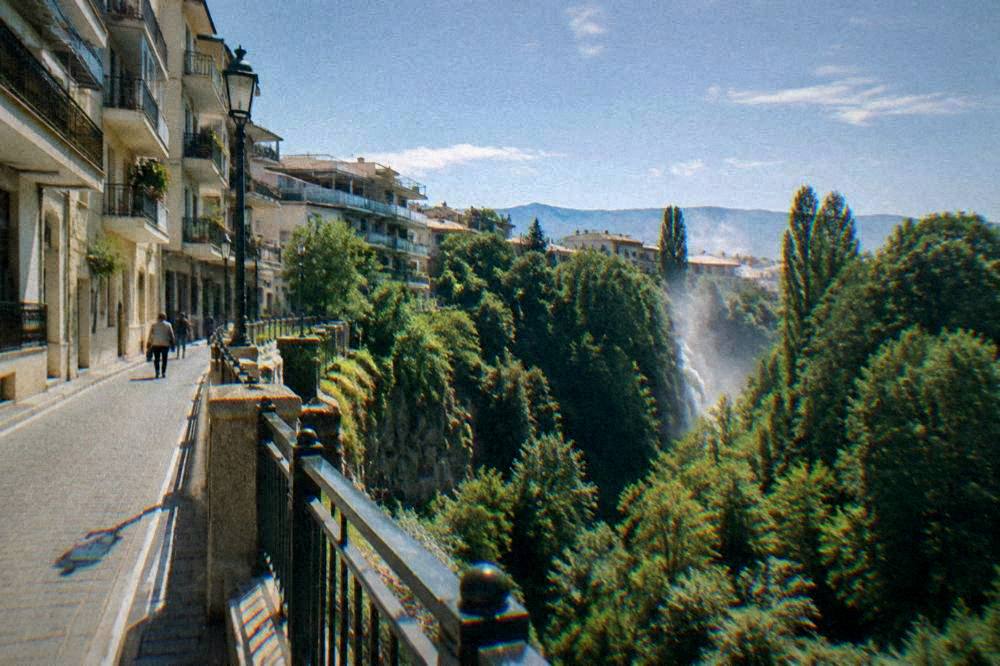
Yes, for the specific reason that the falls are in a town centre rather than at the end of a hike: no other day trip from Thessaloniki delivers a major natural sight with parking, coffee and dinner within a short walk. At about 82 minutes each way, the drive is mid-range for the region, shorter than Meteora and comparable with Lake Kerkini.
The honest comparison is with the corridor's other sights. Vergina has the more famous single attraction, and Pella the deeper history, but both are indoor, ticketed and seasonal in their hours. Edessa's park is reported free, open-air and lit at night, which makes it the flexible component of any western-loop day: it works as a morning stop, an afternoon cool-down or an evening endpoint after the museums close.
For cruise passengers and short-stay visitors the calculus is tighter. A day that includes Vergina and Edessa is a long one, and travellers with only a single day in port may prefer the Kavala corridor eastward or a city day around Aristotelous Square. For anyone with two or more days in Thessaloniki, the western loop is one of the region's best-value routes, and the two days in Thessaloniki itinerary logic of pairing a city day with one strong excursion points straight at it.
Common Questions About The Edessa Waterfalls Day Trip From Thessaloniki
How far is Edessa from Thessaloniki?
Edessa is about 90 km by road from Aristotelous Square in Thessaloniki, roughly 82 minutes of free-flow driving. Allow more in traffic or with stops along the western corridor.
How much does it cost to see the Edessa waterfalls?
Entry to the waterfall park is reported to be free. The small indoor attractions in the park, including the water museum and mills, carry separate reported fees of a few euro each; confirm on arrival.
Can you visit the Edessa waterfalls without a car?
Yes, either by intercity bus and rail services toward Edessa and Veria, whose timetables are not in this site's facts, or by an organized day trip from Thessaloniki that includes the waterfalls in its route. Check the operators' own pages for schedules.
What is the biggest waterfall in Edessa?
Karanos is the main waterfall, dropping through the wooded gorge directly below the town's cliff edge, with smaller cascades and walking paths around it in the municipal park.
Is Edessa a good day trip with children?
The park's paths, bridges and falls make it one of the more child-friendly stops in Central Macedonia, and the reported free entry keeps the risk low. Paths run through a gorge with water and spray, so keep small children on the walkways.
Can you combine Edessa with Loutra Pozar in one day?
Yes. Loutra Pozar lies about 111 km and 100 minutes from Thessaloniki, roughly 20 to 30 minutes beyond Edessa, and the pairing of waterfalls and thermal baths is a common single-day loop. Thermal-bath prices are not in this site's facts, so check the baths' own page first.
The short version of every planning decision on this page: the park is the easy part, reported free and open most of the day, while the driving is the part worth designing. Anchor the day on Vergina or Pella, add Edessa as the open-air finish, and the western corridor of Central Macedonia delivers a day trip from Thessaloniki that mixes royal tombs, mosaics and a river falling through the middle of a town, all inside about two hours of the White Tower. The Thessaloniki Travel Guide holds the full set of day-trip pages for the region, from Pella and Vergina to the Petralona Cave to the south.