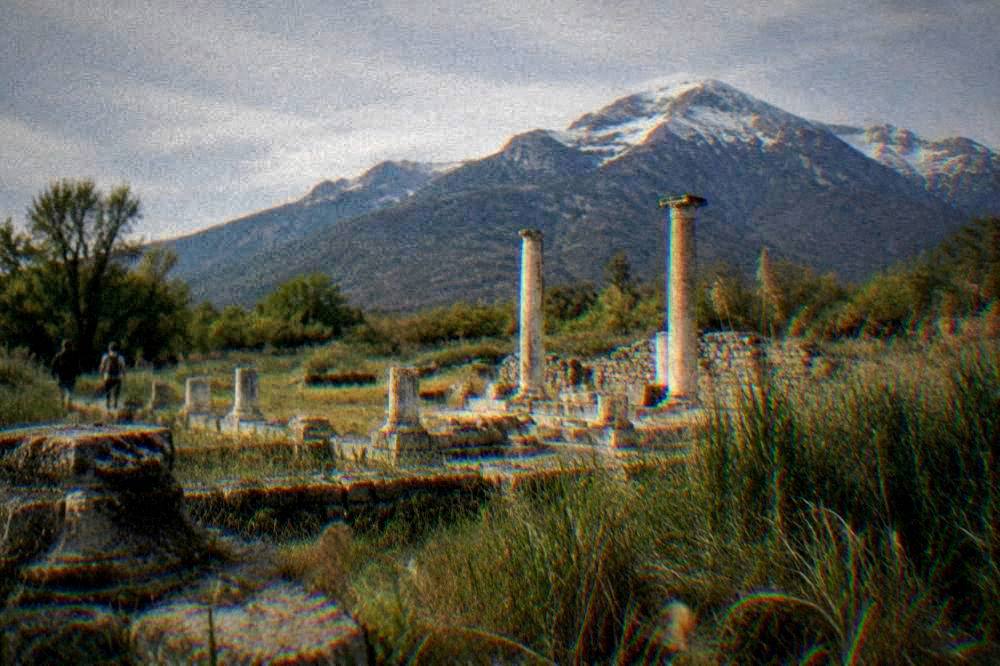
Dion: The Sacred City At The Foot Of Olympus
Dion was the sacred city of the ancient Macedonians, dedicated to Zeus and set at the very foot of Mount Olympus, about 67 minutes by road from Aristotelous Square in Thessaloniki.
Short answer
The Dion archaeological park sits about 90 km southwest of Thessaloniki, about 67 minutes by road from Aristotelous Square. Entry costs 10 euro full and 5 euro reduced, per the park's own site, and the park is open Wednesday to Monday 08:00 to 20:00 and Tuesday 08:30 to 15:30.
Dion is the sacred city of the ancient Macedonians, dedicated to Zeus and tucked at the very foot of Mount Olympus, about 67 minutes by road southwest of Aristotelous Square in Thessaloniki, in Central Macedonia, northern Greece. The name itself comes from Zeus: "Dion" means "of Zeus", and for centuries this was where kings came to sacrifice before war, where Alexander the Great staged games before setting out for Asia, and where a working Roman city later grew around baths, mosaics and temples. Today it is one of the most rewarding day trips from Thessaloniki, a green, water-threaded park that pairs naturally with Litochoro and the Mount Olympus foothills in a single day.
This guide covers what the park holds, the hours and ticket prices the park's own site publishes, how to get there under your own steam or on a tour, and how to combine Dion with Olympus, Litochoro or the other ancient sites of northern Greece.
What Is The Dion Archaeological Site Near Thessaloniki?
Dion is an archaeological park at the foot of Mount Olympus, about 90 km and 67 minutes by road from Aristotelous Square in Thessaloniki, and it preserves the sacred city where the ancient Macedonian kings honoured Zeus. Alexander the Great assembled his forces and staged sacrifices and games here before his campaign into Asia, and the site later flourished as a Roman colony with baths, a theatre, an odeon and mosaics, all threaded by springs.
The park sits on flat ground crossed by channels of the Vaphyras river, with the wall of Olympus rising directly behind it.
The name is the first thing to understand. "Dion" is the genitive of Zeus, so the city's full meaning is "city of Zeus". Archelaus, a king of Macedon, is credited in the sources with establishing the games and festival at Dion in honour of Zeus and the Muses. Later kings kept the cult going, and the city minted its own coinage and hosted athletic and theatrical competitions that drew the Greek world to the foot of the mountain the Greeks believed was the home of the gods.
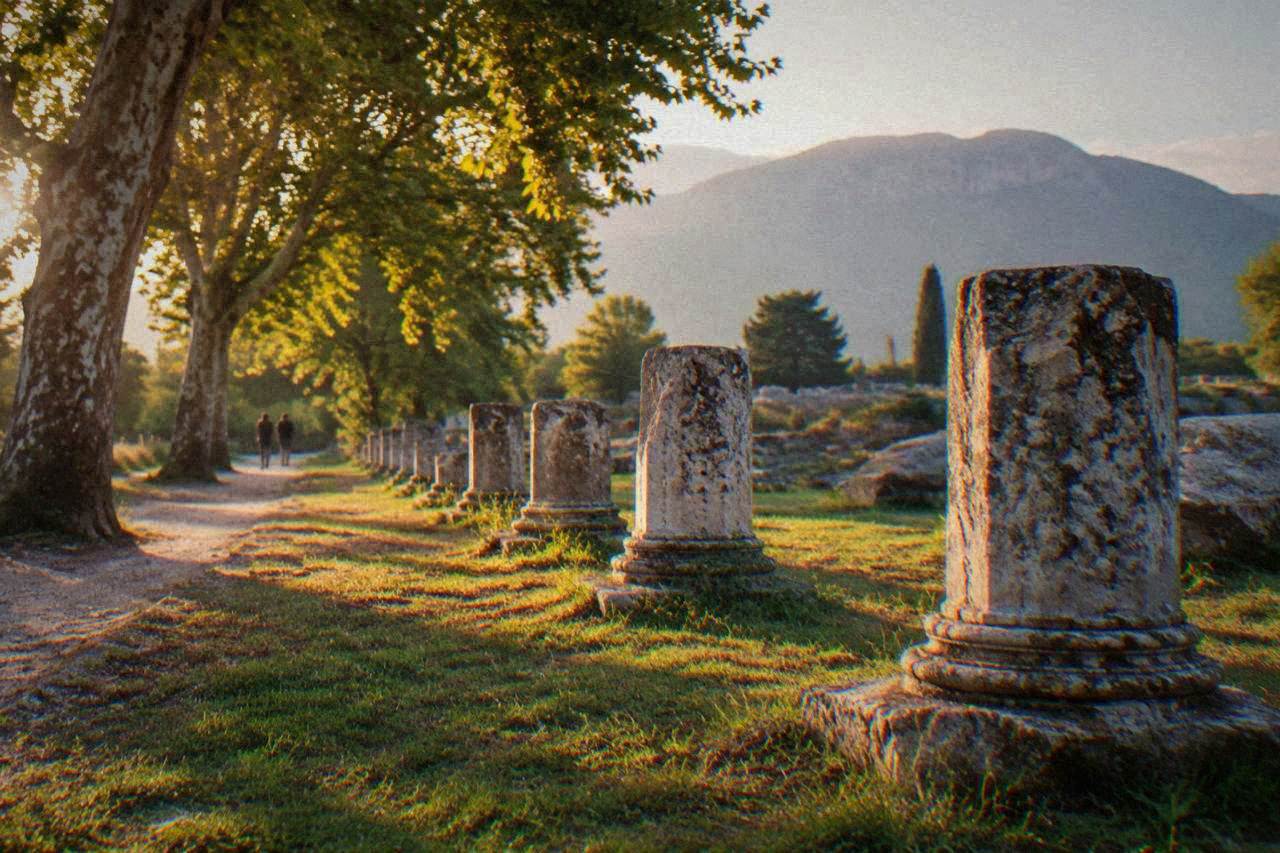
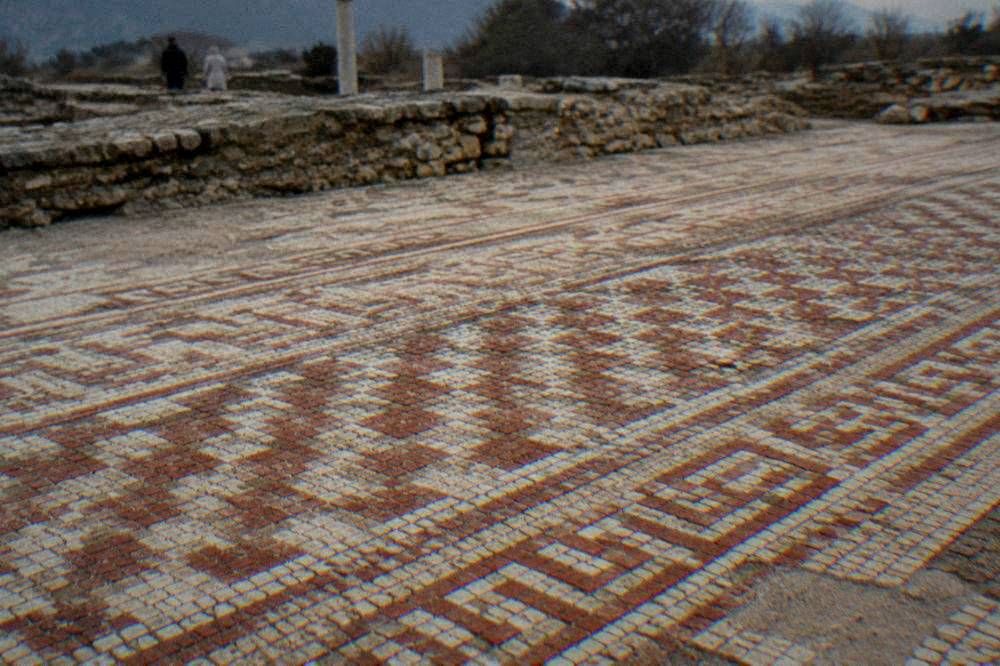
What survives today is spread across a large, shaded park. There are the city walls and the main street, the sanctuary of Zeus with its Altar of Zeus Hypsistos still standing, the sanctuary of Demeter and Isis with water still flowing through it, a Hellenistic theatre, a Roman odeon, baths with in-situ mosaics, an early Christian basilica and a villa district with floor mosaics. The on-site museum, in the modern village a short walk or short drive away, holds the statues, inscriptions and finds from the excavations.
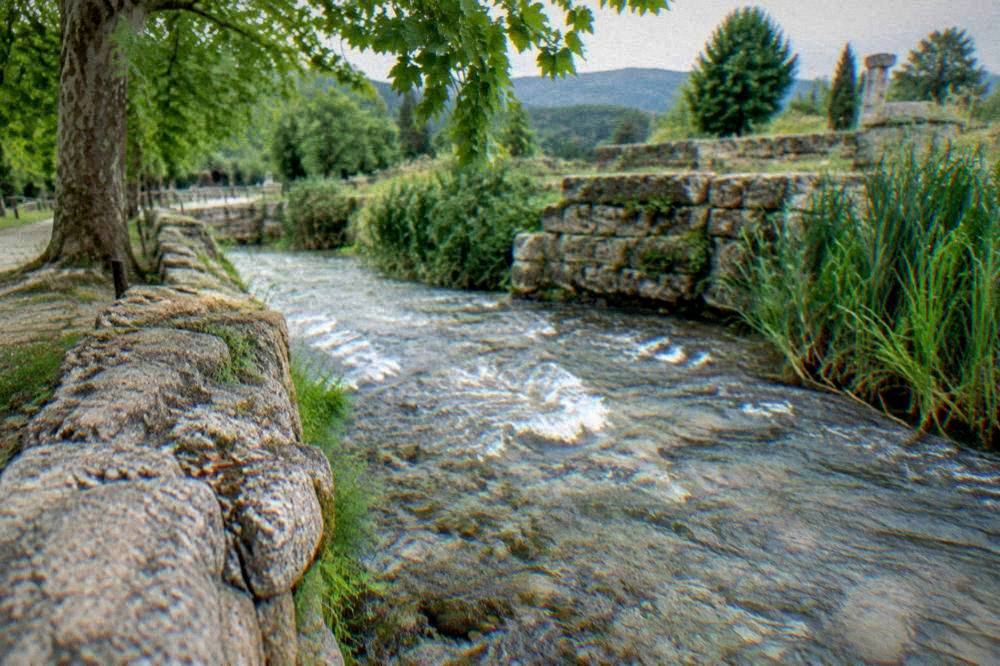
The site's water is its signature. The sanctuaries of Demeter and Isis were built around springs and channels, and the excavators have kept the water running, so reeds, plane trees and streams thread between the ruins. That makes Dion unusually pleasant in summer heat compared with bare, treeless sites.
What Are The Opening Hours And Ticket Prices At Dion?
The Dion archaeological park is open Wednesday to Monday 08:00 to 20:00 and Tuesday 08:30 to 15:30, and entry costs 10 euro full and 5 euro reduced, per the park's own site, with the ticket including the Archaeological Archive of Dion. Those are the figures the park publishes; confirm them on the park's own page before you travel, since state-site hours shift with the season. The museum in the modern village keeps separate hours, which the same page lists.
The seasonal rhythm matters. The long 08:00 to 20:00 window applies through the summer half of the year, and the Tuesday short day is the exception to build around: if your trip falls on a Tuesday, the park closes mid-afternoon, so an early start matters. Winter visitors should expect shorter days at Greek state sites generally; check the park's own page for the months you travel.
| Item | Details |
|---|---|
| Park hours, Wednesday to Monday | 08:00 to 20:00 |
| Park hours, Tuesday | 08:30 to 15:30 |
| Full ticket | 10 euro |
| Reduced ticket | 5 euro |
| Included in ticket | Archaeological Archive of Dion |
| Reduced eligibility | Standard Greek state-site reductions; confirm on the park's page |
Free-admission days that apply across Greek state museums and sites also apply here: 6 March, 18 April, 18 May, the last weekend of September and 28 October. If your dates line up with one of those, entry costs nothing, but expect company. Standard exemptions, including free entry for EU citizens up to 25, are the national scheme; the park's own page carries the details.
For context against the city's museums: the Archaeological Museum of Thessaloniki is 10 euro full and 5 euro reduced, so Dion sits at the same price point as the major city museums. Read more about that museum on the Archaeological Museum page.
How Do You Get From Thessaloniki To Dion?
Driving from Aristotelous Square in Thessaloniki to Dion takes about 67 minutes over about 90 km of road, computed over free-flow routing, and the practical route runs down the national road toward Katerini and then inland toward the Olympus foothills. Those drive times assume no traffic, parking or stops, so treat them as floor values, not promises. There is no metro or rail station at Dion itself; the journey is by road.
By car, the route leaves Thessaloniki southbound, follows the Athens-direction national road along the Thermaic Gulf, and turns inland at the Katerini junction toward the village of Dion. The same road continues to Litochoro, about 67 minutes and 91 km from Aristotelous Square, which is why Dion and Litochoro pair so naturally in one day. Fill the tank in the city or in Katerini; village fuel is limited.
Public transport to Dion is indirect. Trains from Thessaloniki call at Katerini and Litochoro stations on the way to Larissa, but no train serves Dion village, and the park facts hold no walk time from any station, so plan on a bus or taxi for the last leg.
The third option is a tour. A shared or private excursion removes the car and the schedule guesswork, and the related tour on this page covers both the park and the Olympus foothills with pickup in Thessaloniki.
| Route from Aristotelous Square | Distance | Free-flow time |
|---|---|---|
| Dion archaeological park | 90.1 km | about 67 minutes |
| Litochoro | 90.7 km | about 67 minutes |
| Mount Olympus (Prionia trailhead) | 106.9 km | about 86 minutes |
Can You Combine Dion With Mount Olympus In One Day?
Yes, Dion and the Olympus foothills fit comfortably in one day trip from Thessaloniki: the park lies about 67 minutes from the city and Litochoro about the same, with the Prionia trailhead about 86 minutes away, so a realistic day covers Dion plus Litochoro or Dion plus a trailhead walk, not a summit attempt.
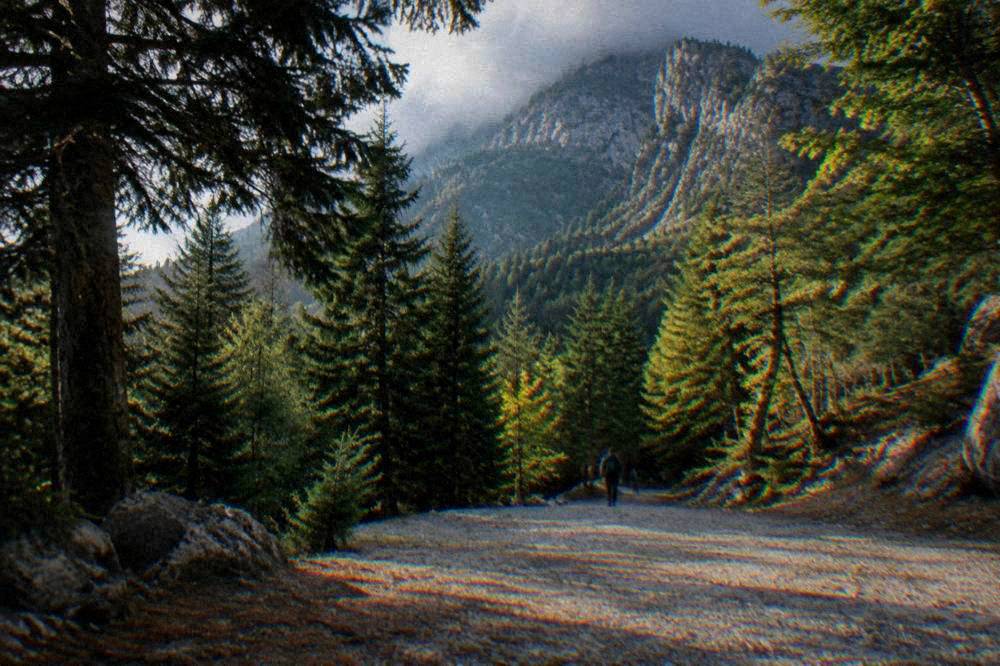
The shape of the day writes itself. Leave Thessaloniki early, reach Dion for opening at 08:00, and give the park two to three unhurried hours while the light is soft and the water channels are in shade. Then drive the short hop to Litochoro, the traditional gateway town under Olympus, for lunch and a stroll. In the afternoon either walk a stretch of the Enipeas gorge from the Litochoro side or drive up to the Prionia trailhead, about 86 minutes from the city, for a short forest walk.
That plan answers the common question can you do Mount Olympus in a day: a day trip is a visit to Dion, Litochoro or a trailhead walk, not a summit claim.
A longer day, for the ambitious, threads Dion, Litochoro and Vergina or Pella together, but that stacks two ticketed sites and a lot of road. A cleaner split is a full Olympus-and-Dion day, and a separate day for the royal Macedonian sites. Edessa and the thermal baths of Loutra Pozar sit on a different axis west of the city and make their own trip.
What Should You Actually See Inside The Dion Park?
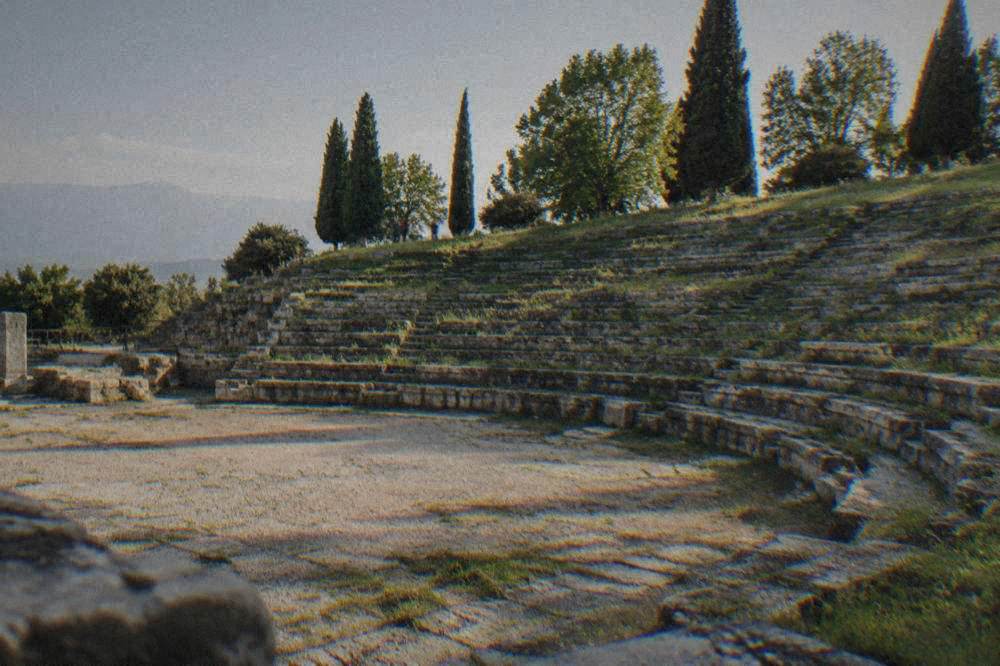
The four things to build a visit around are the sanctuary of Zeus with its standing altar, the water sanctuaries of Demeter and Isis, the Roman odeon and Great Baths with their mosaics, and the Hellenistic theatre where the ancient festival performances were staged, all connected by a level, signposted path network. The park is flat and walkable, with shade from plane trees, and the loop past the main monuments takes a couple of hours at a comfortable pace.
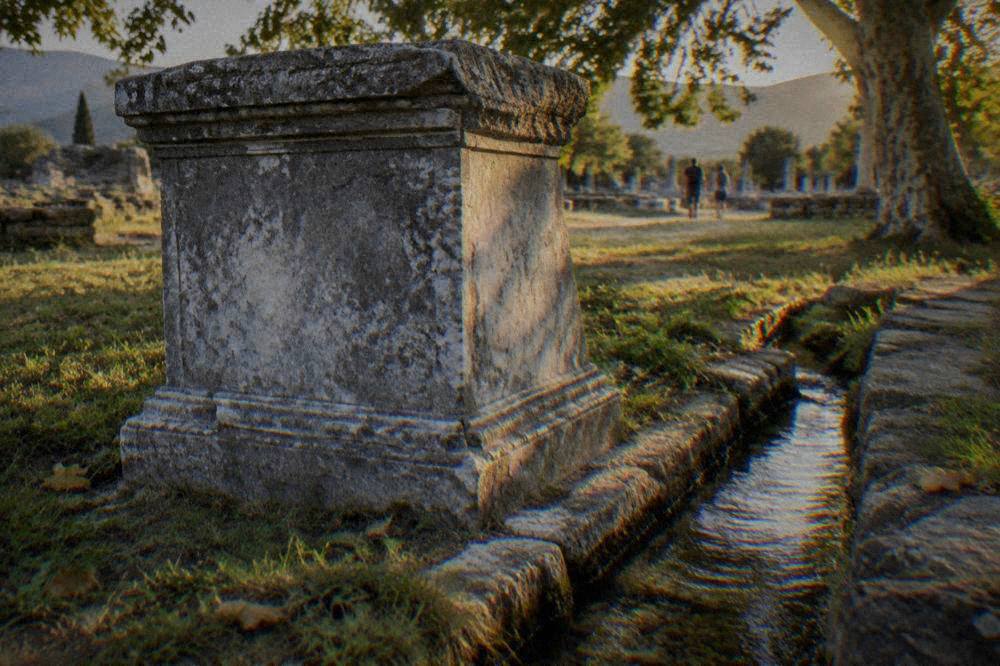
Start at the sanctuary of Olympian Zeus, just inside the park, where the Altar of Zeus Hypsistos still rises among the trees. This is the cult heart of the city, the reason Dion existed, and the spot the sources connect with Archelaus's festival and with Alexander's pre-campaign sacrifices. From there the main street runs through the ancient city, past the public baths and the odeon, a small roofed theatre of the Roman period.
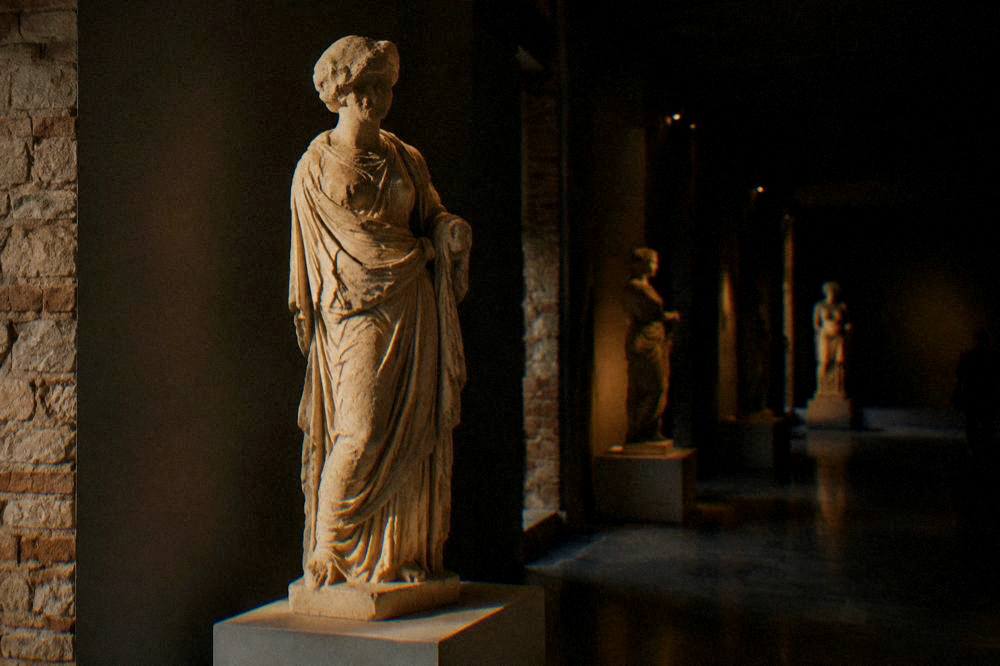
The water sanctuaries are the signature. The sanctuary of Demeter and the sanctuary of Isis were built around springs, channels and a marshy terrace, and the water still runs through the excavated basins today. Statues from the Isis sanctuary, found in the water where they were buried in late antiquity, are among the museum's highlights. The setting, reeds and flowing water below the mountain wall, is unlike any other Greek site near Thessaloniki.
Finish with the Hellenistic theatre, a grassy bowl west of the city, and the villa district with its floor mosaics. Then decide whether to walk or drive to the museum in the modern village, where the statues, grave markers and the famous hydraulis, a reconstructed ancient water organ, are displayed. Give the museum an hour.
A rough allocation for a first visit:
| Area of the park | What it is | Suggested time |
|---|---|---|
| Sanctuary of Zeus | Altar and cult heart of the sacred city | 20 to 30 minutes |
| Main street and baths | Roman city fabric and in-situ mosaics | 30 to 40 minutes |
| Sanctuaries of Demeter and Isis | Water channels, springs and basins | 30 to 40 minutes |
| Hellenistic theatre | Festival performance bowl | 15 to 20 minutes |
| Dion Archaeological Museum | Statues, inscriptions, hydraulis | about 1 hour |
Who Built Dion And Why Does It Matter?
Dion mattered because it was the national sanctuary of the Macedonian kingdom: founded as a cult place of Zeus at the foot of the mountain the Greeks held sacred, elevated into a festival city by King Archelaus of Macedon, and used by Philip II and Alexander the Great as the stage for the ceremonies that legitimized war. The city flourished under the Romans as a colony, was damaged by earthquakes in later antiquity, and was eventually abandoned as floods and silting buried the ruins, which is why the mosaics and statuary survived so well.
The festival of Zeus and the Muses at Dion, the Olympian games of Macedonia in all but name, drew athletes, poets and musicians from across the Greek world. The sources record Alexander here before his expedition to Asia, staging games and sacrifices. That event is the anchor of the site's fame, and the theatre you walk past is the structure associated with those festival performances.
After the Roman conquest the city prospered as a colony, acquiring the baths, the odeon, aqueducts and the villas whose mosaics survive. The decline came in late antiquity; the museum tells the story of a city that gradually slid into the marsh, its temples quarried and its statues toppled into the water. Excavation continues today, and the Archaeological Archive of Dion, included in your ticket, is the research wing of that work.
Understanding Dion's role clarifies the geography of Macedonian power for the whole region. The kings kept a sacred city at Olympus's foot, a capital at Pella, and royal burials at Vergina, ancient Aigai. Visit all three and the map of the kingdom assembles itself.
When Is The Best Time Of Year To Visit Dion From Thessaloniki?
The best window is April to June, when the 08:00 to 20:00 summer hours are in force, the water channels run full, the plane trees are in leaf and the mean daily high in the region sits in the low 20s to high 20s C, before the July and August heat that makes open sites punishing at midday. September and early October run a close second, with the last weekend of September a free-admission period at Greek state sites. Winter visits are possible but shorter-day hours apply at state sites generally.
Still, the HNMS Thessaloniki Mikra station, 1959 to 2010, gives a fair planning frame: a July mean daily high of 31.7 C, an August figure of 31.4 C, and June at 29.4 C. October cools to a 21.2 C mean high, April to 19.1 C and May to 24.6 C. If you walk the park at midday in July, expect the top of that range and plan the park for morning and Litochoro for afternoon shade.
| Month (HNMS Thessaloniki Mikra station, 1959 to 2010) | Mean daily high | Mean daily low |
|---|---|---|
| April | 19.1 C | 7.9 C |
| May | 24.6 C | 12.6 C |
| June | 29.4 C | 17.0 C |
| July | 31.7 C | 19.3 C |
| August | 31.4 C | 19.1 C |
| September | 27.1 C | 15.4 C |
| October | 21.2 C | 11.3 C |
Rain is not usually the constraint: July averages 23.8 mm and August 19.3 mm at the city station, the lowest monthly totals of the year. What the station table cannot tell you is the state of the mountain: Olympus makes its own weather, and Refuge A is reported open only roughly early May to late October, per the refuge's own information, so an autumn trip that hopes to add a trailhead walk should confirm locally.
How Does Dion Compare With The Other Ancient Sites Near Thessaloniki?
Dion is the sanctuary site, the greenest and most atmospheric of the ancient parks near Thessaloniki, while Vergina is the royal burial site, Pella the capital's city and palace, and Philippi the Roman colony furthest east, so the choice between them is a choice of story rather than quality. All are within day-trip range of Thessaloniki, and each answers a different question about ancient Macedonia.
Vergina, about 62 minutes from Aristotelous Square, holds the royal tombs of Aigai under an earth-covered museum, the burial place of Philip II. Pella, about 43 minutes, was the capital itself, with palace remains and a museum of mosaics. Dion, about 67 minutes, is the sacred city. The three form a triangle that a two-day itinerary can cover comfortably, one site per half day with museum time.
Further afield, Philippi and Kavala sit about two hours east, on the road toward Thrace, and belong with a different trip, as does Amphipolis on the same axis. Petralona Cave is a prehistoric site on the Halkidiki side of the gulf, about 55 minutes out, and pairs with beaches rather than antiquities.
| Ancient site near Thessaloniki | Drive from Aristotelous Square | What it preserves |
|---|---|---|
| Pella | about 43 minutes | Capital of the Macedonian kingdom, palace, mosaics |
| Vergina (Aigai) | about 62 minutes | Royal tombs, including Philip II's, under a museum |
| Dion | about 67 minutes | Sacred city of Zeus, water sanctuaries, Roman city |
| Philippi | about 127 minutes | Roman colony, theatre, early Christian basilicas |
On price, the parks sit near one another: Dion is 10 euro full and 5 euro reduced per the park's own site.
What Do Guided Dion Day Trips From Thessaloniki Include?
Guided Dion trips from Thessaloniki typically cover round-trip road transport from the city, time in the archaeological park, and a stop in the Olympus foothills or at Litochoro, with the tour description on the operator's live listing carrying the exact inclusions for each departure.
The related tour on this page covers Dion and the Olympus park in one excursion from Thessaloniki, which is the most natural pairing. For travellers whose real goal is the mountain monasteries, a Meteora excursion runs on a separate day, Kalambaka being about 228 km and 2 hours 34 minutes away, a full day by road. The thermal baths and waterfalls trip to Loutra Pozar and Edessa runs on yet another axis, west of the city.
A few practical notes on booking. Ticket prices to the park itself are separate from tour prices, and the 10 euro park ticket is paid at the gate unless your tour states otherwise, so read the listing's inclusions line. Free-cancellation terms vary by product and are shown on the listing before payment. And if your dates fall on a Tuesday, remember the park's 15:30 closing, which is the single most common way a Dion day goes wrong.
What Should You Bring And How Should You Plan The Day?
Bring water, sun protection, shoes you can walk a flat but unpaved park in, cash or a card for the 10 euro ticket, and a plan that puts Dion in the morning: the park opens 08:00 Wednesday to Monday, the light is better, the shade is cooler, and the afternoon belongs to Litochoro or the Prionia trailhead on the standard two-stop day. A morning arrival also protects you against the Tuesday 15:30 close if your travel day slips.
Clothing is simple. The park is level, but the paths are gravel and grass, and the water channels mean damp patches near the sanctuaries. In summer, a hat matters: much of the park is under trees, but the main street and theatre are exposed. The museum in the village is indoors, which makes it the natural midday stop when the sun is high.
Time budgeting, end to end:
| Block | Time |
|---|---|
| Depart Thessaloniki | 07:30 to 08:00 |
| Arrive at Dion | about 67 minutes later |
| Park visit | 2 to 3 hours |
| Museum | about 1 hour |
| Lunch in Litochoro | 1 to 1.5 hours |
| Prionia trailhead walk | 1 to 2 hours |
| Return to Thessaloniki | about 67 to 86 minutes by road |
One closing caution on the mountain. What is safe to say is what the refuge's own information reports: Refuge A is open roughly early May to late October. Confirm locally before you go, check the weather at Litochoro rather than the coast, and treat the mountain, as the Macedonians did, as the thing you honour from the sanctuary below.
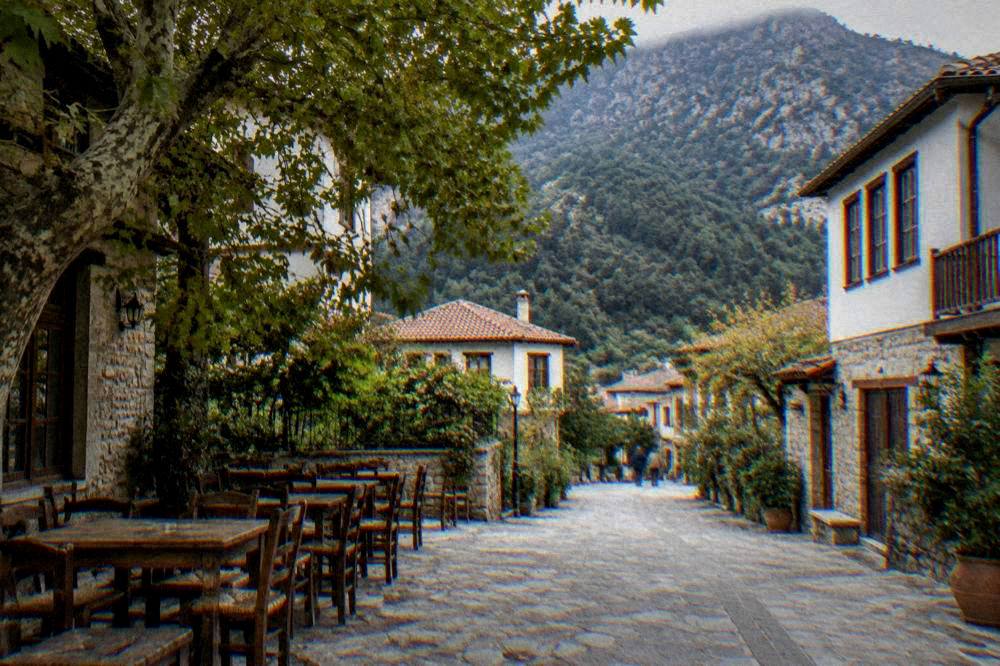
Dion rewards exactly the kind of unhurried half day that Thessaloniki-based trips make easy: one hour of road, a water-threaded sanctuary under the wall of Olympus, a museum of statues pulled from the marsh, and lunch in a mountain gateway town before the drive back along the gulf. Per the Thessaloniki Travel Guide desk's standing advice for state sites, confirm hours on the park's own page the week you travel, and the rest of the day plans itself.
Common Questions About Dion From Thessaloniki
How far is Dion from Thessaloniki?
Dion is about 90 km by road from Aristotelous Square in Thessaloniki, a drive of about 67 minutes under free-flow conditions, with no traffic, parking or stops included.
How much does the Dion archaeological site cost?
Entry to the Dion archaeological park costs 10 euro full and 5 euro reduced, per the park's own site, and the ticket includes the Archaeological Archive of Dion. Confirm the current price on the park's own ticket page before booking anything.
What are the opening hours at Dion?
The park is open Wednesday to Monday 08:00 to 20:00 and Tuesday 08:30 to 15:30, per the park's own site. Winter hours at Greek state sites are shorter, so check the park's page for the season you travel.
Can you visit Dion and Mount Olympus on the same day trip?
Yes. Dion lies about 67 minutes from Thessaloniki and Litochoro about the same, with the Prionia trailhead about 86 minutes out, so a day trip can cover the park, lunch in Litochoro and a trailhead walk. A summit attempt is a different proposition, and this guide makes no claim about it.
Is there a metro or train to Dion?
No. Trains from Thessaloniki call at Katerini and Litochoro, but no rail line serves Dion, so the last leg is by road. Intercity buses reach Katerini, with local connections onward; check operator schedules locally.
Is Dion worth visiting compared with Vergina and Pella?
They tell different stories: Dion is the sacred city of Zeus with flowing water and Roman mosaics, Vergina holds the royal tombs of Aigai, and Pella was the kingdom's capital. All three are within about an hour of Thessaloniki by road, and two fit in one ambitious day.