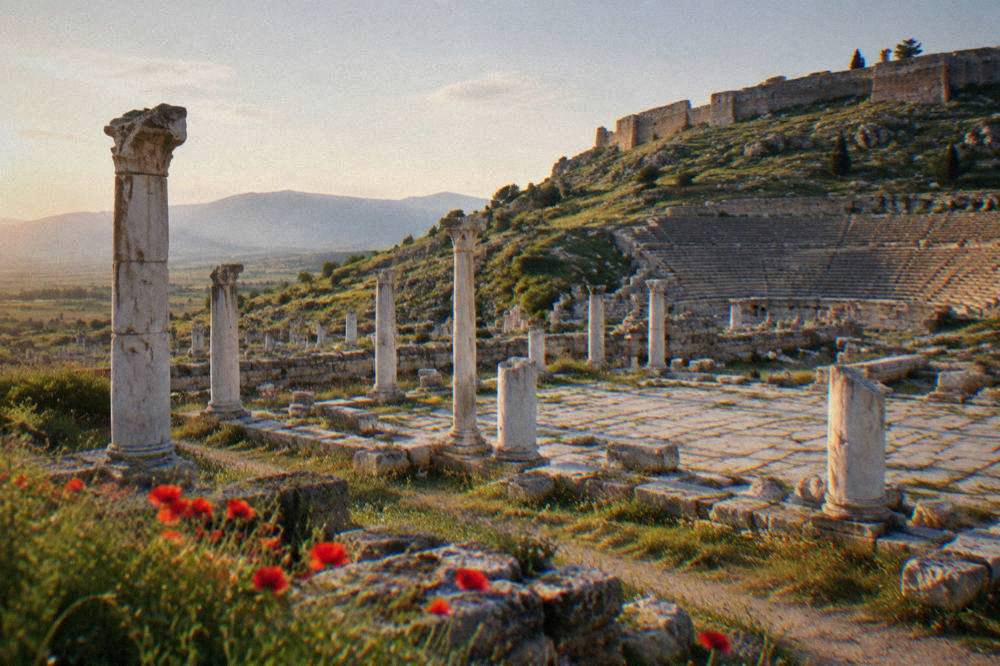
Philippi: Where Paul Preached In Europe
Philippi sits about 127 minutes by road east of Thessaloniki, and it is the archaeological site where, according to the Acts account, the Apostle Paul first preached on European soil.
Short answer
Philippi is about 156 km and about 127 minutes by road from Aristotelous Square in Thessaloniki. It pairs naturally with Kavala and Amphipolis on a single east-Macedonia loop, and it is a full-day trip.
Philippi is the far end of the east-Macedonia day-trip arc from Thessaloniki: about 156 km and about 127 minutes by road from Aristotelous Square, in the hills above the coastal city of Kavala. For a city that is now a spread of stone foundations, theatres and basilica walls, its name carries remarkable weight. According to the Acts account, the Apostle Paul preached here to a small group by a river outside the walls, and the letter he later wrote to the community at Philippi became part of the New Testament. That single association turns the site into a destination for pilgrims and history readers alike, and it explains why the route from Thessaloniki runs full of coaches for much of the year. This page lays out what the site holds, how to get there, what the road looks like, and how to fold Kavala and Amphipolis into the same day.
Where Is Philippi And How Far Is It From Thessaloniki?
Philippi stands about 156 km east of Thessaloniki, about 127 minutes by road from Aristotelous Square under free-flow conditions, in the region of Eastern Macedonia a short drive inland from the port city of Kavala. The route runs east along the northern edge of the Thermaic Gulf and then inland past Amphipolis before climbing to the Philippi plateau. Those drive times are computed over routing data with no traffic, so real journey times run longer.
The road east from Thessaloniki is one of the pleasantest drives in northern Greece. It leaves the city along the coast, with the Thermaic Gulf on the right and the mountains of Halkidiki ahead, then swings north around the head of the gulf before turning east toward the Strymonic plain. Amphipolis sits roughly on the halfway mark, about 78 minutes and 100 km from Aristotelous Square, and its famous stone lion is visible from the main road. From there the road climbs gently toward Philippi and the plain beyond it.
The practical reading of those numbers is simple: Philippi is not a half-day destination from Thessaloniki. It sits in the same distance band as Kavala, about 118 minutes and 155 km, and the two are almost always visited together. Meteora is the only common day trip from Thessaloniki that is farther, at about 228 km and 154 minutes, a comparison worth holding in mind when deciding how many long drives a single trip can carry.
| Destination from Aristotelous Square | Distance by road | Free-flow drive time |
|---|---|---|
| Amphipolis | 100 km | about 78 minutes |
| Kavala | 155 km | about 118 minutes |
| Philippi | 156 km | about 127 minutes |
| Meteora (Kalambaka), for comparison | 228 km | about 154 minutes |
Times are computed over routing data with no traffic, parking stops or site visits; treat them as floors, not promises. The drive back into Thessaloniki in the late afternoon can add real time, and parking at the site is a separate matter to confirm on arrival.
For travellers building the wider northern-Greece circuit, the site's coverage of Pella, Vergina and Dion covers the western and southern arcs, while Philippi, Kavala and Amphipolis cover the east.
Why Does Philippi Matter For Bible History?
Philippi is the place where, according to the Acts account, the Apostle Paul delivered his first recorded sermon on European soil, to a small group meeting by a river outside the city walls, and the community that formed there received one of his letters, the Epistle to the Philippians. That combination of a preached sermon, a baptism and a surviving letter makes the site a fixed point on any biblical-history route through Greece.
The story, as the Acts narrative tells it, is unusually domestic. Paul and his companions found a place of prayer by a river outside the walls on the Sabbath and spoke to the women gathered there. One of them, Lydia, a dealer in purple cloth from the city of Thyatira, listened and was baptised with her household. The narrative then moves to an imprisonment, an earthquake and a release, episodes that Bible readers know well. What the card and the sources support stops there: the number of Paul's visits, the dates of the events and the scripture chronology are not settled matters for this page, and the site itself asks to be read through the text rather than through invented dates.
The connection back to Thessaloniki is direct. Paul travelled west from Philippi along the Via Egnatia, the Roman road that linked the Adriatic to the Hellespont, and Thessaloniki grew rich on that same road, constructed, per the city's own historical pages, between 146 and 120 BC. The city's Pauline history is covered in depth on the site's Thessaloniki In The Bible page, which traces the stops a scripture-minded itinerary can make inside the modern city itself.
That shared road is the quiet reason a Philippi day trip feels like a continuation of a Thessaloniki walk. The Via Egnatia that Paul used is the ancestor of the modern highway that carries the visitor east, and the same corridor that made Thessaloniki a commercial hub in antiquity made Philippi a Roman colony on the frontier of the empire. Reading the two cities together, the port metropolis and the inland colony, is the honest way to understand both.
What Will You Actually See At The Philippi Site?
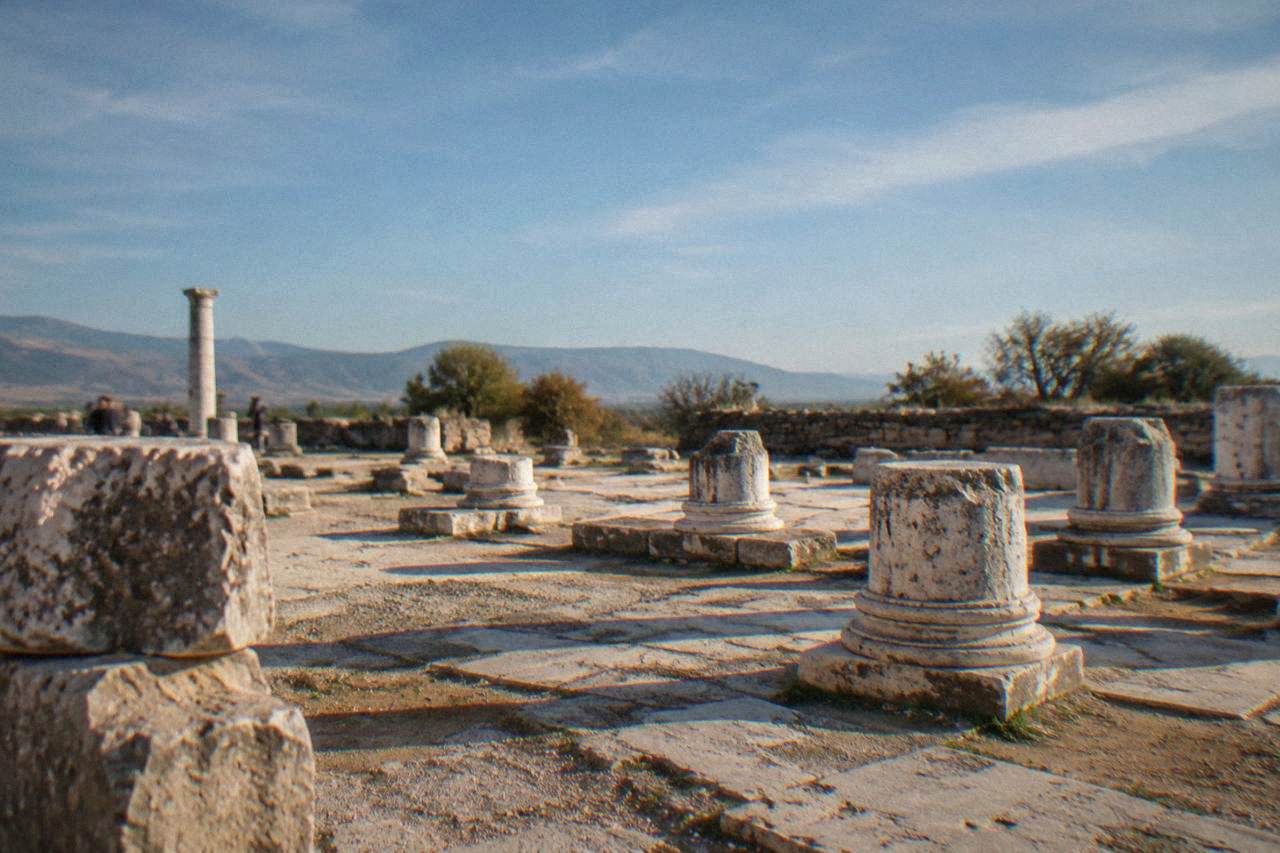
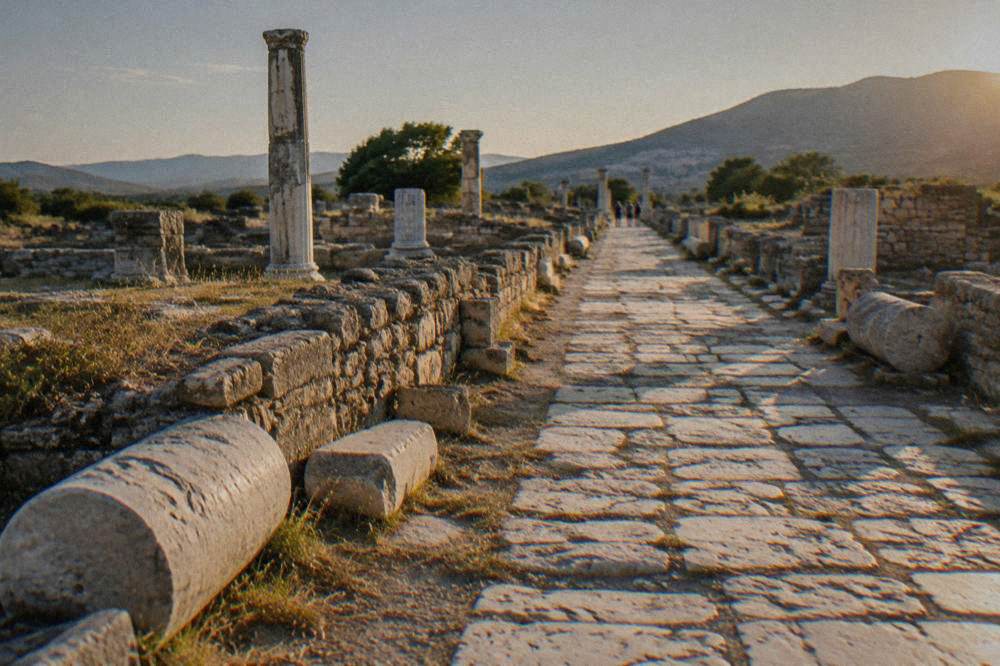
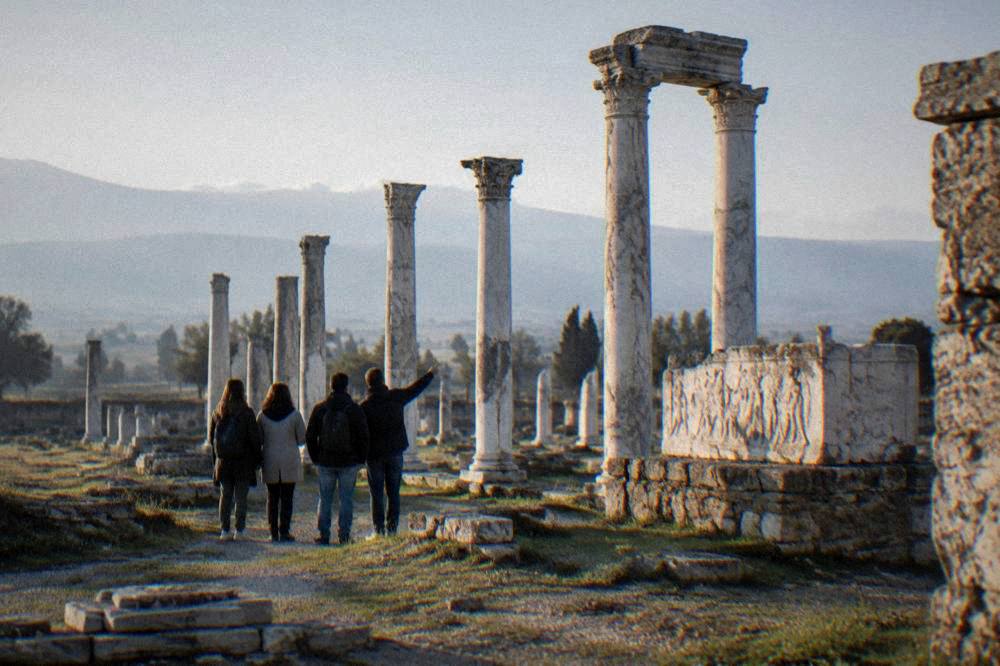
The Philippi archaeological site holds a Roman forum, a large theatre, stretches of the Via Egnatia itself, several early Christian basilicas with surviving floor mosaics, and city walls on the acropolis hill above, a spread of ruins covering both the Roman colony and the later Byzantine town. The theatre and the forum are the centrepieces, and the basilica mosaics carry the Christian layer of the city's story.
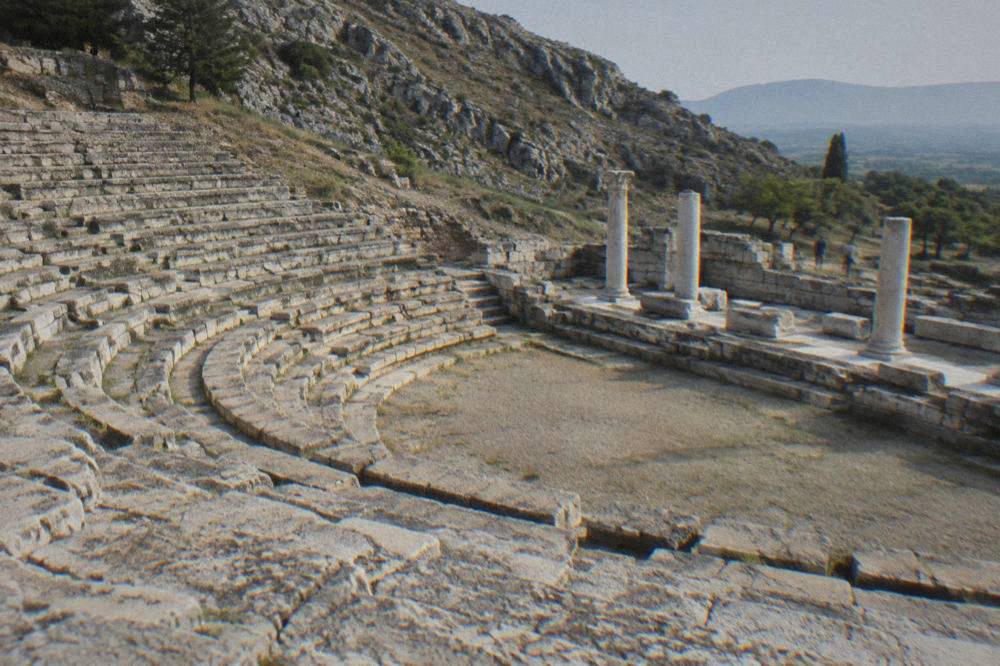
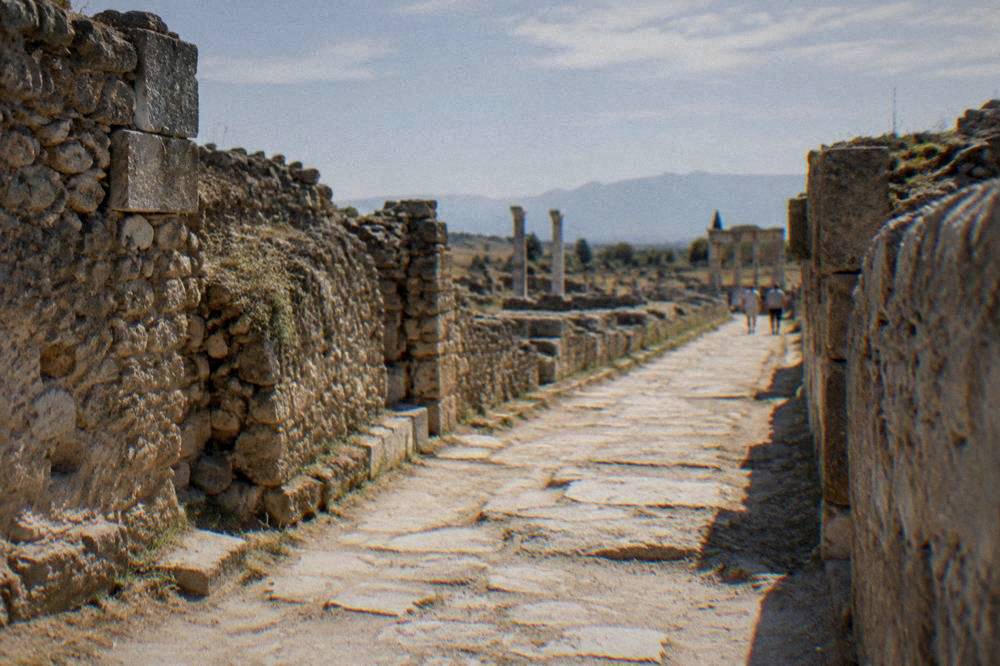
The site is large and mostly open ground, so shoes and water matter more than at a museum stop. The theatre, cut into the slope below the acropolis, anchors one end of the visit; the forum, with its paved surfaces and administrative buildings, anchors the other. Between and around them run the foundations of the basilicas, built as the city became a Christian centre in the late Roman and early Byzantine centuries, and the line of the Via Egnatia, which the visitor can walk along for a stretch, the same road surface conceptually that carried traffic between Rome's eastern provinces.
Outside the walls, a short distance away, a small modern church stands by a river and commemorates the meeting the Acts account describes, and it is a regular stop for pilgrimage groups. The site's own visitor facilities, opening hours and admission prices are matters to confirm before travelling: check the official archaeological channels or your tour operator before setting the itinerary in stone. A visit that also takes in the theatre, the forum, one basilica and the riverside memorial is a full morning on foot.
Planning the day around the site's scale is the difference between a rushed stop and a real visit:
| Stop at Philippi | What it is | Time to allow |
|---|---|---|
| Theatre | Hellenistic-era theatre cut into the hillside below the acropolis | 20 to 30 minutes |
| Forum and surrounding public buildings | Paved civic centre of the Roman colony | 40 to 60 minutes |
| Basilica ruins and mosaics | Early Christian church foundations with floor mosaics | 30 to 45 minutes |
| Via Egnatia stretch | Walkable line of the Roman road inside the site | 15 to 20 minutes |
| Riverside memorial church outside the walls | Modern chapel commemorating the Acts meeting by the river | 20 to 30 minutes |
| Site museum | Finds from the excavations | 30 to 45 minutes |
The museum stop is worth protecting in the schedule; the excavated finds give the stones their context, and an afternoon spent among them after the open site is a natural wind-down. Confirm opening arrangements locally before counting on it.
For the drive itself, an organised option covers the route and the guiding in one package: the Philippi and Kavala Private Apostle Paul Tour from Thessaloniki is this site's featured product for the destination, pairing the site with Kavala in a single day, and Check availability if a private format suits your group.
Should You Combine Philippi With Kavala In One Day?
Yes, and for most travellers from Thessaloniki the combination is the standard plan: Kavala sits about 118 minutes along the same road, only minutes short of Philippi itself, so pairing the coastal city with the inland site costs little extra driving and turns a long single-purpose run into a full day with two very different experiences, a seaside port town and a Roman colony.
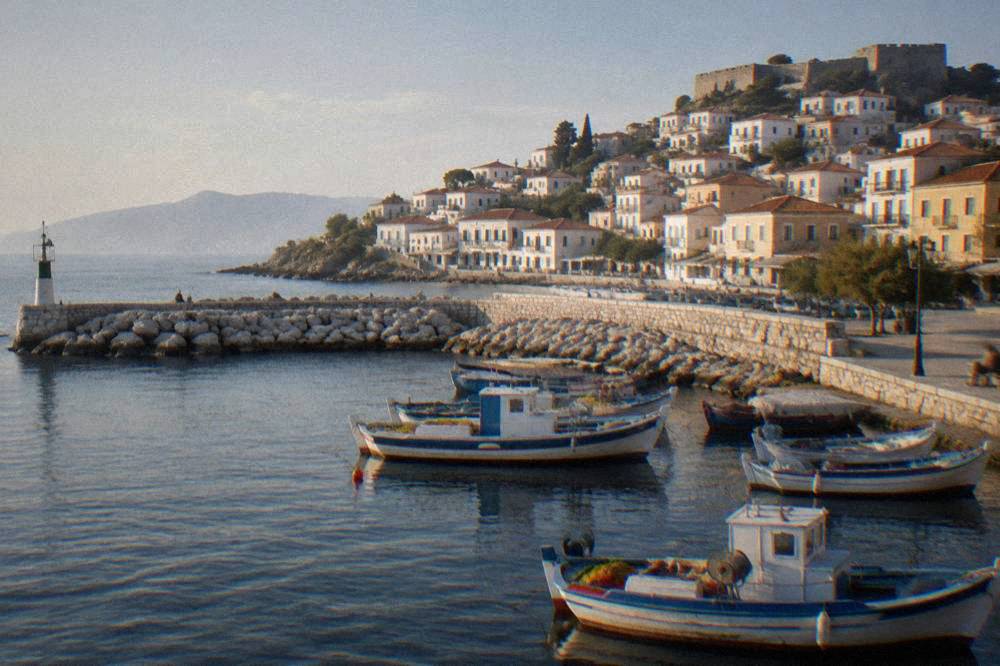
Kavala is the natural first or last stop. The city climbs an amphitheatre-shaped hill around its harbour, with an Ottoman-era aqueduct standing over the old town and a castle crowning the top, and its seafront makes a comfortable lunch stop between site visits. The card names no restaurants for Kavala or anywhere else, so the honest advice is simply that the harbour area is where eating options cluster, and that a midday pause here breaks up the drive sensibly. Kavala's own page on this site, Kavala, covers the city in detail.
The geometry of the day is forgiving. From Thessaloniki the road reaches Amphipolis first, then Kavala on the coast, then Philippi inland, and the return can retrace the same corridor. A loop that takes all three, with a stop at Amphipolis for its lion and museum area, runs to roughly three hours of driving for the full circle, on top of time at each stop. That is a long day, and it is the shape of day that makes a private or organised format attractive: the Thessaloniki: Kavala, Philippi, and Beach Full Day Trip adds a beach stop to the same corridor for those who want the sea in the itinerary too.
A sample shape for the combined day, using the card's free-flow figures:
| Time | Stop | Notes |
|---|---|---|
| 08:00 | Leave Aristotelous Square | About 78 minutes to Amphipolis free-flow |
| 09:30 | Amphipolis lion and area | Short stop on the main corridor |
| 11:00 | Kavala old town and harbour | Lunch and the aqueduct |
| 14:00 | Philippi archaeological site | Theatre, forum, basilicas, museum |
| 17:00 | Depart Philippi | About 127 minutes back free-flow |
| 19:15 | Back in Thessaloniki | Later with traffic and stops |
The card's drive times carry no traffic allowance, and summer afternoons on the return leg into Thessaloniki are slower than the free-flow figure. Build slack into any evening commitment.
How Do You Get To Philippi From Thessaloniki Without A Car?
The practical car-free options are an organised day tour from Thessaloniki, which handles the whole corridor including Kavala, or a self-managed combination of intercity bus services toward Kavala with local transport onward, a route the card carries no schedule or fare figures for, so timings and connections need to be confirmed with the operators before committing a day to them.
The organised route is straightforward to describe. Several day-trip products from Thessaloniki cover Philippi, some with Kavala, some with a beach stop, and the private format this site features, the Philippi and Kavala Private Apostle Paul Tour, pairs the two headline stops with a guide. Beyond the featured product, the Thessaloniki: Kavala, Philippi, and Beach Full Day Trip is the small-group shape of the same idea, and either covers the drive, the parking and the pacing in one purchase.
The independent route needs honesty. The card holds no bus timetables, fares or frequencies for Thessaloniki to Kavala or Kavala to Philippi, so this page prints none. What can be said is that intercity coaches in the region run from Thessaloniki's KTEL Macedonia station toward Kavala, that Philippi lies a further short hop inland from Kavala, and that the connection details, frequency and last return times must be confirmed with the operators before the day. For the station itself, the site's coverage of the Thessaloniki bus station corridor stops applies the same way east: arrive early, and treat published connections as the floor of the planning problem, not the whole of it.
Train service is not a Philippi answer: the rail network the card documents runs west and north from Thessaloniki, toward Larissa, Veria, Edessa and Florina, not east to Kavala. Within Thessaloniki itself, the metro's Line 1, open since November 2024 with the Kalamaria extension added on 27 August 2026, runs 05:15 to 00:30 Sunday to Thursday and 05:15 to 02:00 Friday and Saturday, with a basic ticket at 0.60 euro and a daily ticket at 2.50 euro, useful for reaching the KTEL stations from a central base before an early departure.
When Is The Best Time Of Year For A Philippi Day Trip?
Late spring and early autumn are the comfortable windows: the HNMS Thessaloniki Mikra station record, 1959 to 2010, shows July and August mean daily highs of 31.7 C and 31.4 C, which is punishing on an open site with no shade, while May averages a 24.6 C high and September 27.1 C with lower rainfall than the winter months. April and October are workable and quieter, with mean highs of 19.1 C and 21.2 C.
Philippi is an open-air site with long stretches of unshaded stone, so the temperature table matters more here than for museum days in the city. The same station record shows January mean lows of 1.5 C and December the highest monthly rainfall at 55.1 mm, with August the lowest monthly rainfall at 19.3 mm. Summer visits are common, but they reward an early start: arriving at the site in the morning and saving Kavala's harbour for the afternoon turns the day's heat curve to the traveller's advantage. More of these guides are collected on Thessaloniki Travel Guide.
| Month | Mean high C | Mean low C | Rainfall mm | Suitability for the site |
|---|---|---|---|---|
| March | 14.3 | 4.7 | 37.9 | Cool, workable |
| April | 19.1 | 7.9 | 36.1 | Comfortable |
| May | 24.6 | 12.6 | 44.2 | Comfortable, greener |
| June | 29.4 | 17.0 | 29.8 | Warm, start early |
| July | 31.7 | 19.3 | 23.8 | Hot, start very early |
| August | 31.4 | 19.1 | 19.3 | Hot, start very early |
| September | 27.1 | 15.4 | 29.8 | Comfortable |
| October | 21.2 | 11.3 | 43.0 | Comfortable, variable |
All figures are HNMS Thessaloniki Mikra station, 1959 to 2010, a weather-station record for the city, and conditions inland at Philippi, at elevation, can run a little sharper than the coastal station suggests. The annual calendar also shapes the drive: the Thessaloniki International Film Festival, whose 67th edition ran 5 to 15 November 2026, and the International Fair, whose 90th edition ran 5 to 13 September 2026, are annual city events that add traffic and fill accommodation in the departure city, worth knowing when booking a base.
What Does A Philippi Day Trip Cost To Plan?
No exact price can be stated here, because this site never quotes a hotel rate, a taxi fare beyond the reported figures it documents, or a bus fare the sources do not carry. Organised tours are the one cost line that renders cleanly, since the featured private tour, the small-group Kavala, Philippi and beach trip, and the Meteora private day trip all price on the operator's live listing.
Organised products are the one cost line that renders cleanly, because the operator's live listing carries the current figure. The featured private tour and the small-group Kavala, Philippi and beach trip both price on their listings, and a third corridor option, the Meteora private day trip, appears in the comparison below for travellers weighing which long drive to spend a tour budget on. This site never quotes a hotel rate, a taxi fare beyond the reported figures it documents, or a bus fare the sources do not carry.
What the independent day actually costs is a function of fuel, any tolls the route carries, parking at the site and admission, so the honest planning line is: budget generously for fuel and confirm the rest before travelling. The climate resilience fee that applies to Greek accommodation is collected by the lodging, charged per room per night and higher from April to October; no rate belongs on this page.
How Does Philippi Compare With Other Day Trips From Thessaloniki?
Philippi is the longest-haul cultural day trip east of Thessaloniki at about 127 minutes each way, against about 43 minutes to Pella, 62 to Vergina and 67 to Dion, and it trades the royal-Macedonian archaeology of the western trips for Roman-colony streets and Bible history, a different product for a different reader, while Meteora at about 154 minutes is the only standard trip farther.
The western arc, Pella, Vergina and Veria, delivers the Argead world: the mosaics and palace of Pella, the royal tombs of Aigai at Vergina, reported at about 20 euro full and 10 euro reduced, and the Byzantine lanes of Veria, itself tied to Paul's journey. The eastern arc delivers Rome and the Acts narrative. A traveller with two spare days and an interest in the period can honestly do both, and the site's Alexander The Great sites coverage and the Philippi corridor together make a complete northern-Greece ancient route.
| Day trip | Drive time each way | Theme | Best for |
|---|---|---|---|
| Pella | about 43 minutes | Macedonian capital, mosaics | Short, easy ancient fix |
| Vergina | about 62 minutes | Royal tombs of Aigai | The headline Macedonian museum |
| Dion | about 67 minutes | Sanctuary city under Olympus | Ruins plus mountain scenery |
| Amphipolis | about 78 minutes | Lion monument, ancient city | A stop on the Philippi road |
| Kavala | about 118 minutes | Port city, old town, aqueduct | Sea, food, relaxed pace |
| Philippi | about 127 minutes | Roman colony, Bible history | Pilgrimage and Roman ruins |
| Meteora | about 154 minutes | Monasteries on rock pinnacles | The single most dramatic trip |
Pairing logic matters more than ranking, and the card's constraint against calling any destination better than another holds: Kassandra, Sithonia and the Halkidiki peninsula trips answer a beach question, not a history one, and the site's Halkidiki overview treats them on their own terms.
What Should You Pack And How Should You Pace The Day?
Pack for an open, largely unshaded archaeological site in the warmer months: closed comfortable shoes, a hat, more water than seems reasonable, sun protection and something for shoulders inside any working church, then pace the day as an early start, a midday break in Kavala and a late-afternoon return, because the drive alone is about two hours in each direction before any time on site is counted.
The early start is the whole game. Leaving Thessaloniki around 08:00 puts the traveller at the site before the worst of the heat and before the coach waves, and it leaves slack for the Amphipolis stop on the way. The midday hours belong to Kavala, where lunch and the harbour shade reset the day, and the return leg after 17:00 arrives back in Thessaloniki in the evening. That shape also protects the city itself: a traveller back by 19:00 still gets a late walk on the Nea Paralia, the seafront promenade that is a walking space rather than a swimming beach, with swimming done at Perea about 28 minutes away or farther down the coasts.
A short checklist, built for this corridor specifically:
| Item | Why it earns its place |
|---|---|
| Two litres of water per person, warm months | The site is open ground with little shade |
| Closed walking shoes | Paved ancient streets, loose gravel, theatre steps |
| Hat and sun protection | About 31 C mean highs in July and August |
| Shoulder cover | Working churches along the route require modest dress |
| Printed or offline site notes | Coverage in the hills is not guaranteed |
| Cash in euro | Small stops along the corridor may not take cards |
Emergency cover is the same across Greece: 112 reaches the EU-wide emergency services. Greece uses the euro, is a Schengen member, and the practical mechanics of the departure city, from the metro to the White Tower's 8 euro full and 4 euro reduced ticket in force from 1 April 2026, are covered on this site's city pages.
Is A Guided Tour Worth It For Philippi?
A guided format earns its cost on this corridor more than on shorter trips, because the drive is about two hours each way, the site's stories sit in the Acts narrative and Roman history rather than on interpretation boards alone, and a private guide controls the pacing between Philippi, Kavala and Amphipolis so the day closes with margin instead of a rushed return to Thessaloniki.
The counter-case is real too. An independent traveller with a car, a good guidebook and an early start covers the same ground at lower cash cost, and the site itself rewards quiet reading. What the tour buys is the corridor logistics and the narration, and for the Bible-focused traveller, a guide who can move between the Acts text and the stones in front of the group changes the character of the visit entirely. The featured private product covers Philippi and Kavala in one itinerary, and the small-group alternative adds the beach stop, so the format choice is really a question of privacy versus price, both of which live on the operators' live listings rather than on this page.
For travellers who prefer a same-day taste of guided Thessaloniki before committing to a long day east, a shorter city product such as the bike tour past the White Tower and the Rotunda is a low-commitment way to test the format.
What About Amphipolis On The Way To Philippi?
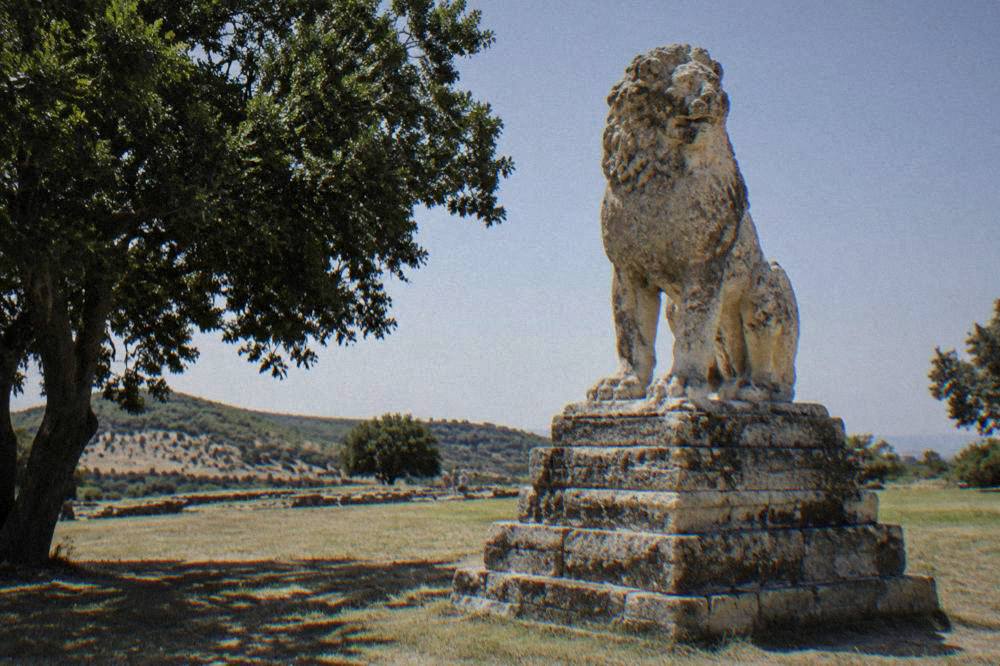
Amphipolis sits about 78 minutes and 100 km from Aristotelous Square, directly on the Philippi corridor, and its restored stone lion monument beside the old Via Egnatia alignment makes it a natural half-hour stop that breaks the drive without adding meaningful distance, while its museum and wider ancient city area reward a longer pause for travellers with time to spare.
The lion is the signature sight, a recumbent stone lion of the kind erected over great tombs in the Greek world, standing in a spot that keeps the ancient road's presence alive. What the card does give is the geometry, and the geometry is kind: a stop here costs perhaps thirty minutes and zero extra kilometres on the run to Kavala and Philippi.
For travellers stretching the east into a two-day loop, the corridor continues toward Kavala and the coast, with Thassos-style island hops sitting outside this site's day-trip scope, and the return to Thessaloniki retracing through Amphipolis or swinging north toward Drama country. The safe plan is the documented one: out along the gulf, up past Amphipolis, Kavala for lunch, Philippi for the afternoon, and home along the same road with the sunset behind the wheel.
Common Questions About A Philippi Day Trip From Thessaloniki
How far is Philippi from Thessaloniki?
Philippi is about 156 km by road from Aristotelous Square, about 127 minutes under free-flow conditions computed over routing data, so roughly two hours in each direction before traffic and stops.
Can you visit Philippi and Kavala in one day from Thessaloniki?
Yes. Kavala lies about 118 minutes along the same corridor, only minutes short of Philippi's drive time, so the standard plan pairs the coastal city with the site in a single full day, often with an Amphipolis stop on the way.
Why is Philippi important in the Bible?
According to the Acts account, Paul preached at Philippi to a group meeting by a river outside the walls, and the community that formed there later received his Epistle to the Philippians, events the site commemorates today, including at a riverside memorial church.
What is the best time of year to visit Philippi?
Late spring and early autumn. The HNMS Thessaloniki Mikra station record, 1959 to 2010, shows July and August mean highs of 31.7 C and 31.4 C on an unshaded site, while May averages 24.6 C and September 27.1 C.
How long should you spend at the Philippi site?
A visit that covers the theatre, the forum, the basilica mosaics, a stretch of the Via Egnatia and the museum runs about two and a half to three hours on foot, plus time for the riverside memorial church outside the walls.
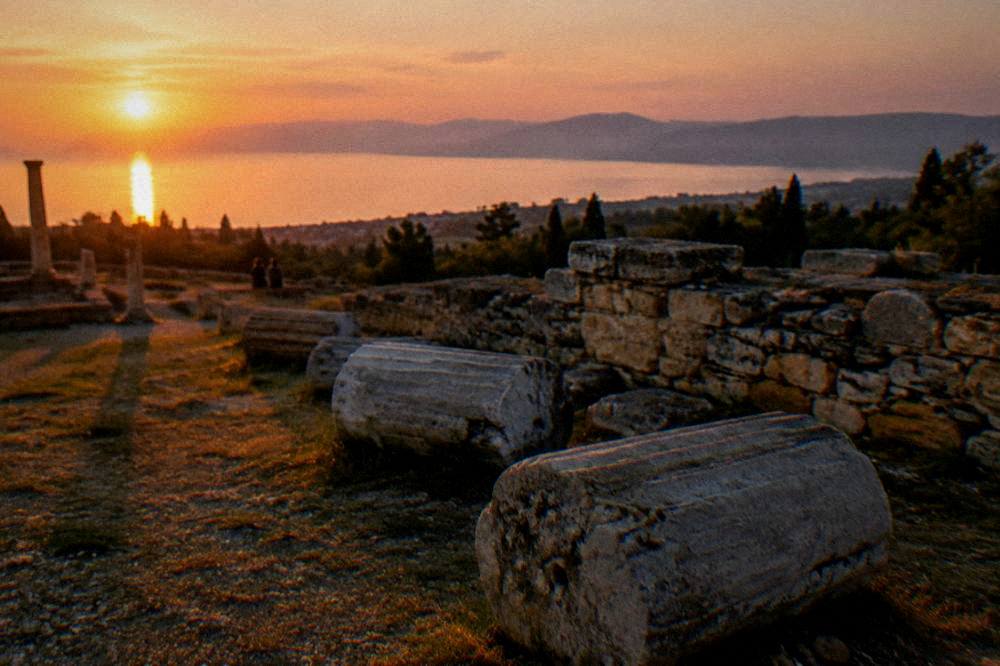
A Philippi day is a commitment of road and attention, and it repays both. The traveller who leaves Thessaloniki early, walks the Roman streets before the heat, eats in Kavala by the water and returns along the gulf at dusk has done the eastern arc of northern Greece properly, and has stood on the same corridor that carried a preacher, a road and an empire east and west for two thousand years.