Thessaloniki In The Bible: Saint Paul And The Thessalonians
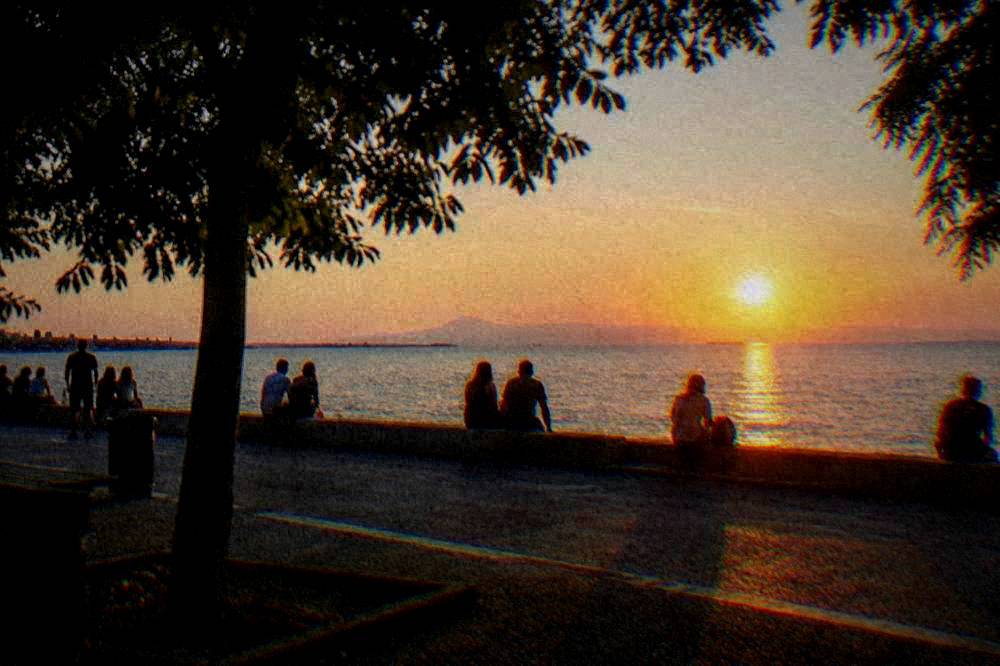
Two of the New Testament letters are addressed to a church Paul founded in the city the Acts account calls Thessalonica, the same city that is today Thessaloniki, the second city of Greece, on the Thermaic Gulf in Central Macedonia.
Short answer
Thessaloniki appears in the Bible as Thessaloniki: Paul arrived in the city according to Acts, founded a Christian community there, and later wrote two letters, 1 and 2 Thessalonians, to that church. The city's early Christian basilicas are now part of a UNESCO listing of fifteen monuments inscribed in 1988.
Thessaloniki, the second city of Greece, sits on the Thermaic Gulf in Central Macedonia, and it carries a name that readers of the New Testament already know. The city the Acts account calls Thessalonica is this same city, founded in 315 BC by Cassander and named for his wife Thessalonike, and it is the recipient of two of the letters of Saint Paul, 1 and 2 Thessalonians. Few cities of Paul's mission route can be visited today as continuously and as easily: the Thessaloniki Metro's Line 1 has run since November 2024, the airport is about 20 minutes by road from Aristotelous Square, and the early Christian and Byzantine monuments connected to the city's long church history were inscribed as a group of fifteen on the UNESCO World Heritage List in 1988. This page sets out what the Bible says about the city, what is and is not known, and what a visitor can see on the ground, with the practical details the official pages give.
Where Does Thessaloniki Appear In The Bible?
Thessaloniki appears in the Bible under the name Thessalonica, in the Acts account of Paul's travels and in the two letters Paul addressed to the church there, First and Second Thessalonians. The Acts narrative has Paul reach the city after passing through Philippi, Amphipolis and Apollonia, and it describes him arguing in the synagogue there over three sabbaths. The two letters, in turn, are written to the community that formed in that city. Together these texts are the reason the city's name is known to readers worldwide.
The Acts account, in chapter 17, places Paul in Thessaloniki after his stay in Philippi, travelling along the Via Egnatia, the Roman road built between 146 and 120 BC that connected the Adriatic to the Aegean and gave the city its commercial weight. In the Acts telling, Paul reasoned in the synagogue with Jews and Greeks, and a number of people believed, including, the text says, "not a few of the leading women". Opposition followed: a crowd was stirred up, the house where Paul had been staying was attacked, and the believers sent Paul and Silas away by night to Berea, the modern Veria, about 52 minutes by road from Aristotelous Square.
The two letters to the Thessalonians stand apart from the narrative. They address a young community's questions: persecution, the return of Christ, life and work, and the death of members of the congregation. What the reader should take from the texts is that Thessaloniki was a Roman provincial city with a synagogue, a mixed population and enough civic tension that a new religious movement drew an official response.
For the modern geography, the mapping is direct. Thessaloniki is Thessaloniki. Berea is Veria. Philippi, where the Acts account has Paul arrive in Macedonia first, is the archaeological site east of Thessaloniki, about 156.3 km by road. And the Via Egnatia that carried the mission is commemorated today in the name of the city's central Egnatia street, which runs past the Arch of Galerius and the Rotunda.
Who Were The Thessalonians Paul Wrote To?
The Thessalonians were the members of the Christian community that formed in Thessaloniki during Paul's stay, a mixed group of Jews and Greeks described in the Acts account, with the text singling out some prominent women among the believers. Paul's letters address them as a working, persecuted congregation, and the letters' warm tone is the reason the name "Thessalonians" has carried into Christian usage for two thousand years. No population figure for the congregation exists in any source this site can print.
The Acts account gives the social sketch: some of the Jews were persuaded, a great many of the devout Greeks, and not a few of the leading women. That is all the text claims, and it is the honest limit of what can be said. The letters add texture of a different kind: the community worked with their hands, they received the message "in much affliction", and they became an example, Paul writes, to believers in Macedonia and Achaia. Thessaloniki was the capital of the Roman province of Macedonia, which explains both why the city mattered to a travelling preacher and why civic authorities reacted when local opponents brought accusations before the city authorities.
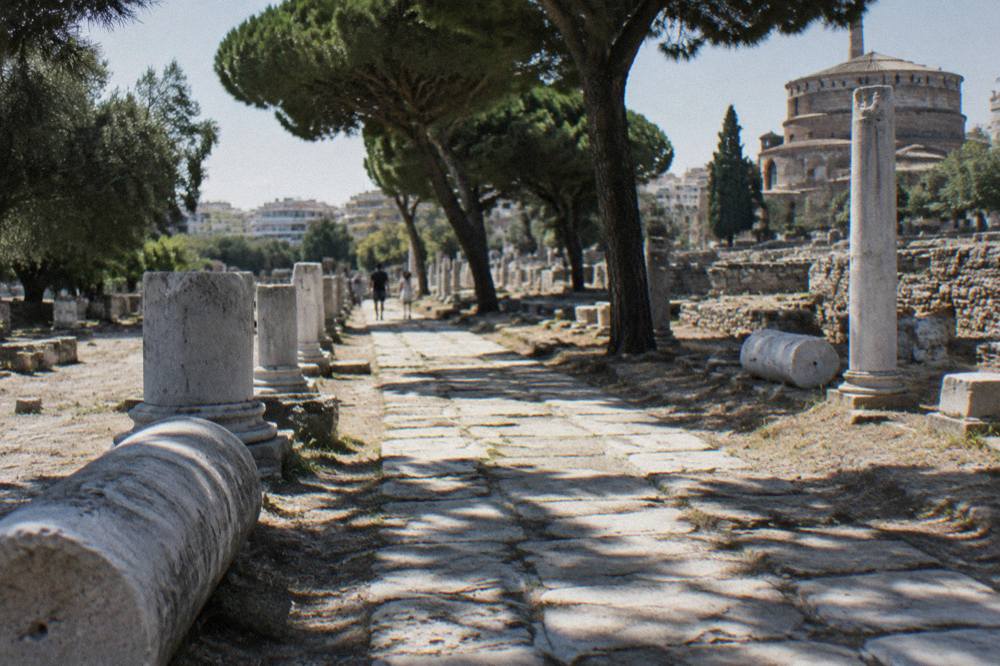
The city Paul entered had already been a Hellenistic and Roman centre for centuries. Founded in 315 BC, it had grown rich on its harbour and its position on the Via Egnatia. That Roman layer is still visible in the city centre: the Galerian complex of the Palace of Galerius, the Arch of Galerius and the Rotunda all belong to the Roman city, centuries after Paul but within the same urban frame he would have known as a Roman administrative centre. Visitors who want the full Roman and early Christian sequence in one visit should read the Byzantine churches guide alongside this page.
One caution is worth stating plainly. Popular retellings add details the texts do not contain: the size of the congregation, the location of the synagogue, the length of Paul's total stay beyond the three sabbaths of the synagogue argument. What stands is the sequence in Acts, the letters themselves, and the physical city, which is unusually well preserved for one of Paul's stops.
What Can You See In Thessaloniki From Paul's World?
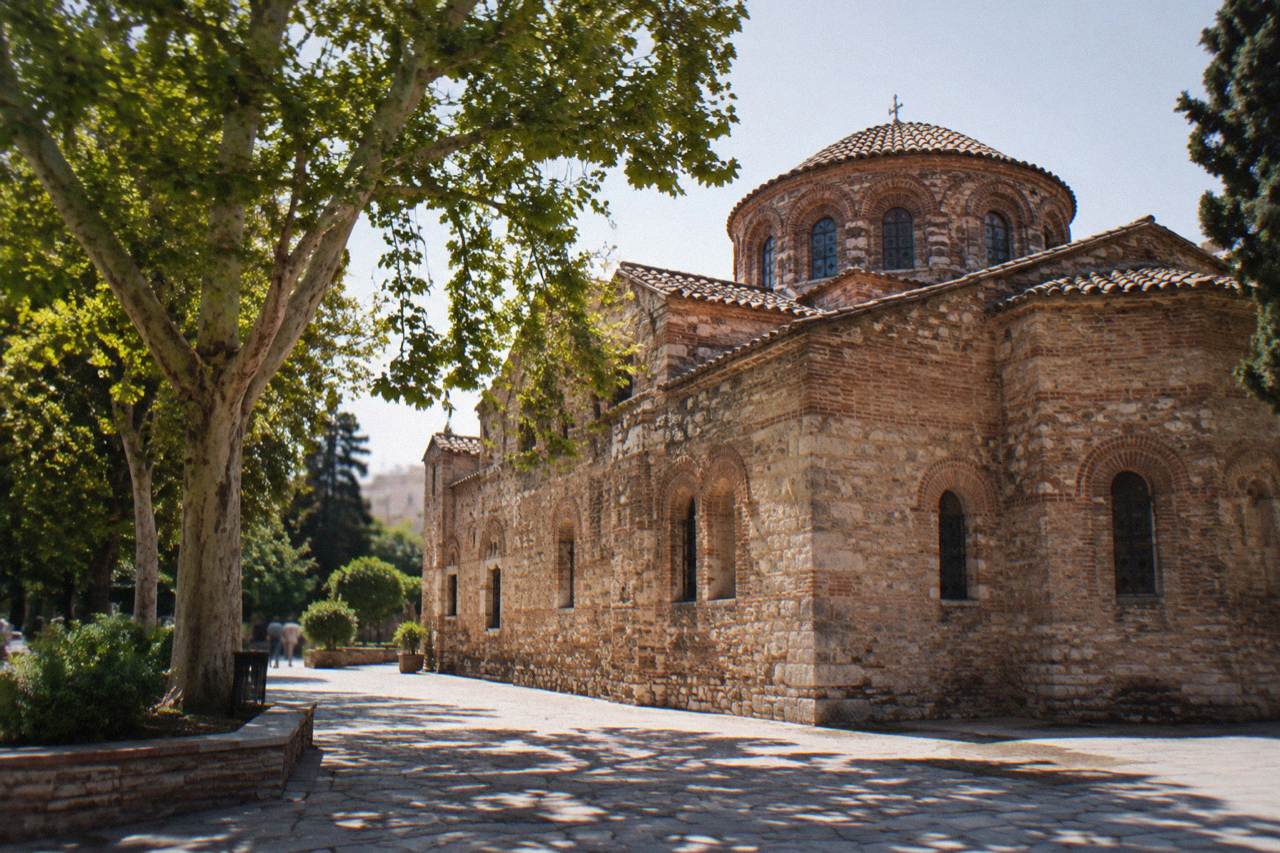
Almost nothing survives above ground from the exact decades of Paul's visit, but the Roman city he walked is present in the Galerian complex, the Arch of Galerius and the Rotunda, and the city's early Christian basilicas, built in the centuries after the letters, carry the story of the community the letters began. The Church of Saint Demetrius, the city's patron, and the UNESCO-listed group of fifteen Paleochristian and Byzantine monuments, inscribed in 1988, are the visible continuation of the Thessalonian church.
The Roman remains are the closest layer. The Palace of Galerius, with its arch and the great cylindrical Rotunda, was the heart of the tetrarchic complex. The Arch of Galerius is an open-air monument on Egnatia street, free to view at any time, and its relief panels of the tetrarch's campaigns are among the most complete Roman reliefs in Greece. The Rotunda's hours follow the state sites pattern, roughly 08:00 to 20:00 in summer per the odysseus portal, but the entry price for the Rotunda is a reported figure only, so check the current price on the official ticket page before visiting.
The churches are the second layer and the more moving one for a Bible-oriented visit. The Church of Saint Demetrius, dedicated to the city's patron saint whose name day on 26 October doubles as the anniversary of the city's liberation in 1912, is a working church, free to enter and open outside service times. Hagia Sophia, the Rotunda's neighbour in the UNESCO group, and Panagia Acheiropoietos carry the early Christian basilica form. The detailed guide to the Church of Saint Demetrius covers what the building holds and how to visit respectfully.
The table below groups the principal sites by period and access, using only figures the official pages give.
| Site | Period | Access | Entry |
|---|---|---|---|
| Arch of Galerius | Roman, Galerian complex | Open-air, on Egnatia street, anytime | Free |
| Rotunda | Roman, later a church | Roughly 08:00 to 20:00 in summer, per the state portal | Price not stated on the pages this site reports, check the official ticket page |
| Palace of Galerius | Roman, Galerian complex | State site, summer hours per the state portal | Check the official ticket page |
| Church of Saint Demetrius | Early Christian basilica, rebuilt after the 1917 fire | Working church, free, open outside services | Free |
| Hagia Sophia | Byzantine, UNESCO group | Working church, free, open outside services | Free |
| Panagia Acheiropoietos | Early Christian basilica, UNESCO group | Working church, free, open outside services | Free |
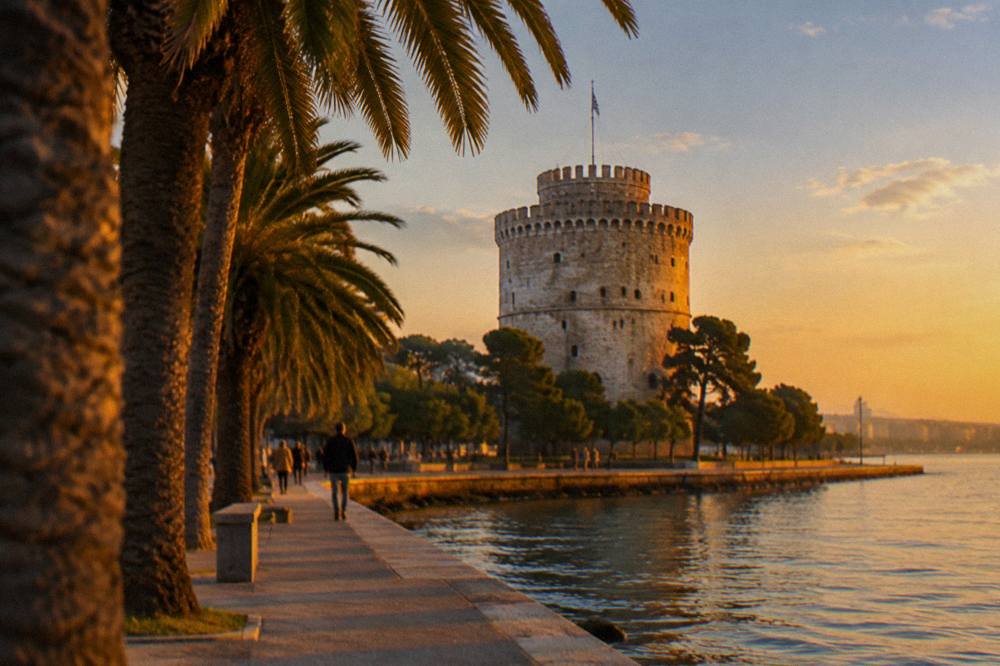
| White Tower | Ottoman-era landmark, museum inside | Summer 08:00 to 21:00 daily; winter 08:30 to 15:30 daily | 8 euro full, 4 euro reduced, in force from 1 April 2026 |
A guided walk is the efficient way to connect these layers, since the Roman, early Christian and modern city sit on top of each other within a walkable core. The Check availability link opens the operator's live listing for the Apostle Paul story walk, which follows the biblical narrative through the centre. The city is compact: the site's guide to getting around Thessaloniki covers the metro, buses and walking routes.
What Are The Letters To The Thessalonians About?
First and Second Thessalonians address a young congregation under pressure: 1 Thessalonians comforts a community whose members have died, answers questions about the return of Christ, and urges quiet working lives, while 2 Thessalonians takes up the same themes in a firmer register, correcting idleness and confusion about the day of the Lord. Both letters open with thanksgiving for the Thessalonians' faith, and both are, page for page, among the most pastoral of Paul's letters.
1 Thessalonians is usually summarized as a letter of encouragement. The community had faced hostility, and members had died before the return they expected. Paul's answer, in the letter's own words, is that the dead in Christ will not be left behind, and the famous description of the meeting "in the air" comes from that passage. The letter closes with a string of short instructions: rejoice always, pray continually, test everything, hold fast to what is good.
2 Thessalonians is harder in tone. It deals with a report that the day of the Lord has already come, and with believers who had stopped working. The letter's instruction, that anyone unwilling to work should not eat, has travelled far beyond theology into general proverb.
For a visitor, the letters change how the city reads. Standing at the Rotunda or in the nave of Saint Demetrius, the reader is inside the civic world, persecutions and magistrates included, that the letters assume. The table below pairs each letter's main themes with the passages a Bible-carrying visitor most often asks about.
| Letter | Main themes | Passages visitors ask about |
|---|---|---|
| 1 Thessalonians | Comfort under persecution, the dead in Christ, holy living, quiet work | 1:3 thanksgiving; 4:13 to 18 the meeting in the air; 5:16 to 22 rejoice, test everything |
| 2 Thessalonians | The day of the Lord, the man of lawlessness, discipline against idleness | 2:1 to 12 the day has not come; 3:10 the one unwilling to work |
How Did The Thessalonian Church Continue After The Letters?
The community Paul addressed grew into one of the great Christian cities of the Greek world, and its evidence is architectural: the early Christian basilicas and mosaics of Thessaloniki were inscribed together as fifteen Paleochristian and Byzantine monuments on the UNESCO World Heritage List in 1988, and the city's patron, Saint Demetrius, gives his name to its cathedral and to the 26 October name day that coincides with the city's liberation day. The church of the letters became the church of the empires.
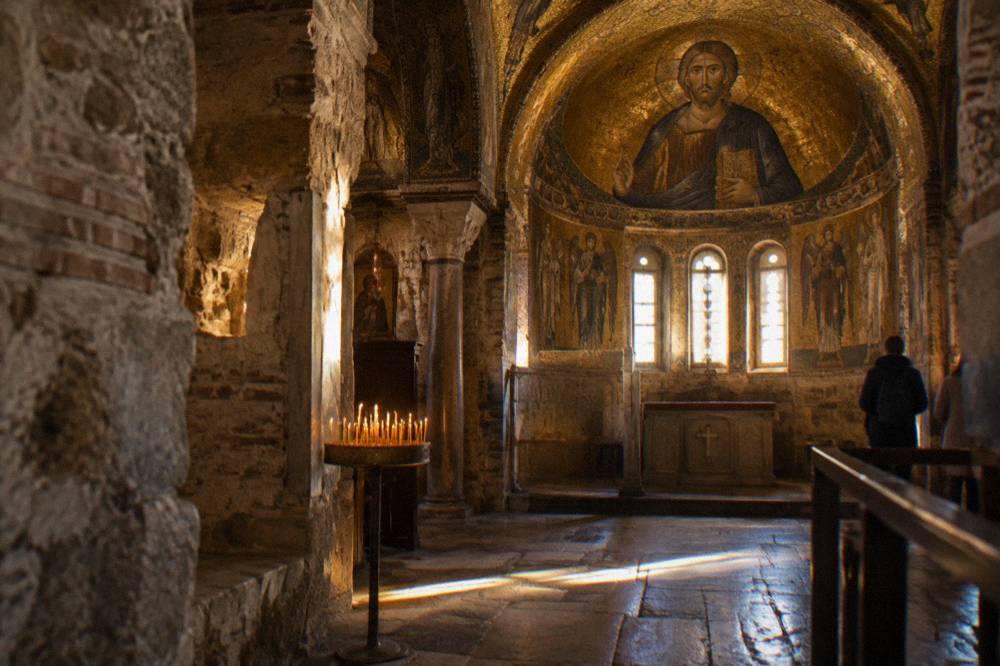
What the visitor can see is the result: a city where early Christian basilica plans, Byzantine mosaics and Ottoman-era layers sit within a fifteen minute walk of each other. The mosaic of Hosios David, the vault of the Rotunda when open, and the crypt of Saint Demetrius are the pieces visitors with a Bible interest most often seek out. All working churches are free to enter and open outside service times; no church publishes fixed visiting hours this site can print, so plan around services.
The Jewish thread runs parallel and belongs to the same story of the city's religious depth. Sephardic Jews arrived after 1492, per municipal pages, and built a community central to the city's life until the deportation of about 46,000 Jews in 1943, starting in March 1943, a history the Jewish Thessaloniki guide covers with the restraint it deserves. For the earlier Roman-period Jewish community of Paul's synagogue, no physical trace has been identified, and any tour or page claiming to show "the synagogue of Paul" is adding colour the texts do not supply.
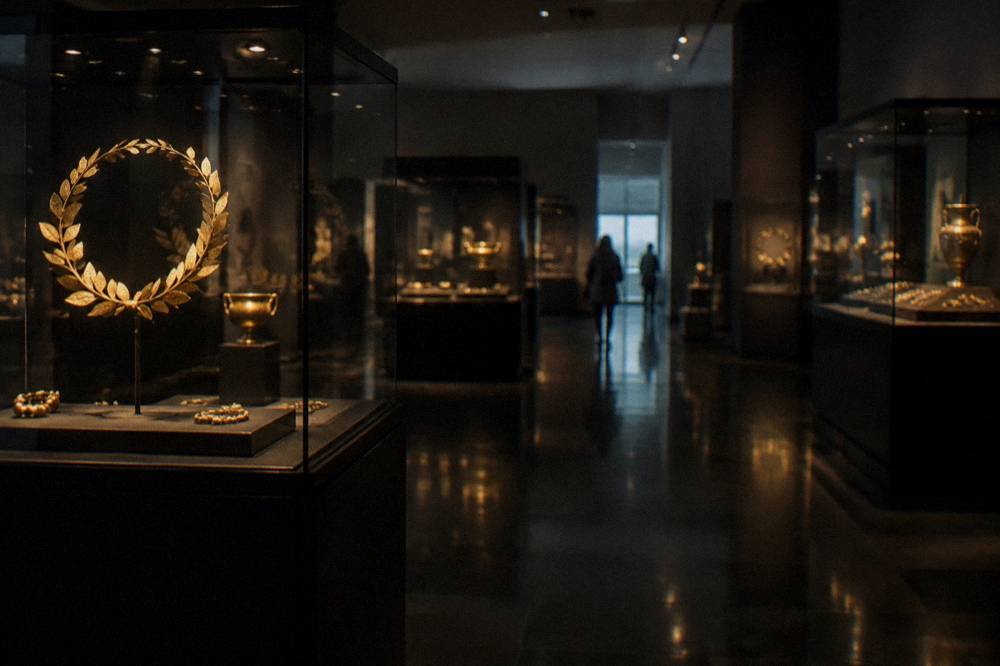
The museums hold the movable evidence. The Archaeological Museum of Thessaloniki, 10 euro full and 5 euro reduced, open 09:00 to 17:00 and closed Tuesdays from 1 November to 31 March, displays the city's Roman and early Christian holdings, and the Museum of Byzantine Culture, also 10 euro and 5 euro, daily 08:00 to 20:00 in summer, carries the story deep into the Byzantine period. Both are state museums, free on 6 March, 18 April, 18 May, the last weekend of September and 28 October, per their own visiting pages.
| Museum | Hours per its own page | Ticket |
|---|---|---|
| Archaeological Museum of Thessaloniki | 1 April to 31 October, daily 09:00 to 17:00; 1 November to 31 March, daily 09:00 to 17:00, closed Tuesday | 10 euro full, 5 euro reduced |
| Museum of Byzantine Culture | Summer, daily 08:00 to 20:00; winter, Monday and Wednesday to Sunday 08:30 to 15:30, Tuesday closed | 10 euro full, 5 euro reduced |
| White Tower | Summer, daily 08:00 to 21:00; winter, daily 08:30 to 15:30 | 8 euro full, 4 euro reduced, from 1 April 2026 |
Can You Follow Paul's Macedonian Route From Thessaloniki?
Yes, and the route is compact: Philippi, where the Acts account begins the Macedonian story, is about 156.3 km east by road, roughly 127 minutes free-flow from Aristotelous Square, and Berea, where Paul fled from Thessaloniki, is Veria, about 72.8 km and 52 minutes west. Amphipolis, the town Acts names on the road between them, is about 100.4 km away. A single day covers Philippi and Kavala, the ancient Neapolis where Paul first landed in Macedonia.
The drive times below are computed free-flow figures, without traffic, parking or stops, so treat them as "about". Kavala, the port city below Philippi, is about 154.6 km east. A combined Philippi and Kavala day trip is one of the most popular biblical-history excursions from Thessaloniki, and the site's Philippi day trip guide details the site itself, the Roman forum, the prison tradition names the "place of prayer" and the Octagon church complex.
| Place on the Acts route | Distance by road from Aristotelous Square | Free-flow time |
|---|---|---|
| Veria (Berea) | 72.8 km | about 52 minutes |
| Amphipolis | 100.4 km | about 78 minutes |
| Kavala (ancient Neapolis) | 154.6 km | about 118 minutes |
| Philippi | 156.3 km | about 127 minutes |
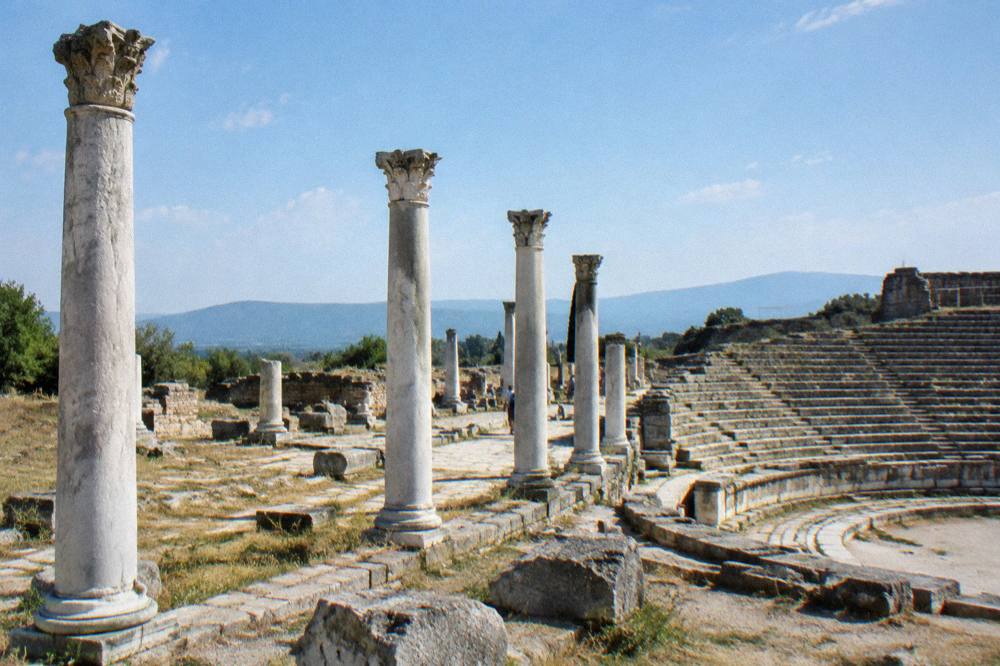
West of the city the route bends toward Vergina and Pella, the heart of ancient Macedonia. Vergina, the site of the Royal Tombs of Aigai, is about 68 km and 62 minutes away, and Pella, Alexander's birthplace and capital, about 46 km and 43 minutes. These are not Paul stops, but they fill the historical frame: Paul preached in a Roman province whose Macedonian past was already four centuries old, and whose roads, the Via Egnatia among them, were built for exactly the kind of movement his mission required.
For planning, three practical anchors. The metro runs 05:15 to 00:30 Sunday to Thursday and 05:15 to 02:00 Friday and Saturday, with a basic ticket at 0.60 euro and a daily ticket at 2.50 euro, per the Thessaloniki Metro's own ticket page. The airport is about 20 minutes by road from the centre, and the airport to city centre guide lists the bus lines and options. And the best months for long day trips are the shoulder seasons, which the site's best time to visit guide breaks down with the HNMS Thessaloniki Mikra station, 1959 to 2010, climate table.
When Should A Bible-Interest Visitor Come To Thessaloniki?
The strongest weeks are late April to June and September to October, when the HNMS Thessaloniki Mikra station, 1959 to 2010, record shows mean highs of 19.1 to 29.4 C and 21.2 to 27.1 C, and 26 October brings the patronal feast of Saint Demetrius with the liberation anniversary. July and August, at mean highs of 31.7 and 31.4 C, suit a slower, museum-weighted itinerary. December averages 55.1 mm of rain, August 19.3 mm.
The feast day is the calendar's peak for this particular interest. Saint Demetrius day, 26 October, is the city's name day and, since the liberation protocol of 26 October 1912, its liberation day, followed two days later by Ochi Day on 28 October with its parade. Services at the cathedral and the city's ceremonial calendar give those days a weight no ordinary Tuesday has. The reported Dimitria festival ran 1 to 26 October in 2026, and the Thessaloniki International Film Festival ran 5 to 15 November in 2026, so October into mid-November layers sacred and cultural calendars on top of each other, though dates should be confirmed each year.
Weather planning should use the station record, not impressions. Rain days run 5.1 in August against 12.7 in December, and the annual total is 444.5 mm. Winter visits are quiet and cheap but shorter-dayed; the Thessaloniki weather guide gives the full monthly table, and the site's Thessaloniki Travel Guide homepage links the current season-by-season picks. One trap to ignore: older pages still say Thessaloniki has no metro, which is out of date, as Line 1 has run since November 2024.
How Do You Plan A Thessaloniki Bible-Lands Itinerary?
A workable plan is three nights in the city plus one or two day trips: day one for the Roman core of the Arch of Galerius, Rotunda and Palace of Galerius; day two for the early Christian churches and the two big museums; day three for Philippi and Kavala east, or Veria and Vergina west. Base yourself near Aristotelous Square or in Ano Poli, arrive via the airport about 20 minutes out, and use the metro, at 0.60 euro a ticket, beyond walking range.
Lodging choice matters less than visitors fear, because the biblical-era core is compact. The where to stay guide maps the neighbourhoods, from the city-centre grid to Ano Poli inside the Byzantine walls, and notes that Greek accommodations collect a climate resilience fee per room per night, higher from April to October, paid at the property. Church visits cost nothing, the state museums charge the ticket prices tabled above, and the free-admission days, 6 March, 18 April, 18 May, the last weekend of September and 28 October, can anchor a cheap itinerary precisely.
Food needs no special planning for this theme, though Modiano Market and Kapani Market sit within the same walkable core and give the city's continuous-market flavour; the what to eat guide and the budget guide cover the rest. Travellers combining the trip with Athens should see the Athens to Thessaloniki guide for route options, and anyone extending into the region's monastic world should read the site's page on the Mount Athos cruise from Ouranoupoli, noting that Athos entry itself requires a permit, is men only, and the cruise does not land.
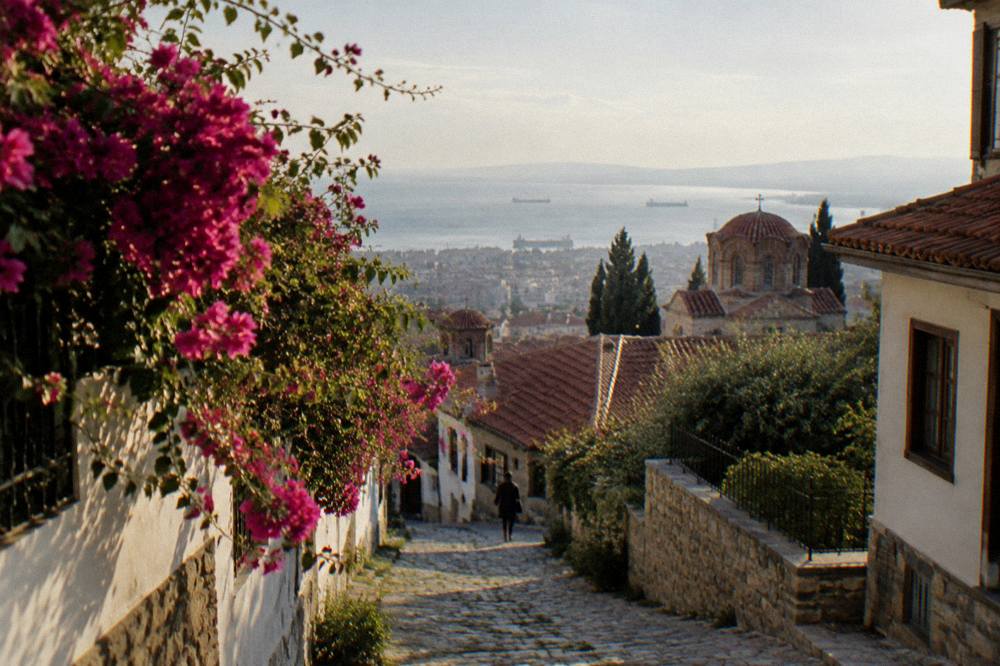
For the days in the city, two experiences sit naturally beside the biblical walk. The OTE Tower rotating experience pairs a meal with the best aerial read of the city's layout, from the Thermaic Gulf to Ano Poli, useful for orienting a walk-based itinerary.
And after the churches, the open market food tour through the markets of the same streets gives the living-city layer the ancient stones cannot, which is the point: Thessaloniki in the Bible is a doorway into a city that has been continuously itself for twenty-three centuries.
Common Questions About Thessaloniki In The Bible
Is Thessaloniki the same city as Thessaloniki in the Bible?
Yes. Thessaloniki in the Acts account and in the headings of 1 and 2 Thessalonians is Thessaloniki, the second city of Greece, founded in 315 BC by Cassander and named for his wife Thessalonike. The city has been continuously inhabited under variants of the same name.
Which books of the Bible mention Thessalonians?
Acts chapter 17 narrates Paul's stay in the city, and two letters, First and Second Thessalonians, are addressed to the church there. Paul's letters to the Corinthians also mention Macedonia and the Macedonian churches that included Thessaloniki.
Can you visit the places where Paul preached in Thessaloniki?
You can visit the city and its Roman remains, including the Galerian complex, the Arch of Galerius and the Rotunda, plus the early Christian churches that continue the story. No above-ground structure from Paul's exact decades, including the synagogue of Acts, has been identified, so treat any specific "Paul stood here" claim with caution.
How far is Philippi from Thessaloniki?
Philippi is about 156.3 km east by road from Aristotelous Square, roughly 127 minutes free-flow, and is normally visited as a full day trip, often combined with Kavala, the ancient Neapolis, about 154.6 km away.
Where is Berea, where Paul fled from Thessaloniki?
Berea is Veria, a town about 72.8 km west of Thessaloniki, about 52 minutes by road, and a common stop on tours that combine Veria with Vergina, about 68 km from the city.
Are the churches of Thessaloniki free to enter?
Yes. The working churches, including the Church of Saint Demetrius, Hagia Sophia and Panagia Acheiropoietos, are free to enter and open outside service times. The state museums charge admission: the White Tower is 8 euro full and 4 euro reduced from 1 April 2026, and the two big museums are 10 euro and 5 euro.