Thessaloniki Weather Month By Month
Thessaloniki sits on the Thermaic Gulf in Central Macedonia, northern Greece, and its weather is Mediterranean with continental edges: hot, dry summers and cool winters with rain through the colder half of the year. Here is what the station record actually says, month by month.
Short answer
Thessaloniki's warmest month by mean daily high is July at 31.7 C and the coolest nights are January's 1.5 C mean low, per the HNMS Thessaloniki Mikra station record, 1959 to 2010. December carries the highest monthly rainfall at 55.1 mm and August the lowest at 19.3 mm, with annual rainfall of 444.5 mm.
Thessaloniki, the second city of Greece, lies on the shore of the Thermaic Gulf in Central Macedonia, and its climate is Mediterranean with continental edges: summers are hot and almost rainless, winters are cool and wet, and the two seasons between them are short and pleasant. Every figure on this page comes from one weather-station record, the HNMS Thessaloniki Mikra station, 1959 to 2010, which is the official long-term average published by the Hellenic National Meteorological Service. That record is what a planning visitor should read, not a forecast and not a memory of one unusual year. It says, among other things, that July averages a mean daily high of 31.7 C, that January nights average 1.5 C, and that December, not November, carries the heaviest monthly rainfall of the year at 55.1 mm.
The station record matters because Thessaloniki's weather gets summarised badly. Coastal-city assumptions from the Greek islands do not transfer: this is northern Greece, backed by plains and mountains, and the prevailing wind is north-westerly all year except in August, when it swings to the south. The same record shows why the city's shoulder seasons are so workable for sightseeing: April, May, September and October all combine daytime highs between about 19 and 27 C with manageable rainfall. The full planning picture, including crowd and price rhythm, sits in the best time to visit Thessaloniki guide; this page stays on the numbers and what they mean for each month on the ground.
What Is The Average Weather In Thessaloniki?
The HNMS Thessaloniki Mikra station record, 1959 to 2010, puts the mean daily high at 31.7 C in July and 31.4 C in August, the mean daily low at 1.5 C in January, and annual rainfall at 444.5 mm with roughly 5 to 13 rain days a month, fewest in August (5.1) and most in December (12.7). In plain terms: reliably hot, dry summers, cool winters with regular rain from October through March, and short, gentle shoulder seasons either side.
The two things that surprise first-time visitors are the size of the summer swing and the concentration of rain in the cold half of the year. Between June and August the station averages fewer than 8 rain days a month, and in August only 5.1. From October onward that figure climbs back above 9, reaching 12.7 in December. Rain in Thessaloniki is a winter story, not a summer one.
| Month | Mean high C | Mean low C | Rain mm | Rain days |
|---|---|---|---|---|
| Jan | 9.3 | 1.5 | 37.7 | 11.5 |
| Feb | 11.0 | 2.3 | 35.0 | 10.7 |
| Mar | 14.3 | 4.7 | 37.9 | 12.1 |
| Apr | 19.1 | 7.9 | 36.1 | 11.1 |
| May | 24.6 | 12.6 | 44.2 | 11.0 |
| Jun | 29.4 | 17.0 | 29.8 | 7.9 |
| Month | Mean high C | Mean low C | Rain mm | Rain days |
|---|---|---|---|---|
| Jul | 31.7 | 19.3 | 23.8 | 6.7 |
| Aug | 31.4 | 19.1 | 19.3 | 5.1 |
| Sep | 27.1 | 15.4 | 29.8 | 7.0 |
| Oct | 21.2 | 11.3 | 43.0 | 9.3 |
| Nov | 15.5 | 7.1 | 52.8 | 11.0 |
| Dec | 10.9 | 3.2 | 55.1 | 12.7 |
Every row above is a 51-year station average, not last year's reading, so a given week can sit well above or below it. What the averages are good for is choosing a month and packing for it, and that is what the rest of this page does, one month at a time.
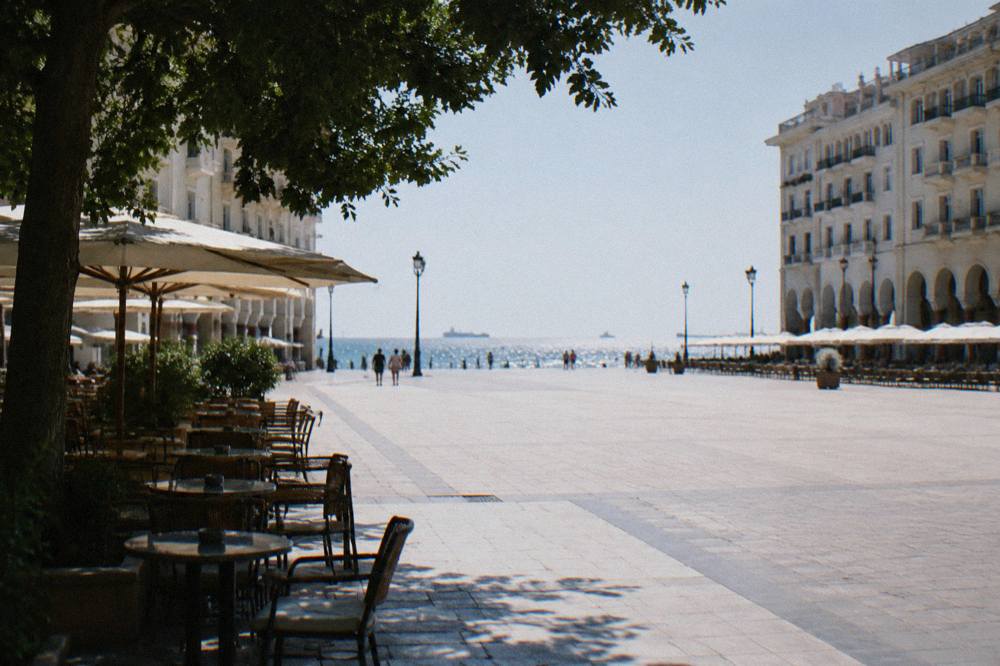
Weather shapes a visit less than visitors fear, and more than they expect. A rainy day list exists for exactly the December-to-March stretch: the city's major museums, from the Archaeological Museum to the Museum of Byzantine Culture, are indoor hours, and the metro, open since November 2024 with its Kalamaria extension added on 27 August 2026, moves you between them without standing in the rain. A private guide is another wet-weather ally, since a local adjusts the route to the sky. Check availability for the private walking option, or read the Thessaloniki walking tour guide for the route logic first.
How Hot Does Thessaloniki Get In Summer?
July and August both average a mean daily high above 31 C, 31.7 C and 31.4 C respectively, with mean nightly lows around 19 C, per the HNMS Thessaloniki Mikra station, 1959 to 2010, and rainfall collapses to 23.8 mm in July and 19.3 mm in August, the lowest monthly totals in the record. Summer in Thessaloniki is hot, dry and reliable, but the station means hide the individual days that push well past them.
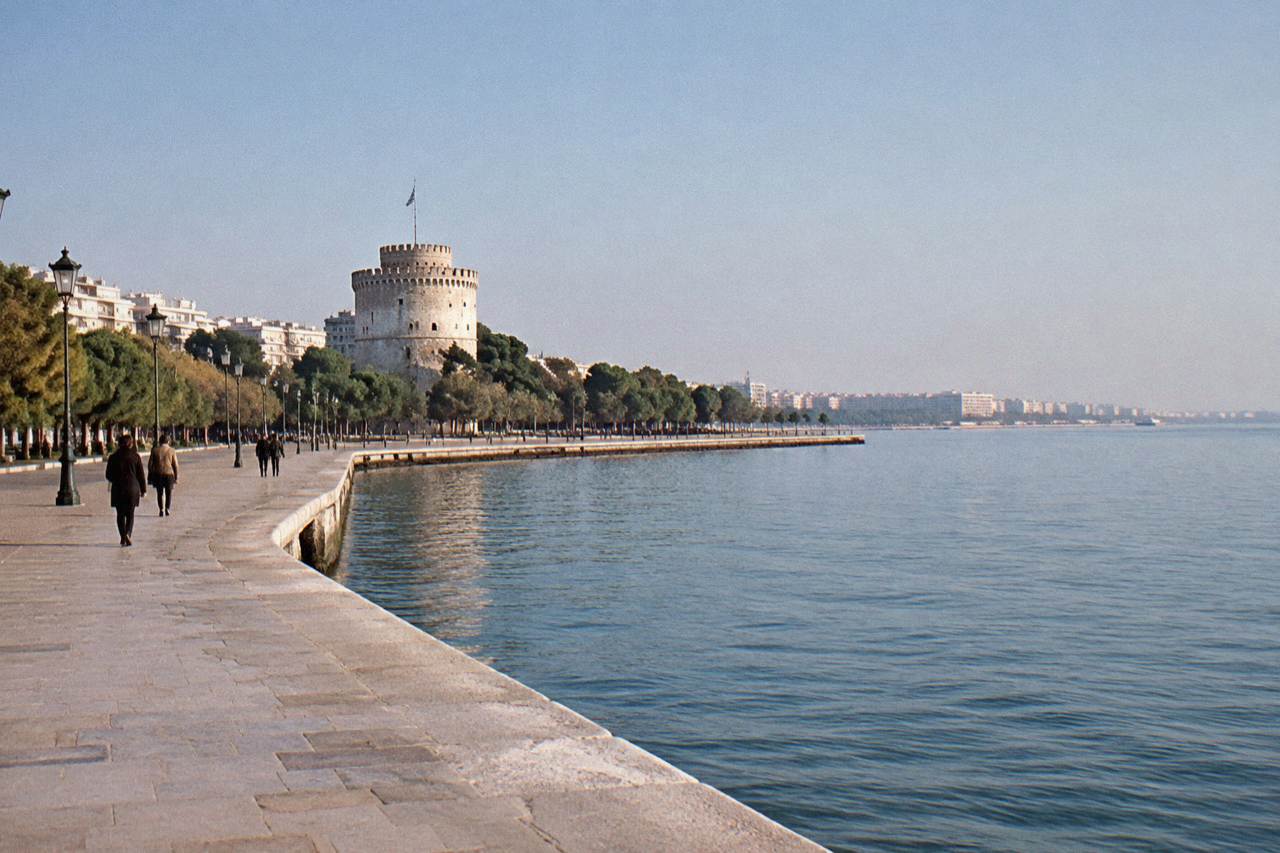
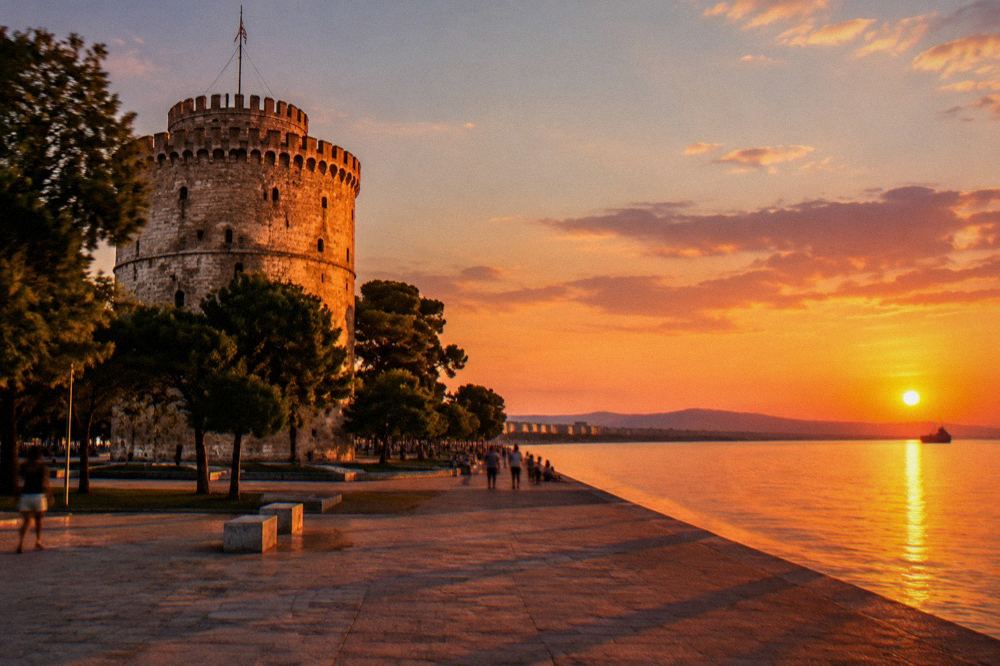
Summer sightseeing in Thessaloniki is therefore an early-morning and evening activity. The Nea Paralia promenade, the White Tower and the Ano Poli lanes are best walked before noon or after the heat eases; the White Tower keeps summer hours of 08:00 to 21:00 daily, with entry stopping 20 minutes before closing, per the Museum of Byzantine Culture's visiting page. Midday belongs to shade, long lunches and the sea breeze off the Thermaic Gulf, which the north-westerly prevailing wind reinforces for most of the season. In August the wind turns southerly, which is the one wind change in the whole annual record.
One honest correction before anything else: the city waterfront is a promenade, not a beach, and nobody should plan to swim off the Nea Paralia. Real swimming in summer is a short trip south, at Perea, about 28 minutes by road from Aristotelous Square, or further out at Epanomi. The beaches near Thessaloniki guide covers the options with their drive times.
| Summer planning factor | Station-record figure | What it means on the ground |
|---|---|---|
| July mean high | 31.7 C | Sightsee before noon, museum or shade at midday |
| August mean high | 31.4 C | Same pattern, with the lowest rainfall of the year |
| July and August mean lows | 19.3 and 19.1 C | Warm evenings, the promenade stays busy late |
| August rain days | 5.1 | Rain is a non-factor in the peak month |
| Prevailing wind in August | Southerly | The one month the usual north-westerly reverses |
Day trips change character in summer too. Meteora is about 228 km away by road and is a full-day outing in any season; in July heat, the monastery walking needs the same early start as the city sights. Halkidiki's Kassandra peninsula, about 78 minutes by road to Kallithea, is the classic summer day trip and pairs naturally with a beach stop, while the Olympus lagoons and Dion sit in the foothills where afternoon temperatures run a little kinder than the city pavement. A hop-on hop-off bus tour is a summer-sensible way to cover the city's spread-out monuments with shade between stops, and it pairs with the things to do in Thessaloniki master list when the heat breaks.
Does Thessaloniki Get Cold Or Snow In Winter?
January's mean daily low is 1.5 C and its mean daily high is 9.3 C, with December averaging 10.9 C by day and 3.2 C at night, per the HNMS Thessaloniki Mikra station, 1959 to 2010. That is a genuinely cool winter by Greek standards, cold enough for frost on clear nights, though the station table records no snow-day count and this page prints none.
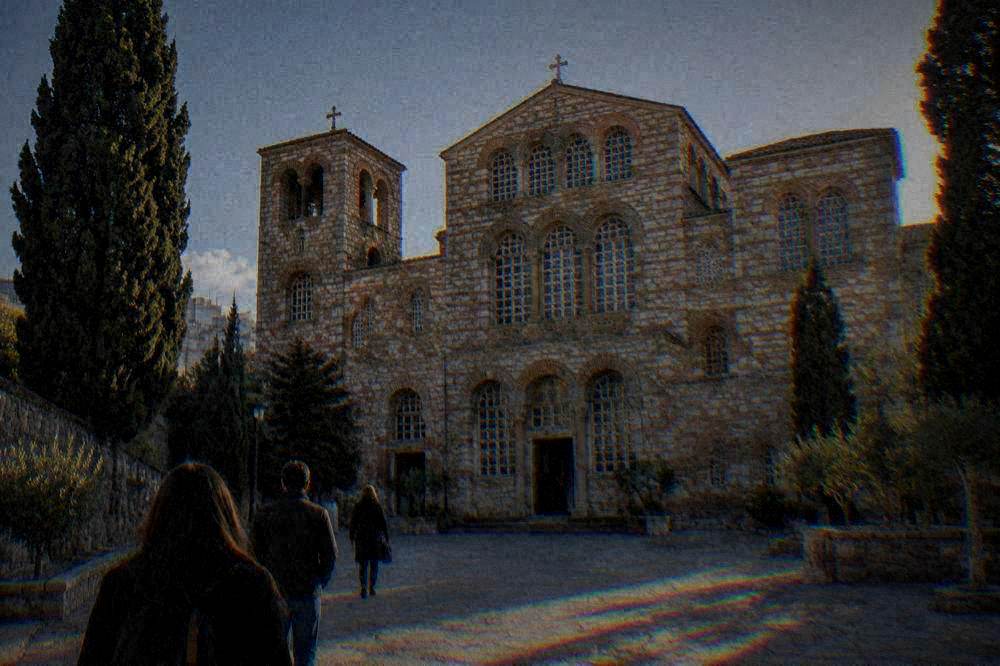
Winter in Thessaloniki is a museum-and-cafe season, and a good one. The UNESCO-listed Byzantine churches, the Archaeological Museum and the Museum of Byzantine Culture all sit within a compact centre, the latter keeping daily hours of 08:00 to 20:00 in summer and shorter winter hours, per its own visiting page. Rain falls on roughly 11 to 13 days a month from November through March, but it rarely lasts all day, and the rain-day figure counts any day with measurable rain, not washouts. Winter visitors should also know the seasonal museum rhythm: the Archaeological Museum closes on Tuesdays from 1 November to 31 March, and state museums are free on set days including 6 March and 28 October.
| Winter month | Mean high C | Mean low C | Rain mm | Rain days |
|---|---|---|---|---|
| Nov | 15.5 | 7.1 | 52.8 | 11.0 |
| Dec | 10.9 | 3.2 | 55.1 | 12.7 |
| Jan | 9.3 | 1.5 | 37.7 | 11.5 |
| Feb | 11.0 | 2.3 | 35.0 | 10.7 |
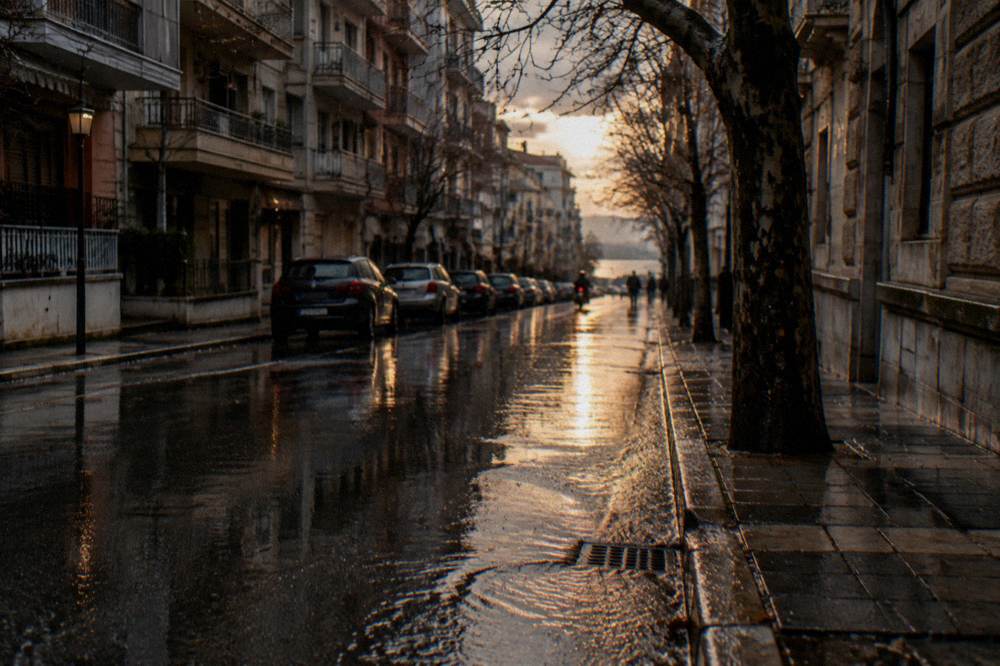
December's 55.1 mm is the highest monthly rainfall total in the station table and August's 19.3 mm the lowest, a pattern worth knowing because it inverts the intuition of visitors from northern Europe, where summer rain is expected. Thessaloniki's wetter months are midwinter, and the transition is fast: October still averages 21.2 C by day, November drops to 15.5 C, and by January the daytime mean is under 10 C. Layers and a real rain jacket, not a cardigan, are the winter packing call.
Winter also carries two of the city's fixed calendar moments. Saint Demetrius day falls on 26 October, the city's patron feast and the anniversary of the 1912 liberation, and Ochi Day follows on 28 October with its parade. Later in the season, the Thessaloniki International Film Festival ran 5 to 15 November in its 2026 edition and is an annual anchor of the cold half of the year.
When Is The Best Weather For Sightseeing In Thessaloniki?
April, May, September and October are the comfortable months: mean daily highs of 19.1 C in April, 24.6 C in May, 27.1 C in September and 21.2 C in October, with mean lows between 7.9 and 15.4 C, per the HNMS Thessaloniki Mikra station, 1959 to 2010. May carries 44.2 mm of rain over about 11 days, so spring is greener and slightly wetter than early autumn, which averages fewer than 8 rain days a month.
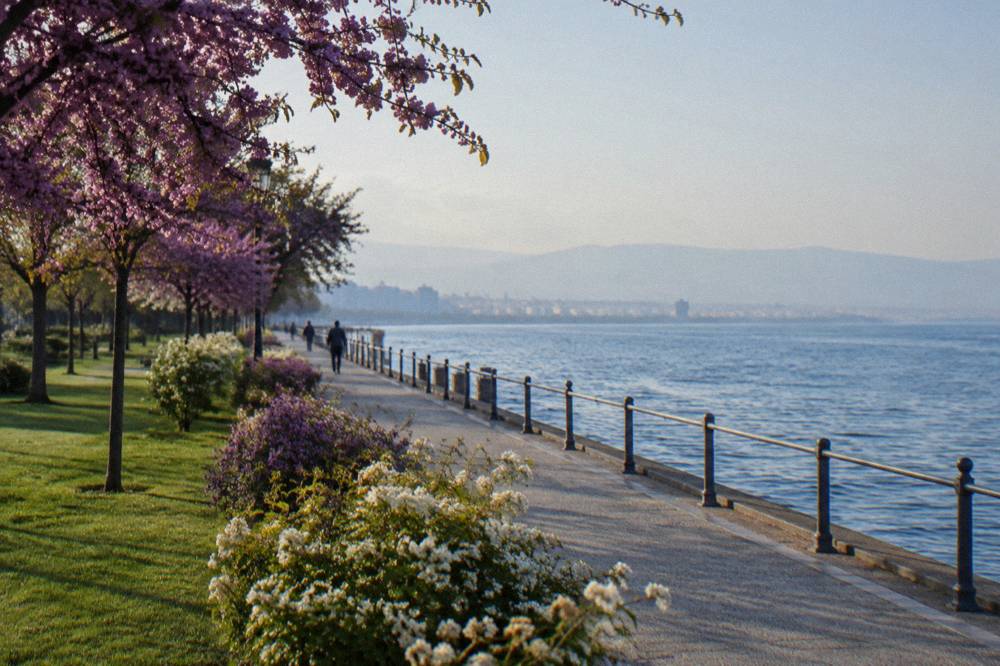
The shoulder-season case is straightforward. Daytime temperatures sit in the range where walking the Ano Poli lanes, the Rotunda and the Galerian complex is a pleasure rather than an endurance test, and the White Tower's summer hours, 08:00 to 21:00 daily from 1 April to 31 October, give long sightseeing days. Spring adds blossom to the city's hillsides and full water to the Edessa waterfalls on a day trip; autumn adds warm sea swimming a short drive south at Perea without July's pavement heat. More of these guides are collected on Thessaloniki Travel Guide.
| Shoulder month | Mean high C | Mean low C | Rain mm | Rain days | Best used for |
|---|---|---|---|---|---|
| Apr | 19.1 | 7.9 | 36.1 | 11.1 | Long walking days, spring blooms |
| May | 24.6 | 12.6 | 44.2 | 11.0 | Warm days, the month with a high shoulder rain total |
| Sep | 27.1 | 15.4 | 29.8 | 7.0 | Sea trips and city walking alike |
| Oct | 21.2 | 11.3 | 43.0 | 9.3 | Museums, festivals, fewer crowds |
October deserves its own word. It averaged 21.2 C by day and only 9.3 rain days in the station record, and the city's autumn calendar stacks on top of it: the Dimitria festival ran 1 to 26 October in its 2026 edition, and the International Fair closed a few weeks earlier, having run 5 to 13 September in 2026. September and October are the months when weather and culture point the same way. The Thessaloniki festivals guide carries the full annual rhythm.
Day trips work in every shoulder month too, with drive times that do not change with the weather: Vergina about 62 minutes, Pella about 43, Dion about 67, and Meteora the long one at about 154 minutes of free-flow road. What changes is the experience on arrival: spring and autumn are the seasons for the outdoor archaeological sites, where summer shade is scarce and winter rain makes the stone slick. The northern Greece itinerary guide bundles several of these into a route.
What Is Thessaloniki Weather Like Month By Month?
Each month below pairs the HNMS Thessaloniki Mikra station averages, 1959 to 2010, with the practical reading a visitor needs: January is the coolest at 9.3 C by day, July and August the warmest at above 31 C, December the month with the highest rainfall at 55.1 mm, and the shoulder months of April, May, September and October the easiest for a first visit. No month in the record is unvisitable; each just asks for different plans.
January. Mean high 9.3 C, mean low 1.5 C, 37.7 mm of rain over 11.5 rain days. The coolest month in the station table, with frost possible on clear nights. Museum days, ouzeri lunches and the Byzantine churches carry the month; outdoor sites are for the dry windows between fronts.
February. Mean high 11.0 C, mean low 2.3 C, 35.0 mm over 10.7 rain days. Slightly milder than January, still a layering month. Orthodox Easter falls late in some years, 2 May in 2027, so February is plain winter with no festival cushion; check the greek easter in Thessaloniki guide if your trip straddles spring.
March. Mean high 14.3 C, mean low 4.7 C, 37.9 mm over 12.1 rain days, the highest rain-day count of the spring. The city greens quickly and the seafront becomes walkable again. The Archaeological Museum's Tuesday winter closure runs to 31 March, and 6 March is a free-admission day at state museums.
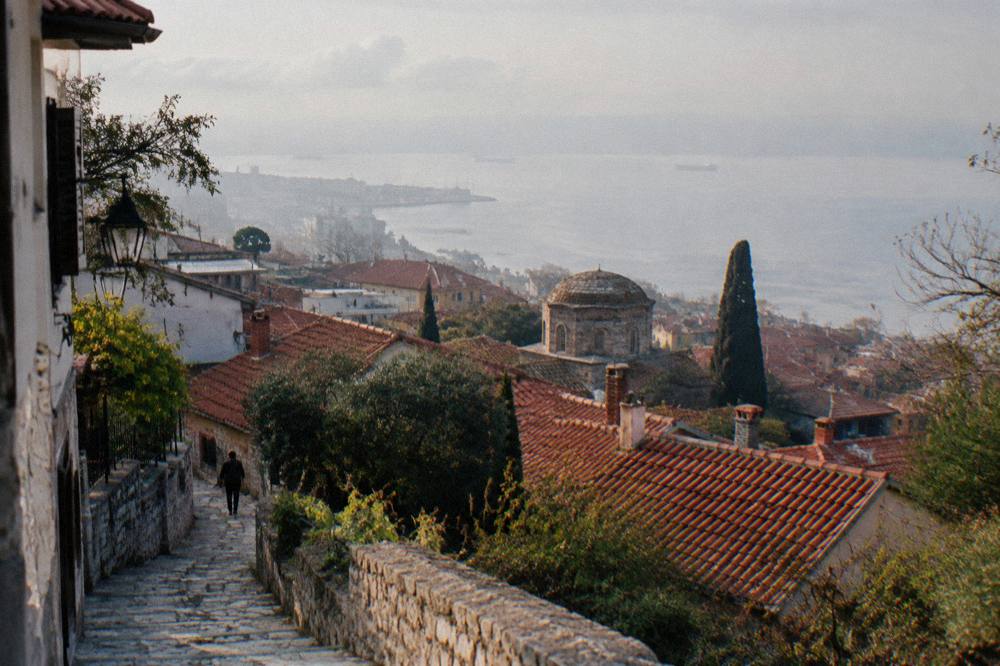
April. Mean high 19.1 C, mean low 7.9 C, 36.1 mm over 11.1 rain days. The White Tower and the big museums switch to summer hours on 1 April, and the 2026 ticket prices, 8 euro full and 4 reduced at the White Tower, apply. Ano Poli walks, the Heptapyrgion walls and the first beach afternoons at Perea all come back into range.
May. Mean high 24.6 C, mean low 12.6 C, 44.2 mm over 11.0 rain days. Warm, bright and, at 44.2 mm, carrying a heavier rain total than any summer month, usually arriving in short spring downpours rather than all-day rain. The last weekend of September and 18 May are free-admission days at state museums, worth planning around.
June. Mean high 29.4 C, mean low 17.0 C, 29.8 mm over 7.9 rain days. The jump into summer: heat builds, rain days halve from spring levels, and the swimming season opens properly south of the city. Thessaloniki Pride ran 15 to 20 June in its 2026 edition, part of the early-summer calendar.
July. Mean high 31.7 C, the highest in the record, mean low 19.3 C, 23.8 mm over 6.7 rain days. Full summer. Early starts, sea afternoons, promenade evenings. Day trips shift to the water: the Halkidiki coast and the lagoons under Olympus.
August. Mean high 31.4 C, mean low 19.1 C, 19.3 mm over 5.1 rain days, the lowest rainfall and fewest rain days of the year, and the one month the prevailing wind turns southerly. The classic Greek-August pattern, with the whole city's evening life moving outdoors.
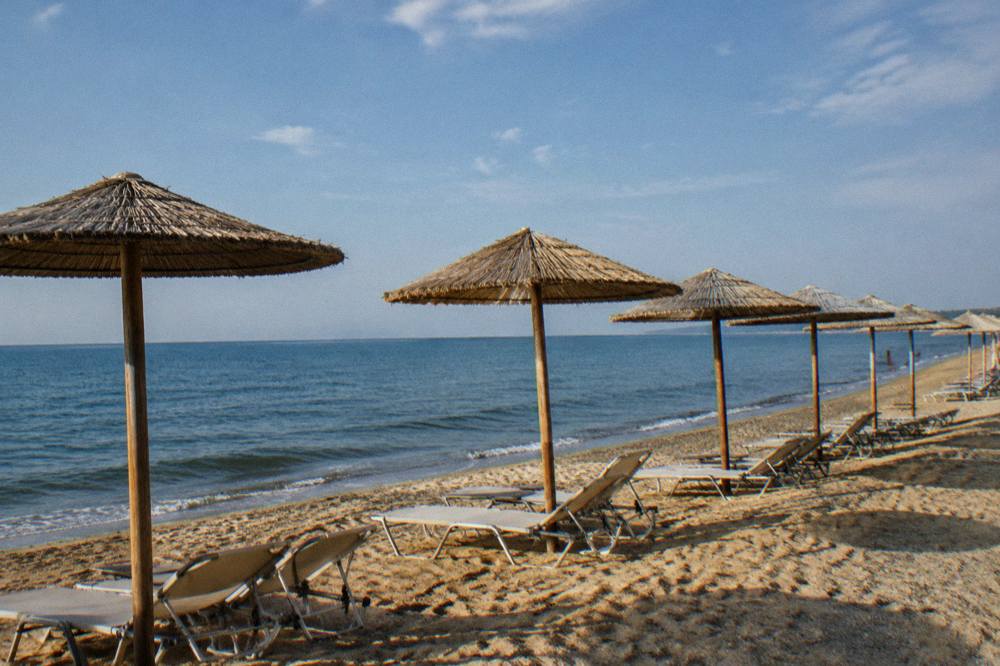
September. Mean high 27.1 C, mean low 15.4 C, 29.8 mm over 7.0 rain days. Sea still warm enough for swimming, city back to full walking temperature, and the International Fair anchoring the calendar, 5 to 13 September in its 2026 edition. A strong contender for the single best month to visit.
October. Mean high 21.2 C, mean low 11.3 C, 43.0 mm over 9.3 rain days. The Dimitria festival ran 1 to 26 October in 2026 and the Night Half Marathon ran 17 October, so culture fills the shortening days. The 28 October holiday is a free-admission day at state museums.
November. Mean high 15.5 C, mean low 7.1 C, 52.8 mm over 11.0 rain days. The tilt into winter is unmistakable: rain roughly doubles from October's total, the winter museum hours begin on 1 November, and the Film Festival, 5 to 15 November in its 2026 edition, gives the month its shape.
December. Mean high 10.9 C, mean low 3.2 C, 55.1 mm over 12.7 rain days, the highest rainfall and the most rain days in the table. A coat-and-umbrella month with a Christmas market tradition on Aristotelous Square; dates vary by year, so check locally before counting on it.
| Month | One-line station summary | One-line planning summary |
|---|---|---|
| Jan | 9.3 / 1.5 C, 37.7 mm | Museums, churches, warm cafes |
| Feb | 11.0 / 2.3 C, 35.0 mm | Late winter, quiet streets |
| Mar | 14.3 / 4.7 C, 37.9 mm | Spring begins, free museum day 6 March |
| Apr | 19.1 / 7.9 C, 36.1 mm | Summer hours start 1 April |
| May | 24.6 / 12.6 C, 44.2 mm | Bright, with spring downpours |
| Jun | 29.4 / 17.0 C, 29.8 mm | Swimming season opens |
| Jul | 31.7 / 19.3 C, 23.8 mm | Early starts, sea afternoons |
| Aug | 31.4 / 19.1 C, 19.3 mm | Lowest rain of the year |
| Sep | 27.1 / 15.4 C, 29.8 mm | Fair month, warm sea |
| Oct | 21.2 / 11.3 C, 43.0 mm | Festivals, long museum days |
| Nov | 15.5 / 7.1 C, 52.8 mm | Film Festival, winter hours |
| Dec | 10.9 / 3.2 C, 55.1 mm | Highest rainfall, Christmas lights |
How Should You Pack For Thessaloniki Weather?
Pack for a 20-degree annual temperature swing: light clothing, sun protection and a layer for sea-breeze evenings from June to August, and a proper rain jacket, warm layers and waterproof shoes from November to March, with the shoulder months demanding both halves of the suitcase at once, since April can produce a 19.1 C afternoon after a 7.9 C night.
The station record gives the packing logic directly. Summer lows around 19 C mean evenings on the promenade stay warm, but a light layer covers the sea breeze; summer highs above 31 C mean the day needs a hat, water and shade planning, not willpower. Winter is the reverse: daytime means near 10 C are perfectly walkable, but nights near freezing and regular rain make the jacket and the shoes the two items that decide whether the trip works. The Thessaloniki in winter and Thessaloniki in summer guides break each season's wardrobe and activity list down further.
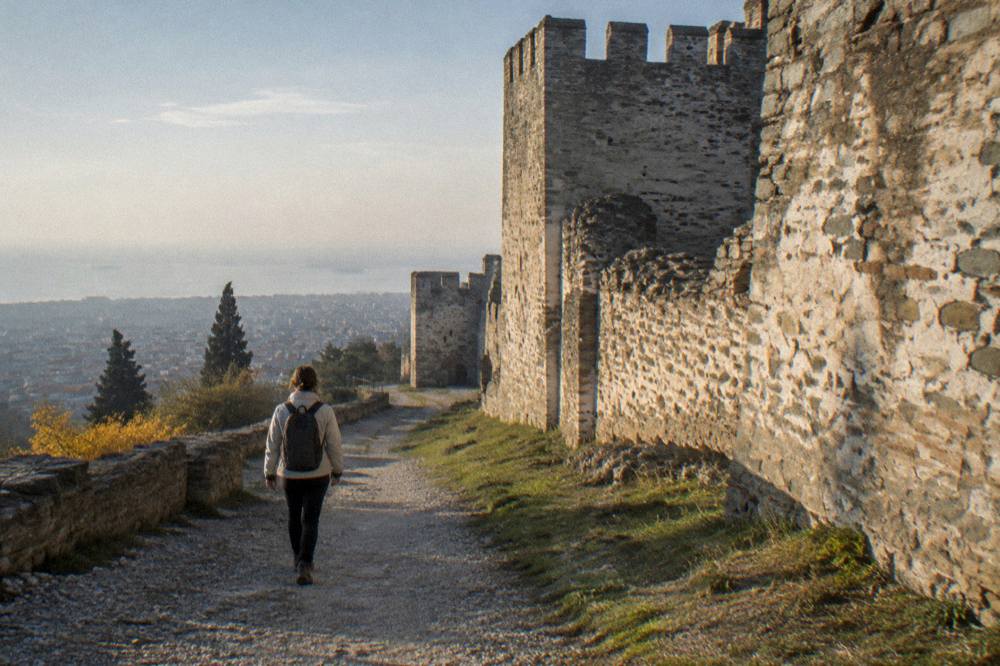
Weather-proofing a visit is also about choosing the right format for the day. A guided walk moves faster between shelters when a front passes; an open market food tour spends much of its time under the market roof at Modiano Market; a hop-on hop-off bus puts roof and wheels between you and the rain between stops. The trio below covers all three formats, with the operator's live listing carrying the current prices and times.
Common Questions About Thessaloniki Weather
Does Thessaloniki get snow?
The HNMS Thessaloniki Mikra station table, 1959 to 2010, records January's mean nightly low at 1.5 C, which is cold enough for frost and occasional snow, but the station publishes no snow-day count and this page prints none. Treat snow as possible in deep winter and rare, and check the forecast close to your travel date.
What is the rainiest month in Thessaloniki?
December, at 55.1 mm over 12.7 rain days, followed by November at 52.8 mm, per the HNMS Thessaloniki Mikra station, 1959 to 2010. August is the opposite end of the scale at 19.3 mm over 5.1 rain days.
Is Thessaloniki too hot in July and August?
The station averages put July at a 31.7 C mean daily high and August at 31.4 C, which is manageable with early starts, midday shade and evening walking. Swimming near the city is at Perea, about 28 minutes by road, since the Nea Paralia waterfront is a promenade and not a swimming beach.
When does the swimming season start near Thessaloniki?
The station record does not measure sea temperature, and this page prints no monthly sea figures. As a practical rule, June's 29.4 C mean high opens the beach season at Perea and Epanomi, and September's 27.1 C keeps it open well past the school holidays.
Does the wind matter in Thessaloniki?
The prevailing wind is north-westerly all year except August, when it turns southerly, per the station record. In practice the wind moderates summer heat on the seafront and adds chill to wet winter days, so it matters for comfort, not for safety.
Which month has the fewest rain days in Thessaloniki?
August, at 5.1 rain days, with July close behind at 6.7, per the HNMS Thessaloniki Mikra station, 1959 to 2010. December has the most at 12.7.
The pattern, in one paragraph: Thessaloniki is a hot-dry-summer, cool-wet-winter city with a station record that rewards reading it directly rather than trusting folklore. July and August belong to the sea and the evening promenade, December and January to the museums and the Film Festival, and the four months either side of summer are when the city is at its most walkable. Match the month to the trip you want, pack for the station table rather than for the Mediterranean of the islands, and the weather will do the rest.