Thessaloniki In Winter: What Stays Open And What It Feels Like
Thessaloniki in winter is a working city of museums, markets and Byzantine churches, with short opening hours, cool rain and a metro that runs late. Here is what the official pages actually say.
Short answer
Thessaloniki in winter runs on shorter museum hours and cool, wet weather: HNMS station data shows January mean highs of 9.3 C and December rainfall of 55.1 mm, while the metro runs 05:15 to 00:30 and the major museums stay open with reduced winter schedules.
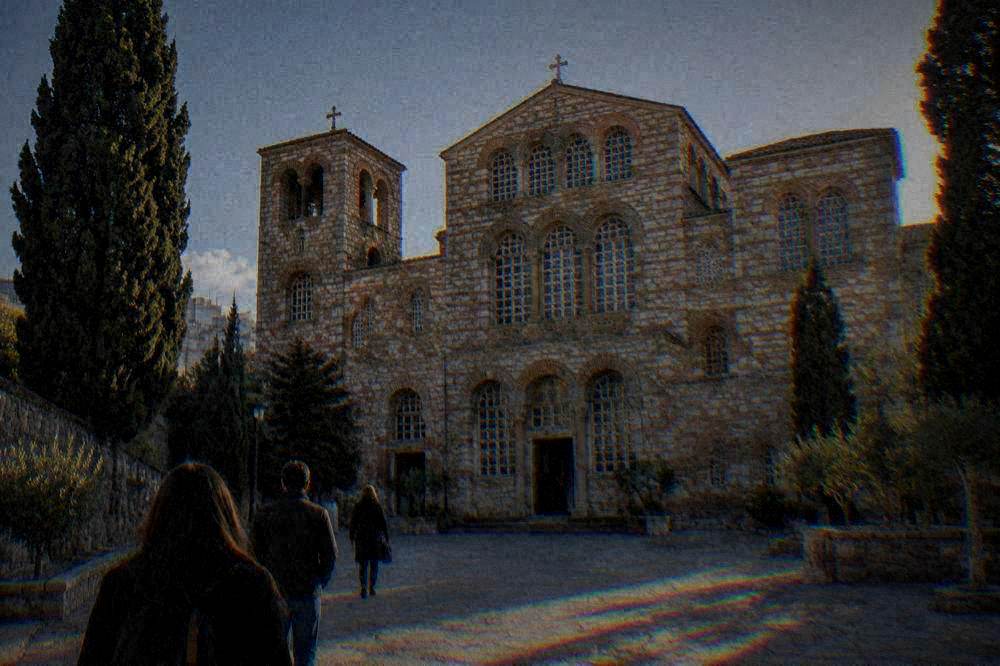
Thessaloniki, the second city of Greece, sits on the Thermaic Gulf in Central Macedonia, and from November to March it becomes a different place from the summer postcard city: museum hours shorten, the Nea Paralia promenade empties of sunbathers it never technically had, and the Fifteen UNESCO-listed Paleochristian and Byzantine monuments, inscribed in 1988, become the main event. Winter here is not a shutdown. The metro that opened in November 2024, extended to Kalamaria on 27 August 2026, runs the same late hours year-round, the state museums simply switch to a winter timetable on 1 November, and the climate record shows a city that is cool and damp rather than frozen.
How Cold And Wet Is Thessaloniki In Winter?
The HNMS Thessaloniki Mikra station table, 1959 to 2010, puts the January mean daily maximum at 9.3 C and the mean minimum at 1.5 C, with December the highest-rainfall month in the table at 55.1 mm. November averages 15.5 C and 7.1 C with 52.8 mm of rain, and February 11.0 C and 2.3 C. The annual rainfall total is 444.5 mm, spread across the whole year.
Those are long-run station means, not a forecast for any given week, and they describe a Mediterranean climate with continental edges: nights that fall to a few degrees above freezing, days that often reach ten degrees or more, and rain that arrives on roughly 11 to 13 days per month in November, December and January by the station's rain-day counts. The prevailing wind is north-westerly all year except August, which is why the seafront can feel sharp even when the thermometer looks mild.
Snow does fall in northern Greece, but the HNMS table carries no snow-day count for the city. What the table does show is that January lows average 1.5 C, cold enough for frost on clear nights. For the full month-by-month picture, see Thessaloniki weather month by month, and for how winter ranks against spring and autumn, the best time to visit Thessaloniki.
| Month | Mean daily high (C) | Mean daily low (C) | Rainfall (mm) | Rain days |
|---|---|---|---|---|
| November | 15.5 | 7.1 | 52.8 | 11.0 |
| December | 10.9 | 3.2 | 55.1 | 12.7 |
| January | 9.3 | 1.5 | 37.7 | 11.5 |
| February | 11.0 | 2.3 | 35.0 | 10.7 |
| March | 14.3 | 4.7 | 37.9 | 12.1 |
Figures: HNMS Thessaloniki Mikra station, 1959 to 2010.
What Do The Museums And Sights Open In A Thessaloniki Winter?
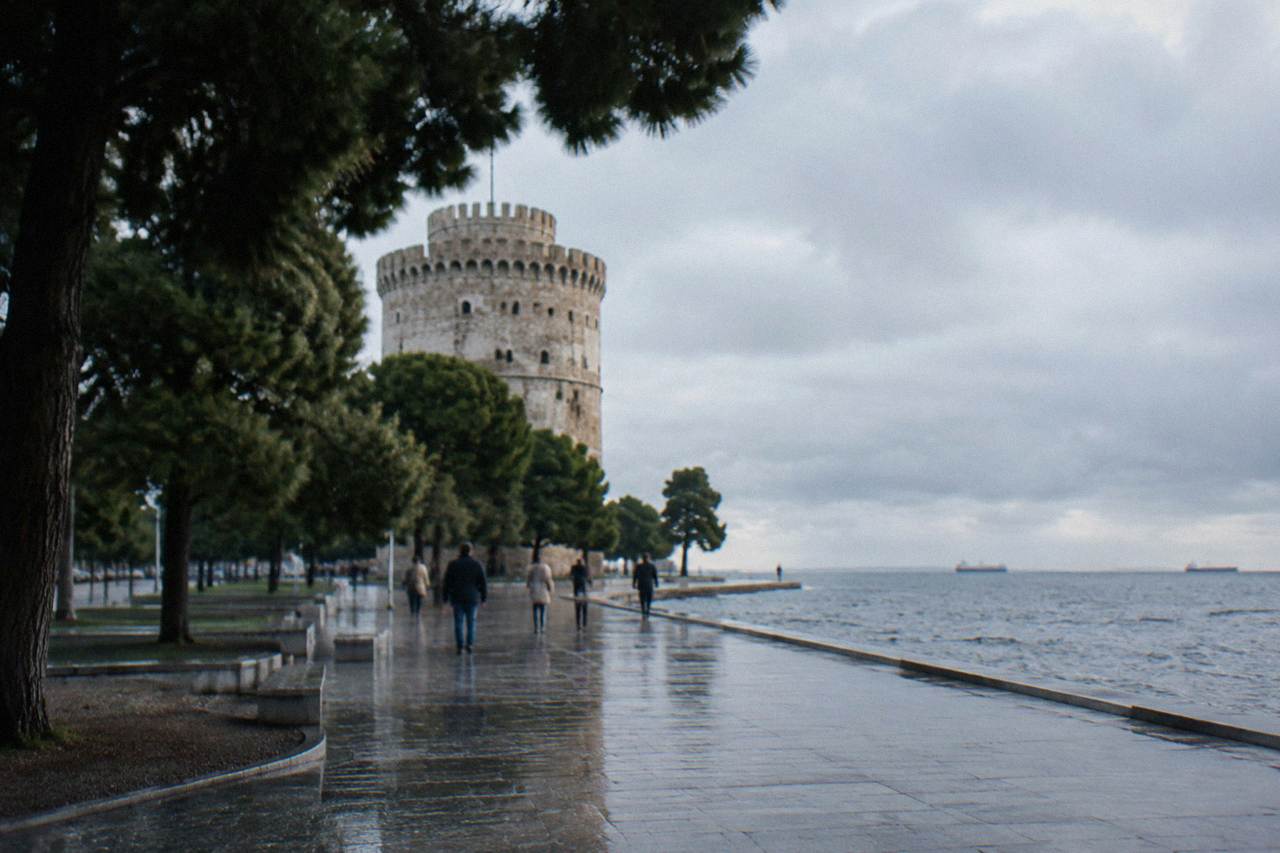
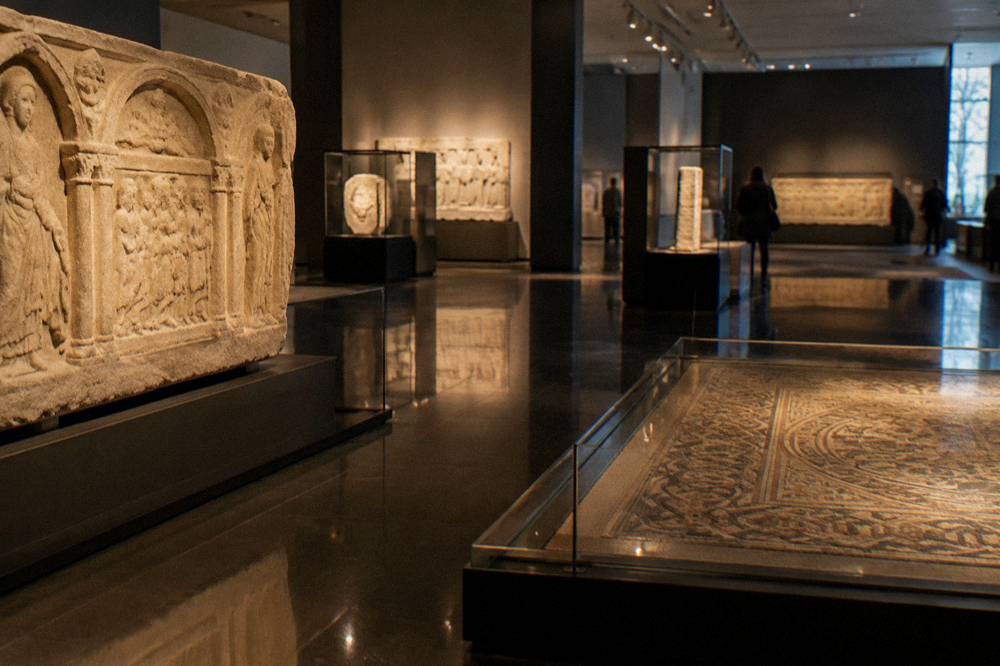
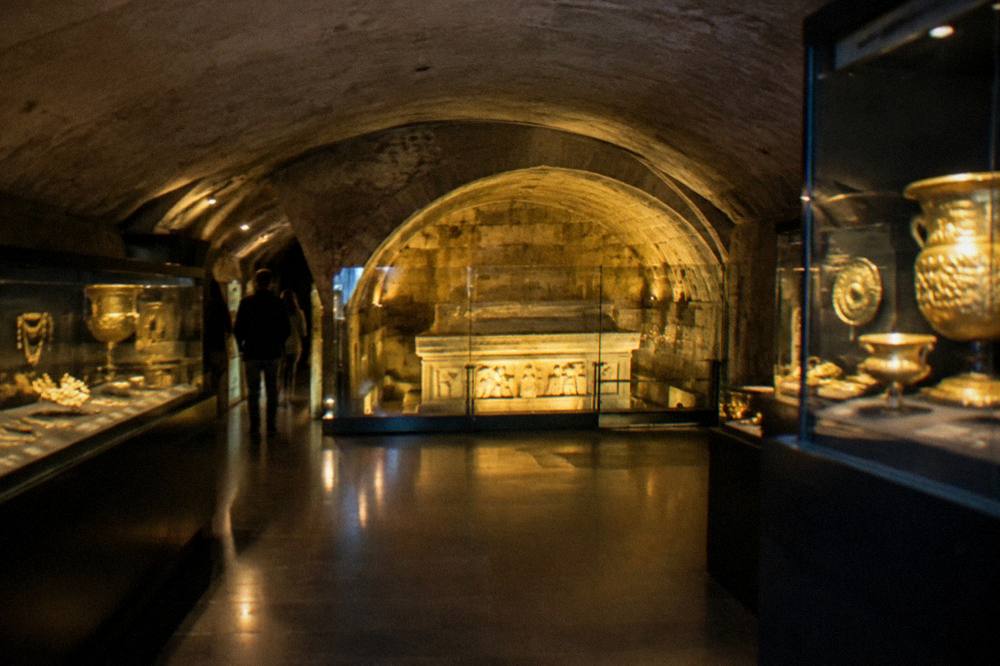
From 1 November to 31 March the White Tower runs daily 08:30 to 15:30, the Museum of Byzantine Culture runs Monday and Wednesday to Sunday 08:30 to 15:30 and closes Tuesdays, and the Archaeological Museum runs 09:00 to 17:00 and also closes Tuesdays, per each museum's own visiting page. The 2026 ticket prices carry over: the White Tower at 8 euro full and 4 reduced, the two big museums at 10 euro full and 5 reduced.
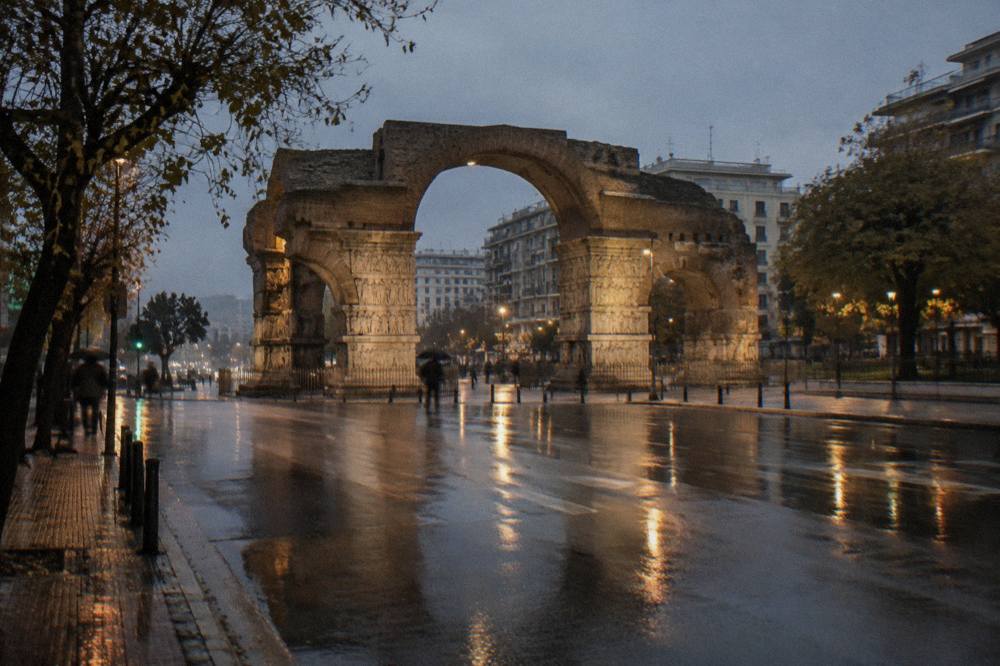
Winter is when the Tuesday closures bite, and that is the single most useful planning fact on this page. A common mistake is to stack the Archaeological Museum and the Museum of Byzantine Culture on the same winter Tuesday and find both shut. Build around it: the White Tower stays open daily, the churches stay open around services, and the open-air Roman monuments such as the Arch of Galerius cost nothing and close for no one.
| Sight | Winter hours (1 Nov to 31 Mar) | Ticket |
|---|---|---|
| White Tower | Daily 08:30 to 15:30 | 8 EUR full, 4 EUR reduced |
| Museum of Byzantine Culture | Mon, Wed to Sun 08:30 to 15:30, Tue closed | 10 EUR full, 5 EUR reduced |
| Archaeological Museum of Thessaloniki | Daily 09:00 to 17:00, Tue closed | 10 EUR full, 5 EUR reduced |
| Church of Saint Demetrius | Working church, open outside services | Free |
| Arch of Galerius | Open-air street monument | Free |
Sources: the museums' own visiting pages; entry stops 20 minutes before closing at the White Tower and the Archaeological Museum. State museums are free on 6 March, 18 April, 18 May, the last weekend of September and 28 October, and free for EU citizens up to 25. For more sight-by-sight detail, see the museums of Thessaloniki and free things to do in Thessaloniki, which covers the churches and monuments that cost nothing.
A guided walk is one way to beat the short-day problem, because a loop that covers the White Tower, the Rotunda, the Ladadika district and the upper town of Ano Poli inside a few daylight hours is exactly what a winter visitor needs. The Thessaloniki walking tour of top sights and hidden gems is the walk this site features for the season; Check availability to see current dates and the meeting arrangements on the operator's live listing.
Is A Winter Walking Tour Of Thessaloniki Worth It?
Yes, because the sights a walk covers, the White Tower, Ano Poli, the Byzantine churches and the Roman monuments, stay open through winter even as museum hours shrink, and a guided loop concentrates them inside the daylight window. The walking tours in the list above cover the same ground rain or shine, and the city's compact centre keeps distances short.
The practical case is about light, not temperature. With museums closing at 15:30 and the winter sun setting early, a structured walk that starts mid-morning uses the day efficiently. Ano Poli under low cloud is still Ano Poli: the Byzantine walls, the Heptapyrgion fortress, which served as a prison until 1989, and the view across the Thermaic Gulf from the upper town. The food market stops, at Modiano Market and Kapani Market, are covered spaces, which is why a market-based food tour is a strong winter pick. The Museum of Illusions ticket in the trio above is the indoor fallback for families.
For the seasonal church detail, the Byzantine churches of Thessaloniki covers the UNESCO-listed buildings, and the overview of things to do in Thessaloniki lists what runs across the whole year.
Does The Metro Still Run In Winter, And How Do You Get Around?
Yes, the Thessaloniki Metro runs 05:15 to 00:30 Sunday to Thursday and 05:15 to 02:00 Friday and Saturday year-round, per the operator's own site, with a basic ticket at 0.60 euro and a daily ticket at 2.50 euro. Line 1 opened in November 2024 and the Kalamaria extension, five more stations to Mikra, was inaugurated on 27 August 2026.
Winter makes the metro more useful, not less, because it removes the rain from the equation between the centre, the New Railway Station and Kalamaria. The reduced 0.30 euro fare and the 5.80 euro 10+1 carnet are on the Thessaloniki Metro's ticket page. For the full network picture, see getting around Thessaloniki and the Thessaloniki metro guide.
| Metro ticket | Price | Notes |
|---|---|---|
| Basic single | 0.60 EUR | One journey, 0.30 EUR reduced |
| Daily ticket | 2.50 EUR | 24 hours, unlimited metro |
| 10+1 carnet | 5.80 EUR | Eleven basic journeys |
| 30-day pass | 16.00 EUR | Monthly |
The airport connection also keeps running: Thessaloniki Airport "Makedonia" is about 20 minutes by road from Aristotelous Square, with OASTH airport bus lines X1, X2 and X3 plus the night N1 serving it, per the airport operator's information page. The reported airport bus fare of about 2 euro is a secondary-source figure, so confirm it when boarding. Details are in Thessaloniki airport to the city centre.
What Does Thessaloniki Feel Like Between November And March?
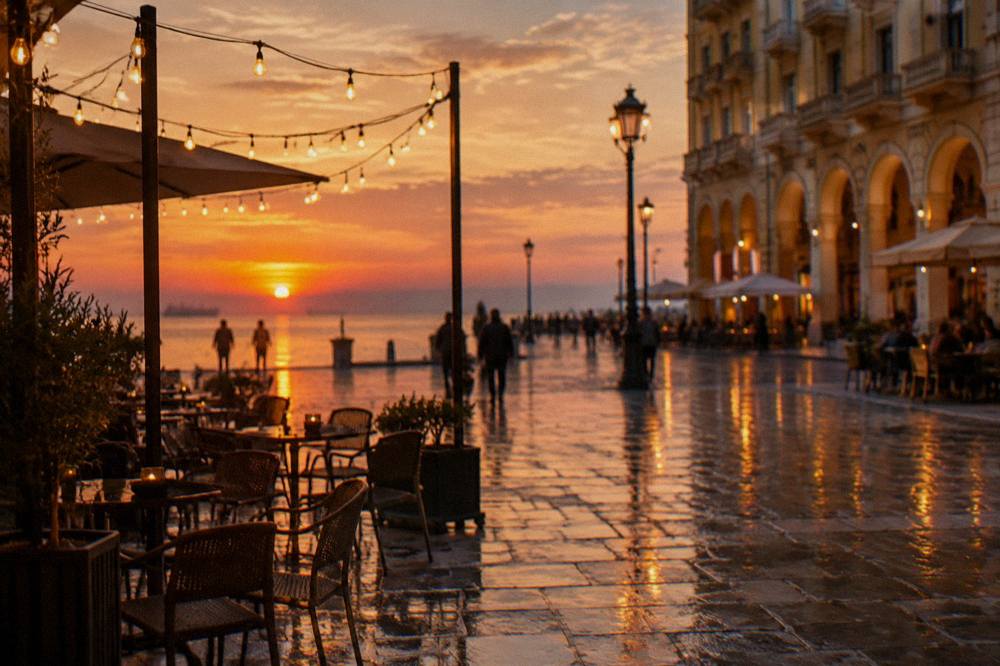
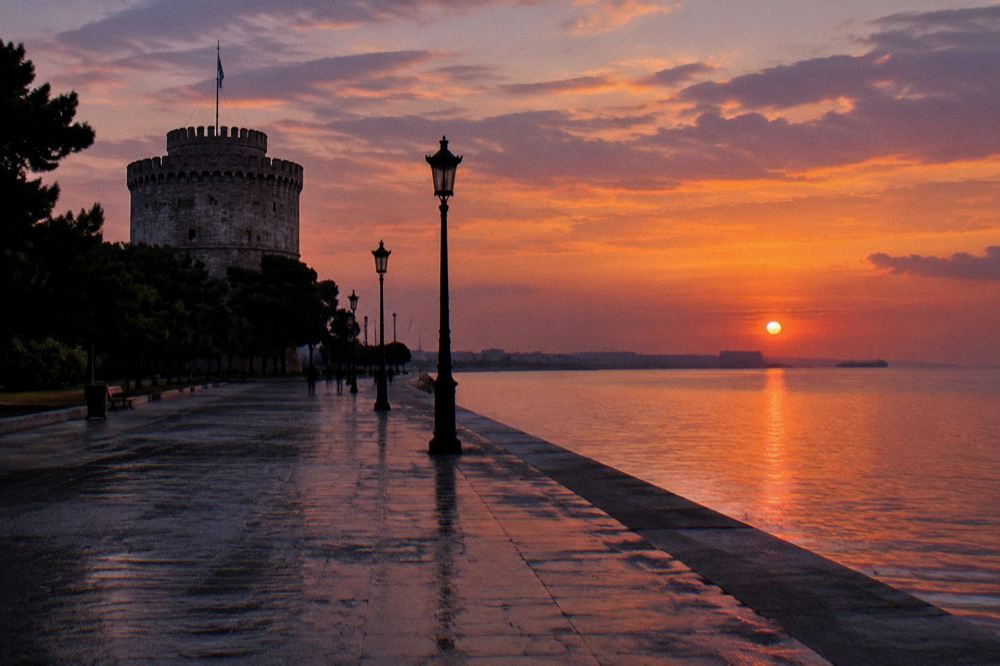
It feels like a working Greek city at full speed with thinner crowds at the sights: markets and bakeries trading as always, the Ladadika and Valaoritou dining streets busy in the evenings, museums on their 08:30 or 09:00 winter openings, and the seafront promenade used for walking, not swimming, since the Nea Paralia is a promenade rather than a beach and swimming happens at Perea, about 28 minutes away by road.
The honest description is that Thessaloniki never closes for winter the way a resort town does. This is a city of more than a million people in the wider urban area, with a university, a port and a year-round food culture. What changes is the rhythm: sunset comes early, the October festivals have ended, and the calendar turns to the fixed winter dates. Saint Demetrius day falls on 26 October and doubles as the city's liberation day, commemorating 26 October 1912. Ochi Day follows on 28 October with the annual parade. The Thessaloniki International Film Festival then runs in November; its 67th edition ran 5 to 15 November 2026, and the festival is a fixture of the city's winter cultural calendar, covered in the film festival guide.
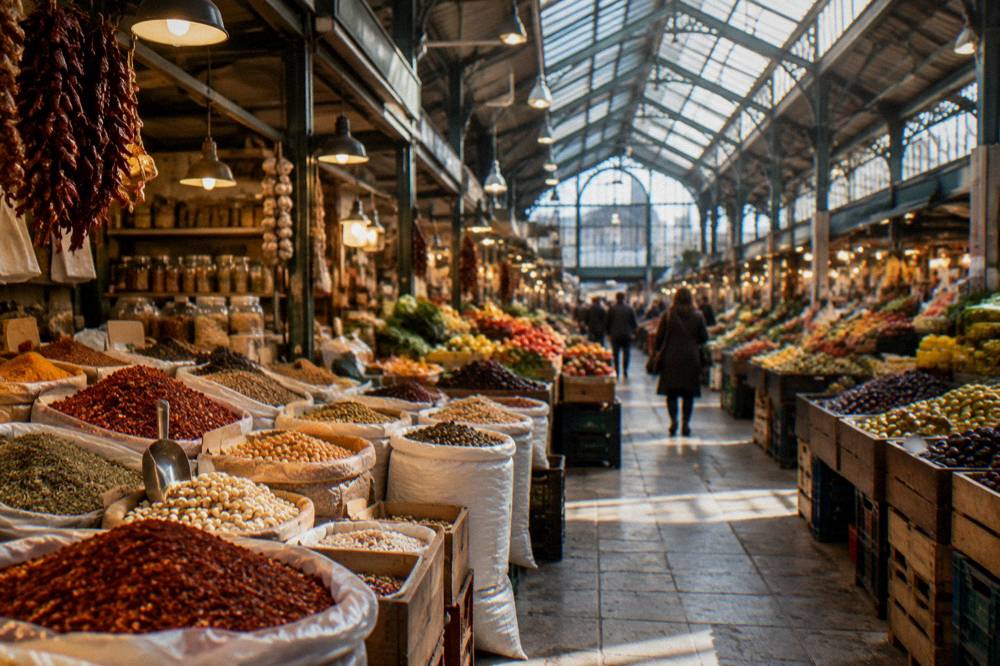
Eating is the winter activity here. The covered markets, Modiano Market and Kapani Market, the ouzeri tradition and the bakery counter with its bougatsa are indoor pleasures, and what to eat in Thessaloniki with the bougatsa guide cover them in detail. A market walk with tastings is the tour format built for this weather; the open market food tour in the trio above is exactly that, and check availability for winter dates on the operator's listing.
Which Day Trips Still Work From Thessaloniki In Winter?
Vergina, Pella, Veria, Edessa and the Loutra Pozar thermal baths all still work, at 62, 43, 52, 82 and about 100 minutes by road respectively, while the Mount Olympus hiking season does not: Refuge A on Olympus opens around early May and closes around late October. Meteora is a full day at about 228 km, and the Halkidiki beach towns are out of season for swimming.
Winter reshuffles the day-trip map. The ancient-Macedonia circuit, Vergina, Pella and the sites around Veria, is driven by museums and covered sites, so short days matter less. The Loutra Pozar hot springs near the border with North Macedonia are a natural winter destination. Edessa's waterfalls park is free and open, and the falls are at their strongest after winter rain. By contrast, the beach economy of Kassandra and Sithonia, and the boat trips out of Ouranoupoli, run May to October; the Mount Athos cruise season does not operate through winter, and entry to Athos itself requires a permit, a diamonitirion, and is men only in any case. The full index of guides sits on Thessaloniki Travel Guide.
| Day trip | Distance from Aristotelous Square | Drive time | Winter verdict |
|---|---|---|---|
| Pella | 45.7 km | about 43 min | Works, museum-led |
| Veria | 72.8 km | about 52 min | Works |
| Vergina (Aigai) | 68.0 km | about 62 min | Works, ticketed museum |
| Edessa waterfalls | 90.3 km | about 82 min | Works, free park |
| Dion | 90.1 km | about 67 min | Works, shorter hours |
| Meteora (Kalambaka) | 227.5 km | about 154 min | Full day, long drive |
| Halkidiki beaches | 86 to 97 km | 78 to 96 min | Out of season |
| Mount Olympus (Prionia) | 106.9 km | about 86 min | Refuge closed in winter |
Drive times are free-flow calculations from OSM routing; add margin for weather. The Vergina museum at Aigai is reported to cost 20 euro full and 10 reduced on its own site, a figure to confirm before you go. Each Meteora monastery is reported to charge 5 euro cash, with each closed one weekday per week, again reported, so check the current arrangements on the monasteries' own pages before booking anything. Full write-ups live in the site's day-trip guides, from Vergina and Pella to Meteora.
Where Should You Stay In Thessaloniki In Winter?
The city centre remains the practical base: the area around Aristotelous Square and the seafront puts the White Tower, the Ladadika dining district and the metro stations within a short walk, which matters more in rain than in July. A climate resilience fee applies per room per night, collected by the accommodation and lower from November to March.
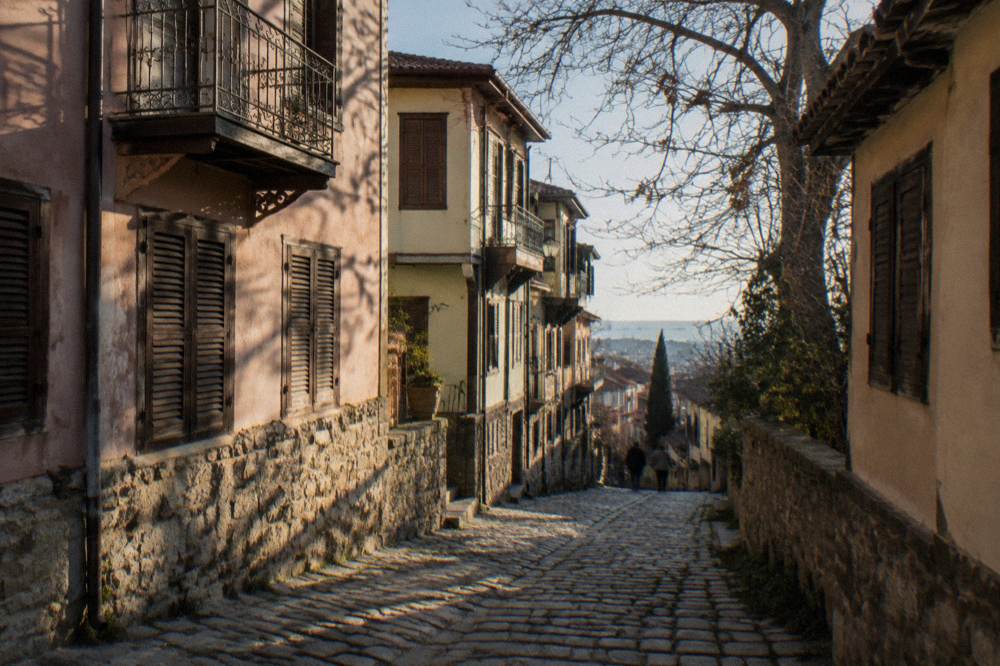
Winter lodging is a simpler decision than summer lodging. Ano Poli is atmospheric but uphill; Kalamaria is a tramless ride in; the centre wins on walkability, and the metro now links the centre to Kalamaria and the railway station in minutes at 0.60 euro a journey. Confirm the fee amount with the property at booking, since it is added locally. The area-by-area breakdown, with the trade-offs, is in where to stay in Thessaloniki, and cost planning is in the Thessaloniki budget guide.
What Should You Pack For Thessaloniki In Winter?
Pack for a mean daily high between 9.3 and 15.5 C across the four winter months with lows near freezing in January, rain on roughly 11 to 13 days a month in November through January, and a north-westerly wind off the Thermaic Gulf: layers, a real raincoat, and shoes that handle wet cobbles in Ano Poli.
The numbers say temperate, not alpine. This is not northern Europe in January, but it is also not a city where a jacket is optional after dark. The wind direction matters on the seafront: the Nea Paralia walk from the White Tower eastwards is exposed, and the prevailing north-westerly makes it feel colder than the station table suggests. An umbrella or a hood beats a plain coat, and one warm layer covers the evening shift from the cafés around Aristotelous Square to dinner in Ladadika.
| Item | Why |
|---|---|
| Raincoat or umbrella | 52.8 mm of rain in November, 55.1 mm in December |
| Warm layer for evenings | January mean low 1.5 C |
| Shoes with grip | Wet cobbles and stone steps in Ano Poli |
| Sunglasses | Winter sun low over the gulf |
| Metro ticket or contactless card | 0.60 EUR journeys, 2.50 EUR daily |
Figures: HNMS Thessaloniki Mikra station, 1959 to 2010.
Thessaloniki In Winter Versus The Other Seasons
Winter trades the 31.7 C July mean high, the beach day trips, the gulf and the long summer evenings for 8 euro museum tickets without summer queues, five UNESCO-scale sight clusters within walking distance, a metro that runs to 00:30 or 02:00, and the Film Festival that carries the cultural calendar into November, with the museums, markets and churches in season.
The trade is honest and specific. Summer belongs to the gulf, the terraces and the long evenings; winter belongs to the museums, the markets and the churches. The shoulder months of March and October split the difference, which is why the best time to visit Thessaloniki ranks them first for many travellers. But if a winter visit is what the calendar gives you, the city does not punish you for it: the Thessaloniki International Fair ran 5 to 13 September in its 2026 edition and is past, the Dimitria festival ran through October, and the Film Festival carries the cultural calendar into November.
Common Questions About Thessaloniki In Winter
Is Thessaloniki worth visiting in winter?
Yes. The museums, the covered markets, the Byzantine churches and the food culture run year-round, the metro keeps late hours, and the November film festival anchors the cultural calendar. Expect cool rain and museum days that end at 15:30.
How cold does Thessaloniki get in winter?
The HNMS Thessaloniki Mikra station table, 1959 to 2010, shows January mean highs of 9.3 C and lows of 1.5 C, with February at 11.0 C and 2.3 C. Freezing nights happen, and the station table carries no snow-day count.
Does it rain a lot in Thessaloniki in winter?
December has the highest monthly rainfall in the station table at 55.1 mm over about 12.7 rain days, and November follows at 52.8 mm. The annual total is 444.5 mm, so rain is frequent but rarely continuous.
Are the museums open in Thessaloniki in winter?
Yes, on winter schedules from 1 November to 31 March. The White Tower opens daily 08:30 to 15:30, the Museum of Byzantine Culture closes Tuesdays, and the Archaeological Museum also closes Tuesdays, per their own visiting pages.
Can you swim in Thessaloniki in winter?
No. The Nea Paralia is a promenade, not a beach, in any season, and the sea swimming at Perea, Agia Triada and Epanomi is a warm-season activity. Winter visitors walk the seafront rather than swim it.
What day trips work from Thessaloniki in winter?
Vergina, Pella, Veria, Edessa and the Loutra Pozar thermal baths work well, all inside about two hours by road. The Mount Olympus refuge season ends in late October, and the Halkidiki boat and beach trips do not run in winter.