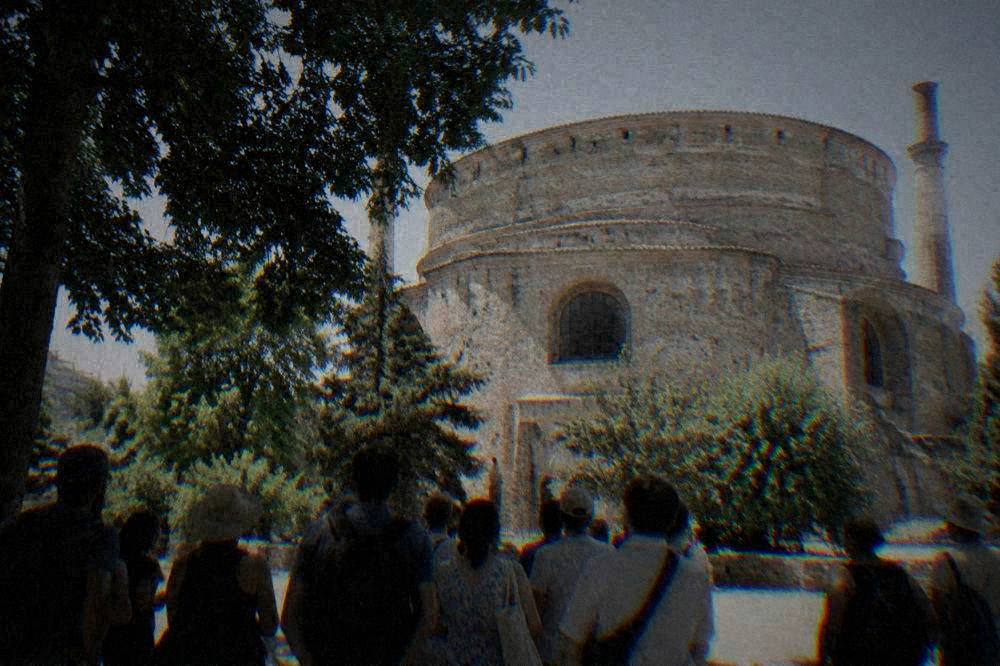
Free Things To Do In Thessaloniki
Thessaloniki gives away an unusual amount for nothing: Roman arches in the street, UNESCO-listed Byzantine churches you can walk into, a long seafront promenade and a walled upper town with views over the Thermaic Gulf. This guide lists what genuinely costs zero euro, and what does not.
Short answer
The Arch of Galerius, Aristotelous Square, the Nea Paralia promenade, the Ano Poli streets and the working Byzantine churches of Thessaloniki are all free. State museums are free on five fixed days a year, including 18 April and 28 October.
Thessaloniki, the second city of Greece, sits on the Thermaic Gulf in Central Macedonia, and a striking share of it costs nothing to see. The Arch of Galerius stands in the middle of a public street. Fifteen Paleochristian and Byzantine monuments, inscribed on the UNESCO World Heritage List in 1988, include working churches that open their doors outside services without a ticket. The seafront promenade, the Nea Paralia, is a walk, not an attraction with a gate, and the old upper town of Ano Poli climbs inside the Byzantine walls to viewpoints over the whole gulf. The Thessaloniki Travel Guide desk has gone through the prices that matter: what follows is what is genuinely free, what is free only on certain days, and where a small ticket applies so nobody is surprised at the door.
What Can You Do In Thessaloniki Without Spending Anything?
The core of Thessaloniki is free to walk and free to look at: the Arch of Galerius on Egnatia, Aristotelous Square, the whole Nea Paralia promenade, the lanes of Ano Poli inside the Byzantine walls, and the working Byzantine churches, including the Church of Saint Demetrius and Hagia Sophia, which are open to visitors outside service times at no charge. The city was founded in 315 BC by Cassander and layered by Romans, Byzantines and Ottomans, and a great deal of that layered history is simply standing in public space rather than behind a ticket desk.
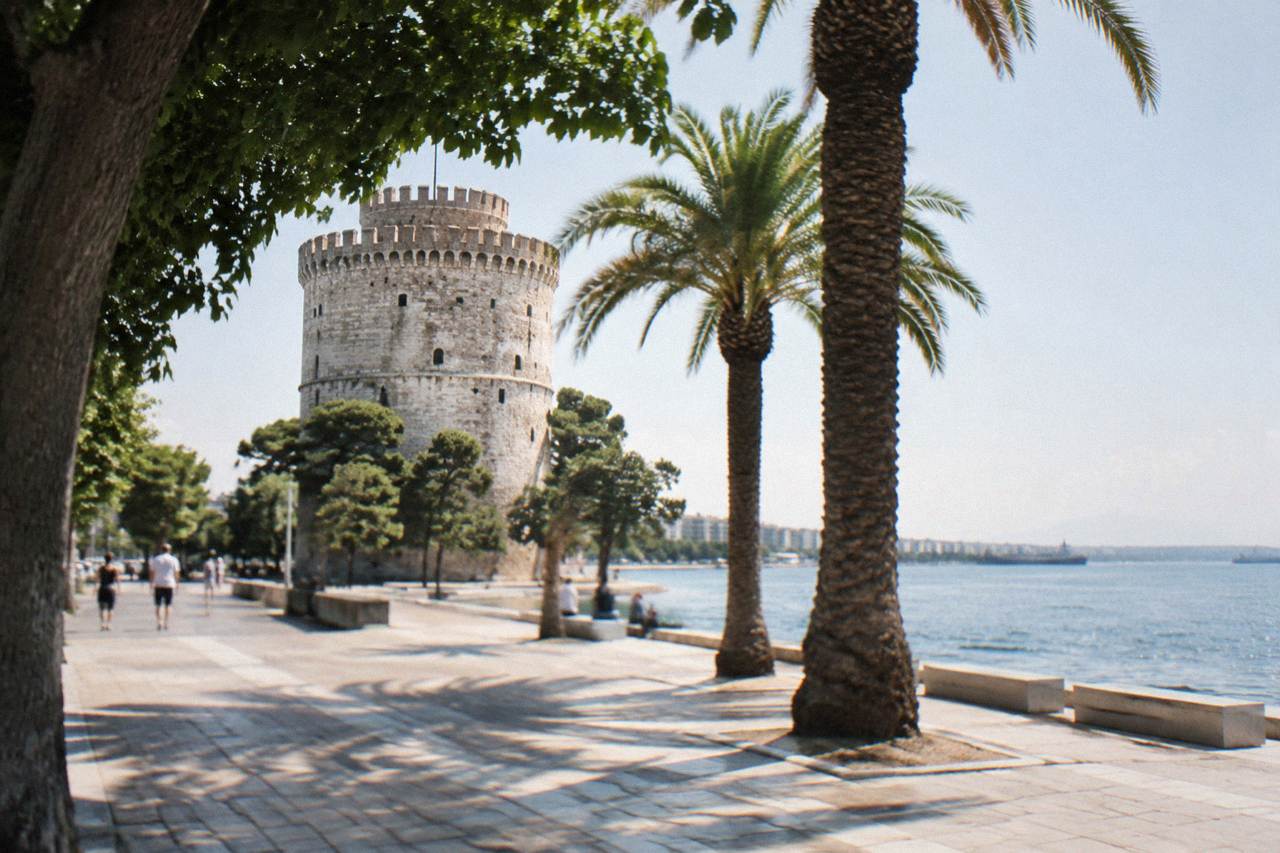
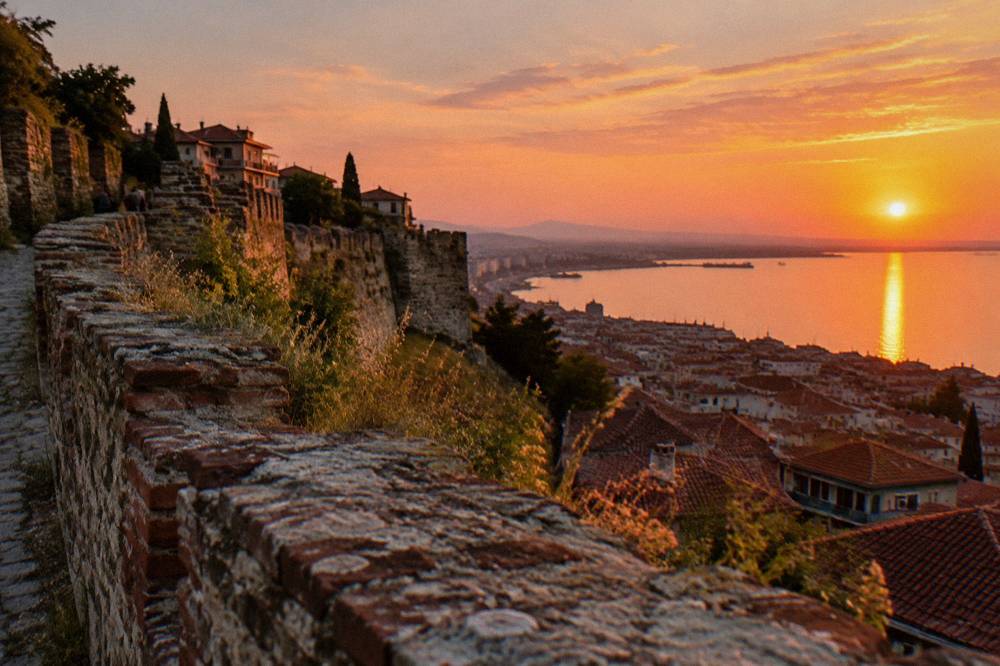
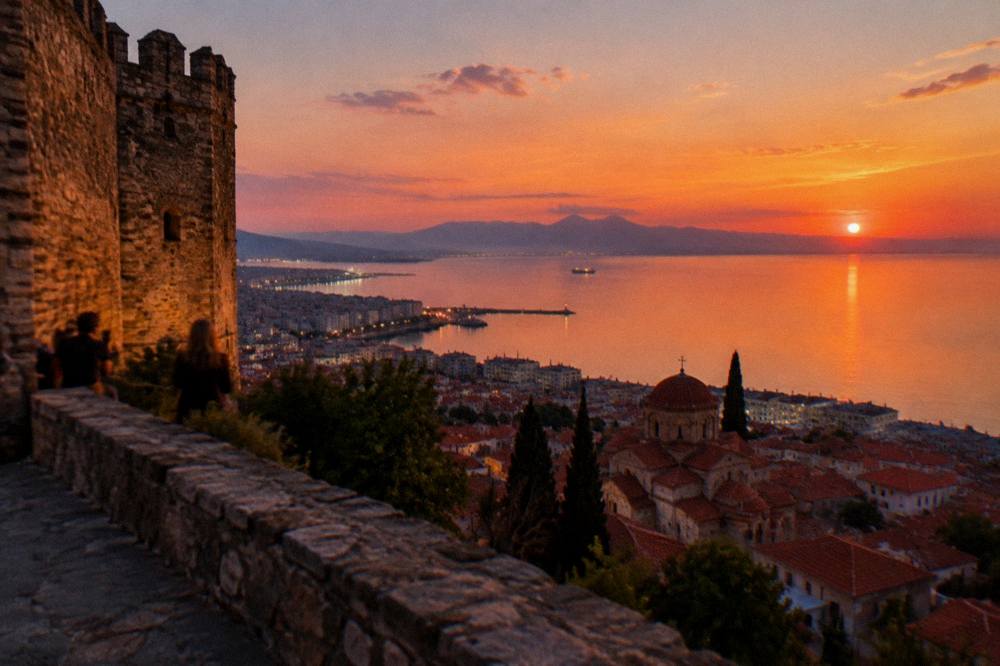
Start at sea level and work up. The White Tower is the landmark, and walking to it costs nothing even though climbing inside now takes a ticket. The Nea Paralia runs along the water as a designed promenade, and it is a walking and cycling space, not a beach: swimming happens further out at Perea, about 23 km and 28 minutes away by road. From the promenade the route uphill into Ano Poli passes the walls, whose visible sections run about 4 km of the original roughly 8 km circuit, according to the Ministry of Culture's own monument page. Up at the Heptapyrgion fortress, the view over the city and the Thermaic Gulf is the free reward; entering the fortress interior is where a ticket may apply, so check the current price on the monument's own ticket page before you go.
The table below separates what is genuinely free from what carries a 2026 ticket, so the budget is clear before anyone sets out.
| Sight | Cost | Notes |
|---|---|---|
| Arch of Galerius | Free | Open-air monument on Egnatia street |
| Aristotelous Square | Free | Open public square on the seafront |
| Nea Paralia promenade | Free | Walking and cycling promenade, not a beach |
| Ano Poli streets and city walls exterior | Free | About 4 km of wall visible today |
| Working churches (Church of Saint Demetrius, Hagia Sophia, Panagia Acheiropoietos, Hosios David) | Free | Open outside services |
| White Tower | 8 euro full, 4 euro reduced | Prices in force from 1 April 2026 |
| Archaeological Museum | 10 euro full, 5 euro reduced | Closed Tuesday from 1 November to 31 March |
| Museum of Byzantine Culture | 10 euro full, 5 euro reduced | Daily in summer, 08:00 to 20:00 |
For readers who want the whole paid-and-free picture in one place, the site's overview of Thessaloniki sights covers the ticketed attractions in depth.
Which Museums In Thessaloniki Can You Enter For Free?
Every state museum and archaeological site in Thessaloniki is free on five fixed days a year, 6 March, 18 April, 18 May, the last weekend of September and 28 October, and entry is also free for EU citizens up to the age of 25 on any day, according to the Museum of Byzantine Culture's visiting page. On those days the White Tower, the Archaeological Museum and the Museum of Byzantine Culture all open without a ticket, which makes them the cheapest possible dates to see the city's museum collections.
The fixed days map onto national and European observances: 6 March is Melina Mercouri Day, 18 April is International Day for Monuments and Sites, 18 May is International Museum Day, the last weekend of September is European Heritage Days, and 28 October is Ochi Day, a national holiday that in Thessaloniki also carries the annual parade. Plan around them carefully: they are popular days, and 28 October in particular coincides with the Ochi Day parade through the centre, an event that is itself free to watch. Saint Demetrius day, 26 October, falls two days earlier and marks the city's patron saint as well as the anniversary of the liberation of Thessaloniki on 26 October 1912.
| Free-admission day | What it is | Applies to |
|---|---|---|
| 6 March | Melina Mercouri Day | State museums and sites |
| 18 April | International Day for Monuments and Sites | State museums and sites |
| 18 May | International Museums Day | State museums and sites |
| Last weekend of September | European Heritage Days | State museums and sites |
| 28 October | Ochi Day, national holiday | State museums and sites |
Beyond those dates, the free tier of the city is best understood with a guide's context, and two options in the site's roster keep the budget intact. One is a genuinely free, pay-what-you-want walk: the Small group MERAKI local walking free tour on GuruWalk is free to join and you pay what you want at the end. The other end of the scale is a fully guided option such as the Upper Town Historical Tour Experience, which covers the walled quarter that is otherwise free to wander alone.
A note on the two big museums for anyone planning around a tight budget: the Archaeological Museum's hours are 09:00 to 17:00, and from 1 November to 31 March it closes on Tuesdays, while the Museum of Byzantine Culture runs daily 08:00 to 20:00 through the summer season. Neither is free on an ordinary day, so the fixed free dates or the reduced-ticket rules are the way in without paying full price.
Is Exploring The Ano Poli And The City Walls Free?
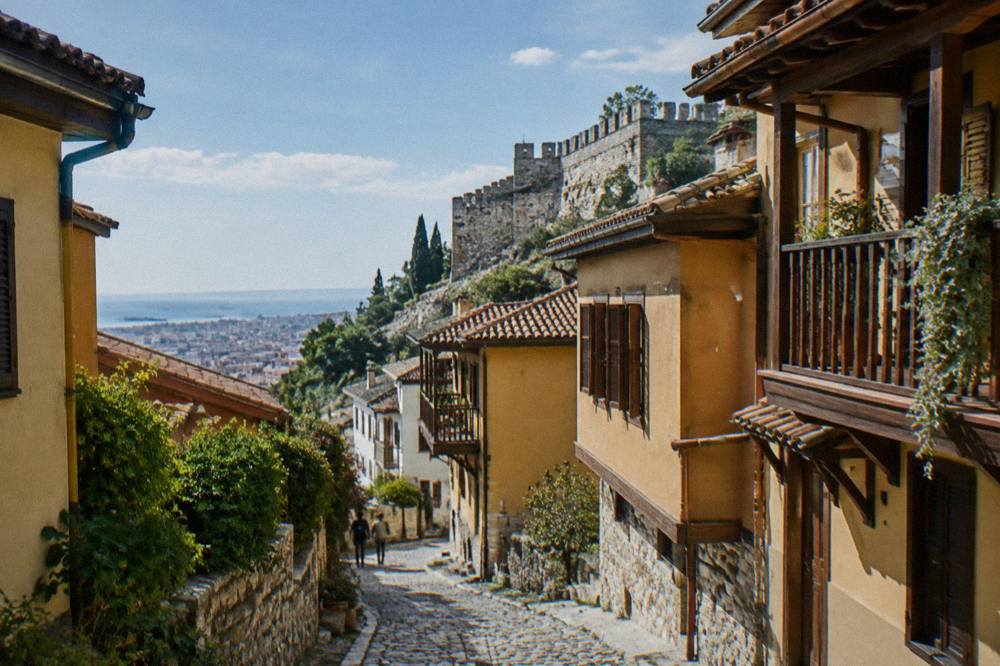
Yes, the whole of Ano Poli, the old upper town of Thessaloniki, is free to explore on foot: its stone lanes, its traditional houses, the exterior of the Byzantine walls and the viewpoints over the Thermaic Gulf cost nothing, and only the interior of the Heptapyrgion fortress carries a possible ticket, so confirm the current price locally before entering. Ano Poli is the part of the city that the Great Fire of 1917 did not reach, which is why its pre-fire street pattern and Ottoman-era houses survive at all.
The walls themselves are the oldest free structure in the district, with Hellenistic origins later expanded in the Byzantine period and strengthened under the Ottomans, per the Ministry of Culture's monument entry. The Heptapyrgion fortress at the top was used as a prison until 1989, a fact the Ministry of Culture records on the same page, and today the walk around it and the panorama from the Trigonion Tower area are the payoff for the climb. For the stories behind the stones, a guided walk such as the Upper Town Historical Tour Experience adds the layers a map cannot, and the site's dedicated Ano Poli guide also covers where to base yourself near or below the walls.
Climbing on foot from the centre is the free way, and it takes nothing but legwork up through the lanes. Visitors who would rather ride up and walk the flat parts can consider an e-bike option, since the e-Bike Tour Through Picturesque Neighborhoods covers several districts, Ano Poli viewpoints among them, without the climb.
Is The Nea Paralia Waterfront Free To Walk?
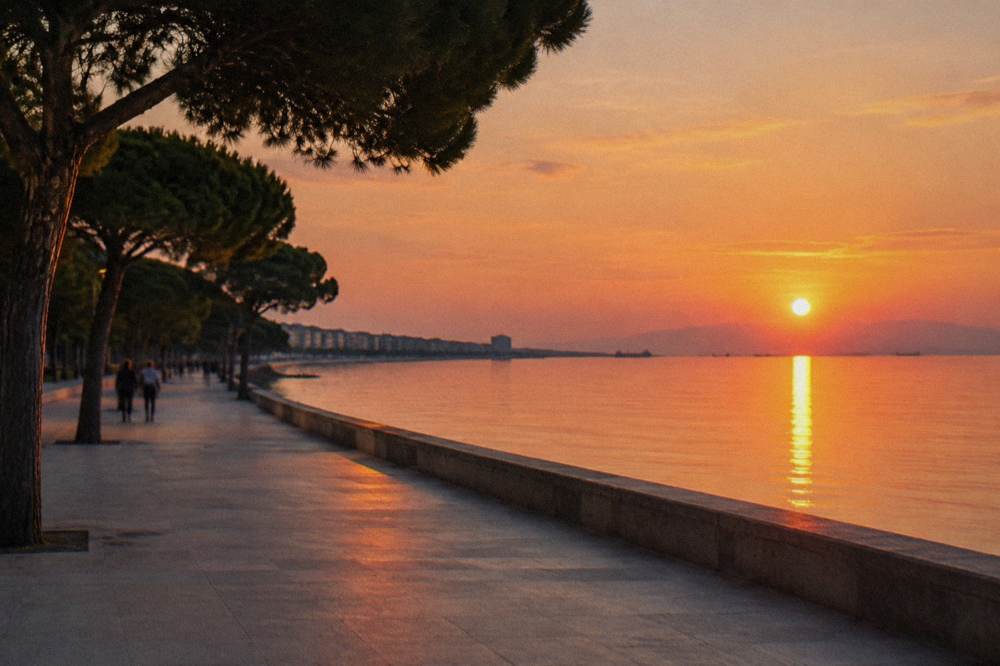
The Nea Paralia is a free public promenade running along the Thermaic Gulf from near the White Tower southwards, open at all hours, built for walking, running and cycling, and it is not a beach: swimming is not done there, and the nearest swimmable beaches are at Perea, about 23 km and roughly 28 minutes away by road. No gate, no ticket, no season: the promenade is simply part of the city's public ground.
Walking it is the single most reliable free activity in Thessaloniki, because it works in every month. In July the mean daily high is 31.7 C and in January the mean daily low is 1.5 C, per the HNMS Thessaloniki Mikra station record, 1959 to 2010, so summer walkers go early or late and winter walkers get a cold but bright seafront. The themed gardens along the route and the sculpture installations cost nothing to pass, and the view back toward the White Tower and up to the walls of Ano Poli is the free spectacle the promenade exists for.
| Month | Mean high C | Mean low C | Rain mm |
|---|---|---|---|
| January | 9.3 | 1.5 | 37.7 |
| April | 19.1 | 7.9 | 36.1 |
| July | 31.7 | 19.3 | 23.8 |
| October | 21.2 | 11.3 | 43.0 |
Climate figures: HNMS Thessaloniki Mikra station, 1959 to 2010. October is a rainier month than July at 43.0 mm against 23.8 mm, and December carries the highest monthly total at 55.1 mm, so a promenade walk in the cooler half of the year is best timed between showers. The site's weather guide and best-time-to-visit guide break the year down month by month for planning.
Are The Byzantine Churches Of Thessaloniki Free To Enter?
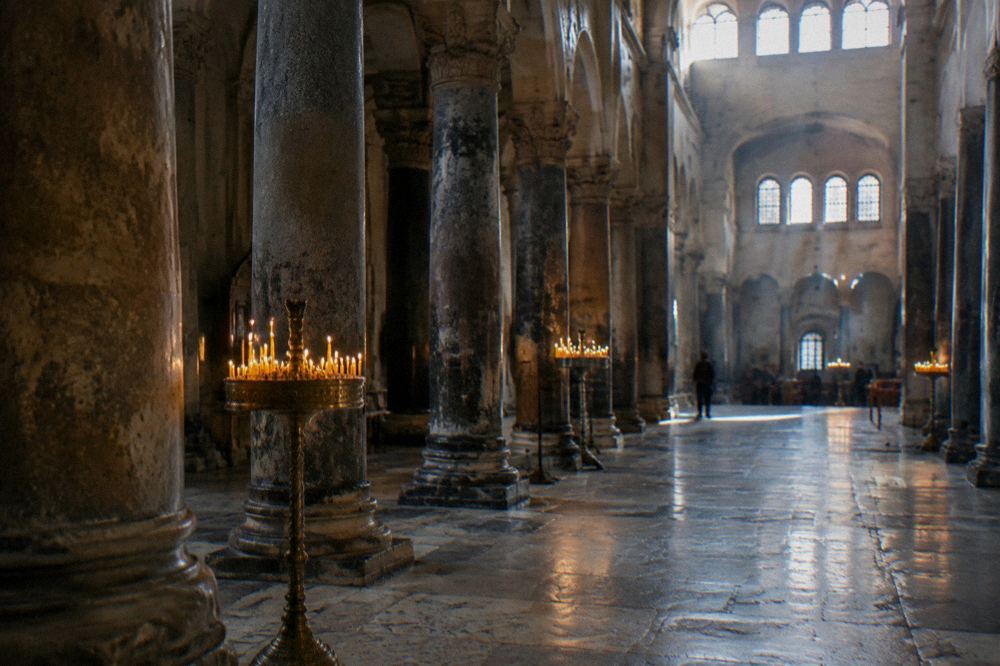
Yes, the working churches of Thessaloniki are free to enter outside service times, and this includes several of the UNESCO-listed Paleochristian and Byzantine monuments: the Church of Saint Demetrius, Hagia Sophia, Panagia Acheiropoietos and Hosios David charge no admission, though hours follow the liturgical day rather than a museum timetable and specific opening hours for each church are not published centrally, so confirm locally. The UNESCO inscription of 1988 covers fifteen monuments, and the churches among them are living places of worship rather than ticketed sites.
The Church of Saint Demetrius is dedicated to the city's patron saint, whose feast day on 26 October doubles as the anniversary of the 1912 liberation, and the crypt and the earlier layers beneath the present church are part of what makes it a destination in itself. Hagia Sophia and the Church of Saint Demetrius were both damaged in the Great Fire of 1917, per the municipality's own history pages, and their rebuilding is part of the city's modern story. The Byzantine churches guide on this site walks through them one by one.
Practical etiquette costs nothing either: modest dress, quiet voices, and no photography during services. None of the churches charge, none sells a combined ticket, and none posts a price list, because they are not museums. If a posted collection box exists, contributions are voluntary.
Are The Markets And Squares Of Thessaloniki Free To Visit?
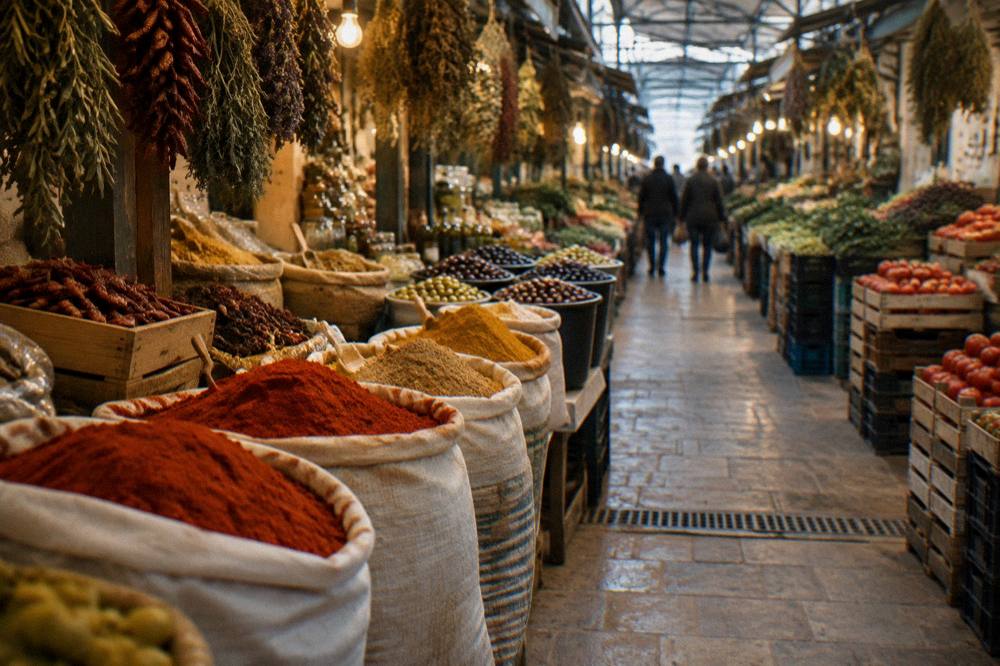
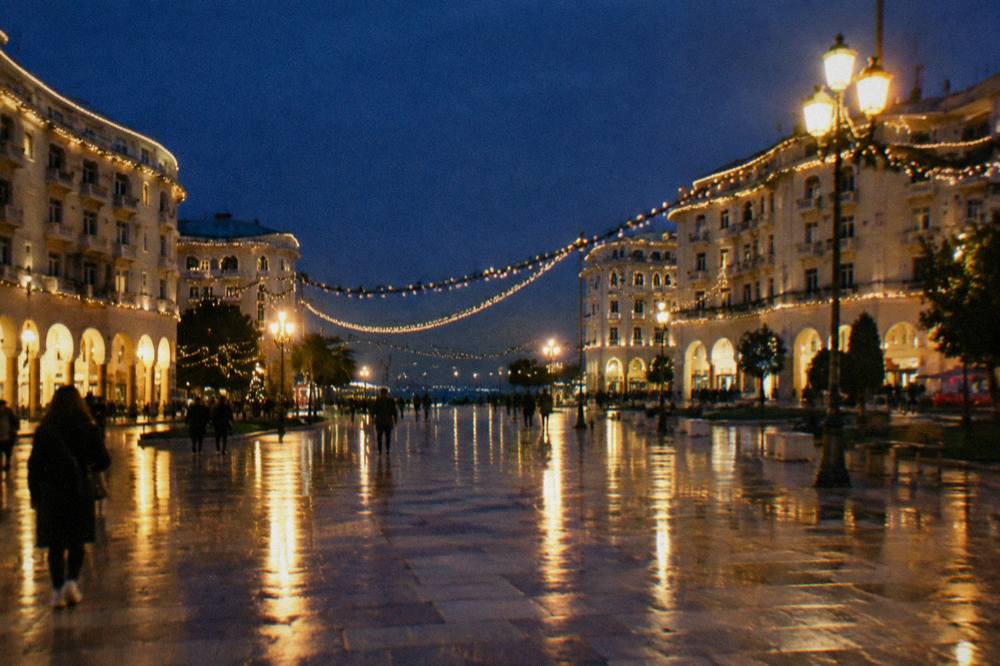
Yes, Kapani Market and Modiano Market cost nothing to enter, and neither does Aristotelous Square, the open heart of the city designed under the post-fire Hebrard plan: browsing, photographing and soaking in the noise of the food halls is free, and money only leaves your pocket when you buy something. The markets are working commercial spaces, open on their own commercial schedules rather than museum hours.
Kapani Market is the older, open-air sprawl of stalls, spices and household goods; Modiano Market, the covered hall, reopened after its refurbishment as a mixed food-and-eating space. Neither charges admission, and both are at their most interesting in the morning when the trade is at full volume. The site's Kapani Market area coverage and food pages map the surrounds, and the what to eat in Thessaloniki guide picks up where the free browsing ends and the paid tasting begins.
| Free public space | What it is | Best free activity |
|---|---|---|
| Aristotelous Square | Open square toward the seafront | People-watching, open views to the gulf |
| Kapani Market | Open-air market district | Browsing the spice and produce stalls |
| Modiano Market | Covered food hall | Walking the hall and the food counters |
| Roman Agora (exterior) | Ancient forum site in the centre | Viewing the exposed remains from the street |
| Ladadika district | Historic quarter by the port | Wandering the coloured facades |
From the street, the ancient remains are visible without any ticket at all, and the same is true of the Galerian complex ruins along Egnatia, where the Palace of Galerius excavations sit in the open city fabric.
Which Free Annual Events Fill The Thessaloniki Calendar?
Several of Thessaloniki's biggest annual events are free to experience as public occasions: the Ochi Day parade on 28 October, Saint Demetrius day on 26 October, the public side of the Thessaloniki International Film Festival from 5 to 15 November 2026, and the reported Dimitria festival running 1 to 26 October 2026, all fill squares and streets that cost nothing to stand in. The 90th Thessaloniki International Fair ran 5 to 13 September 2026 with Japan as the honoured country, and its pavilions require a ticket, but the fair's presence transforms the centre for free.
The Film Festival is the highlight for a free-flowing visit: while screenings are ticketed, the festival's red carpets, open-air installations and the atmosphere around the venues on the seafront are open to everyone. The Dimitria festival, reported at 1 to 26 October 2026 for its 61st edition, brings performances across city venues; individual events set their own terms, so confirm the programme locally. The site's Film Festival guide covers the November dates in detail.
Which Free Viewpoints And Nearby Escapes Sit Around Thessaloniki?
The free viewpoints of Thessaloniki are concentrated in Ano Poli, above all the wall-side terraces below the Trigonion Tower and the Heptapyrgion approaches, and beyond the city several low-cost escapes sit within easy reach, including the seafront at Perea at about 23 km and 28 minutes by road and the reported free park at the Edessa waterfalls at about 90 km and 82 minutes, per computed free-flow drive times from Aristotelous Square. None of the viewpoints has a gate or a fee, and the drive times below are free-flow figures, so allow more in traffic.
| Free or low-cost escape | Distance from Aristotelous Square | Free-flow drive time |
|---|---|---|
| Perea seafront | 23.0 km | about 28 minutes |
| Epanomi | 28.8 km | about 36 minutes |
| Veria | 72.8 km | about 52 minutes |
| Edessa waterfalls park | 90.3 km | about 82 minutes |
| Litochoro (Mount Olympus base) | 90.7 km | about 67 minutes |
| Naoussa | 92.3 km | about 76 minutes |
The Edessa waterfalls park is reported to be a public, free-to-enter park with the waterfalls viewable from open paths, though small fees may apply to individual museums and attractions inside it, so confirm on the day. Within the city itself, no viewpoint charges: the walls, the upper lanes and the seafront all give their panoramas away, which is rare for a European city of this size and history. Getting to any of the nearby towns costs a bus or a tank of fuel, but standing in the best of their landscapes costs nothing.
For deeper planning, the day trips overview and getting around guide cover the transport choices, and the metro's own facts are on the Thessaloniki metro page: Line 1 has run since November 2024, the Kalamaria extension was inaugurated on 27 August 2026, and a basic ticket costs 0.60 euro.
That last pick deserves its own sentence, because it is the purest fit for this page: the Small group MERAKI local walking free tour on GuruWalk is free to join, you pay what you want at the end, and it is never a paid tour.
Common Questions About Free Things To Do In Thessaloniki
Is the White Tower free?
No. The White Tower costs 8 euro full and 4 euro reduced under the prices in force from 1 April 2026. Walking to it and around it on the seafront is free; only the interior climb is ticketed, and state museums including the White Tower are free on 6 March, 18 April, 18 May, the last weekend of September and 28 October.
Can you visit Thessaloniki churches for free?
Yes. The working churches, including the Church of Saint Demetrius, Hagia Sophia, Panagia Acheiropoietos and Hosios David, are free to enter outside service times. Specific opening hours vary with the liturgical day, so confirm locally.
Is the Ano Poli free to explore?
Yes. The lanes, walls exterior and viewpoints of Ano Poli cost nothing. The Heptapyrgion fortress interior may carry a ticket, so check the current price locally before entering.
Is the Nea Paralia a free beach?
The Nea Paralia is free, but it is a promenade, not a beach, and swimming is not done there. The nearest swimmable beaches are at Perea, about 28 minutes away by road, and at Agia Triada or Epanomi.
When are Thessaloniki museums free?
State museums and sites are free on 6 March, 18 April, 18 May, the last weekend of September and 28 October each year, and free for EU citizens up to 25 on any day.
Is there a free walking tour in Thessaloniki?
Yes. The Small group MERAKI local walking free tour on GuruWalk is free to join and works on a pay-what-you-want basis at the end. Check availability on the operator's live listing for current details.
Thessaloniki rewards the empty wallet better than almost any Greek city its size: the arch, the walls, the churches, the promenade and the squares are all standing open, and the museum days listed above fold the ticketed half of the city into the free one five times a year.