Free Walking Tour Thessaloniki: Tip-Based Walks Compared
Thessaloniki, the second city of Greece on the Thermaic Gulf, has one English-language free walking tour, a pay-what-you-want walk on GuruWalk, plus a deep bench of paid walks. This page explains how the tip-based model works, what the route covers, and what museum and transport costs to plan around.
Short answer
The city has one English free walk, on GuruWalk, which is pay what you want.
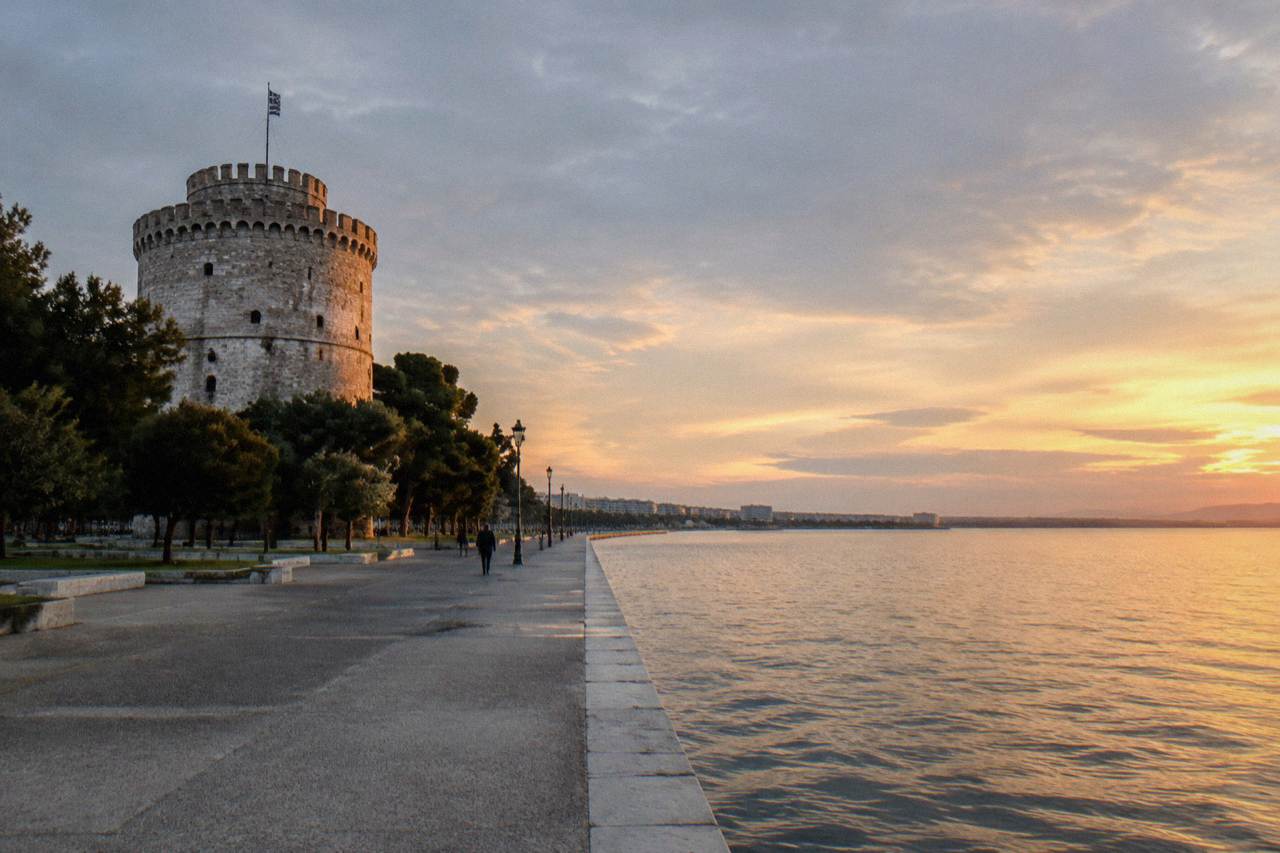
Thessaloniki, the second city of Greece, sits on the Thermaic Gulf in Central Macedonia, and its compact, seafront-hugging centre makes it one of the most walkable cities in the country. A visitor can start at the White Tower on the Nea Paralia promenade, reach Aristotelous Square in a matter of minutes on foot, and continue inland to the Roman Rotunda and the Arch of Galerius without ever needing a bus. That walkability is exactly why the free, tip-based walking tour format has taken root here.
What Is A Free Walking Tour In Thessaloniki?
A free walking tour in Thessaloniki is a guided city walk that costs nothing to join and is paid for by an optional tip at the end. The city has one English-language free walk, a pay-what-you-want tour on GuruWalk. Beyond that single free walk, Thessaloniki's tour roster is dominated by paid walks, and this page keeps the two categories clearly separated.
The format itself is straightforward. A guide leads a group through the city centre, stops at the major monuments, tells their history, and at the end the participants decide what the walk was worth to them. There is no fixed price and no obligation beyond the booking itself. In Thessaloniki's case the free option is the Small group MERAKI local walking free tour, listed on GuruWalk. It is free, tip based, and the platform name belongs in any honest mention of it because that is where the listing lives. Never treat it as a paid product: the price structure is the product.
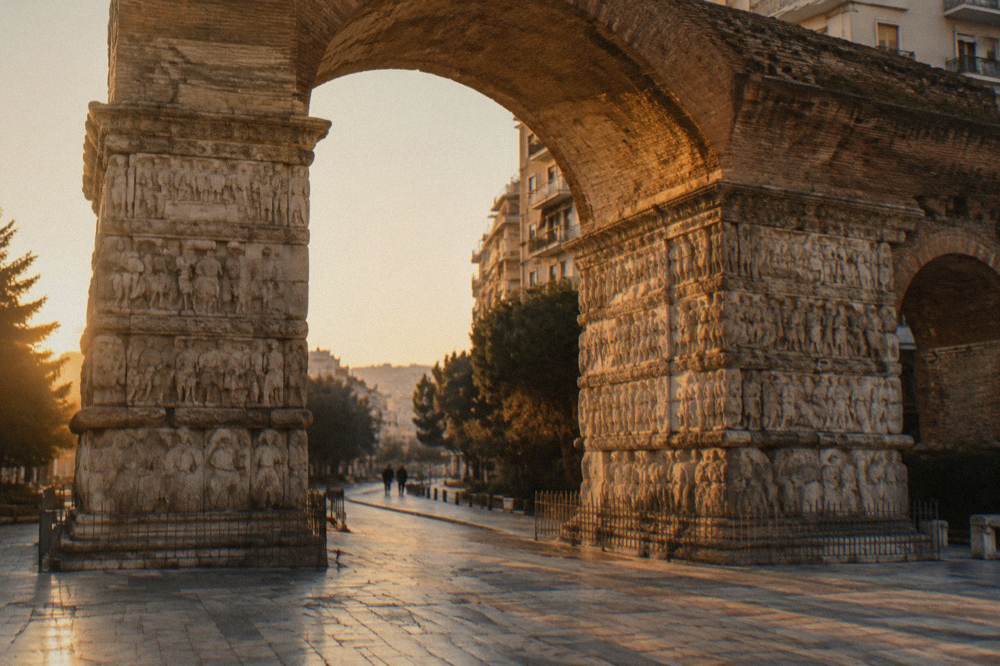
What distinguishes Thessaloniki from many European cities is how much of the classic walking route is free to view even without a guide. The Arch of Galerius stands in the open on Egnatia street and costs nothing to walk under. Aristotelous Square is a public square. The Nea Paralia is a public promenade. The working churches, including the Church of Saint Demetrius and Hagia Sophia, are free to enter outside services. A free walking tour here is therefore not selling access to anything; it is selling narrative, orientation and the judgment of a local about what matters.
For travellers who want the broader picture of the city before committing to any single format, the site's main overview page on things to do in Thessaloniki sets out the full range of sights, museums and day trips, and the dedicated Thessaloniki walking tour page covers the paid guided walks in detail.
How Does The Tip-Based GuruWalk Model Work In Thessaloniki?
The GuruWalk model in Thessaloniki works on a simple exchange: you reserve a place for free, the guide walks you through the city, and at the end you pay what you want in cash. The walk itself is never described as paid, no price is attached to it, and the tip is entirely at the walker's discretion. Booking a spot simply holds your place in the group.
GuruWalk is the platform on which Thessaloniki's English free walk is listed, and this page names it for that reason alone. The listing gives the practical details: the meeting arrangement, the route and the guide's approach are all on the tour's own page, and readers should confirm them at booking rather than rely on second-hand summaries. What the editorial record supports is the structure: free to book, pay what you want at the end, small group format.
The obvious question is what to tip, and here the honest answer is that no established tipping norm exists for Thessaloniki. The practical approach is to decide before the walk ends, based on its length and quality, and to carry cash, since a tip handed to a guide at the end of a street walk is normally cash.
A few practical points follow from the format. Free walks tend to fill on busy days, so reserving ahead matters more than turning up on spec. Groups are described as small, which changes the experience compared with the large-flag-follow-the-guide format some cities have. And because the walk is the guide's livelihood, a no-show after a booking takes a place someone else could have used; if plans change, cancel the booking rather than simply not appearing.
For walkers who prefer a fixed price and a guaranteed structure, the paid alternatives sit alongside the free walk rather than replacing it. The site's Thessaloniki food tour page covers the guided eating walks, which are a different category altogether and never free, since tastings are built into the product.
What Sights Does A Free Thessaloniki Walking Route Cover?
A typical free walking route in Thessaloniki covers the seafront White Tower, the Nea Paralia promenade, Aristotelous Square, the Roman complex of the Rotunda and the Arch of Galerius, and the lanes of Ano Poli or Ladadika depending on the guide. All of these are free to view from the street, and the walk itself decides how deep into each it goes.
The spine of any Thessaloniki walk is the waterfront. The White Tower, the city's landmark fortification, anchors the eastern end of the promenade; the exact route a free walk takes is on the listing, but the tower is the natural reference point because everything else radiates from it. The White Tower page covers its history and its museum, and the Nea Paralia page covers the promenade itself, which is a walking and cycling space, not a swimming beach.
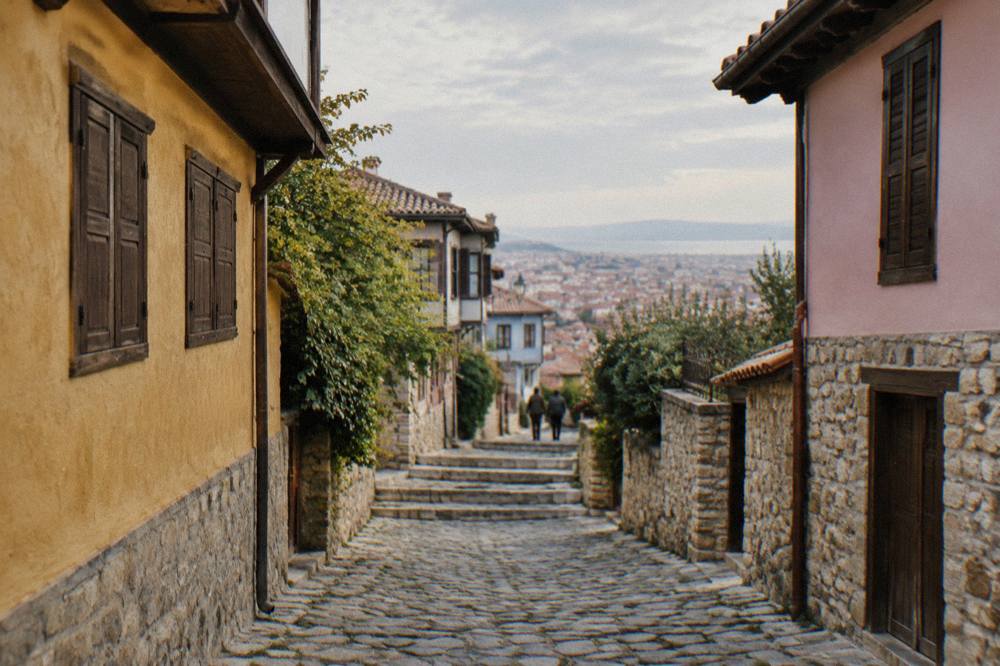
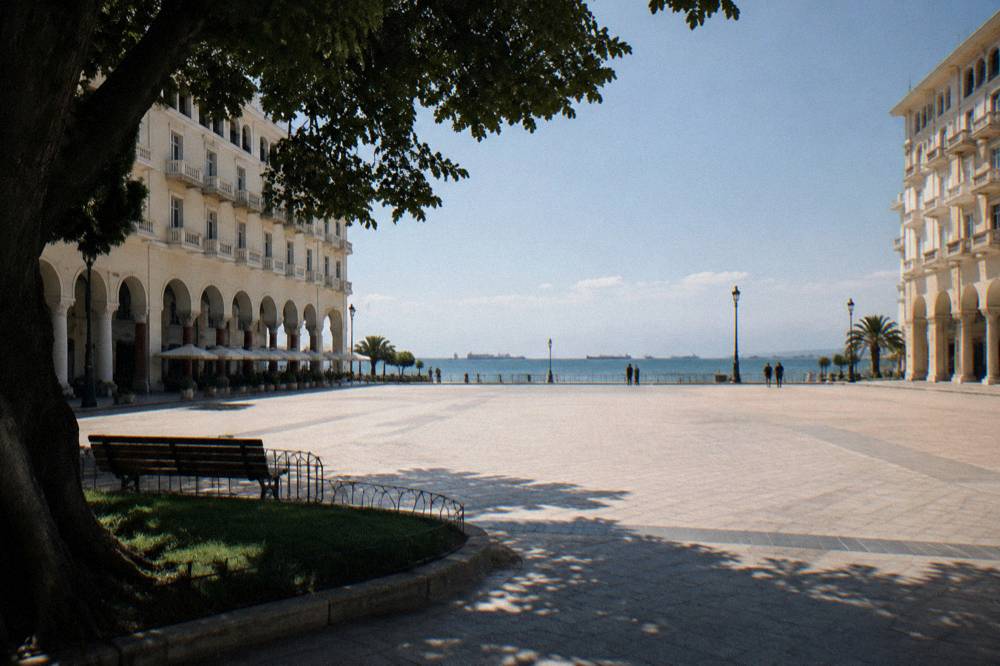
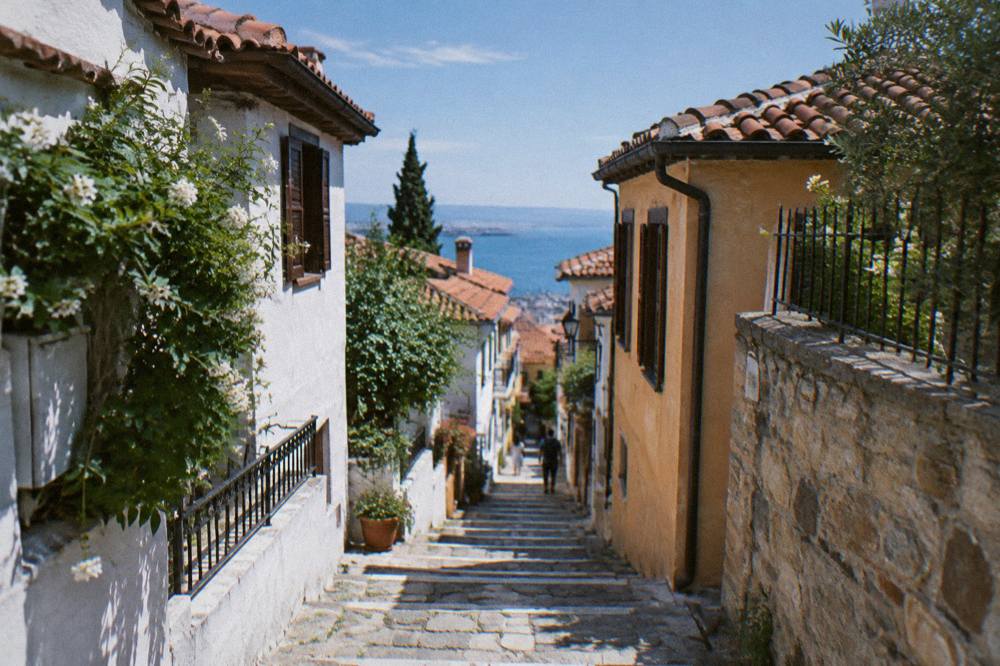
From there the standard route runs west along the water to Aristotelous Square, the monumental square laid out under the Hebrard reconstruction plan that followed the Great Fire of 1917, then inland to the Roman layer: the Rotunda, the domed structure of the Galerian complex, and the Arch of Galerius on Egnatia street. The arch is open-air and free; the Rotunda page and the Arch of Galerius page give the detail. Many walks then climb into Ano Poli, the old upper town inside the Byzantine walls, where the Heptapyrgion fortress and the Trigonion Tower look out over the whole Thermaic Gulf, or drop into Ladadika, the restored merchant quarter near the port.
What the walk cannot do is take you inside the paid monuments for free. Here is what the record says about the entries a walker might add around a free tour:
| Sight | Summer hours | Admission (from 1 April 2026) | Source |
|---|---|---|---|
| White Tower | Daily 08:00 to 21:00 (1 Apr to 31 Oct) | 8 euro full, 4 euro reduced | Museum of Byzantine Culture visiting page |
| Archaeological Museum | Daily 09:00 to 17:00 (1 Apr to 31 Oct) | 10 euro full, 5 euro reduced | Museum's hours and tickets page |
| Museum of Byzantine Culture | Daily 08:00 to 20:00 (8 May to 31 Oct) | 10 euro full, 5 euro reduced | Museum's visiting page |
| Rotunda | Reported about 08:00 to 20:00 in summer | Check the current price on the site's own ticket page before booking | Reported per the state sites portal |
| Arch of Galerius | Open-air street monument | Free to view | Street monument on Egnatia |
| Working churches | Open outside services | Free | General rule for working churches |
The interplay of walk and museum matters for planning. A free walk is typically a street-level experience, so the efficient pattern is to walk first, get the geography and the history, and then return to whichever interiors earned the ticket. The Archaeological Museum page and the Museum of Byzantine Culture page carry the full hours, including the winter Tuesday closures that catch out November to March visitors: the Archaeological Museum is closed on Tuesday from 1 November to 31 March, and the Museum of Byzantine Culture likewise.
How Much Should You Budget Beyond The Tip In Thessaloniki?
Beyond the tip, a walker in Thessaloniki can spend as little as 0.60 euro for a single metro ride or as much as about 28 euro on the three big state museum tickets at full price. A realistic day built around a free walk, one museum entry and metro transport sits well under 15 euro per person, with free-admission days able to cut the museum line to zero.
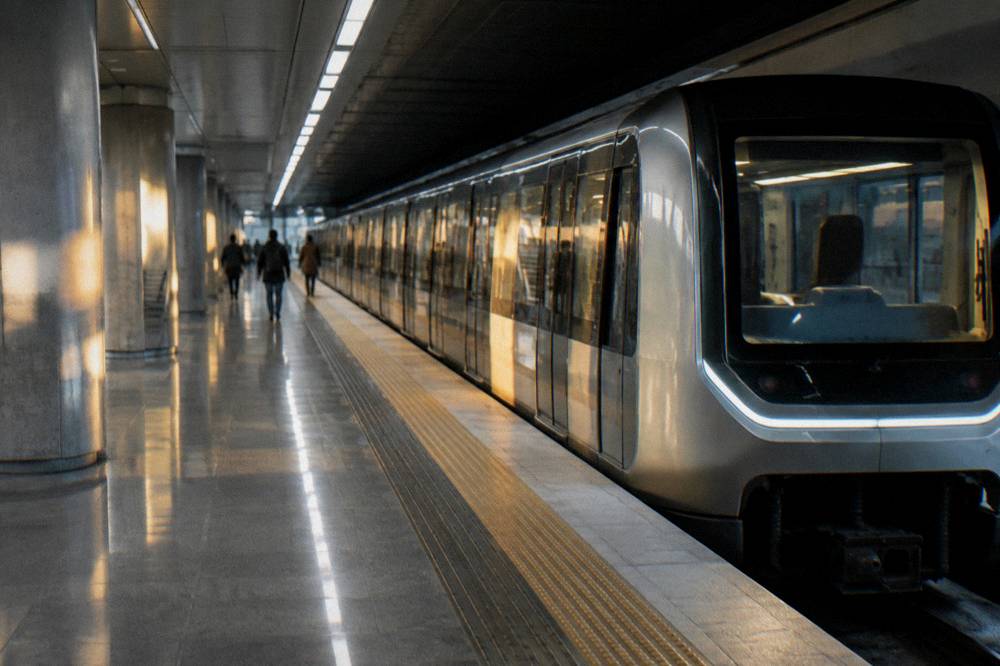
Transport costs are refreshingly low. The Thessaloniki Metro's ticket page states a basic single ticket at 0.60 euro (0.30 reduced) and a daily ticket at 2.50 euro for 24 hours of unlimited metro use. Service runs 05:15 to 00:30 Sunday to Thursday and 05:15 to 02:00 Friday and Saturday, which covers any plausible walking-tour schedule. The reported airport bus fare is about 2 euro, and a daytime taxi from the airport to the centre is reported at about 25 euro; both figures are reported rather than official, so confirm before you go. The rest of the planning pages sit on Thessaloniki Travel Guide.
| Item | Cost | Notes |
|---|---|---|
| Metro single ticket | 0.60 euro | 0.30 reduced, one journey |
| Metro daily ticket | 2.50 euro | 24 hours, unlimited metro |
| Airport bus (X1/X2/X3) | About 2 euro | Reported fare, confirm locally |
| White Tower entry | 8 euro full, 4 euro reduced | Since 1 April 2026 |
| Archaeological Museum | 10 euro full, 5 euro reduced | Closed Tuesday in winter |
| Museum of Byzantine Culture | 10 euro full, 5 euro reduced | Closed Tuesday in winter |
| State museum free days | 0 euro | 6 Mar, 18 Apr, 18 May, last Sep weekend, 28 Oct |
One budget line deserves a flag. Stays in Greece carry a climate resilience fee, collected by the accommodation, charged per room per night, and higher from April to October than in winter. This is not a walking-tour cost but it appears on the hotel bill, so walkers comparing total trip spend should know it exists.
When Is The Best Time Of Year For A Walking Tour Of Thessaloniki?
The best walking months in Thessaloniki, judged from the HNMS Thessaloniki Mikra station record for 1959 to 2010, are April, May, October and early November, when mean daily highs sit between 19 and 25 C and rainfall stays moderate. July and August, with mean highs above 31 C, push any long walk into the early morning or evening.
The climate table below is the whole story, and it comes from a weather-station record, the HNMS Thessaloniki Mikra station, 1959 to 2010, not from last year's observations. July shows the highest mean daily high at 31.7 C and January the lowest mean daily low at 1.5 C. December carries the highest monthly rainfall total at 55.1 mm and August the lowest at 19.3 mm, with annual rainfall summing to 444.5 mm. Rain days peak in December at 12.7 per month and dip to 5.1 in August.
| Month | Mean high C | Mean low C | Rain mm | Rain days |
|---|---|---|---|---|
| Jan | 9.3 | 1.5 | 37.7 | 11.5 |
| Feb | 11.0 | 2.3 | 35.0 | 10.7 |
| Mar | 14.3 | 4.7 | 37.9 | 12.1 |
| Apr | 19.1 | 7.9 | 36.1 | 11.1 |
| May | 24.6 | 12.6 | 44.2 | 11.0 |
| Jun | 29.4 | 17.0 | 29.8 | 7.9 |
| Jul | 31.7 | 19.3 | 23.8 | 6.7 |
| Aug | 31.4 | 19.1 | 19.3 | 5.1 |
| Sep | 27.1 | 15.4 | 29.8 | 7.0 |
| Oct | 21.2 | 11.3 | 43.0 | 9.3 |
| Nov | 15.5 | 7.1 | 52.8 | 11.0 |
| Dec | 10.9 | 3.2 | 55.1 | 12.7 |
Two seasonal notes follow from the events calendar rather than the weather record. The 67th Thessaloniki International Film Festival runs 5 to 15 November 2026, and the Dimitria festival was reported to run 1 to 26 October in 2026, so autumn walks share the centre with festival crowds. Late October also brings Saint Demetrius day on 26 October and Ochi Day on 28 October, the latter a state free-admission day at the museums, which pairs a parade atmosphere with free museum entry. More detail sits on the site's guide to the best time to visit Thessaloniki.
Can You Walk Thessaloniki Without A Guide At All?
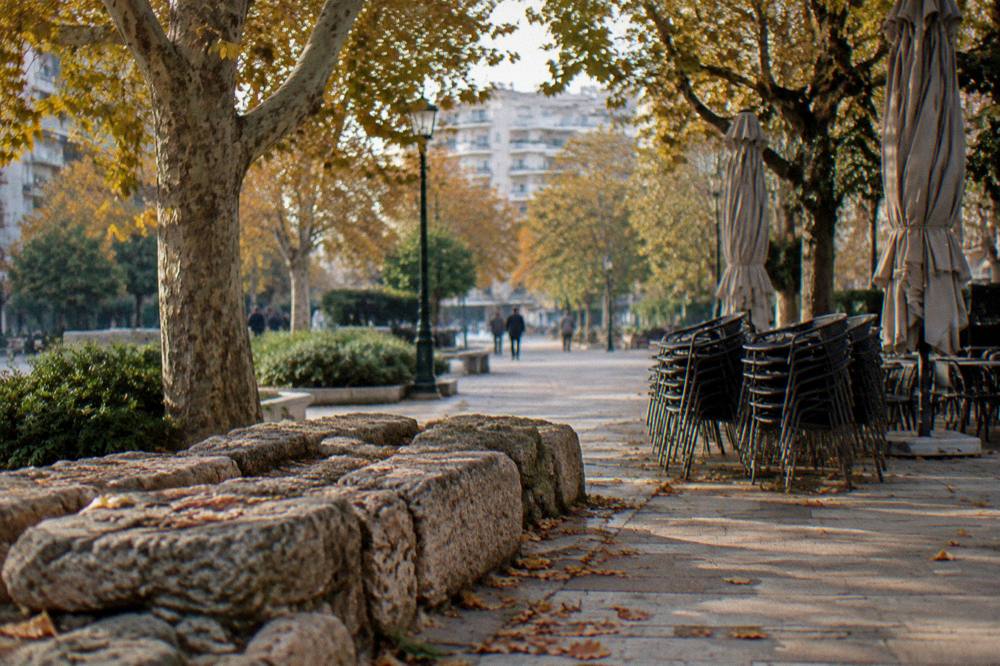
Yes, Thessaloniki can be walked without a guide, and done well, because the core route is linear, the landmarks are visible, and every major monument has a detailed page of its own. A self-guided version of the classic route costs nothing but shoe leather, and this site's free-things-to-do guide lists the no-cost sights systematically.
The self-guided spine is easy to hold in your head. Start at the White Tower, walk the Nea Paralia west, cut up through Aristotelous Square, follow the Roman axis to the Rotunda and the Arch of Galerius, then either climb to Ano Poli for the walls and the views or drop to Ladadika and the port. The whole distance is short by big-city standards; the city centre was rebuilt after the Great Fire of 1917 on a plan that favours straight axes, and the sea is always on one side as a compass. The site's guide to free things to do in Thessaloniki covers the no-cost options in full, including the churches and the squares.
What a guide adds is what a map cannot: the layers. Thessaloniki has fifteen Paleochristian and Byzantine monuments inscribed on the UNESCO World Heritage List since 1988, a Roman tetrarchic complex, an Ottoman centuries-long chapter beginning with the conquest of 1430, and a sequence of modern turning points that runs from the Great Fire of 1917 through the deportations of 1943 to the earthquake of 1978. A walker who knows none of this sees pleasant streets; a walker who does sees a cross-section of European history compressed into a few kilometres. Founded in 315 BC by Cassander and named for his wife Thessalonike, the city has been continuously important for over two millennia, and a guided narrative carries more of that than a phone screen can.
| Route segment | What you pass | Cost to view |
|---|---|---|
| Nea Paralia to White Tower | Promenade, the landmark tower | Free from outside |
| White Tower to Aristotelous Square | Waterfront blocks, the square | Free |
| Aristotelous Square to Rotunda | City centre streets, Roman monument | Free from outside |
| Rotunda to Arch of Galerius | The Galerian axis on Egnatia | Free |
| Climb to Ano Poli | Byzantine walls, Heptapyrgion, views | Free to walk the streets |
| Descent to Ladadika | Restored quarter near the port | Free |
Accessibility is one topic where the record stays silent. Ano Poli in particular is a hill district of stepped lanes, and the climb is real.
What Free Walks And Day Trips Pair Well With A Thessaloniki City Walk?
A free city walk in Thessaloniki pairs naturally with a paid day trip, because the city walk covers the streets and the day trips reach what no walk can: the royal tombs at Vergina, the ruins of Dion under Mount Olympus, and the beaches of Halkidiki. All are drives of under two and a half hours from Aristotelous Square, and Meteora, at about 228 km, is a full day on its own.
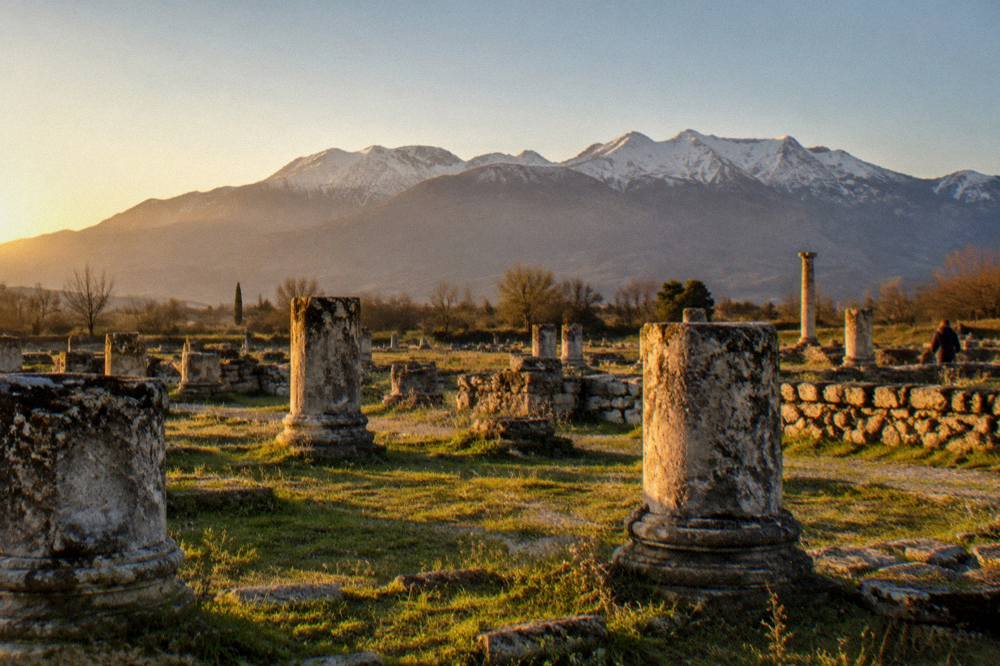
The day-trip bench around Thessaloniki is unusually strong for a walking city. Pella, the archaeological site and museum of the Macedonian capital, is about 43 minutes by road. Vergina, home of the Museum of the Royal Tombs of Aigai, is about 62 minutes. Dion, the archaeological park at the foot of Mount Olympus, is about 67 minutes, and Litochoro, the trailhead town for Olympus walks, about the same. Edessa's waterfalls, with the park itself reported as free to enter, are about 82 minutes away. In Halkidiki, Kallithea on Kassandra is about 78 minutes and Nikiti on Sithonia about 96 minutes.
| Day trip | Drive from Aristotelous Square | Character |
|---|---|---|
| Pella | About 43 min | Macedonian capital, museum |
| Kassandra (Kallithea) | About 78 min | Organised beaches |
| Vergina (Aigai) | About 62 min | Royal tombs museum |
| Dion | About 67 min | Archaeological park under Olympus |
| Litochoro | About 67 min | Mount Olympus trailhead |
| Edessa | About 82 min | Waterfalls park |
| Sithonia (Nikiti) | About 96 min | Wilder coastline |
| Meteora (Kalambaka) | About 154 min | Monasteries, full day only |
Drive times are free-flow figures computed over OpenStreetMap routing, so real traffic and parking add to them; treat each as "about". Meteora deserves its own warning: Kalambaka is about 228 km by road, roughly 2 hours 34 minutes without stops, and any plan that calls it a half day is wrong. It is a full-day destination, and the site's Meteora guide covers it properly.
Two of the tours below extend the walking theme beyond the city: one pairs the Dion archaeological park with Mount Olympus, and one lifts the view over the whole route just described from the rotating OTE Tower by the White Tower. The Dion trip carries a per-person from-price on its card, and the tower experience includes a light meal; both list their prices below.
For walkers whose appetite for the sea outlasts their appetite for streets, a Thessaloniki sunset cruise turns the same waterfront the walk covers into an evening perspective from the water, and the site's Kassandra guide and Sithonia guide cover the two Halkidiki peninsulas that day-trippers from the city reach most easily.
Common Questions About Free Walking Tours In Thessaloniki
Is a free walking tour in Thessaloniki really free?
Yes, in the specific sense that booking costs nothing and there is no fixed charge. The free walk, listed on GuruWalk, is pay what you want: you tip the guide at the end in whatever amount you decide. Museum entries and transport along the route are separate and cost extra.
How much should I tip on a free walking tour in Thessaloniki?
Decide based on the length and quality of the walk, and carry cash, since tips at the end of a street walk are normally given in cash.
Where do free walking tours in Thessaloniki start?
The meeting arrangement is on the walk's own listing, and this page does not invent one. Check the listing when you book. As a geographic matter, the White Tower on the seafront is the city's standard reference point, and the metro reaches the centre on Line 1, open since November 2024 with the Kalamaria extension since 27 August 2026.
Do I need to book a free walking tour in Thessaloniki in advance?
Reserving ahead is the practical choice, because a free walk has limited places and the booking costs nothing. If your plans change, cancel the booking so another walker can take the spot.
Can I do a free walking tour of Thessaloniki in winter?
The walk itself is a year-round format, but winter visitors should note two things: mean highs run 9.3 C in January per the HNMS Thessaloniki Mikra station record, 1959 to 2010, and the Archaeological Museum and the Museum of Byzantine Culture are both closed on Tuesday from 1 November to 31 March.
What is free to see in Thessaloniki without any tour at all?
The Arch of Galerius, Aristotelous Square, the Nea Paralia promenade and the working churches, including the Church of Saint Demetrius and Hagia Sophia, are all free. State museums are free on 6 March, 18 April, 18 May, the last weekend of September and 28 October.