What To Eat In Thessaloniki: The Dishes To Order
Thessaloniki eats well at every hour of the day, from morning koulouri beside the seafront to late-night ouzeri plates in Ladadika. This guide sets out the dishes to order, dish by dish, with the markets and neighbourhoods where each one lives.
Short answer
Order bougatsa for breakfast, koulouri as a street snack, gyros or souvlaki for a fast lunch, and an ouzeri spread of small plates in the evening: fish, olives, cheese, bread and wine or ouzo. Shop at Modiano Market and Kapani Market, eat dessert as trigona and syruped sweets, and take a guided food tour if you want the city's food explained rather than just eaten.
Thessaloniki, the second city of Greece, sits on the Thermaic Gulf in Central Macedonia, and its food culture is inseparable from its street life: the seafront Nea Paralia promenade, the central squares, the Ladadika district and the two great covered markets all feed into one another. The municipal gastronomy site references UNESCO and the Creative Cities Network, which is why the city's food reputation travels ahead of it. This page lays out the dishes to order, meal by meal, in the order a day of eating in Thessaloniki actually runs.
The eating day starts early and ends late. Koulouri sellers work the pavement from the morning commute onward, bougatsa counters fill around breakfast, markets peak by mid-morning, and the ouzeri and tsipouradiko tables of the evening run deep into the night. None of this requires a plan so much as an appetite, but a little structure helps, and the sections below give it.
What Should You Eat For Breakfast In Thessaloniki?
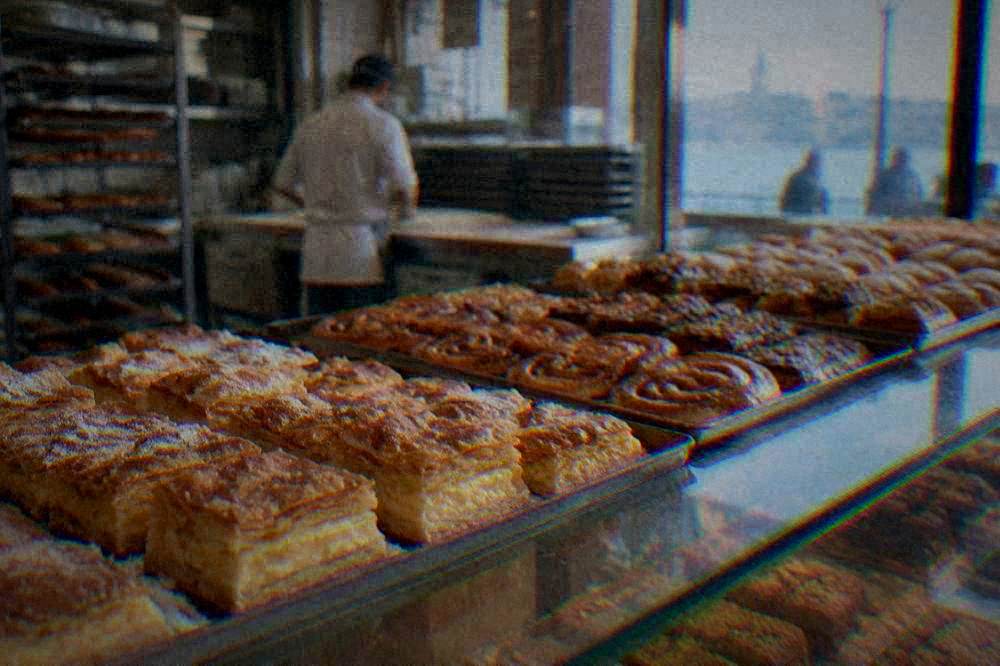
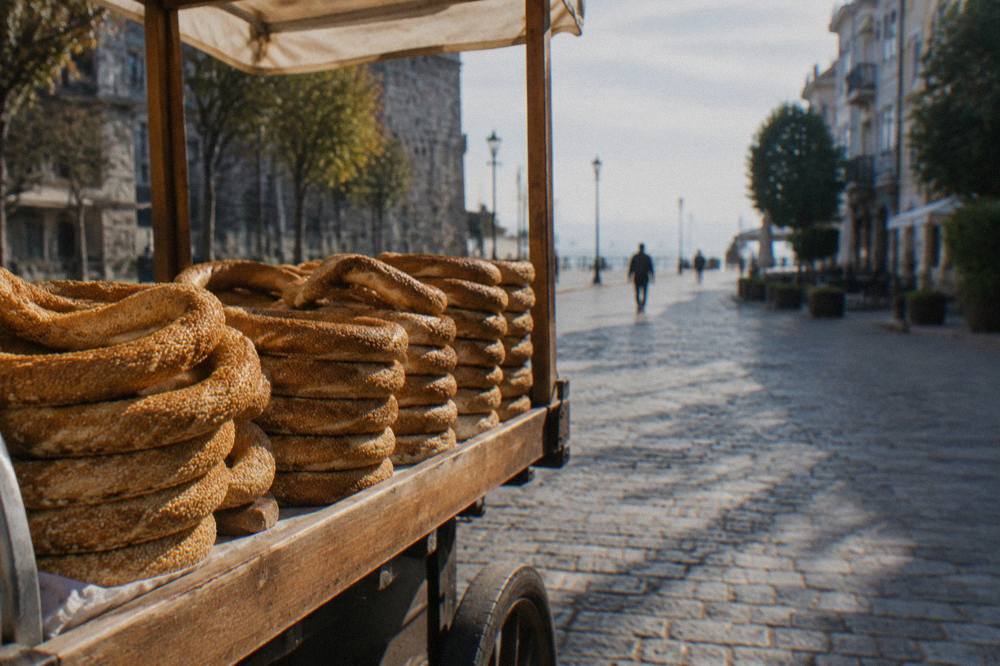
Breakfast in Thessaloniki means two things above all: koulouri, the sesame bread ring sold from street carts and bakery counters across the city, and bougatsa, a warm filled pastry that the city has made its own signature morning dish, served with a coffee standing at a counter or sitting at a table. Both are cheap street foods by design, eaten fast and fresh, and both are at their best in the morning hours when they are coming out of the oven rather than sitting under glass.
Neither dish has a story this page can tell with confidence, because the origins of both koulouri and bougatsa are the subject of competing accounts that no official source settles. What can be said plainly is what each one is: koulouri is a ring of bread dough rolled in sesame, and bougatsa is a layered pastry with a semolina custard filling that is cut, sprinkled with cinnamon and icing sugar, and eaten hot. The dedicated bougatsa guide on this site covers the pastry in detail, including how it is served and what to order with it.
The coffee culture matters as much as the food. Greek coffee, made in a small pot and served with the grounds settling in the cup, sits beside espresso-based drinks and the cold foam versions that are popular across Greek cities. Bakeries and patisseries are the backbone of the morning, and no specific shop can be recommended here, because no individual bakery has been endorsed by this site: walk into any busy one and order what the counter is selling fastest.
The practical pattern for a first morning: pick a bakery near your base, order a bougatsa and a coffee, then buy a koulouri from a cart later and eat it walking. Neither purchase needs research, and prices vary from shop to shop, so check at the counter rather than expecting a fixed city-wide figure.
Where Do You Buy Food At The Markets Of Thessaloniki?
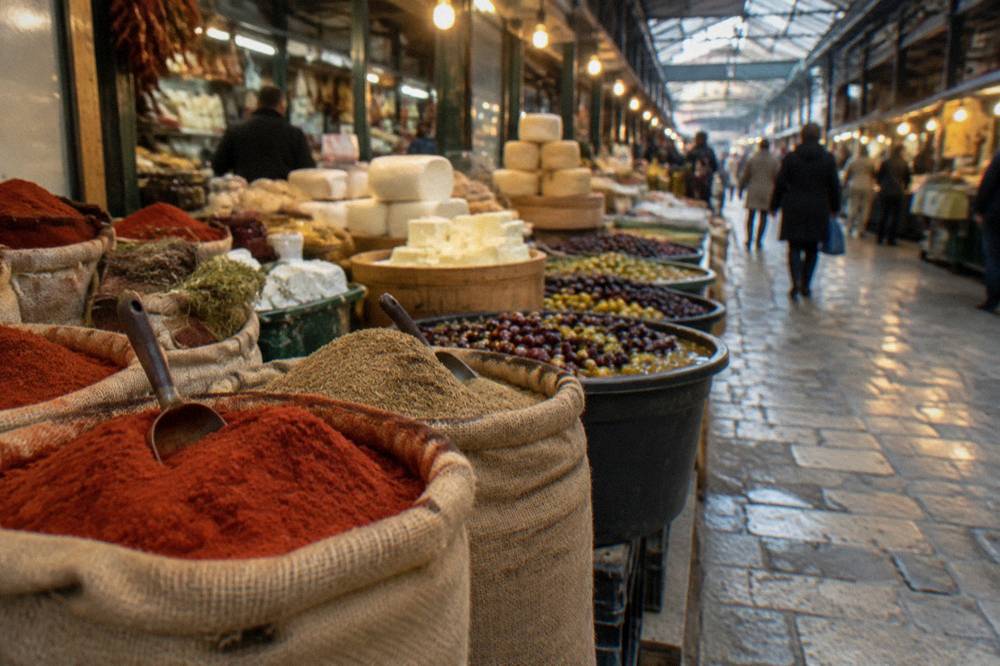
Modiano Market and Kapani Market are the two named market institutions of central Thessaloniki, and they are where the city shops for olives, cheese, spices, fish, meat and fruit, with Modiano the covered market and Kapani the sprawling traditional market district of stalls and specialist shops around it, both within a short walk of Aristotelous Square. A market walk is the single best way to understand what Thessaloniki cooks, because everything sold in the restaurants is sold here first.
Modiano Market reopened after a long refurbishment and now combines a historic covered hall with food counters and eating spots, while Kapani Market remains the older, rougher shopping district where butchers, spice sellers and greengrocers trade from tightly packed premises. Both are working markets, not museums: they are at their liveliest in the morning, and the stalls thin out later in the day. Opening hours vary by stall and by season, so treat a morning visit as the safe plan and confirm any specific shop's hours locally.
What to look for at the stalls:
| Market stop | What is sold | What to do with it |
|---|---|---|
| Olive and pickle stalls | Table olives, pickled peppers, capers | Buy a mixed bag for a picnic or an evening meze table |
| Cheese counters | Feta and other Greek cheeses by weight | Ask for a tasting piece before buying a block |
| Spice stalls | Dried herbs, ground spices, mountain tea | Buy small bags; sealed packets travel better |
| Fish counters | Gulf and Aegean fish and seafood by the kilo | Look, then eat the same catch at a tsipouradiko |
| Fruit and vegetable stalls | Seasonal produce | Whatever is stacked highest is what is in season |
A guided walk that includes the markets is the easiest way to convert a market visit into understanding. The Thessaloniki food tour pages on this site describe how a guided market-and-tasting walk works, and the tour below is the one this site features for the task: a walk led by a working chef, which pairs the buying of ingredients with the eating of the finished plates. You can also Check availability for the chef-led walk directly.
What Is Meze Culture And Why Does It Dominate Thessaloniki Evenings?
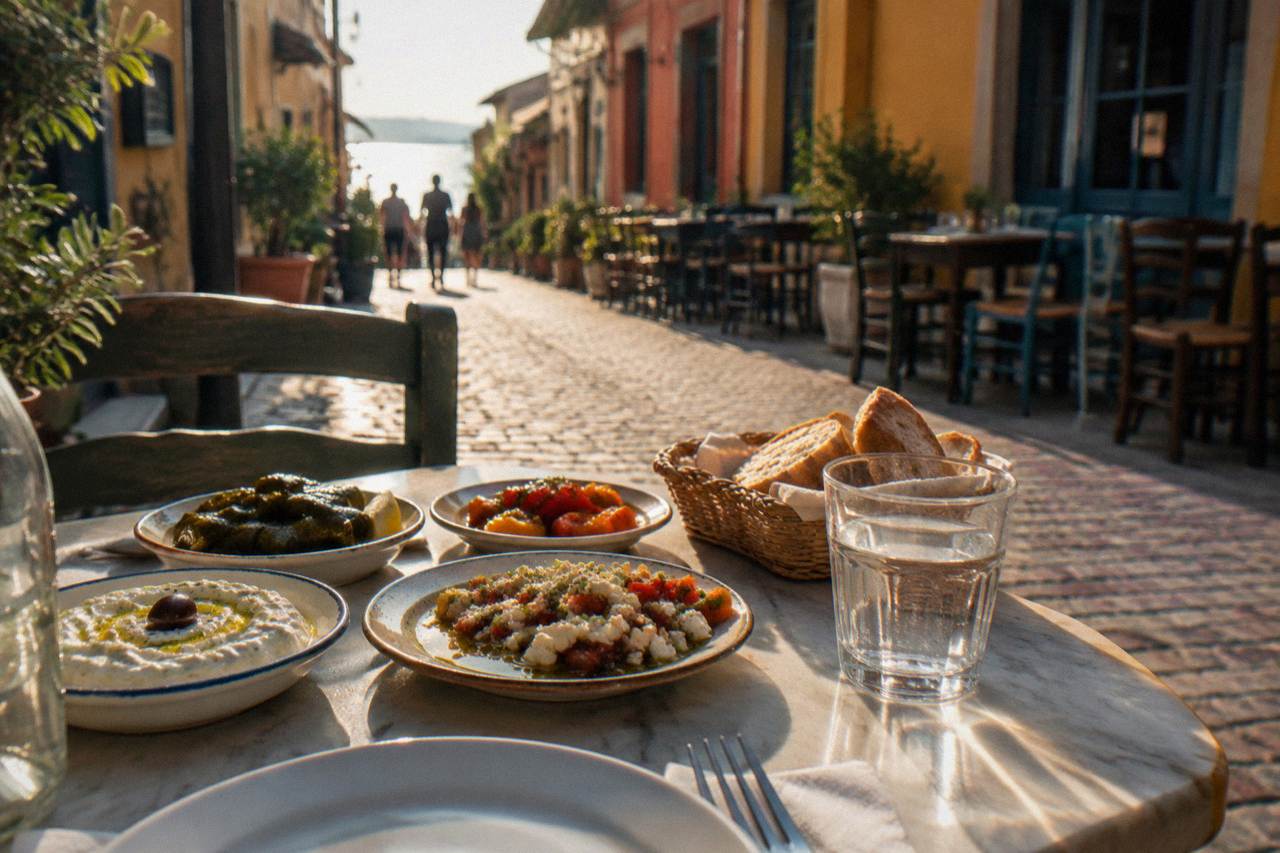
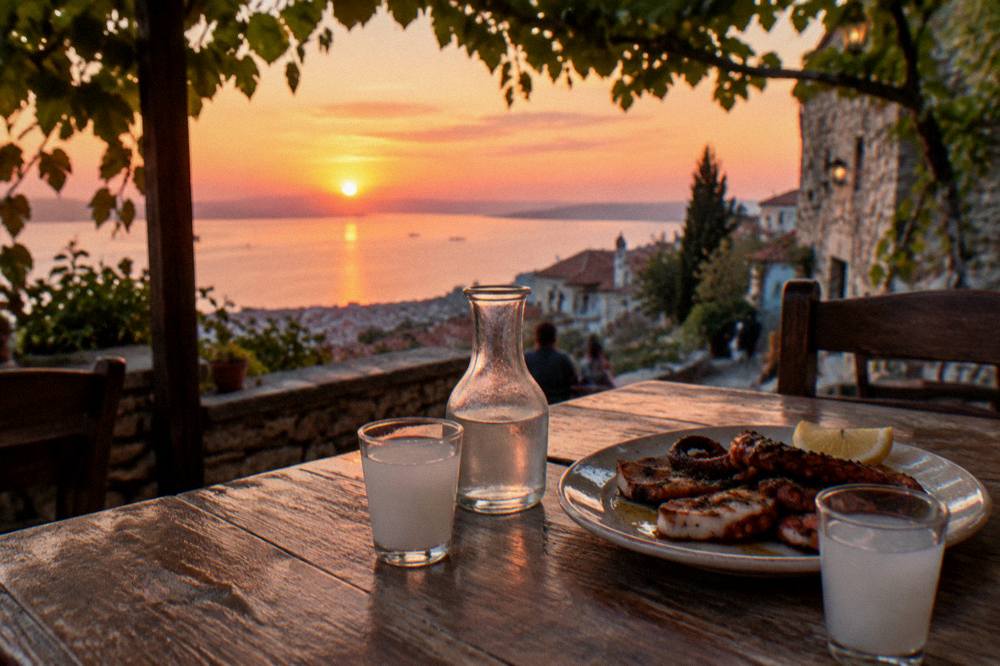
Meze is the small-plate eating style of northern Greece: instead of one main dish per person, a table orders a series of shared plates, cheese, olives, greens, fish, fried vegetables, dips and bread, brought out gradually alongside wine, ouzo or tsipouro, and the meal becomes a long conversation rather than a course structure. In Thessaloniki this style runs the evening, especially in the ouzeri and tsipouradiko houses of the city centre and Ladadika.
An ouzeri serves ouzo and food built around it; a tsipouradiko serves tsipouro, the regional spirit, often with a small plate arriving with each pour. The ouzeri guide on this site explains the tradition and what to expect from an evening in one. The rule that matters at the table: order fewer plates than there are people, see what arrives, then order more. The kitchen expects a second round.
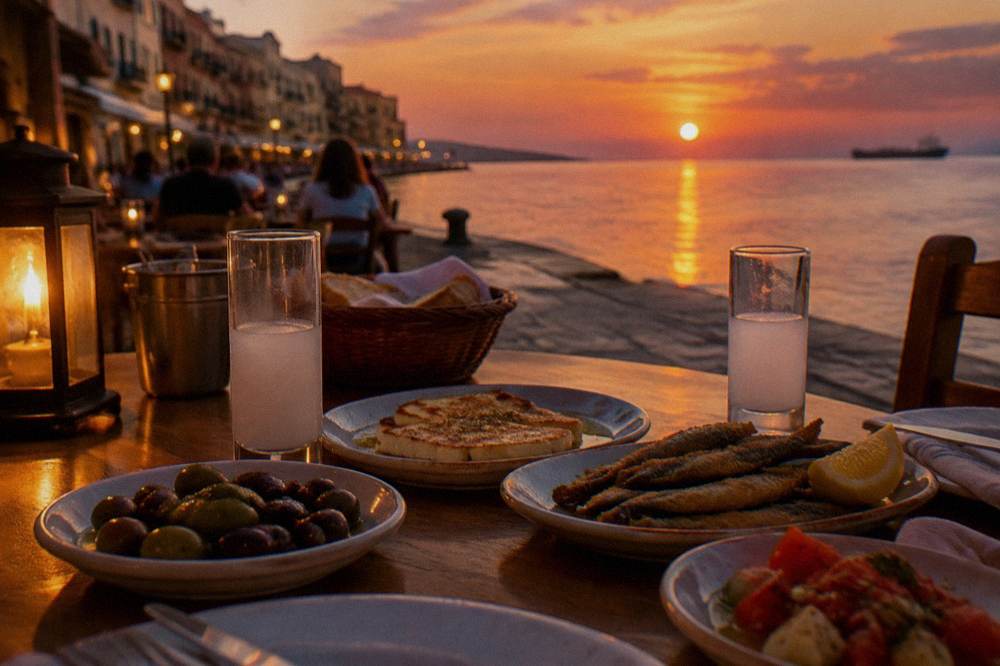
A typical shared table works through dishes in a loose order:
| Plate type | Typical dishes | Role at the table |
|---|---|---|
| Opening plates | Bread, olives, cheese, small pickles | Arrive fast, set the pace |
| Vegetable meze | Fried peppers, greens, tomatoes, dips | Bulk of the table, vegetarian-friendly |
| Seafood meze | Small fried fish, octopus, seafood in sauce | Pairs with ouzo and tsipouro |
| Heavier plates | Grilled meat, meatballs, baked dishes | Come later in the sequence |
| Fruit and sweets | Seasonal fruit, spoon sweets | Close the meal with the last glass |
No restaurant or ouzeri can be named on this page, because this site endorses no individual venue: look for tables of locals, a written menu of the day, and fish priced by the kilo on display.
Which Street Food Should You Try In Thessaloniki?
The street-food canon of Thessaloniki is gyros and souvlaki in pita with tomato, onion, chips and tzatziki, sold from small shops across the city at all hours, joined by koulouri from carts, roasted chestnuts and corn in the colder months, and the general Greek habit of eating standing up at a counter. It is fast, filling food sold at walk-up prices, and the quality question is answered by the queue at the counter rather than by any list.
Gyros is meat cooked on a vertical spit and shaved into the pita; souvlaki is skewered cubes of meat grilled and wrapped. Both come in the same wrap format with the same fillings, and both are eaten by hand out of paper. The differences between one shop and the next are real but unrankable from here: this site names no shop as the best, because no such claim can be sourced, and a busy counter with fast turnover is the practical proxy for freshness.
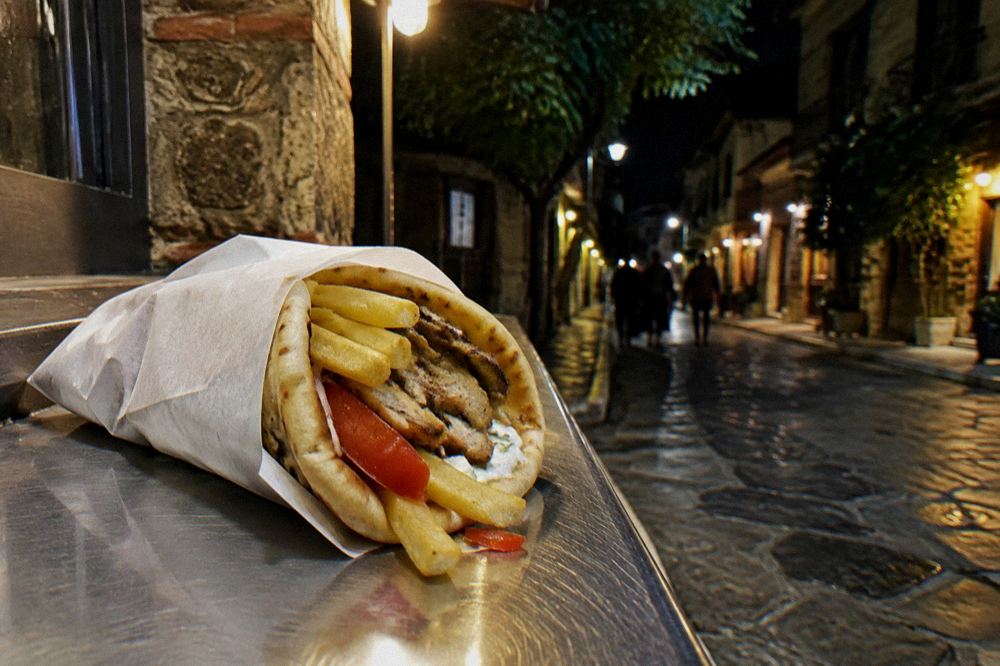
The evening street-food scene in Thessaloniki runs very late, in step with the city's nightlife, and a walk that combines the street-food counters with the historical centre is a good way to eat and see at once. The private walking option below can be steered toward the food streets of the centre on request with the operator.
Which Sweets And Desserts Should You Look For?
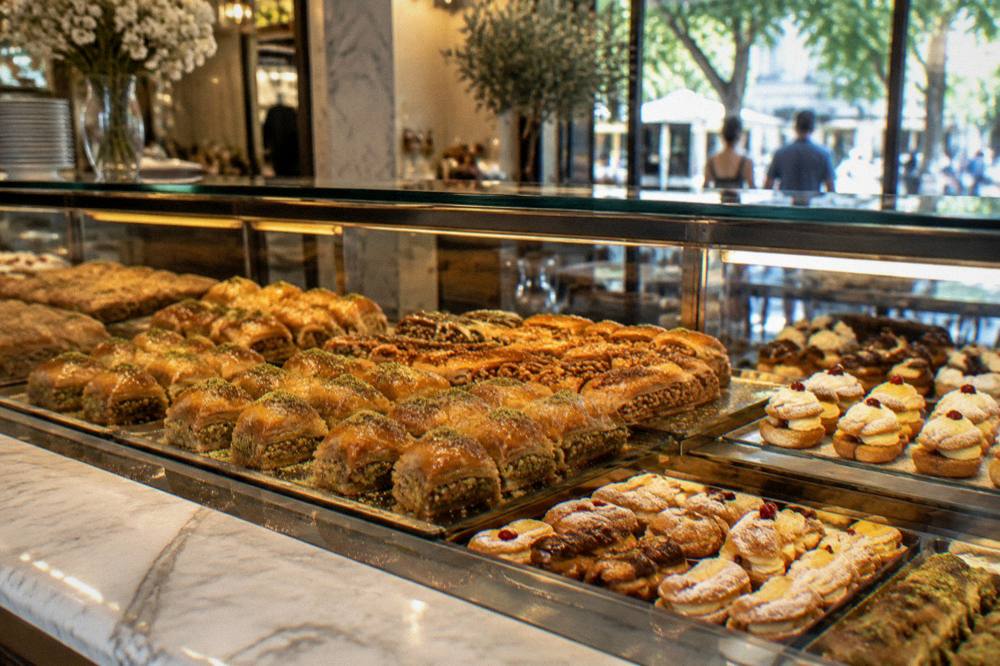
The dessert list of Thessaloniki centres on trigona, the cream-filled cone pastries associated with the city, syrup-soaked pastries such as baklava and kataifi served in small portions, spoon sweets preserved in syrup and offered as a gesture of hospitality, and ice cream from the city's patisseries, all of which are sold by weight or by the piece rather than as restaurant courses. Sweet shops stay busy late into the evening, and dessert here is a street-and-counter affair rather than a sit-down course.
Syrup pastries are eaten in small quantities because they are intensely sweet, and a mixed tray by the kilo is how locals buy them for a table. Spoon sweets, fruit or nut preserved in syrup and served by the spoonful, appear with coffee and in homes as a welcome. Order by pointing, buy by weight, and eat the same day. The full index of guides sits on Thessaloniki Travel Guide.
| Sweet | What it is | When to eat it |
|---|---|---|
| Trigona | Crisp cone pastry filled with cream | Any time, the city's signature sweet |
| Baklava and kataifi | Layered or shredded pastry in syrup with nuts | After a meal, in small pieces |
| Spoon sweets | Fruit or nuts preserved in syrup | With coffee or as a guest's welcome |
| Kazan dipi | A set cream dessert in syrup | At patisseries, eaten sitting |
| Ice cream | Patisserie gelato in local flavours | Afternoon and evening walks |
How Does A Full Eating Day In Thessaloniki Run?
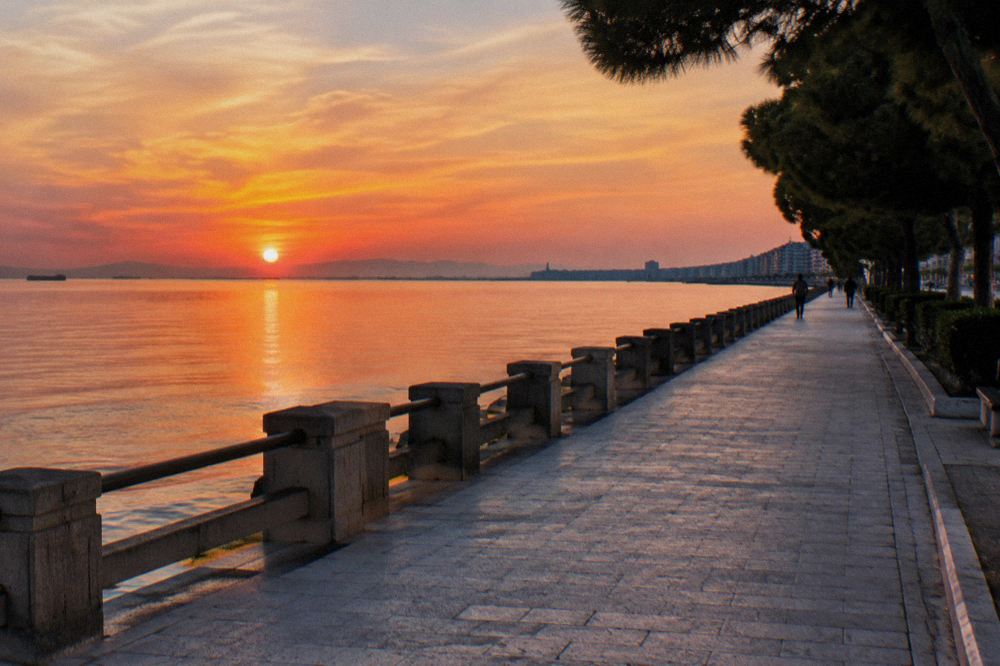
A full eating day in Thessaloniki runs from a morning bougatsa and coffee, through a mid-morning market walk at Modiano Market or Kapani Market, to a fast gyros lunch, an afternoon koulouri or ice cream on the Nea Paralia seafront promenade, and a long evening of shared meze with ouzo or wine in the city centre or Ladadika, with dessert from a patisserie counter late at night. The city eats across the whole day rather than in three fixed sittings, and the plan below matches that rhythm.
The timing is flexible, but the geography is not: everything in the table below sits in or near the compact centre, between Aristotelous Square, the markets and the Ladadika district, all of it walkable. Thessaloniki is a genuinely walkable city for eating purposes, and a day organised around food doubles as a tour of its central neighbourhoods.
| Time of day | What to eat | Where in the city |
|---|---|---|
| Morning | Bougatsa and coffee | Any busy bakery near your base |
| Mid-morning | Market walk, olives and cheese tasting | Modiano Market and Kapani Market |
| Lunch | Pita gyros or souvlaki | Street-food shops in the centre |
| Afternoon | Koulouri and a walk | Nea Paralia seafront promenade |
| Evening | Meze with ouzo or tsipouro | City centre ouzeri and Ladadika |
| Late | Trigona or syrup sweets | Patisserie counters, still open late |
Pairing the food day with the sights works naturally: the one day in Thessaloniki itinerary lays out how the White Tower, the Rotunda and the Arch of Galerius line up along the same walking routes the food stops sit on, and a meal-anchored day is a realistic way to see the UNESCO-listed Byzantine core between plates.
What Should You Drink With Thessaloniki Food?
The drinks that belong with Thessaloniki food are ouzo and tsipouro, the anise and grape spirits of northern Greece that are served with meze and almost never drunk plain, Greek wine from the vineyards of Macedonia, beer with street food, and Greek coffee or espresso across the day, with frappe and cold coffees dominating the warm months. The pairing rule that matters is that ouzo and tsipouro come with food, and the meze table exists because the drink does.
Northern Greece is a wine region, and the vineyards of the wider area supply the restaurant lists of Thessaloniki; the northern Greece wine page on this site is not the right pointer for this, so keep to what is on the list itself: wine tours from the city visit working wineries in the region and are listed in the food-and-drink category of tours on this site.
What Food Should You Bring Home From Thessaloniki?
The food souvenirs that travel well from Thessaloniki are the dry goods sold at the markets: jars of olives and olive oil, sealed packets of dried herbs and mountain tea, vacuum-packed cheeses, honey, spoon sweets in sealed jars, and sesame products including halva, all bought by weight or by the piece at Modiano Market or Kapani Market and packed in checked luggage rather than carry-on. Fresh pastries and cream sweets do not travel, and the counter will tell you so.
The practical limits are set by customs rules at home rather than by the market, and sealed, labelled products clear most borders more easily than loose ones. Alcohol travels within the duty-free allowance of your destination; oil and honey travel best wrapped in clothes in the middle of a suitcase. This is also where a market visit pays off twice: the same stalls that feed you in Thessaloniki stock the shelf you unpack at home.
When Is The Best Season For Eating In Thessaloniki?
The eating calendar of Thessaloniki peaks in the warm months, when the HNMS Thessaloniki Mikra station, 1959 to 2010, records mean highs of 31.7 C in July and 31.4 C in August, tables spill onto pavements, and the meze evening runs outdoors, but the city eats well year round, with chestnut and corn sellers out in the cooler months and October hosting the Dimitria festival, reported at 1 to 26 October 2026 as the latest edition of an annual arts festival.
There is no closed season for food here.
The seasonal difference is one of atmosphere more than menu. Winter eating moves indoors, syrup sweets and baked dishes rise in appeal, and the Christmas season brings its own market and sweet traditions covered on the Thessaloniki Christmas page. The best time to visit guide and the Thessaloniki weather guide carry the month-by-month detail, but the short version for eaters: come when you like, and eat what the season gives.
| Month range | HNMS mean high | Eating character |
|---|---|---|
| December to February | 9.3 to 11.0 C | Indoor tables, chestnuts, baked and syruped dishes |
| March to May | 14.3 to 24.6 C | Outdoor tables returning, spring vegetables |
| June to August | 29.4 to 31.7 C | Full outdoor season, late meze evenings |
| September to November | 27.1 down to 15.5 C | Festival season, autumn produce, warm days early on |
Climate figures are station means from the HNMS Thessaloniki Mikra station, 1959 to 2010, and December carries the highest monthly rainfall total, 55.1 mm, with August the lowest at 19.3 mm. Rain, in other words, is a reason to sit longer at the table, not to cancel one.
Common Questions About Eating In Thessaloniki
What food is Thessaloniki famous for?
Thessaloniki is strongly associated with bougatsa, koulouri, pita gyros, trigona cream cones and the meze-and-ouzo evening, and the municipal gastronomy site references UNESCO and the Creative Cities Network. The dedicated question page what food is Thessaloniki famous for covers the list in more detail.
Which market should I visit, Modiano Market or Kapani Market?
Both, if time allows, because they sit close together: Modiano Market is the covered market and Kapani Market is the traditional stall district around it. Go in the morning, when both are at their busiest, and confirm individual stall hours locally.
Do I need to book a food tour to eat well in Thessaloniki?
No. The markets, bakeries and ouzeri are open to anyone. A guided walk, such as the chef-led tour featured on this site, adds explanation and a structured tasting route, and is a reasonable choice for a first visit or a short stay.
Is food in Thessaloniki expensive?
This site publishes no dish or meal prices, and prices vary shop to shop. Street foods such as koulouri and gyros are cheap by design, while seafood at a tsipouradiko is priced by the kilo and read from the display. Check menus at the door and set your own budget.
Where should I stay to be near the food?
The central neighbourhoods around Aristotelous Square, the markets and Ladadika put the eating day on foot. The where to stay in Thessaloniki guide maps the districts and their characters.
Can I eat vegetarian in Thessaloniki?
Yes. The meze table is heavily vegetable-based by tradition: greens, fried peppers, dips, tomatoes, olives, cheese and bread make up most of a standard spread, and bakery and street options extend the choice further.
Whatever you order, eat the way the city does: in small portions, across the whole day, shared where possible, and bought where the counter is busiest. That habit, more than any single dish, is what food in Thessaloniki actually is.