Ouzeri And Meze In Thessaloniki: How To Order
The ouzeri is where Thessaloniki eats standing, arguing and sharing: small plates, slow drinking, and meze that arrive until you say stop.
Short answer
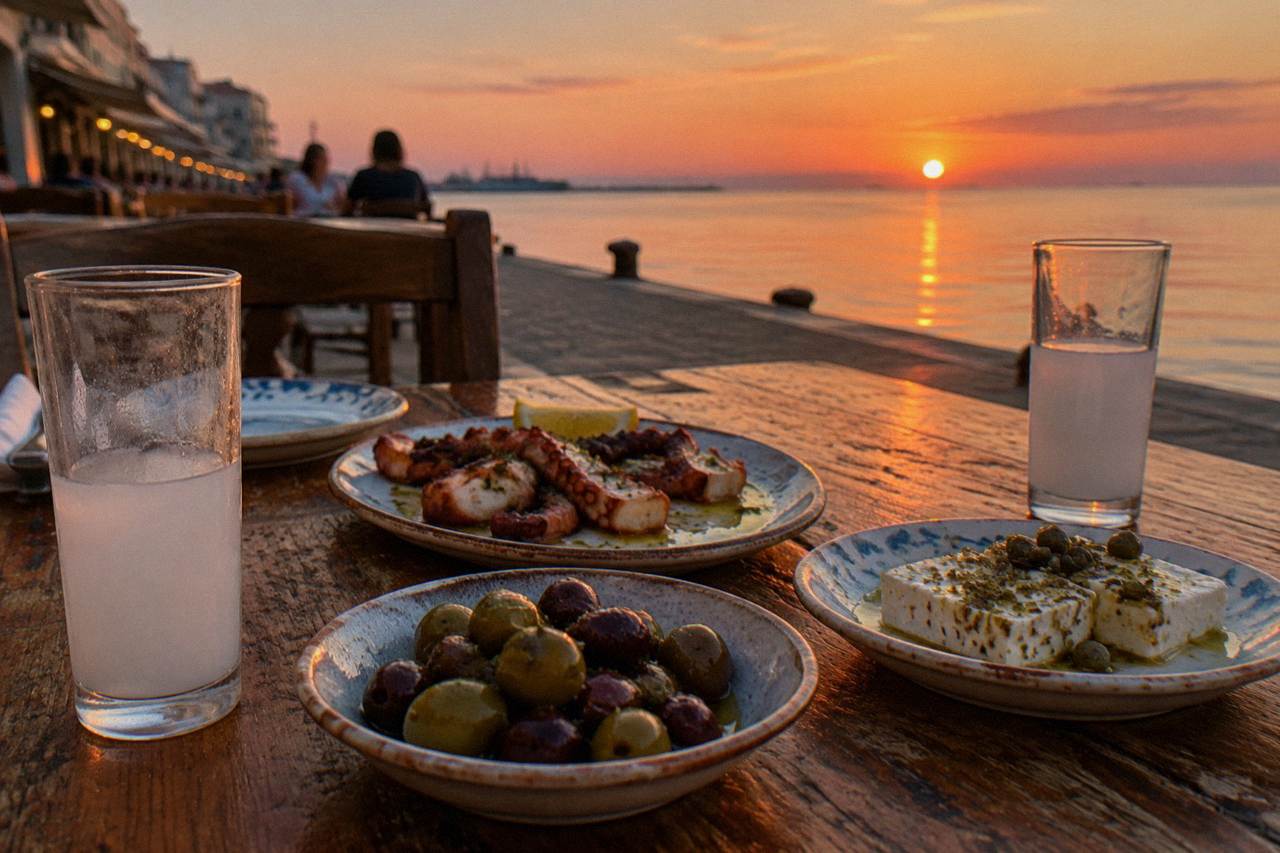
An ouzeri in Thessaloniki serves ouzo or tsipouro with small shared plates called meze, ordered little by little through the evening rather than as one fixed menu.
Thessaloniki, the second city of Greece, sits on the Thermaic Gulf in Central Macedonia, and its food culture runs through a specific kind of place: the ouzeri. This is not a restaurant in the fixed-menu sense. It is a small-plate institution built around a single strong drink and a stream of shared dishes, and in this city it competes with the taverna and the more recent all-day cafe as the place where eating actually happens. The Thessaloniki Travel Guide desk lays out here how an ouzeri works, how to order without over-ordering, and how the custom fits the wider table of northern Greece. For the city's broader food landscape, start with what to eat in Thessaloniki and the best restaurants in Thessaloniki guide, then come back for the ouzeri ritual itself.
What Is An Ouzeri In Thessaloniki?
An ouzeri is a small eating house built around ouzo or tsipouro and a steady stream of shared small plates called meze, ordered one or two at a time across a whole evening rather than chosen from a fixed menu, and in Thessaloniki it stands beside the taverna as one of the two default ways the city sits down to eat and drink together. The name comes from the drink, not the food. You are technically there for the ouzo, and the kitchen exists because strong anise spirit drunk on an empty stomach is a bad plan, so every round arrives with something to eat. That pairing, drink plus small plate, is the entire operating principle.
The distinction that matters to a visitor is pace. A restaurant meal in the international sense has a beginning, a main course and an end. An ouzeri evening has none of those guarantees. Plates arrive slowly, the table accumulates them, and the meal finishes when the table decides it has finished. Nothing is rushed and the bill reflects what was actually consumed, plate by plate. In a city that was European Capital of Culture in 1997 and holds fifteen Paleochristian and Byzantine monuments inscribed by UNESCO in 1988, the ouzeri is the culinary counterpart to that layered identity: layered itself, unhurried, and built for conversation rather than efficiency.
The ouzeri also anchors the city's relationship with its markets. Many of the small plates start as raw material from Modiano Market and Kapani Market, the two named historic market halls of the centre, and the morning shopping and the evening meze are two halves of the same food economy. A cook buying anchovies and greens at midday is supplying the same table a visitor sits at that night. The Kapani Market and Modiano Market pages cover the buying end of that chain.
How Do You Order Meze At A Thessaloniki Ouzeri?
Order one drink and one or two meze to start, never a full table of plates at once, because meze are designed to arrive gradually: you order a little, eat, talk, then order the next plate based on what the table still wants, and stopping is simply a matter of not ordering again. The waiter will usually ask what you want as the drink lands. Two plates for two people is the correct opening move. If the table is still hungry after those, order two more. The error newcomers make is treating the first order as the whole meal, which produces a wall of food arriving at once and a bill nobody expected.
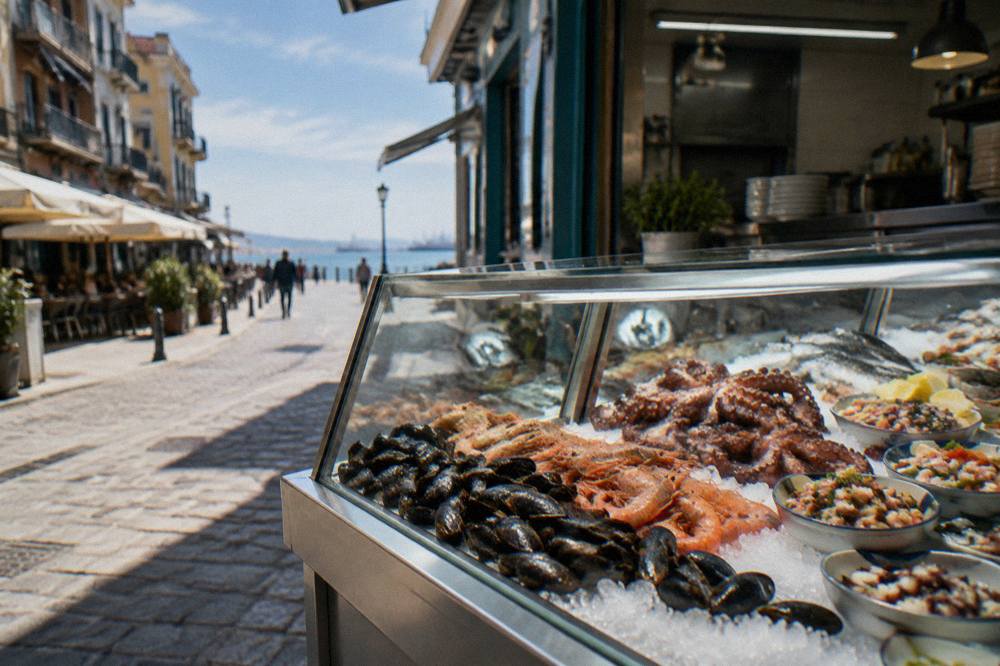
Meze divide loosely into the categories below. Not every ouzeri serves every category, and the daily seafood depends entirely on what came in that morning, so treat any printed list, including this one, as a shape rather than a menu. A plate of fried anchovies and a plate of boiled greens may arrive at the same time, or ten minutes apart, and neither order is wrong.
| Meze category | What it typically is | How it arrives |
|---|---|---|
| Seafood small plates | Anchovies, sardines, small fried fish, octopus, mussels | By the plate, shared, often the signature of the house |
| Cold vegetable plates | Olives, tomato, cucumber, boiled greens, dips | First to land, ordered with the first drink |
| Cheese and cured plates | Feta and other regional cheeses, cured meat | Small portions, ordered alongside |
| Hot kitchen plates | Fried courgette, meatballs, grilled cheese | Come from the kitchen hot, order in a second wave |
| Pulse and grain plates | Beans, lentils, bread-based dishes | Filler plates that extend the evening cheaply |
Confirm the day's seafood at the counter or with the waiter before committing to it, since availability changes daily. No price list for any individual ouzeri exists on this site, and none should be assumed: confirm prices on the spot, as with everything on a food trip. The practical food pages, including the bougatsa guide for the city's other breakfast institution, work the same way.
Ouzo Or Tsipouro: What Should You Drink At A Thessaloniki Ouzeri?
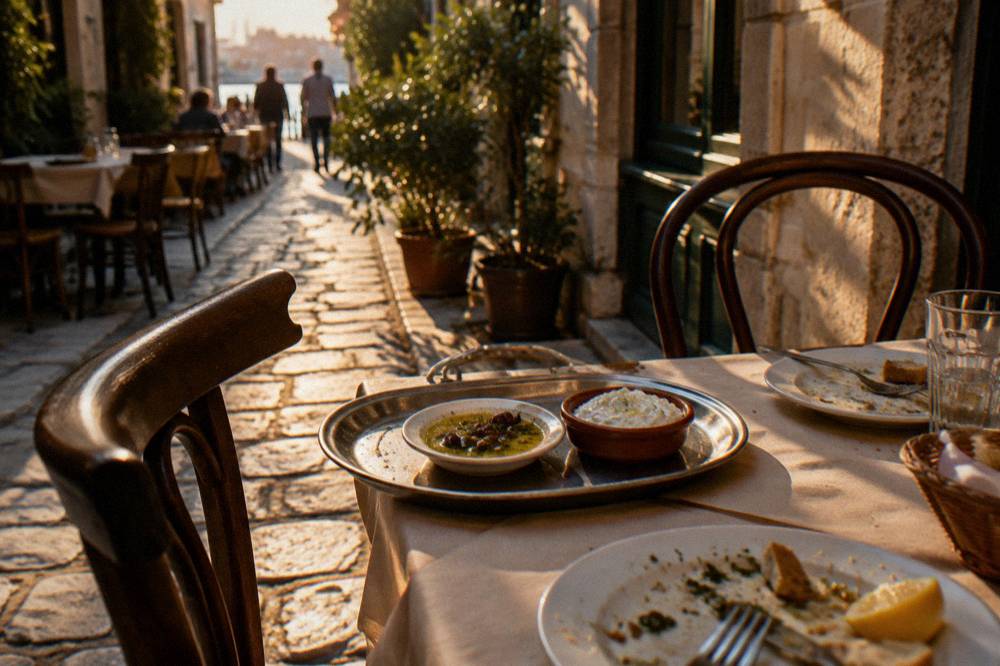
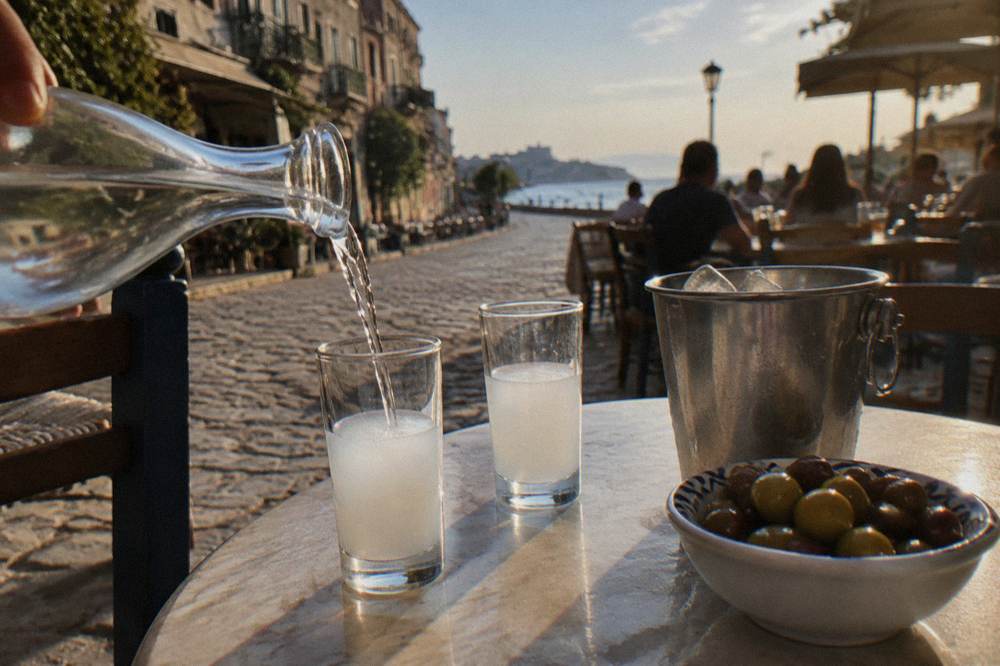
Ouzo is the anise-flavoured spirit the ouzeri is named for, tsipouro is the stronger grape pomace spirit of northern Greece served either plain or with anise, and in Thessaloniki both are drunk the same way: small, with water added, over ice or not, always alongside food, and always slowly across the whole evening. The regional loyalties run deeper than the labels suggest. Macedonia is tsipouro country by production, and many tables in this city drink tsipouro in an ouzeri without anyone treating that as a contradiction. Order whichever the house is known for, or one of each across the evening, and let the waiter pour the first water.
The mechanics matter more than the choice. These are strong spirits meant to be stretched. The traditional pour is a small measure of spirit, then cold water added to the glass, which turns anise versions cloudy white. Drinking either straight, fast, or without food is treated locally as a mistake, not a flex. The water is not an optional dilution for the faint of heart; it is the standard serving method, and a bottle of cold water on the table is as much a part of the setting as the bread.
| Drink | Base | Typical flavour | How it is served |
|---|---|---|---|
| Ouzo | Grape spirit flavoured with anise | Strong anise, sweet edge | Small glass, water added, cloudy when diluted |
| Tsipouro without anise | Grape pomace distillate | Grapy, fiery, no anise | Small glass, with or without water |
| Tsipouro with anise | Grape pomace distillate with anise | Anise, close cousin of ouzo | Small glass, water added |
Where Do You Find Ouzeri Neighbourhoods In Thessaloniki?
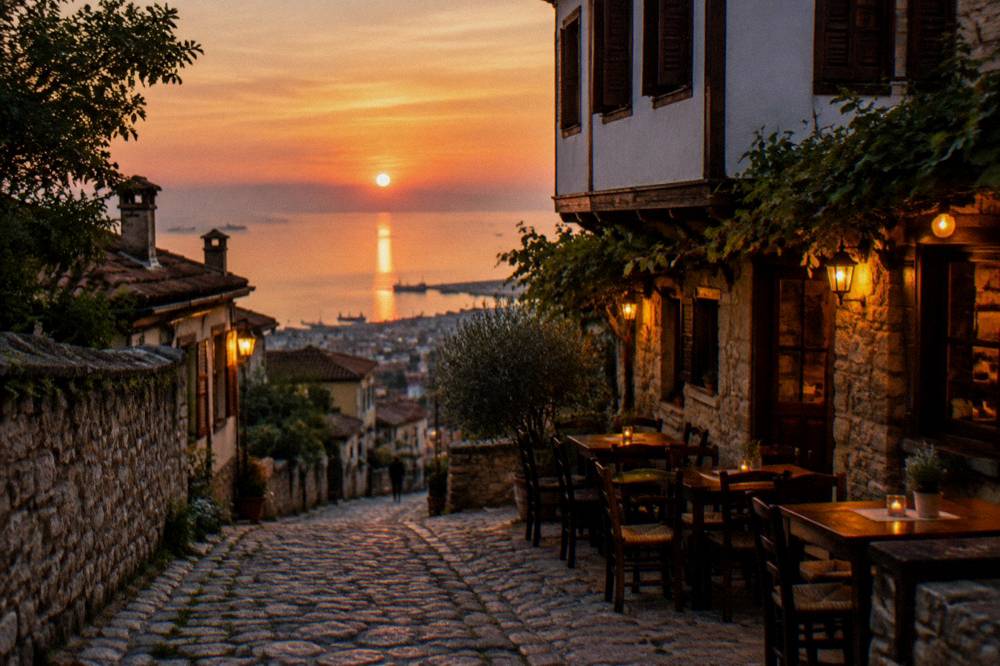
The character differs by quarter, and the differences are structural rather than incidental. Ladadika sits beside the port, among the buildings that survived the 1917 Great Fire that left 73,000 people homeless and reshaped the centre. Ano Poli climbs inside and above the walls of a city founded in 315 BC, and its tables look down over the whole Thermaic Gulf. Kalamaria, now reachable directly by metro since the extension opened on 27 August 2026, is where the city eats when nobody is performing for visitors.
| Quarter | Character | How it fits an evening |
|---|---|---|
| Ladadika | Restored merchant district near the port, eating and nightlife | Closest to hotels and the centre, loud later in the evening |
| Ano Poli | Old upper town inside the Byzantine walls, traditional tables | Earlier, quieter, views over the gulf, cobbled streets |
| Kalamaria | Coastal residential district, local ouzeri density | A metro ride from the centre, local prices and custom |
| City centre markets | Modiano Market and Kapani Market area | Daytime food buying, some counters serving from morning |
The Ladadika, Ano Poli and Kalamaria pages cover each quarter in detail. For the late end of the evening, Thessaloniki nightlife picks up where the meze plates stop.
When Is The Best Hour And Season For An Ouzeri In Thessaloniki?
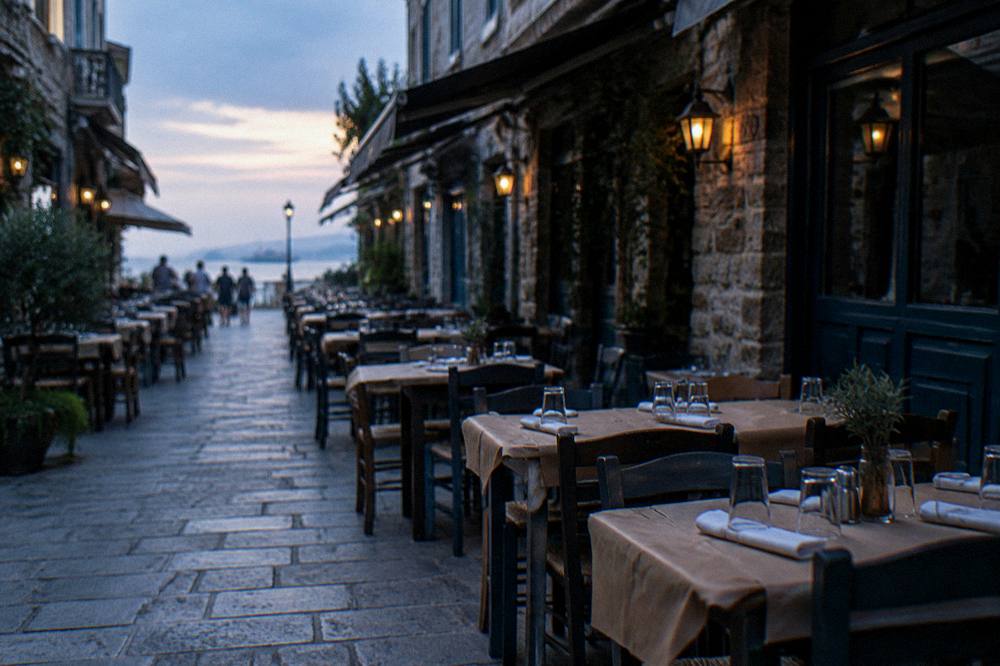
The ouzeri evening in Thessaloniki runs late by northern European habit, with tables filling from the evening onward and staying past midnight in summer, and the season matters because eating outdoors is half the custom: summer mean highs of 31.7 C in July and August make the street table the default, while winter pushes the same ritual indoors. Those temperature figures are the HNMS Thessaloniki Mikra station record, 1959 to 2010, and they describe the climate that shapes the custom, not a forecast for any given night.
The seasonal logic is straightforward. A city whose mean daily high exceeds 27 C from June through September builds its social life around outdoor tables and slow drinking in the relative cool of the evening. Winter does not stop the ouzeri, it just moves it inside, and the hot kitchen plates become the point of the order rather than the seafood. Rainfall in the record never disappears in any month, but the difference between 19.3 mm in August and 55.1 mm in December tells its own story about which half of the year owns the outdoor table.
| Month | Mean daily high C | Mean daily low C | Rain mm |
|---|---|---|---|
| April | 19.1 | 7.9 | 36.1 |
| May | 24.6 | 12.6 | 44.2 |
| June | 29.4 | 17.0 | 29.8 |
| July | 31.7 | 19.3 | 23.8 |
| August | 31.4 | 19.1 | 19.3 |
| September | 27.1 | 15.4 | 29.8 |
| October | 21.2 | 11.3 | 43.0 |
All figures: HNMS Thessaloniki Mikra station, 1959 to 2010. December carries the highest monthly rainfall total at 55.1 mm and August the lowest at 19.3 mm in the same record, which is one more reason the summer table owns the custom. For planning around the whole year, see the best time to visit Thessaloniki and the Thessaloniki weather page.
How Does An Ouzeri Evening Fit Into A Day In Thessaloniki?
An ouzeri evening slots naturally onto the end of a sightseeing day in Thessaloniki: the state museums keep summer hours into the late afternoon, the metro runs until 00:30 Sunday to Thursday and 02:00 on Friday and Saturday, and the last meze plates of the night land well inside the metro's operating window, so a day of Byzantine monuments can end at a table with nothing more complicated than a 0.60 euro basic metro ticket home. The metro figures come from the Thessaloniki Metro's own ticket and operations pages. Line 1 opened in November 2024 and the Kalamaria extension on 27 August 2026, so the city's late transport question has a different answer than it did two years ago.
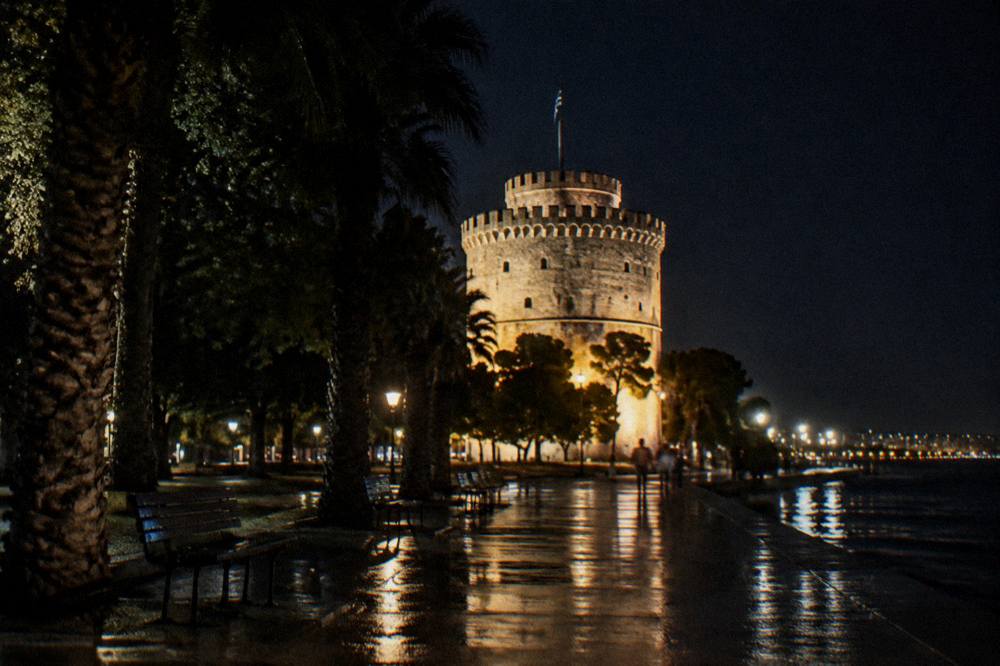
A workable shape for a first day: the White Tower, at 8 euro full and 4 euro reduced since 1 April 2026 per the Museum of Byzantine Culture's visiting page, opens at 08:00 in summer, followed by the Archaeological Museum or the Museum of Byzantine Culture, then the promenade and Ano Poli in the late afternoon light, with the ouzeri as the fixed evening point. The things to do in Thessaloniki page assembles the full day.
| Part of the day | Option | Detail |
|---|---|---|
| Morning | White Tower | Summer 08:00-21:00 daily, 8 euro full, 4 euro reduced |
| Morning | Museum of Byzantine Culture | Summer daily 08:00-20:00, 10 euro full, 5 euro reduced |
| Afternoon | Archaeological Museum | 09:00-17:00 daily Apr-Oct, 10 euro full, 5 euro reduced |
| Late afternoon | Ano Poli and the walls | Free to walk, views over the gulf |
| Evening | Ouzeri in Ladadika, Ano Poli or Kalamaria | Metro home until 00:30, or 02:00 Fri-Sat |
State museums are free on 6 March, 18 April, 18 May, the last weekend of September and 28 October, which pairs neatly with an ouzeri budget evening. Getting around the city at night is covered in getting around Thessaloniki, and the Thessaloniki metro page holds the full fare and hours detail.
Can You Combine Ouzeri With Day Trips From Thessaloniki?
Yes, but the day trip comes first and the ouzeri comes after, because the worthwhile trips out of Thessaloniki are real distances: Vergina is about 62 minutes by road, Dion about 67, Edessa about 82, and Meteora about 154 minutes each way, which makes Meteora a full day that ends back in the city late, hungry and ready for a table rather than another monument. These are free-flow drive times computed over road routing from Aristotelous Square, without traffic, parking or stops, so read them as floor values, and check the tour's own listing for what a guided version includes.
The logic of the order matters. Meteora's monasteries at Kalambaka are about 228 km away, and the site treats it as a full-day trip for exactly that reason. Ancient Macedonia is closer: Vergina holds the Museum of the Royal Tombs of Aigai, Pella is about 43 minutes out, and Dion sits under Mount Olympus about 67 minutes away. A day among tombs and mountains earns the evening meze in a way a day of city museums does not, and the city's ouzeri quarter is where those days end.
| Day trip | Distance from Aristotelous Square | Free-flow drive time |
|---|---|---|
| Pella | 45.7 km | about 43 minutes |
| Vergina | 68.0 km | about 62 minutes |
| Dion | 90.1 km | about 67 minutes |
| Litochoro | 90.7 km | about 67 minutes |
| Edessa | 90.3 km | about 82 minutes |
| Kassandra, Kallithea | 86.2 km | about 78 minutes |
| Sithonia, Nikiti | 97.2 km | about 96 minutes |
| Meteora, Kalambaka | 227.5 km | about 154 minutes |
The dedicated pages for Vergina, Meteora and Halkidiki hold the sight detail, and the northern Greece itinerary strings several of them together with the city nights in between.
What Should You Know Before Your First Ouzeri In Thessaloniki?
The practical rules are few and firm: meze are shared and arrive gradually, so order in waves; add water to your ouzo or tsipouro rather than drinking it neat; expect the evening to start later than a northern European dinner; carry cash as a fallback even though cards are common; and treat the bill as a count of plates and glasses, checked against what the table actually received. Beyond that, the ouzeri is one of the least demanding dining formats a visitor can enter, precisely because there is no fixed sequence to get wrong.
A few city-level facts close the practical picture. Greece uses the euro and is a Schengen member, the emergency number is 112, and the metro's basic ticket is 0.60 euro with a 2.50 euro daily ticket, per the Thessaloniki Metro's ticket page. The climate resilience fee is collected by your accommodation per room per night and is higher from April to October, so it appears on the hotel bill, not the ouzeri bill. Seasonal events can lift or crowd the evening scene: the Thessaloniki International Fair ran 5 to 13 September 2026, the Dimitria festival was reported for 1 to 26 October 2026, and the International Film Festival runs 5 to 15 November 2026, an annual autumn cluster worth knowing when booking a table-heavy weekend.
One caution that belongs only to this food culture: pacing is the whole game. The drink is strong, the plates keep coming while the glasses are full, and the city's custom is to finish an ouzeri evening walking, along the Nea Paralia promenade or up into Ano Poli, not to need the taxi immediately. Confirm the current price of anything before ordering, enjoy the table, and let the evening run at its own speed.
Common Questions About Ouzeri In Thessaloniki
What is an ouzeri in Thessaloniki?
An ouzeri is a small eating house built around ouzo or tsipouro and shared small plates called meze, ordered gradually across an evening. In Thessaloniki it stands beside the taverna as a default way of eating, especially in Ladadika, Ano Poli and Kalamaria.
How do I order at an ouzeri?
Order one drink and one or two meze to start, then order more plates in waves as the table wants them. Do not order a full meal at once, and simply stop ordering when you are finished.
Ouzo or tsipouro, which should I drink?
Either, served slowly with food. Ouzo is anise flavoured, tsipouro is a grape pomace spirit served plain or with anise, and both are drunk in small glasses with cold water added.
Is an ouzeri the same as a taverna?
No. A taverna is a restaurant serving full dishes and meals, while an ouzeri centres on the spirit and its small accompanying plates. In practice many places blur the line, and menus often overlap.
Do you need a reservation for an ouzeri in Thessaloniki?
For a first visit, no: walking in and taking an open table is normal.
What time do Thessaloniki ouzeri fill up?
Later than a northern European dinner, with tables filling through the evening and staying late, especially in summer when outdoor tables are the default. The metro runs until 00:30 Sunday to Thursday and 02:00 Friday and Saturday, which sets a practical end of night.