Where To Stay In Thessaloniki: Areas And Hotels
Thessaloniki's hotel map is compact, and the right base depends on what the trip is for: first-time sightseeing, food and nightlife, a quiet old-town stay or an early flight out of Makedonia airport.
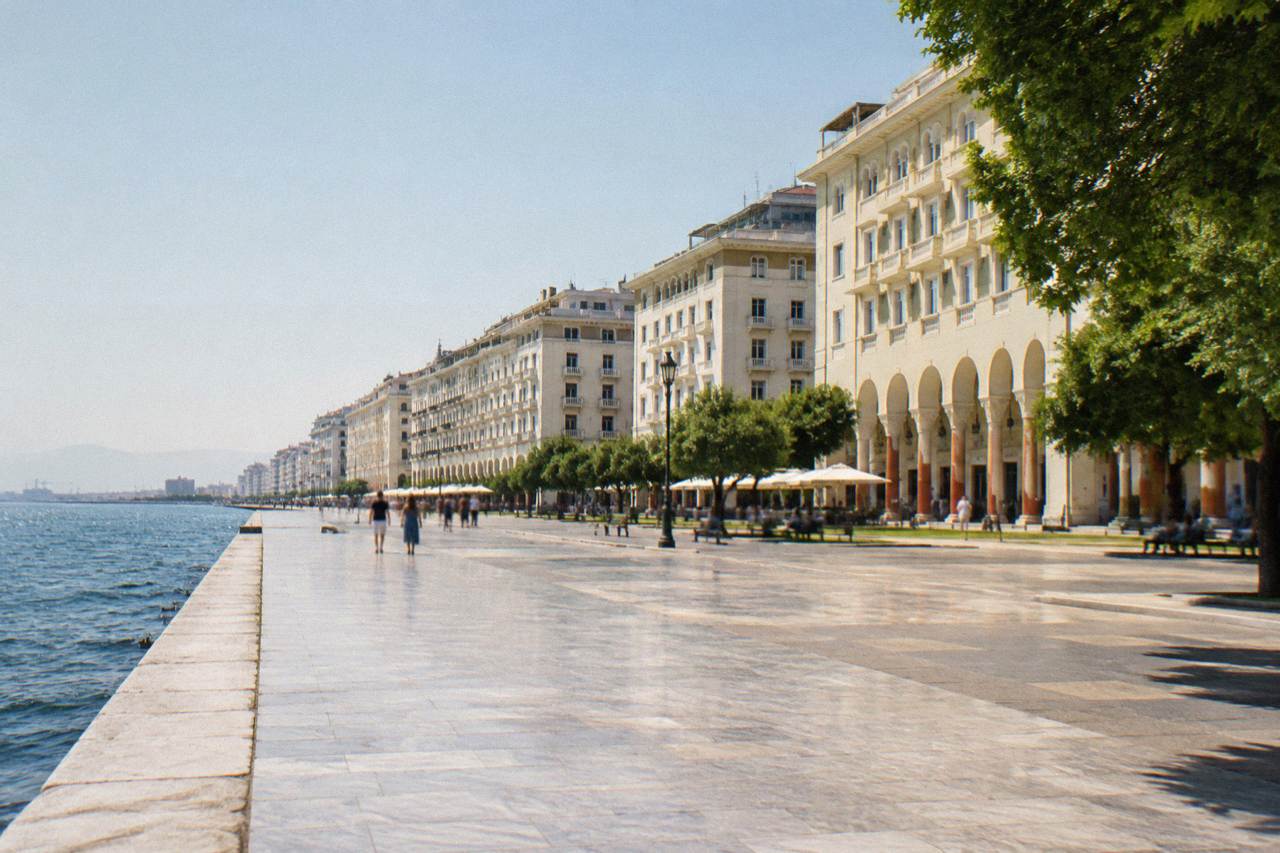
Short answer
Stay in the City Centre around Aristotelous Square for a first visit, in Ano Poli for quiet and views inside the Byzantine walls, in Ladadika for restaurants and nightlife, or in Kalamaria for a residential base on the airport side of the city.
Thessaloniki, the second city of Greece, sits on the Thermaic Gulf in Central Macedonia, and its hotel districts cluster within a few kilometres of Aristotelous Square. That compactness is the whole point of choosing a base here: the White Tower, the Rotunda, the Arch of Galerius, the Ladadika dining quarter and the old upper town of Ano Poli all sit within walking or short metro range of one another, and the metro's Line 1, open since November 2024 and extended to Kalamaria on 27 August 2026, ties the centre to the eastern suburbs. This guide walks through each area, what it suits, and the practical facts, including the Greek climate resilience fee every accommodation collects. For a wider picture of the city, start with the Thessaloniki Travel Guide homepage and the main things to do in Thessaloniki page.
Where To Stay In Thessaloniki: Which Area Fits Your Trip?
The practical answer for Thessaloniki is a base in the City Centre around Aristotelous Square for a first visit, Ano Poli for quiet lanes and views inside the Byzantine walls, Ladadika for restaurants and nightlife near the port, Kalamaria for a residential stay on the airport side, or the seafront along the Nea Paralia for the promenade. Every one of these sits within the built-up area along the Thermaic Gulf, and none is more than a short metro or bus ride from the others. The choice is really about noise, walking distance and what the trip is for.
The areas this guide covers are the ones the city's own geography defines: the City Centre, Ano Poli above it, Ladadika by the old port, Kalamaria to the southeast, and Panorama beyond it. Thessaloniki is a coastal city, not an island, and its day-trip hinterland, Halkidiki, Pella, Vergina, Dion, Edessa and Meteora, is reached by intercity bus, train or tour rather than by ferry. If the trip mixes city nights with monastery days and beach afternoons, the base still stays in the city: the buses to Halkidiki and the western sites leave from stations on the edge of town.
| Area | Character | Suits |
|---|---|---|
| City Centre (Aristotelous Square) | Business hotels, squares, the seafront one street down | First visits, short stays, cruise days |
| Ano Poli | Old upper town inside the Byzantine walls, small guesthouses | Quiet, views, history |
| Ladadika | Restored port quarter, restaurants and bars | Food-focused trips, nightlife |
| Kalamaria | Residential eastern suburb on the metro since 2026 | Longer stays, early flights |
| Nea Paralia seafront | Promenade-side blocks southeast of the White Tower | Walkers, runners, sea views |
A note on what this page will not do: no hotel or hostel name in Thessaloniki is printed on this site. What holds up on this page is the geography, the transport and the fee rules, and those are what actually decide a booking. Nightly rates are not published here either; they change constantly and belong on the booking platform, not on a guide page. Compare the areas below, then price them.
Is The City Centre Around Aristotelous Square The Best Base For A First Visit?
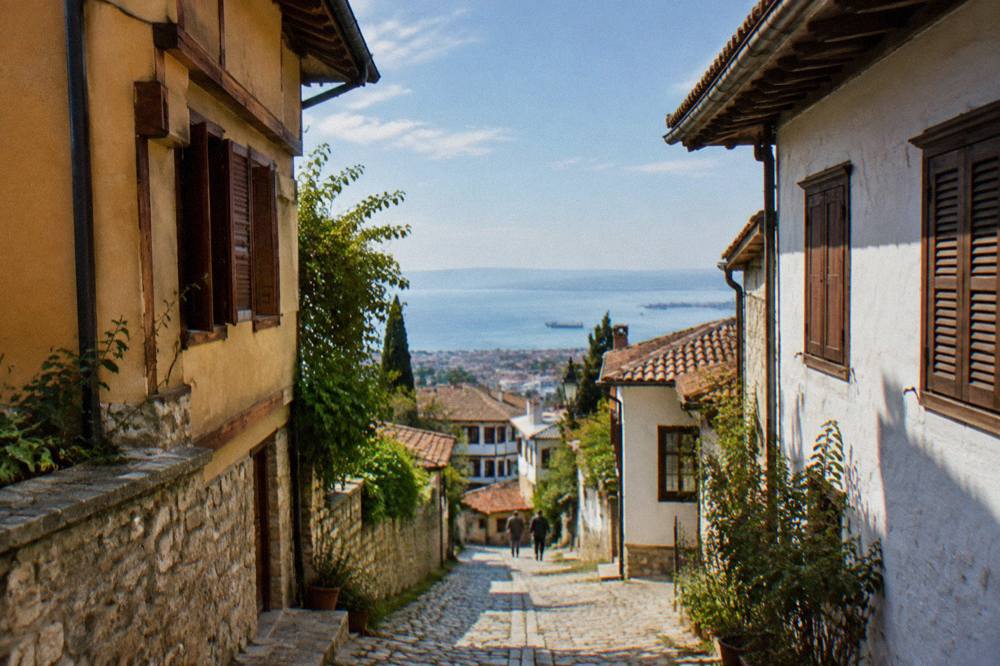
For a first visit, yes: the City Centre around Aristotelous Square is the base that puts the White Tower, the Rotunda, the Arch of Galerius, the Roman Agora, the Archaeological Museum and the Museum of Byzantine Culture all within a walk or a single metro ride, and the airport bus stops within a few streets of the square. Aristotelous Square itself was laid out as part of the reconstruction plan that followed the Great Fire of 1917, which left 73,000 people homeless, and it still functions as the city's front room, opening straight down to the sea.
The case for the centre is walking distance. The White Tower, the city's landmark on the seafront, is a short stroll along the water. Its ticket, 8 euro full and 4 reduced since 1 April 2026 per the Museum of Byzantine Culture's visiting page, opens the museum inside. The Archaeological Museum (10 euro full, 5 reduced) and the Museum of Byzantine Culture (the same) are both on or near the centre's edge. The fifteen UNESCO-listed Paleochristian and Byzantine monuments, inscribed in 1988, thread through these blocks: Hagia Sophia, the Church of Saint Demetrius, Panagia Acheiropoietos and the Rotunda among them. Working churches are free to enter and open outside service times.
The trade-off is noise and price. The centre is where the city works, shops and goes out, so light sleepers should ask for a room off the main streets when booking. Anyone prioritising silence over convenience should read the Ano Poli section below, and anyone weighting restaurant nights should look at Ladadika first. For a one-night or cruise-port stop, the centre is close to unbeatable; the one day in Thessaloniki itinerary is built exactly on that assumption.
| Central sight | Walking from Aristotelous Square | Admission |
|---|---|---|
| White Tower | Seafront, short walk | 8 euro full, 4 reduced |
| Archaeological Museum | East side of the centre | 10 euro full, 5 reduced |
| Museum of Byzantine Culture | Further east, short bus or walk | 10 euro full, 5 reduced |
| Rotunda | North of the seafront | Check the current price on the site's own page |
| Arch of Galerius | On Egnatia street | Free to view, open air |
| Church of Saint Demetrius | Near the Roman Agora | Free, open outside services |
State museums in Thessaloniki are free on 6 March, 18 April, 18 May, the last weekend of September and 28 October, which is worth knowing if the stay overlaps one of those dates. Hours change by season: the Archaeological Museum runs 09:00 to 17:00 and closes on Tuesdays from 1 November to 31 March, and the White Tower runs 08:00 to 21:00 in summer and 08:30 to 15:30 in winter.
Getting in from the airport is straightforward from a central base. Thessaloniki Airport "Makedonia" is about 16 km and roughly 20 minutes by road from Aristotelous Square, with OASTH airport bus lines including the X1 from the KTEL terminal and the X3 from Mikra metro station, and a reported flat taxi rate of about 25 euro by day; confirm the fare before riding. The full transfer picture is in the airport to city centre guide.
Why Does Ano Poli Suit Travellers Who Want Quiet And Views?
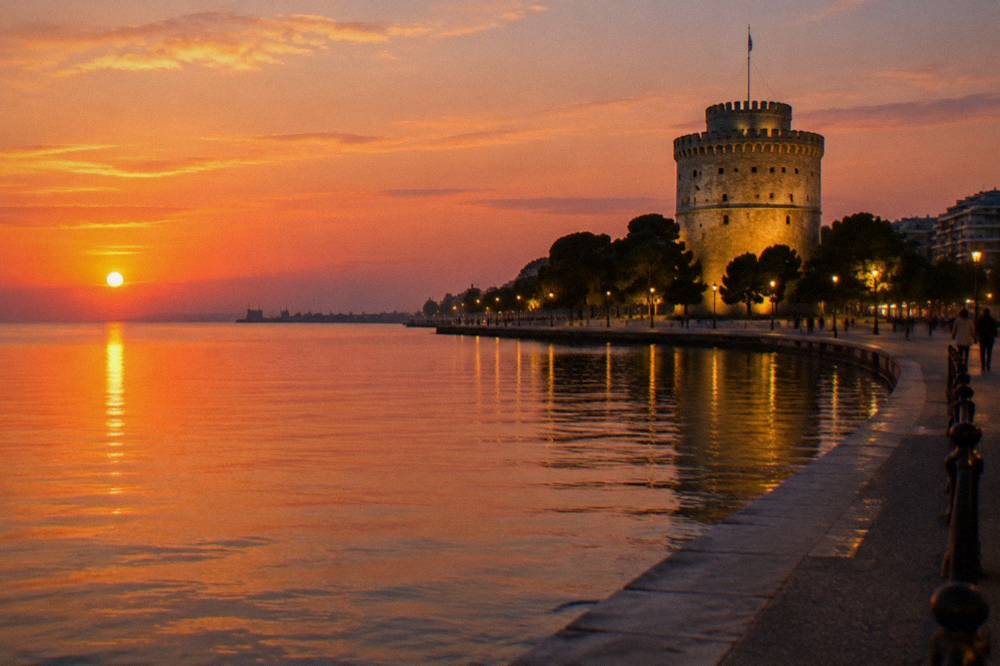
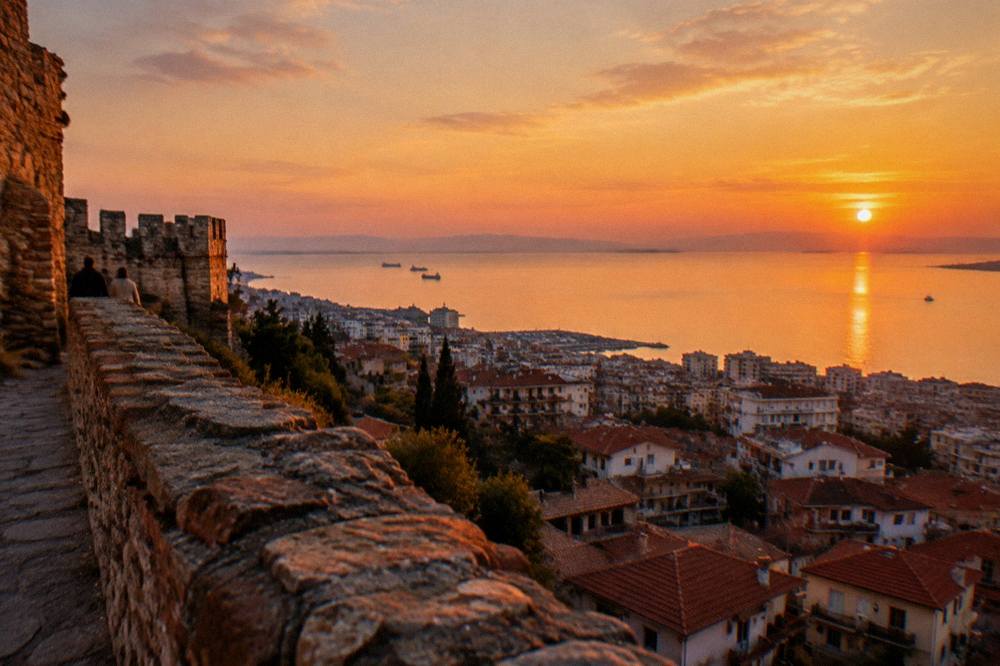
Ano Poli, the old upper town inside the Byzantine walls, suits travellers who want quiet stone lanes, small guesthouses and the city's rooftop views, at the price of a uphill walk or a short bus ride down to the centre. The walls themselves are part of the UNESCO inscription of 1988, with Hellenistic origins expanded in the Byzantine period: the original circuit ran about 8 km and about 4 km remains visible. The Heptapyrgion fortress at the top was used as a prison until 1989 and is now a visitable monument.
Ano Poli is the only part of central Thessaloniki that survived the Great Fire of 1917 with its fabric intact, and it reads that way: low houses, gardens, Byzantine churches such as Hosios David and the Vlatadon Monastery, and lanes that end in balconies over the Thermaic Gulf. The Trigonion Tower on the wall is the classic sunset viewpoint. Nothing on this site verifies a guesthouse name, so treat the area, not an address, as the booking decision: search the upper town on the platform of choice and check the walk to the nearest bus stop or metro station before confirming.
The walkability runs one way, downhill. Coming back up is a real slope, and in July, when the HNMS Thessaloniki Mikra station, 1959 to 2010, puts the mean daily high at 31.7 C, an afternoon ascent with luggage is worth avoiding; arrange arrival by taxi or bus. A guided introduction helps here, because the lanes are unlabelled and the stories are layered: the Old Town walking tour covering mythology and botany is the natural pairing, and Check availability on the operator's live listing before locking the dates. The site's own Ano Poli guide covers the quarter street by street.
Ano Poli also places the city's layered history at the door. Founded in 315 BC by Cassander and named for his wife Thessalonike, the city passed through Roman, Byzantine and Ottoman rule, and the upper town conserves the pre-1917 street pattern the fire spared below. For a longer read on that arc, the Thessaloniki history page carries the timeline.
Is Ladadika The Right Pick For Restaurants And Nights Out?
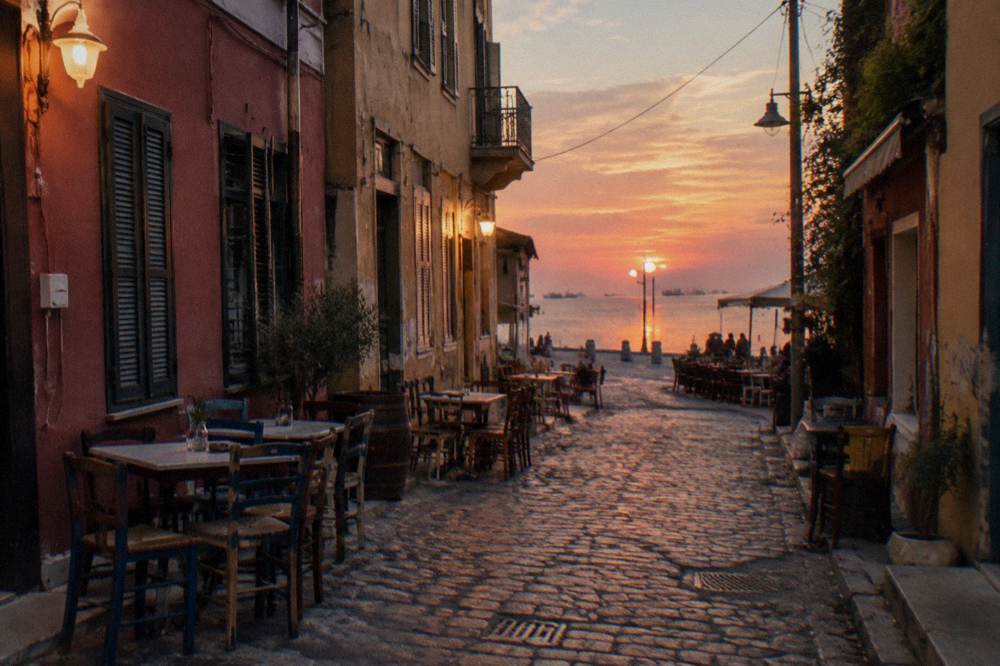
Ladadika, the restored quarter by the old port west of Aristotelous Square, is the pick for travellers whose Thessaloniki trip is built around dinners, ouzeri and late nights, because the restaurants and bars are the neighbourhood itself and the centre is a 10-minute walk along the sea. The district takes its name from the olive oil warehouses that once lined it, and its coloured facades and cobbled blocks now hold the densest concentration of eating places in the city.
The honest caveat is the flip side of the same fact: this is the loudest part of town after dark. Rooms above or beside the action suit travellers who plan to be part of it and close the night there, not light sleepers on a 7am museum schedule. Anyone mixing both should compare rates for rooms facing the port side rather than the restaurant streets, and read the Thessaloniki nightlife and best restaurants pages for what the evenings hold. Those pages deal in dishes and formats, not addresses.
Food is the reason the city gets called a gastronomy destination at all: the municipal gastronomy site operates under UNESCO's Creative Cities network. A food tour is the efficient way to calibrate before booking dinners, and check availability for the traditional Greek food tour with a local, which the trio above also features. Ladadika also sits beside the port, which matters for cruise passengers: the cruise port day guide covers that case.
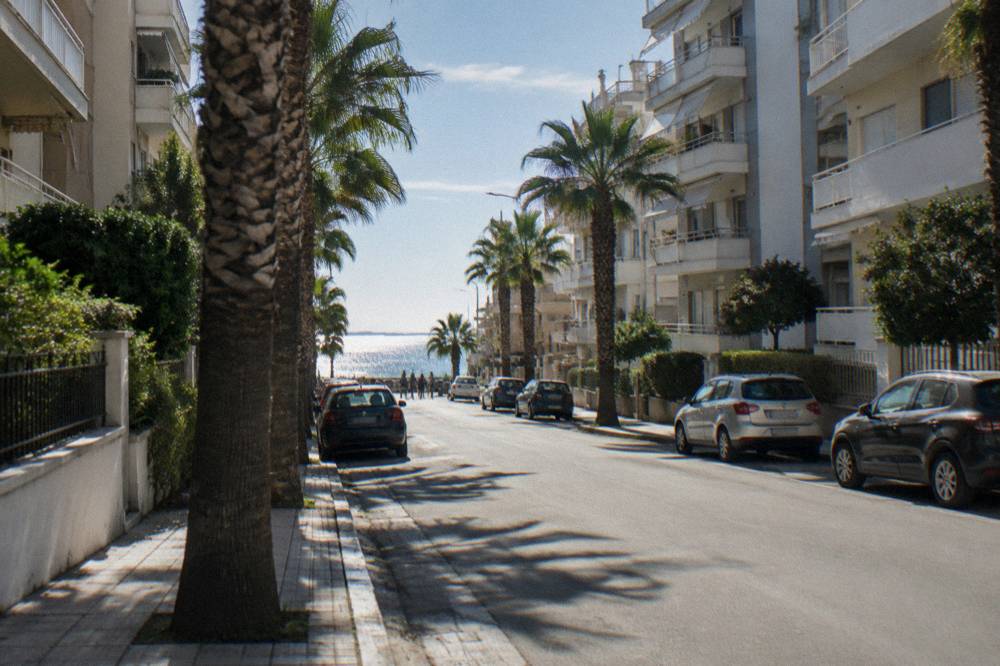
Is Kalamaria A Good Base On The Airport Side Of Thessaloniki?
Kalamaria, the southeastern suburb across from the centre, became a genuinely practical base on 27 August 2026, when the metro's Kalamaria extension opened five new stations, including Mikra, tying the district to the centre in minutes for a 0.60 euro basic ticket. Before that date Kalamaria was a bus-and-taxi suburb; since then it is on the same line as the New Railway Station, the main terminal at the other end of town. The extension was inaugurated at Mikra station on 27 August 2026, and the government's own press material for the opening put the Mikra-to-centre journey at about 15 minutes.
Kalamaria suits two kinds of traveller: anyone staying a week or more who wants a residential neighbourhood with seafront walks at Aretsou and Nea Krini, and anyone with an early flight, because the airport lies just beyond the district and OASTH's X3 airport bus runs from Mikra metro station. It is also the honest answer for a family base: the Thessaloniki with kids guide treats the eastern seafront as the easier territory for buggies and beach afternoons. What this page will not do is rank Kalamaria against the centre or call it safer or nicer: the district's case rests on transport and geography.
| Metro fact | Figure | Source basis |
|---|---|---|
| Line 1 opened | November 2024 | Operator's own pages |
| Kalamaria extension | Opened 27 August 2026 | Operator's own pages |
| Basic ticket | 0.60 euro, one journey | Metro ticket page |
| Daily ticket | 2.50 euro, 24 hours | Metro ticket page |
| Hours, Sunday to Thursday | 05:15 to 00:30 | Metro site |
| Hours, Friday and Saturday | 05:15 to 02:00 | Metro site |
One thing the metro ticket page does not state is that the 0.60 euro covers city buses as well; do not assume integration, and ask at the ticket machine or on the Thessaloniki metro page before planning bus connections. For the wider bus-and-walk picture, the getting around Thessaloniki guide covers it.
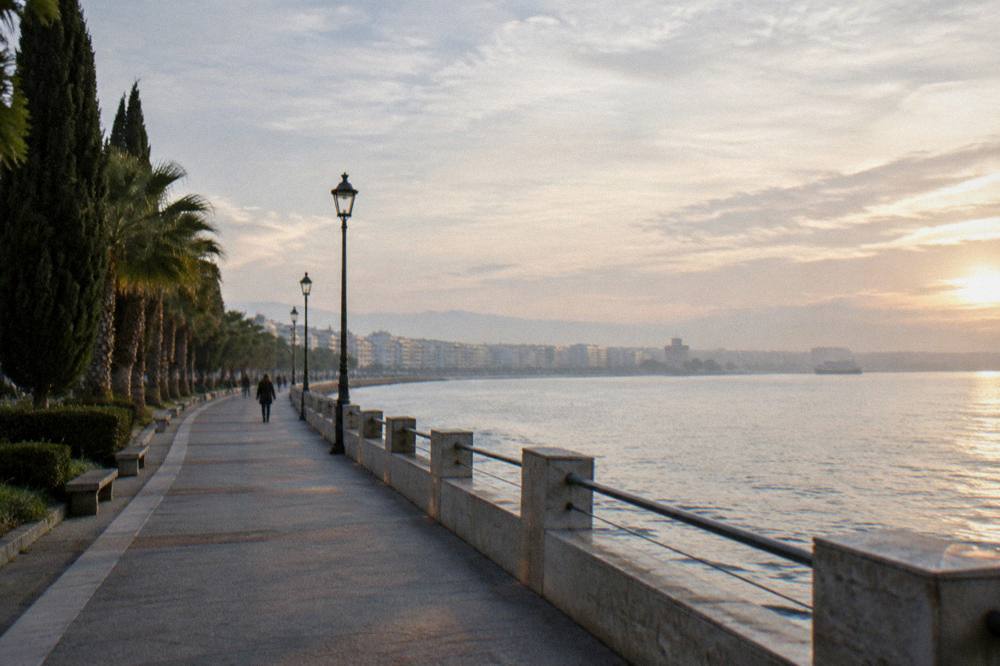
Where Should You Stay In Thessaloniki Near The Seafront?
Along the Nea Paralia, the seafront promenade that curves southeast from the White Tower, a seafront room trades restaurant density for the promenade, a daily walk-and-run route the whole city uses, and sunset views over the Thermaic Gulf. The Nea Paralia is a promenade, not a beach: swimming in the city is not advised at the central waterfront, and the nearest swimmable beaches are at Perea, about 23 km and 28 minutes by road, Agia Triada or Epanomi. Book the seafront for the walk and the view, and take a bus, taxi or the water taxi that runs to Perea in summer (about 10 euro one way, a reported seasonal figure, confirm locally) for the water itself.
The seafront blocks sit between the centre and Kalamaria, so they inherit both: a 20-minute walk one way to Aristotelous Square, a short ride the other way to the eastern beaches' direction. The beaches near Thessaloniki guide maps the swimming options properly, from Perea to the Halkidiki peninsulas of Kassandra and Sithonia. Halkidiki is not a suburb: Kallithea on Kassandra is about 86 km and 78 minutes by road from Aristotelous Square, and Nikiti on Sithonia about 97 km and 96 minutes, so a beach-base switch is a different holiday, not a commute.
Sunset is the seafront's daily event, and the site's sunset cruise page covers watching it from the water. On land, the OTE Tower by the White Tower has a rotating floor with a light-meal experience that is bookable in advance; it appears in the picks above. Season matters for the promenade choice too: the HNMS Thessaloniki Mikra station, 1959 to 2010, records July and August mean highs of 31.7 C and 31.4 C, so a seafront room in high summer wants air conditioning confirmed at booking, and October, at a 21.2 C mean high with 43.0 mm of rain, is the calmer shoulder option, as the best time to visit and weather pages set out.
Where To Stay In Thessaloniki On A Budget?
On a budget, the honest levers in Thessaloniki are the district, the season and the fee: a room in Kalamaria or the blocks behind the centre rather than on the seafront, a stay outside the April-to-October high window when the climate resilience fee drops, and a base within walking distance of a metro station so a 2.50 euro daily ticket replaces taxis. The budget case is structural, and the Thessaloniki budget page assembles the free and cheap side of the city, from the free churches of the UNESCO fifteen to the free museum days.
The fee deserves a plain explanation, because it surprises people at checkout. Greece charges a climate resilience fee on overnight stays: it is collected by the accommodation, charged per room per night, and runs higher from April to October than from November to March. Ask for it when comparing rates, especially for longer stays, where per-night extras add up.
Season moves both rates and experience. Winter, November to March, is when museums cut hours, the Archaeological Museum closes on Tuesdays, and the HNMS Thessaloniki Mikra station, 1959 to 2010, records January mean highs of 9.3 C and lows of 1.5 C, with December the high month for rainfall at 55.1 mm. The payoffs are fewer crowds, the Dimitria festival (its 61st edition ran 1 to 26 October 2026), the Thessaloniki International Film Festival (the 67th edition runs 5 to 15 November 2026) and the city's Christmas season, covered in the Thessaloniki in winter page. Confirm any festival date for the year of travel.
| Season | Mean high C | Rain mm | Budget angle |
|---|---|---|---|
| March | 14.3 | 37.9 | Shoulder rates, cool |
| April | 19.1 | 36.1 | High-season fee window starts |
| July | 31.7 | 23.8 | Peak heat, peak rates |
| October | 21.2 | 43.0 | Festival month, shoulder |
| November | 15.5 | 52.8 | Low fee window, film festival |
| February | 11.0 | 35.0 | Lowest rates, quiet city |
Figures above are station means for 1959 to 2010 from the Hellenic National Meteorological Service's Thessaloniki Mikra station, not a forecast for any given week.
Which Area Works Best For Day Trips Out Of Thessaloniki?
For a day-trip-heavy itinerary, the best base is the City Centre near the KTEL bus connections and the metro's New Railway Station end, because the intercity buses to Halkidiki, Vergina, Pella and Edessa, and the trains north and south, all leave from stations on the city's edge rather than from the beach suburbs. KTEL Macedonia's terminal sits in Menemeni about 4 km west of the centre, with the Halkidiki operator's terminal at the 9th km of the Thessaloniki to Nea Moudania road; both are reached by city transport from a central base, and the bus station and train station pages map them.
The distances are the planning reality. Vergina's Museum of the Royal Tombs of Aigai is about 68 km and 62 minutes by road; Pella about 46 km and 43 minutes; Dion about 90 km and 67 minutes; Edessa about 90 km and 82 minutes; and Meteora, at Kalambaka, about 228 km and 2 hours 34 minutes, a full day and never a half. The Ouranoupoli boats that view Mount Athos from the sea are about 130 km and 2 hours 19 minutes away, and entry to Athos itself requires a permit, the diamonitirion, and is men only. These figures are free-flow drive times, with no traffic, parking or stops, so treat them as the floor, not the average.
| Day trip | Km by road | Drive time (about) | Character |
|---|---|---|---|
| Pella | 45.7 | 43 min | Macedonian capital, museum |
| Vergina (Aigai) | 68.0 | 62 min | Royal tombs |
| Dion | 90.1 | 67 min | Archaeological park |
| Edessa | 90.3 | 82 min | Waterfalls |
| Kassandra (Kallithea) | 86.2 | 78 min | Organised beaches |
| Sithonia (Nikiti) | 97.2 | 96 min | Wilder coves |
| Ouranoupoli | 129.9 | 2 h 19 min | Athos-view cruises |
| Meteora (Kalambaka) | 227.5 | 2 h 34 min | Monasteries, full day |
Organised tours replace the bus timetable with pickup, and several from this site's roster run these routes daily. The Meteora options, the Vergina and Pella trips and the Dion and Mount Olympus day trip all collect from central hotels, which is a quiet argument for a central base even when the days themselves leave the city. The site's Vergina, Pella and Meteora pages carry the site-level detail for each.
Common Questions About Where To Stay In Thessaloniki
Where to stay in Thessaloniki for a first visit?
The City Centre around Aristotelous Square: the White Tower, the Rotunda, the Arch of Galerius, the Roman Agora and the main museums are all walkable, and the airport bus stops near the square.
Is Ano Poli a good place to stay?
Yes, for quiet and views: the old upper town inside the Byzantine walls has the city's small-guesthouse character and the sunset viewpoints at the Trigonion Tower, at the cost of an uphill walk from the centre.
What is the climate resilience fee in Thessaloniki?
A Greek fee charged per room per night by the accommodation, higher from April to October than from November to March. The accommodation confirms the exact amount at booking.
Is Kalamaria connected to the centre by metro?
Yes, since 27 August 2026, when the Kalamaria extension opened five stations including Mikra; the basic metro ticket is 0.60 euro and the daily ticket 2.50 euro.
Can you swim near the hotels on the seafront?
Not at the central waterfront: the Nea Paralia is a promenade, not a beach. Swimming is at Perea, about 28 minutes by road, Agia Triada or Epanomi.
Where to stay in Thessaloniki on a budget?
Compare rooms in Kalamaria or the blocks behind the centre rather than seafront addresses, travel outside the April-to-October fee window if dates allow, and stay near a metro stop so a 2.50 euro daily ticket replaces taxis.
Whichever area wins, the same closing advice holds: confirm the room's noise side and the fee at booking, check the metro map for the nearest station, and treat Thessaloniki as the compact, walkable base it is, with all of northern Greece's day trips strung out from its bus and rail stations.