Two Days In Thessaloniki: Byzantium, Seafront And Ano Poli
Two days cover Thessaloniki's Byzantine core, the Roman Rotunda, the old upper town of Ano Poli and the Nea Paralia promenade, with time left for the markets and the Archaeological Museum.
Short answer
Spend day one on the compact centre, from the White Tower and the Arch of Galerius to the Rotunda and Aristotelous Square, and day two in Ano Poli and the museums, ending on the Nea Paralia. The metro, open since November 2024, links the airport side of the city to the centre in minutes.
Thessaloniki, the second city of Greece, sits on the Thermaic Gulf in Central Macedonia, and two days is enough to walk its Byzantine core, climb to the old upper town of Ano Poli and still find time on the seafront. The city that Cassander founded in 315 BC now carries fifteen UNESCO-listed Paleochristian and Byzantine monuments, inscribed in 1988, packed into a centre small enough to cross on foot. This itinerary is built around opening hours, ticket prices and distances, so the plan holds together whether you arrive in summer heat or a wet November week.
Is Two Days Enough For Thessaloniki?
Two days is enough for the historic centre, Ano Poli, the seafront promenade and one museum, because the fifteen UNESCO monuments, the Roman Rotunda and Aristotelous Square all sit within a walkable rectangle about two kilometres end to end. What two days does not cover is the day trips: Vergina, Pella, Meteora and Halkidiki each need a full day of their own, and Kalambaka is about 228 km away.
The answer to how many days is enough for Thessaloniki depends on what you want from the trip. Two days gets you the city itself. Three adds a day trip, and the three-day itinerary shows where that extra day goes. If you only have one, the one-day plan trims this same route to its core.
A practical note on seasons: the Archaeological Museum closes on Tuesdays from 1 November to 31 March, and the Museum of Byzantine Culture does the same in winter. In summer both run long hours. Plan museum days around that Tuesday closure if you visit between November and March.
What Should Day One In Thessaloniki Look Like?
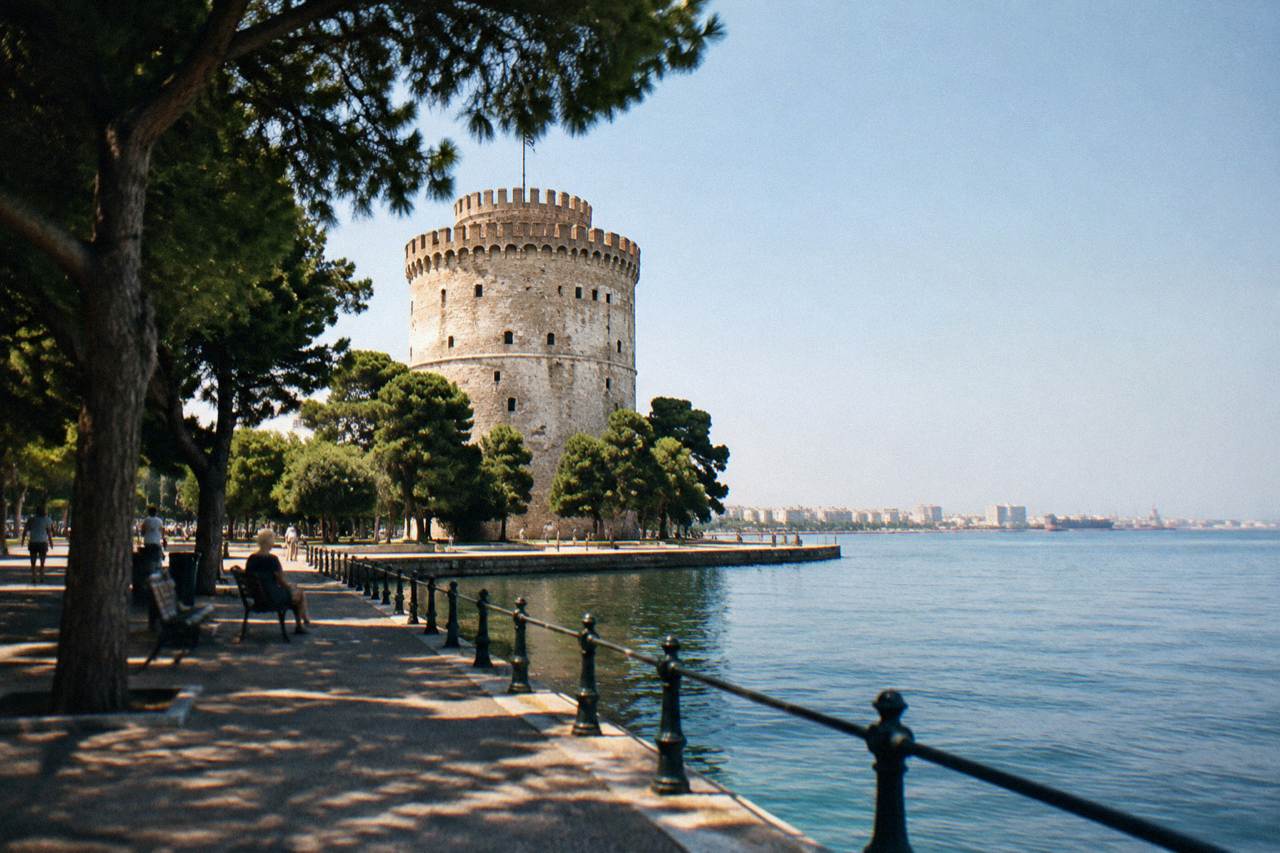
Day one is the flat centre: start at the White Tower at 08:00 when it opens in summer, walk the seafront to the Nea Paralia, then loop back through the Arch of Galerius, the Rotunda, Aristotelous Square and the Ladadika district, finishing at the Church of Saint Demetrius. Every sight on this route is within a 30-minute walk of the others, and the only paid entries are the White Tower and, if you take it, the Rotunda.
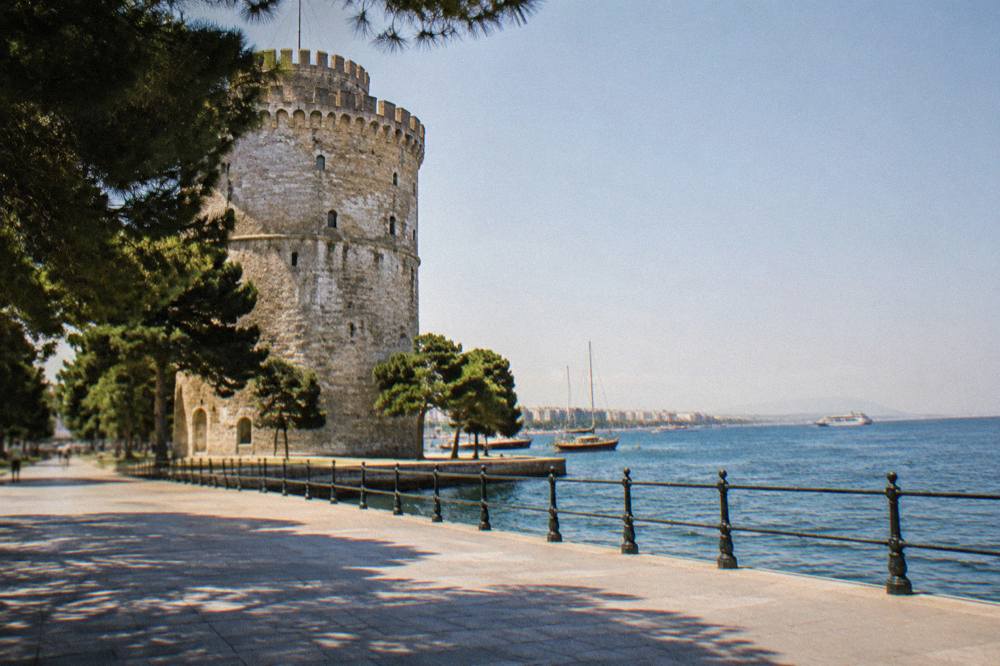
The White Tower opens daily at 08:00 in summer (1 April to 31 October) and 08:30 in winter, closing at 21:00 or 15:30 respectively, with entry stopping 20 minutes before close. A full ticket costs 8 euro and a reduced ticket 4 euro under the prices in force from 1 April 2026, per the Museum of Byzantine Culture's visiting page, which administers it. The view from the top takes in the whole Thermaic Gulf, the port and the rectangle of the centre you are about to walk.
From the tower, the Nea Paralia runs southeast along the water. It is a promenade, not a beach: swimming happens at Perea, Agia Triada or Epanomi, and Perea is about 23 km and 28 minutes by road from Aristotelous Square. A seasonal water taxi to Perea is reported to run in summer for about 10 euro one way, but confirm locally before counting on it.
Turn inland at Navarinou Square and you reach the Roman layer. The Arch of Galerius stands free on Egnatia street, and a few minutes away the Rotunda is one of the city's most imposing survivals from the Galerian complex of the Roman emperor Galerius. Check the current price on the monument's own ticket page before you go; a combined state-sites ticket of about 15 euro is reported to cover the major museums and Galerian sites, and it deserves confirmation on site.
The afternoon belongs to Aristotelous Square, the open heart of the city, designed under the Hebrard reconstruction plan that followed the Great Fire of 1917, which left 73,000 people homeless. From there it is a short walk to the Church of Saint Demetrius, the city's patron church, free to enter and open outside services like the other working churches. End in Ladadika, the restored low district near the port, as the evening crowd builds.
What Should Day Two In Thessaloniki Look Like?
Day two is the hill and the museums: climb into Ano Poli through the Byzantine walls to the Heptapyrgion and the Trigoniou Tower in the morning, visit Hosios David or the Vlatadon Monastery while you are up there, then come down for the Archaeological Museum or the Museum of Byzantine Culture in the afternoon, timing around the winter Tuesday closures.
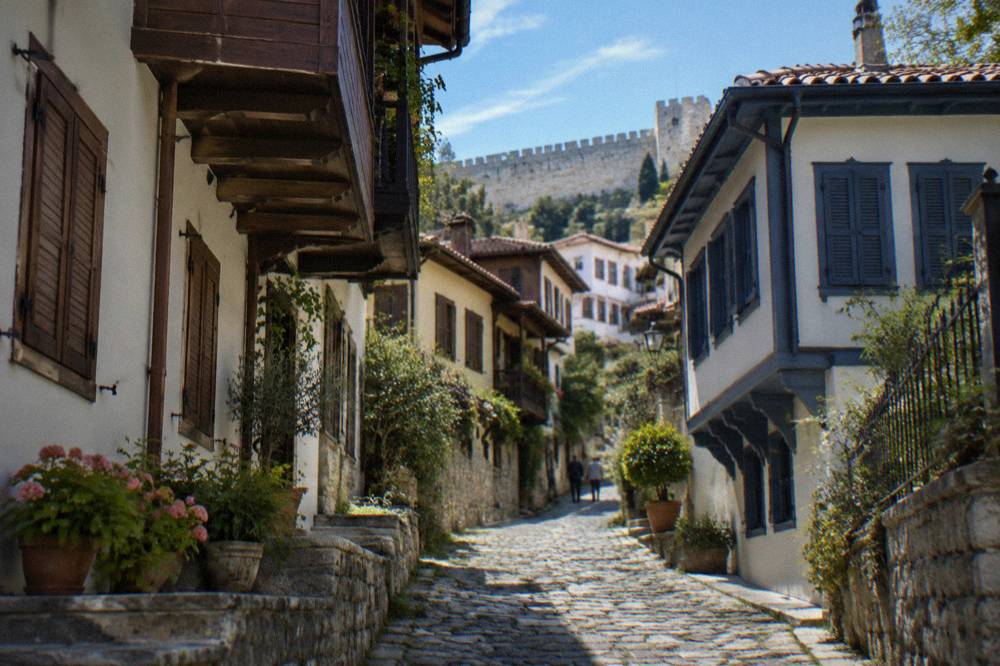
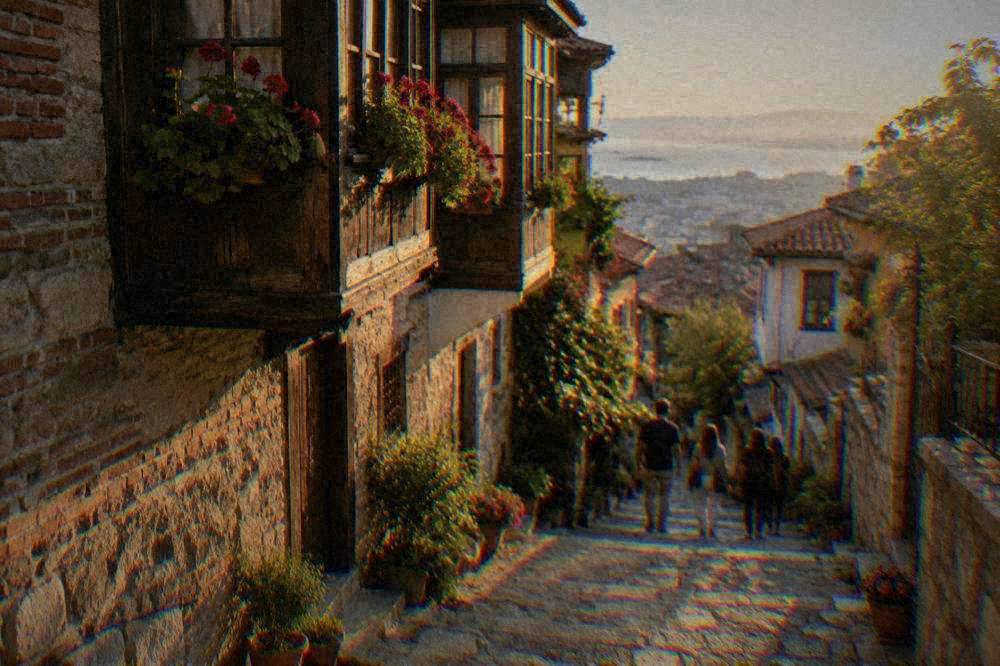
Ano Poli, the old upper town, is the only district that survived the 1917 fire intact, and its stone streets climb to the acropolis where the Heptapyrgion fortress stands. The fortress served as a prison until 1989, and its walls carry the city's defensive story from Byzantine times, when the full circuit ran about 8 km. Check the current admission on the site's own ticket page before you climb; hours of roughly 08:00 to 20:00 in summer are reported but should be confirmed.
While you are in the upper town, Hosios David holds some of the finest early Byzantine mosaics in the city and is one of the UNESCO fifteen. The Vlatadon Monastery, also within the walls, is part of the same inscription. Both are working religious sites, free to enter, open outside services.
Come down for lunch near the Rotunda or on the streets behind Hagia Sophia, itself another of the UNESCO monuments. Then choose your museum. The Archaeological Museum runs 09:00 to 17:00 daily in summer and closes on Tuesday from 1 November to 31 March, at 10 euro full and 5 euro reduced. The Museum of Byzantine Culture is open daily 08:00 to 20:00 in summer and 08:30 to 15:30 Monday and Wednesday to Sunday in winter, same prices. State museums are free on 6 March, 18 April, 18 May, the last weekend of September and 28 October.
A private walk with a local is one efficient way to absorb the centre, and the private walking tour with a local pairs well with either day. The site's own themed walking tour page lists other options.
How Do You Get Around Thessaloniki In Two Days?
You walk, and you use the metro for anything beyond the centre: Line 1 has run since November 2024 and the Kalamaria extension since 27 August 2026, with a basic ticket at 0.60 euro, a daily ticket at 2.50 euro and service from 05:15 to 00:30 Sunday to Thursday and to 02:00 on Friday and Saturday, per the Thessaloniki Metro's own ticket page.
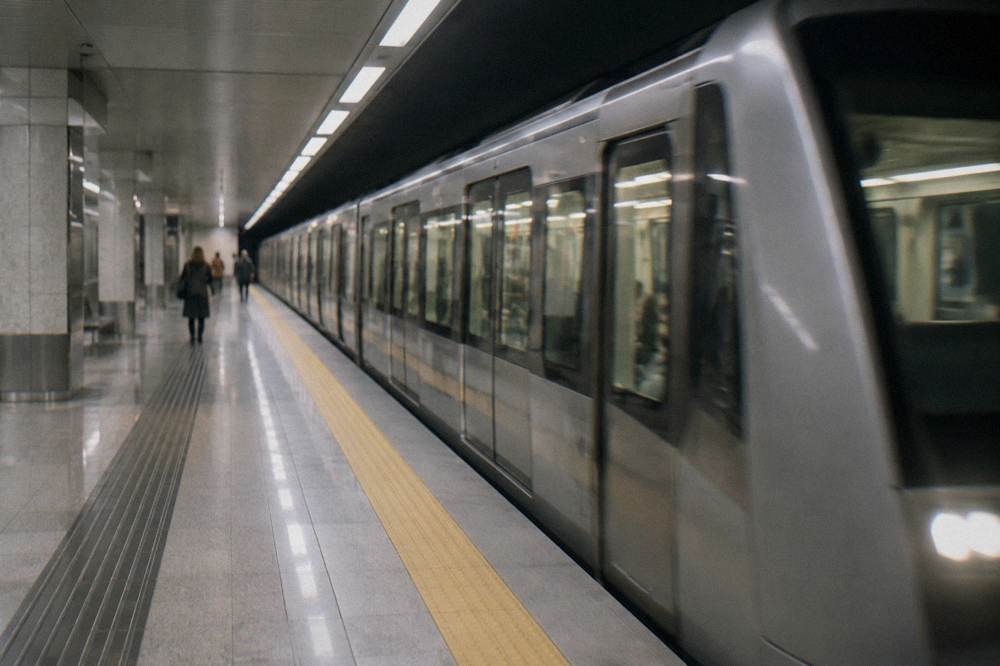
The historic centre is flat and compact, which is why this itinerary barely needs transit. The metro matters for the edges: the airport-side buses X2 and X3 connect to the Nea Elvetia and Mikra metro stations, per the OASTH line list, and the airport is about 16 km and 20 minutes by road from Aristotelous Square. The reported airport bus fare is about 2 euro and a daytime taxi about 25 euro, both worth confirming before you rely on them. The full airport-to-centre picture is in the airport transfer guide.
| Journey | Method | Figure |
|---|---|---|
| Centre to Kalamaria side | Metro Line 1, Kalamaria branch | 0.60 euro basic ticket |
| Unlimited metro for a day | Daily ticket | 2.50 euro |
| Airport to centre | Bus X1/X2/X3 or taxi | About 2 euro bus / about 25 euro taxi, reported |
| Centre to Perea beach town | Road | 23 km, about 28 minutes |
Do not assume the metro ticket also covers city buses; that integration is reported but not stated on the metro's own ticket page, so confirm before transferring. The getting around guide covers the bus network in more detail.
What Does A Two-Day Thessaloniki Trip Cost?
Budget the paid sights on this itinerary at their current official prices: the White Tower at 8 euro, the Archaeological Museum and the Museum of Byzantine Culture at 10 euro each full price, and free entry to all the working churches and open-air monuments, with metro fares adding 0.60 euro a ride. Accommodation carries a separate Greek climate resilience fee collected by the property, per room per night, higher from April to October.
| Item | Price | Notes |
|---|---|---|
| White Tower | 8 euro / 4 reduced | In force from 1 April 2026 |
| Archaeological Museum | 10 euro / 5 reduced | Summer daily, closed Tue in winter |
| Museum of Byzantine Culture | 10 euro / 5 reduced | Same seasonal pattern |
| Working churches | Free | Open outside services |
| Arch of Galerius | Free | Open-air street monument |
| Metro single | 0.60 euro | Daily ticket 2.50 euro |
Two savings levers matter. The free-admission days at state museums (6 March, 18 April, 18 May, the last weekend of September, 28 October) can erase the museum line of the budget entirely if your dates align, and EU visitors up to 25 enter free. Otherwise, the reported combined state-sites ticket of about 15 euro may beat individual tickets if you plan to visit several state sites, though its current availability should be confirmed at the first ticket desk you reach. Everything else covered here is indexed on Thessaloniki Travel Guide.
Food is the other line. The site's food tour page covers guided tasting walks, while the markets itinerary below covers the self-guided version.
Where Does The Food Fit In A Two-Day Plan?
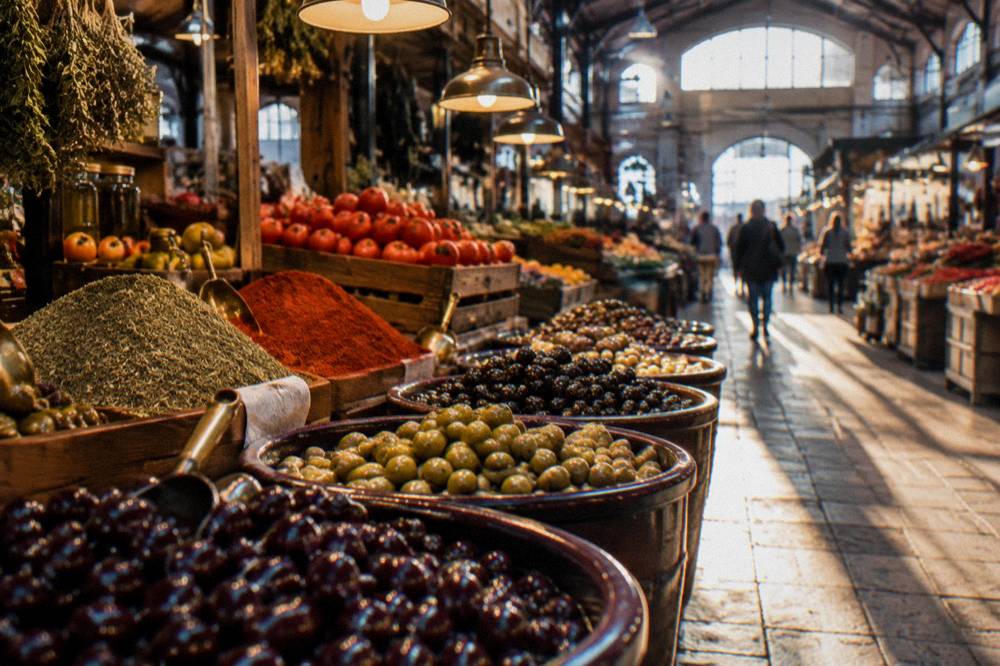
Thessaloniki's food scene concentrates around its two central markets, Modiano Market and Kapani Market, and around the ouzeri and cafes of Ladadika and the streets off Aristotelous Square, so the plan is simple: a market breakfast before the museums on day one, an ouzeri lunch after Ano Poli on day two, and an evening walk through Ladadika both nights.
The markets sit a few minutes west of Aristotelous Square and open early. Modiano Market is the restored covered hall and Kapani Market the older open sprawl beside it; both are working food markets rather than sights, and both are on the walking line between the centre and the Ladadika district. A gastronomic food tour with a chef is the structured version of the same route if you want the tastings explained rather than discovered.
For the background reading, the what to eat guide covers the city's signature dishes and the restaurant guide the districts where they cluster. No individual venue is named here, because the desk's sources do not rank restaurants.
What If It Rains Or You Have Children In Tow?
Rain shifts the plan indoors without breaking it: the Archaeological Museum, the Museum of Byzantine Culture and the reported new Metropolis of Thessalonians museum absorb a wet afternoon, the metro connects them, and the rainy-day itinerary holds a full alternative plan, while the family itinerary adapts this same two-day route for children.
Rain in Thessaloniki is measurable rather than guessed: the HNMS Thessaloniki Mikra station, 1959 to 2010, records December as the month with the highest rainfall total at 55.1 mm and August the lowest at 19.3 mm, with November at 52.8 mm close behind. Rain days run from 5.1 a month in August to 12.7 in December. A winter two-day trip should hold one indoor option in reserve, which the museum hours above make easy.
| Month | Mean high C | Mean low C | Rain mm | Rain days |
|---|---|---|---|---|
| January | 9.3 | 1.5 | 37.7 | 11.5 |
| April | 19.1 | 7.9 | 36.1 | 11.1 |
| July | 31.7 | 19.3 | 23.8 | 6.7 |
| October | 21.2 | 11.3 | 43.0 | 9.3 |
| December | 10.9 | 3.2 | 55.1 | 12.7 |
All figures are HNMS Thessaloniki Mikra station, 1959 to 2010, a weather-station record. The full monthly table is in the weather guide.
Can You Add A Day Trip To A Two-Day Stay?
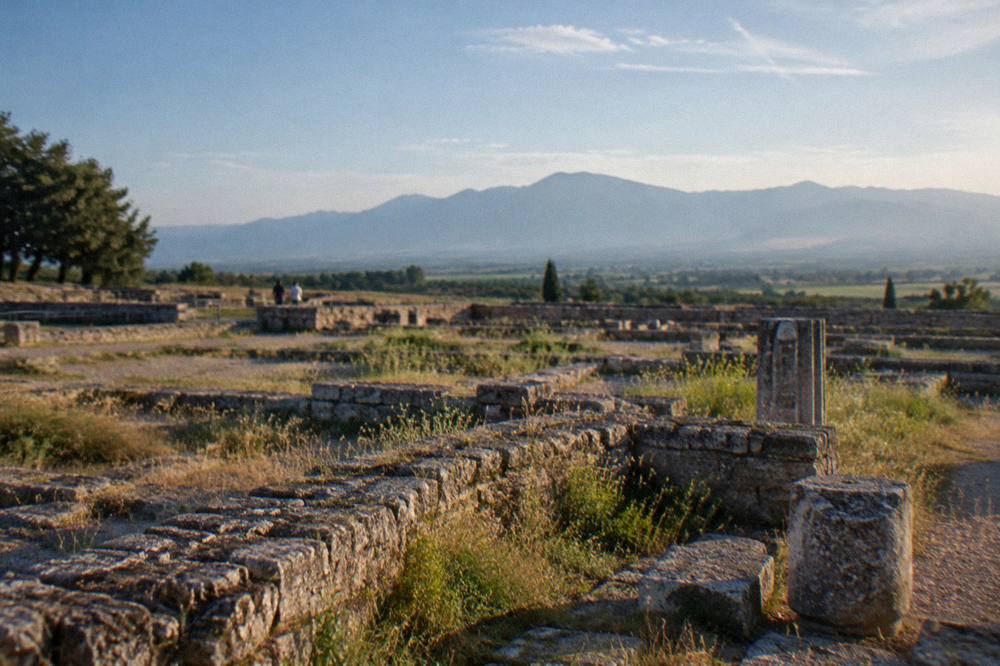
Only by extending to a third day or by sacrificing the second day's museums, because every headline day trip is a full-day outing: Vergina is about 62 minutes by road, Pella about 43, Dion about 67 and Meteora about 154 minutes each way, all computed free-flow times from Aristotelous Square that grow with traffic and stops.
| Day trip | Road distance from Aristotelous Square | Free-flow time |
|---|---|---|
| Pella | 45.7 km | About 43 minutes |
| Vergina | 68.0 km | About 62 minutes |
| Dion | 90.1 km | About 67 minutes |
| Edessa | 90.3 km | About 82 minutes |
| Kassandra (Kallithea) | 86.2 km | About 78 minutes |
| Meteora (Kalambaka) | 227.5 km | About 154 minutes |
The northern Greece itinerary sequences these over a week, and the Thessaloniki and Halkidiki itinerary splits a stay between the city and the peninsulas. Cruise passengers docking for a single day are better served by the cruise port day plan, and short-stay travellers by the layover itinerary.
If you must see something beyond the city inside two days, Pella is the closest archaeological option at about 43 minutes, and the Pella museum's reported ticket is 10 euro with a combined site-and-museum option at 15 euro.
What Practical Rules Should You Know Before Arriving?
Greece uses the euro and is a Schengen member, the emergency number is 112, the metro runs from 05:15 to 00:30 Sunday to Thursday and to 02:00 on Friday and Saturday, and state museums close on fixed holidays including 1 January, 25 March, 1 May, Easter Sunday and 25 and 26 December, so the only real planning risks in a two-day trip are a winter Tuesday and a holiday closure.
The October window deserves a special note, because it is the densest fortnight in the city's calendar. Saint Demetrius day falls on 26 October and doubles as the city's liberation day, marking the Greek army's entry on 26 October 1912. Ochi Day follows on 28 October with its parade, and on both dates state museums open free. The Dimitria festival is reported to have run 1 to 26 October in 2026, and the 90th Thessaloniki International Fair ran 5 to 13 September in 2026, with Japan as the honoured country. The festival guide holds the annual calendar.
For arrivals, the airport guide covers the bus lines X1, X2, X3 and N1 in detail, and the metro guide the new network. The things-to-do overview remains the site's master list if you want to swap any stop on this route.
Common Questions About Two Days In Thessaloniki
Is two days enough for Thessaloniki?
Two days covers the historic centre, Ano Poli, the seafront promenade and one or two museums, since the main sights sit in a walkable rectangle. Day trips such as Vergina, Pella and Meteora each need a full extra day.
What is the best order for two days in Thessaloniki?
Day one: the White Tower, the Nea Paralia, the Arch of Galerius, the Rotunda, Aristotelous Square and the Church of Saint Demetrius. Day two: Ano Poli and the Heptapyrgion in the morning, then the Archaeological Museum or the Museum of Byzantine Culture in the afternoon.
How much do the sights cost in Thessaloniki?
The White Tower is 8 euro full and 4 euro reduced under the prices in force from 1 April 2026, and the Archaeological Museum and the Museum of Byzantine Culture are 10 euro and 5 euro. Working churches and the open-air Arch of Galerius are free.
Can you use the Thessaloniki metro as a visitor?
Yes. Line 1 has operated since November 2024 and the Kalamaria extension since 27 August 2026. A basic ticket costs 0.60 euro and a daily ticket 2.50 euro, with service from 05:15 to 00:30 Sunday to Thursday and to 02:00 on Friday and Saturday.
Can you swim in Thessaloniki on a two-day trip?
Not at the city waterfront: the Nea Paralia is a promenade. Swimming is at Perea, Agia Triada or Epanomi, and Perea is about 23 km and 28 minutes by road from Aristotelous Square.
When are Thessaloniki museums free?
State museums are free on 6 March, 18 April, 18 May, the last weekend of September and 28 October, and EU visitors up to 25 enter free at any time. In winter, the Archaeological Museum and the Museum of Byzantine Culture close on Tuesdays.
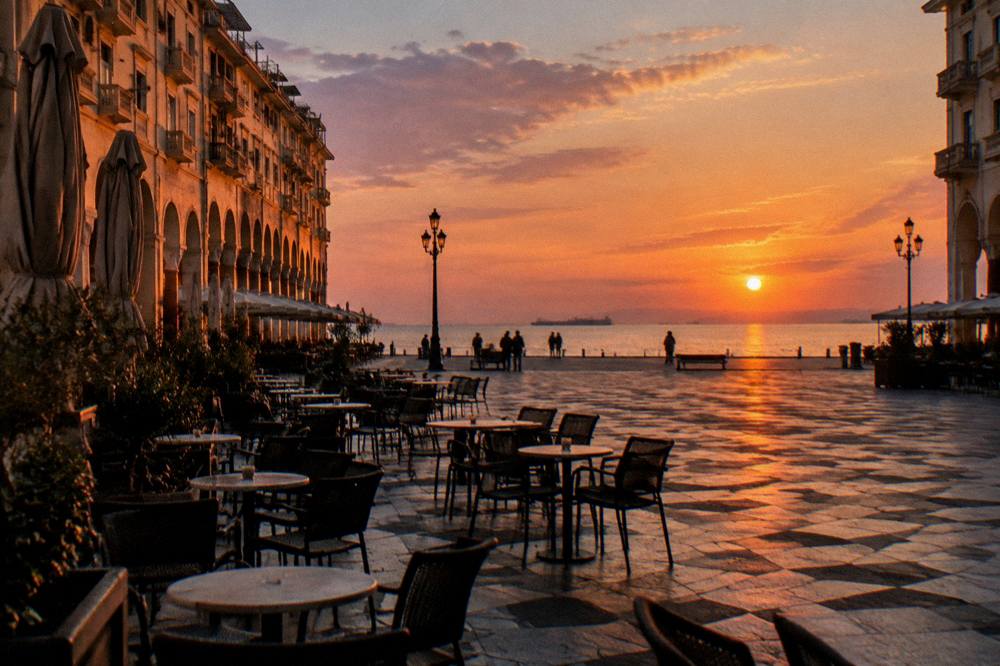
Two days in Thessaloniki, walked in the order above, ends where it began: on the water, with the White Tower lit behind you and the centuries of Byzantine wall still standing above Ano Poli. Keep a third day in reserve if the day trips call, and read the three-day itinerary before you decide they do not.