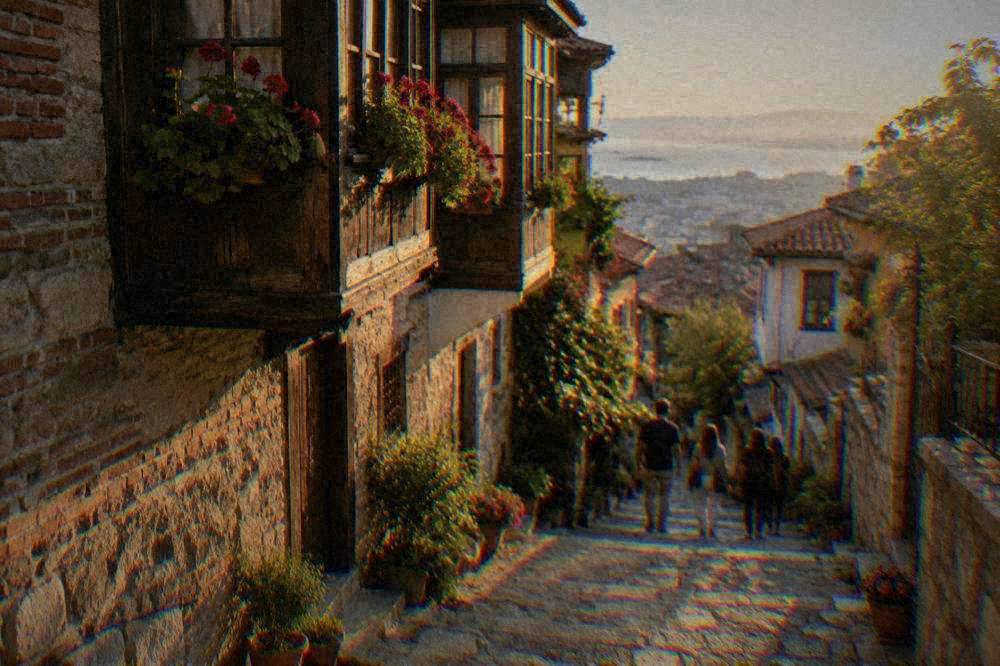
Hosios David: The Hidden Apse Mosaic In Ano Poli
Hosios David, also written Hosios David, is a small Byzantine church high in Ano Poli, the old upper town of Thessaloniki in Central Macedonia, and one of the fifteen monuments on the city's UNESCO World Heritage listing. This guide covers what the church holds, how to reach it on foot or by metro, and what to pair it with in the streets around it.
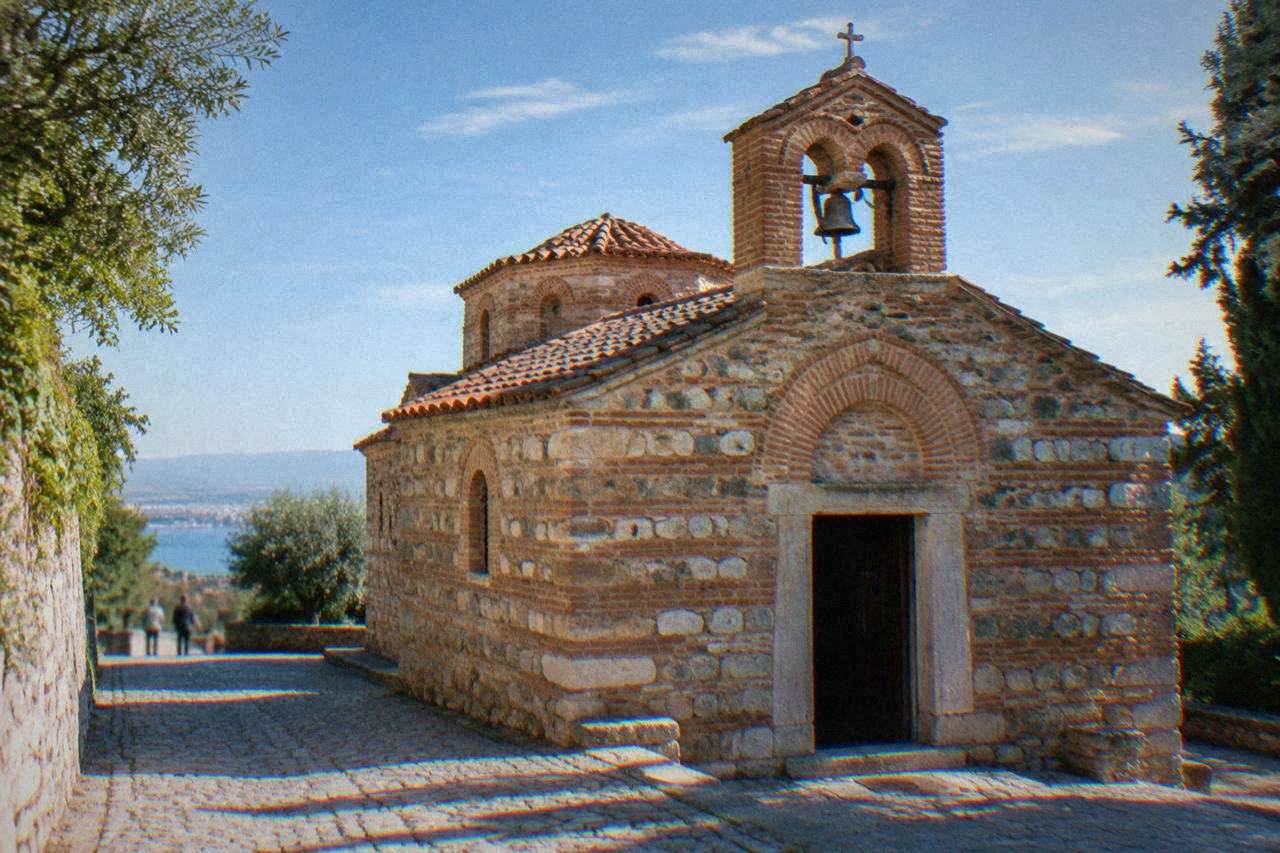
Short answer
Hosios David (Hosios David) is a working church in Ano Poli, Thessaloniki, one of the fifteen Paleochristian and Byzantine monuments inscribed by UNESCO in 1988. Entry is free, it is open outside service times, and its apse mosaic is the reason it appears in every serious account of the city's Byzantine art.
Hosios David, spelled Hosios David on the site's other pages, sits in Ano Poli, the old upper town of Thessaloniki, the second city of Greece, on the Thermaic Gulf in Central Macedonia. It is one of the fifteen Paleochristian and Byzantine Monuments of Thessaloniki inscribed on the UNESCO World Heritage List in 1988, yet it is the quietest of them: a low stone church on a sloping street, a short climb above the city centre, with no ticket desk and no queue. The church is a working place of worship, free to enter and open outside service times, and the vault mosaic in its apse is the single object that gives the building its reputation among people who study Byzantine art.
What Is Hosios David In Thessaloniki?
Hosios David is a Byzantine church in Ano Poli, the old upper town of Thessaloniki, and one of the fifteen monuments covered by the city's UNESCO World Heritage inscription of 1988. It is a working Orthodox church: free to enter, open outside service times, with no ticket price and no published visiting hours, and its apse mosaic is the reason art historians single it out.
The church is also known as the Latomou monastery church, a name that connects it to the quarries that once cut into the hillside above the city. UNESCO's listing, "Paleochristian and Byzantine Monuments of Thessaloniki", was inscribed in 1988 and covers fifteen Early Christian and Byzantine monuments, from the Rotunda and the Arch of Galerius at the bottom of the town to the city walls and the churches of the upper town. Hosios David belongs to that list alongside Hagia Sophia, the Church of Saint Demetrius, Panagia Acheiropoietos and the Vlatadon Monastery, all of them working churches rather than museums.
That distinction shapes the visit. The state museums, the Archaeological Museum and the Museum of Byzantine Culture, sell tickets and keep fixed hours; the churches on the UNESCO list do not. The Museum of Byzantine Culture's visiting page is the place to see how the state presents the collection, and much of what it displays in cases upstairs survives in situ in churches like this one.
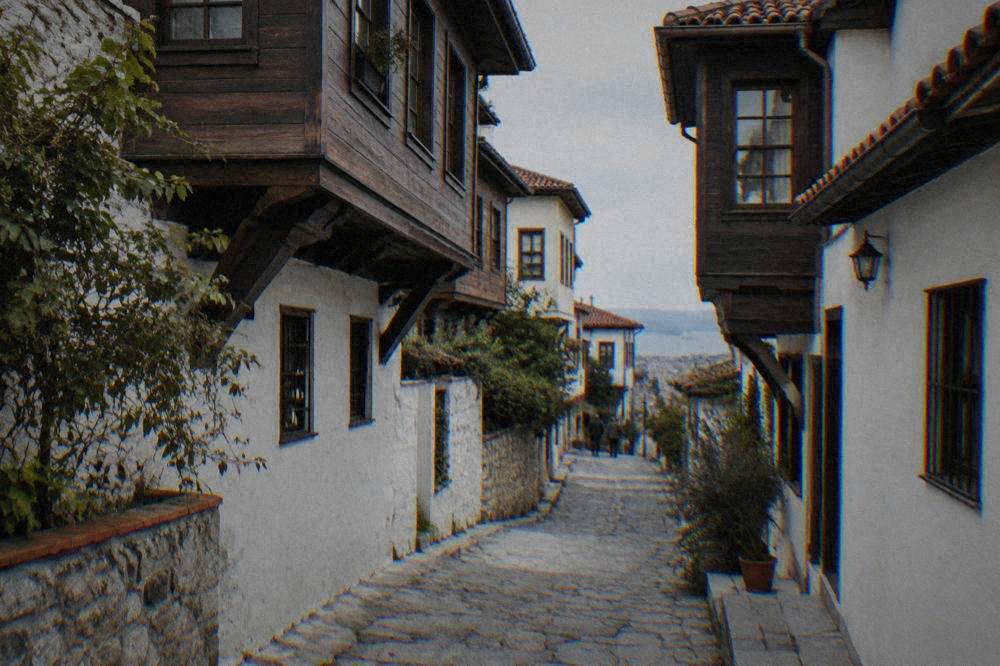
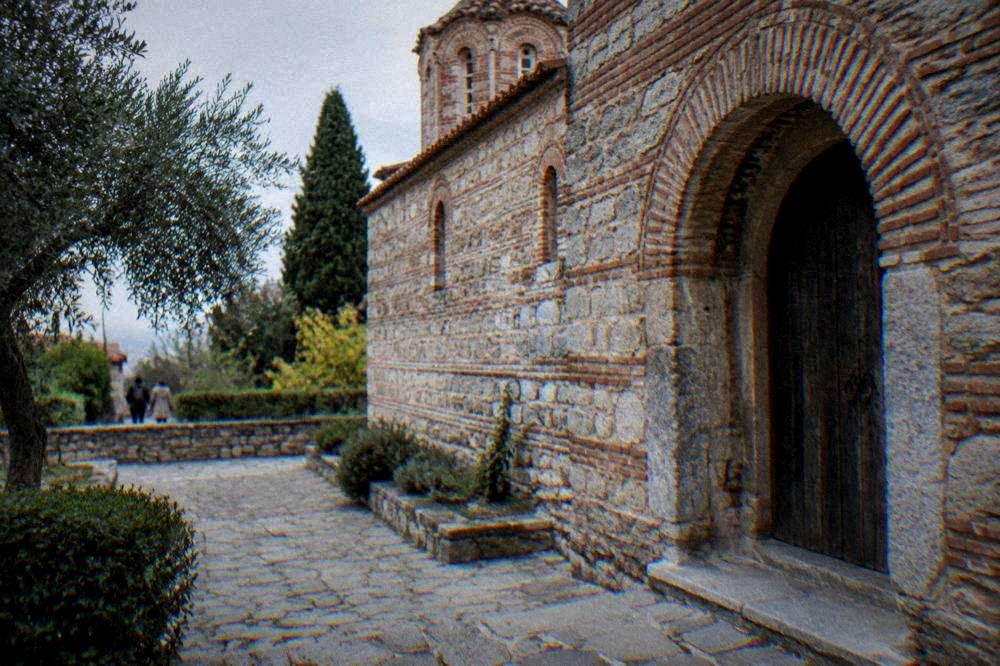
The building itself is small, built of rough stone and brick banding typical of the city's middle Byzantine churches, with a later narthex and a modest bell gable. Visitors come for one thing: the mosaic in the sanctuary vault, one of the rare survivals of early Byzantine mosaic in the city outside the Rotunda.
Why Is The Apse Mosaic Of Hosios David Famous?
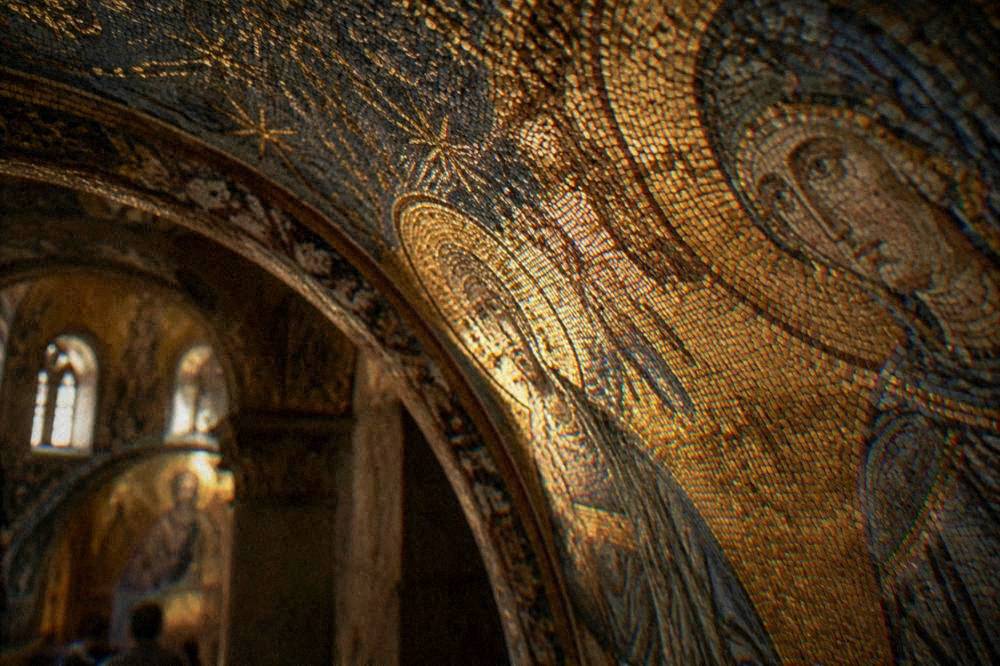
The apse mosaic of Hosios David is famous because it is one of the few early Byzantine mosaics to survive in place in Thessaloniki, concealed for centuries and revealed intact inside a working parish church rather than a museum. It is the object that puts a small neighbourhood church on the same UNESCO list as the Rotunda, and no other monument in Ano Poli carries comparable in-place mosaic work.
The story of the mosaic, as the standard accounts tell it, involves concealment: plastered over and forgotten, then uncovered in the modern period, a sequence that explains both its survival and its late fame. The concealing and uncovering belongs to the literature on the church rather than to the facts this site prints, but the result is visible on the wall. The mosaic fills the sanctuary vault with a figural programme in glass tesserae, and its condition, subject and execution are the reasons it is reproduced in every survey of Byzantine art that covers Greece.
To see the mosaic in context, the Museum of Byzantine Culture holds the city's systematic collection of icons, mosaics and wall paintings, with a full ticket at 10 euro and a reduced ticket at 5 euro, per the museum's own visiting page. Pairing the museum with Hosios David gives you the scholarship in the morning and the wall itself in the afternoon.
A guided walk is one way to reach the church with the history attached, and the site's featured Thessaloniki sights walking tour covers the upper town among the city's main monuments; you can also Check availability for your dates. For travellers who prefer to move at their own pace between the hill and the seafront, the options below work well too.
The mosaic rewards slow looking. Stand back toward the narthex and the figures hold the vault; move closer and the setting of the tesserae, the deliberate angles that catch lamplight, becomes visible. Photography rules in working churches follow the rule of the person in charge at the door, so ask before setting up a shot, and keep voices low during services. The church is small enough that a visit of ten quiet minutes covers it, which is exactly why it pairs so well with the walk through Ano Poli around it.
How Do You Get To Hosios David In Ano Poli?
Hosios David is reached on foot from the city centre by climbing into Ano Poli, the old upper town inside the Byzantine walls, roughly twenty to thirty minutes uphill from Aristotelous Square; the Thessaloniki Metro's Line 1, open since November 2024 with the Kalamaria extension since 27 August 2026, runs 05:15 to 00:30 Sunday to Thursday and 05:15 to 02:00 Friday and Saturday, with a basic ticket at 0.60 euro and a daily ticket at 2.50 euro per the metro's ticket page.
There is no station at the church door: Ano Poli is a hillside neighbourhood of lanes and steps, and the last stretch is always on foot. The practical approach is to take the metro to a central stop, walk up through the streets of the upper town, and come down again toward the Rotunda or the Arch of Galerius on Egnatia, both open-air monuments free to view, which turns the church into one leg of a loop rather than a dead-end climb. The metro's ticket page states the fares and the hours above; buy the daily ticket if you plan a second ride later in the day.
| Way Up To Ano Poli | What The Sources Say | Good For |
|---|---|---|
| On foot from Aristotelous Square | A steady uphill walk through the old streets; no published time for this exact route, allow a relaxed half hour | Combining the climb with the lanes themselves |
| Metro Line 1 to a central stop, then walk up | Open since November 2024; basic ticket 0.60 euro, daily 2.50 euro; hours 05:15 to 00:30 Sun to Thu, 05:15 to 02:00 Fri and Sat | Saving the legs for the upper town |
| Guided walking tour | The site's featured tour covers the city's main sights including the upper town | History on the way up |
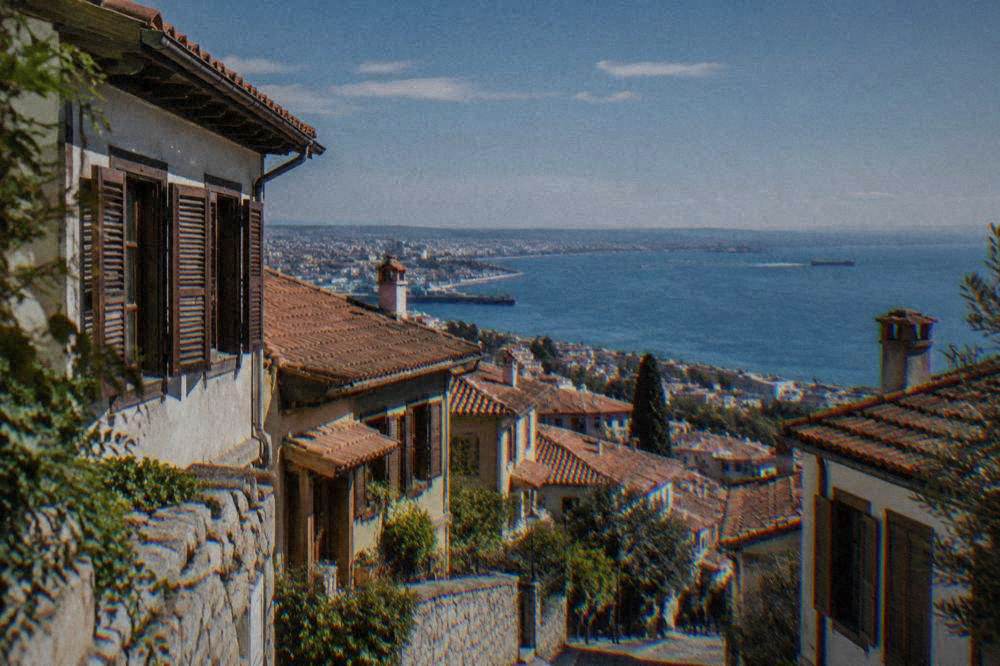
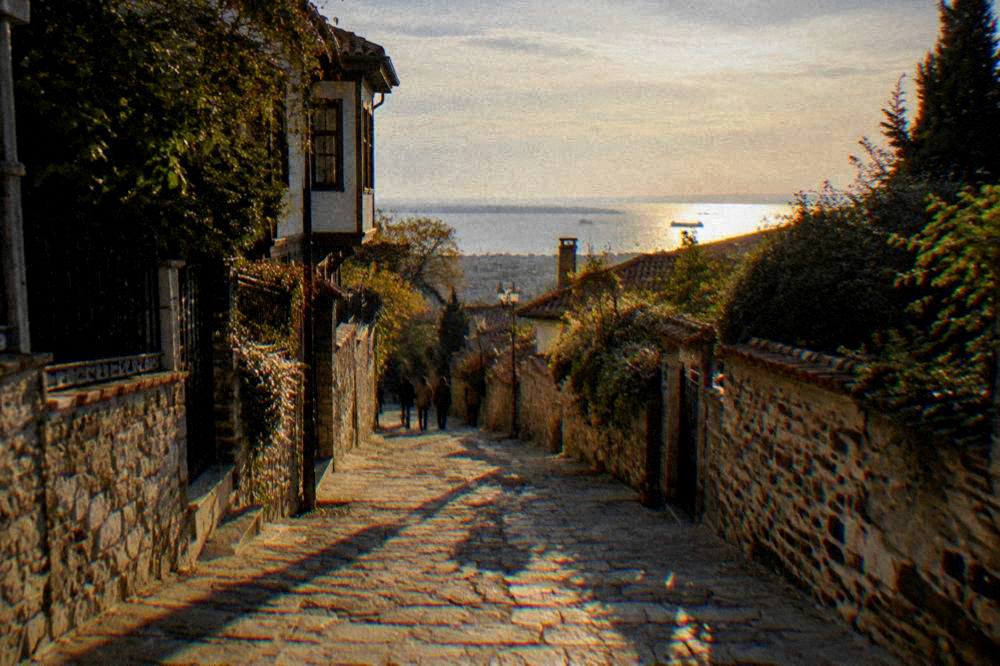
The climb itself is part of the point. The lanes of Ano Poli, covered in detail on the site's Ano Poli neighbourhood guide, run between houses with overhanging upper floors, small gardens and views opening suddenly over the Thermaic Gulf. Wear shoes with grip: the paving is worn, the gradient is real, and in the wet months the stones are slick. The site's two days in Thessaloniki itinerary places the upper town on the second morning for exactly this reason, after the flat centre has been done on day one.
Comfort matters when a day of walking is planned, and a bus tour that lets you hop on and off along the seafront is one way to save your legs for the hill.
What Can You See Inside The Church Of Hosios David?
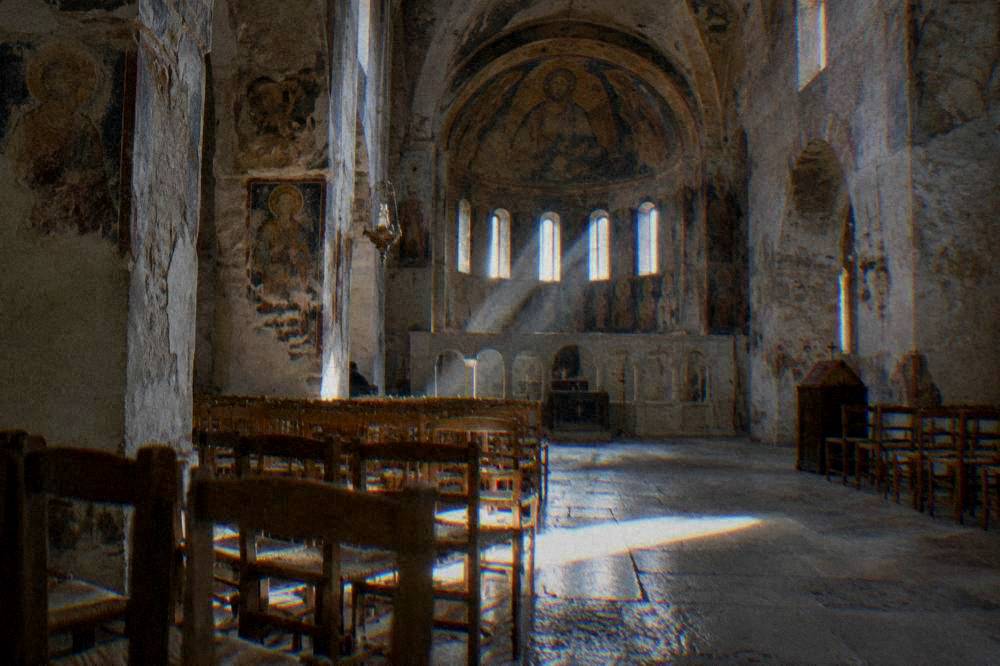
Inside Hosios David you see a single-nave Byzantine church interior, plain stone and brick at eye level, with the sanctuary vault carrying the mosaic that made the building famous; there is no ticket desk, no shop and no rope line, and the whole space is small enough to take in from the doorway. The interior is dim by design, lit from small windows, which serves the mosaic: the tesserae read differently through the day as the light moves, and late afternoon is when the gold tones warm up.
Beyond the vault, look for the fabric of the building itself. The banding of stone and brick, the proportions of the nave and the later additions around the core all tell the story of a church that has been in continuous use through the Ottoman centuries and the modern period.
For comparison, the state collections hold what the churches keep in place. The city's two great museums bookend any serious Byzantine day:
| Museum | Ticket | Hours (Per The Museum's Own Page) |
|---|---|---|
| Museum of Byzantine Culture | 10 euro full, 5 euro reduced | Daily 08:00 to 20:00 in summer; Mon, Wed to Sun 08:30 to 15:30 in winter |
| Archaeological Museum of Thessaloniki | 10 euro full, 5 euro reduced | 09:00 to 17:00 daily from 1 April to 31 October; closed Tuesday from 1 November to 31 March |
Free-admission days for state museums fall on 6 March, 18 April, 18 May, the last weekend of September and 28 October, per the Museum of Byzantine Culture's visiting page; entry is also free for EU citizens up to 25. None of this applies to Hosios David, which charges nothing on any day. The White Tower, the city's landmark on the seafront, costs 8 euro full and 4 reduced under the prices in force from 1 April 2026, if the seafront museum is on the same day's plan.
How Does Hosios David Compare With Thessaloniki's Other Byzantine Churches?
Hosios David is the smallest and quietest of Thessaloniki's UNESCO-listed Byzantine churches: free, unfenced and usually near-empty, where Hagia Sophia and the Church of Saint Demetrius are large working parishes in the flat centre and the Vlatadon Monastery sits higher still inside the walls. All five are free to enter and open outside services, and all five sit inside the same UNESCO inscription of 1988.
| Church | Where | What Distinguishes It |
|---|---|---|
| Hosios David (Hosios David) | Ano Poli, upper town | The sanctuary vault mosaic; the hidden, quiet one |
| Hagia Sophia | City centre | A great cross-in-square church, damaged in the Great Fire of 1917 and restored |
| Church of Saint Demetrius | City centre, near the Roman remains | The city's patron saint church; also damaged in the 1917 fire |
| Panagia Acheiropoietos | City centre | An Early Christian basilica plan in continuous use, per UNESCO's listing |
| Vlatadon Monastery | Ano Poli, highest of the group | A monastery inside the walls, the closest neighbour to Hosios David on the hill |
The honest comparison is about scale and setting, not quality. The Church of Saint Demetrius, covered on the site's Saint Demetrius page, and Hagia Sophia are monumental parishes with the weight of the city around them; Panagia Acheiropoietos holds a basilica plan of the earliest Christian period; the Vlatadon Monastery and Hosios David belong to the hill. If time allows only two churches, one from the flat centre and one from the upper town gives the fullest picture of what the UNESCO listing protects, and this pairing is exactly how the site's things to do in Thessaloniki overview structures a first visit.
A detail worth carrying: the Great Fire of 1917 devastated the centre of the city and left 73,000 people homeless, which is why the downtown churches carry so much restoration from the years after the fire, while the upper town, above the fire line, keeps an older street fabric. The 1978 earthquake added its own damage across the city. Seen together with the Heptapyrgion, a fortress that served as a prison until 1989, the hill reads as the layer of Thessaloniki the modern city grew up beneath. The rest of the planning pages sit on Thessaloniki Travel Guide.
What Else To See Around Hosios David In Ano Poli?
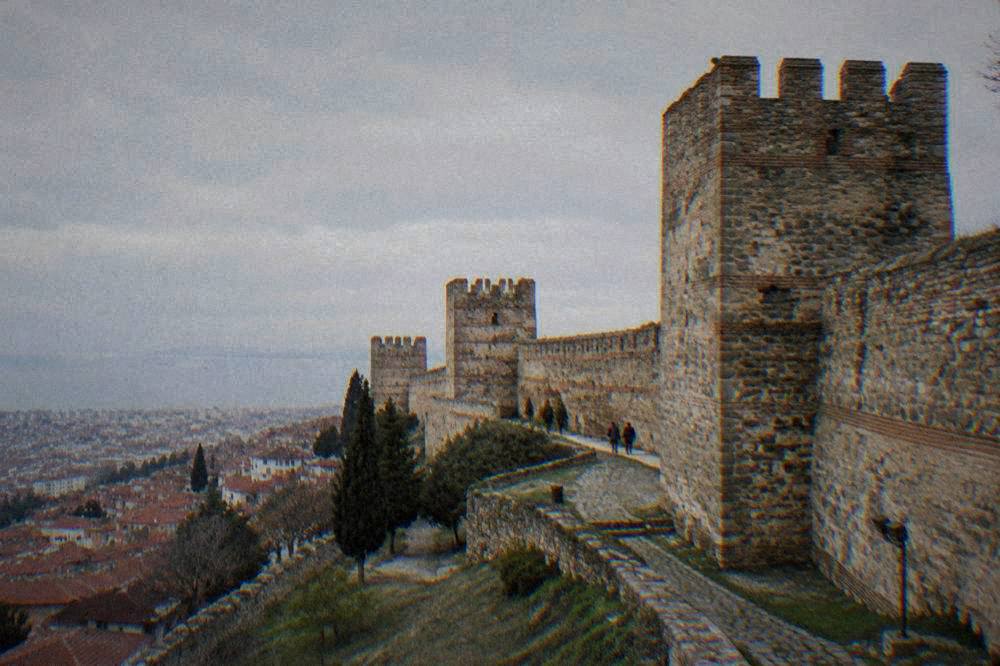
Around Hosios David, Ano Poli offers the Heptapyrgion fortress at the top of the walls, the Trigoniou Tower on the wall's eastern stretch, the Vlatadon Monastery, and a network of lanes with views over the Thermaic Gulf, all within a walk of the church and all free or open-air except where a state site charges entry. The upper town is compact: a loop from the church to the fortress and back down takes a relaxed morning, and every step of it is uphill first and downhill after.
| Ano Poli Sight | What The Sources Say |
|---|---|
| Heptapyrgion | The fortress at the acropolis; used as a prison from the late 19th century until 1989 |
| City walls | The original walls ran about 8 km; a visible part survives around the upper town |
| Trigoniou Tower | A standing tower on the wall walk, a landmark of the eastern walls |
| Vlatadon Monastery | A UNESCO-listed monastery church inside the walls |
| Eptapyrgio streets | Lanes of traditional houses, gardens and sudden gulf views |
The site's dedicated pages carry more on each: the Heptapyrgion, the Trigoniou Tower and the Vlatadon Monastery.
Coming down, two routes compete. The western descent drops toward the Ottoman and Roman layers of the lower town, past the Bey Hamam and the Roman Forum; the eastern descent follows Egnatia past the Arch of Galerius, a free open-air monument, to the Rotunda. Either way the walk ends on flat ground, which is the moment to consider how much of the day's eating should happen in one sitting. The city's food reputation is citywide, and a chef-led tasting walk is one structured way into it after a morning on the hill.
When Is The Best Time Of Day To Visit Hosios David?
The best time to visit Hosios David is late morning or mid to late afternoon in the warmer half of the year: the climb is cooler, the light inside the church favours the mosaic, and the lanes of Ano Poli are at their best before dusk, with mean highs of 24.6 C in May and 27.1 C in September per the HNMS Thessaloniki Mikra station, 1959 to 2010. No published hours exist for the church itself, so daylight is the only constraint the sources support.
The climate record for the city, from the HNMS Thessaloniki Mikra station, 1959 to 2010, gives the planning frame. July has the highest mean daily high at 31.7 C and January the lowest mean daily low at 1.5 C; December carries the highest monthly rainfall at 55.1 mm and August the lowest at 19.3 mm. For a walk that is entirely outdoors and uphill, the shoulder months are the comfortable ones.
| Month | Mean High C | Mean Low C | Rain mm |
|---|---|---|---|
| April | 19.1 | 7.9 | 36.1 |
| May | 24.6 | 12.6 | 44.2 |
| June | 29.4 | 17.0 | 29.8 |
| September | 27.1 | 15.4 | 29.8 |
| October | 21.2 | 11.3 | 43.0 |
Figures from the HNMS Thessaloniki Mikra station, 1959 to 2010.
In winter the same advice holds with different clothes: the hill is exposed, the mean low in January sits at 1.5 C, and the light inside the church is at its weakest. Rain days run 11.5 in January and 12.7 in December against 5.1 in August, on the same station record. Whenever you go, carry water for the climb, and note the emergency number for Greece is 112.
Is Hosios David Free To Visit In Thessaloniki?
Yes, Hosios David is free to visit: it is a working Orthodox church with no ticket, no published hours and no booking, open to visitors outside service times like the Church of Saint Demetrius, Hagia Sophia, Panagia Acheiropoietos and the Vlatadon Monastery.
That makes the upper town one of the best-value walks in Greece. The churches cost nothing, the walls and towers are viewed from public streets, and the two museums that charge, at 10 euro full and 5 euro reduced each, are optional bookends rather than entry requirements. The combined state-sites ticket is reported at about 15 euro full and 8 reduced, but that figure is a reported one: confirm it on the ticketing page before relying on it.
For travellers building the whole day around guided experiences rather than independent walking, the three options below cover the upper town, the city loop and the food scene, the three angles this page has taken in turn.
And if one guided experience is the budget, the walking tour is the one that reaches the hill itself.
Common Questions About Hosios David Thessaloniki
Is Hosios David the same as Hosios David?
Yes. Hosios David and Hosios David are two Latin spellings of the same church in Ano Poli, Thessaloniki, one of the fifteen UNESCO-listed Paleochristian and Byzantine monuments. This site uses Hosios David on its monument pages and Hosios David here, matching the spellings travellers search for.
What is Hosios David famous for?
Hosios David is famous for the mosaic in its sanctuary vault, one of the rare early Byzantine mosaics to survive in place in Thessaloniki. The church is part of the UNESCO World Heritage inscription of 1988 and is free to enter outside service times.
Do you need a ticket for Hosios David?
No. Hosios David is a working Orthodox church with free entry and no ticket desk. The city's state museums, including the Museum of Byzantine Culture at 10 euro full and 5 euro reduced, are the paid Byzantine experiences.
How do you get to Hosios David?
Walk uphill from the centre into Ano Poli, roughly a half hour from Aristotelous Square, or ride the metro (basic ticket 0.60 euro, daily 2.50 euro) to a central stop and climb from there. No metro station serves the upper town directly; the final stretch is on foot through the lanes.
What else is near Hosios David in Ano Poli?
The Heptapyrgion fortress, used as a prison until 1989, the Trigoniou Tower on the walls, and the Vlatadon Monastery are all within the same walk, along with lanes overlooking the Thermaic Gulf. See the site's Ano Poli guide for the full loop.
When is the best time to visit Hosios David?
Late morning or late afternoon in the warmer months, in daylight and outside service times. Mean highs reach 24.6 C in May and 27.1 C in September per the HNMS Thessaloniki Mikra station, 1959 to 2010, so the shoulder months make the climb most comfortable.