Is It Safe To Walk Around Thessaloniki At Night?
Is it safe to walk around Thessaloniki at night? A calm, source-based answer covering the seafront, Ano Poli, transport hours and the precautions that matter in Greece's second city.
Thessaloniki, the second city of Greece, sits on the Thermaic Gulf in Central Macedonia, and its rhythm runs late: dinner starts well after sunset in summer, the seafront promenade stays lit, and the metro runs past midnight.
Is It Safe To Walk Around Thessaloniki At Night?
Take the same precautions you would in any European city of this size, keep valuables out of back pockets, and check your own government's travel advice for Greece before you travel. The emergency number throughout Greece and the wider EU is 112.
That is the whole honest frame. What can be said with grounding is structural: the city centre is compact, the main promenade is a continuous lit walkway, and public transport runs late, all of which reduce the situations where a visitor walks alone through empty streets.
The Thessaloniki Metro's own pages state running hours of 05:15 to 00:30 Sunday to Thursday and 05:15 to 02:00 on Friday and Saturday, so on a weekend night the underground option exists until two in the morning. A basic ticket costs 0.60 euro and a 24-hour ticket 2.50 euro, per the metro's ticket page. That matters for night planning more than any anecdote: knowing the last train time tells you when you need to be heading back, and the same pages confirm the system is fully operational, with Line 1 open since November 2024 and the Kalamaria extension inaugurated on 27 August 2026.
For a fuller treatment of the same question in daylight terms, see Is It Safe To Travel To Thessaloniki Greece Right Now?, and for the districts worth knowing by name rather than by rumour, start with What Is The Nicest Neighborhood In Thessaloniki?.
Which Parts Of Thessaloniki Stay Busy After Dark?
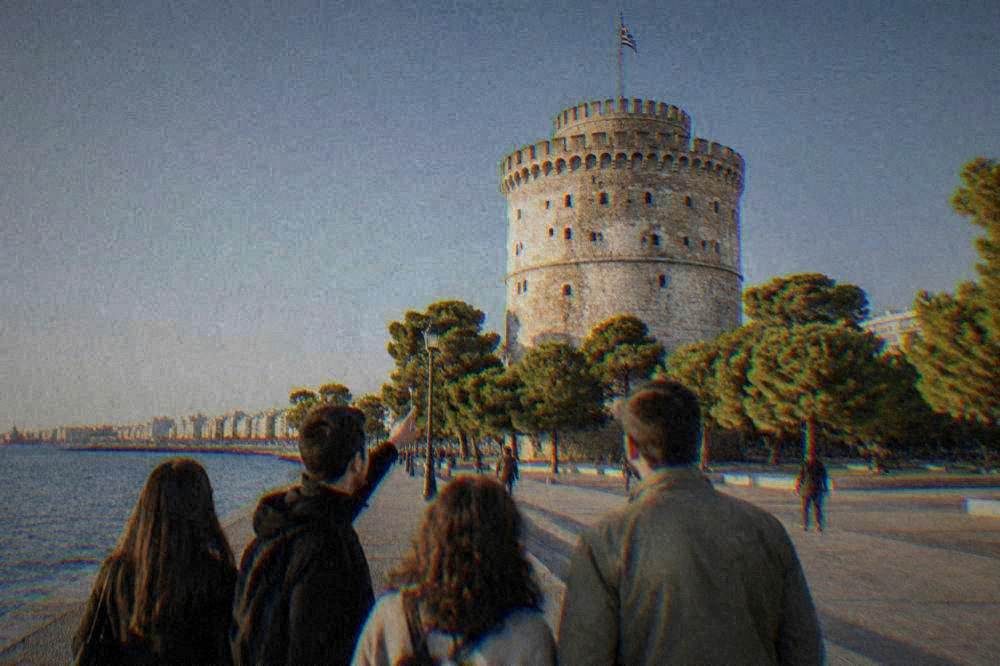
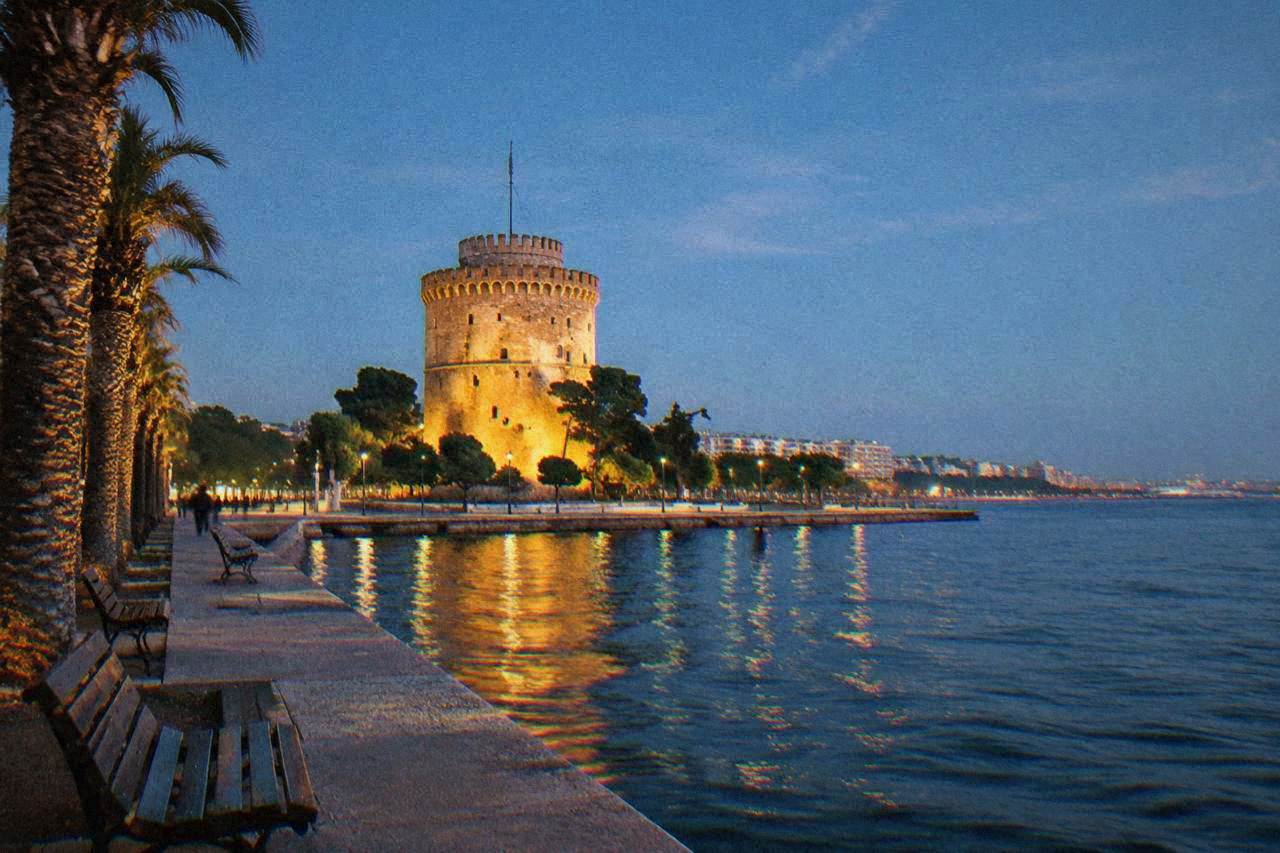
The busiest evening stretches are the Nea Paralia promenade along the Thermaic Gulf, Aristotelous Square at the centre, and the Ladadika district near the port, all of which host the city's late dining and bar life rather than emptying after dark. The White Tower, at the promenade's midpoint, stands lit as the city's landmark. No source supports labelling any named district safe or unsafe at night, so the practical rule is simple: walk where the restaurants and people are.
The Nea Paralia is a promenade, not a beach, and at night it functions as the city's shared front room. Because it is linear, continuous and lit along the water, it is the natural evening walk, ending or beginning at the White Tower. The layout itself does quiet-weather work: you are never far from a road, a cafe strip or other people walking the same route.
Inland, Aristotelous Square and the streets running off it toward Ladadika carry the evening crowd. Ladadika, the old commercial quarter by the port, is the named dining district, and the upper town of Ano Poli climbs away from it inside the Byzantine walls. Ano Poli's lanes are quieter after dark than the seafront, which is a statement about footfall, not about safety ratings, and visitors who want to see its walls and the Heptapyrgion in the same day often do so before sunset and come down to the lower city for dinner.
A guided walk is one way to learn this geography fast. A private walking tour with a local covers the main sights and hidden corners in one pass, and knowing which square connects to which street is exactly the knowledge that makes an evening stroll feel routine on day three.
How Does Late-Night Transport Work In Thessaloniki?
The metro runs from 05:15 to 00:30 Sunday to Thursday and until 02:00 on Friday and Saturday nights, per the Thessaloniki Metro's own site, with a basic ticket at 0.60 euro and a 24-hour ticket at 2.50 euro. Older guides still claim the city has no metro, which is out of date: Line 1 opened in November 2024 and the Kalamaria extension on 27 August 2026.
Beyond the last train, a taxi is the fallback, and the reported flat airport rate is about 25 euro by day.
The metro connects the New Railway Station, the centre and the Nea Elvetia end of the line, with the Kalamaria extension adding five stations out to Mikra. If your hotel sits near a station, your last-train arithmetic is straightforward; the schedule above is first and last departure from the terminals, so intermediate stations see slightly earlier final trains. The full index of guides sits on Thessaloniki Travel Guide.
For the bus and taxi layers the published record is thinner. The airport bus X1 flat fare is reported at about 2 euro and a day taxi from the airport at about 25 euro, both from secondary sources, so confirm before you rely on them. City bus fares and ride-hailing prices are not printed on this page because no official figure sits behind them.
| Transport | What the sources say | Hours or figure |
|---|---|---|
| Thessaloniki Metro | Own site, running hours | 05:15-00:30 Sun-Thu, 05:15-02:00 Fri-Sat |
| Metro basic ticket | Own ticket page | 0.60 euro single, 2.50 euro for 24 hours |
| Airport bus X1 | Reported fare, confirm locally | About 2 euro flat |
| Taxi, airport to centre by day | Reported rate, confirm locally | About 25 euro |
| Emergency number | EU-wide | 112 |
Getting around the city in general, including the metro, airport buses and the KTEL intercity stations, is covered in detail in Getting Around Thessaloniki.
What Precautions Make Sense On A Night Walk In Thessaloniki?
The precautions that matter are the ordinary ones for any European city: keep phones and wallets out of back pockets, carry only what you need for the evening, agree taxi terms or use a meter, save the 112 emergency number, and check your own government's current travel advice for Greece before the trip. No published source names pickpocket hotspots or scam patterns specific to Thessaloniki, so this page invents none, and the reported tourist information line at Aristotelous Square is +30 2310 229070, worth confirming on arrival.
Season changes the texture of a night walk more than any other variable. In July the mean daily high is 31.7 C, per the HNMS Thessaloniki Mikra station record, 1959 to 2010, and the city legitimately comes alive after dark, with the promenade at its fullest once the heat breaks. In January the mean nightly low drops to 1.5 C on the same station record, and the same streets empty early, which is a reason to plan a shorter loop and know your last train time, not a safety verdict on the city.
| Month | Mean high C | Mean low C | Night-walk reading |
|---|---|---|---|
| January | 9.3 | 1.5 | Cold evenings, wrap up, shorter walks |
| April | 19.1 | 7.9 | Mild evenings, comfortable walking |
| July | 31.7 | 19.3 | Heat breaks after sunset, busiest nights |
| October | 21.2 | 11.3 | Pleasant evenings, festival season |
All four rows come from the same HNMS Thessaloniki Mikra station table, 1959 to 2010, a weather-station record rather than a forecast. December carries the highest monthly rainfall in that record at 55.1 mm and August the lowest at 19.3 mm, so winter nights are likelier to be wet as well as cold, and a rain plan beats an umbrella debate at midnight.
Events also shift the streetscape. The Thessaloniki International Film Festival, whose 67th edition runs 5 to 15 November 2026, fills the centre with evening screenings and crowds, and Saint Demetrius day on 26 October, the city's patronal and liberation day, brings a public holiday and festivities. Busy festival nights mean fuller streets and later activity, which cuts both ways for a visitor: company on the pavements, and longer waits for a taxi afterward.
Should You Take An Evening Tour Instead Of Walking Alone?
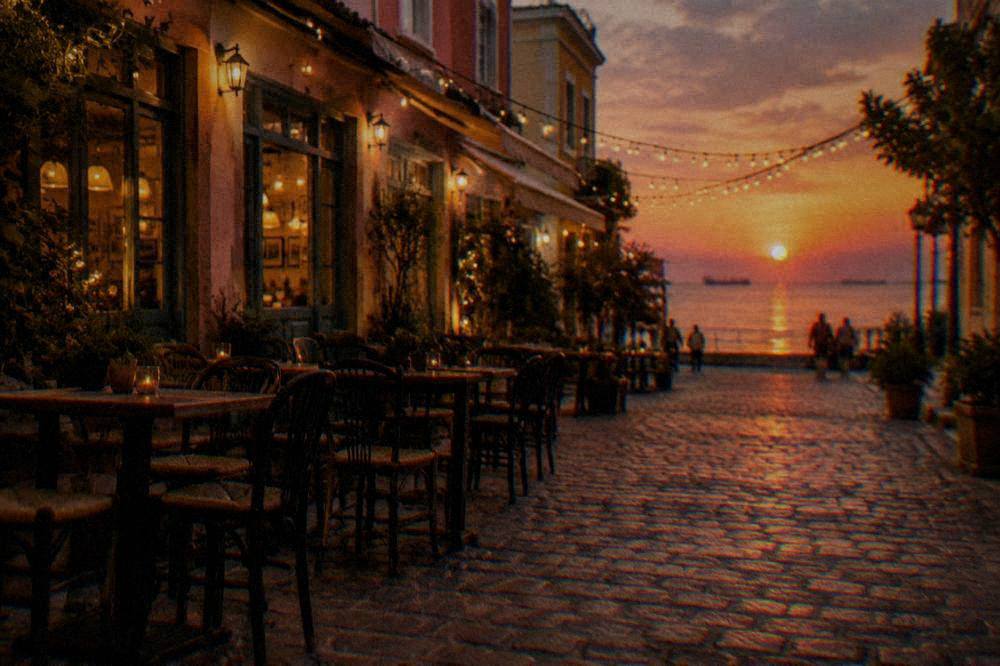
An evening or late-afternoon tour is a reasonable way to see the city at night without doing your own route-finding, and Thessaloniki has options that run into the evening hours, including a private walking tour with a local, a street food tour with a local guide and a hop-on hop-off sightseeing bus ticket.
This is not a claim that a tour is safer, since no source supports that comparison. It is a practical observation: a guided evening walk hands the route, the timing and the local judgement to someone who knows the city, which is appealing on a first night or a solo trip. A food-focused evening tour has a second advantage, because it ends in the districts where dinner crowds are thickest, which is where the lit, populated streets are.
If your evening plans lean toward food rather than sights, read What Food Is Thessaloniki Famous For? first, then decide whether a guided tasting route or your own restaurant wandering suits you better. For the daylight half of the trip, Thessaloniki Walking Tour on this site lays out the same streets in the morning light.
Common Questions About Walking Around Thessaloniki At Night
Is It Safe To Walk Around Thessaloniki At Night?
The centre, seafront and dining districts stay busy late, the metro runs until 00:30 on weekdays and 02:00 on weekend nights, and the standard European-city precautions apply. Check your own government's travel advice before travelling.
Is Thessaloniki well lit at night?
The main promenade, the Nea Paralia, is a continuous lit seafront walk, and the commercial centre around Aristotelous Square carries normal city street lighting. No source on this page publishes a lighting survey by district, so treat any street-by-street claim elsewhere with caution.
What time does the Thessaloniki Metro stop at night?
Per the Thessaloniki Metro's own site, the hours are 05:15 to 00:30 Sunday to Thursday and 05:15 to 02:00 on Friday and Saturday, counted from first and last departures at the terminals. A basic ticket is 0.60 euro and a 24-hour ticket 2.50 euro.
Are there areas of Thessaloniki to avoid at night?
Walk where the evening crowds and lit shopfronts are, keep to the promenade and main squares late, and read the calmer discussion in the related question on areas in Thessaloniki.
What is the emergency number in Thessaloniki?
112, the EU-wide emergency number, works throughout Greece. A tourist information centre at Aristotelous Square is reported at +30 2310 229070, though that line should be confirmed on arrival as it comes from a secondary source.
Do I need to worry about walking back to my hotel after dinner?
Plan the walk the way you would in any unfamiliar city: know the distance before you order a second carafe, check the last metro time if your hotel is near a station, and keep a taxi as the fallback. In July and August the streets fill late, per the city's dining rhythm, while from November to March they quiet down earlier, so the same walk feels different by season.
The short version, supported by everything the sources do publish: Thessaloniki is a compact, late-night, coastal city with a lit promenade, a metro that runs past midnight, districts that stay animated after dark, and an emergency number, 112, that works everywhere in Greece. Walk with the ordinary precautions, keep an eye on the last train, and enjoy the White Tower lit against the Thermaic Gulf.