Is It Safe To Travel To Thessaloniki, Greece Right Now?
A calm, sourced answer on safety in Thessaloniki: emergency numbers, transport, weather, health care and day-trip logistics, written by the Thessaloniki Travel Guide editorial desk.
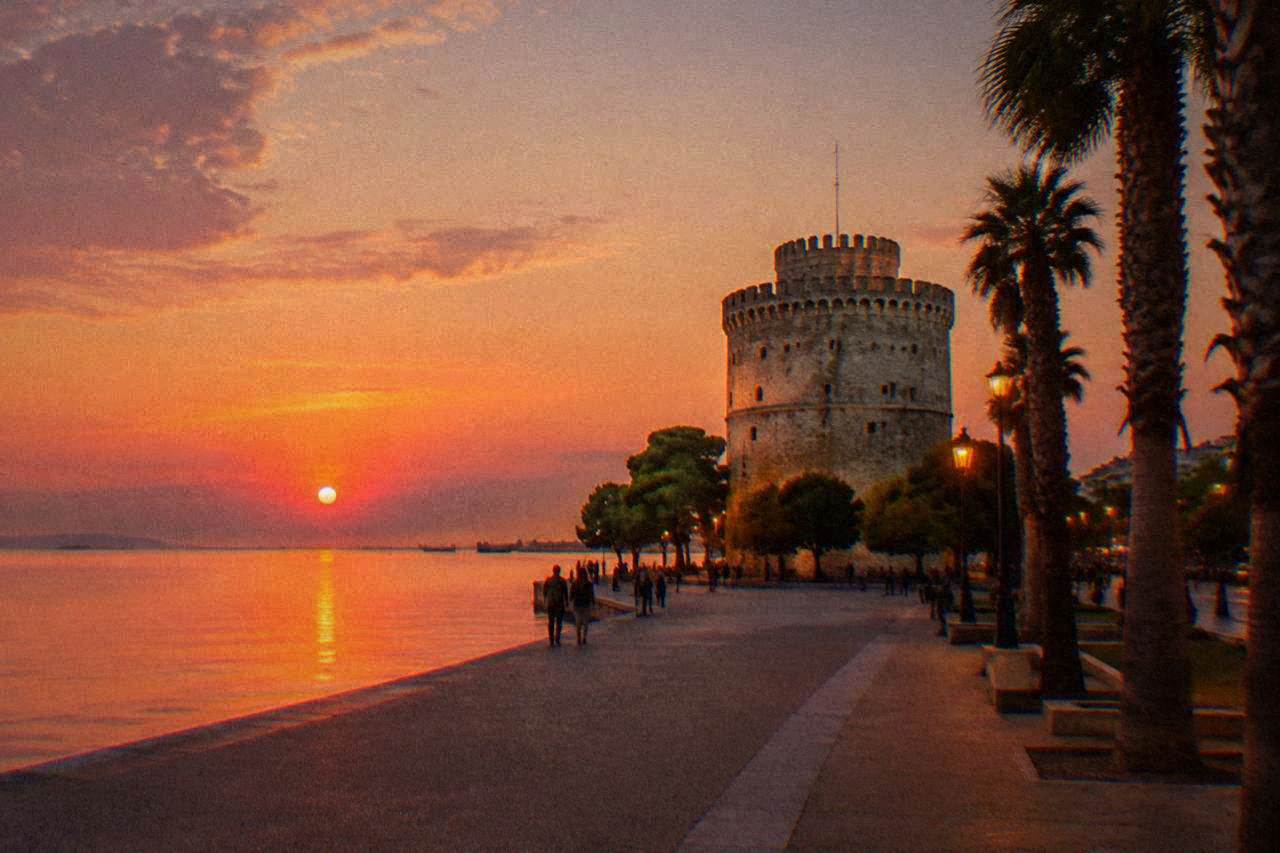
Thessaloniki, the second city of Greece, sits on the Thermaic Gulf in Central Macedonia, a coastal city of more than a million people in the wider urban area, with the White Tower on its seafront promenade and fifteen UNESCO-listed Paleochristian and Byzantine monuments inside its borders. Travellers asking whether it is safe to visit right now deserve a straight, sourced answer rather than a mood. This page reports what primary sources say: the EU-wide emergency number, the metro operator's own published hours and fares, the HNMS weather-station record, and the practical structures, from Schengen membership to the tourist information centre on Aristotelous Square, that shape a visit.
Is It Safe To Travel To Thessaloniki, Greece Right Now?
Thessaloniki is a functioning European city inside Greece, a Schengen member since 2000 and a euro-country since 2001, with the EU-wide emergency number 112 in force, an open metro running from 05:15 to 00:30 Sunday to Thursday, and a tourist information centre reported on Aristotelous Square. Nothing in the primary sources marks the city out as anything other than a normal destination for the usual city precautions. What the sources do give is structure: an emergency number, a published transport system, hospitals, and stable weather patterns, and that structure is what this page reports.
Greece is in the Schengen area; there is no hedging on that. Visitors from other Schengen states move without internal border checks, and the country has used the euro since 1 January 2001, with notes and coins from 2002. Thessaloniki itself, founded 315 BC by Cassander and liberated on 26 October 1912, is the second city of Greece, and the municipal gastronomy site describes a wider urban area of more than a million people. A city of that scale has the full apparatus of a national second city: a metro, an international airport, a working port and a dense city bus network.
The honest answer to "right now" is also a process answer. Check your own government's travel advice before booking, because that is the channel governments use for live security and weather information, and this site does not duplicate or paraphrase it. Then apply the same precautions you would apply in any European city of comparable size: keep valuables out of back pockets, watch belongings in crowds, and save 112 in your phone before you need it. For a broader view of what the city offers, see things to do in Thessaloniki, and for the value question, is Thessaloniki worth visiting?.
How Do You Get Help In An Emergency In Thessaloniki?
The emergency number in Thessaloniki is 112, the standard EU-wide number that reaches police, fire and ambulance anywhere in Greece, and it is free to call. A tourist information centre is reported at Aristotelous Square, the central square of the city, at +30 2310 229070, though this figure is reported rather than confirmed on an official page, so confirm it before you rely on it. For everything else, the structures are ordinary: Greece has a public health system, European Health Insurance Card holders access it on the same terms as Greek citizens for necessary care, and travel insurance covers what the card does not.
Dial 112 from any phone, including a foreign SIM roaming in Greece; the operators handle calls in multiple languages and route them to the correct service. This is the single most useful number to save on arrival, and it works identically in every EU member state.
The table below gathers the practical contacts and systems this page can ground from its sources. Anything not in it should be confirmed locally.
| Service | What the sources say | Notes |
|---|---|---|
| Emergency number | 112, EU-wide, free | Police, fire and ambulance |
| Tourist information centre | Reported at Aristotelous Square, +30 2310 229070 | Reported figure, confirm before relying on it |
| Health care | Greek public system; EHIC accepted for necessary care | Travel insurance covers the rest |
| Money | Euro only, since 2002 in cash | No border checks within Schengen |
| Metro | Open, 05:15 to 00:30 Sun to Thu, 05:15 to 02:00 Fri and Sat | Per the Thessaloniki Metro's own site |
One thing worth planning in advance: pharmacies in Greek cities operate on rota hours for evenings and Sundays, and the rota is posted on pharmacy doors and in local listings. Confirm the nearest one to your accommodation when you check in, the same way you would note the nearest clinic.
A guided walk is a practical way for a first-time visitor to get oriented, learn the geography between Ano Poli and the seafront, and pick up local pointers. The Old Town walking tour with mythology and botany covers the upper town inside the Byzantine walls with a local guide. For more on the city after dark, read is it safe to walk around Thessaloniki at night?.
Is Public Transport In Thessaloniki Safe And Working?
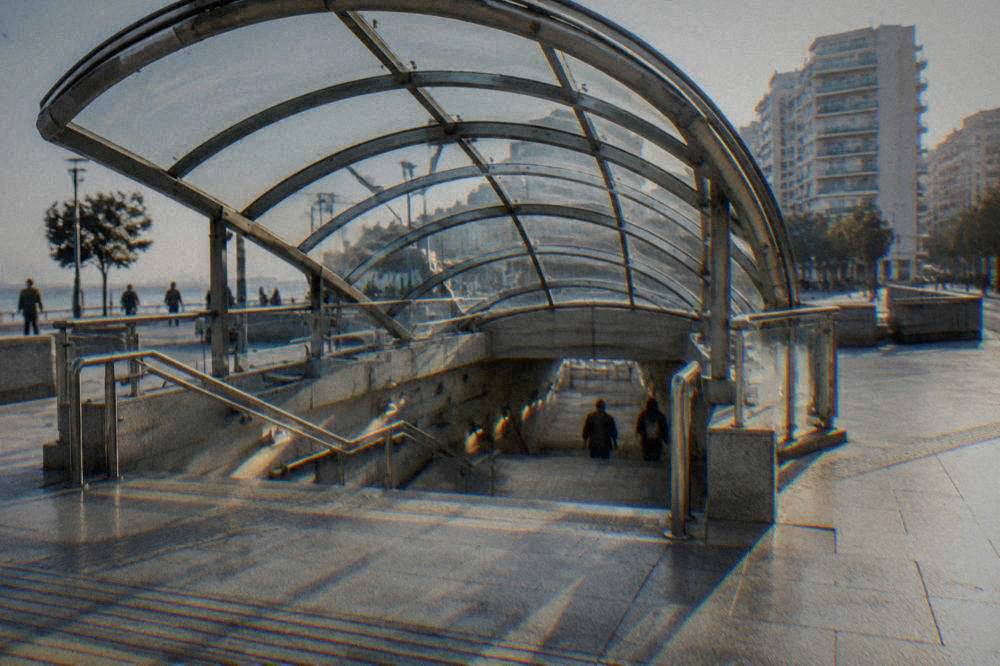
The Thessaloniki Metro is open and running: Line 1 opened in November 2024, the Kalamaria extension was inaugurated on 27 August 2026, and the operator's own site publishes hours of 05:15 to 00:30 Sunday to Thursday and 05:15 to 02:00 Friday and Saturday, with a basic ticket at 0.60 euro and a daily ticket at 2.50 euro. Older guides that claim the metro is unfinished or "coming soon" are simply out of date. The airport, Thessaloniki "Makedonia" (SKG), is about 16 km and 20 minutes by road from Aristotelous Square, with airport bus lines X1, X2, X3 and N1 listed by the city bus operator.
For the airport transfer itself, the operator's page lists the bus routes above, and a day taxi fare of about 25 euro is reported in secondary sources, so confirm the fare with the driver before setting off. Cruise passengers have a dedicated option as well: the shore excursion with port pickup covers the city's headline sights with the logistics handled. The operator's live listing carries the current price and availability.
The metro's own ticket page states the basic single fare of 0.60 euro, a reduced fare of 0.30 euro, and the 2.50 euro daily ticket valid for 24 hours of unlimited metro travel. Buy tickets at station machines, and validate them as instructed on site.
Beyond the metro, KTEL intercity buses run from the Macedonia station toward Halkidiki, Vergina, Edessa and the wider north, and Hellenic Train serves routes including Athens, Larissa, Litochoro, Veria and Edessa. Timetables change seasonally, so check the operator's own pages for the day you travel. If your question is really about the city's shape on foot, is Thessaloniki a walkable city? covers the distances between the White Tower, Aristotelous Square and Ano Poli.
| Transport fact | Figure | Source basis |
|---|---|---|
| Metro Line 1 opening | November 2024 | Metro operator's own press release |
| Kalamaria extension | Inaugurated 27 August 2026, five stations | Metro operator's own press release |
| Metro hours | 05:15 to 00:30 Sun to Thu; 05:15 to 02:00 Fri and Sat | Metro operator's site |
| Metro fares | 0.60 euro single; 2.50 euro daily | Metro ticket page |
| Airport to centre | About 16 km, about 20 minutes by road | Computed road routing |
What About Weather, Earthquakes And The Sea In Thessaloniki?
Thessaloniki has a Mediterranean climate with continental edges: HNMS Thessaloniki Mikra station, 1959 to 2010, shows a July mean high of 31.7 C, a January mean low of 1.5 C, and annual rainfall of 444.5 mm, with December the highest monthly total at 55.1 mm and August the lowest at 19.3 mm. The city sits in a seismic region: the 1978 earthquake, on 20 June, killed 49 people and damaged buildings, and modern Greek buildings are built to seismic codes. Swimming is not done at the city waterfront; the Nea Paralia is a promenade, and beaches are at Perea, about 28 minutes by road, Agia Triada or Epanomi.
The earthquake of 1978 is part of the city's history rather than a live warning, but it explains why building codes here are seismic, as across Greece, and why older visitors may hear about it. Nothing in the sources supports a prediction or a risk ranking, and none is offered. Practical preparation is the same as for any southern European city in summer: water, shade in the middle of the day in July and August, and a check of your government's advice during any named heat event, which is the channel that carries official heat warnings. The full index of guides sits on Thessaloniki Travel Guide.
The sea matters to safety in one specific way: the Thermaic Gulf waterfront in the centre is for walking, not swimming, and visitors who want to swim travel out to Perea (about 23 km by road), Agia Triada or Epanomi (about 36 minutes). The monthly sea temperatures are research-only on this site and are not printed. For the beach question in full, see does Thessaloniki have nice beaches?.
Weather rarely disrupts a visit structurally. Rain days run 5.1 per month in August against 12.7 in December, per HNMS, and the city functions year-round, with indoor options from the Archaeological Museum (10 euro full, 5 euro reduced, per its own hours page) to the Museum of Byzantine Culture. If rain is on your forecast, the question of how many days is enough for Thessaloniki helps you size the trip.
Are Day Trips From Thessaloniki Safe To Book?
The Mount Athos question has one hard rule: entry to Athos requires a permit (a diamonitirion) and is men only, and the cruise from Ouranoupoli views the coast from the sea and does not land. The operator's listing for any booked trip carries its cancellation terms. Meteora's distance is the number travellers most often underestimate. Kalambaka is about 228 km away, so the visit is a full day even with a driver or an organised bus.
Per-monastery entry prices and each monastery's weekly closure day are reported by monastery-focused sites rather than confirmed on official pages here, so check the current details before you go and carry cash for the monasteries. A booked bus trip, such as the full-day Meteora excursion, handles the driving and the timing. For Mount Athos, the facts to hold onto are simple. Entry is a permitted, men-only pilgrimage arranged through the Pilgrims' Bureau, reportedly months ahead. The boat from Ouranoupoli, about 139 minutes by road from the centre, sails past the monastic coast for viewing from the water, women and men alike, and does not land. Ouranoupoli also sits at the top of Halkidiki, so the trip can combine with the Kassandra or Sithonia peninsulas, compared in which is better, Kassandra or Sithonia?. Road conditions on these routes are ordinary national roads, and in winter the mountain routes, including Mount Olympus at Prionia, about 86 minutes out, can carry snow; the question does Thessaloniki get snow? covers the city side of that. Book day trips with operators whose listings state pickup points and cancellation policies, read the terms, and confirm winter departures before paying, since mountain access is seasonal.
Should You Change Any Plans For Thessaloniki?
No plan needs changing on safety grounds: the metro runs, the emergency number is 112, the museums publish their hours and prices on their own pages, and the city hosts major annual events such as the 67th Thessaloniki International Film Festival from 5 to 15 November 2026 without structural disruption.
The adjustments worth making are practical, not defensive: confirm museum tickets online, note that a climate resilience fee is collected by accommodation per room per night and is higher from April to October, and allow a full day for Meteora.
State museums are free on 6 March, 18 April, 18 May, the last weekend of September and 28 October, per the Museum of Byzantine Culture's visiting page, which is useful for budgeting rather than safety. The city's calendar, from the International Fair in September to Saint Demetrius day on 26 October and Ochi Day on 28 October, brings crowds and parades to the centre; these are civic events, and planning around them is about hotel availability and traffic rather than risk.
Check your government's travel advice and the transport operators' own sites in the days before you travel, and treat anything announced after this page was written as a live matter for those channels, not for a destination guide.
Common Questions About Safety In Thessaloniki
Is it safe to walk around Thessaloniki at night?
The general answer is the usual one for a European city of this size: stick to lit, busy streets, keep phones and wallets out of back pockets, and use the metro, which runs until 00:30 Sunday to Thursday and 02:00 Friday and Saturday, for longer cross-town legs.
What areas should I avoid in Thessaloniki?
Use your own government's travel advice for live guidance, and apply the standard city precautions anywhere you go. The neighbouring districts of the centre, from Ladadika to Ano Poli to Kalamaria, are ordinary residential and leisure areas.
What is the emergency number in Thessaloniki?
112, the EU-wide free emergency number, reaches police, fire and ambulance. A tourist information centre is reported at Aristotelous Square at +30 2310 229070, though that figure is reported rather than confirmed, so double-check it on arrival.
Is the tap water drinkable, and do I need insurance?
This site prints no tap-water verdict for Thessaloniki, because none is confirmed in its sources; ask your accommodation or rely on bottled water. For health care, Greece's public system serves European Health Insurance Card holders for necessary care, and travel insurance covers what the card does not, so carry both.
Is the Thessaloniki Metro safe to use?
The metro is open and running: Line 1 since November 2024, with the Kalamaria extension inaugurated on 27 August 2026. The operator's own site publishes the hours (05:15 to 00:30 Sunday to Thursday, 05:15 to 02:00 Friday and Saturday) and the fares (0.60 euro single, 2.50 euro daily). Take the same care with belongings you would on any busy city metro.
Are there any health or weather risks I should plan for?
Plan for heat and sun in July and August, when the HNMS Thessaloniki Mikra station record, 1959 to 2010, shows mean highs above 31 C, and for rain in late autumn and winter, with December averaging 55.1 mm. Official heat and storm warnings are issued through government channels, so check your own travel advisory while you are on the road.