Thessaloniki To Sofia And Skopje: Bus And Train
Sofia lies about 294 km and Skopje about 228 km by road from Thessaloniki, and both are reachable by intercity coach, with train options confirmed on the operators' own sites before travel.
Short answer
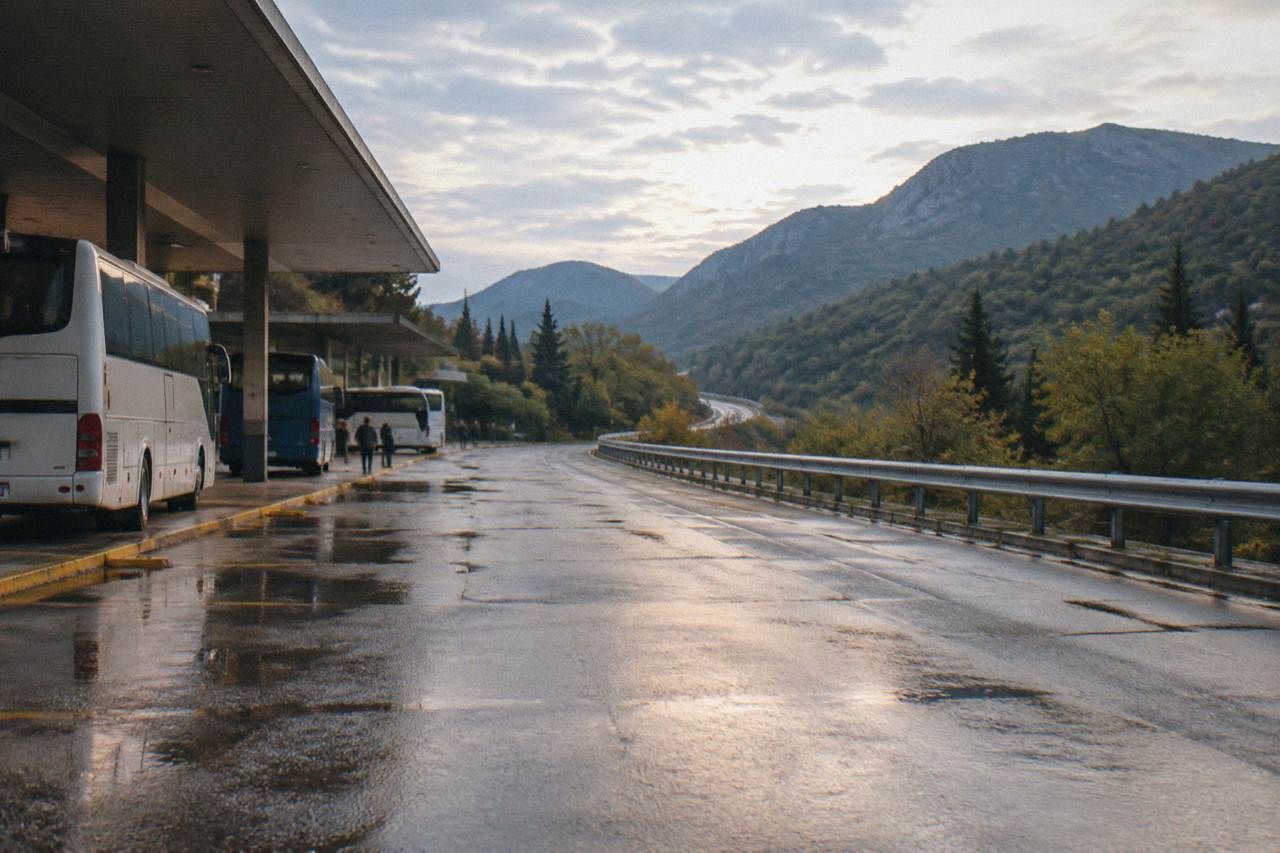
Sofia is about 294 km and about 221 minutes by road from Thessaloniki, and Skopje about 228 km and about 173 minutes, both computed over free-flow routing. Intercity coaches run from the KTEL Macedonia station; coach times, fares and border waits are confirmed directly with the operator before travel.
Thessaloniki sits in Central Macedonia, on the Thermaic Gulf, and it is the natural Greek base for pushing north: two neighbouring capitals, Skopje and Sofia, both sit within a long day's reach by road. The road distance from Aristotelous Square to Sofia is about 294 km, computed over free-flow routing, and to Skopje about 228 km, which is, by a striking coincidence, almost the same road distance as Meteora in the opposite direction. Both journeys cross an international border, so both need a little more planning than a trip to Vergina or Pella. This guide sets out what the operators' own pages and the computed road data support: distances, hubs, and the practical questions that come up before a cross-border trip.
How Far Is Sofia From Thessaloniki?
Sofia is about 294 km from Thessaloniki by road, about 221 minutes of free-flow driving from Aristotelous Square, computed over standard routing with no traffic, no stops and no border check. Real journeys take longer, because this route crosses an international border with passport and customs checks. The free-flow figure is a planning baseline, not a promise. Anyone comparing it against a coach timetable should add generous margin for the border and for rest stops.
The 294 km figure comes from route computation over the road network, the same method this site uses for every distance it prints. It makes Sofia the longest of the three big northbound options from Thessaloniki. Kastoria, inside Greece, is about 193 km and about 130 minutes; Skopje, the first capital across the border, is about 228 km and about 173 minutes. Sofia is about 294 km and about 221 minutes free-flow.
That distance puts Sofia in a different category from the standard Greek day trips. Vergina is about 62 minutes from the centre, Pella about 43, and even Meteora, a full day at about 154 minutes, stays inside Greece with no border at all. Sofia is doable as a very long day trip by car, but it rewards an overnight. Skopje sits in between, closer, but still carrying the border overhead.
How Do You Travel From Thessaloniki To Sofia?
The supported routes from Thessaloniki to Sofia are the intercity coach, departing from the KTEL Macedonia station on Giannitson street in Menemeni, about 4 km from the centre, and travel by road, a distance of 294 km, about 221 minutes free-flow; confirm coach timetables, fares and journey durations directly with the operator before travel.
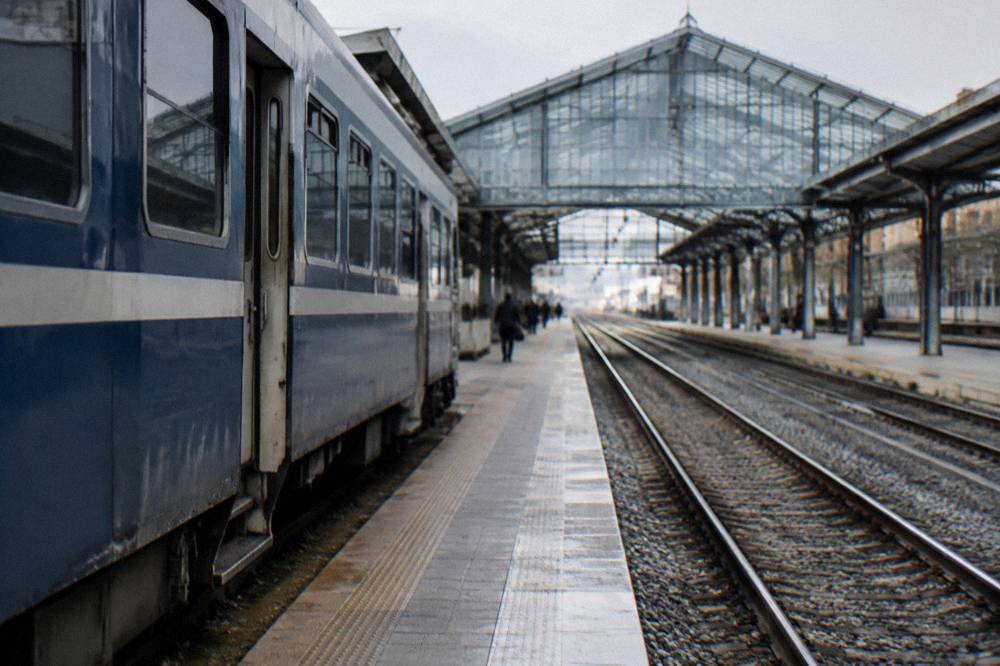
The KTEL Macedonia intercity station is on Giannitson street in Menemeni, about 4 km from the centre, a detail confirmed from the station data and the operator's route listings. It is the same station that serves the northern Greek intercity network, and the practical guide to the Thessaloniki bus station covers how to reach it. Hellenic Train serves Athens to Thessaloniki and the northern Greece routes, including Larissa, Litochoro, Katerini, Veria, Edessa and Florina, and its own site carries the timetables; the sources used here publish no train journey time or fare for any Sofia or Skopje leg, so nothing is printed.
Driving is the third option, and the one where the computed data is strongest: 294 km, about 221 minutes free-flow. The route leaves Greece and enters Bulgaria, which joined the Schengen area in full on 1 January 2025, the same area Greece belongs to. A rental car adds the cross-border permission question, which is always checked with the rental company in advance; the site's Thessaloniki car rental guide sets out the rental basics, and no hire rate or toll figure is printed anywhere on this site.
How Far Is Skopje From Thessaloniki And How Do You Get There?
Skopje is about 228 km from Thessaloniki by road, about 173 minutes of free-flow driving from Aristotelous Square, and the practical route is the intercity coach from the KTEL Macedonia station or a drive north across the border into North Macedonia. The road distance to Skopje is, to within half a kilometre, the same as the road distance to Meteora, about 227.5 km, though Meteora takes about 154 minutes because its road is faster. Skopje's free-flow figure is slower for the same distance, which tells a planner a lot about the road quality on the northern route.
The border between Greece and North Macedonia means a passport check in both directions, since leaving Greece means leaving the Schengen area and entering a non-Schengen state. Coach journey times and fares for the Skopje route are likewise confirmed directly with the operator.
For orientation before departure, the Skopje day trip guide and the Sofia day trip guide cover each capital's own picture. A useful framing for the journey north: Skopje is closer than Sofia by about 66 km of road, and it is also the route most of the Sofia coaches take, so a traveller heading to either capital is looking at the same road out of Thessaloniki for its first stretch.
Before a long northbound day, the seafront stretch of Thessaloniki deserves its own half-morning, and the open-air sights along the Nea Paralia, the White Tower and the Arch of Galerius are all free to view from the street. The Arch of Galerius is an open-air monument on Egnatia street, and the White Tower's own visiting page lists a full ticket of 8 euro and a reduced ticket of 4 euro, prices in force from 1 April 2026, with summer hours of 08:00 to 21:00 daily.
Do You Need A Visa Or A Different Currency For Skopje And Sofia?
Greece is a Schengen member and uses the euro, and both Skopje and Sofia lie outside Greece, so each trip involves an international border with passport checks, and the entry requirements and local currency of North Macedonia and Bulgaria are confirmed on official sources before departure. The emergency number 112 works across the European Union, including Greece; the equivalent numbers for each destination country are confirmed locally. What this guide states with confidence is the Greek side: Schengen membership, never hedged, and the euro since 2001.
The currency question matters more than travellers expect. The euro does not cross the border with you: neither destination is Greece, and each has its own currency and its own rules, so cash plans and card acceptance are checked for the destination, not assumed from the Greek side of the border. Build slack into any same-day return.
For the Greek leg of any plan, the practical layer is well documented. The metro runs from 05:15 to 00:30 Sunday to Thursday and 05:15 to 02:00 Friday and Saturday, with a basic ticket of 0.60 euro and a daily ticket of 2.50 euro, per the Thessaloniki Metro's own ticket page. The full picture is in the Thessaloniki metro guide, and the wider getting around Thessaloniki guide covers buses and taxis, including the advice to confirm fares and apps locally.
Is Skopje Or Sofia A Better Fit For Your Trip From Thessaloniki?
What the numbers do support is a rule of thumb, that Skopje is the more plausible same-day return and Sofia the more plausible overnight.
The comparison with domestic day trips sharpens the picture. Pella is about 45.7 km and 43 minutes, Vergina about 68 km and 62 minutes, Dion about 90 km and 67 minutes, and Halkidiki's Nea Moudania gateway about 60 km and 57 minutes, all free-flow and all border-free. Against that, both Skopje and Sofia are commits: longer roads, a border, and, on the return, a passport check back into the Schengen area.
Time of year changes the arithmetic too. The HNMS Thessaloniki Mikra station record, 1959 to 2010, puts the July mean high at 31.7 C and the January mean low at 1.5 C, with December carrying 55.1 mm of rain and August 19.3 mm. Mountain roads north of the city in January, and a hot afternoon border queue in July, are both worth planning around; the site's Thessaloniki weather and best time to visit Thessaloniki guides carry the full table.
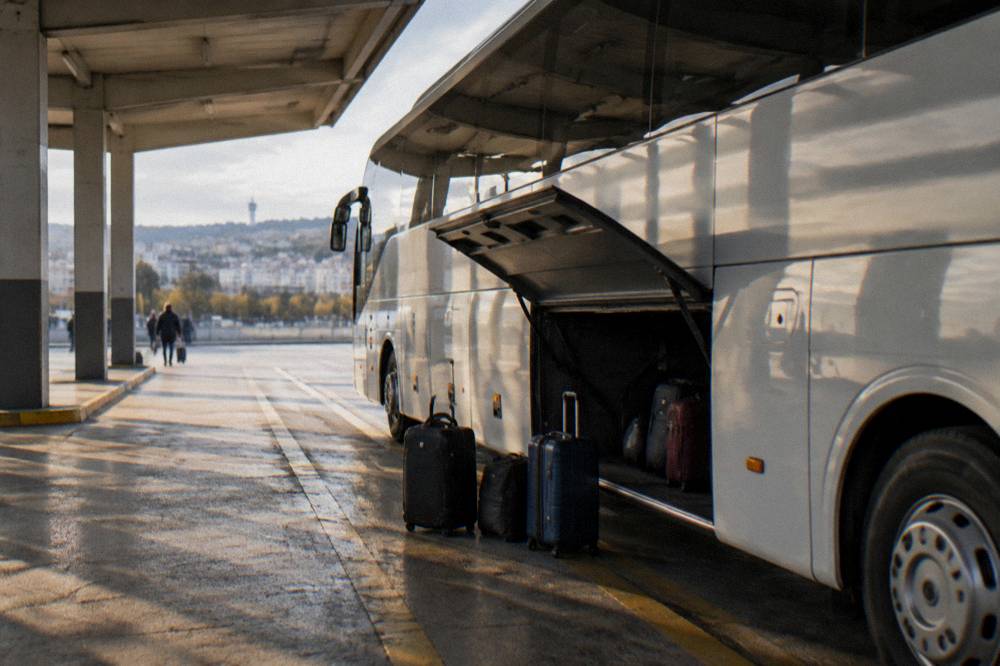
Where Do Coaches To The North Leave From In Thessaloniki?
The Halkidiki coaches are a separate operation, KTEL Halkidiki, based at the 9th km of the Thessaloniki to Nea Moudania road, so a traveller heading north to Skopje and a traveller heading south to the beaches use different stations entirely. Reaching the station from the centre is a short city hop.
The OASTH city bus network covers the city, with the airport links X1, X2, X3 and N1 documented on the operator's own service-lines page, and the metro's Line 1, open since November 2024 and extended to Kalamaria on 27 August 2026, runs from 05:15 to 00:30 Sunday to Thursday and 05:15 to 02:00 Friday and Saturday, per the metro's own site. How to pay for a city bus is answered on the bus payment page, and fares for any intercity coach are confirmed with the operator, never assumed. The station itself is a functional intercity hub rather than a sight, but the neighbourhood around it connects onward.
What Should You Sort Out In Thessaloniki The Day Before A Cross-Border Trip?
The practical checklist is short and firm: confirm the coach time and fare with the operator, check passport validity for the destination country, plan the journey to the KTEL Macedonia station, and leave a margin for the border in both directions.
On the Greek side, the metro's hours and fares are fixed and published, the station's location is known, and the emergency number is 112. Everything time-sensitive on the foreign side of the border is confirmed at booking or with official sources, not from memory.
The morning of departure in Thessaloniki rewards an early start. The city's seafront promenade, the Nea Paralia, is a walking promenade rather than a beach, and it is at its quiet early. Modiano Market and Kapani Market open for the city's own shopping, and the food culture is the subject of the what to eat in Thessaloniki guide, with the bougatsa page on the city's best-known pastry. None of those figures, opening hours or prices for individual shops belong on this page, and none are printed.

Can You Combine Sofia Or Skopje With Other Stops In Northern Greece?
Yes, and the road data supports several combinations: Kastoria lies about 193 km and about 130 minutes from Thessaloniki and sits west toward that side of the border region, while Florina-side and Edessa routes (Edessa about 90 km and about 82 minutes) are served by Hellenic Train's northern network, so a multi-stop northern itinerary by road or rail is realistic with two or three nights. The pairing that works least well is Meteora with either capital, because Meteora lies about 228 km in the opposite direction and deserves its own full day.
A sensible northern loop might run Thessaloniki, Edessa, Kastoria, and on toward the western crossings, or Thessaloniki, Skopje, Sofia as a two-capital run with an overnight in each. The site's northern Greece itinerary guide develops the multi-stop plan in detail, and the Thessaloniki budget page covers cost planning on the Greek side, where the metro's 0.60 euro basic ticket and 2.50 euro daily ticket, per the operator's ticket page, keep city movement cheap.
The one-day options closer to home remain the benchmark for value. Pella at about 43 minutes, Vergina at about 62, and Dion at about 67, all free-flow, deliver ancient Macedonia without a border; the Alexander the Great sites guide covers those. A capital trip is a different kind of day, and pricing it as if it were Pella is the commonest planning mistake.
What Does The Road Data Say About Every Northern Route From Thessaloniki?
The computed free-flow figures, all measured from Aristotelous Square over standard routing, are: Skopje about 228 km and 173 minutes, Sofia about 294 km and 221 minutes, Kastoria about 193 km and 130 minutes, Kavala about 155 km and 118 minutes, Philippi about 156 km and 127 minutes, and Amphipolis about 100 km and 78 minutes. These are planning baselines with no traffic, no stops and no border checks, and the two capital routes each add an international crossing on top.
The full picture in one table:
| Destination from Aristotelous Square | Distance by road | Free-flow time | Border on the route |
|---|---|---|---|
| Sofia | 294 km | about 221 min | Yes |
| Skopje | 228 km | about 173 min | Yes |
| Kastoria | 193 km | about 130 min | No |
| Kavala | 155 km | about 118 min | No |
| Meteora (Kalambaka) | 228 km | about 154 min | No |
| Halkidiki (Nea Moudania) | 60 km | about 57 min | No |
| Vergina | 68 km | about 62 min | No |
| Pella | 46 km | about 43 min | No |
Against the everyday Greek day trips, the capital routes are the outliers in both distance and overhead:
| Greek day trip | Distance | Free-flow time |
|---|---|---|
| Pella | 45.7 km | about 43 min |
| Halkidiki gateway (Nea Moudania) | 60.1 km | about 57 min |
| Vergina | 68.0 km | about 62 min |
| Dion | 90.1 km | about 67 min |
| Litochoro | 90.7 km | about 67 min |
| Edessa | 90.3 km | about 82 min |
| Naoussa | 92.3 km | about 76 min |
| Kassandra (Kallithea) | 86.2 km | about 78 min |
And the Greek-side transport facts that hold on any departure morning:
| Transport fact | Figure | Where it comes from |
|---|---|---|
| Metro basic ticket | 0.60 euro | the Thessaloniki Metro's ticket page |
| Metro daily ticket | 2.50 euro | the Thessaloniki Metro's ticket page |
| Metro hours, Sun-Thu | 05:15 to 00:30 | the Thessaloniki Metro's own site |
| Metro hours, Fri-Sat | 05:15 to 02:00 | the Thessaloniki Metro's own site |
| KTEL Macedonia station location | Giannitson street, Menemeni | the operator's route listings |
| Airport bus lines | X1, X2, X3, N1 | OASTH's service-lines page |
| Emergency number in Greece | 112 | EU-wide standard |
The pattern to take away: distance in the Balkans is not the same as time. Meteora and Skopje are the same 228 km, but the free-flow difference of about 19 minutes reflects the road, and the border adds a variable no table can fix. Plan on the numbers, confirm the rest with the operator, and treat the border as the one leg of the journey with no published schedule.
Before the coach north, the city itself repays a slower look. The Apostle Paul connection to Thessaloniki runs deep in the city's history, and a walking tour built around his story covers the Roman and early-Christian layer that the northbound traveller otherwise speeds past. Equally, Thessaloniki's food scene is the reason many visitors extend a stopover in the first place, and a guided tasting through the markets and the ouzeri tradition turns a transit day into the memory of the trip. Both are among this site's featured picks, alongside the hop-on hop-off sightseeing bus ticket that covers the seafront landmarks.
Common Questions About Travelling From Thessaloniki To Sofia And Skopje
How far is Sofia from Thessaloniki?
Sofia is about 294 km by road from Aristotelous Square, about 221 minutes of free-flow driving, computed over standard routing. The journey crosses an international border, so real travel time runs longer.
How far is Skopje from Thessaloniki?
Skopje is about 228 km by road, about 173 minutes free-flow, roughly 66 km closer than Sofia. The route crosses the border into North Macedonia, with passport checks in both directions.
Is there a train from Thessaloniki to Sofia or Skopje?
Hellenic Train serves Thessaloniki and the northern Greece routes, and its own site carries the timetables. The sources used here publish no train time or fare for a Sofia or Skopje leg, so availability and schedules are confirmed on the operator's site before travel.
Where do the buses to Skopje and Sofia leave from?
Intercity coaches use the KTEL Macedonia station on Giannitson street in Menemeni, about 4 km from the city centre. Coach times and fares are confirmed directly with the operator.
Do I need a passport to travel from Thessaloniki to Skopje or Sofia?
Yes. Both trips leave Greece; North Macedonia is outside the Schengen area, while Bulgaria joined it in full on 1 January 2025. Passport and entry requirements for North Macedonia and Bulgaria are confirmed with official sources before departure, and border waits have no published figure.
Can I do Sofia as a day trip from Thessaloniki?
It is a long one: about 294 km and about 221 minutes each way free-flow, plus border checks in both directions, before any city time. An overnight is the more realistic shape for Sofia; Skopje is the shorter same-day option of the two.
For anyone planning the wider region, the editors at Thessaloniki Travel Guide keep the domestic day-trip pages, including the Vergina, Pella and Meteora guides, alongside the things to do in Thessaloniki overview for the days spent in the city itself.