What Is Thessaloniki Famous For?
Thessaloniki is famous for the White Tower, fifteen UNESCO-listed Byzantine monuments, Roman Galerian remains, its food culture and its seafront on the Thermaic Gulf.
Thessaloniki, the second city of Greece, sits on the Thermaic Gulf in Central Macedonia, and its fame rests on a short, concrete list: the White Tower on the seafront, fifteen Paleochristian and Byzantine monuments inscribed by UNESCO in 1988, the Roman Galerian complex at the city's heart, a food culture the municipality itself promotes, and an old upper town, Ano Poli, inside the Byzantine walls. Founded in 315 BC by Cassander and named for his wife Thessalonike, the city spent two millennia as a Roman provincial capital, a Byzantine metropolis and an Ottoman port before liberation on 26 October 1912.
What Is Thessaloniki Famous For?
Thessaloniki is famous for five things above all: the White Tower, its seafront landmark; fifteen Paleochristian and Byzantine monuments inscribed on the UNESCO World Heritage List in 1988; the Roman Galerian complex of the Rotunda, the Arch of Galerius and the Palace of Galerius; a food culture built around markets like Modiano Market and Kapani Market; and a layered history as a Roman, Byzantine, Ottoman and Jewish city. All of that stands on a waterfront, the Nea Paralia, which is a promenade rather than a beach, in Greece's second city. Nothing on the list is a ranking: each item is documented by the municipality, UNESCO or the state museums, and the sections below take them one at a time.
The fame is unusually compact. The White Tower, the Rotunda, the Arch of Galerius, Aristotelous Square, the Roman Agora, Hagia Sophia and the Church of Saint Demetrius all sit within a walkable central belt, which is one reason the question is Thessaloniki a walkable city comes up so often, and the honest answer is yes for the core. Beyond the centre, Ano Poli climbs inside the walls toward the Heptapyrgion, a fortress used as a prison until 1989, and the Nea Paralia runs along the gulf.
A first visit can reasonably be built around these landmarks, and the question of how many days is enough for Thessaloniki has a practical answer: the famous core fits in two full days, with day trips beyond that. If you are weighing the city against the capital, the comparison page on which is nicer, Athens or Thessaloniki covers the differences.
The White Tower And The Seafront
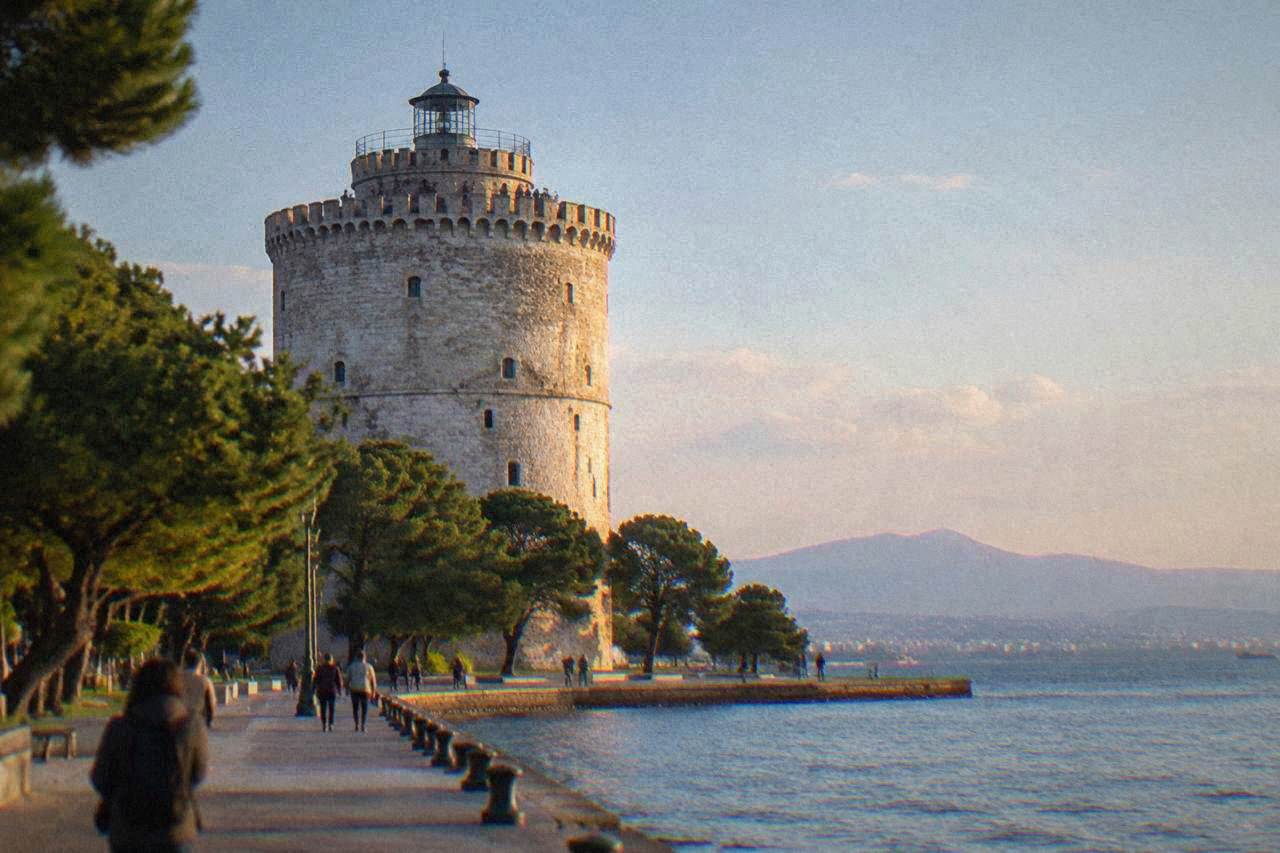
The White Tower is the landmark Thessaloniki is recognized by: a fortification on the Nea Paralia waterfront, open 08:00 to 21:00 daily in summer and 08:30 to 15:30 in winter, with a full ticket of 8 euro and a reduced ticket of 4 euro, prices in force since 1 April 2026 according to the Museum of Byzantine Culture's own visiting page. The tower stands for the city the way a single building can, appearing on souvenirs, posters and the tourism board's own material. The Nea Paralia around it is a promenade for walking, not a swimming beach; the nearest swimmable water is at Perea, about 28 minutes away by road.
The 4 euro figure still circulates on older pages, and it is the detail worth correcting first: the Museum of Byzantine Culture's visiting page lists 8 euro full and 4 euro reduced from 1 April 2026. Entry stops 20 minutes before closing. Beyond the tower itself, the waterfront leads to the Trigonion Tower and the walls of Ano Poli, both named high points of any circuit of the city, and the OTE Tower in the fairgrounds offers a rotating dining experience sold as a ticketed product.
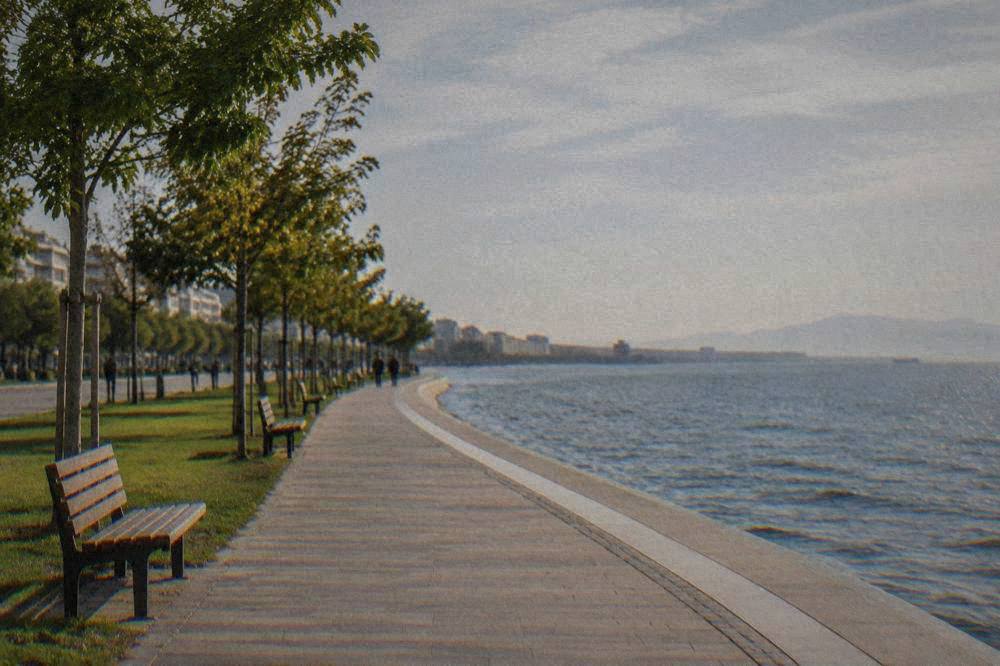
The seafront is also where the city's public life happens. Aristotelous Square, the great open rectangle at the centre of the waterfront, was laid out under the reconstruction plan that followed the Great Fire of 1917, which left 73,000 people homeless and reshaped the whole centre. The square opens to the gulf and closes the view with Mount Olympus on clear days across the water.
A guided loop is the efficient way to see this cluster, and a private walk with a local is the natural fit: Check availability for the Thessaloniki private walking tour, which covers the White Tower, the Rotunda and the old town in one guided circuit.
The UNESCO Fifteen And The Byzantine City
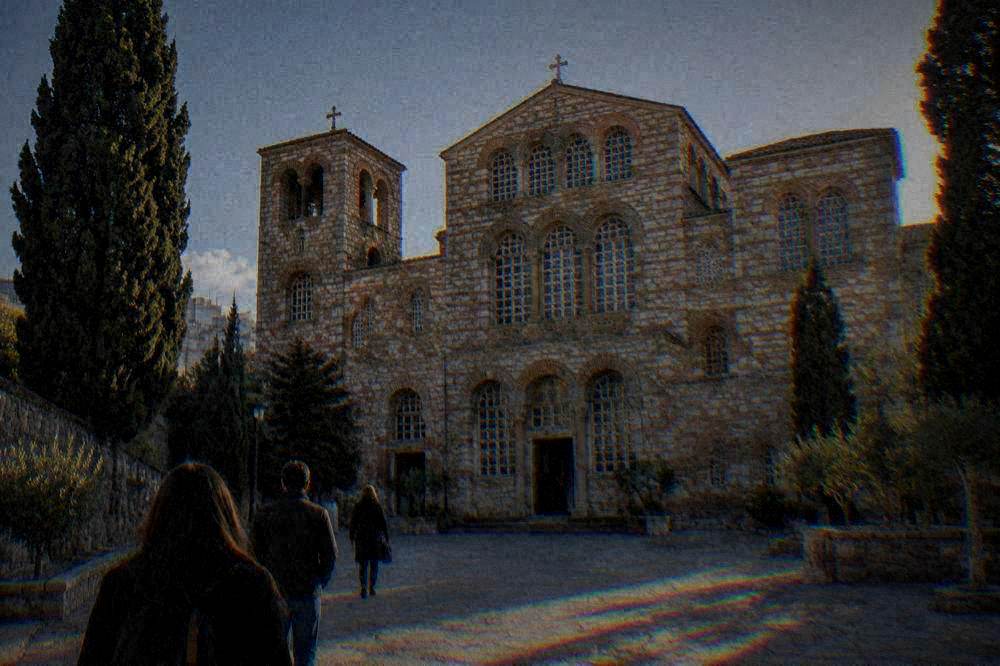
Thessaloniki is famous for fifteen Paleochristian and Byzantine monuments inscribed together on the UNESCO World Heritage List in 1988, a concentration that includes Hagia Sophia, the Church of Saint Demetrius, Panagia Acheiropoietos, Hosios David, the Rotunda, the Heptapyrgion and the city walls. UNESCO credits the city with buildings from the Early Christian period through the Byzantine era that document the development of church architecture, per the World Heritage Centre's own listing page. Working churches among them are free to enter and open outside service times; no other church hours are published in a fixed form.
The list is the backbone of the city's cultural claim to fame, and it is unusually walkable. Hagia Sophia and the Church of Saint Demetrius stand within minutes of Aristotelous Square; the Church of Saint Demetrius, dedicated to the city's patron saint, whose name day falls on 26 October, the same date as the city's liberation in 1912, was damaged in the Great Fire of 1917 and rebuilt. The Vlatadon Monastery sits higher up in Ano Poli near the walls.
Two state museums carry the interpretation. The Archaeological Museum of Thessaloniki is open 09:00 to 17:00 daily from 1 April to 31 October and closed on Tuesdays from 1 November to 31 March, at 10 euro full and 5 euro reduced, per its own hours-and-tickets page. The Museum of Byzantine Culture is open daily 08:00 to 20:00 in summer and Monday plus Wednesday to Sunday 08:30 to 15:30 in winter, also 10 euro full and 5 euro reduced. State museums are free on 6 March, 18 April, 18 May, the last weekend of September and 28 October.
| What | The figure the source gives | Where it comes from |
|---|---|---|
| UNESCO inscription | 1988, fifteen monuments | World Heritage Centre listing, criterion markers (i), (ii), (iv) |
| White Tower ticket | 8 euro full, 4 euro reduced, from 1 April 2026 | Museum of Byzantine Culture visiting page |
| Archaeological Museum ticket | 10 euro full, 5 euro reduced | The museum's hours-and-tickets page |
| Museum of Byzantine Culture ticket | 10 euro full, 5 euro reduced | The museum's visiting page |
| Free state-museum days | 6 March, 18 April, 18 May, last weekend of September, 28 October | State museum admission pages |
For anyone planning deeper reading, the site's guide to the Byzantine churches of Thessaloniki and the page on the Museum of Byzantine Culture expand on each monument.
Roman Thessaloniki: The Galerian Complex
Thessaloniki is famous for one of the best-preserved Roman imperial complexes in Greece: the Galerian complex, built under the tetrarch Galerius, which strings the Rotunda, the Arch of Galerius (the Camara) and the Palace of Galerius along the line of the Roman Via Egnatia, constructed between 146 and 120 BC. The Arch of Galerius is a street monument on Egnatia, free to view at any hour. The Rotunda and the palace grounds are ticketed state sites; their current prices are on the state ticketing pages, so check the current price on the museum's own ticket page before booking.
The Rotunda's masonry dome and the palace's surviving halls and hippodrome outline give the city its Roman layer, sitting directly under the modern apartment blocks. The complex sits a short walk from Aristotelous Square and the Roman Agora, the city's ancient forum, and the metro's Line 1, open since November 2024 with the Kalamaria extension inaugurated 27 August 2026, moves visitors along the same east-west axis the Romans used. Older guides still describe a city with no metro, which is out of date.
Food, Markets And The City's Food Culture
Thessaloniki is famous as an eating city: the municipality runs a dedicated City of Gastronomy site in UNESCO's Creative Cities network, and the fame concentrates in the covered Modiano Market, the open-air Kapani Market, the ouzeri and cafe culture of the Ladadika district, and sweets and street foods sold across the centre. The gastronomy site publishes the city's food history from the Via Egnatia era onward.
The market halls are the practical heart of it. Modiano Market and Kapani Market sit blocks apart near the centre, selling fish, spices, meat and produce, and the streets around them carry the pastry and coffee trade. The food fame has its own dedicated answer page on what food Thessaloniki is famous for, which goes dish by dish.
The surest way into the food culture is a guided tasting, since the markets reward local knowledge. A traditional food tour with a local moves through the markets and the ouzeri stops, and a cooking class with a local family adds the home-kitchen side of the same culture; both are in the picks below, alongside the private walking tour for the landmarks.
Jewish History, Ano Poli And The Layered Past
Thessaloniki is famous for a Jewish history that shaped the city for centuries: a Sephardic community arrived after 1492, grew into a central part of the city's commercial life, and was destroyed in 1943, when about 46,091 Jews were deported, the first train leaving on 15 March 1943. The city's own history pages publish those figures. The Jewish Museum of Thessaloniki carries the story today; its hours and admission are on the museum's own page, so confirm before you go. Ano Poli, the upper town inside the Byzantine walls, preserves the pre-1917 street pattern that the fire never reached.
The upper town is the other half of this fame: Ano Poli's narrow streets climb to the Heptapyrgion fortress, a prison until 1989 and now an open monument, and the Trigonion Tower on the wall circuit. The original walls ran about 8 km, of which about 4 km remain visible, per the national culture ministry's own site. The Atatürk Museum, in the house where Atatürk was born, rounds out the Ottoman layer of the same story.
Day Trips: Vergina, Mount Olympus And Meteora
Thessaloniki is famous as a base for the ancient-Macedonia and northern-Greece day trips: Vergina and the Royal Tombs of Aigai, Pella, Dion and Mount Olympus, the beaches of Halkidiki's Kassandra and Sithonia peninsulas, and Meteora, which is about 228 km away and a full day, not a half day. The drive times are computed over free-flow road routing from Aristotelous Square, and every trip below is a real, published route. The Mount Athos cruise from Ouranoupoli views the monastic coast but does not land; Athos entry needs a permit and is men only, reported by the pilgrimage authorities.
| Day trip | Distance by road from Aristotelous Square | Free-flow drive time |
|---|---|---|
| Pella (Archaeological Museum) | 45.7 km | about 43 minutes |
| Vergina (Royal Tombs of Aigai) | 68.0 km | about 62 minutes |
| Dion (archaeological park) | 90.1 km | about 67 minutes |
| Litochoro (Mount Olympus base) | 90.7 km | about 67 minutes |
| Edessa (waterfalls) | 90.3 km | about 82 minutes |
| Kassandra (Kallithea) | 86.2 km | about 78 minutes |
| Sithonia (Nikiti) | 97.2 km | about 96 minutes |
| Meteora (Kalambaka) | 227.5 km | about 2 hours 34 minutes |
The ancient-Macedonia circuit is the signature: Pella was the capital of the Macedonian kingdom, Vergina holds the museum of the Royal Tombs of Aigai, and Dion sits under Mount Olympus, all within about an hour of the centre. Meteora needs a full day and the question of whether Meteora is closer to Athens or Thessaloniki has a clear answer in the road distances. Halkidiki's two peninsulas carry the beach traffic in summer, and the beaches question is covered separately under does Thessaloniki have nice beaches.
Common Questions About What Thessaloniki Is Famous For
What Is Thessaloniki Famous For?
Thessaloniki is famous for the White Tower on its seafront, fifteen Paleochristian and Byzantine monuments inscribed by UNESCO in 1988, the Roman Galerian complex, the food culture of its markets and ouzeri, and its layered Jewish, Ottoman and Macedonian history, all in Greece's second city on the Thermaic Gulf.
Is Thessaloniki famous for food?
Yes. The municipality runs a City of Gastronomy site within UNESCO's Creative Cities network, and the fame centres on Modiano Market, Kapani Market, the Ladadika district and the city's sweets and street foods. The dedicated page on what food Thessaloniki is famous for covers it dish by dish.
What is the most famous landmark in Thessaloniki?
The White Tower, on the Nea Paralia waterfront. It is open 08:00 to 21:00 daily in summer and 08:30 to 15:30 in winter, with a full ticket of 8 euro and a reduced ticket of 4 euro from 1 April 2026, per the Museum of Byzantine Culture's visiting page.
Is Thessaloniki famous for anything Roman?
Yes, the Galerian complex: the Rotunda, the Arch of Galerius and the Palace of Galerius, built under the tetrarch Galerius beside the Roman Via Egnatia, constructed between 146 and 120 BC. The Arch of Galerius is a free street monument; the Rotunda and palace are ticketed state sites.
Which famous places can you visit from Thessaloniki?
Vergina and the Royal Tombs of Aigai (about 62 minutes by road), Pella (about 43 minutes), Dion and Mount Olympus (about 67 minutes), the Halkidiki peninsulas, and Meteora, about 228 km away and a full-day trip.
The short version stands: Thessaloniki is famous for a waterfront Byzantine-Roman city with a food culture attached, and the Thessaloniki Travel Guide covers each of those claims in its own guide pages, from the White Tower to the day trips beyond the walls.