Which Is Better, Thessaloniki Or Halkidiki?
A plain comparison of Thessaloniki, the second city of Greece on the Thermaic Gulf, and Halkidiki, its peninsulas to the south: what each does best, drive times, and how to combine both.
Thessaloniki is a coastal city on the Thermaic Gulf in Central Macedonia, northern Greece; Halkidiki is the beach region of peninsulas that begins about 57 minutes and 60 km by road to the south. Neither one is "better" in the abstract, because they are different products: Thessaloniki is the second city of Greece, a city-break destination of Byzantine monuments, markets and restaurants, while Halkidiki is where that city goes to swim. This page compares the two on what each actually offers, using drive times computed from the city centre and the facts each official source states, and closes with a plan for combining both in one trip.
Which Is Better, Thessaloniki Or Halkidiki?
Thessaloniki is better for a city break of two to four days built around Byzantine churches, Roman monuments, museums and food, and Halkidiki is better for a beach holiday of swimming and slow days by the sea. Thessaloniki is a city of 315 BC origins on the Thermaic Gulf; Halkidiki is a region of peninsulas, not a single place, so the comparison is really city versus coast.
The question hides a category error worth untangling. Thessaloniki is one city: you can stay in the centre, walk to the White Tower, the Rotunda and the Church of Saint Demetrius, and eat in Ladadika in the evening. Halkidiki is a whole region shaped like a trident, with Kassandra and Sithonia as its two main peninsulas and Ouranoupoli at the gate of Mount Athos on the third. Saying "Halkidiki" pins almost nothing down; Kallithea on Kassandra is about 78 minutes and 86 km by road from Aristotelous Square, while Nikiti on Sithonia is about 96 minutes and 97 km, and both times vary by village because each peninsula runs for many kilometres beyond its pin.
The practical rule this site's Halkidiki day-trip guide works from: base yourself in Thessaloniki if the trip is culture, food and walking, and base yourself on one of the peninsulas if the trip is beaches and swimming. The city's own waterfront, the Nea Paralia, is a promenade, not a swimming beach, so sea bathing is not something Thessaloniki itself offers; the nearest swimmable beaches are at Perea and Agia Triada, with Perea about 28 minutes by road from the centre. Kalamaria, the eastern district the metro has served since 27 August 2026, sits between the two worlds and makes the southern road out of the city a short hop.
What Does Each Place Do Best?
Thessaloniki's strength is density: fifteen UNESCO-listed Paleochristian and Byzantine monuments inscribed in 1988, a Roman Galerian complex, two major state museums and a walkable centre between Aristotelous Square and the Ano Poli walls. Halkidiki's strength is shoreline: beaches, villages and boat days spread across two large peninsulas, best reached with a car and without a fixed schedule.
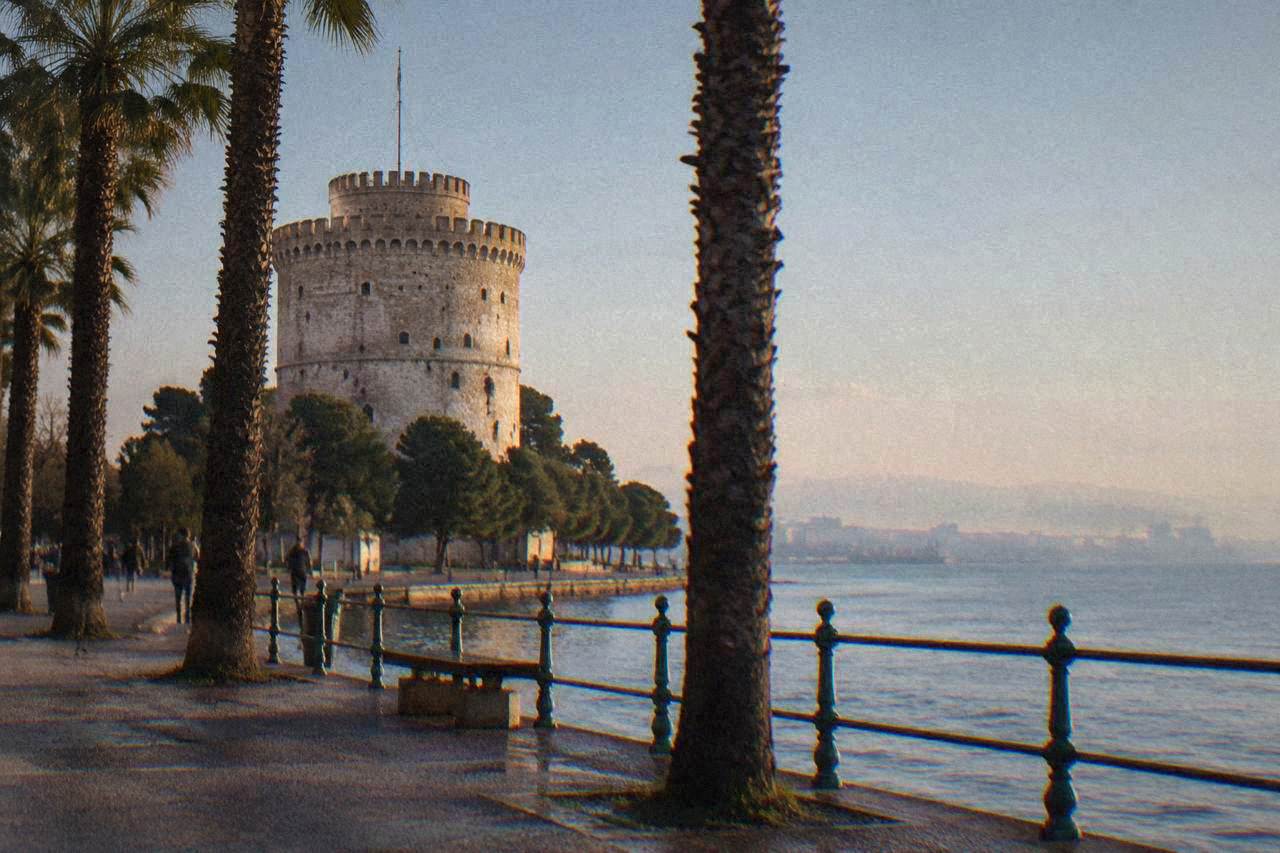
In the city, the sights stack up within a few kilometres. The White Tower is the landmark on the seafront; a full ticket costs 8 euro and a reduced ticket 4 euro, the prices in force from 1 April 2026 per the Museum of Byzantine Culture's own visiting page. The Archaeological Museum and the Museum of Byzantine Culture are each 10 euro full and 5 euro reduced, and state museums are free on 6 March, 18 April, 18 May, the last weekend of September and 28 October. The metro is open, Line 1 running since November 2024 with the Kalamaria extension inaugurated 27 August 2026, and a basic ticket is 0.60 euro with a 24-hour ticket at 2.50 euro per the Thessaloniki Metro's ticket page. None of this exists in Halkidiki, which is precisely the point of the comparison: the peninsula half of the region trades monuments for water.
Halkidiki answers with shoreline. What the numbers do support is distance: if you are choosing where to sleep, the Halkidiki gateway at Nea Moudania is about 57 minutes out, Afytos on Kassandra about 79 minutes, and Sithonia's villages past that again. For the split within the region, the Kassandra or Sithonia comparison sticks to the same drive times and gives no ranking. One hard boundary applies at the southern end: the Ouranoupoli cruise views the Mount Athos coast from the sea and never lands, because Athos entry needs a permit and is men only.
A city stay also opens two very different product lanes. For the culture lane, a local-led walk such as Best of Thessaloniki: Tour by Local covers the core sights in one loop. For the food lane, the city's markets and tavernas are the reason many people come at all, from Modiano Market in the centre to the ouzeri rows that carry the city's food reputation.
How Far Is Halkidiki From Thessaloniki?
From Aristotelous Square the Halkidiki gateway at Nea Moudania is about 60 km and 57 minutes by road, Kallithea on Kassandra about 86 km and 78 minutes, Nikiti on Sithonia about 97 km and 96 minutes, and Ouranoupoli about 130 km and 139 minutes. All times are free-flow road estimates computed over routing data, with no traffic, parking or stops included.
Because Halkidiki is a region of peninsulas, one distance is never enough. The table below gives the computed figures this site uses everywhere, from the city centre to each peninsula pin and to the closest swimmable beaches near the city.
| Destination | Distance by road | Driving time (about) |
|---|---|---|
| Halkidiki gateway (Nea Moudania) | 60 km | 57 minutes |
| Kassandra (Kallithea) | 86 km | 78 minutes |
| Afytos (Kassandra) | 83 km | 79 minutes |
| Sithonia (Nikiti) | 97 km | 96 minutes |
| Ouranoupoli (Mount Athos cruises) | 130 km | 139 minutes |
| Epanomi (nearest beaches south) | 29 km | 36 minutes |
| Perea (nearest beach town) | 23 km | 28 minutes |
Two consequences follow. First, a day trip from Thessaloniki to Kassandra or Sithonia is possible but eats most of a day in driving alone; the Ouranoupoli cruise departure point is close to two and a half hours out, and the cruise itself views the Mount Athos coast from the sea without landing, since entry to Athos requires a permit, the diamonitirion, and is men only, as reported by regional guides. Second, if the trip is built around beaches, sleeping in the city and driving south daily is a poor trade; sleep on a peninsula and visit the city once instead.
Can You Combine Thessaloniki And Halkidiki In One Trip?
Yes, comfortably, and it is the answer this site recommends for trips of five days or more: three or four nights in Thessaloniki for the monuments, museums and food, then two or three nights on one peninsula for the beaches. With the gateway about 57 minutes from the centre, the transfer costs half a morning, and each half works better with its own base.
The Thessaloniki and Halkidiki itinerary works through the split day by day. The logic is simple. The city's sights are indoor and outdoor, museum and street, and they cluster; the beaches are spread along coastlines that reward staying put. Doing the city first also front-loads the walking, then the peninsula half of the trip becomes the recovery. A night-flight arrival into Thessaloniki Airport "Makedonia", about 16 km and 20 minutes by road from Aristotelous Square, fits the pattern either way round.
One timing note if beaches matter: HNMS Thessaloniki Mikra station, 1959 to 2010, puts the July mean daily high at 31.7 C and the January mean low at 1.5 C, so the beach half of a combined trip is a May-to-October proposition, and a city-first half works in almost any month. The annual rainfall of 444.5 mm at the same station is concentrated in the colder half of the year, with December averaging 55.1 mm and August 19.3 mm, which makes the late-summer window the calmest stretch for splitting a week between city and coast.
Before leaving the city, decide how much of the surrounding region belongs in the trip. Vergina is about 62 minutes by road, Pella about 43, Dion about 67, and Meteora about 154 minutes each way, which makes Meteora a full day on its own. A day trip that pairs the royal tombs of Aigai with the museum at Pella is a common choice for the ancient-Macedonia lane; details and live pricing are on the operator's listing, and check availability if that lane is yours.
Which Costs More, Thessaloniki Or Halkidiki?
What can be stated is that Thessaloniki's big state museums charge 10 euro full and 5 euro reduced, the White Tower 8 euro and 4, and the metro's 24-hour ticket is 2.50 euro, while Halkidiki's costs are almost entirely transport, lodging and food, none of which carry printed figures here.
A short budget frame is still possible without inventing numbers. In the city, the main payable items are museum tickets and food; state museums are free on the five annual free days listed above, and churches are free to enter outside services. A climate resilience fee exists across Greek accommodation, collected by the property per room per night and higher from April to October, but the rates are not printed on this page. In Halkidiki, beyond the fee, the spend is fuel, a car if you rent one, and wherever you eat.
Common Questions About Thessaloniki Or Halkidiki
Which Is Better, Thessaloniki Or Halkidiki?
Thessaloniki is better for a city break of monuments, museums and food over two to four days; Halkidiki is better for a beach holiday. They are not rivals, since Halkidiki's gateway is only about 57 minutes by road from the city centre, and a five-day trip can take both.
Can you swim in Thessaloniki itself?
No. The Nea Paralia is a promenade, not a beach. Swimming is at Perea, about 28 minutes by road, Agia Triada or Epanomi, about 36 minutes, or on the Halkidiki peninsulas.
Is Halkidiki one place?
No. It is a region of peninsulas: Kassandra, pinned at Kallithea about 78 minutes from Aristotelous Square, and Sithonia, pinned at Nikiti about 96 minutes, plus Ouranoupoli at about 139 minutes on the Athos peninsula. Distances vary by village.
How many days do you need for each?
Thessaloniki works as a two-to-four-day city break; Halkidiki rewards a week if beaches are the point. A combined trip of five to seven days splits naturally between the two.
Do you need a car in Halkidiki?
The beaches and villages are spread along coastlines, so a car is the practical choice for the peninsulas. Thessaloniki itself is walkable in the centre and has an open metro with a 0.60 euro basic ticket, so a car is a burden there.
The honest verdict: pick Thessaloniki for the city, Halkidiki for the sea, and pick both if the calendar allows, because the road between them is barely an hour long.