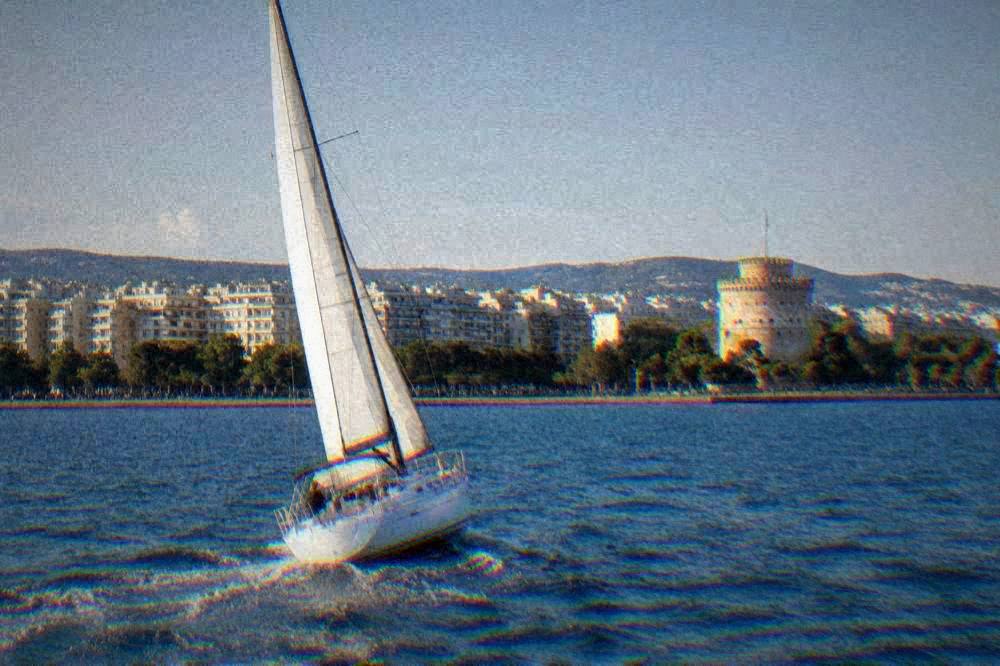
Mount Athos Cruise From Ouranoupoli
The Mount Athos cruise is the only way anyone, man or woman, can see the Holy Mountain's monasteries in a single day from Thessaloniki, because the boats sail from Ouranoupoli along the Athos coast and never land.
Short answer
The Mount Athos cruise departs from Ouranoupoli, about 130 km and roughly 139 minutes by road from Thessaloniki, and sails along the Athos coast so passengers see the monasteries from the sea. The boat does not land. Entry to the peninsula itself requires a permit called a diamonitirion and is men only; the cruise needs no permit and is open to everyone.
The Mount Athos cruise is a sea trip, not a monastery visit. Boats leave from Ouranoupoli, the last village on the Halkidiki side of the border with the monastic republic, and sail south along the Athos coast so that the monasteries appear one by one on the shoreline. Thessaloniki, the second city of Greece on the Thermaic Gulf in Central Macedonia, is the natural base for the day: Ouranoupoli is about 130 km and roughly 139 minutes by road from Aristotelous Square, according to routing computed over OpenStreetMap. The single fact that shapes the whole day is that the boats never land. Entry to the Athos peninsula requires a residence permit called a diamonitirion and is restricted to men, per the reported rules of the monastic administration, so the cruise is the one version of this trip genuinely open to everyone.
The rest of this page sets out how the day works, what the cruise can and cannot include, how the permit system differs from the cruise, when to go, and how the trip compares with the other day trips reachable from Thessaloniki. The Thessaloniki Travel Guide day-trip pages cover the alternatives, from Vergina to Meteora, in the same reporting voice.
What Is The Mount Athos Cruise From Ouranoupoli?
The Mount Athos cruise is a round trip by boat from the village of Ouranoupoli along the coast of the Athos peninsula, in which passengers view the monasteries of the Holy Mountain from the water without going ashore. The boats turn back at the limit of the monastic territory and return to port the same day. It is a viewing cruise, not a landing, and no permit is needed to board.
Ouranoupoli sits at the top of the Athos finger of Halkidiki, where the secular part of the peninsula ends and the monastic republic begins. The village is the embarkation point because it is the closest settlement to the border that anyone can enter freely; beyond it, the rules of the monastic state apply. The cruise route runs down the western shore of Athos, the side facing the Thermaic Gulf, and the monasteries stand on that coast at various heights, some right at the water, some well up the slopes.
The distinction between the cruise and a visit matters more here than on any other day trip from Thessaloniki. The monastic republic of Mount Athos has governed its own entry for more than a thousand years of continuous monastic life, and its reported rules are strict: a permit, the diamonitirion, a male-only entry rule, and an application through the Pilgrims' Bureau. None of that applies to the cruise. The boat stays in international and Greek territorial waters, and the peninsula is seen the way sailors have always seen it, from the sea.
That is also why this trip is popular with a wider range of travellers than the word "pilgrimage" suggests. Women, who cannot enter the peninsula under the reported rules, can take the cruise. Families can take it. Anyone who wants the coastline of Halkidiki's most protected shore with a running commentary on the monasteries can take it. The Halkidiki guide covers the wider region, and the question can a woman visit Mount Athos is answered directly on its own page.
The cruise is run by local boat operators out of Ouranoupoli, and schedules, prices and durations are set by them: confirm the departure time and the current price with the operator when booking. What the sources consistently report is the shape of the trip: a departure from Ouranoupoli's small harbour, a run down the coast past a series of monasteries, a turnaround point, and a return. Weather can cancel sailings, as with any small-boat operation on open water, so a booking with free cancellation is worth having.
How Do You Get From Thessaloniki To Ouranoupoli?
Ouranoupoli is about 130 km from Aristotelous Square in Thessaloniki, a drive of roughly 139 minutes in free-flow traffic, computed over OpenStreetMap routing. That makes it one of the farthest standard day trips from the city, and the drive each way passes through the Halkidiki towns of the Sithonia side before the final stretch along the coast to the Athos border.
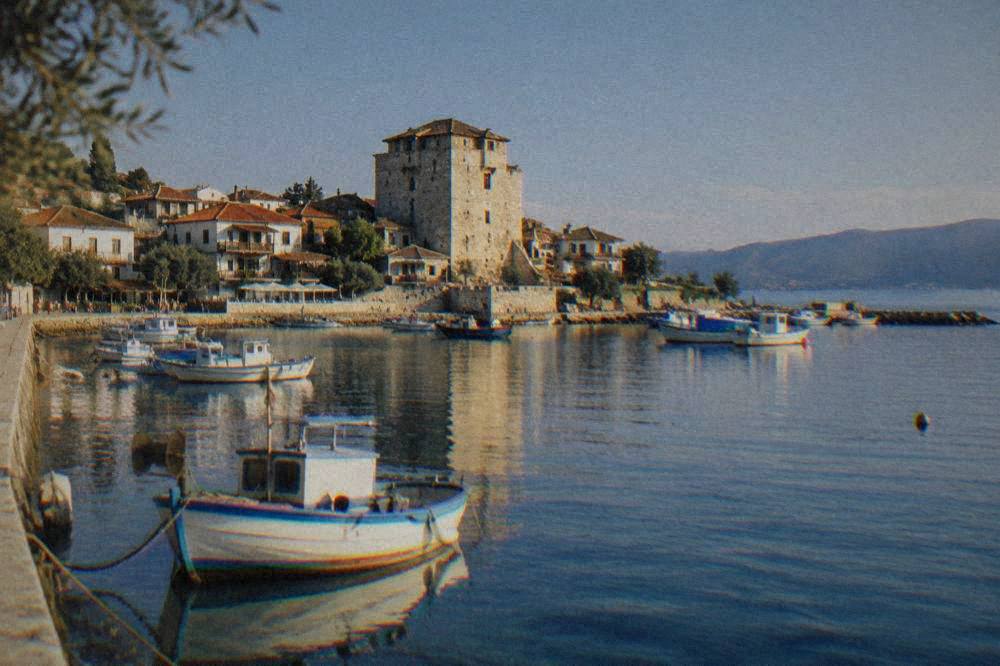
The route runs southeast out of Thessaloniki, around the head of the Thermaic Gulf, and down through Halkidiki. The last part of the drive is the memorable one: the road narrows past the resorts of the Sithonia coast and arrives at Ouranoupoli with the Byzantine tower on the shore and the first Athos heights closing the view to the south. Free-flow times assume no traffic, no parking search and no stops, so treat 139 minutes as the floor, not the plan. In summer, the road through Halkidiki carries beach traffic, and the realistic door-to-berth time is longer.
A practical structure for the day is to leave Thessaloniki in the morning with margin for the sailing time, and to treat anything in Halkidiki on the way back as optional rather than scheduled. Drivers coming back in the evening will rejoin the city near the airport corridor; the airport itself is about 20 minutes from the centre, which matters if the trip is being fitted around a departure day. The cruise-port day plan on the Thessaloniki cruise port day page shows how a fixed arrival window shapes a similar decision.
Confirm pickup time and point with the operator. What can be stated plainly is the distance and the free-flow time above, because both are computed from road data, and the fact that Ouranoupoli is the embarkation point for the cruise.
The table below places Ouranoupoli among the standard day trips from Thessaloniki by road distance and free-flow time from Aristotelous Square, as computed over OpenStreetMap routing.
| Day trip from Aristotelous Square | Distance by road | Free-flow time |
|---|---|---|
| Perea | 23.0 km | about 28 min |
| Pella | 45.7 km | about 43 min |
| Vergina | 68.0 km | about 62 min |
| Kassandra (Kallithea) | 86.2 km | about 78 min |
| Lake Kerkini | 88.0 km | about 82 min |
| Litochoro | 90.7 km | about 67 min |
| Sithonia (Nikiti) | 97.2 km | about 96 min |
| Ouranoupoli | 129.9 km | about 139 min |
| Meteora (Kalambaka) | 227.5 km | about 154 min |
Read that table as a ranking of commitment. Pella and Vergina are short hops by comparison; Meteora and Ouranoupoli are the two long days, and only one of them involves a boat.
Can You Actually Visit The Monasteries On A Mount Athos Cruise?
No, the cruise does not land anywhere on the Athos peninsula. Entry to Mount Athos requires a residence permit called a diamonitirion, issued through the Pilgrims' Bureau in Thessaloniki, and entry is men only under the reported rules of the monastic administration. The cruise views the monasteries from the sea, and no cruise ticket grants or substitutes for the permit.
This is the point where a good deal of online copy goes wrong, so it is worth being precise. The monastic republic is a self-governing community under Greek and ecclesiastical law, and it controls its own border at the narrow isthmus and the sea approaches. The reported entry rules are: men only, a diamonitirion permit applied for in advance, and a limited stay. For everyone else, and for any woman traveller, the cruise is the option, and it is a genuine one: the monasteries of the western coast are large, elevated and clearly visible from a boat.
The comparison table below separates the two experiences plainly.
| Mount Athos cruise | Monastery visit on Athos | |
|---|---|---|
| Starts from | Ouranoupoli harbour | Border crossing with permit |
| Who can go | Everyone, no restriction by sex | Men only, reported rule |
| Permit needed | No | Yes, diamonitirion, applied for in advance |
| Goes ashore | No, the boat does not land | Yes, stays within the monastic state |
| Monastery interiors | Not seen, the trip is from the sea | Seen from within, per the monastery's own rules |
| Booking | With the boat operator | Through the Pilgrims' Bureau, reported |
The cruise commentary, in the operators' descriptions, covers the monasteries as they pass: their names, their foundations and their position on the coast. What it cannot offer is the interior, the courtyards or the services, and any product description implying otherwise should be read carefully before booking. The honest framing is a coastal sightseeing run along one of the most restricted shorelines in Europe, and that is a better trip than a blurred one.
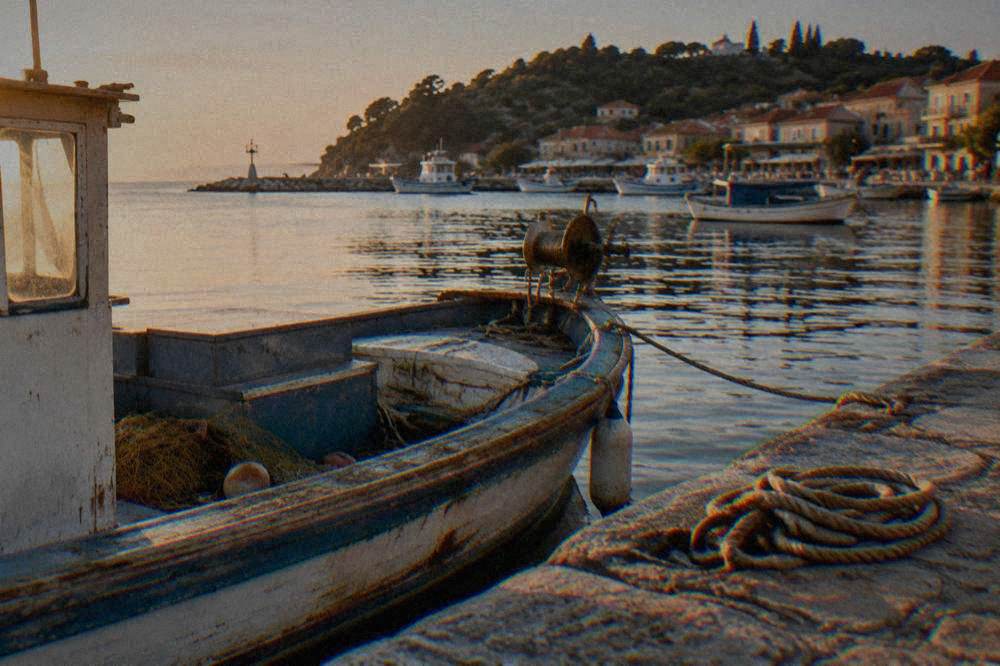
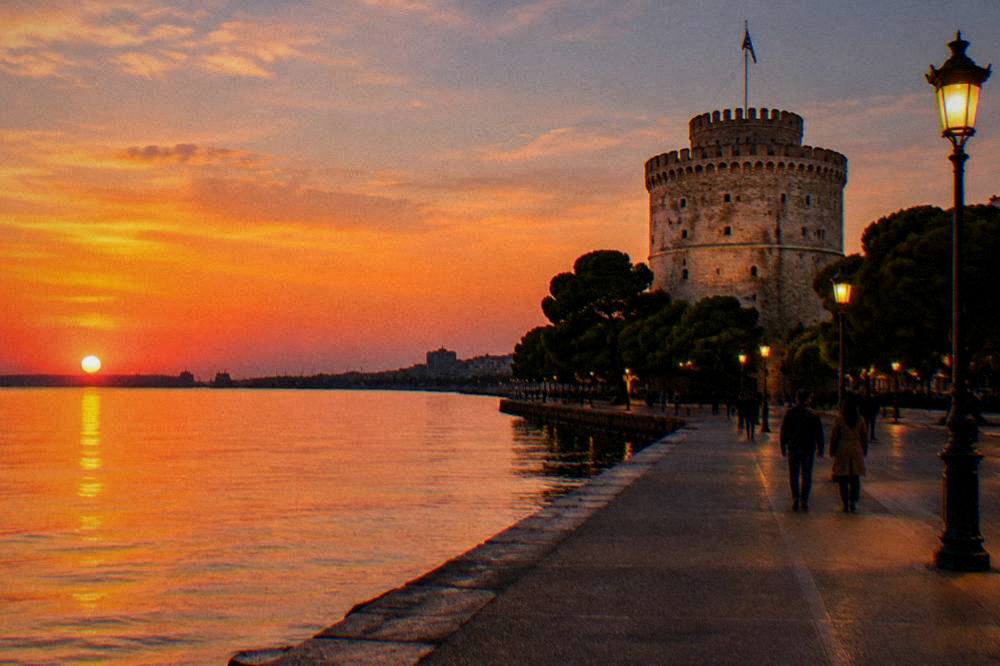
If the day in Thessaloniki before departure is still open, the featured city pick on this page is the Bike Tour Past The White Tower And The Rotunda, which loops the seafront and the Roman monuments in one ride; Check availability for the date that fits around an early start south.
What Do You See On The Mount Athos Cruise?
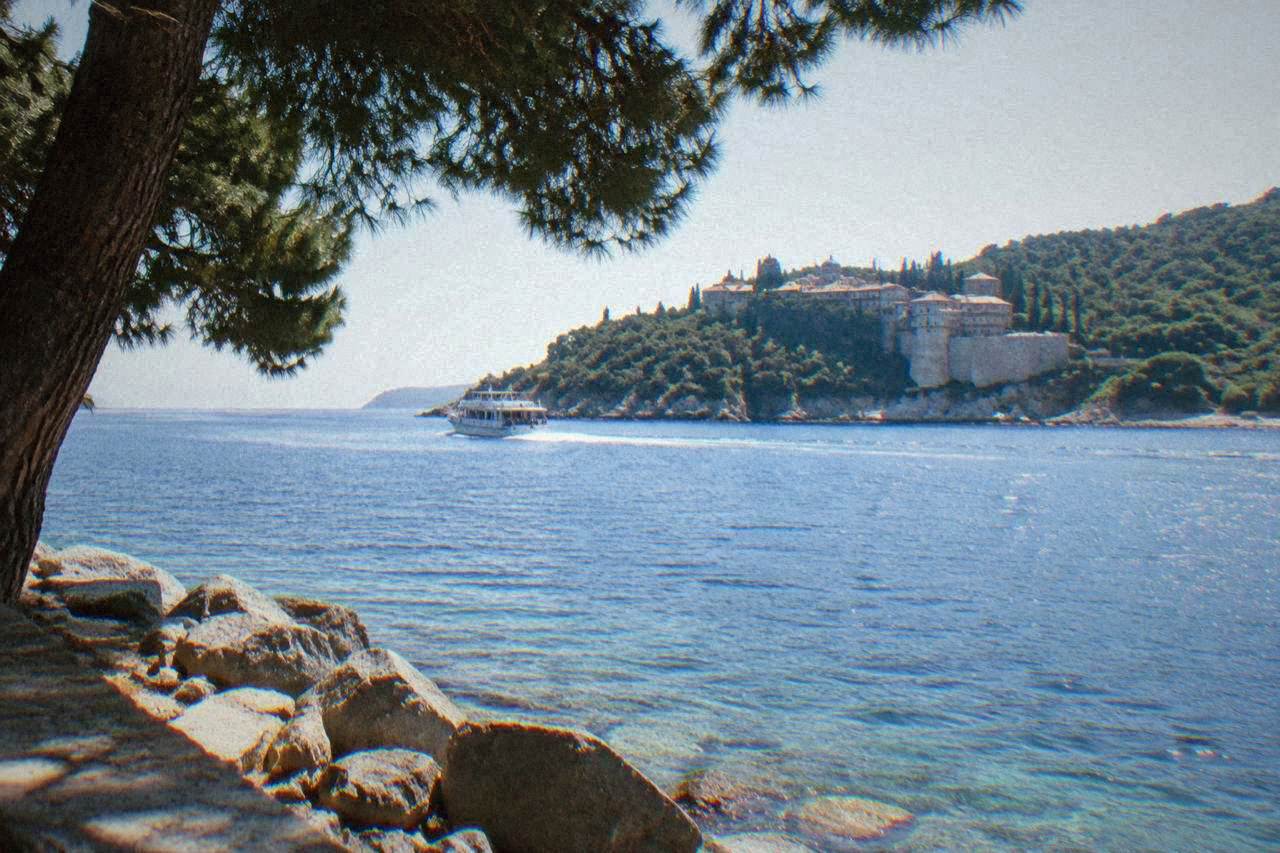
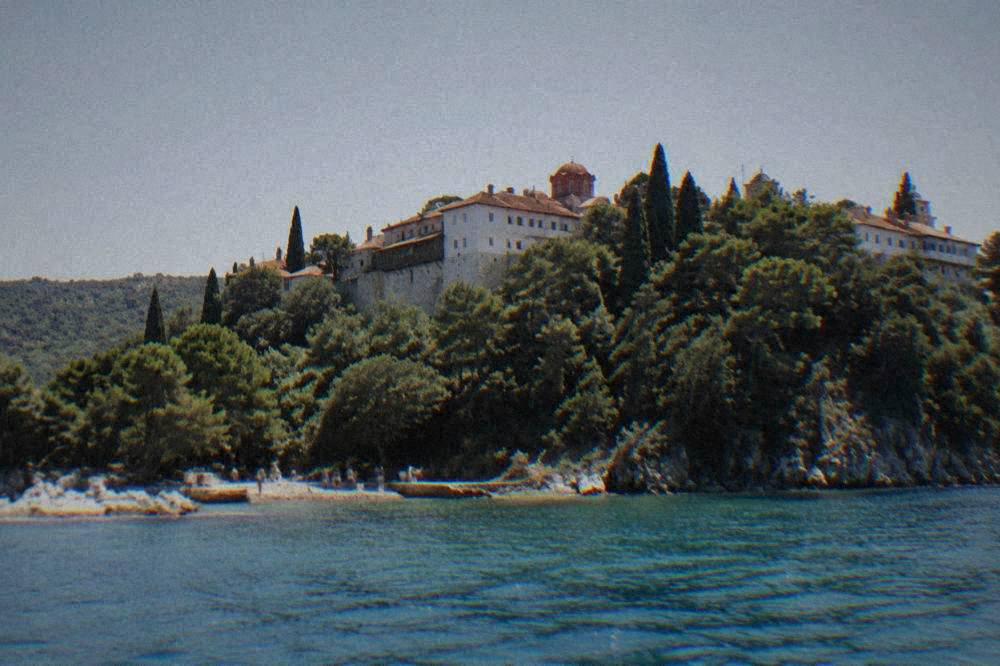
The cruise shows the monasteries of the western, sea-facing coast of Athos, one after another, from the deck of the boat: large walled complexes with towers and courtyards set on the shoreline or on the forested slopes above it. The coastline itself is part of the sight, wooded and mountainous, with no roads, resorts or settlements visible inside the monastic territory.
The monasteries of Athos are not small chapels. They are fortified monastic towns, each with walls, a principal church, workshops and cells, and the western coast presents them to the sea the way they were built to be seen, since the sea was for centuries the main approach. From the water the sequence reads as a wall, a tower, a roofline, then forest, then the next complex, with the slopes of the Holy Mountain rising behind. No monastery count, no names list and no sailing distance from shore are stated here, because the operators set the route; the operator's listing describes the route it sails.
The boat also passes the boundary itself. Ouranoupoli's shore is the edge of the secular world; the towers and beaches just south of it belong to the monastic state, and the contrast between the resort coast of Halkidiki and the empty wooded coast of Athos is immediate and visible. Photographers get the standard shot of a monastery above the water with the summit behind it, and the deck is the only place that shot exists for anyone without a permit.
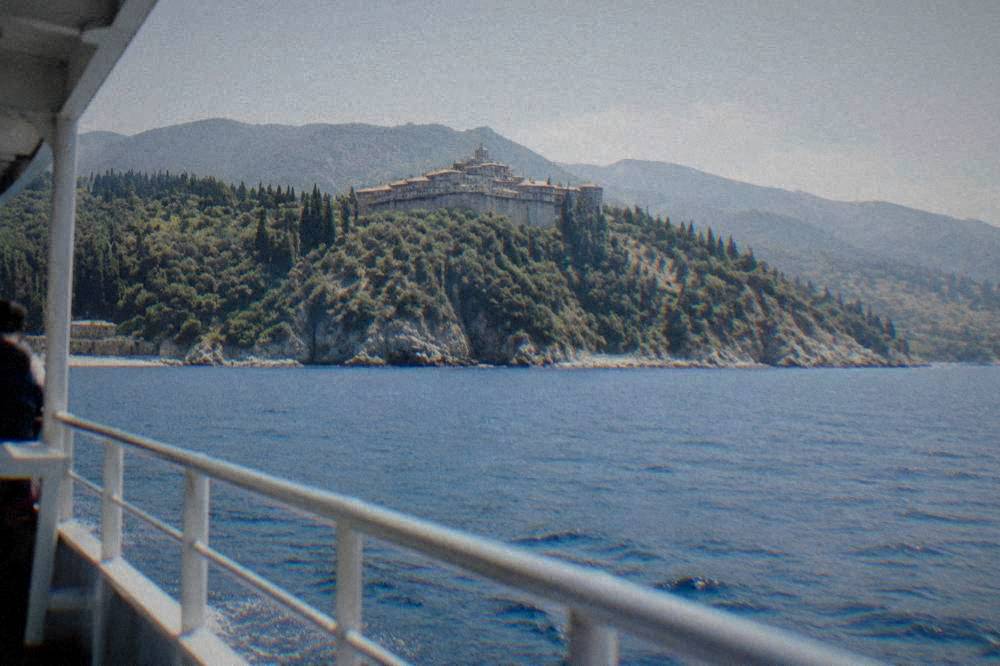
Two things to bring, based on what a small-boat day on open water involves: sun protection, since the deck offers little shade on a run down a coast, and a layer for the return leg, since the wind on the Gulf picks up in the afternoon even in summer. Seasickness is a real consideration on any small craft; the operator's listing states the sailing duration, and anyone sensitive to swell should read it before booking rather than after departing.
The Blue Lagoon cruise above is the other boat day out of the same region: a Halkidiki swimming and lunch trip rather than a monastic coast run, and a reasonable alternative when the Athos sailing is full or the weather closes it.
When Is The Best Time Of Year For A Mount Athos Cruise?
The cruise season runs on the operators' schedules, which are busiest and most frequent in the summer months and thinner outside them, with morning departures reported as the standard pattern from May to October. Spring and early autumn combine workable sea conditions with cooler driving weather on the 130 km run from Thessaloniki, and winter sailings are not a plan to rely on.
The sea state governs this trip more than the sight does. The Thermaic Gulf and the north Aegean off Halkidiki blow up quickly under northwesterly wind, which the HNMS Thessaloniki Mikra station record, 1959 to 2010, lists as the prevailing wind in every month except August, when it swings southerly. A small boat running down an exposed coast is the first thing an operator cancels when the forecast is poor, so any booking outside high summer carries a real chance of a weather cancellation, and a free-cancellation rate is not a luxury here.
For the city side of the planning, the same station record gives the climate context for Thessaloniki: a July mean daily high of 31.7 C, a January mean daily low of 1.5 C, December the highest monthly rainfall of the year at 55.1 mm and August the lowest at 19.3 mm, with 444.5 mm falling across the year on average. The monthly detail follows.
| Month | Mean high C | Mean low C | Rain mm | Rain days |
|---|---|---|---|---|
| Jan | 9.3 | 1.5 | 37.7 | 11.5 |
| Feb | 11.0 | 2.3 | 35.0 | 10.7 |
| Mar | 14.3 | 4.7 | 37.9 | 12.1 |
| Apr | 19.1 | 7.9 | 36.1 | 11.1 |
| May | 24.6 | 12.6 | 44.2 | 11.0 |
| Jun | 29.4 | 17.0 | 29.8 | 7.9 |
| Jul | 31.7 | 19.3 | 23.8 | 6.7 |
| Aug | 31.4 | 19.1 | 19.3 | 5.1 |
| Sep | 27.1 | 15.4 | 29.8 | 7.0 |
| Oct | 21.2 | 11.3 | 43.0 | 9.3 |
| Nov | 15.5 | 7.1 | 52.8 | 11.0 |
| Dec | 10.9 | 3.2 | 55.1 | 12.7 |
Read that as a weather-station record for Thessaloniki, not a sea forecast for the Athos coast, but the two are close enough for planning: May and June offer warm days with modest rain, and September combines a 27.1 C mean high with only 7.0 rain days on average. August is the calmest wind month on the station record and the busiest on the water. October is still workable at a 21.2 C mean high, but rain days rise and operator schedules shorten, and by November the trip is a poor bet.
One dated note worth folding in: the 2026 event calendar in Thessaloniki runs late into autumn, with the 67th Thessaloniki International Film Festival fixed for 5 to 15 November 2026, so an October or early November trip can pair a Halkidiki boat day with a city evening, though the Athos sailings themselves are a fair-weather product. The Thessaloniki in summer and shoulder-season pages carry that planning in more depth.
How Does A Mount Athos Day Compare With Other Day Trips From Thessaloniki?
A Mount Athos cruise day is the longest combined drive-plus-boat day among the standard Thessaloniki day trips: roughly 139 minutes each way by road plus the sailing time, with the viewing done from the water rather than on foot. Ancient-site trips such as Vergina and Pella are shorter drives with walking and museums, Meteora is farther by road, and the Halkidiki beach peninsulas sit closer with swimming instead of monasteries.
The comparison matters because Thessaloniki is unusually rich in day trips, and a week in the city forces choices. The table below groups the main options by what the day actually consists of, using the computed road times from Aristotelous Square.
| Day trip | Drive each way | What the day consists of |
|---|---|---|
| Pella | about 43 min | Archaeological site and museum, walking |
| Vergina | about 62 min | Royal tombs of Aigai and museum, walking |
| Kassandra (Kallithea) | about 78 min | Organised beaches and resort coast |
| Sithonia (Nikiti) | about 96 min | Wilder coves and pine coast |
| Ouranoupoli, Athos cruise | about 139 min | Long drive, then boat viewing of monasteries |
| Dion and Mount Olympus park | about 67 min to Dion | Archaeological park, optionally the mountain area |
| Meteora (Kalambaka) | about 154 min | Clifftop monasteries, full day by road |
Two patterns stand out. First, the Athos cruise is the only trip on that list where the sight is seen from a boat, which makes it the natural choice for anyone who wants a sea day with substance rather than a beach day. Second, its drive time is nearly the longest, so it competes for a day with Meteora rather than with Pella. Travellers trying to fit both a monastery coast and a clifftop monastery into one itinerary should give each its own full day; the Meteora page covers that trip's length honestly.
The pairing that works better is Athos plus the rest of Halkidiki. Ouranoupoli is reached through the Sithonia side, and a two-day plan that sleeps one night on the peninsula and sails on the second morning converts the cruise from a long single day into a relaxed one. The Kassandra and Sithonia pages cover where the beaches are, and the wider things to do in Thessaloniki page frames the whole set of choices.
What Should You Know Before Booking A Mount Athos Cruise?
Book the cruise with the operator's own listing rather than on assumptions: the sailing time, the price, the departure point in Ouranoupoli and the cancellation terms are all set by the operator and printed on its listing. Leave Thessaloniki with margin for the roughly 139-minute drive, carry the passport or ID card the operator requires, and treat the monastic entry rules as settled fact rather than a debate: permit, men only, no landing from the cruise.
A few practical points in plain list form, all of them sourced from the rules and figures above:
- The cruise does not land, and no ticket variant changes that. Anyone promising a monastery interior on a boat trip is overselling.
- Women can take the cruise and cannot enter the peninsula; the reported rule is absolute, and the dedicated answer page on whether a woman can visit Mount Athos states it plainly.
- The drive is long. Free-flow 139 minutes each way means a dawn start for a morning sailing, and the return lands in Thessaloniki in the evening.
- Weather cancels small-boat sailings. Book a cancellable rate and have a same-day fallback, such as the sunset cruise in the city or a beach afternoon, in case the sailing is scrubbed.
- Confirm the meeting point in Ouranoupoli and the check-in time with the operator; harbours are small and departures are not held.
The permit route, for men planning a genuine monastic stay, is a different project entirely: application through the Pilgrims' Bureau, reported in advance of travel, with the stay length and conditions set by the monastic administration. No price, quota or lead time is stated here because none is published in a form that can be quoted; the Bureau answers those questions directly. For everyone else, the cruise is the trip, and it delivers exactly what it promises and nothing more, which is the best thing that can be said of any day out.
A private walking tour the day after a long boat day is a sensible pairing: the city's own fifteen UNESCO-listed Paleochristian and Byzantine monuments, inscribed in 1988, are all on foot from the centre.
Common Questions About The Mount Athos Cruise
Can a woman take the Mount Athos cruise?
Yes. The cruise is open to everyone and requires no permit. What women cannot do, under the reported rules of the monastic administration, is enter the Athos peninsula itself. The cruise never lands, so the restriction does not affect it.
Does the Mount Athos cruise land on Mount Athos?
No. The boats from Ouranoupoli view the monastic coast from the sea and turn back without landing. Landing on the peninsula requires a diamonitirion permit and is men only.
How far is Ouranoupoli from Thessaloniki?
About 130 km by road from Aristotelous Square, roughly 139 minutes in free-flow conditions, computed over OpenStreetMap routing. Allow more in summer traffic and for parking near the harbour.
How long does the Mount Athos cruise take?
The sailing duration is set by the operator and printed on its live listing. The full day, with the drive each way from Thessaloniki, is a long one, so plan the whole day around it.
Do you need a permit for the Mount Athos cruise?
No. The diamonitirion permit is required only to enter the monastic republic as a visitor. The cruise stays on the water and boards on a normal ticket, subject to the operator's terms.
When does the Mount Athos cruise run?
Sailings follow the operators' seasonal schedules, reported as concentrated from May to October with morning departures. Schedules thin outside high season and weather cancels sailings, so confirm the current timetable with the operator before travelling.
The Mount Athos cruise from Ouranoupoli is the one day trip from Thessaloniki that shows a closed world from open water, and the only one where the boundary itself is part of the view. Book the sailing on its own terms, drive down with margin, and let the peninsula keep its rules.