Do They Speak English In Thessaloniki?
Greek is the language of Thessaloniki, but English-language tours, day trips and transport make the city workable without Greek. Here is what to expect, honestly.
What the record does support: the city runs on tourism and a large student population, its metro opened with fare machines that accept English-language menus, and every tour, food walk and day trip sold through this site is offered in English where the product card says so. For a traveller deciding whether language will block a trip, the short answer is no, with Greek pleasantries still worth learning because they are the polite currency of the city.
Do They Speak English In Thessaloniki?
Greek is the sole official language of Thessaloniki and of Greece, and no measured English-proficiency figure for the city exists in any source this site holds, so none is quoted here. What is documented: Thessaloniki is a university city with a tourist waterfront, its public transport sells tickets through machines and a website with English options, and guided tours of the city and its day-trip region are sold in English. Practical conclusion: language is not a barrier that stops a visit.
That answer needs unpacking, because the question usually hides two different worries. One is ordering coffee and reading menus, which visitors solve with pointing, translated menus and patience, in that order. The other is deeper engagement: understanding the Roman Rotunda, the fifteen UNESCO-listed Paleochristian and Byzantine monuments, or the story of a city founded 315 BC by Cassander. That second kind of understanding is exactly what a guided English-language tour exists to deliver, and Thessaloniki has a healthy supply of them, from walking tours of the centre to food tours through Modiano Market and Kapani Market.
A note on honesty, because other pages inflate this topic. Claims such as "everyone speaks English" or "nearly all young people are fluent" circulate widely and trace back to no measurement. What it can do is describe the situations a traveller actually meets, which the rest of this page does.
What Language Is Actually Spoken In Thessaloniki?
The language of Thessaloniki is Greek, the official language of Greece, written in the Greek alphabet. The city's name in Greek is Thessaloniki, rendered in Greek letters on every street sign and road entering the city, and the municipality's own pages, from the White Tower to the metro, publish Greek and English versions side by side. Visitors who read the Latin alphabet only will find their way, with a little map preparation.
Greek letters appear on signage everywhere, so recognising a handful pays off fast. A sign reading "ODOS" means street, "EXODOS" means exit, and metro station names are displayed in both alphabets on the system's own network materials. Curious how the name itself is pronounced by locals? The companion page How Do Greeks Say Thessaloniki covers the stress pattern and the common English mispronunciations in detail.
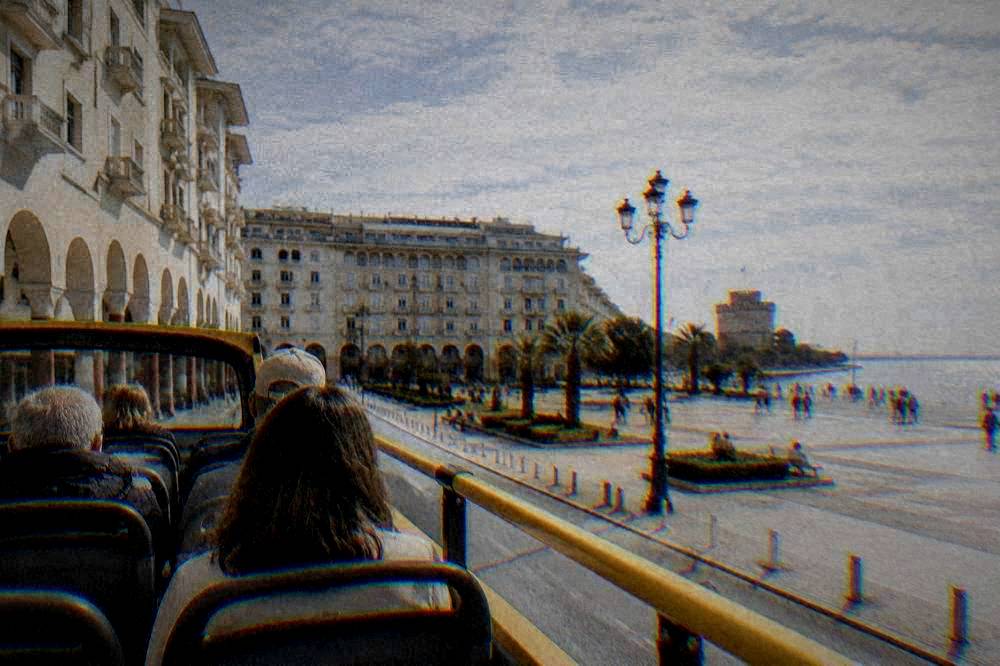
It also helps to know the city's shape before arriving. Thessaloniki is not an island destination and not Athens: it is a coastal city on the Thermaic Gulf, with the White Tower on the seafront promenade, the Nea Paralia, and the old upper town of Ano Poli inside the Byzantine walls. Whether that geography can be covered on foot matters more to a visitor than the alphabet question, and the page Is Thessaloniki A Walkable City answers it directly.
Where English-Language Tours Carry The Visit
Every guided product sold through this site is offered in English where its product card states the language, and the roster for Thessaloniki includes English-language walking tours, food tours, cooking and wine experiences, and day trips to Vergina, Pella, Meteora and Halkidiki. This is the single most useful language fact for a visitor: interpretation is a service that can simply be booked.
The choice below shows the range. The old town walk covers Ano Poli, the walls and the mythology of the upper town; the food tour works through Modiano Market and the city's delicacies; the Vergina and Pella day trip handles the ancient Macedonia sites, where a guide is worth the most.
For context on what a guided walk adds: Thessaloniki carries fifteen UNESCO-listed Paleochristian and Byzantine monuments, inscribed in 1988, plus a Roman Galerian complex of the Arch of Galerius, the Rotunda and the Palace of Galerius. Reading those layers unaided is hard even for visitors who speak Greek. A guide who narrates in English turns the Church of Saint Demetrius, Hagia Sophia and the Heptapyrgion, a fortress that served as a prison until 1989, from silent stones into a story. The editorial desk at Thessaloniki Travel Guide rates guided interpretation as the highest-value spend in a city this dense with history.
| Experience Type | What Runs In English Per The Product Card | What It Covers |
|---|---|---|
| Old town walking tour | Offered in English | Ano Poli, the walls, mythology and botany |
| Food tour with local delicacies | Offered in English | Market stops, tastings and the city's food culture |
| Vergina and Pella day trip | Offered in English | The Royal Tombs of Aigai at Vergina and the museum at Pella |
| Meteora full-day trips | Offered in English | The monasteries of Meteora, about 228 km away, a full day |
Do You Need Greek For Markets, Museums And The Metro?
No, not as a condition of the visit: the metro's own ticket page publishes English alongside Greek, with a basic ticket at 0.60 euro and a daily ticket at 2.50 euro, and the major state museums display their hours and prices on English-language pages. Markets are cash-and-gesture environments where pointing works, and museum audio and label languages should be checked on each museum's own page before assuming.
The metro deserves a specific note because older guides still describe it as unfinished, which is out of date. Line 1 opened in November 2024 and the Kalamaria extension was inaugurated on 27 August 2026, with five more stations reaching Mikra. Trains run 05:15 to 00:30 Sunday to Thursday and 05:15 to 02:00 Friday and Saturday, per the Thessaloniki Metro's own site. For the practical details of paying, the page How To Pay For The Bus In Thessaloniki works through the ticketing rules. Between transport and the two anchor museums, the Archaeological Museum at 10 euro full and the Museum of Byzantine Culture at 10 euro full, a visitor can book, ride and enter without a word of Greek.
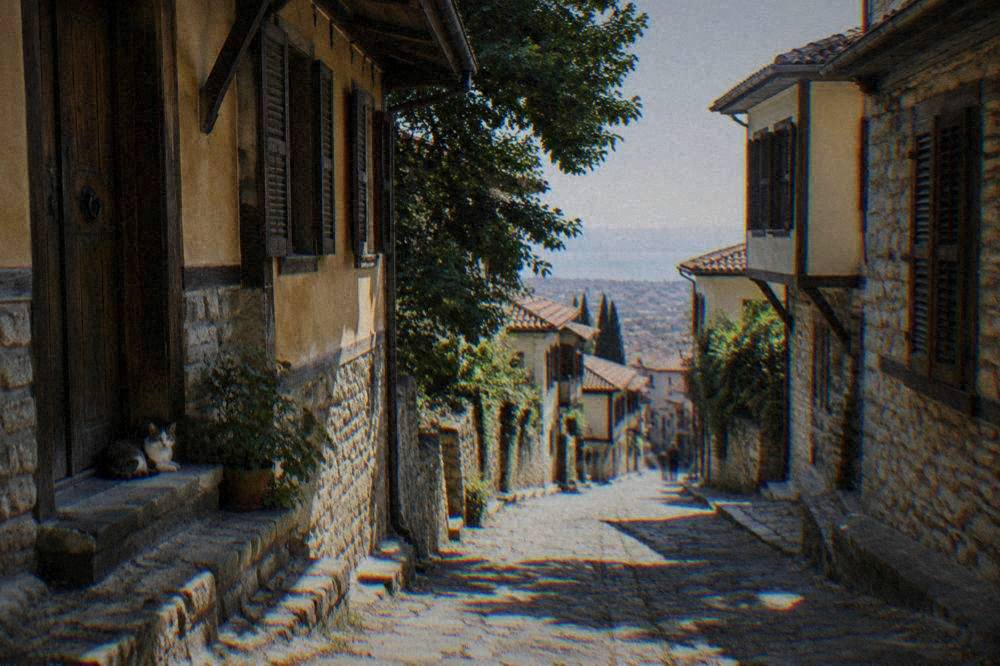
For the old town itself, the solo pick below is the related tour of this page, an English-language walk through Ano Poli with mythology and botany woven in, and it can sit alongside a self-guided day:
Should You Learn Any Greek Before The Trip?
Yes, a small amount, for courtesy rather than necessity: a greeting, a thank you and a please change the tone of every market stall and café counter, and locals respond to the attempt even when the visitor's accent bends the words. This site publishes no phrasebook, because none of its sources supports one, so the recommendation stops at the principle: learn pleasantries, book tours in English, and stop worrying.
The pattern holds across the day-trip region too. Halkidiki's resort strips, Kassandra and Sithonia, run on international summer tourism; the archaeological sites at Vergina, Pella and Dion are interpreted for tour groups in multiple languages; and Meteora's monastery circuit at about 228 km from Aristotelous Square is a standard coach itinerary. Vergina is about 62 minutes by road, Pella about 43, and Dion about 67, all computed free-flow times from Aristotelous Square, so a booked English-language day trip compresses ancient Macedonia into a single, narrated excursion.
Getting Around Thessaloniki Without Greek
Thessaloniki's transport layer works for a non-Greek speaker: the metro publishes an English site with fares and hours, the airport bus lines are numbered X1, X2, X3 and N1 on the OASTH network, and reported taxi costs of about 2 euro for the airport bus and about 25 euro by day for a taxi to the centre are confirmable at booking. Emergency services answer 112, the EU-wide number.
Two cautions keep this honest. First, confirm the reported airport figures when booking, because they come from secondary sources rather than a printed tariff. Second, do not assume the 0.60 euro metro ticket covers city buses: the metro's own tickets page does not say so, and the two systems' integration is exactly the kind of operational detail that changes. The museum layer is steadier: state museums are free on 6 March, 18 April, 18 May, the last weekend of September and 28 October, per the Museum of Byzantine Culture's visiting page, and those dates need no language at all.
Planning questions benefit from the same English-first material. How long to stay is answered at How Many Days Is Enough For Thessaloniki, and whether the city earns the trip at all is weighed at Is Thessaloniki Worth Visiting. Both matter more to the itinerary than any language question does.
English On Day Trips From Thessaloniki
Day trips are where English-language booking matters most, because the destinations, Vergina, Pella, Dion, Meteora, Halkidiki and Mount Olympus, sit outside the city where signage and services thin out. The Vergina and Pella day trip listed on this site runs in English per its product card, as do the Meteora coach trips, and the drive times, about 62 minutes to Vergina, about 43 to Pella and about 154 to Kalambaka, come from computed routing from Aristotelous Square.
The arithmetic of distance explains why booking beats improvising here. Meteora at Kalambaka is about 228 km by road, roughly two and a half hours free-flow each way, which makes it a full day and makes a narrated coach trip the efficient form. Halkidiki splits into the two peninsulas, Kassandra at Kallithea about 78 minutes away and Sithonia at Nikiti about 96, compared and contrasted at Which Is Better Kassandra Or Sithonia. A booked trip with an English-speaking driver or guide converts those hours in the car into part of the experience.
The trio below repeats the three picks of this page for anyone comparing side by side:
One day trip carries a language rule of its own: Mount Athos. Entry to Athos requires a permit, a diamonitirion, and is men only; the boat cruise from Ouranoupoli, about 139 minutes by road from Thessaloniki, views the monastic coast from the sea and does not land. Nothing about that arrangement is a language question, but it is the kind of fine print an English-language listing states clearly and a self-planned trip can miss. Confirm the current arrangements at booking before travelling out.
Common Questions About English In Thessaloniki
Do They Speak English In Thessaloniki?
Greek is the official language, and no measured English-proficiency figure for the city exists, so no percentage is claimed. In practice, English-language tours, day trips, metro ticketing and museum pages carry a visitor through the city, and booking guided products in English is the reliable route to understanding the sights.
Can I Visit Thessaloniki Without Speaking Any Greek?
Yes. The metro's own site publishes English fares and hours, the major museums publish English visiting pages, and the tours listed on this site run in English where the product card says so. A greeting and a thank you in Greek are courteous, not required.
Are The Museums In Thessaloniki Labelled In English?
The Archaeological Museum and the Museum of Byzantine Culture publish their hours, prices and free days on English-language pages, with tickets at 10 euro full and 5 euro reduced. For in-gallery label and audio-guide languages, check each museum's own visiting page before the visit.
Do English-Language Tours Cover The Day Trips Too?
Yes, per the product cards: the Vergina and Pella day trip, the Meteora full-day trips and Halkidiki cruises are sold in English. The drive times from Aristotelous Square, about 43 minutes to Pella, about 62 to Vergina and about 154 to Kalambaka, come from computed routing and argue for a guided trip over self-driving.
Is The Thessaloniki Metro Usable Without Greek?
Yes. The metro's own ticket page publishes in English, with a basic ticket at 0.60 euro and a daily ticket at 2.50 euro, and trains run 05:15 to 00:30 Sunday to Thursday and 05:15 to 02:00 Friday and Saturday. Station names appear in both alphabets on the network's materials.
The honest summary: Thessaloniki speaks Greek, its visitor infrastructure speaks English where it counts, and the gap between the two is best closed by booking guided experiences in English rather than by trusting unverifiable fluency claims.