What Is The Oldest Building In Thessaloniki?
Thessaloniki has no single oldest building to point to, but its Roman, Byzantine and Ottoman layers, from the Rotunda to the Ano Poli walls, tell the story of a city founded in 315 BC.
Thessaloniki, the second city of Greece, sits on the Thermaic Gulf in Central Macedonia, and its building stock has been interrupted so often, by fire, earthquake, siege and redevelopment, that the question of which structure came first has no documented single answer. The city was founded in 315 BC by Cassander and named for his wife Thessalonike, a daughter of Philip II, according to the municipality's own history pages. Almost nothing from that Hellenistic founding survives above ground in recognizable form. What does survive begins with the Roman era and grows denser through the Byzantine centuries, and fifteen of those early Christian and Byzantine monuments were inscribed together on the UNESCO World Heritage List in 1988.
What Is The Oldest Building In Thessaloniki?
Thessaloniki was founded in 315 BC by Cassander, per the municipality's history pages, but the surviving monuments begin with the Roman Galerian complex, whose Rotunda and Arch of Galerius still stand, and continue through fifteen Paleochristian and Byzantine monuments inscribed on the UNESCO World Heritage List in 1988.
The question gets asked constantly, and the reason the answer stays slippery is physical. The Great Fire of 1917 left about 73,000 people homeless and gutted the centre, according to the municipality, and the reconstruction that followed the Hebrard plan reshaped whole blocks around Aristotelous Square. A 1978 earthquake damaged buildings again, among them churches the municipality names explicitly, including Hagia Sophia and the Church of Saint Demetrius. Repairs and rebuilding blur the line between what is ancient and what is restored.
That blur is the honest core of the answer. A church may stand on foundations many centuries old while its visible walls, mosaics and roof belong to later campaigns of repair. The UNESCO inscription of 1988 recognizes the group of fifteen monuments for their Paleochristian and Byzantine heritage as a set, not as a ranking by age, and the World Heritage pages give no construction league table. For what the city is actually famous for beyond this, see what Thessaloniki is famous for.
So instead of crowning one winner, the useful approach is to walk the layers. Roman first, then the Byzantine churches and walls, then the Ottoman traces such as the Heptapyrgion fortress, whose own history the state archaeological service documents.
Which Roman Monuments Still Stand In Thessaloniki?
The surviving Roman monuments of Thessaloniki are the Galerian complex: the Rotunda, the Arch of Galerius (Kamara) and the Palace of Galerius, built under the tetrarch Galerius. The Arch of Galerius is an open-air street monument on Egnatia, free to view at any hour, and the Rotunda stands a short walk north of it, part of the same UNESCO-inscribed group of fifteen monuments.
These are the structures a visitor can actually point at when the age question comes up. The municipality's monument pages associate the palace, the triumphal arch and the Rotunda with Galerius and his era, without printing exact construction dates for each.
Massive, brick-built and domed, it has served Roman, Christian and Muslim uses across its life, and that sequence of conversions is itself part of the city's story. Visitors should check the current opening arrangements on site before planning an interior visit, and check the current price on the monument's own ticket page before booking or arriving.
The Arch of Galerius asks nothing of the visitor but attention. It sits in the middle of the city, crossed daily by people walking between Aristotelous Square and the Rotunda, its relief panels worn but legible. Free, open and unreconstructed in its setting, it is the easiest Roman encounter in Thessaloniki.
| Roman-era monument | What the sources support | Viewing today |
|---|---|---|
| Rotunda | Part of the Galerian complex; original purpose not given in the official pages used here | Interior opening arrangements vary, check on site |
| Arch of Galerius | Open-air triumphal monument on Egnatia, associated with Galerius | Free to view at any time |
| Palace of Galerius | Galerian complex in the modern city fabric | Open-air remains visible from the surrounding streets |
A private walk with a local guide is the most efficient way to link these three in one morning, since they sit within easy walking distance of each other and of the Byzantine churches that follow them in the city's timeline. The Check availability link shows the operator's live listing for that walk.
How Old Are The Byzantine Churches Of Thessaloniki?
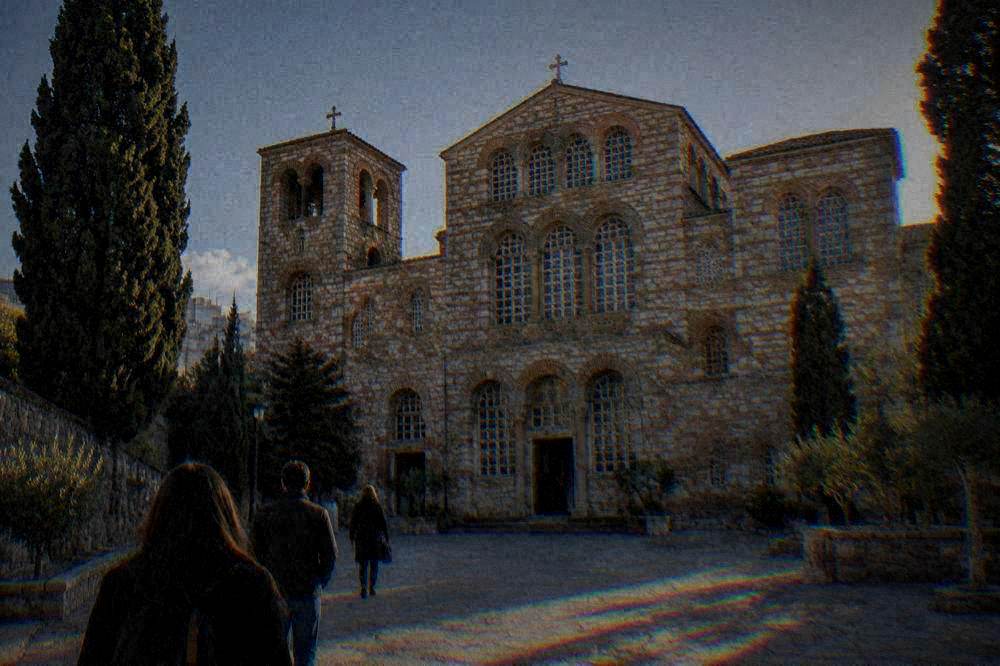
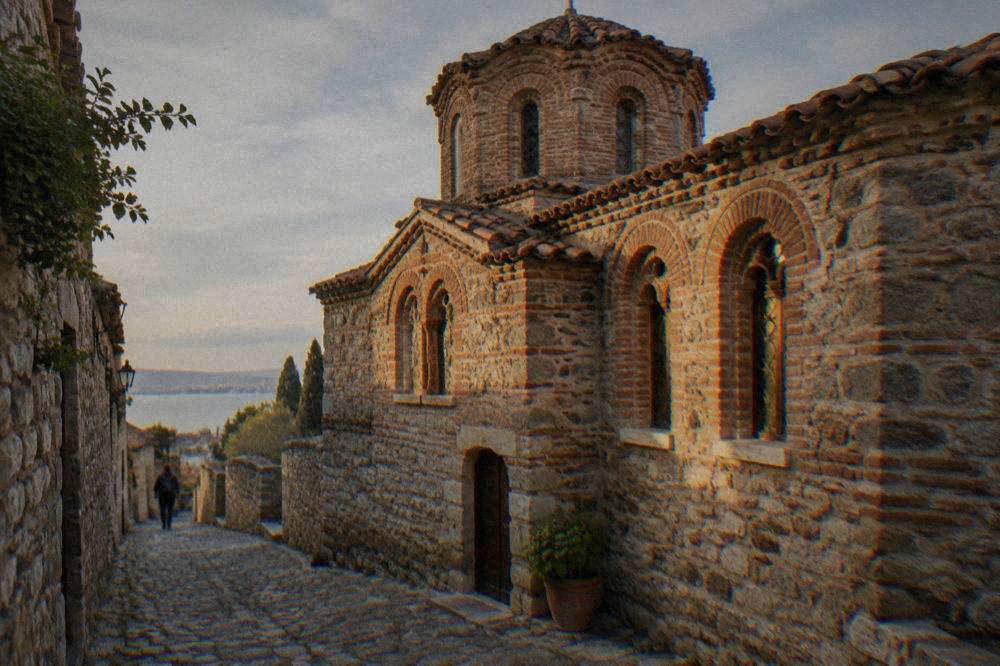
The working churches of Thessaloniki, including Saint Demetrius, Hagia Sophia, Panagia Acheiropoietos, Hosios David and the Vlatadon Monastery, are free to enter and open outside service times, and all belong to the UNESCO group of fifteen inscribed in 1988.
What can be said with attribution is narrower and more interesting. Both Hagia Sophia and the Church of Saint Demetrius were damaged in the Great Fire of 1917, per the municipality's history pages, and both carry the repairs of the century since. The fire is the dividing event: what visitors see in the centre is a city rebuilt after 1917 around surviving and restored monuments, not an untouched ancient streetscape. The wider story of the city's name and its long continuity is covered in is Thessaloniki the same as Thessalonica.
Church visiting in Thessaloniki is refreshingly simple on the practical side. These are working Orthodox churches, free to enter, and generally open outside liturgical hours; no printed timetable applies, so the workable plan is to go in the morning and be quiet during services. No ticket, no queue, no price to check. The crypts and chapels attached to some of them follow their own arrangements, and those are best confirmed on the spot.
What Do The City Walls And The Heptapyrgion Show?
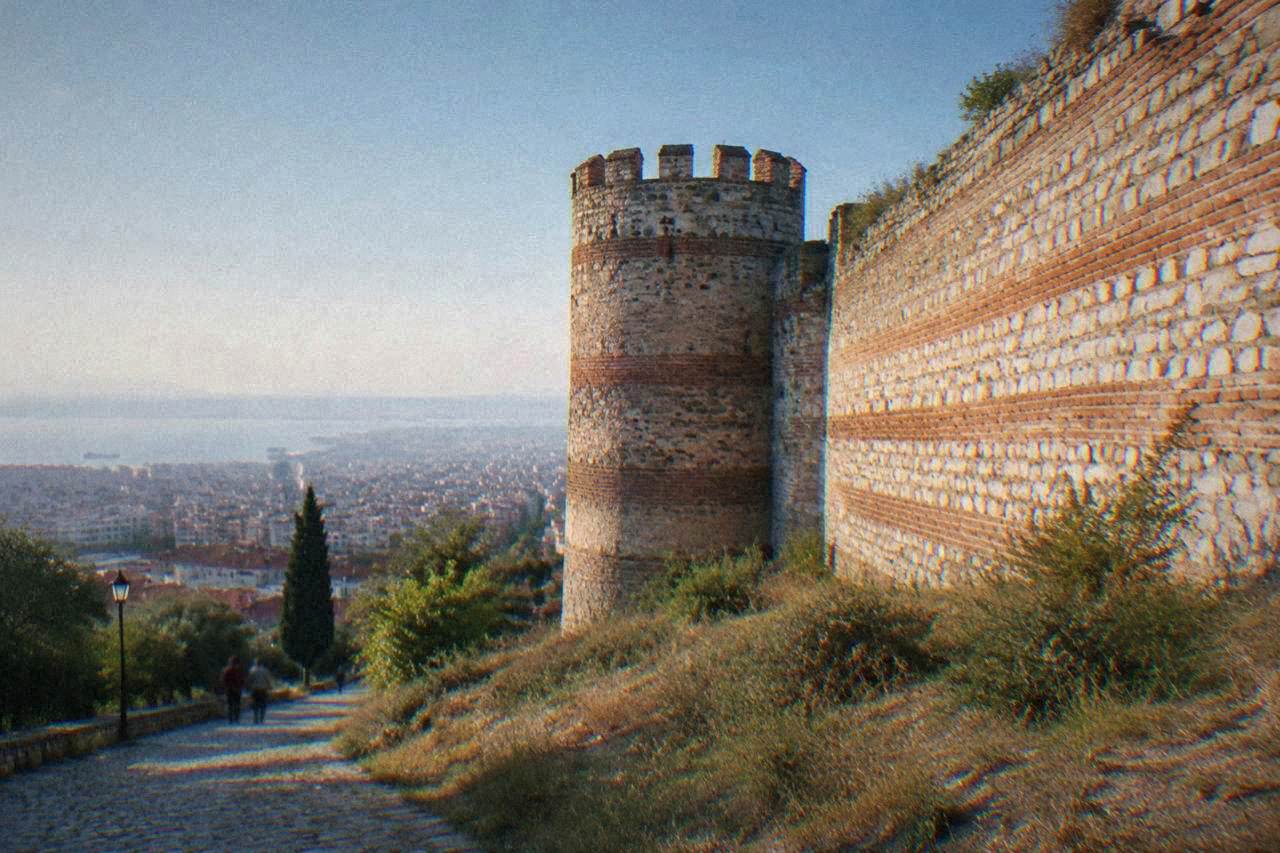
The walls of Thessaloniki, visible today around Ano Poli, run partly along their original course of about 8 km, with roughly 4 km still standing, per the state archaeological service, and the Heptapyrgion fortress at their top was used as a prison until 1989. The walls have Hellenistic origins and were expanded in the Byzantine period and strengthened under the Ottomans, which makes them the clearest multi-era structure in the city.
The walls are the closest thing to a single answer the sources permit. Not one construction date, because they were never built once: begun in the city's early period, rebuilt and extended under Byzantine rule, and reinforced after the Ottoman conquest of 1430, they are a composite the way the city is. Walking them from the Trigoniou Tower down through Ano Poli gives the best physical sense of that layering, and the upper town itself, with its small stone houses, is protected as a heritage district.
The Heptapyrgion, the fortress at the highest point, has the sharpest documented turn of use. The state culture ministry's own pages record its conversion into a prison in the late 19th century and its closure in 1989, after which it passed to the archaeological service. A building that has been fortress, prison and monument within living memory is a useful corrective to any city's tendency to present its history as static.
| Layer of Thessaloniki | Documented facts | Where to see it |
|---|---|---|
| Hellenistic founding | Founded 315 BC by Cassander, named for Thessalonike | No standing structure survives recognizably |
| Roman | Galerian complex: Rotunda, Arch of Galerius, Palace of Galerius | Around Egnatia and Navarinou Square |
| Byzantine | Fifteen Paleochristian and Byzantine monuments, UNESCO-inscribed 1988 | Churches and walls across the centre and Ano Poli |
| Ottoman | Conquest 1430; Heptapyrgion a prison until 1989 | Heptapyrgion and the upper town walls |
| Modern | Great Fire 1917, about 73,000 homeless; 1978 earthquake; European Capital of Culture 1997 | Hebrard-era centre around Aristotelous Square |
Can You Cover These Layers In One Day In Thessaloniki?
Yes, the Roman core, the Byzantine churches and the Ano Poli walls fit into a single walking day, because the historic centre is compact and largely flat until the climb to the upper town. A realistic loop runs Rotunda and Arch of Galerius in the morning, the Church of Saint Demetrius and Hagia Sophia at midday, and the walls and Heptapyrgion in the afternoon, with the metro, open since November 2024, connecting the edges.
The practical details are on this site already. The White Tower, at the seafront end of that loop, costs 8 euro full and 4 euro reduced under the pricing in force from 1 April 2026, per the Museum of Byzantine Culture's visiting page. The Archaeological Museum and the Museum of Byzantine Culture are each 10 euro full and 5 euro reduced, and both museums keep their hours on their own visiting pages, which is where to confirm before a visit. State museums are free on 6 March, 18 April, 18 May, the last weekend of September and 28 October.
How long to allow overall depends on depth. The question of how many days is enough for Thessaloniki has a different answer for a monuments-only trip than for one that adds day trips to Vergina, Pella and Meteora. Vergina, with the Museum of the Royal Tombs of Aigai, lies about 62 minutes by road from Aristotelous Square, and Meteora about 154 minutes, so both pull a day out of the city each. This Thessaloniki Travel Guide page stays with the city itself.
For a guided version of the layers walk, a private tour with a local guide covers the same ground with someone who can put a name to every wall course, and a food-and-drink walk with a chef pairs the monuments with the city's market and table culture, which is a documented part of its identity.
Common Questions About Thessaloniki's Oldest Structures
What Is The Oldest Building In Thessaloniki?
No official source names one. Thessaloniki was founded in 315 BC by Cassander, but the standing monuments begin with the Roman Galerian complex and the Byzantine churches and walls, fifteen of them UNESCO-listed since 1988. Any single pick would be a guess.
How Old Is The Rotunda In Thessaloniki?
View it as Roman in origin and multi-era in use.
Are The Byzantine Churches Of Thessaloniki Free To Enter?
Yes. The working churches, including Saint Demetrius, Hagia Sophia, Panagia Acheiropoietos, Hosios David and the Vlatadon Monastery, are free and generally open outside service times. No printed hours or ticket prices apply.
Can You Walk The Old City Walls Of Thessaloniki?
Parts of them. Roughly 4 km of the original about 8 km circuit still stands around Ano Poli, per the state archaeological service, and the walk from the Trigoniou Tower toward the Heptapyrgion is the standard route.
What Happened To Thessaloniki's Old Buildings?
Fire, earthquake and redevelopment. The Great Fire of 1917 left about 73,000 people homeless and gutted the centre, and the 1978 earthquake damaged churches including Hagia Sophia and the Church of Saint Demetrius, per the municipality's history pages.
The short version: Thessaloniki does not offer one oldest building, it offers a readable sequence of them, from the Roman Rotunda and Arch of Galerius through the Byzantine churches and walls to the Ottoman-era Heptapyrgion, all within a walkable kilometre or two of Aristotelous Square. Walk that sequence and the question answers itself in layers.