Is Thessaloniki Good For Shopping?
A plain answer to whether Thessaloniki is good for shopping: markets, districts, day-trip buys and what the sources actually say about Greece's second city as a shopping stop.
Thessaloniki, the second city of Greece, sits on the Thermaic Gulf in Central Macedonia, and its shopping story is the story of a real, lived-in city rather than a resort built around visitors. People who live here, more than a million of them across the wider urban area according to the city's own gastronomy portal, buy their food, clothes and household goods in the same streets a traveller walks between the White Tower and Aristotelous Square. That makes the retail landscape different from an island souvenir town: less tat, more function, and a food-market culture that the municipal UNESCO Creative City of Gastronomy designation exists to celebrate.
Is Thessaloniki Good For Shopping?
Thessaloniki is good for shopping if what you want is food, markets and everyday Greek retail rather than designer flagships. The city's core, from Aristotelous Square out to the Ladadika district and up to Ano Poli, packs covered food markets, high-street chains and small independent shops into a compact, walkable centre, and the municipal gastronomy portal signals how seriously the city takes its food trade.
The distinction matters. What the sources do support is a city of markets. Modiano Market and Kapani Market sit at the centre of the food-shopping tradition, one a covered market, the other an open-air grid of stalls that has served the city for generations. Around them spreads a conventional Greek city-centre retail core: clothes, shoes, books, phone shops, bakeries, all within a walkable area that the metro now stitches together, Line 1 having opened in November 2024 and its Kalamaria extension in August 2026.
For a first-time visitor weighing the city overall, the companion piece is Thessaloniki worth visiting covers the broader case, and how many days is enough for Thessaloniki helps size a trip that leaves room for market wandering rather than sprinting between monuments.
What Can You Actually Buy In Thessaloniki?
The strongest shopping category is food: olives, spices, honey, sweets, coffee and wine from the covered markets and delicatessens, bought in a city the municipal portal itself frames through its gastronomy. Beyond food, the centre offers mainstream fashion retail and small independents, while Ano Poli and the seafront promenade, the Nea Paralia, offer walking, browsing and viewpoints rather than shop-to-shop retail therapy.
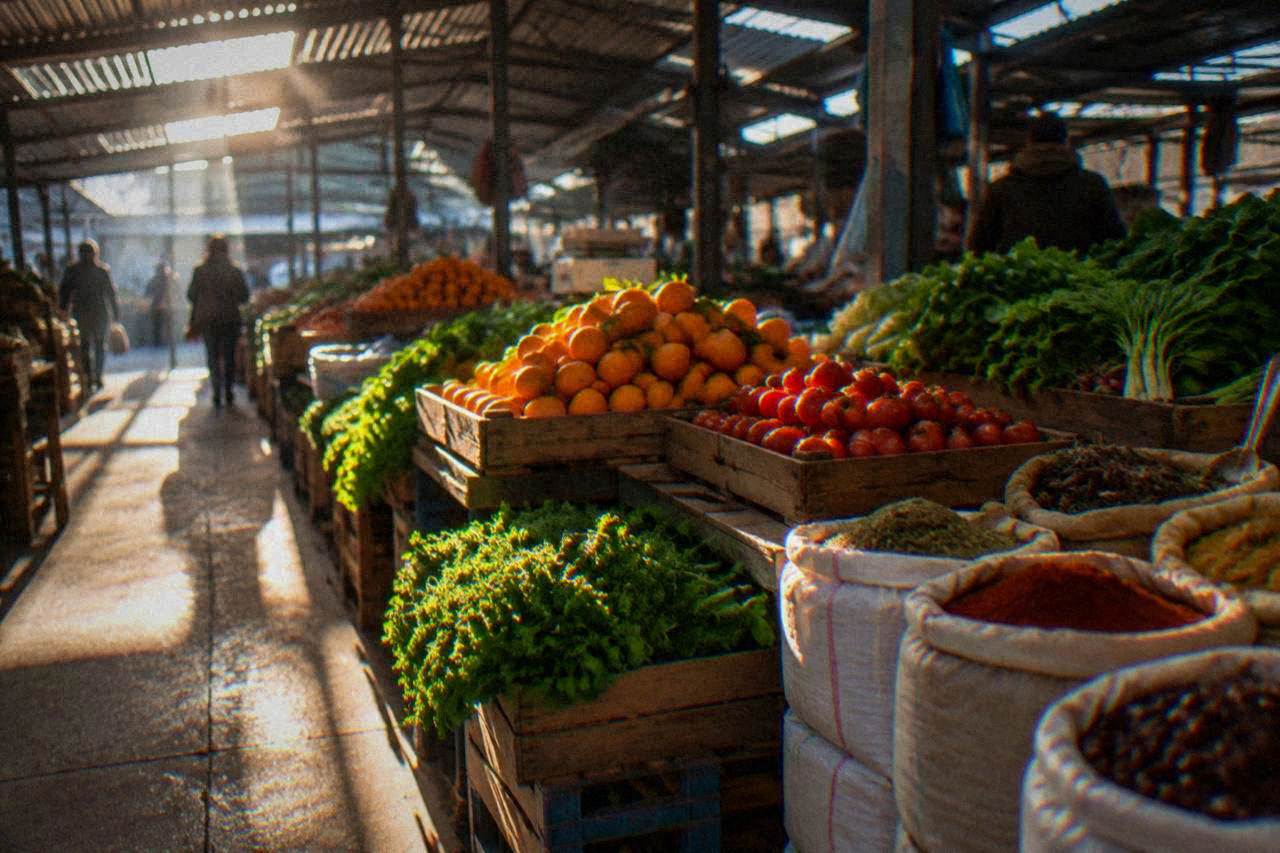
Food is where the city's identity and its shopping overlap. The municipal Creative City of Gastronomy portal exists because the food culture here runs deep, and the practical expression of that for a shopper is the market hall and the deli counter. Modiano Market is the covered anchor; Kapani Market is the older, louder, open-air counterpart. Between them a traveller can assemble a serious bag of edible souvenirs. What a specific stall charges is not something this site can print: prices at market stalls move with the season, so check the board on the spot.
Non-food shopping is functional rather than spectacular. Greek and international chains fill the blocks around the centre, and independent shops cluster in the side streets. A good walk through the upper town explains the city's layers while the market district does the commerce; the Thessaloniki Old Town Walking Tour, Mythology and Botany covers Ano Poli's walls and plants, and a shopper can pair it with a market morning on the same day. Check availability
How Do The Markets Compare With The Shops?
Modiano Market and Kapani Market are the food-shopping core and the most distinctive retail experience in the city, while the conventional shops around the centre sell what any Greek city of this size sells. The markets are where Thessaloniki feels different from other shopping stops, because they feed the city's own kitchens and the municipal gastronomy designation recognises exactly that trade.
A useful way to see the difference is to compare what each kind of shopping delivers, honestly and without inventing price levels:
| Shopping type in Thessaloniki | What it offers | What the sources support saying |
|---|---|---|
| Covered food markets (Modiano Market) | Produce, delicatessen goods, edible gifts | A covered central market, part of the city's gastronomy identity |
| Open-air markets (Kapani Market) | Stalls of food and household goods | An open-air market district in the centre |
| City-centre retail streets | Fashion, shoes, books, everyday goods | A compact, walkable, conventional Greek retail core |
| Ano Poli craft and antique corners | Small shops in the old upper town | The old upper town within the Byzantine walls, reached on foot |
The table is deliberately thin where the sources are thin. Confirm current prices on the stall or in the shop before buying.
The metro makes a market-and-shops day painless. A basic ticket costs 0.60 euro and a 24-hour ticket 2.50 euro, per the Thessaloniki Metro's ticket page, with trains running from 05:15 to 00:30 Sunday to Thursday and to 02:00 on Friday and Saturday nights. Older guides that say the city has no metro are out of date. More on that in the site's guide to getting around Thessaloniki.
Is Shopping In Thessaloniki Expensive?
Thessaloniki prices sit on the Greek mainland, in euro, and the sources support no comparison ranking against Athens or other cities, so the honest answer is that costs feel like northern Greece rather than an island resort, with market food the affordable category and imported fashion priced as imported fashion. Greece has used the euro since 1 January 2001, so there is no currency puzzle to solve.
The cost question overlaps with the trip-budget question, and the fuller treatment lives in is Thessaloniki expensive. For shopping specifically, a few grounded anchors help. Entry to the big state museums is modest, the White Tower at 8 euro full and 4 reduced since 1 April 2026, per the Museum of Byzantine Culture's visiting page, and the Archaeological Museum and Museum of Byzantine Culture each at 10 euro and 5 reduced, which frees budget for the market stalls. State museums are also free on fixed days: 6 March, 18 April, 18 May, the last weekend of September and 28 October.
The one accommodation cost that is safe to name is the Greek climate resilience fee, which exists, is collected by the accommodation, is charged per room per night, and runs higher from April to October; the rates are set by category and the desk collects them, so expect it on the bill rather than in the quoted rate.
What About Shopping On The Day Trips?
The day trips around Thessaloniki carry their own shopping angle, and the two strongest are the food-and-wine country of Naoussa and Veria and the monastery shops of Meteora, with Vergina and Pella selling archaeology in museum form rather than goods. All distances below are road distances from Aristotelous Square, computed over free-flow routing.
The map of shopping-adjacent day trips, with drive times as computed, not promised:
| Day trip from Thessaloniki | Road distance | About, free-flow | Shopping angle |
|---|---|---|---|
| Veria | 72.8 km | 52 minutes | Market town near Vergina |
| Vergina (Aigai) | 68.0 km | 62 minutes | Museum of the Royal Tombs of Aigai |
| Naoussa | 92.3 km | 76 minutes | Wine country of northern Greece |
| Edessa | 90.3 km | 82 minutes | Waterfall town, park entry free |
| Kassandra (Kallithea) | 86.2 km | 78 minutes | Organised beaches of Halkidiki |
| Meteora (Kalambaka) | 227.5 km | 154 minutes | Monastery shops, a full day out |
Naoussa's wine reputation is the reason the site keeps a northern Greece wine guide, and a wine-country day pairs naturally with a city shopping trip built around food. Meteora deserves a warning label on any shopping itinerary: Kalambaka is about 228 km and over two and a half hours by road, so it is a full-day trip, never a half-day retail dash, and any guide calling it easy is wrong. Each Meteora monastery charges its own small entry fee, reported at about 5 euro per monastery, cash only, with no combined ticket, and each monastery closes one weekday; per-monastery details are reported rather than official here, so confirm before you go. The site's Meteora guide carries the fuller treatment.
Halkidiki adds a different retail layer, beach-town browsing on Kassandra and Sithonia, and the comparison between the two peninsulas is covered in which is better, Kassandra or Sithonia.
When Is The Best Time To Shop In Thessaloniki?
Late spring through early autumn gives the full shopping-and-market experience, with July and August the warmest months, a mean high of 31.7 C and 31.4 C respectively per the HNMS Thessaloniki Mikra station, 1959 to 2010, while the wetter months from October to December bring 43.0, 52.8 and 55.1 mm of rain and push browsing indoors.
The climate record, HNMS Thessaloniki Mikra station, 1959 to 2010, gives the shape of the year. July and August are the warmest and, at 23.8 mm and 19.3 mm of rain, the drier pair on the monthly table. December carries the highest monthly rainfall at 55.1 mm, and November sits at 52.8 mm, so a winter market trip means a covered hall like Modiano Market rather than a slow wander through Kapani Market's open-air stalls. September and October land in between, 29.8 mm and 43.0 mm, with the Dimitria festival reported to have run 1 to 26 October in 2026 and the city busy around the feast of Saint Demetrius on 26 October and Ochi Day on 28 October.
The safe pattern for any Greek city is to treat markets as morning places and to confirm hours locally, and the same caution applies to any specific shop. Emergency number throughout Greece, for completeness on any practical page: 112.
For travellers whose shopping instinct is really a food instinct, the companion answer on what food Thessaloniki is famous for names the edible threads to pull, and the overview of what Thessaloniki is famous for puts the markets in their wider context. A market-led first morning, an Ano Poli walk in the afternoon and a wine or Meteora day trip later in the week is a shape that fits the city as the sources describe it, and the Thessaloniki Travel Guide holds the detailed guides for each of those pieces.
Common Questions About Shopping In Thessaloniki
Is Thessaloniki Good For Shopping?
Yes, for food markets, everyday Greek retail and edible souvenirs rather than luxury flagships. Modiano Market and Kapani Market anchor the food-shopping core, and the centre is compact and walkable, with the metro running since November 2024.
Which market should I visit for food shopping in Thessaloniki?
Modiano Market is the covered market at the centre of the food trade, and Kapani Market is the open-air stall district beside the same central area. Both are working markets that supply the city's kitchens; check prices at the stall, as none are published in advance.
Is shopping in Thessaloniki cheaper than in Athens?
This site prints no ranking or price comparison between the two cities, because the sources do not support one. What can be said is that Thessaloniki is a mainland Greek city using the euro, with market food as the affordable shopping category.
Can I buy wine around Thessaloniki?
Yes, and Naoussa, about 76 minutes by road from Aristotelous Square, is the recognised wine country of northern Greece. The site's northern Greece wine guide covers the region in detail.
What can I buy on the Meteora day trip?
Meteora's monasteries sell small religious and craft items, and each monastery charges its own entry, reported at about 5 euro in cash with no combined ticket. Kalambaka is about 228 km away, so treat it as a full day and confirm details before you go.