Thessaloniki Accessibility: Step-Free Routes And Transport
Thessaloniki has a modern, fully underground metro, a flat city centre along the Thermaic Gulf and a hilly old upper town. This guide sets out what the transport operators and museums publish, and what to confirm before you book.
Short answer
Thessaloniki's centre is flat and compact, the metro (Line 1, open since November 2024) runs 05:15 to 00:30 Sunday to Thursday and until 02:00 on Friday and Saturday, and a basic ticket costs 0.60 euro. Access details at individual sights are not published centrally, so confirm each venue before booking.
Thessaloniki, the second city of Greece, sits on the Thermaic Gulf in Central Macedonia, and its centre is unusually kind to visitors who plan around terrain: the streets between Aristotelous Square and the Nea Paralia promenade are flat, the metro that opened in November 2024 is fully underground with new stations, and the main museum cluster sits within a short, level walk of the seafront. The catch is the old upper town, Ano Poli, which climbs inside the Byzantine walls and rewards strong legs more than wheels. This page works through both, from the airport arrival to the Meteora day trip, using only what the operators and museums themselves state.
Is Thessaloniki Easy To Get Around Without A Car?
Yes, for the flat central belt along the waterfront, because the metro is open, tickets cost 0.60 euro for a single journey and 2.50 euro for a 24-hour pass, and the sights between the White Tower and Aristotelous Square sit on level ground within walking range of each other. The metro runs 05:15 to 00:30 Sunday to Thursday and 05:15 to 02:00 Friday and Saturday, per the operator's own site.
Ano Poli, the old upper town, is the exception: it climbs steeply inside the walls.
Older guides still describe a city with no metro, which is out of date: Line 1 opened in November 2024, and the Kalamaria extension, five more stations to Mikra, was inaugurated on 27 August 2026. For a visitor planning around energy and mobility, that matters more than any other single fact about the city, because it links the new railway station in the west with Nea Elvetia in the east and Kalamaria in the southeast without a single street-level transfer.
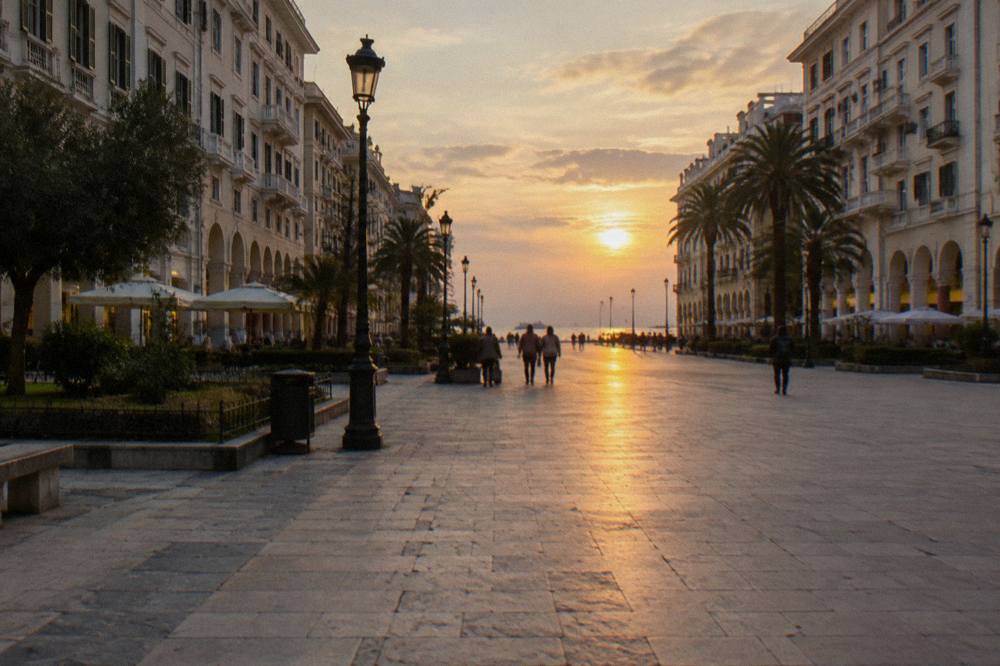
The city centre itself splits cleanly. The band from the port through Ladadika, Aristotelous Square, the Roman Agora area and along the Nea Paralia to the White Tower and beyond is low-lying and level. Ano Poli, above it, is a maze of slopes, steps and cobbled lanes under the walls, with the Trigonion Tower and the Heptapyrgion at the top. Neither the municipality nor the sight operators publish step counts, gradients or surface conditions for named streets or sights, so treat any "accessible route" claim on a third-party site as unconfirmed and ask the venue directly.
The published transport facts, all from the operators' own pages:
| Transport fact | Figure | Where it comes from |
|---|---|---|
| Metro basic ticket | 0.60 euro full, 0.30 euro reduced | Thessaloniki Metro ticket page |
| Metro 24-hour ticket | 2.50 euro, unlimited metro trips | Thessaloniki Metro ticket page |
| Metro hours, Sunday to Thursday | 05:15 to 00:30 | Thessaloniki Metro site |
| Metro hours, Friday and Saturday | 05:15 to 02:00 | Thessaloniki Metro site |
| Kalamaria extension opening | 27 August 2026 | Ministry press release |
| Emergency number | 112 | EU-wide standard |
Which Areas Of Thessaloniki Are Easiest On Foot?
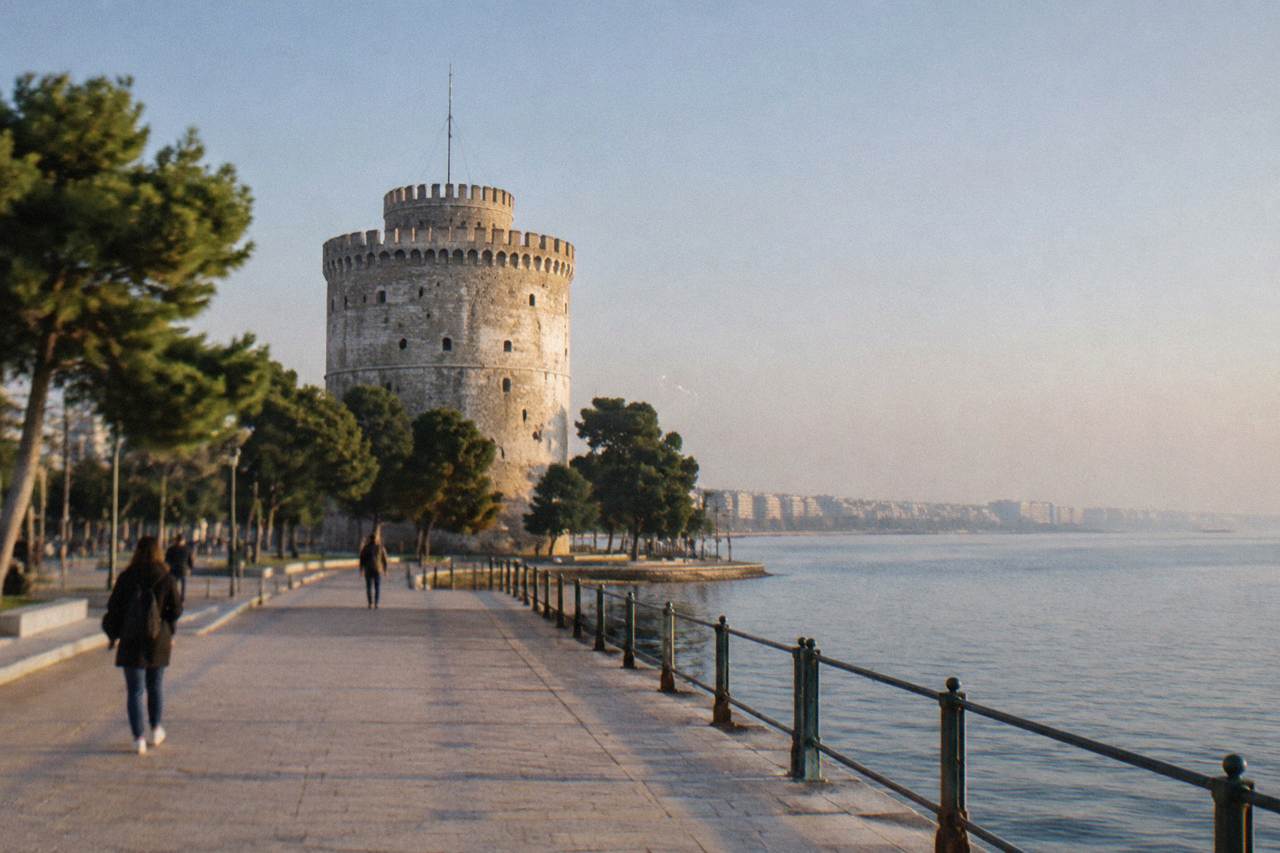
The seafront band from the port to the Nea Paralia and the blocks around Aristotelous Square form the flattest, most compact walking ground, with the White Tower, the Rotunda's neighbourhood and the Ladadika dining quarter all on level ground. Kalamaria, on the southeast side, now has five metro stations of its own. Ano Poli is steep by contrast, built on the slope below the Byzantine walls, and no published source gives gradients or step counts there.
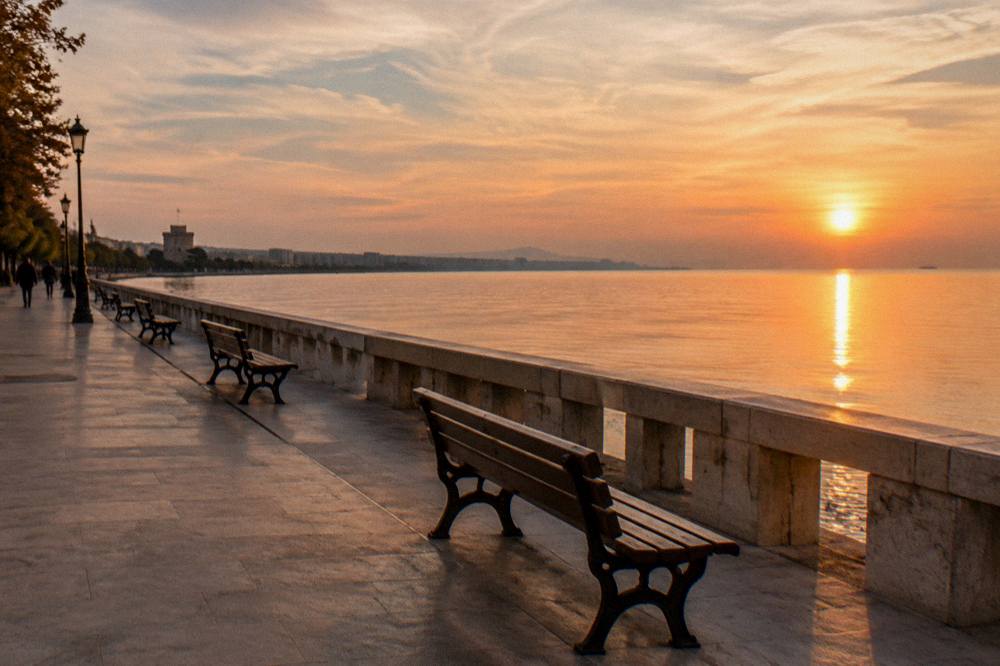
Think of the city in three tiers. The first is the waterfront: the Nea Paralia is a promenade, a walking and cycling route along the gulf rather than a beach, and it links a chain of sights on flat reclaimed ground. The second tier is the retail and monument core a block or two inland, around Aristotelous Square, the Roman Agora and the Arch of Galerius on Egnatia, still essentially level. The third is everything above the walls.
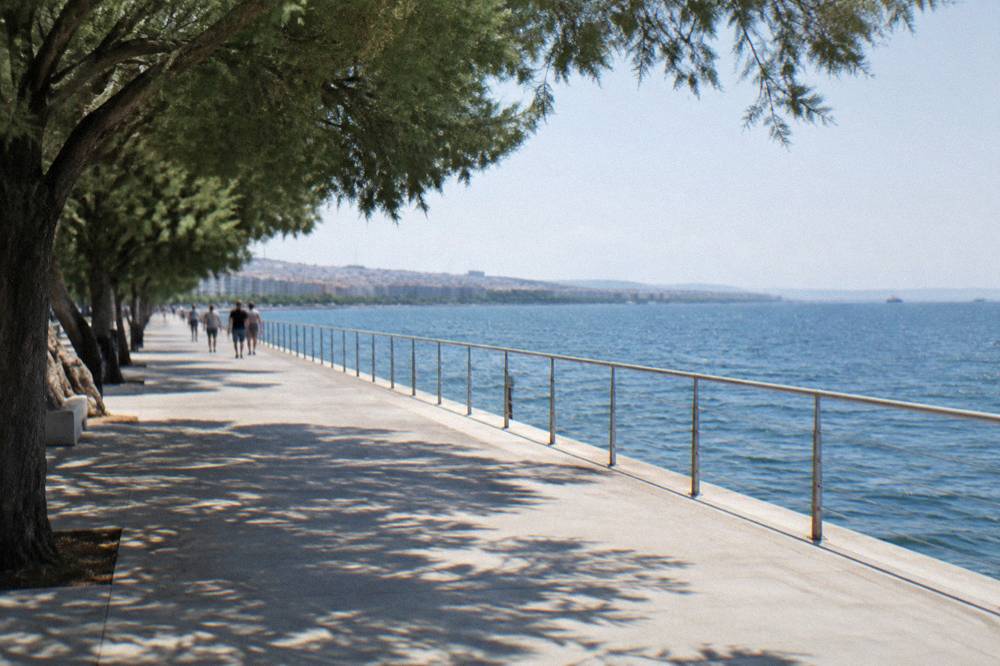
A note on the promenade itself: swimming is not what it is for. The city waterfront is for walking and views; the nearest swimmable beaches are at Perea, about 23 km and 28 minutes by road from Aristotelous Square, and Epanomi at about 36 minutes, and the site's beaches near Thessaloniki guide covers them.
| Area | Terrain character | What sits there |
|---|---|---|
| Nea Paralia waterfront | Flat promenade along the gulf | Walking and cycling route, sea views |
| Aristotelous Square and centre | Level grid of streets | Square, shops, cafes, Roman Agora area |
| Ladadika | Flat, near the port | Dining quarter |
| Kalamaria | Coastal, now on the metro | Five stations from Nomarchia to Mikra |
| Ano Poli | Steep slopes and lanes inside the walls | Trigonion Tower, Heptapyrgion, Vlatadon Monastery |
If the plan is to see the flat core with a guide rather than self-directing, two options fit this brief. A guided Thessaloniki walking tour covers the central sights, and it is worth messaging the operator about pace, rest stops and route before booking, since no operator publishes route gradients. An electric-assist bicycle tour is another way to flatten the city, and both appear in the picks below alongside a seated, rotating viewpoint experience at the OTE Tower in the fair grounds.
The e-bike option deserves a line of its own here. Electric assist does not remove stairs, but it changes what a slope costs, and Thessaloniki's slope problem is concentrated in exactly one district, Ano Poli. As with any operator, ask directly about the route and about the bike step-over height before booking; the listing describes neighbourhoods rather than a stair-free guarantee.
How Does The Thessaloniki Metro Change Accessible Travel?
The metro gives the city a fully underground, newly built spine with level station entrances, though the operator publishes no accessibility audit of individual stations, so lift availability at each stop should be confirmed with the operator before relying on it. What is published is solid: 05:15 to 00:30 Sunday to Thursday, 05:15 to 02:00 Friday and Saturday, 0.60 euro a single journey, 2.50 euro a day ticket, and a Kalamaria branch opened on 27 August 2026.
For a visitor with stamina or mobility limits, the practical effect is that the two ends of the city, the railway station in the west and Kalamaria in the southeast, are now linked without a bus transfer, and the fare is low enough that a tired return leg costs almost nothing.
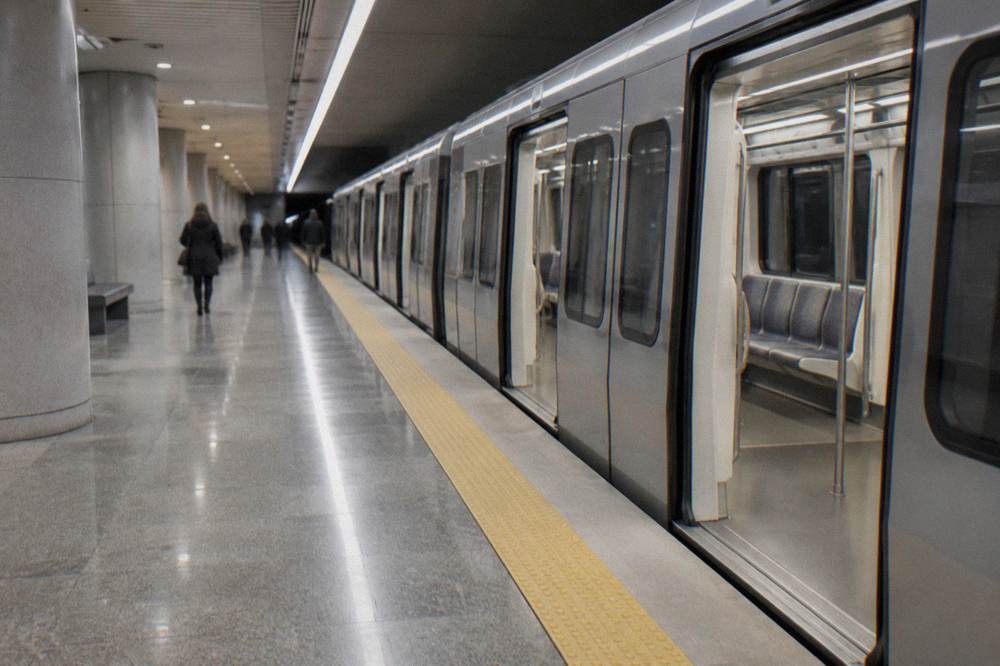
One warning worth repeating: the claim that the metro is under construction, still common on older pages, is simply false and has been since November 2024. Do not plan around a city with no rail link, because that city no longer exists.
| Metro fact | Published figure |
|---|---|
| Line 1 opening | November 2024 |
| Kalamaria extension | Inaugurated 27 August 2026, five stations |
| Single ticket | 0.60 euro full, 0.30 euro reduced |
| 24-hour ticket | 2.50 euro |
| 30-day pass | 16 euro |
| Hours | 05:15 to 00:30 Sun to Thu, 05:15 to 02:00 Fri and Sat |
A guided walk remains the other half of the equation, since the metro covers distance but not orientation. The related tour for this page is exactly that: a guide-led walk through the central sights and less obvious corners, bookable with a free-cancellation window so the route conversation with the operator can happen before the commitment.
How Hard Is The Journey From Thessaloniki Airport To The Centre?
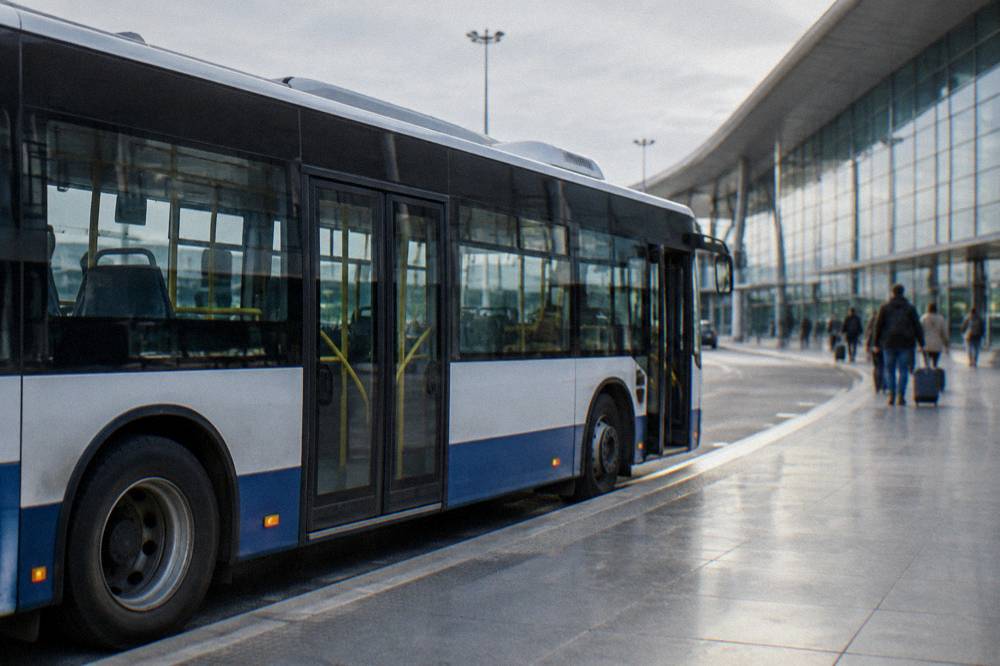
Thessaloniki Airport "Makedonia" (SKG) is 16.4 km and about 20 minutes by road from Aristotelous Square, with four published OASTH airport bus lines (X1, X2, X3 and the night N1) and a reported flat taxi day fare of about 25 euro, a figure from secondary sources that should be confirmed with the driver or rank before setting off. X2 and X3 connect the airport to metro stations, which extends the step-free-possible planning into the city.
The airport operator's own page lists the public bus and taxi options, and OASTH's route list names the four airport lines. What neither prints in a stable form is the bus fare; a flat fare of about 2 euro on the airport lines is reported in city guides, so treat it as approximate and confirm on boarding. Journey time by road is short when traffic is light, and the computed 20-minute figure is free-flow, not rush hour. More of these guides are collected on Thessaloniki Travel Guide.
For arrivals, the sequence that minimises effort is straightforward: bus or taxi to the centre, then metro or a short flat walk to the hotel. The site's Thessaloniki airport to city centre guide walks through each option, and the where to stay in Thessaloniki guide helps with picking a base inside the flat belt rather than up in Ano Poli.
Which Museums Should You Confirm Access With Before Visiting?
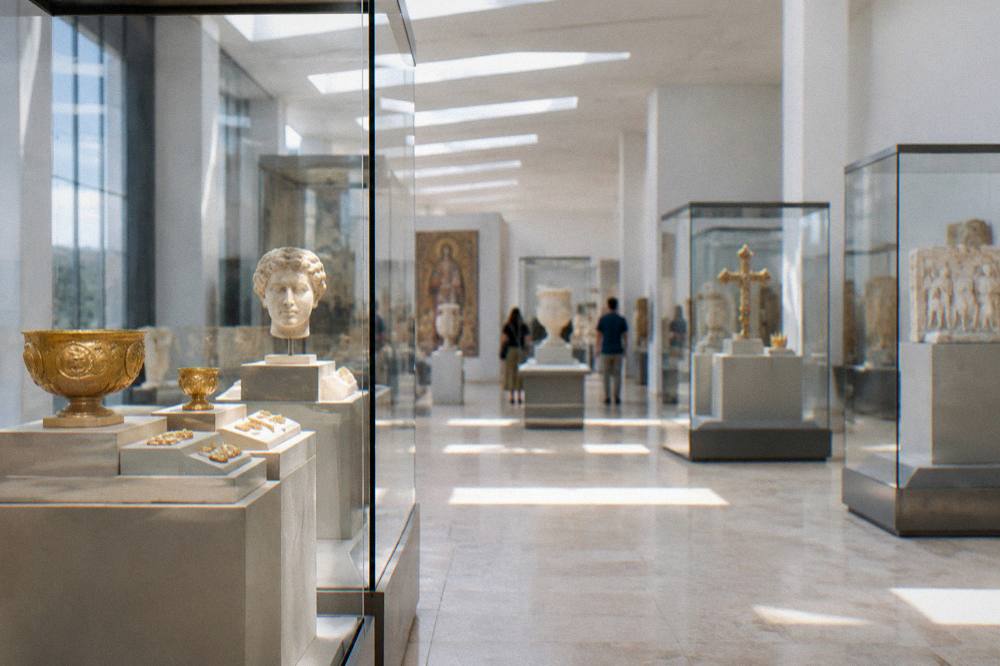
What is published and reliable is the practical layer: hours, ticket prices including the 8 euro White Tower ticket in force since 1 April 2026, and free-admission days such as 6 March, 18 April, 18 May, the last weekend of September and 28 October.
The big three, with their own published details:
| Museum | Published hours | Published ticket |
|---|---|---|
| White Tower | Daily 08:00 to 21:00 summer, 08:30 to 15:30 winter | 8 euro full, 4 euro reduced, from 1 April 2026 |
| Museum of Byzantine Culture | Daily 08:00 to 20:00 in summer; winter Mon, Wed to Sun 08:30 to 15:30, Tue closed | 10 euro full, 5 euro reduced |
| Archaeological Museum | 09:00 to 17:00 daily in summer; winter closed Tuesday | 10 euro full, 5 euro reduced |
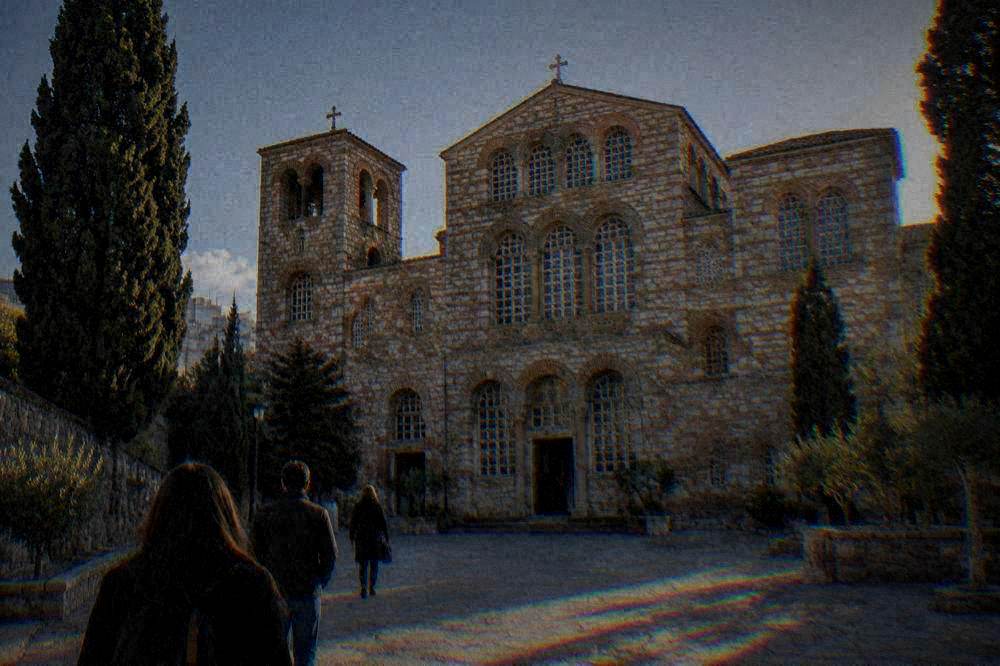
Two planning details follow from that table. First, the White Tower is a tower: entry, stairs and interior circulation are exactly the kind of detail no published page settles, and the Museum of Byzantine Culture, which operates the White Tower, is the right place to ask. Second, the winter Tuesday closures at the Byzantine and Archaeological museums mean an off-season itinerary needs those days free for churches, the Rotunda's neighbourhood and the open-air Arch of Galerius, which stands free to view on Egnatia.
The churches need the same caution. The Byzantine churches of Thessaloniki guide and the Thessaloniki museums guide expand both topics.
For a rest that comes with a view instead of a climb, the OTE Tower in the fair grounds offers a seated rotating experience with a light meal, and it is one of the few high-view options in the city that does not depend on stairs at all, though the operator should be asked about boarding arrangements directly.
Are The Big Day Trips From Thessaloniki Realistic With Access Needs?
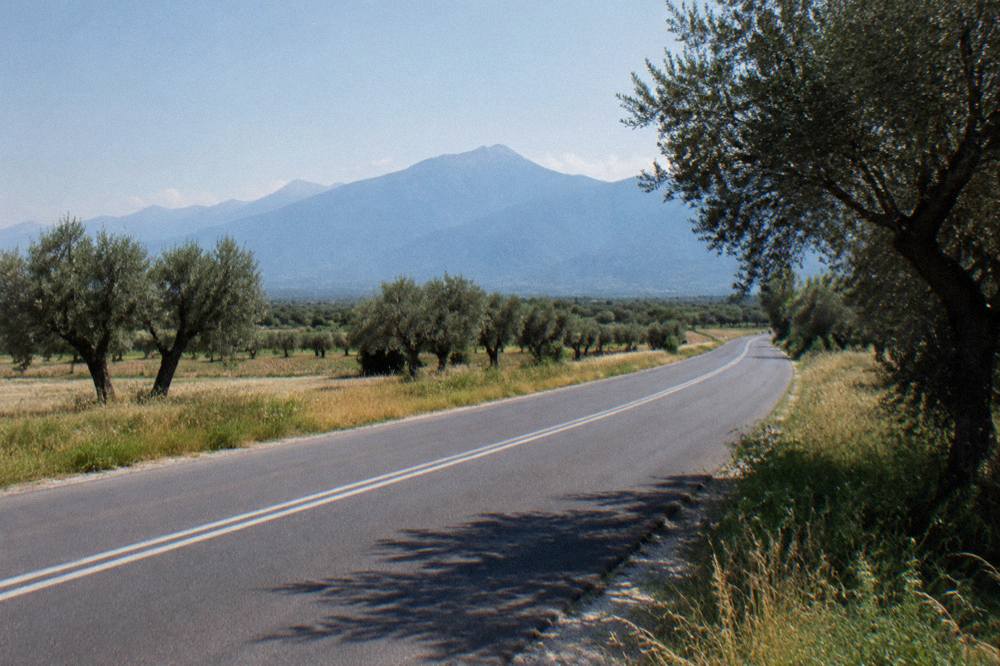
Only with honest arithmetic: Meteora is about 228 km and roughly two and a half hours of driving each way from Aristotelous Square, a full day by any measure, while Pella is about 43 minutes, Vergina about 62 and Dion about 67, all free-flow road times that grow with traffic and stops. Whether a given site's paths, monasteries or museum interiors suit a particular visitor is a per-venue question no central source answers.
The distances, computed over standard routing from Aristotelous Square:
| Day trip destination | Road distance | Free-flow time |
|---|---|---|
| Perea (beach town) | 23.0 km | about 28 min |
| Pella (museum) | 45.7 km | about 43 min |
| Vergina (Royal Tombs of Aigai) | 68.0 km | about 62 min |
| Dion (archaeological park) | 90.1 km | about 67 min |
| Edessa (waterfalls) | 90.3 km | about 82 min |
| Kassandra (Kallithea) | 86.2 km | about 78 min |
| Sithonia (Nikiti) | 97.2 km | about 96 min |
| Ouranoupoli | 129.9 km | about 139 min |
| Meteora (Kalambaka) | 227.5 km | about 154 min |
Two structural notes matter for planning. Meteora's monasteries sit on rock pinnacles with steep approaches; the per-monastery entry details and weekly closure days are reported rather than centrally published, so check the current details on the monasteries' own pages before booking anything. And Mount Athos is a special case: entry requires a permit, the diamonitirion, and is men only, while the boat trip from Ouranoupoli views the coast and does not land, so no Athos product should be sold to anyone as a monastery visit.
For trips booked as products rather than self-driven, the same rule as in the city applies: message the operator about vehicle type, boarding, walking distance at stops and rest breaks before paying. The listings describe what each trip covers; they do not carry an accessibility audit, and no honest page should pretend otherwise.
How Should You Time An Accessible Trip Around Weather And Crowds?
Plan around the HNMS Thessaloniki Mikra station record, 1959 to 2010: July averages a mean high of 31.7 C and August 31.4 C, while December carries the heaviest monthly rainfall at 55.1 mm and August the lightest at 19.3 mm, so spring and autumn offer the mildest walking conditions. The city's fixed calendar events, like the Film Festival from 5 to 15 November 2026, add crowds and demand without changing the terrain.
Heat changes an accessibility plan more than rain does here. A flat waterfront route that is pleasant in April at a mean high of 19.1 C is a different proposition in late July, and the same applies to Ano Poli, where shade and slopes compound. The full monthly picture is in the Thessaloniki weather guide, and the seasonal trade-offs, including the winter museum closures noted above, are laid out in the best time to visit Thessaloniki guide.
A short checklist closes the planning layer. Note that Greek accommodation collects a climate resilience fee per room per night, higher from April to October, payable at the property. Use the metro for distance and the promenade for pleasure. Ask every museum, church and tour operator the same two questions, about steps and about toilets, and treat silence as a reason to ask again rather than an answer. Emergency number is 112.
Common Questions About Accessibility In Thessaloniki
Is Thessaloniki accessible for wheelchair users?
The flat central belt along the seafront and around Aristotelous Square is the most manageable part, and the fully underground metro opened in November 2024 with the Kalamaria extension from 27 August 2026. No official source publishes a station-by-station or sight-by-sight access audit, so confirm lift and entrance details with the metro operator and each venue before your visit.
Is Ano Poli in Thessaloniki hard to walk?
Yes, it is the steep part of the city: the old upper town climbs inside the Byzantine walls toward the Trigonion Tower and the Heptapyrgion, with sloping lanes and steps. No published gradient or step counts exist, so judge it as a hilly district and plan rest points.
How much does the Thessaloniki metro cost?
The Thessaloniki Metro ticket page states 0.60 euro for a basic single journey, 0.30 euro reduced, and 2.50 euro for a 24-hour ticket. Trains run 05:15 to 00:30 Sunday to Thursday and 05:15 to 02:00 on Friday and Saturday.
Can you visit the White Tower with mobility limits?
The White Tower is a tower, and no official page publishes its interior access arrangements. The Museum of Byzantine Culture operates it and lists the 8 euro full and 4 euro reduced ticket in force from 1 April 2026, so contact the museum before planning an ascent.
Is Meteora a realistic accessible day trip from Thessaloniki?
Meteora is about 228 km and roughly two and a half hours of driving each way from Aristotelous Square, a full day, and the monasteries stand on rock formations with steep approaches. Check entry details and closure days on the monasteries' own pages and ask any tour operator about walking distances at stops before booking.
Does Thessaloniki have accessible beaches?
The city waterfront, the Nea Paralia, is a promenade and not a swimming beach. Swimming is at Perea, about 28 minutes by road, or Epanomi, about 36 minutes, and facilities at each beach should be confirmed locally before you go.