Thessaloniki Sweets: Trigona, Tsoureki And Syrian Pastries
Thessaloniki, the second city of Greece on the Thermaic Gulf, treats its sweets as seriously as its Byzantine walls, and the pastry counters here run from syrup-soaked trigona in the hillside district of Panorama to Syrian pastries carried into the city by refugee families a century ago.
Short answer
Trigona, the cream-filled triangular pastries associated with the Panorama district above the city, are the sweet Thessaloniki is known for by name; tsoureki, the braided sweet bread, and the Syrian pastry tradition sit beside them on nearly every counter.
Thessaloniki, the second city of Greece, sits on the Thermaic Gulf in Central Macedonia with the White Tower on its seafront promenade and the old upper town of Ano Poli inside the Byzantine walls, and it is also a city whose pastry counters have a reputation that travels. The municipal gastronomy site references UNESCO and the Creative Cities Network, and the practical evidence is on display every morning: trays of trigona, braided tsoureki, syruped filo and the nut-filled Syrian pastries that refugee families brought to the city after 1912 and the upheavals that followed. This page is a plain map of that counter: what each sweet is, which district of the city it belongs to, and how to plan a day around it. For the savoury side of the same city, start with what to eat in Thessaloniki and the dedicated page on bougatsa.
What Are Trigona Panoramatos And Where Do They Come From?
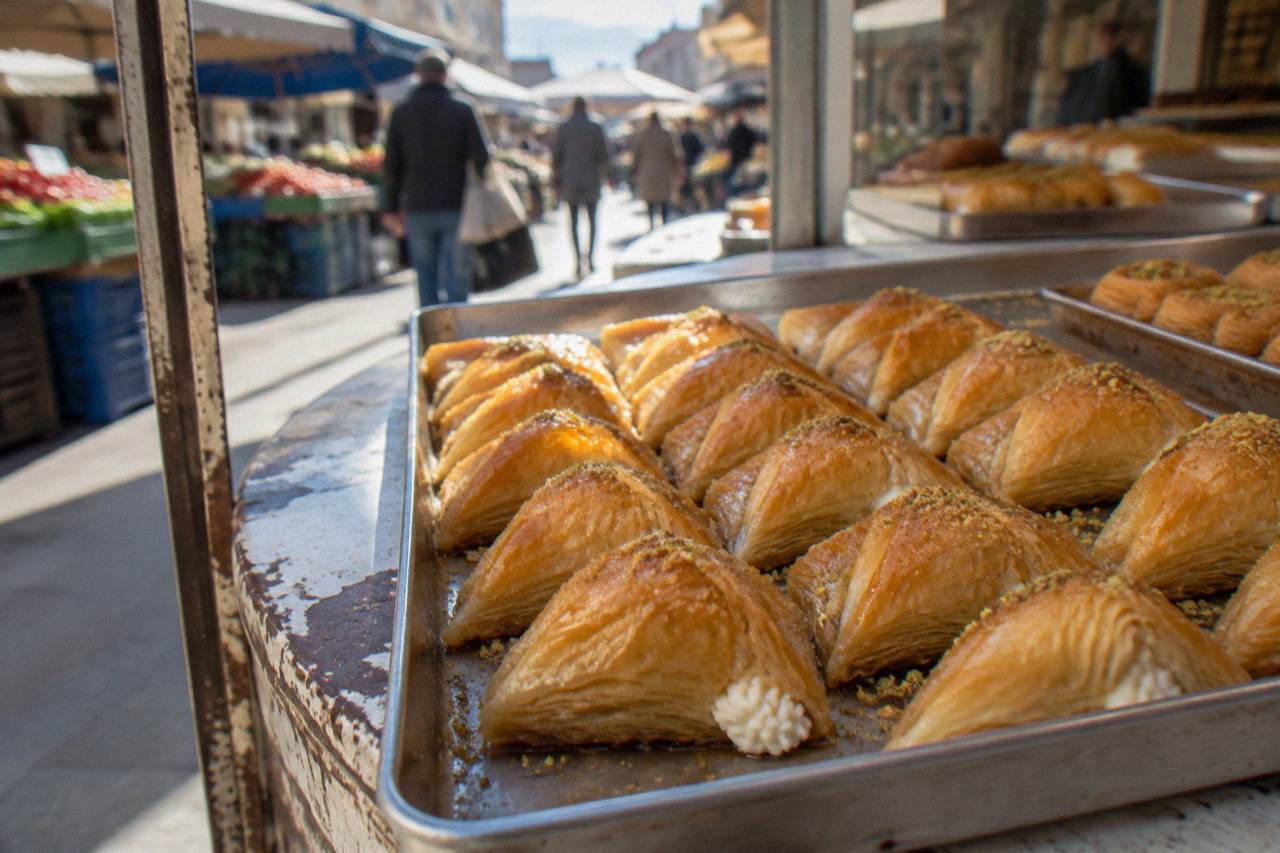
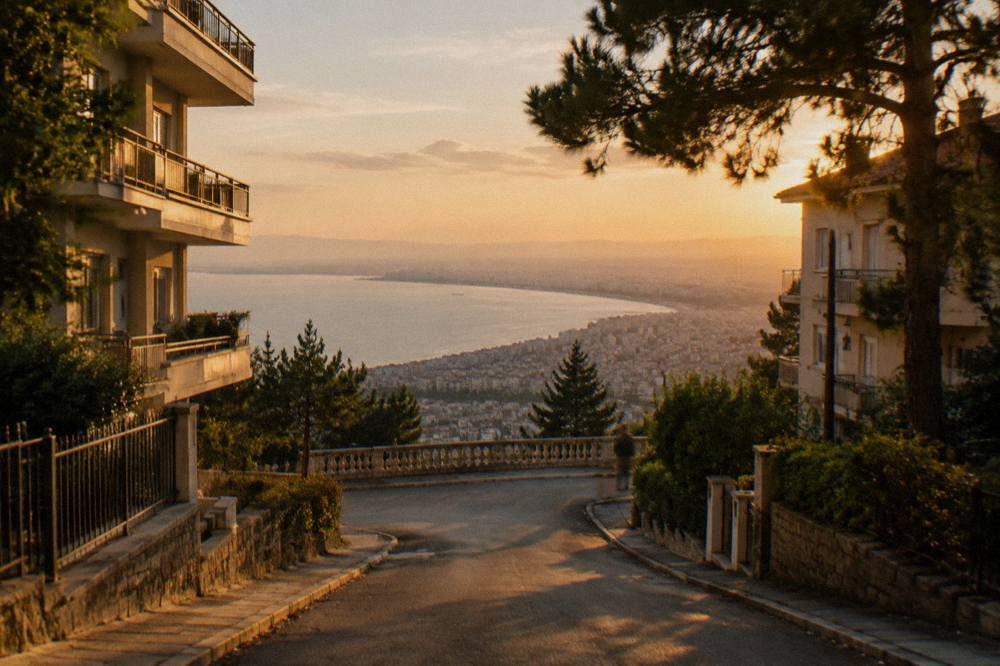
Trigona panoramatos are small triangular pastries filled with a light cream, and the name points to Panorama, the hillside district southeast of the centre that gives the sweet both its name and its local address; they are the one Thessaloniki sweet that carries a neighbourhood label, sold across the city but firmly attached to the district where the reputation was built. Panorama sits high above the Thermaic Gulf with views back over the whole city, which is how the district earned its name. The pastries themselves are crisp, horn-shaped shells, filled to order with a custard cream and best eaten the same day, and the city's own pastry shops sell them by weight or by the piece. No single bakery is named as the inventor, and the sweet's standing rests on the district that carries its name.
The practical point for a visitor is geography. Panorama is a residential district, not a sightseeing one, and a sweets outing there pairs naturally with a look at the Panorama district guide. The rest of the city centre, from Aristotelous Square to Ladadika, sells trigona too, so a dedicated trip uphill is a choice rather than a necessity. What the trip adds is the setting: the district looks out over the gulf and the city it feeds.
How the pieces fit together:
| Sweet | What it is | Where it belongs in the city |
|---|---|---|
| Trigona panoramatos | Triangular crisp pastry filled with cream | Panorama district, also sold citywide |
| Tsoureki | Braided sweet bread, eaten plain or filled | Every bakery, central in the Easter season |
| Syrian pastries | Syruped filo and nut pastries from the city's Syrian refugee tradition | Historic counters in and around the centre |
| Baklava and syruped filo | Layered filo with nuts and syrup | Citywide |
| Bougatsa | Filo parcel with custard, eaten warm | A savoury-adjacent breakfast, citywide |
For travellers who want the counter explained rather than decoded alone, a guided walk does that work: the Thessaloniki Food Tour: A Feast of Local Delicacies builds a route through the city's food stops, and Check availability on the operator's live listing before you commit to a date.
What Is Tsoureki And When Do Thessalonians Eat It?
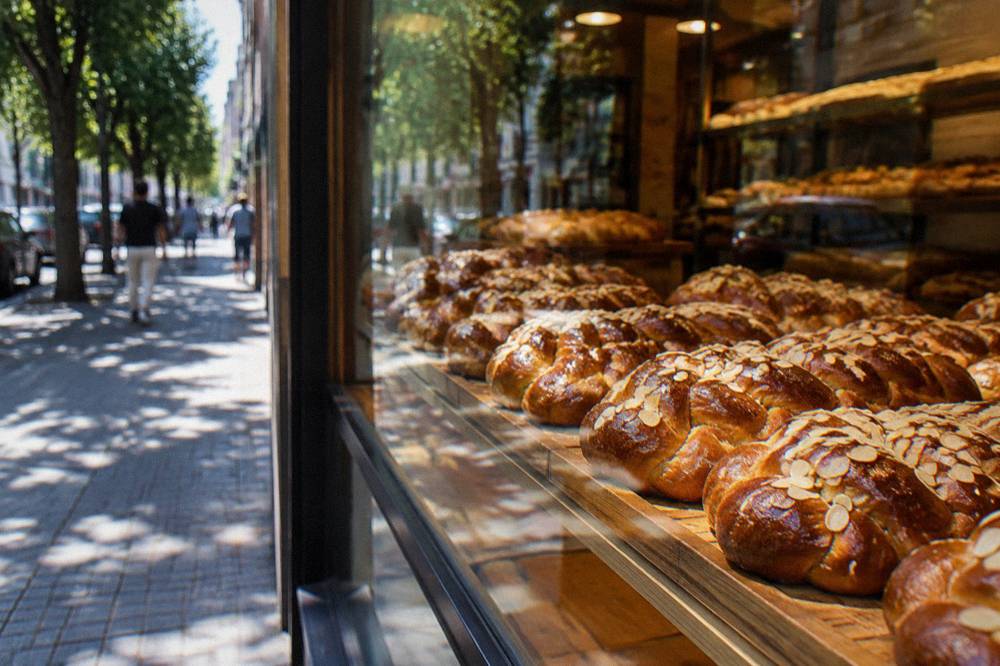
Tsoureki is a soft, braided sweet bread, enriched with butter and eggs and lightly scented, eaten year-round as an everyday treat and central to the Orthodox Easter table, when braided loaves appear across the city's bakeries in the weeks before the feast; in Thessaloniki it is also sold by the slice, often filled, at counters that treat it as a dessert rather than a bread. Orthodox Easter falls on 2 May in 2027, and in the weeks before it the city's bakery windows fill with braided loaves. Outside the season, tsoureki persists as a filled slice: chocolate, chestnut and cream versions sit in display cases beside the trigona. The municipal tourism apparatus makes no claim about who bakes it best, and neither does this page; the reliable statement is that it is everywhere, and that a fresh slice is a cheap, shareable way to sample the city's sweet style.
The bread's rhythm follows the city's calendar. Saint Demetrius day on 26 October, the patronal feast that coincides with the anniversary of the city's liberation on 26 October 1912, brings its own round of baking and family tables, and the Thessaloniki International Fair, which ran 5 to 13 September in 2026 in its 90th edition, sits at the start of the autumn season that ends with the Thessaloniki International Film Festival, which runs 5 to 15 November in 2026.
A simple year-shape for planning:
| Period | What the counter looks like | Why |
|---|---|---|
| Winter (Nov to Mar) | Tsoureki and syruped pastries dominate | Cool weather suits rich, dense sweets |
| Spring | Easter braided loaves everywhere before the feast | Orthodox Easter 2027 falls on 2 May |
| Summer (Jun to Aug) | Cream-filled sweets eaten fresh, cold drinks beside them | July mean high 31.7 C, per the HNMS Thessaloniki Mikra station, 1959 to 2010 |
| Autumn (Sep to Oct) | Fair, film festival and patronal feasts, family baking | Dimitria festival ran 1 to 26 October in 2026 |
Summer matters for cream: trigona are filled to order and do not travel well in heat, so morning is the sensible window. August is the low point of the year's rainfall at 19.3 mm monthly, per the same HNMS station record, which makes it a dry month for walking between counters, but a warm one for anything with custard. The rest of the planning pages sit on Thessaloniki Travel Guide.
Where Do Syrian Pastries Fit Into Thessaloniki's Sweets?
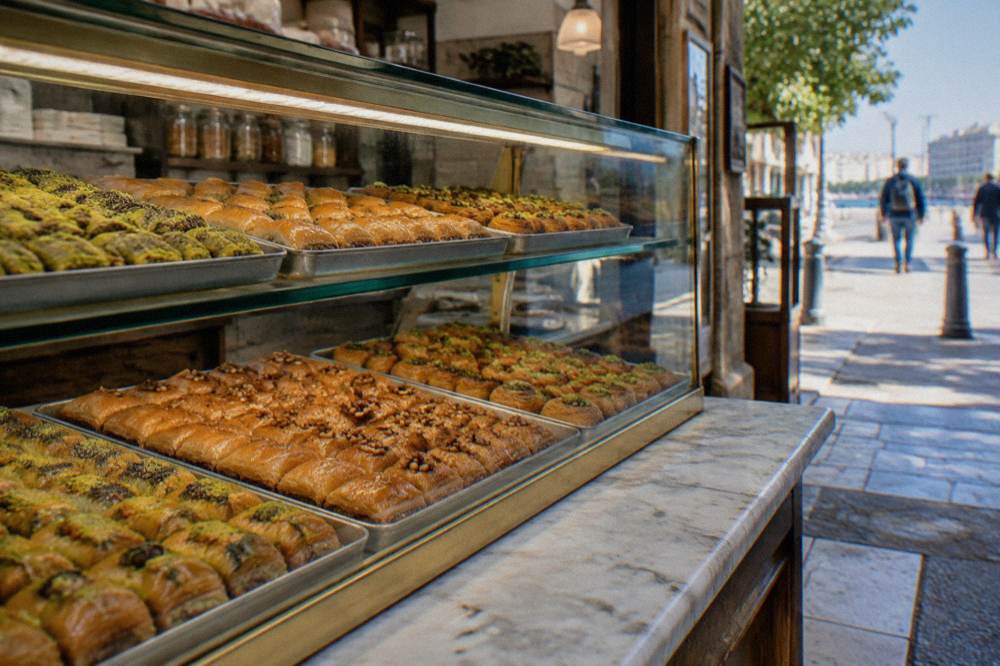
Syrian pastries are the syruped, nut-filled filo tradition that arrived with the Orthodox Syrian refugee families resettled in Greece, and in Thessaloniki that tradition became part of the city's standard pastry counter rather than a niche; the sweets include small syruped rolls and nut-topped pieces sold by the kilo, and the counters that specialize in them sit in and around the city centre. The city's broader story explains the layering: Sephardic Jewish families arrived after 1492, Muslim and Christian communities followed under Ottoman rule from 1430, and the population exchanges brought Greek refugees from Syria and Asia Minor. Each wave left something on the table. The municipal gastronomy site, which references UNESCO and the Creative Cities Network, treats this mixture as the city's defining food trait, though it lists no designation year because none has been confirmed on an official page.
No source names the original Syrian pastry shop in Thessaloniki, and this page will not guess one. A century of continuous presence turned a refugee tradition into a local staple, sold by weight alongside trigona and tsoureki in the same display cases. For the deeper history of the communities behind the counter, see Jewish Thessaloniki.
Which Markets Sell Sweets And Ingredients In Thessaloniki?
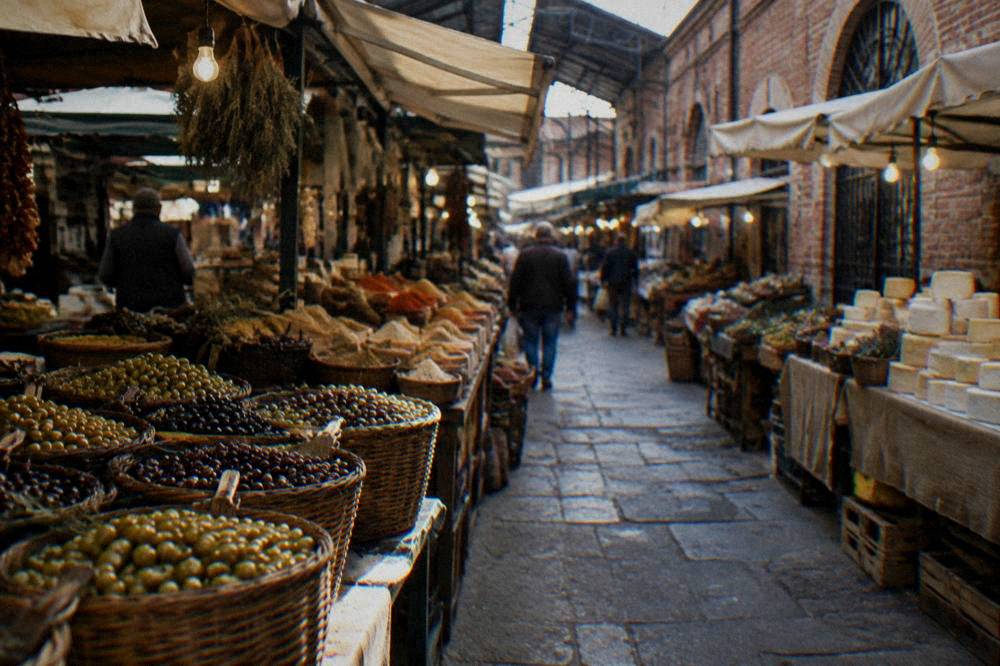
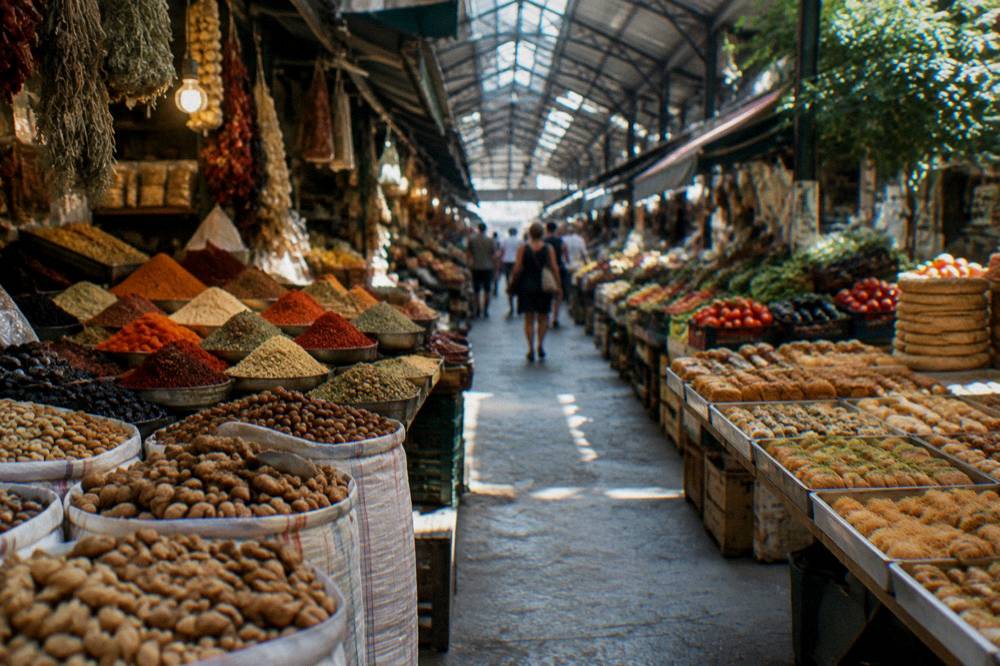
Modiano Market and Kapani Market are the city's two named historic markets, both within walking distance of Aristotelous Square, and both sell the nuts, honey and filo that underpin the sweets described here alongside ready-to-eat trays; they are working food markets rather than museums, and they are the place to see the raw materials of the pastry counter piled up in bulk. Modiano Market is the restored covered market; Kapani Market is the older, open-air sprawl beside it. Neither is a dessert destination in itself, but a sweets-focused walk through the centre naturally passes through them, and the smell of roasted nuts does half the guiding.
A short route that stitches the sweet city together, using only named places:
| Stop | Place | What it adds to a sweets walk |
|---|---|---|
| 1 | Aristotelous Square | The centre, coffee and pastry counters on all sides |
| 2 | Kapani Market | Nuts, honey and filo in bulk, the raw side of the counter |
| 3 | Modiano Market | Restored covered market, food stalls and stands |
| 4 | Ladadika | Historic district west of the square, cafes after dark |
| 5 | Ano Poli | Climb through the Byzantine walls, pastry shops in the old upper town |
| 6 | Panorama | Bus or taxi uphill for trigona in the district that names them |
The walking distances here are short: the city centre between Aristotelous Square, the markets and Ladadika is compact, and the Thessaloniki Metro, open since November 2024 with the Kalamaria extension inaugurated 27 August 2026, covers the longer legs. A basic metro ticket costs 0.60 euro and a daily ticket 2.50 euro, per the metro's own ticket page. Panorama is the one stop on the route above that is a ride rather than a walk; the getting around Thessaloniki guide covers the options in full.
Can You Build A Whole Day Around Sweets In Thessaloniki?
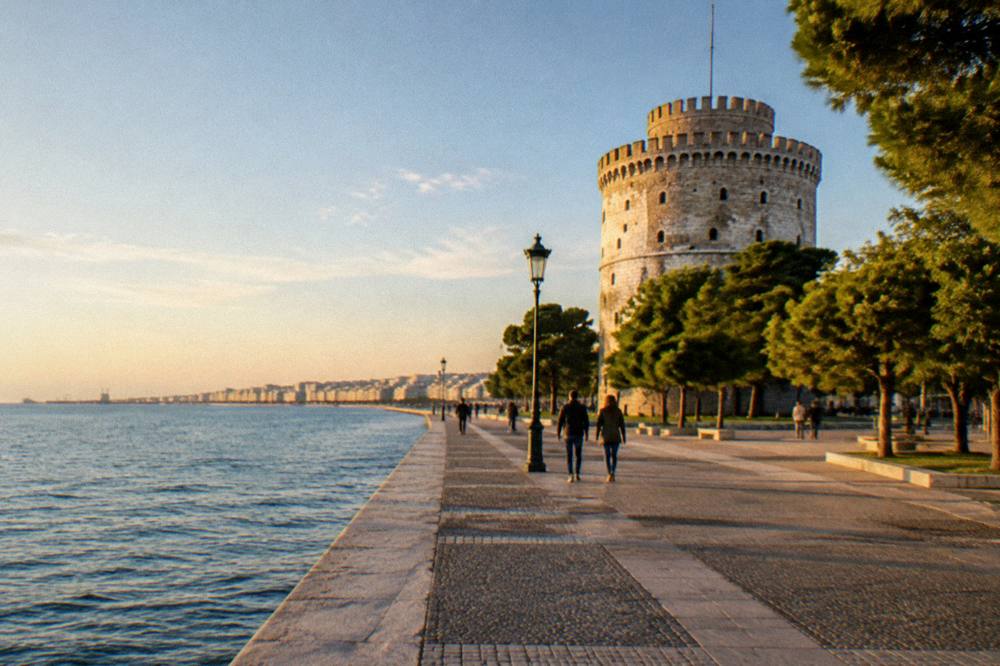
Yes, and the shape is simple: a morning bougatsa in the centre, a mid-morning walk through Kapani Market and Modiano Market for nuts and honey, a trigona stop in Panorama at midday, an afternoon museum hour or a stroll on the Nea Paralia promenade, and an evening in Ladadika, with the whole loop stitched together on foot and by metro for a few euro in fares; no single ticket or pass exists for the city's pastry counters, so the day costs only what you eat. The promenade is a walking route, not a swimming beach; swimming is at Perea, about 28 minutes by road, per computed routing from Aristotelous Square. Between stops, the Museum of Byzantine Culture is open daily 08:00 to 20:00 in summer and 08:30 to 15:30 in winter (closed Tuesday from November to March), with admission 10 euro full and 5 euro reduced, per its visiting page.
The day, hour by hour:
| Time | Stop | Note |
|---|---|---|
| 08:30 | Bougatsa in the centre | Eaten warm, the city's breakfast sweet |
| 10:00 | Kapani Market and Modiano Market | Nuts, honey, filo, working markets |
| 11:30 | Metro or taxi to Panorama | Trigona in the district that names them |
| 13:30 | Return, lunch in the city centre | See the what-to-eat guide |
| 15:00 | Museum of Byzantine Culture or the Nea Paralia | 10 euro full entry, per the museum's page |
| 18:00 | Aristotelous Square and the waterfront | Sunset over the Thermaic Gulf |
| 20:00 | Ladadika | Cafes and dessert counters after dark |
Two products fit this day naturally. A sunset walking tour covers the afternoon-to-evening arc, city sights and the waterfront, and the walking tour with city highlights and sunset is the one this site features for it. For a first day in the city, the hop-on hop-off sightseeing bus loops past the White Tower, the Arch of Galerius and the upper town, useful for scoping the districts before the sweets walk.
What Should You Know About Prices, Seasons And Bringing Sweets Home?
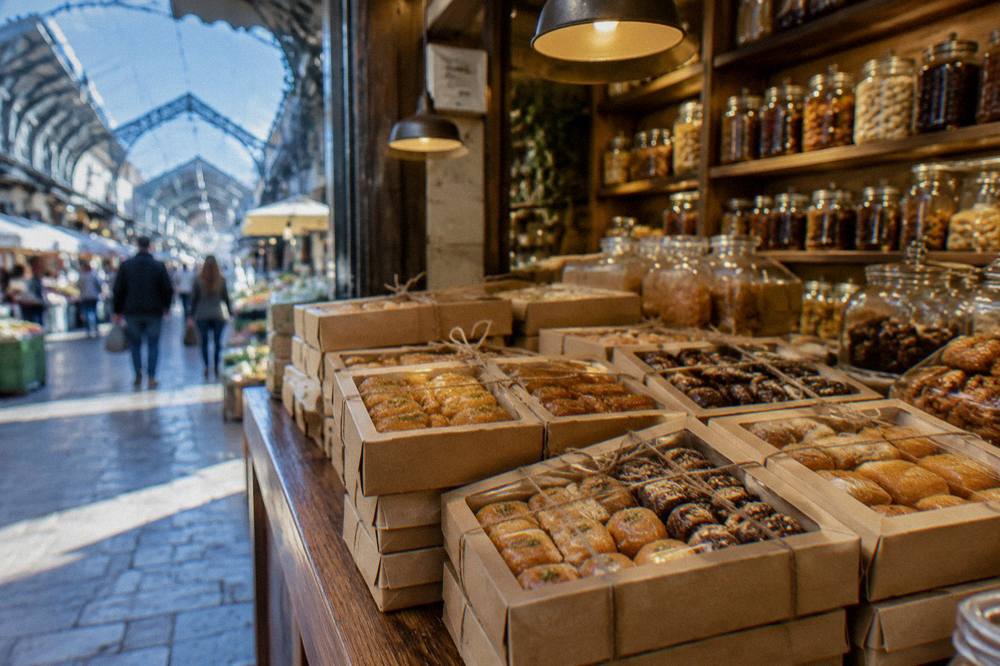
Counters sell by the piece and by the kilo, cream-filled trigona are best eaten the day they are filled, syruped pastries travel better, and no official price list exists for any individual shop, so expect to ask at the counter; for gifts, the rule of thumb from the ingredients is that dry, syruped filo and nut pastries survive a journey and fresh cream does not, and summer heat shortens every shelf. The honest position on prices is that this page prints none for food, because none is fixed; the counter tells you in seconds. Museum and transport prices are different: they are published, and the figures above come from the museums' own pages and the metro's ticket page.
Season-by-season practicalities:
| Question | Answer |
|---|---|
| Best months for a sweets walk | April to June and September to October, mild and dry |
| July and August | Mean highs above 31 C per the HNMS record; eat cream early in the day |
| Easter season | Tsoureki everywhere before the feast; Orthodox Easter 2027 falls on 2 May |
| Winter | November to March, counters as busy, some museums close Tuesday |
| Bringing sweets home | Syruped pastries travel; trigona and cream-filled tsoureki do not |
If a full trip is being planned around food, the timing questions are covered in when to visit Thessaloniki and the Thessaloniki weather guide, and the broader sightseeing list is on the things to do in Thessaloniki page.
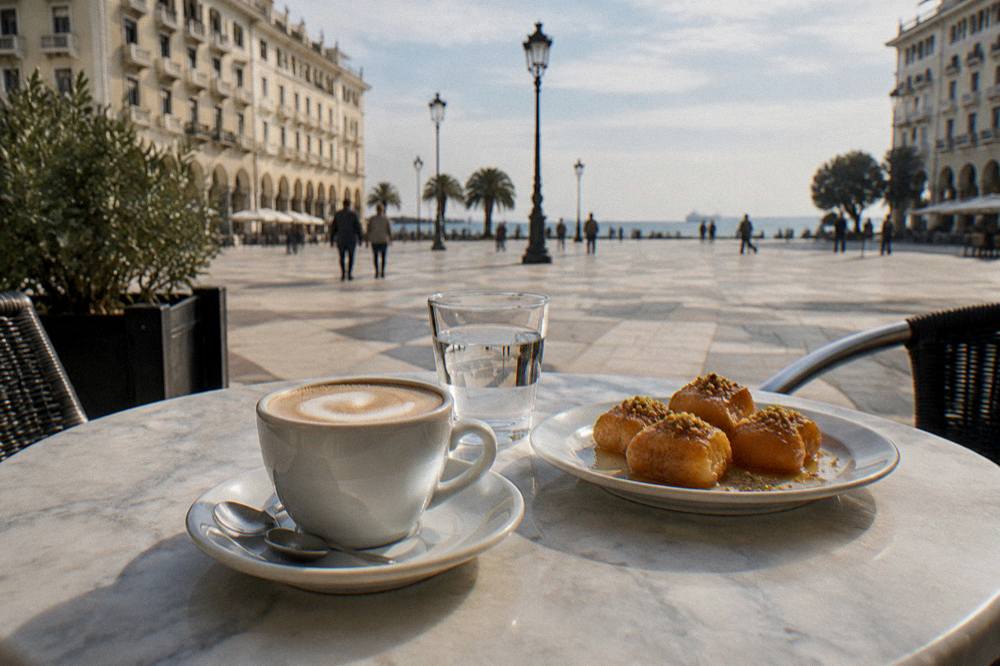
The last word on the counter goes to geography, which is the one thing a guide can state with certainty: the sweets of Thessaloniki are a citywide habit with a hillside address, and the shortest route to understanding the city is a tram of cream in Panorama, a slice of tsoureki in the centre, and a box of Syrian pastries carried home from a counter that has been syruping filo for a hundred years.
Common Questions About Thessaloniki Sweets
What is trigona panoramatos?
A small triangular pastry with a crisp shell and a cream filling, named after the Panorama district above the city and sold at pastry counters across Thessaloniki. It is best eaten fresh on the day it is filled.
Where can I buy trigona in Thessaloniki?
Pastry counters across the city centre sell trigona, and the Panorama district, a short bus or taxi ride uphill from the centre, is the district the sweet is named for. Prices are set by the counter, so ask before you buy.
What is tsoureki?
A soft, braided sweet bread enriched with butter and eggs, eaten year-round in Thessaloniki and central to the Orthodox Easter table. Orthodox Easter falls on 2 May in 2027.
What are Syrian pastries in Thessaloniki?
Syruped, nut-filled filo pastries from the tradition brought by Orthodox Syrian refugee families resettled in Greece, now a standard part of the city's pastry counters and sold by weight.
Can I bring Thessaloniki sweets home?
Dry, syruped filo and nut pastries travel well; cream-filled trigona and filled tsoureki slices do not, and summer heat shortens every shelf. Buy syruped pastries on your last day and keep them cool.
Are there food tours that cover Thessaloniki sweets?
Yes, guided food walks build a route through the city's counters and markets, including the sweet ones, and free cancellation applies if plans change. Check availability on the operator's live listing before your trip.