Thessaloniki Train Station: Trains To Athens And Beyond
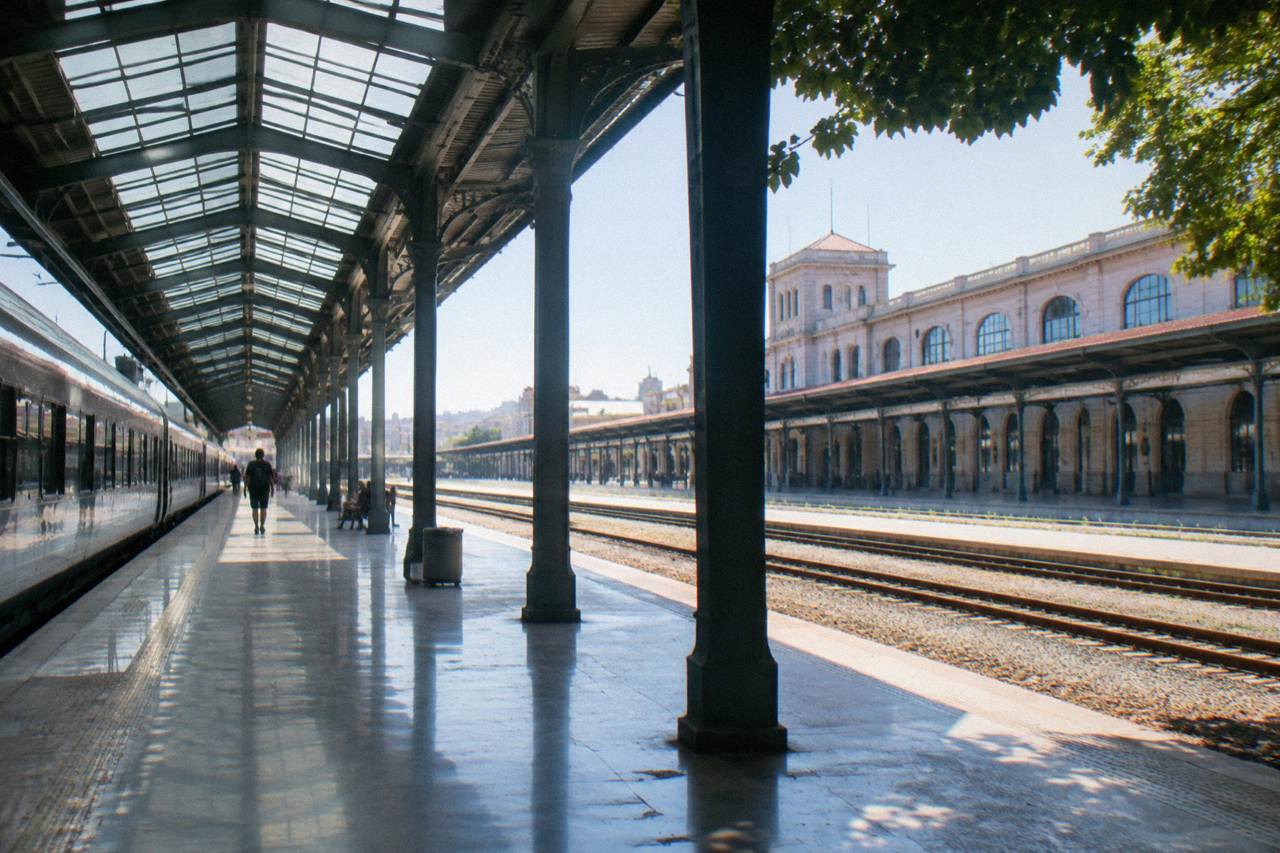
Thessaloniki's railway terminal, the New Railway Station, sits on the metro's Line 1 and connects the city with Athens and northern Greece.
Short answer
Thessaloniki's main rail terminal is the New Railway Station, a stop on metro Line 1 with a basic ticket of 0.60 euro. Hellenic Train runs the Athens route and services to Larissa, Litochoro, Katerini, Veria, Edessa and Florina; journey times and fares are confirmed on its own site.
Thessaloniki, the second city of Greece on the Thermaic Gulf in Central Macedonia, runs its rail traffic through one terminal: the New Railway Station, which also gives its name to the northern terminus of metro Line 1. That dual role, rail hub plus metro interchange, is the single most useful thing to know about arriving here by train, because the station feeds directly into a metro system that has been open since November 2024 and gained its Kalamaria extension on 27 August 2026. This guide lays out what the operators' own pages say about the trains, the transfers and the coach alternatives from elsewhere in the city, and it points to a few things to do once you have dropped your bags. The Thessaloniki Travel Guide covers the rest of the city, from the White Tower to the day-trip region of Halkidiki, Pella and Meteora.
Where Is Thessaloniki Train Station And What Is It Called?
Thessaloniki's main railway terminal is called the New Railway Station, and it is also the name of the northern terminus of metro Line 1, which the Thessaloniki Metro's own network pages list as a stop on the line from here to Nea Elvetia and Mikra. The station area sits west of the historic centre, and the metro link carries passengers from the station into the city core for a basic ticket of 0.60 euro, per the metro's ticket page.
The name trips people up. "New" is a relative term here, and the station has served as the city's rail terminus for generations even as the area around it changed. What is genuinely new is the metro interchange beneath and beside it: Line 1 opened in November 2024, and the Kalamaria extension, inaugurated 27 August 2026, added five more stations at the south-eastern end of the line without changing anything at the station end. Older guides still describe a city with no metro at all, which is out of date.
For orientation, think of the station as the western anchor of the waterfront city. Aristotelous Square, the ceremonial heart of the centre, is a short metro or taxi hop away, and the White Tower stands further east along the seafront promenade, the Nea Paralia. The Ano Poli upper town rises behind the centre within the Byzantine walls. If you are mapping an arrival, the Thessaloniki metro guide covers the line in detail, and getting around Thessaloniki puts the metro beside the buses and taxis.
| Station fact | What the operator's page says |
|---|---|
| Name | New Railway Station (rail terminal and metro terminus) |
| Metro line | Line 1, opened November 2024, Kalamaria extension 27 August 2026 |
| Metro basic ticket | 0.60 euro full, 0.30 euro reduced |
| Metro daily ticket | 2.50 euro, 24 hours, unlimited metro rides |
| Metro hours | 05:15 to 00:30 Sunday to Thursday, 05:15 to 02:00 Friday and Saturday |
| Rail operator | Hellenic Train (Athens route and northern Greece) |
Which Trains Run From Thessaloniki Train Station?
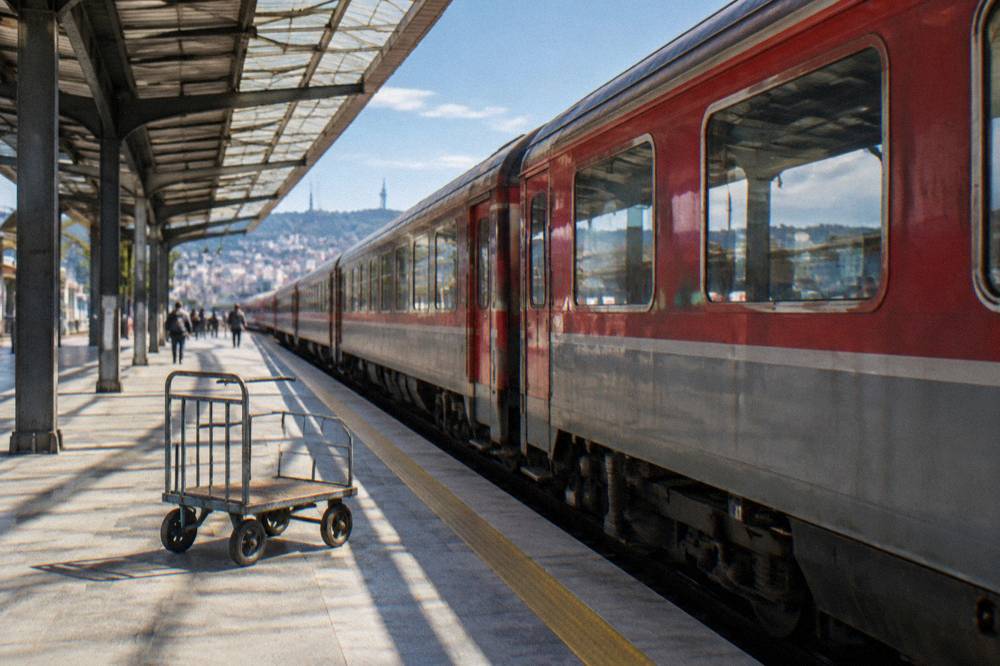
Hellenic Train operates from Thessaloniki to Athens and to destinations across northern Greece, including Larissa, Litochoro, Katerini, Veria, Edessa and Florina, as the operator's own network confirms. The journey times, fares and departure frequencies for these routes are published on the Hellenic Train site rather than fixed in any third-party summary, so confirm your specific date and route there before booking.
The rail pattern matters for trip planning. Southbound, the line runs down through Pieria and towards Larissa on the way to Athens, with Litochoro, the conventional base town for Mount Olympus, among the intermediate stops listed in the operator's timetable documents. Westbound and northbound, services fan out towards Veria, Edessa and Florina in Macedonia. The Athens to Thessaloniki guide walks through the capital connection, and the dedicated answer page on a high-speed train from Athens takes the speed question head on.
Two practical warnings from the sources. First, no timetable figure for the Athens route should be quoted from memory or from an old article: the operator's own PDFs are the reference, and they change. Second, the rail network does not reach everywhere a visitor wants to go. The guide to Thessaloniki, Sofia and Skopje covers those cross-border journeys.
For anyone weighing rail against road for the big day trips, the drive times are fixed geography, and the coach operators run from separate stations described further down this page.
| Rail destination from Thessaloniki | Context from the operator's pages |
|---|---|
| Athens | Main southbound route; times and fares on the Hellenic Train site |
| Larissa | On the southbound corridor, with listed departures |
| Litochoro | Intermediate stop; base town for Mount Olympus |
| Katerini | Intermediate stop on the southbound corridor |
| Veria | On the western Macedonia corridor |
| Edessa | On the route towards Florina |
| Florina | Western terminus of the northern corridor |
Arriving by train usually means an hour or two before the city's sights open or after they close, and that in-between time is where a prebooked activity earns its keep. One option that sits indoors and off the clock is the Museum of Illusions admission ticket, an easy first stop from the centre, with Check availability on the operator's live listing.
How Do You Get From Thessaloniki Train Station To The City Centre?
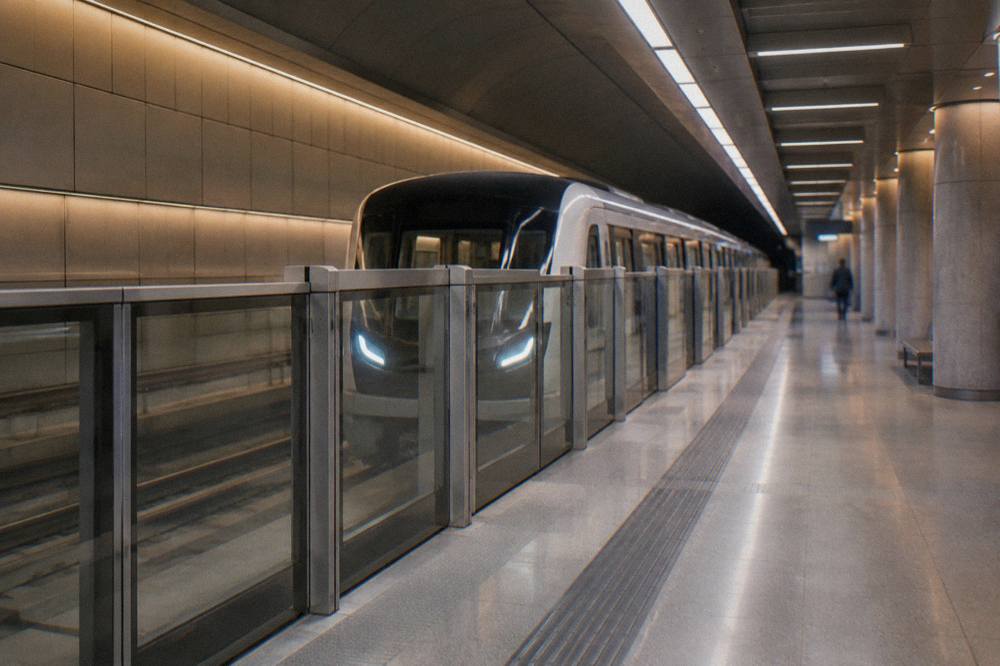
The metro is the direct link: Line 1 runs from the New Railway Station stop into the centre, with a basic ticket of 0.60 euro and a 24-hour daily ticket at 2.50 euro, per the Thessaloniki Metro's ticket page, and trains run from 05:15 to 00:30 Sunday to Thursday and to 02:00 on Friday and Saturday nights. The fare is paid at station machines or contactless, and the network page lists first and last departures from each terminal.
That metro link is the reason the station has become genuinely convenient. Before November 2024, arriving by train meant a bus or a taxi into the centre; now the interchange puts the whole waterfront within a few stops. The station's own stop anchors the line, and the 27 August 2026 extension at the other end means passengers from Kalamaria can also ride straight here to catch a train.
Taxis and airport buses complete the picture. The airport comparison is useful for anyone planning a full arrival strategy: Thessaloniki Airport "Makedonia" is about 16 km and 20 minutes by road from Aristotelous Square, with OASTH airport lines X1, X2, X3 and N1 serving it, and the airport to city centre guide details them.
| From the station to... | Best documented option |
|---|---|
| City centre (Aristotelous Square area) | Metro Line 1, basic ticket 0.60 euro |
| Waterfront and White Tower | Metro towards Nea Elvetia, then walk the Nea Paralia |
| Kalamaria district | Line 1 towards Mikra, extension opened 27 August 2026 |
| Whole-day riding | Metro daily ticket, 2.50 euro for 24 hours |
| Airport "Makedonia" (SKG) | OASTH airport lines X1, X2, X3, N1; see the airport guide |
Is There A High-Speed Train From Athens To Thessaloniki?
Hellenic Train runs the Athens to Thessaloniki route, and the operator's own timetable and ticket pages are where the current journey times and fares are published; no duration, fare or frequency figure from that route is reproduced here, because the sources used for this page do not carry one in a fixed form. What is certain is that the rail corridor connects the two cities and that booking opens through Hellenic Train's own channels.
The honest answer to the speed question is that it depends on the service you pick, and the answer changes as timetables are revised. Any article quoting a hard number of hours from memory, or from a page written years ago, is quoting something the operator may have already replaced. The dedicated answer page keeps the framing, and the comparison piece on which is nicer, Athens or Thessaloniki helps if the question behind the question is whether to split a trip between the two cities.
For perspective on distances: by road the two cities are far apart, and the drive-time table in the day-trip section below shows what "north" means in practice once you leave Thessaloniki heading for the borders. Rail is the backbone for the Athens corridor; roads take over almost everywhere else a visitor wants to reach.
Can You Reach Meteora, Kavala And Skopje By Train Or Coach From Thessaloniki?
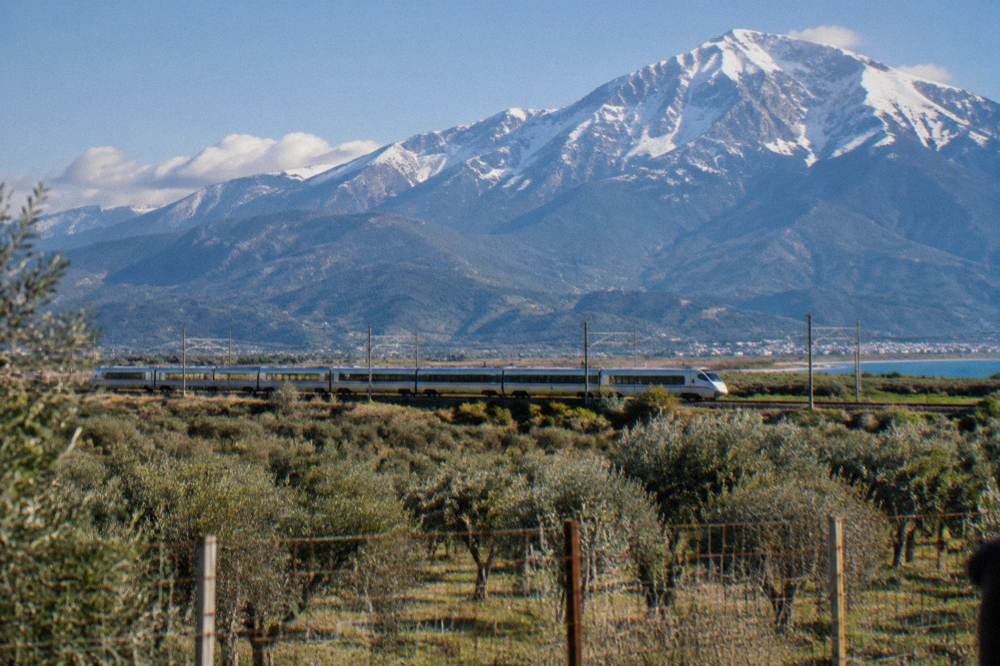
By road from the centre of Thessaloniki, Meteora at Kalambaka is about 228 km and 154 minutes free-flow, Kavala about 155 km and 118 minutes, Philippi about 156 km and 127 minutes, Skopje about 228 km and 173 minutes and Sofia about 294 km and 221 minutes, all computed over OSM routing with no traffic. Coaches to these and other long-haul destinations leave from the KTEL Macedonia station on Giannitson street in Menemeni, about 4 km from the centre.
Those figures are the honest geography, and they explain two things. First, Meteora is a full day whichever way you cut it: the monasteries near Kalambaka are close to four hours of driving round trip before you have climbed a single step, and the Meteora guide plans the day properly, with the answer on whether Meteora is closer to Athens or Thessaloniki settling the common argument. Second, the border cities are serious journeys. Skopje and Sofia are coach or self-drive projects, not afternoon excursions, and the coach operators run them from the intercity station, not the railway terminal.
The KTEL structure splits by region, and the split matters. KTEL Macedonia handles the intercity network from Giannitson street in Menemeni. KTEL Halkidiki runs the Halkidiki coaches from its own position on the 9th km of the Thessaloniki to Nea Moudania road, which is the gateway for Kassandra and Sithonia beach trips. The bus station guide covers both, and the Halkidiki, Kassandra and Sithonia pages plan the beach side.
| Destination | Road distance from central Thessaloniki | Free-flow drive time (about) |
|---|---|---|
| Meteora (Kalambaka) | 228 km | 154 minutes |
| Kavala | 155 km | 118 minutes |
| Philippi | 156 km | 127 minutes |
| Amphipolis | 100 km | 78 minutes |
| Kastoria | 193 km | 130 minutes |
| Skopje | 228 km | 173 minutes |
| Sofia | 294 km | 221 minutes |
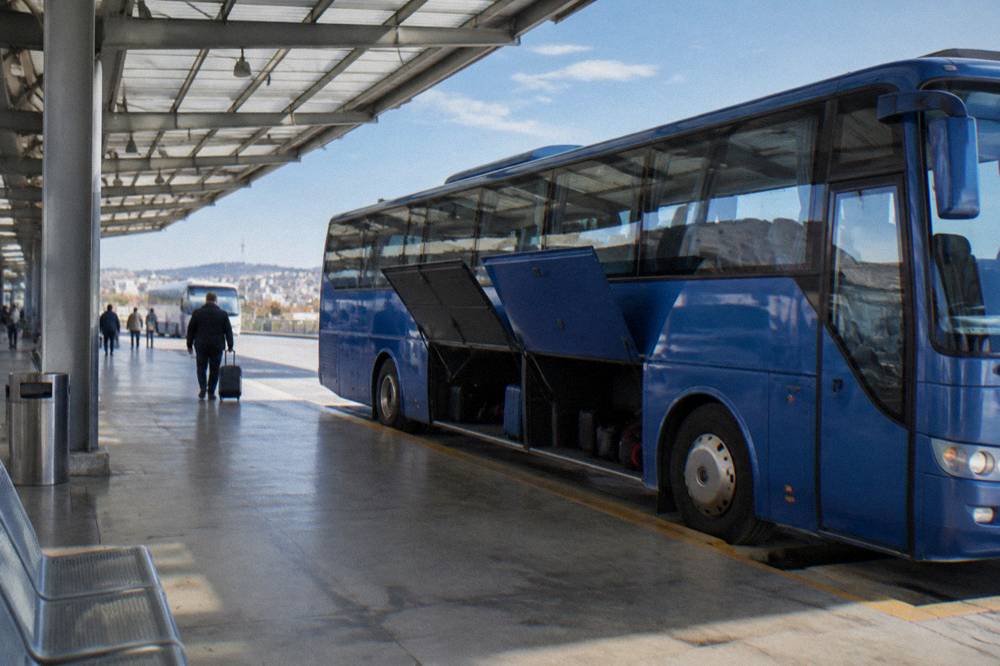
Coach fares, journey durations to Skopje and Sofia, and border-crossing waits are all published by the individual operators, and none is reproduced here: check the operator's own site or counter before committing. For Meteora specifically, organised road day trips are the practical alternative to self-driving, and the operators' listings carry the details:
What Can You Do Near Thessaloniki Train Station?
The station area itself is a transport hub rather than a sightseeing district, but the metro puts the centre within minutes, and the city's headline attractions, the White Tower at 8 euro full and 4 euro reduced since 1 April 2026, the Museum of Byzantine Culture at 10 euro and the Archaeological Museum at 10 euro, all sit along or near the waterfront corridor the line serves, according to each museum's own visiting page.
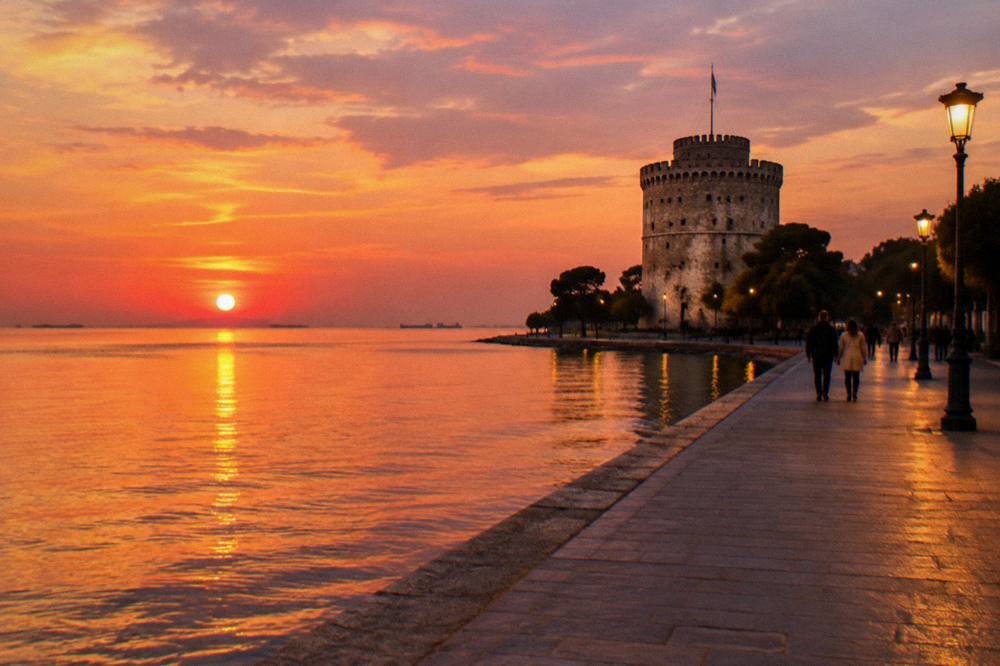
Plan the first afternoon around that corridor. The White Tower keeps summer hours of 08:00 to 21:00 and winter hours of 08:30 to 15:30, with entry stopping 20 minutes before closing, per the Museum of Byzantine Culture's visiting page, which administers it. The Museum of Byzantine Culture itself runs daily 08:00 to 20:00 in summer and 08:30 to 15:30 Monday and Wednesday to Sunday in winter. The Archaeological Museum is open 09:00 to 17:00 daily from 1 April to 31 October, and from 1 November to 31 March it closes on Tuesday, a detail many older guides get wrong.
Beyond the museums, the fifteenth UNESCO-listed Paleochristian and Byzantine monuments of the 1988 inscription are scattered through the centre and the Ano Poli, and the working churches among them, including the Church of Saint Demetrius and Hagia Sophia, are free to enter outside services. Food is the other pole of the city: the what to eat guide and the restaurant guide cover it, and a guided tasting turns the Modiano and Kapani market areas into an itinerary rather than a maze.
A first evening after a long train ride rewards a light plan, and the sunset end of the city is built for one:
| Sight | Summer hours | Winter hours | Ticket |
|---|---|---|---|
| White Tower | Daily 08:00 to 21:00 | Daily 08:30 to 15:30 | 8 euro full, 4 euro reduced |
| Museum of Byzantine Culture | Daily 08:00 to 20:00 | Mon, Wed to Sun 08:30 to 15:30 | 10 euro full, 5 euro reduced |
| Archaeological Museum | Daily 09:00 to 17:00 | 09:00 to 17:00, closed Tuesday | 10 euro full, 5 euro reduced |
| Working churches (Saint Demetrius, Hagia Sophia) | Open outside services | Open outside services | Free |
Where To Stay Near Thessaloniki Train Station?
The station district is a workable base because the metro line runs through it, but the sources for this site point most accommodation advice towards the centre and the waterfront, where the promenade, the Ladadika dining quarter and Aristotelous Square sit within walking range of each other; the where to stay guide maps the neighbourhoods against travel style. A Greek climate resilience fee applies at every accommodation, charged per room per night and collected by the property, higher from April to October.
The fee point is worth repeating because it surprises people at check-in. It is not part of the quoted room rate, it is collected locally by the accommodation itself, and it runs higher in the April to October window than in winter. Beyond that, the practical choice is between a station-adjacent stay that shortens the arrival and departure legs, and a centre stay that puts the evening city at the door. The metro makes the first option less of a compromise than it once was.
Seasonality is the other variable. The best time to visit guide and the weather page carry the HNMS Thessaloniki Mikra station figures for 1959 to 2010: July averages a mean high of 31.7 C, January a mean low of 1.5 C, and December carries the highest monthly rainfall at 55.1 mm against August at 19.3 mm. The film festival in November and the fair in September each pull the centre busier, and the budget guide prices the trade-offs in planning terms.
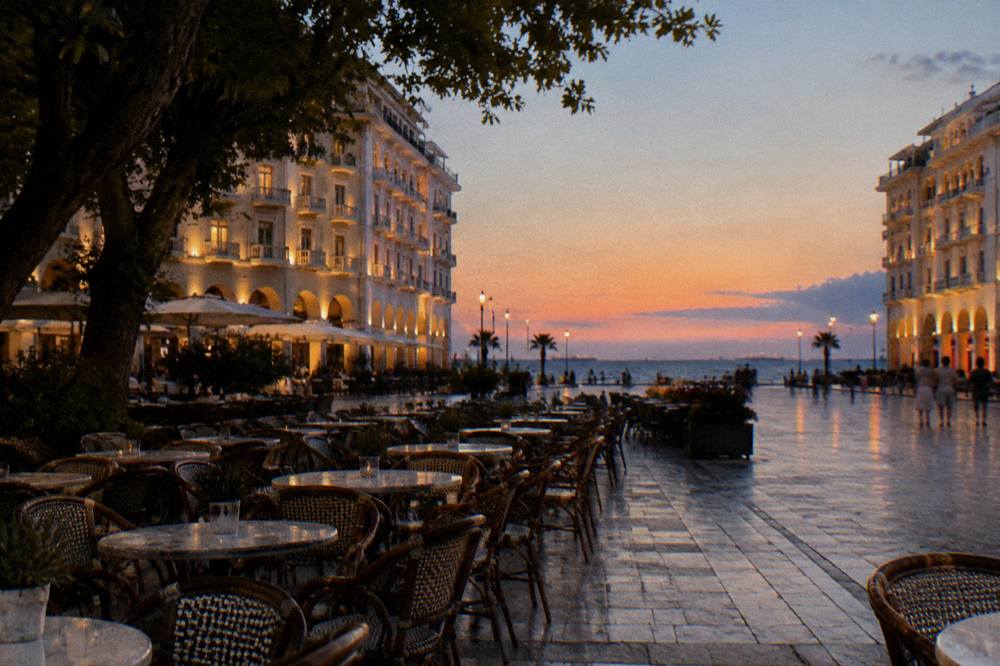
Food lovers with a late arrival can turn the first night into the trip's anchor, since the market-and-tasting circuit starts in the centre a few metro stops from the platforms:
Common Questions About Thessaloniki Train Station
What is Thessaloniki's main train station called?
It is the New Railway Station, which also gives its name to the terminus stop of metro Line 1. The Thessaloniki Metro's own network pages list the station on the line running to Nea Elvetia and, since 27 August 2026, on to Mikra in Kalamaria.
How do I get from Thessaloniki Train Station to the city centre?
Take metro Line 1 from the New Railway Station stop towards Nea Elvetia. A basic ticket costs 0.60 euro and a 24-hour daily ticket 2.50 euro, per the Thessaloniki Metro's ticket page, and trains run from 05:15 until 00:30 Sunday to Thursday and 02:00 on Friday and Saturday nights.
Is there a high-speed train from Athens to Thessaloniki?
Hellenic Train operates the Athens to Thessaloniki route, and current journey times, fares and frequencies are published on the operator's own site. No fixed duration or fare is quoted here; confirm your travel date on the Hellenic Train pages before booking.
Does the train from Thessaloniki go to Meteora?
Meteora sits near Kalambaka, about 228 km and 154 minutes of free-flow driving from central Thessaloniki, and the practical day-trip options run by road, either self-drive, coach or an organised tour. Rail-based options for the Kalambaka area are confirmed on the operator's timetables rather than assumed.
Where do the long-distance buses leave from in Thessaloniki?
Intercity coaches leave from the KTEL Macedonia station on Giannitson street in Menemeni, about 4 km from the centre. Coaches for Halkidiki, including Kassandra and Sithonia, are run by the separate KTEL Halkidiki operator from the 9th km of the Thessaloniki to Nea Moudania road.
Is the Thessaloniki metro connected to the train station?
Yes. The New Railway Station is a stop on Line 1, which opened in November 2024, and the line's Kalamaria extension was inaugurated on 27 August 2026. The metro's ticket page lists a basic fare of 0.60 euro and a daily ticket at 2.50 euro.
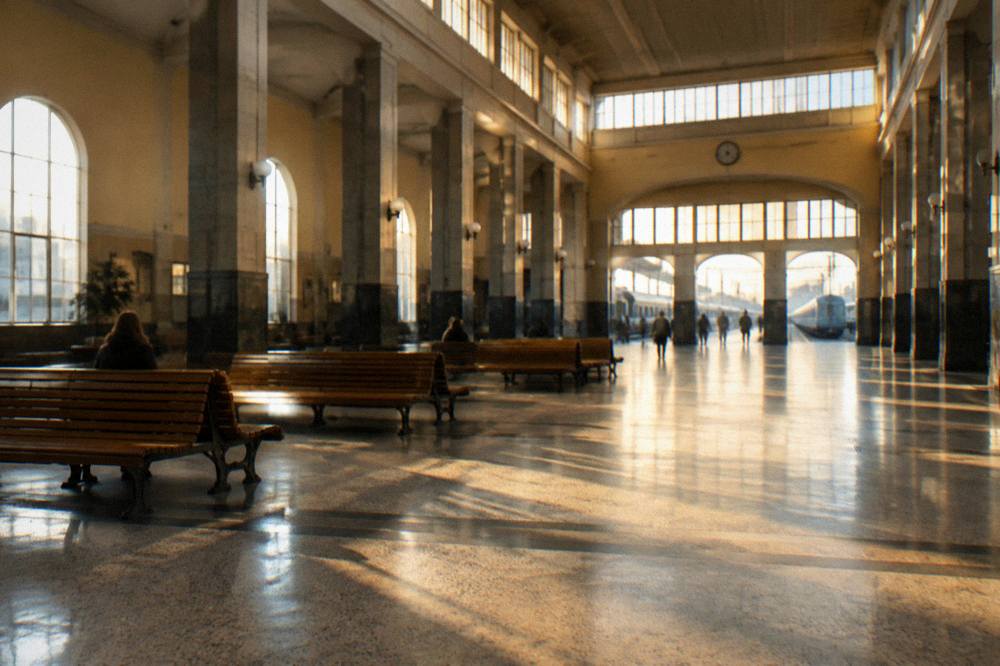
The station, in short, is no longer just a place where trains arrive: since November 2024 it has been the hinge between the national rail network and a working city metro, and that makes it one of the easiest major-city arrivals in Greece to plan around, provided you confirm each train time on the operator's own pages the week you travel.